Where Is Mazda 3 Built

Contents
- 1 Key Takeaways
- 2 📑 Table of Contents
- 3 The Heart of Innovation: Hiroshima and Hofu, Japan
- 4 The North American Hub: Salamanca, Mexico
- 5 The Asian and Emerging Market Factories: Thailand, China, and Vietnam
- 6 How to Find Where *Your* Mazda 3 Was Built
- 7 Why Production Location Matters (And When It Doesn’t)
- 8 The Future: Electrification and Shifting Landscapes
- 9 Conclusion: A Car Without a Single Border
- 10 Frequently Asked Questions

Windshield Washer Fluid

Car Dent Repair Kit
Foam Cannon

Side Mirror Rain Guard
The Mazda 3 is built across a global network of plants, with its primary production hubs located in Japan, Mexico, and Thailand. For the 2026 model year, the specific factory responsible for your vehicle depends on your market and model trim. North American models are predominantly manufactured at Mazda’s Salamanca, Mexico facility, while vehicles for other regions come from plants in Hiroshima, Japan, and Rayong, Thailand. Understanding where your Mazda 3 was built can provide insights into its specifications, pricing, and even certain quality control nuances.
Have you ever looked at your Mazda 3’s window sticker or VIN plate and wondered, “Where in the world was this car actually built?” It’s a fascinating question that goes beyond simple curiosity. For a globally recognized model like the Mazda 3, the answer is a story of international business, trade logistics, and Mazda’s strategic vision. In 2026, the journey of a Mazda 3 from concept to your driveway spans continents. This article will be your complete guide to understanding the intricate map of Mazda 3 production. We’ll explore every major factory, decode what the VIN tells you, and discuss why the assembly location might matter to you as an owner.
Gone are the days when “Made in Japan” was the only answer for a Mazda. While Japan remains the brand’s spiritual and engineering home, the Mazda 3 has embraced a truly global manufacturing footprint. This isn’t about outsourcing to cut corners; it’s a sophisticated strategy to serve local markets efficiently, navigate international trade policies, and be closer to the customer. Whether you’re a potential buyer comparing models, an enthusiast tracking production details, or a current owner satisfying curiosity, knowing where your car is built connects you to its story. Let’s pull back the curtain on the factories that bring the Mazda 3 to life.
Key Takeaways
- Global Production Strategy: Mazda employs a “build where you sell” strategy for the Mazda 3, manufacturing in key markets like North America (Mexico), Asia (Thailand, China, Vietnam), and Japan to reduce costs and tariffs.
- Primary 2026 Plants: The core factories for the 2026 Mazda 3 are Hofu (Japan), Salamanca (Mexico), and Rayong (Thailand), with additional production in China and Vietnam for their respective domestic markets.
- VIN is the Decoder: The 11th character of the Vehicle Identification Number (VIN) definitively indicates the assembly plant. You can use Mazda’s official resources or online decoders to translate this code.
- North America = Mexico: For the last decade, virtually all Mazda 3 sedans and hatchbacks sold new in the United States and Canada have been built at the Salamanca plant.
- Quality is Consistent: Mazda maintains stringent global quality standards. While minor regional specification differences exist, a Mazda 3 built in Thailand is engineered to the same core standards as one from Japan.
- Parts Sourcing is Global: Even at a specific plant, components like engines, transmissions, and electronics are sourced from a worldwide network of Mazda and supplier factories.
- Resale Value Factors: Production location can subtly influence used car pricing due to regional perceptions of quality and parts availability, a factor to consider when researching a model’s worth.
📑 Table of Contents
- The Heart of Innovation: Hiroshima and Hofu, Japan
- The North American Hub: Salamanca, Mexico
- The Asian and Emerging Market Factories: Thailand, China, and Vietnam
- How to Find Where *Your* Mazda 3 Was Built
- Why Production Location Matters (And When It Doesn’t)
- The Future: Electrification and Shifting Landscapes
- Conclusion: A Car Without a Single Border
The Heart of Innovation: Hiroshima and Hofu, Japan
To understand where the Mazda 3 is built, you must start at the source. Mazda’s headquarters and primary R&D center are in Hiroshima, Japan. This is where the soul of the Mazda 3—its SkyActiv engineering, its Jinba Ittai driving philosophy—is born. While not all Mazda 3s for global sale are built here today, the Japanese plants remain the flagship facilities, often piloting new production techniques and housing final assembly for certain high-spec or domestic-market models.
Hiroshima Plant (Miyoshi Proving Grounds Adjacent)
The Hiroshima plant is more than an assembly line; it’s a symbol of Mazda’s resilience and innovation. Historically, it was the sole home of the Mazda 3 (originally the Familia/323). While its role has evolved, it still plays a crucial part. For the 2026 model year, this plant is expected to focus on specific variants, potentially including some premium trims, specialty editions, and vehicles for the stringent Japanese domestic market. The workforce here is deeply intertwined with the engineering team, creating a feedback loop that benefits all global production.
Hofu Plant (Yamaguchi Prefecture)
Located about an hour from Hiroshima, the Hofu plant is a titan of Mazda production. It’s one of the company’s most efficient and high-volume facilities. For many years, Hofu has been responsible for building a significant portion of Mazda 3s destined for markets outside of North America, including Europe, Australia, and parts of Asia. The plant is known for its advanced robotics and quality control systems. If your 2026 Mazda 3 was built for the European market and has a VIN starting with “JM” (Japan), there’s a high probability it rolled off the line at Hofu. This plant exemplifies Mazda’s ability to scale its iconic compact car while maintaining precise build quality.
The North American Hub: Salamanca, Mexico
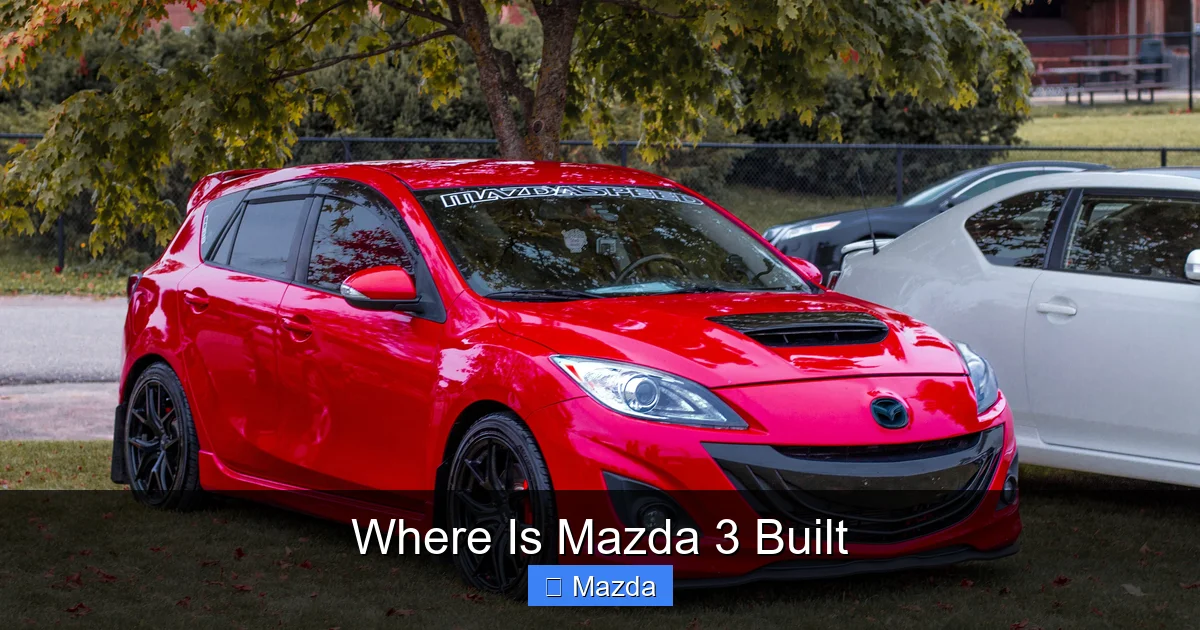
For customers in the United States and Canada, the answer to “Where is my Mazda 3 built?” is overwhelmingly clear: Salamanca, Guanajuato, Mexico. This state-of-the-art facility, which began Mazda 3 production in 2014, was a game-changer. It was built specifically to serve the North American Free Trade Agreement (NAFTA, now USMCA) region, allowing Mazda to avoid import tariffs and keep the Mazda 3 competitively priced against rivals like the Honda Civic and Toyota Corolla.
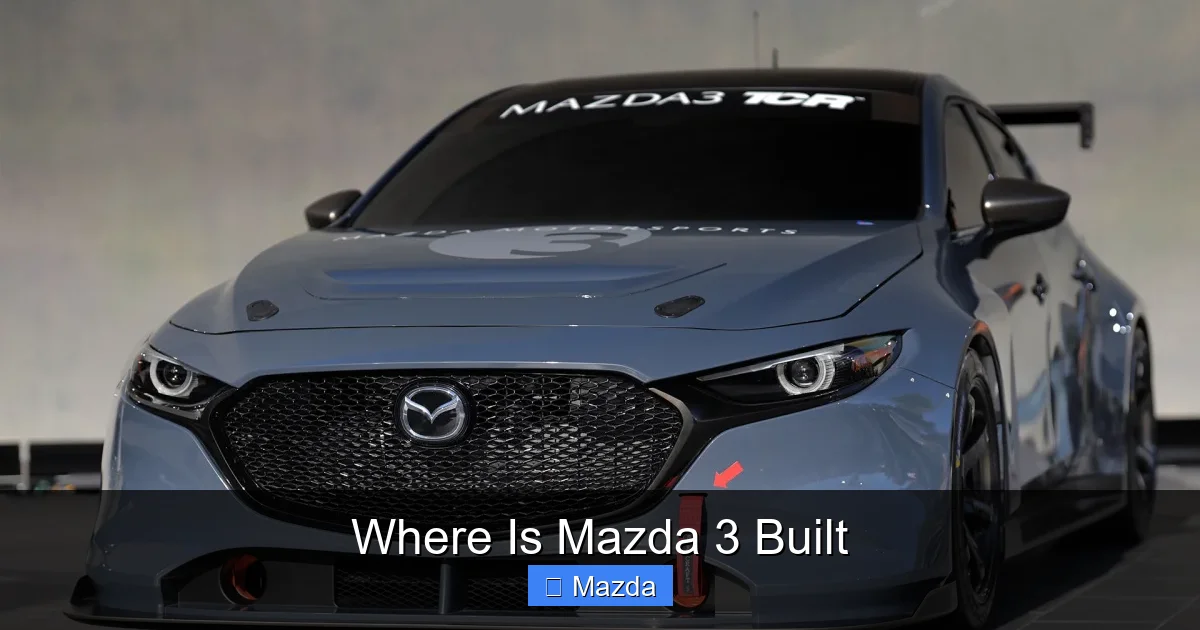
Visual guide about Where Is Mazda 3 Built
Image source: speedhunters-wp-production.s3.amazonaws.com
A Model of Modern Manufacturing
The Salamanca plant is a showcase of Mazda’s manufacturing philosophy. It was designed from the ground up with efficiency and quality in mind. The plant features a high degree of automation in welding and painting, but also retains skilled human technicians for final assembly and inspection. It operates under the same “Monotsukuri” (art of making things) principles as the Japanese plants. For the 2026 model year, Salamanca is the undisputed source for all gasoline-powered Mazda 3 sedans and hatchbacks sold in the U.S. and Canada. You can identify a Salamanca-built car by its VIN, which starts with “3M” (for model year 2024 and later; prior years used “3M” as well but the 10th character denotes year).
Impact on the North American Market
Building the Mazda 3 in Mexico has had a profound impact. It stabilized supply chains, reduced logistics time and cost, and allowed Mazda to invest in marketing and technology for the vehicle. For consumers, it means easier access to parts and, generally, a lower starting MSRP compared to a fully imported vehicle. The plant employs thousands of local workers and has become a critical part of Mazda’s global profitability. When you see a new Mazda 3 on a dealer lot in Chicago or Toronto, it almost certainly made the relatively short journey from Salamanca.
The Asian and Emerging Market Factories: Thailand, China, and Vietnam
Mazda’s global strategy is deeply tied to manufacturing in Southeast Asia. The reasons are multifaceted: growing market demand, cost-effective production, and strategic trade alliances within ASEAN (Association of Southeast Asian Nations).
Rayong Plant, Thailand – The ASEAN Hub
Mazda’s plant in Rayong, Thailand, is a cornerstone of its Asian production. It began operations in 2014 and has been building the Mazda 3 for Thailand and other ASEAN countries like Indonesia, Malaysia, and the Philippines. For the 2026 model year, Rayong remains vital. It produces both sedan and hatchback versions, often tailored with specific features for regional preferences (e.g., different audio systems, climate control tuning). The plant also manufactures the 2.0L SkyActiv-G engine used in many of these models. A VIN starting with “MM” indicates a vehicle from this plant. Thailand’s position allows Mazda to serve a massive region with a locally produced, tariff-advantaged vehicle.
Chongqing Plant, China (Changan Mazda Joint Venture)
In China, Mazda operates through a 50/50 joint venture with Changan Automobile. Their massive facility in Chongqing is one of the world’s largest automotive plants. It produces a wide range of Mazda vehicles, including the Mazda 3, specifically for the enormous Chinese market. The Chinese-market Mazda 3 often has unique styling cues, technology packages, and engine calibrations compared to its global siblings. It may also feature a different badge (“Mazda 3” or “Axela” in the past). For 2026, this plant will continue to be the exclusive source for Mazda 3s sold within China. A VIN from this plant starts with “LVS” or similar, denoting the Changan Mazda entity.
Other Asian Facilities
Mazda also has assembly operations in Vietnam (with a local partner) for that market’s needs. Additionally, there have been historical production runs in Malaysia and Indonesia via complete knock-down (CKD) kits, where parts are shipped from a main plant (like Thailand or Japan) and assembled locally. This allows for even lower tariffs and further customization. For 2026, these CKD operations are likely to continue on a smaller scale, supplementing the output of the full-build plants in Thailand and Japan.
How to Find Where *Your* Mazda 3 Was Built
So you own a Mazda 3, or you’re looking at a used one, and you want the definitive answer. The secret lies in the Vehicle Identification Number, or VIN. This 17-character code is your car’s unique fingerprint, and characters 1-3 (the WMI) and the 11th character (the plant code) hold the key.
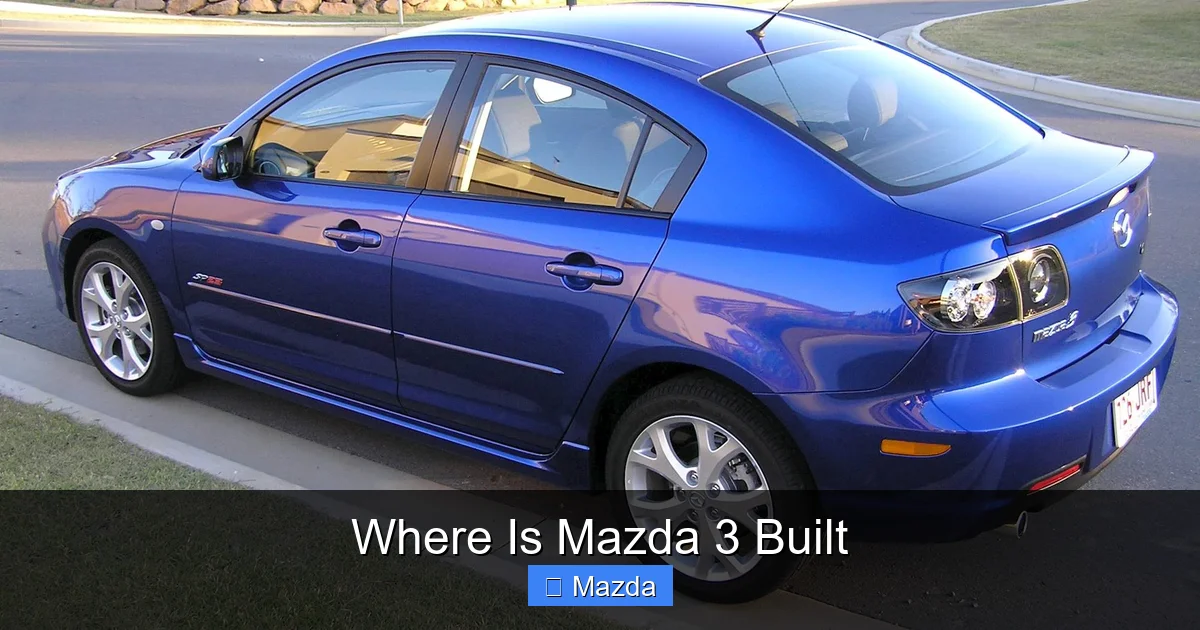
Decoding the VIN: A Step-by-Step Guide
First, locate your VIN. It’s typically on a metal plate on the driver’s side dashboard near the windshield, on the driver’s side door jamb sticker, and on your title and insurance documents. Once you have it, focus on the first three characters and the eleventh.
- Position 1-3 (World Manufacturer Identifier): This tells you the region and manufacturer.
- JM: Japan (Mazda)
- 3M: Mexico (Mazda Mexico)
- MM: Thailand (Mazda Thailand)
- LVS: China (Changan Mazda)
- RF: Canada (for some early models, but now largely replaced by 3M)
- Position 11 (Plant Code): This is the specific factory identifier. This is a letter or number that Mazda assigns internally. For example, for a “3M” VIN (Mexico), an “A” in the 11th position might denote Salamanca. You must use a Mazda-specific decoder or consult official guides to interpret this character correctly, as it changes with model years and plants.
For absolute certainty, you can contact a Mazda dealer with your VIN, and they can pull the exact production details from their system. Numerous reputable online VIN decoders also have extensive databases for Mazda plant codes.
Why Bother Checking?
For most buyers, knowing the plant is a point of interest. However, it can be practically useful when buying used. If you’re looking at a Mazda 3 with high mileage, knowing it’s a Mexican-built car might reassure you about parts availability in the U.S. Conversely, a Japanese-built example might appeal to a purist. It’s also a critical check for verifying a car’s history, especially if a seller claims it’s a rare import or a special edition. It’s one more data point in making an informed decision.
Why Production Location Matters (And When It Doesn’t)
We’re all familiar with the “Made in ___” label and the assumptions it can carry. Does it matter if your Mazda 3 was built in Mexico versus Japan? The answer is nuanced, balancing engineering consistency with real-world variables.
Visual guide about Where Is Mazda 3 Built
Image source: carscoops.com
The Mazda Global Quality Standard
First and foremost, Mazda mandates identical global quality standards. The engineering tolerances, welding techniques, paint processes, and final inspection protocols are uniform across all Mazda plants. A technician in Salamanca is trained to the same specifications as one in Hofu. The core SkyActiv engine and transmission assemblies are often built in dedicated, highly automated engine plants (like those in Hiroshima, Japan, or Windsor, Ontario, Canada for some engines) and shipped to the final assembly line. Therefore, fundamental reliability and build quality are engineered to be consistent.
Where Differences Can Appear
Where you might notice differences are in the “specification” and “content” layers, driven by market regulations and preferences.
- Features & Options: A Mazda 3 built for Thailand might come standard with a rear camera (a regional requirement) but lack a heated steering wheel (less demand). A North American model will have a different audio system supplier than a European one. The base trim levels and available packages vary significantly by region.
- Component Sourcing: While major components are globally sourced, some smaller parts—like specific plastic trim pieces, wiring harnesses, or tires—may come from regional suppliers. This is normal in global manufacturing.
- Warranty and Service Network: Your warranty is administered by Mazda in your country of purchase. A car built for Mexico and sold in the U.S. is fully supported by the U.S. Mazda dealer network. However, if you were to privately import a Japanese-market Mazda 3 to the U.S., you would face major hurdles with warranties, parts, and compliance.
For the average owner buying a car new from their local dealer, these differences are already accounted for in the vehicle’s specification sheet. The production location is a fascinating backstory, not a determinant of the car’s daily performance or longevity.
The Future: Electrification and Shifting Landscapes
Looking ahead to the next decade, the map of Mazda 3 production will inevitably evolve. The automotive industry is in the midst of a seismic shift toward electrification, and Mazda is no exception. The current generation Mazda 3 is offered with a mild-hybrid system in some markets, but a full battery-electric version has not yet been launched.
Preparing for EVs
Mazda has announced plans for battery-electric vehicles. When an electric Mazda 3 (or its spiritual successor) arrives, its production will likely follow a similar global strategy but may be concentrated in plants with existing battery supply chain partnerships or those designated for EV production. Mazda has been investing in battery technology and may co-locate EV assembly with battery pack assembly to streamline logistics. It’s possible that future EV production could be centered in Mexico (to serve North America) and Japan/Thailand for other regions, but new dedicated EV plants are also a possibility.
Trade Policy and Market Demand
The other major factor is international trade. Agreements like the USMCA govern what gets built where for tariff purposes. Changes in trade policy or the introduction of new tariffs could force Mazda to re-evaluate its production allocation. Similarly, if demand for the Mazda 3 shifts dramatically—say, a massive resurgence in Japan or a decline in Southeast Asia—Mazda would adjust production volumes at each plant accordingly. The flexibility of its current multi-plant system is a strategic asset in this volatile environment. For 2026, we expect the status quo to hold, but the next generation will be the true test of Mazda’s long-term manufacturing strategy.
Conclusion: A Car Without a Single Border
The story of “Where the Mazda 3 is built” is the story of modern automotive manufacturing. It’s a tale of a Japanese engineering icon that has grown into a global citizen. In 2026, your Mazda 3’s passport likely has stamps from Mexico, Thailand, or Japan, each representing a crucial node in Mazda’s worldwide network. The Salamanca plant delivers value and efficiency to North American roads. The Rayong plant fuels the growing passion for driving in Southeast Asia. The Hofu and Hiroshima plants remain the guardians of Mazda’s soul and quality.
While the assembly location is a cool piece of trivia and a useful verification tool, the most important truth is this: regardless of the city or country on the “Built In” plaque, you are getting a car that has passed through the same rigorous Mazda standards. The driving experience—that playful, connected feel—is engineered in Hiroshima and instilled in every single unit. So, the next time you slide behind the wheel of your Mazda 3, remember its journey. It’s a testament to global collaboration, all in service of delivering a little bit of driving joy, no matter where in the world it was first bolted together. Whether you’re researching a purchase or just satisfying curiosity, you now hold the map to the Mazda 3’s true global home.
Frequently Asked Questions
Can I use the VIN to find the exact production date of my Mazda 3?
Yes, you can. The 10th character of the VIN represents the model year. For a more precise build date (like month and year), you would need to contact a Mazda dealer with your VIN, as they can access production scheduling records. Some premium VIN decoder services also provide this data.
Does a Mexican-built Mazda 3 have the same warranty as a Japanese-built one?
Absolutely. Your Mazda 3’s warranty is governed by the country where you purchased and registered the vehicle, not its factory of origin. A Mexican-built Mazda 3 sold in the U.S. is fully covered by Mazda North America’s new vehicle warranty, identical to a Japanese-built one.
Are there any significant reliability differences between Mazda 3s from different plants?
No. Mazda maintains uniform global quality control and engineering standards. Major component failures are not linked to the assembly plant. Any minor, region-specific part variations (like certain sensors or trim clips) are designed to meet local regulations and are equally reliable. Consistency is a cornerstone of Mazda’s production philosophy.
I heard the Mexican plant uses more robots. Does that mean better or worse quality?
The Salamanca plant uses a high level of automation, which is common in modern automotive manufacturing. This consistency actually enhances quality by reducing human error in repetitive tasks like welding. Final inspection and quality audits still rely heavily on skilled human technicians. The mix of robotics and human expertise is carefully balanced at all Mazda plants to achieve optimal results.
If I buy a used Mazda 3, should I prefer one from a specific country?
For the vast majority of used car shoppers, the production location should not be a primary deciding factor. Focus instead on the vehicle’s maintenance history, accident history, mileage, and overall condition. A well-maintained Mexican-built Mazda 3 is a better buy than a neglected Japanese-built one. The only minor consideration might be parts availability for very old models, but for 2014+ models (the Salamanca era), parts supply is robust nationwide.
Will future electric Mazda 3 models be built in the same plants?
This is still being determined. Mazda is likely to leverage existing plants for EV production to control costs, but may also create dedicated EV lines or plants. The Salamanca, Mexico facility is a strong candidate for North American EV production due to its strategic location and existing infrastructure. The final decision will depend on battery supply chain logistics and regional EV demand forecasts for the late 2020s and beyond.