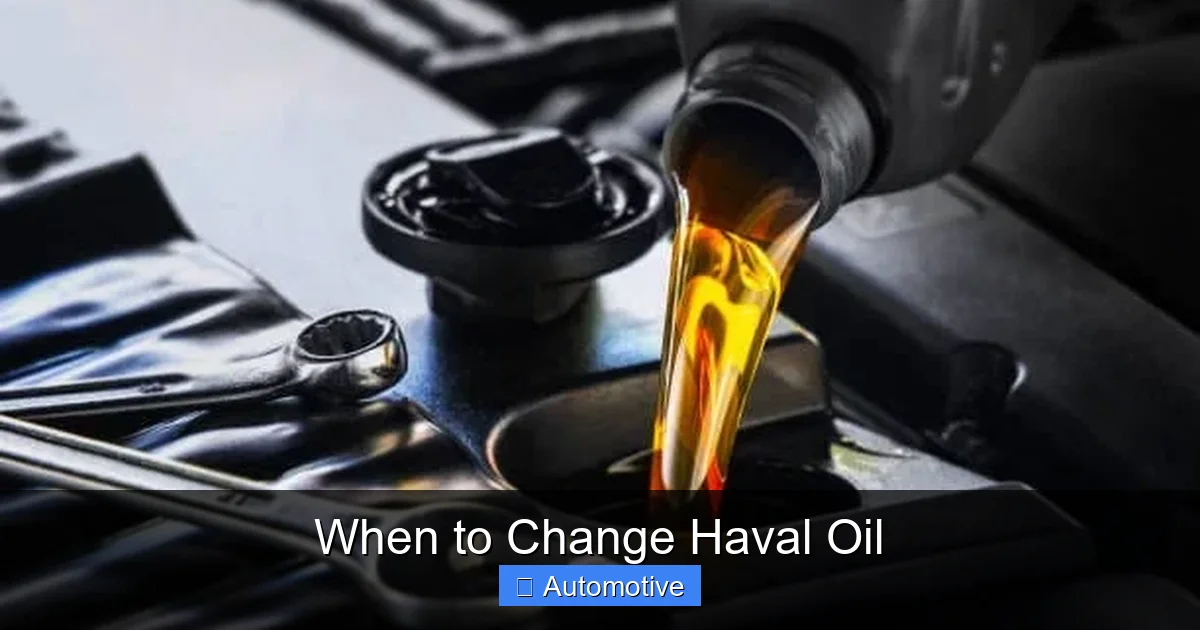
When to Change Haval Oil

Contents
- 1 Key Takeaways
- 2 📑 Table of Contents
- 3 Decoding the Factory Manual: Haval’s Official Stance
- 4 The Real-World Impact: Your Driving Habits Dictate the Schedule
- 5 Oil Specifications: It’s Not Just About “Any Oil”
- 6 Listening to Your Haval: The Signs It’s Time (Even Before the Mileage)
- 7 The Oil Life Monitor: Friend or Foe?
- 8 DIY vs. Professional: Where Should You Get Your Haval Oil Changed?
- 9 Building Your Personalized Haval Oil Change Plan
- 10 Conclusion: The Pillar of Haval Longevity
- 11 Frequently Asked Questions

Dash Cam

Car Battery Tester

Car Cup Holder Expander

Engine Oil Additive
Knowing when to change your Haval oil is non-negotiable for engine health. While Haval provides factory intervals, your actual schedule depends heavily on your driving conditions—what they call “severe service.” Using the correct oil specification and watching for early warning signs are just as critical as following the mileage or time guideline. Ignoring this leads to costly engine wear, sludge, and potential failure. This guide cuts through the confusion to give you a clear, actionable plan for your specific Haval, whether you have a H6, Jolion, or newer model.
So, you’ve got a Haval. That fantastic, value-packed SUV that turns heads on your commute and is ready for family adventures. You love it. You want it to last forever. The single most important, yet often overlooked, thing you can do for its heart—the engine—is to get that oil changed at the right time. But “the right time” isn’t a one-size-fits-all number. It’s a moving target based on your specific Haval model, your driving style, the oil you use, and even the season. Let’s crack the code together.
Haval, as a modern manufacturer, engineers its engines to precise standards and provides a recommended oil change interval in your owner’s manual. This is your starting point, your baseline. For many newer Haval models equipped with synthetic oil from the factory, that baseline is often something like 10,000 kilometers or 12 months, whichever comes first. Sounds simple, right? Just set a calendar reminder and forget it. Wrong. That interval assumes what the industry calls “normal” driving—which is basically highway cruising in moderate temperatures. If your driving is anything but ideal, that number needs to come down, sometimes drastically. The difference between following the manual blindly and adjusting for reality is the difference between an engine that purrs for 300,000 kilometers and one that develops expensive problems at 150,000.
This guide is your definitive roadmap. We will dive into Haval’s official recommendations, decode what “severe driving” really means for you, explore the critical role of oil specification, teach you how to read your car’s subtle (and not-so-subtle) cries for help, and settle the DIY-versus-professional debate once and for all. By the end, you won’t just know when to change your Haval oil—you’ll understand why, and you’ll have a personalized plan to keep your engine running clean, cool, and powerful for years to come.
Key Takeaways
- Follow Haval’s Manual First: Your owner’s manual provides the baseline interval (e.g., 10,000 km/6 months), but this is for ideal “normal” driving.
- “Severe Driving” Halves Your Interval: Frequent short trips, extreme temps, towing, dusty roads, or stop-and-go traffic means changing oil much more often—often every 5,000-7,500 km.
- Oil Type Dictates Longevity: Full synthetic oil can last longer (up to the factory interval or beyond) than conventional oil, but always use the viscosity and specification Haval requires (like API SP or ACEA C).
- Heed the Warning Signs: Don’t ignore the oil pressure light, excessive exhaust smoke, engine knocking, or a burning oil smell. These signal imminent trouble.
- The Oil Life Monitor is a Tool, Not a God: Haval’s intelligent system calculates based on engine cycles, but it doesn’t know about your severe driving. Reset it after every change and consider it a maximum limit.
- Professional vs. DIY: Changing Haval oil yourself saves money but requires proper disposal and exact specifications. A professional service ensures correct oil/filter and a multi-point inspection.
- Monthly Checks are Your Best Friend: Get in the habit of checking oil level and condition on a dipstick every month. Low level or dark, gritty oil means it’s time, regardless of mileage.
📑 Table of Contents
- Decoding the Factory Manual: Haval’s Official Stance
- The Real-World Impact: Your Driving Habits Dictate the Schedule
- Oil Specifications: It’s Not Just About “Any Oil”
- Listening to Your Haval: The Signs It’s Time (Even Before the Mileage)
- The Oil Life Monitor: Friend or Foe?
- DIY vs. Professional: Where Should You Get Your Haval Oil Changed?
- Building Your Personalized Haval Oil Change Plan
- Conclusion: The Pillar of Haval Longevity
Decoding the Factory Manual: Haval’s Official Stance
Your Haval owner’s manual is the bible for your vehicle. In the maintenance schedule section, you will find a chart detailing every required service, including the oil and filter change. It will list a distance (kilometers or miles) and a time frame (e.g., every 12 months). The time component is crucial even if you drive very little. Oil degrades over time due to moisture, fuel dilution, and oxidation, losing its protective properties. So, even if you’ve only put 3,000 km on your Haval in a year, you should still change the oil.
The “Normal” vs. “Severe” Service Divide
This is the most critical distinction you must understand. Every manufacturer, Haval included, bases its “normal” interval on a fantasy world of driving. The “severe service” schedule is the real world for most of us. According to standard automotive engineering guidelines, you are operating under severe conditions if you frequently:
- Make trips of less than 8 kilometers (5 miles), especially in cold weather.
- Drive in extremely hot or cold climates.
- Engage in extensive idling or stop-and-go traffic (think city rush hour).
- Drive on dusty, muddy, or sandy roads.
- Tow a trailer or carry heavy cargo regularly.
- Drive at sustained high speeds (e.g., frequent highway driving above 120 km/h).
If any of these sound like you, your Haval is on the severe service schedule. This typically means changing your oil every 5,000 to 7,500 kilometers, or every 6 months, whichever comes first. For older Haval models or those using conventional oil, the severe service interval might be even shorter, around 5,000 km/6 months. Ignoring this severe service classification is the number one reason engines suffer premature wear and sludge buildup. The constant thermal cycling, fuel dilution from cold starts, and contaminants from harsh environments break oil down much faster.
Model-Specific Nuances
While the general principle holds, it’s wise to check for any model-specific notes. A turbocharged engine, like the 1.5T or 2.0T found in many Haval H6 and F7x models, runs hotter and under more stress than a naturally aspirated engine. This can accelerate oil degradation. Some newer Haval models might come with factory-filled long-life synthetic oils that meet specific standards (like API SP or ACEA C). Your manual will specify the exact oil specification required. Using the correct oil is part of the maintenance plan. Always consult your specific model year’s manual. If you don’t have it, digital copies are often available on Haval’s official website for your region.
The Real-World Impact: Your Driving Habits Dictate the Schedule
Let’s translate “severe service” into your daily life. You might be thinking, “I don’t drive in deserts or tow a boat!” But consider this: do you drop the kids at school (2 km trip), then drive to the grocery store (3 km), then run to the pharmacy (1 km), and finally head to work (15 km)? That’s a series of short trips where the engine never fully warms up. In this scenario, fuel vapor and water condensation can seep into the oil, creating a corrosive, soupy mixture that never gets hot enough to burn off. This is classic severe driving.
Visual guide about When to Change Haval Oil
Image source: golden-horse.ae
The Short-Trip Killer
The single most common “severe” condition is frequent short trips. When an engine runs, it burns off moisture. If trips are too short, the oil never reaches its full operating temperature (typically 90-110°C). This allows water to accumulate in the oil sump. Water is the enemy. It promotes sludge, rusts internal components, and breaks down the oil’s additive package. If your Haval is primarily a city runabout with many starts and stops, you should be scheduling oil changes at the shorter end of the severe spectrum—closer to 5,000 km or 6 months. A good rule of thumb: if your trip doesn’t allow the engine to run for at least 20-30 minutes at operating temperature, you’re in severe territory.
Climate and Environment Matter
Are you in a place with brutal winters (-20°C) or scorching summers (40°C+)? Extreme cold thickens oil, making it harder to circulate on startup, causing more wear in the first critical minutes. Extreme heat thins oil, reducing its film strength and ability to cushion metal parts. Both extremes stress the oil and its additives faster. Similarly, driving on unpaved, dusty roads means fine particulate matter is constantly sucked into the air filter and can work its way past into the oil, acting as an abrasive grinding paste. If your Haval sees these conditions, shorten your interval by 25-30%.
Towing and Load Carrying
Haval SUVs are designed with respectable towing capacities. But if you’re regularly hitting that max rating—pulling a camper, a large boat, or a loaded utility trailer—you’re putting the engine under significant load. This increases operating temperature and stress. The oil works harder to lubricate and cool under these conditions. If towing is a regular part of your Haval’s life, adhere strictly to the severe service schedule and consider using a high-quality full synthetic oil with excellent high-temperature protection (look for the correct API/ACEA spec).
Oil Specifications: It’s Not Just About “Any Oil”
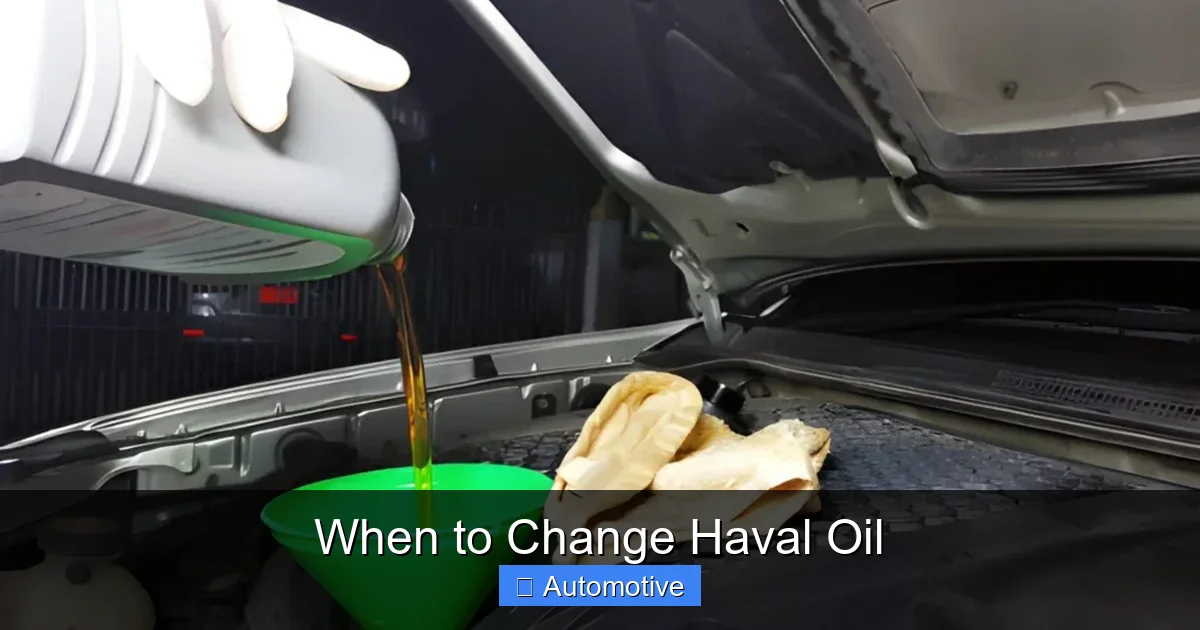
Using the wrong oil is like feeding your body junk food every day. It might run, but long-term damage is inevitable. Haval engines, especially modern ones with tight tolerances and complex emissions systems (like turbochargers and GPF/DPF), require oils that meet specific standards. The manual will specify the viscosity (like 5W-30 or 0W-20) and the performance standard (e.g., API SP, ACEA C2, or a Haval-specific OEM specification).
Visual guide about When to Change Haval Oil
Image source: cargarageexpert.com
Decoding the Sticker on the Bottle
Viscosity (5W-30): The “W” stands for winter. The number before the W indicates cold-flow performance (lower is better for cold starts). The second number indicates thickness at operating temperature. Haval typically recommends a 5W-30 or 5W-40 for many models, but some newer, fuel-efficient engines may use 0W-20. Always use what your manual calls for. Using a thicker oil in cold weather can cause hard starts and increased wear. Using a thinner oil than specified can lead to insufficient film strength and engine damage.
Performance Standard (API SP/ACEA C): These are the “quality” tests. API SP is the latest American Petroleum Institute standard for gasoline engines, offering excellent protection against low-speed pre-ignition (LSPI) in turbocharged engines—a critical issue. ACEA C is a European standard often lower in SAPS (sulfated ash, phosphorus, sulfur) to protect after-treatment devices like catalytic converters and particulate filters. Haval engines designed to meet strict emissions (like those in Europe or China) will often specify an ACEA C oil. Using an oil that doesn’t meet the required spec can void your warranty and damage emissions components. For a deep dive into oil standards, you can read how to know when do you change oil in a car, which covers the fundamentals of oil degradation.
Synthetic vs. Conventional: The Clear Winner for Haval
For any modern Haval, full synthetic oil is not a luxury; it’s a necessity. Its superior molecular structure provides:
- Better Temperature Range: Flows faster in cold starts, resists thinning at high temps.
- Longer Life: Resists oxidation and thermal breakdown much longer, supporting those 10,000 km intervals under normal conditions.
- Improved Cleanliness: Superior detergents keep engine internals cleaner, preventing sludge and varnish.
- Enhanced Protection: Better film strength protects against wear, especially in turbocharged engines.
If your Haval is still under warranty, using a full synthetic oil that meets the specified standard is often required to maintain the warranty’s drivetrain coverage. Even for out-of-warranty vehicles, the extra cost per liter is minimal compared to the engine longevity you gain. The only exception might be an older, high-mileage Haval with significant seal wear, where a high-mileage synthetic blend might be beneficial to help condition aging seals.
Listening to Your Haval: The Signs It’s Time (Even Before the Mileage)
Your Haval will tell you it’s suffering long before the engine seizes. You must learn its language. While the maintenance reminder is a great tool, it’s a computer algorithm based on data inputs, not a direct measure of oil condition. Your senses are your best diagnostic tools.
Visual guide about When to Change Haval Oil
Image source: down-my.img.susercontent.com
The Obvious: Dashboard Warnings
The most urgent sign is the oil pressure warning light (usually a red can icon). If this illuminates while driving, pull over safely and shut off the engine immediately. Do not keep driving. Low oil pressure means catastrophic failure is imminent. Check the oil level first. If it’s low, add the correct oil (just enough to get to the dipstick’s “full” mark) and see if the light goes out when you restart. If the light stays on, or the level was fine, have the car towed to a mechanic. This could indicate a failed oil pump, a blocked oil passage, or a faulty sensor.
The oil change reminder light/service message is a different beast. This is your car’s oil life monitor (OLM) telling you it’s calculated the oil is degraded. When it comes on, schedule your service within the next 500 km or so. Never ignore it for thousands of kilometers. Learn how to reset it after your change—the process varies by Haval model and year, often involving the trip meter button or a menu in the instrument cluster. You can find model-specific reset guides for many vehicles, which illustrates the general process.
The Subtle: Sounds, Smells, and Performance
Before a light comes on, you might notice:
- Engine Ticking or Knocking: A persistent, rhythmic ticking from the top end (valve train) on startup that takes longer to go away can indicate oil is too thin or the level is low. A deeper, metallic knocking could be a bearing issue from prolonged oil starvation.
- Excessive Blue/Gray Smoke: Smoke from the exhaust that isn’t just a brief puff on startup can mean oil is burning in the combustion chamber. This could be due to worn piston rings or valve seals, often accelerated by poor oil maintenance.
- Burning Oil Smell: A distinct, acrid odor of burning oil, especially after driving or when you stop, can signal an external oil leak dripping onto hot exhaust components. Fix the leak and check the oil level.
- Decreased Performance & Fuel Economy: Dirty, degraded oil increases internal friction. You might notice the car feels slightly sluggish or your fuel economy drops. It’s a gradual sign that the oil’s job is becoming harder.
- Exhaust Soot: An unusually dirty tailpipe or excessive visible smoke (not just vapor on a cold start) can be a sign of incomplete combustion, which can be linked to poor engine condition stemming from bad oil.
The Physical Check: Your Monthly Ritual
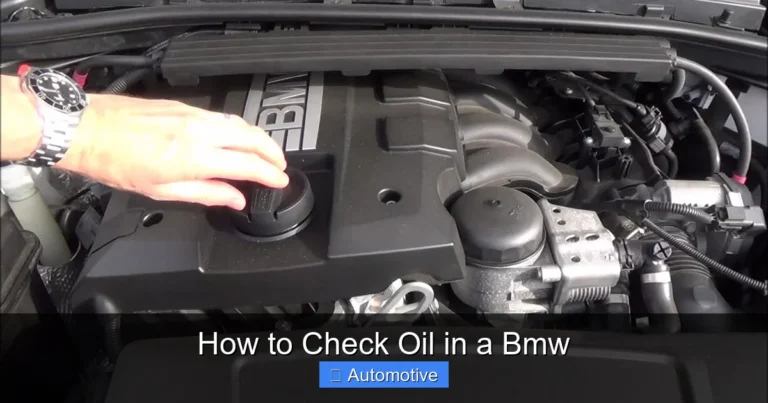
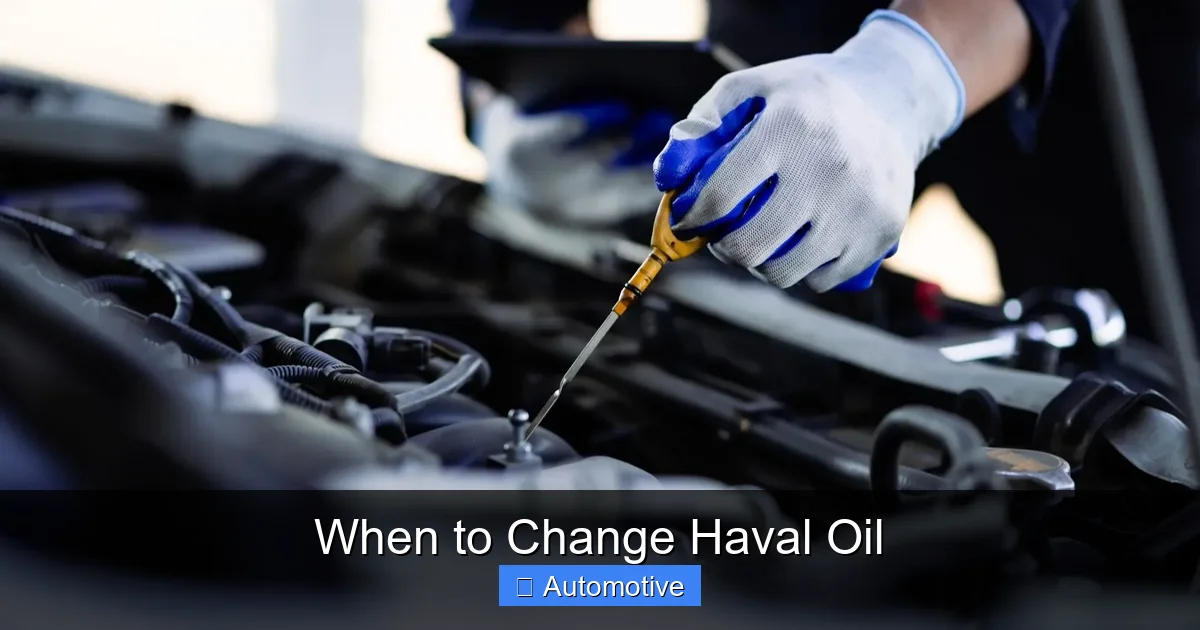
No technology replaces a manual check. Once a month, or before a long trip, do this:
- Park your Haval on level ground, engine off for 5-10 minutes.
- Pull the dipstick, wipe it clean, reinsert it fully.
- Pull it again and read the level. It should be between the “MIN” and “MAX” marks, ideally near the top. Never let it drop below MIN.
- Now, look at the oil’s color and feel. Fresh synthetic oil is typically amber and translucent. If it’s dark brown or black, that’s normal (it gets dirty). But if it’s milky or foamy, that’s water/coolant contamination—a major problem. Rub a bit between your fingers. If it feels gritty or has a strong, burnt smell, it’s cooked and needs changing immediately, regardless of mileage.
This simple 2-minute check is your most powerful tool. It tells you about level, contamination, and gross degradation. If the level is dropping between checks, you have a leak or the engine is burning oil—both need diagnosis.
The Oil Life Monitor: Friend or Foe?
Your Haval almost certainly has an Oil Life Monitor (OLM) or Maintenance Reminder system. This is a computer that uses algorithms based on engine revolutions, temperature, and sometimes other data to estimate oil degradation. It’s a fantastic piece of technology that prevents unnecessary changes and helps the environment. But it has a critical flaw: it doesn’t directly sense oil condition. It calculates based on driving patterns.
How It Works (The Simple Version)
Think of it like a smart counter. The system “knows” that severe conditions (lots of cold starts, high RPMs, high temps) break oil down faster than gentle highway cruising. So, if you drive 100 km in city traffic, it might deduct more “life” from the oil than 100 km on a open highway. The system is reset to 100% after every oil change. When it calculates the oil life has reached a certain threshold (often 15-20% remaining), it illuminates the service light.
The Crucial Caveat: It Doesn’t Know “Severe”
Here’s the trap. The OLM is programmed with the factory’s “normal” interval in mind. If you are a severe driver, the OLM might not decrement life fast enough to match the actual oil degradation happening in your sump. It might tell you you have 40% oil life at 6,000 km, but your oil could already be heavily contaminated from a hundred short trips. Conversely, if you are a perfect highway cruiser, it might extend the interval safely beyond the manual’s time limit, but you still must change at 12 months due to time-based degradation. The OLM is a useful maximum guideline, not a minimum safe point. Your severe driving habits must override its suggestion. For a deeper understanding of these systems, how does my car know when to change oil explains the technology in more detail.
Your Action Plan with the OLM
1. Always reset it immediately after a professional or DIY oil change. If you don’t, the system will continue counting down from the old oil’s life, giving you a false reading.
2. Use it as a check, not a command. If the light comes on at 9,000 km, and you know you drive severely, you’re already late. If it comes on at 11,000 km and you are a gentle highway driver, you might still be okay, but don’t let it go past 12 months.
3. Combine it with your monthly dipstick check. The dipstick tells you the *actual* oil condition (level, color, feel). The OLM is just an estimate. Trust the physical evidence more.
DIY vs. Professional: Where Should You Get Your Haval Oil Changed?
This is a classic debate with strong opinions on both sides. Let’s look at it pragmatically for your Haval.
The Case for Professional Service
Expertise and Equipment: A certified technician, especially at a Haval dealership or a reputable independent shop familiar with Chinese vehicles, knows the exact specification. They won’t accidentally put in 5W-20 when your manual calls for 5W-30. They have the correct filter (some Haval models use cartridge filters that require a special tool) and the proper drain plug torque specs. Over-tightening can strip threads; under-tightening causes leaks.
The Multi-Point Inspection: This is the hidden value. While your Haval is on the lift, a good tech will check your brakes, tires, suspension components, fluid levels (coolant, brake, transmission), belts, hoses, and look for any leaks or developing issues. Catching a worn brake pad or a leaking shock absorber early saves you money and prevents a breakdown. They can also reset your oil life monitor correctly.
Warranty and Record Keeping: If your Haval is still under the factory warranty, having the oil changed at a dealership or with detailed, specification-compliant receipts from a reputable shop provides an unimpeachable service record. This is vital if you ever need a major warranty claim on the engine or drivetrain.
Convenience and Disposal: You drop the car off and they handle everything, including the messy, environmentally regulated disposal of used oil and filter. No fuss.
The Case for DIY
Cost Savings: You only pay for the oil and filter. A quality full synthetic (like 5 quarts/4.7L) and a premium filter might cost $60-$90. A quick-lube shop might charge $100-$150 for the same oil, and a dealership $150-$250. Over the life of the car, the savings add up significantly.
Control and Quality: You choose the exact brand and grade of oil. You can use a high-quality OEM-spec filter from brands like MANN, Mahle, or WIX. You know the job was done right—the drain plug was torqued, the filter was lubed and installed correctly, and the new oil was poured in slowly to avoid aeration.
Knowledge and Connection: Working on your own car builds a deeper understanding of how it works. You’ll spot a small drip before it becomes a big problem because you know where everything is.
The DIY Reality Check: What You Absolutely Must Get Right
If you DIY, you are 100% responsible for the outcome.
- Correct Oil: Verify viscosity and specification. Don’t guess.
- Correct Capacity: Haval engines take a specific amount (e.g., 4.2L, 4.5L). Overfilling can cause aeration, foaming, and increased pressure, damaging seals and the crankshaft. Underfilling leads to starvation. Consult your manual. Add a little less than specified, check the dipstick, and top up carefully.
- Correct Filter: Use the exact filter model for your year, model, and engine. A poorly fitting filter can leak or allow unfiltered oil to circulate.
- Torque the Drain Plug: A loose plug = a catastrophic leak. An overtightened plug = a stripped oil pan. Use a torque wrench set to the manual’s spec (often 20-30 Nm).
- Dispose Properly: Never pour used oil down the drain. Take it to a designated recycling center, auto parts store, or have your local shop take it for a small fee.
If any of these steps make you uneasy, go professional. The cost of a mistake is a ruined engine, which costs thousands. A fundamental part of knowing when to change your oil is also knowing who should change it. For many, the peace of mind and comprehensive check from a pro are worth the premium.
Building Your Personalized Haval Oil Change Plan
Now, let’s synthesize everything into a simple, actionable plan for your specific situation.
Step 1: Start with the Manual
Find your Haval’s official interval. Write it down. Example: “Haval H6 2021, 2.0T: 10,000 km or 12 months.”
Step 2: Honestly Assess Your Driving
Do you fit the “severe service” criteria? If yes, immediately cut that interval in half or more. Your new plan: “Haval H6, severe driving: 5,000-6,000 km or 6 months.”
Step 3: Confirm Your Oil
What oil is currently in there? Check the dipstick color (dark is normal) and the oil cap or service sticker. What does your manual specify? If you’re unsure, call a Haval dealership parts department with your VIN and ask for the recommended oil specification. Buy that exact oil. For severe drivers, a high-quality full synthetic is mandatory.
Step 4: Set Your Reminders
Don’t rely on memory. Set a calendar alert on your phone for the earlier of your two dates (distance or time). For example, if your severe interval is 6,000 km/6 months, set a reminder for the 6-month date. When that reminder comes, check your odometer. If you’re at 4,000 km, change it anyway (time-based). If you’re at 7,500 km and it’s only been 4 months, change it (distance-based).
Step 5: Perform or Schedule the Service
If DIY, gather your tools (wrench, drain pan, funnel, new filter, new oil, gloves), watch a YouTube tutorial for your specific Haval model (search “Haval H6 oil change”), and execute carefully. If going pro, call your shop, book the appointment, and mention any concerns (leaks, noises). Ask them to check the oil level and condition when they’re done.
Step 6: Reset and Record
After the change, reset the oil life monitor. Then, write the date, mileage, oil type/brand, and filter used in a permanent log (a notebook in the glovebox, a spreadsheet, or a maintenance app). This record is gold for resale value and troubleshooting future issues.
By following this personalized plan, you move from guessing to knowing. You protect your investment, ensure reliability, and drive with confidence. Remember, an engine oil change is the cheapest insurance policy you can buy for your Haval’s most expensive component.
Conclusion: The Pillar of Haval Longevity
When it comes to your Haval, the question isn’t just “when to change Haval oil?” It’s “how to be a responsible Haval owner?” The answer lies in a proactive, informed approach to lubrication. Start with the factory manual as your foundation, but build your personal schedule on the bedrock of your real-world driving conditions. Severe driving is the norm, not the exception, for most people. Acknowledging that and shortening your interval accordingly is the single most impactful maintenance decision you can make.
Coupled with the use of the exact, high-quality full synthetic oil your engine demands, and a vigilant eye (and nose, and ear) for warning signs, you create a comprehensive defense strategy. Combine this with the disciplined habit of monthly dipstick checks, and you transform from a passive car owner into an active guardian of your machine.
The oil life monitor is a helpful assistant, but you are the manager. Whether you choose the thoroughness of a professional service with its invaluable multi-point inspection or the cost-saving satisfaction of a carefully executed DIY job, consistency is key. Keep impeccable records. Your future self—and your Haval’s engine—will thank you when you’re still enjoying smooth, trouble-free motoring years down the road. Don’t gamble with the lifeblood of your engine. Master your oil change schedule, and your Haval will reward you with its best performance for the long haul.
Frequently Asked Questions
What happens if I go too long without changing my Haval’s oil?
Oil degrades and loses its lubricating and cooling properties. This leads to increased metal-on-metal friction, causing rapid wear of bearings, piston rings, and camshafts. It can also form sludge and deposits that clog oil passages, leading to catastrophic engine failure. The cost of an engine rebuild or replacement is far higher than any oil change.
Can I use conventional oil in my Haval?
While possible in older Haval models, it is not recommended for any modern Haval, especially turbocharged engines. Conventional oil breaks down faster, offers less protection against high temperatures and deposits, and cannot support the longer factory intervals (like 10,000 km). Using full synthetic oil that meets Haval’s specification is critical for performance and longevity.
How do I reset the oil change light on my Haval?
The process varies by model year and instrument cluster. Typically, it involves turning the ignition on (without starting), pressing and holding the trip meter reset button until the display shows a reset confirmation or the oil life percentage returns to 100%. Always consult your owner’s manual for the exact procedure for your specific Haval. If you get a service at a shop, they should reset it for you.
My Haval uses very little oil between changes. Is that normal?
Yes, modern engines are designed to consume a small amount of oil—typically up to 1 quart per 5,000-8,000 km is considered within normal limits by many manufacturers. However, if you notice the oil level dropping more than 1 quart between scheduled changes, or if you see blue smoke from the exhaust, have a mechanic check for worn piston rings or valve seals.
Is it better to change oil based on time or mileage?
You must follow both. Oil degrades over time due to oxidation and moisture absorption, even with low mileage. Therefore, the rule is: change your oil at the first of either the mileage interval or the time interval (usually 12 months). For example, if your interval is 10,000 km/12 months, and you only drive 5,000 km in a year, you must still change the oil.
My Haval has an oil life monitor. Can I ignore it and just change every 5,000 miles?
No, you shouldn’t ignore it, but you should interpret it correctly. If you are a severe driver, the OLM may not decrement fast enough. Use the 5,000-mile severe interval as your primary schedule and consider the OLM’s “30% life remaining” warning as a final, urgent reminder that you’ve reached the absolute maximum limit. Always reset the OLM after every change.