
When Can You Turn a Car Seat Around?

Contents
- 1 Key Takeaways
- 2 📑 Table of Contents
- 3 When Can You Turn a Car Seat Around? A Parent’s Guide to Safe Transitions
- 4 Why Rear-Facing Is Safer for Young Children
- 5 Understanding Car Seat Types and Their Limits
- 6 Age, Height, and Weight: The Real Indicators
- 7 How to Safely Transition to Forward-Facing
- 8 Booster Seats and Beyond: The Next Steps
- 9 State Laws vs. Best Practices
- 10 Final Thoughts: Prioritizing Safety Over Convenience
- 11 Frequently Asked Questions




Turning your child’s car seat around from rear-facing to forward-facing is a big milestone—but timing is everything. Experts recommend keeping kids rear-facing until at least age 2 or longer, based on height and weight limits. This guide breaks down the safest practices to help you make the right choice for your child’s protection.
Key Takeaways
- Keep your child rear-facing as long as possible: The American Academy of Pediatrics (AAP) recommends rear-facing until at least age 2, or until your child reaches the maximum height or weight limit of their seat.
- Check your car seat’s specific limits: Every seat has different height and weight restrictions—don’t rely on age alone. Refer to the manufacturer’s manual for accurate guidance.
- Forward-facing seats require a 5-point harness: Once turned around, your child must use a forward-facing seat with a harness and top tether for maximum safety.
- Never turn the seat around too early: Prematurely switching to forward-facing increases the risk of serious injury in a crash, especially to the head, neck, and spine.
- Use the top tether strap: This strap anchors the top of the car seat to your vehicle, reducing forward movement during a collision by up to 60%.
- Transition to a booster seat only when ready: Children should stay in a forward-facing harnessed seat until they outgrow it by height or weight, typically around ages 4–7.
- Follow state laws and best practices: While laws vary, safety experts agree that extended rear-facing is the gold standard for child passenger safety.
📑 Table of Contents
- When Can You Turn a Car Seat Around? A Parent’s Guide to Safe Transitions
- Why Rear-Facing Is Safer for Young Children
- Understanding Car Seat Types and Their Limits
- Age, Height, and Weight: The Real Indicators
- How to Safely Transition to Forward-Facing
- Booster Seats and Beyond: The Next Steps
- State Laws vs. Best Practices
- Final Thoughts: Prioritizing Safety Over Convenience
When Can You Turn a Car Seat Around? A Parent’s Guide to Safe Transitions
As a parent, you want to do everything right when it comes to your child’s safety—especially in the car. One of the most common questions new parents ask is: “When can I turn my baby’s car seat around?” It’s a simple question, but the answer isn’t always straightforward. The truth is, turning a car seat from rear-facing to forward-facing is a major decision that can impact your child’s safety in the event of a crash.
Many parents assume that once their child turns one year old, it’s time to flip the seat. But modern safety guidelines tell a different story. Thanks to advances in car seat technology and a deeper understanding of child development, experts now recommend keeping children rear-facing for as long as possible—often well past their second birthday. This shift in thinking has saved countless lives and reduced the severity of injuries in car accidents involving young children.
Why Rear-Facing Is Safer for Young Children
To understand when you can turn a car seat around, it helps to first understand why rear-facing is so important in the first place. In a frontal crash—the most common type of serious accident—a rear-facing car seat cradles the child’s head, neck, and spine, distributing the force of the impact across the entire back of the seat. This reduces stress on the child’s developing body, especially the fragile cervical spine.

Visual guide about When Can You Turn a Car Seat Around?
Image source: seatcoverguide.com
In contrast, a forward-facing seat allows the child’s head to snap forward during a crash, which can lead to severe spinal injuries. Studies show that children under age 2 are up to four times less likely to die or suffer serious injury when riding rear-facing. That’s because their bones, muscles, and ligaments aren’t fully developed enough to handle the forces involved in a collision.
The Science Behind the Safety
Research from organizations like the National Highway Traffic Safety Administration (NHTSA) and the AAP consistently supports extended rear-facing. A study published in the journal Injury Prevention found that children aged 1 to 4 who rode rear-facing had a 75% lower risk of death or serious injury compared to those in forward-facing seats.
Another key factor is the way a child’s body grows. Babies and toddlers have large heads relative to their bodies and weak neck muscles. In a crash, a forward-facing child’s head can be thrown forward with tremendous force, potentially causing spinal cord damage. A rear-facing seat supports the head and neck, keeping the spine aligned and protected.
Real-World Examples
Consider the story of a 22-month-old boy involved in a head-on collision. He was riding in a rear-facing convertible seat that was properly installed. Despite the severity of the crash, he walked away with only minor bruises. Doctors later credited the rear-facing position with saving his life.
On the other hand, a 15-month-old girl in a forward-facing seat was ejected from the vehicle during a rollover. Tragically, she did not survive. Her parents had turned the seat around at 12 months, believing they were following the old “one-year rule.” This heartbreaking example underscores why following outdated advice can have devastating consequences.
Understanding Car Seat Types and Their Limits
Not all car seats are created equal, and knowing the differences is crucial when deciding when to turn a car seat around. There are three main types of seats used during the rear-facing and forward-facing stages: infant seats, convertible seats, and all-in-one seats.

Visual guide about When Can You Turn a Car Seat Around?
Image source: seatcoverguide.com
Infant Car Seats
Infant car seats are designed for newborns and small babies, typically up to 22–35 pounds, depending on the model. These seats are rear-facing only and often come with a detachable base that stays in the car. They’re lightweight and portable, making them ideal for quick trips to the pediatrician or grocery store.
Most infant seats have a maximum weight limit of around 30 pounds, but some newer models go up to 35 pounds. The height limit is usually around 32 inches. Once your child outgrows either the weight or height limit—whichever comes first—it’s time to move to a convertible seat.
Convertible Car Seats
Convertible seats are the workhorses of child passenger safety. They can be used rear-facing from birth and then turned forward-facing when your child is ready. This makes them a cost-effective and long-lasting option for many families.
When used rear-facing, convertible seats typically accommodate children up to 40–50 pounds. Some high-end models, like the Graco 4Ever or the Britax One4Life, allow rear-facing up to 50 pounds or more. Always check the specific model’s manual for exact limits.
All-in-One Car Seats
All-in-one seats (also called 3-in-1 seats) go a step further. They can be used rear-facing, forward-facing, and later as a booster seat. These seats offer the longest usability, often supporting children up to 120 pounds in booster mode.
Because of their versatility, all-in-one seats are a popular choice for parents who want to minimize the number of seat purchases. However, they tend to be heavier and bulkier, so installation can be trickier. Make sure your vehicle has enough space and that the seat fits securely before committing.
How to Check Your Seat’s Limits
The most important rule when deciding when you can turn a car seat around is to follow the manufacturer’s guidelines—not just your child’s age. Every seat has a label with height and weight limits, usually located on the side or bottom of the seat.
For example, the Chicco NextFit Zip Max allows rear-facing up to 40 pounds and 43 inches. That means a tall 3-year-old who hasn’t reached 40 pounds can still ride rear-facing safely. In contrast, a shorter 2-year-old who hits 40 pounds must transition to forward-facing—even if they’re still young.
Never exceed the seat’s limits. Doing so compromises the seat’s ability to protect your child and may void the warranty. If you’re unsure, contact the manufacturer or consult a certified Child Passenger Safety Technician (CPST).
Age, Height, and Weight: The Real Indicators
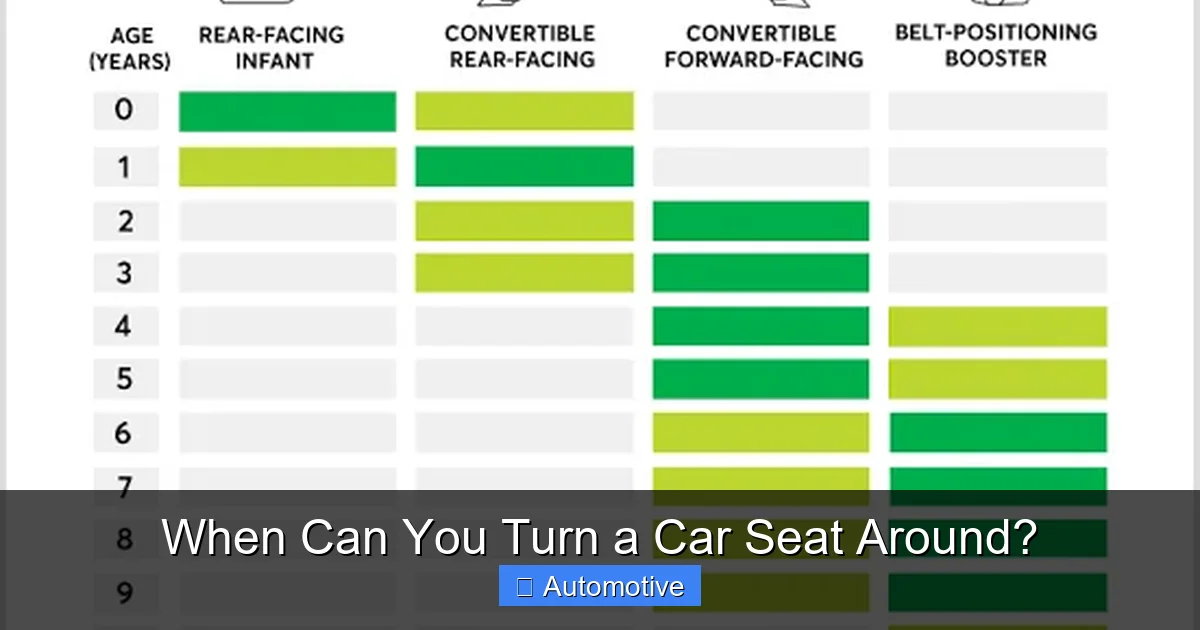
While age is a helpful milestone, it shouldn’t be the sole factor in deciding when to turn a car seat around. The AAP recommends keeping children rear-facing until they reach the maximum height or weight limit of their car seat—whichever comes first. This often means staying rear-facing well beyond age 2.
Visual guide about When Can You Turn a Car Seat Around?
Image source: safeconvertiblecarseats.com
Age Guidelines
The AAP updated its recommendations in 2018 to emphasize extended rear-facing. Previously, the guideline was to keep children rear-facing until at least age 1. Now, the official stance is: “All children should ride in a rear-facing car seat as long as possible, until they reach the highest weight or height allowed by their seat.”
This means many children will remain rear-facing until ages 3, 4, or even 5, depending on their growth and the seat’s capacity. Some parents are surprised to learn that a 4-year-old can still safely ride rear-facing in a high-capacity convertible seat.
Height and Weight Considerations
Height and weight are the most reliable indicators of readiness. Here’s how to assess both:
- Weight: Most rear-facing seats have a weight limit between 35 and 50 pounds. Once your child reaches this limit, it’s time to turn the seat around—even if they’re still young.
- Height: Look for a red or yellow height marker on the side of the seat. When your child’s head is within 1 inch of the top of the seat shell, they’ve outgrown it height-wise.
It’s also important to ensure your child’s shoulders are below the top harness slots when rear-facing. If their shoulders are above the slots, the harness can’t properly restrain them in a crash.
Practical Example: The Johnson Family
The Johnson family had a 3-year-old daughter who weighed 38 pounds and was 39 inches tall. Their convertible seat allowed rear-facing up to 40 pounds and 43 inches. Since she hadn’t hit either limit, they kept her rear-facing. At her 4-year checkup, she weighed 41 pounds—just over the limit—so they turned the seat around. This decision was based on safety data, not age alone.
How to Safely Transition to Forward-Facing
Once your child has outgrown their rear-facing limits, it’s time to turn the car seat around. But this transition must be done correctly to maintain safety.
Step-by-Step Guide to Turning the Seat
- Check the manual: Every seat has specific instructions for forward-facing installation. Never skip this step.
- Recline angle: Forward-facing seats should be installed at a slight recline—usually between 30 and 45 degrees. Use the built-in angle indicator to get it right.
- Harness height: The harness straps should be at or above your child’s shoulders when forward-facing. Adjust the straps as needed.
- Harness tightness: You should not be able to pinch any slack in the harness at the shoulder. It should lie flat and snug.
- Top tether: Always use the top tether strap. Attach it to the designated anchor in your vehicle (usually on the back of the seat, trunk, or ceiling). This reduces forward movement by up to 60%.
- Secure installation: The seat should not move more than 1 inch side-to-side or front-to-back when tugged at the belt path.
Common Mistakes to Avoid
- Skipping the top tether: This is one of the most common errors. Without it, the seat can pitch forward dangerously in a crash.
- Using the wrong harness slots: Always use the slots at or above the shoulders for forward-facing.
- Loose installation: A wobbly seat is unsafe. Use either the seat belt or LATCH system correctly, but not both unless the manual allows it.
- Turning the seat too early: Resist the urge to turn the seat around just because your child seems “big enough.” Wait until they’ve truly outgrown the rear-facing limits.
What to Do If You’re Unsure
If you’re not confident in your installation, seek help. Many local fire departments, police stations, and hospitals offer free car seat checks. You can also find a certified CPST through the National Child Passenger Safety Certification website.
A CPST will inspect your seat, demonstrate proper installation, and answer your questions. This small step can make a huge difference in your child’s safety.
Booster Seats and Beyond: The Next Steps
After your child transitions to forward-facing, the journey isn’t over. The next step is a booster seat, which helps position the seat belt correctly across your child’s body.
When to Move to a Booster
Children should remain in a forward-facing harnessed seat until they outgrow it by height or weight—typically between ages 4 and 7. Most forward-facing seats accommodate children up to 65 pounds.
Signs your child is ready for a booster:
- They’ve reached the weight or height limit of their forward-facing seat
- Their shoulders are above the top harness slots
- The seat belt no longer fits properly across their lap and shoulder
Booster Seat Safety Tips
Booster seats don’t have harnesses. Instead, they lift your child so the vehicle’s seat belt fits correctly:
- The lap belt should lie low across the hips, not the stomach
- The shoulder belt should cross the center of the chest and shoulder, not the neck or face
- Your child should be able to sit with their back against the seat and knees bent at the edge
Children should stay in a booster seat until they’re at least 4 feet 9 inches tall and between 8 and 12 years old—whichever comes first. After that, they can use a regular seat belt, but only if it fits properly.
The Importance of Proper Belt Fit
A poorly fitted seat belt can cause serious injury. In a crash, a lap belt that rides up on the abdomen can damage internal organs. A shoulder belt that crosses the neck can cause spinal injury.
To test belt fit:
- Have your child sit all the way back in the seat
- Buckle the seat belt
- Check that the lap belt is low and snug across the hips
- Ensure the shoulder belt crosses the middle of the shoulder and chest
If the belt doesn’t fit correctly, your child needs a booster—even if they’re “old enough.”
State Laws vs. Best Practices
Every state has its own car seat laws, but these are often minimum requirements—not the safest practices. For example, many states only require rear-facing until age 1 or 2, but experts recommend going much longer.
Examples of State Laws
- California: Children under 2 must ride rear-facing unless they weigh 40+ pounds or are 40+ inches tall.
- New York: Children under 4 must be in a car seat or booster. Rear-facing is recommended but not mandated beyond age 1.
- Washington: Children under 2 must ride rear-facing unless they exceed the seat’s height or weight limits.
While these laws provide a legal baseline, they don’t reflect the latest safety science. Parents are encouraged to follow best practices, even if they go beyond what’s required by law.
Why Best Practices Matter
Car seat laws are designed to protect the average child, but every child is different. By following expert recommendations—like extended rear-facing—you’re giving your child the best possible protection.
Think of it like wearing a seat belt. The law says you must wear one, but wearing it correctly (low and snug across the hips) is what truly saves lives.
Final Thoughts: Prioritizing Safety Over Convenience
Deciding when you can turn a car seat around is one of the most important safety decisions you’ll make as a parent. While it might be tempting to switch to forward-facing early—because it’s easier to see your child or because they seem “big enough”—the risks far outweigh the convenience.
Rear-facing is scientifically proven to be safer for young children. By keeping your child rear-facing until they reach the maximum height or weight limit of their seat, you’re significantly reducing their risk of injury or death in a crash.
Remember, car seat safety isn’t about following trends or what other parents are doing. It’s about making informed, evidence-based choices that protect your child. Read your seat’s manual, consult a CPST if needed, and always prioritize safety over speed or convenience.
Your child’s life is worth the extra time and effort. When in doubt, keep them rear-facing a little longer. It’s a small change that can make a lifelong difference.
Frequently Asked Questions
Can I turn my car seat around at 1 year old?
No, the American Academy of Pediatrics recommends keeping children rear-facing until at least age 2, or until they reach the maximum height or weight limit of their car seat. Turning the seat around too early increases the risk of serious injury.
How do I know if my child has outgrown their rear-facing seat?
Check the seat’s height and weight limits in the manual. Your child has outgrown it if they exceed the weight limit, their head is within 1 inch of the top of the seat, or their shoulders are above the harness slots.
Is it safe to turn the seat around if my child’s legs are touching the back seat?
Yes. It’s perfectly safe for a child’s legs to touch the vehicle seat while rear-facing. Children can bend their knees or sit with legs slightly elevated without risk of injury.
Do I need to use the top tether when forward-facing?
Yes, always use the top tether strap when installing a forward-facing seat. It significantly reduces forward movement in a crash and is required by law in most vehicles.
Can I use both the seat belt and LATCH to install a forward-facing seat?
Only if the car seat manufacturer allows it. Most seats are designed to use one system or the other—not both. Check the manual to avoid improper installation.
When can my child stop using a booster seat?
Children should use a booster seat until they are at least 4 feet 9 inches tall and between 8 and 12 years old. They must also pass the seat belt fit test in your vehicle.