What Year Mazda 3 Should You Avoid?

Contents
- 1 Key Takeaways
- 2 📑 Table of Contents
- 3 Why Mazda 3 Year Matters More Than You Think
- 4 The First Generation Nightmare: 2004-2009 (BK/BP Platform)
- 5 The Infotainment & Steering Debacle: 2010-2013 (BL Platform)
- 6 The Mixed Bag: 2014-2018 Third Generation (BP/BN Platform)
- 7 The Current Champion: 2019-Present Fourth Generation
- 8 Your Smart Buying Guide for a Used Mazda 3 in 2026
- 9 Frequently Asked Questions

Car Scratch Remover

Engine Flush Cleaner

Car Tissue Holder

Windshield Washer Fluid
When shopping for a used Mazda 3 in 2026, steer clear of models from 2004-2009 and 2010-2013. The first generation suffers from severe rust and automatic transmission failures, while the second generation is plagued by buggy infotainment systems and premature steering component wear. For the best reliability, focus on 2017 and newer models, which represent a major engineering overhaul. Always get a pre-purchase inspection and check for outstanding recalls before buying.
Key Takeaways
- First-Gen Mazda 3 (2004-2009): Avoid these at all costs due to rampant rust perforation and notoriously failure-prone automatic transmissions.
- Second-Gen Mazda 3 (2010-2013): Skip models with the stock infotainment system due to constant glitches, and be wary of early steering column wear.
- Third-Gen Early Models (2014-2016): While improved, some early examples have fuel pump and steering column issues that were largely corrected mid-cycle.
- 2017 and Newer is the Sweet Spot: The 2017 refresh brought significant reliability upgrades, making these the most recommended used Mazda 3 years for 2026 buyers.
- Always Verify Service History: A well-maintained example from a “good” year can still be a great car; a neglected one from a “better” year can be a nightmare.
- Certified Pre-Owned (CPO) is Your Friend: For 2017-2020 models, a Mazda CPO program provides a strong warranty and peace of mind.
- Pre-Purchase Inspection is Non-Negotiable: Spend $150-$200 on a thorough inspection by a trusted, Mazda-specialist mechanic before any purchase.
📑 Table of Contents
- Why Mazda 3 Year Matters More Than You Think
- The First Generation Nightmare: 2004-2009 (BK/BP Platform)
- The Infotainment & Steering Debacle: 2010-2013 (BL Platform)
- The Mixed Bag: 2014-2018 Third Generation (BP/BN Platform)
- The Current Champion: 2019-Present Fourth Generation
- Your Smart Buying Guide for a Used Mazda 3 in 2026
Why Mazda 3 Year Matters More Than You Think
Let’s be real. The Mazda 3 has a legendary reputation for being a fun, engaging, and surprisingly well-built compact car. For years, it’s topped enthusiast and critic lists. But that gleaming reputation isn’t uniform across every single model year rolled off the assembly line. Like any long-running vehicle, the Mazda 3 has had its share of problematic years—eras where engineering missteps, cost-cutting, or supplier issues created pockets of chronic problems. As we look toward 2026, the used Mazda 3 market is a mixed bag. You could find a pristine, joyful driver’s car from the right year, or you could accidentally buy a expensive, frustrating money pit from the wrong one. The difference often comes down to the model year. This guide isn’t about bashing Mazda; it’s about giving you the specific, data-backed knowledge to separate the fantastic used buys from the ones you should walk away from. We’ll break it down by generation, highlighting the exact years to avoid and, just as importantly, why.
The First Generation Nightmare: 2004-2009 (BK/BP Platform)
If you see a used Mazda 3 from this era on a lot in 2026, your first instinct should be caution. This generation, while revolutionary for its time in bringing zoom-zoom to the mainstream, is now notorious for two catastrophic, expensive failure points. These are not minor quirks; they are fundamental flaws that define this generation’s used-car reputation.

Visual guide about What Year Mazda 3 Should You Avoid?
Image source: newmazdamodels.com
Rust: The Cancer That Ate the Car
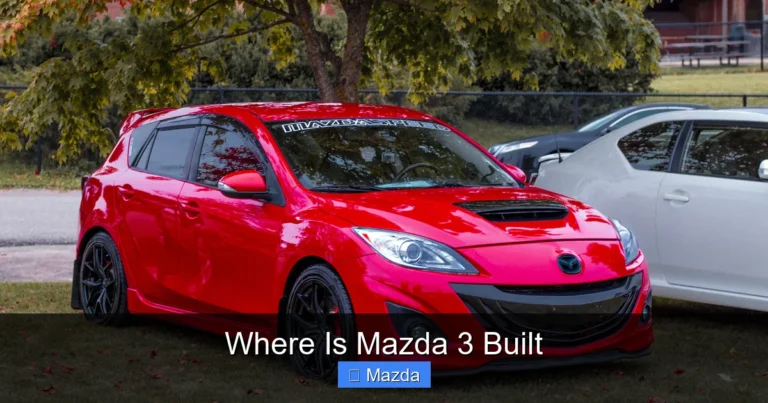
The single biggest reason to avoid 2004-2009 Mazda 3s is structural rust. This wasn’t just surface bubbling; it was severe perforation, particularly in the front fenders, rear wheel arches, and under the rocker panels. For years, Mazda faced class-action lawsuits and had to extend corrosion warranties for these models. The problem was so severe that by 2010, Mazda completely redesigned the body’s rustproofing processes and materials. Finding a clean 2006 or 2007 model in 2026 is exceptionally rare. If you do, expect to see bubbling paint, large rust holes, and possibly compromised structural integrity. Repairing this level of rust is a body-shop job that often exceeds the car’s value. It’s a safety and financial hazard.
The “Death” of the Automatic Transmission
Equally damning is the 4-speed automatic transmission (the 4F27E) paired with the 2.0L and 2.3L engines. This transmission is infamous for premature failure. Symptoms include harsh shifts, slipping, delayed engagement, and eventual complete failure, often between 80,000 and 120,000 miles. The repair cost? A complete rebuild or replacement runs $2,500-$4,000. For a car that might be worth $3,000-$5,000 in 2026, this is a total loss scenario. The manual transmission in these cars is generally robust and sought-after, but the automatic-equipped examples are radioactive in the used market for good reason. You might recall similar transmission woes in other vehicles of that era; for instance, certain Dodge Charger years also suffered from notoriously unreliable automatic transmissions, making them another risky used buy from that period.
Other First-Gen Gremlins
Beyond the big two, expect aged components: failing motor mounts, worn suspension bushings, and electronics that are 20+ years old. The 2.3L engine can have timing chain issues if not meticulously maintained. These cars are simply at the end of their natural, cost-effective lifespan unless you’re a dedicated hobbyist with a parts car.
Verdict for 2004-2009: Avoid unless you are a mechanic buying a $1,500 project car with a manual transmission and zero rust. For any sensible daily driver purchase in 2026, these are the absolute worst years to consider.
The Infotainment & Steering Debacle: 2010-2013 (BL Platform)
Mazda’s second generation was a huge leap in design, interior quality, and driving dynamics. It should have been a home run. Instead, Mazda introduced two major, frustrating problem areas that tarnish this generation’s otherwise solid record.

Visual guide about What Year Mazda 3 Should You Avoid?
Image source: assets.adac.de
The Glitchy Bose Sound System & Infotainment
For 2010-2013, Mazda partnered with Bose for a premium sound system and introduced a color touchscreen for infotainment. The audio quality was good, but the system’s brain was a mess. Owners report constant freezing, rebooting, Bluetooth connectivity failures, and GPS navigation that would simply stop working. The system would often require a hard reset by disconnecting the car battery. These are not simple software updates; they are fundamental hardware/software integration flaws. Fixing it usually means replacing the entire head unit, which is expensive. While not as catastrophic as a transmission failure, it’s a daily annoyance that destroys the premium feel of the car. This era of buggy tech is comparable to the early infotainment struggles seen in some Audi Q5 models from the early 2010s, where complex tech interfaces led to owner frustration.
The Steering Column Rattle & Click
The second, more serious issue is a widespread steering column problem. A faulty intermediate steering shaft or its mounting bushings would cause a loud, alarming clunk or rattle over bumps and during low-speed turns. More critically, it could lead to a loss of power steering assist. The repair involves replacing the entire steering column assembly, costing $1,000-$1,800. This issue became so common that Mazda issued a service bulletin (and later, for some VINs, a recall) to address it. Any 2010-2013 Mazda 3 you consider must have this repair documented as completed, or you must budget for it immediately.
Other Second-Gen Notes
Outside of these two major issues, the 2.0L and 2.5L SkyActiv-G engines (introduced in 2012) are generally reliable. The manual gearbox is excellent. Rust is far less prevalent than on the first gen, but still worth checking. The ride can be firm, and some early SkyActiv engines had oil consumption issues that were mostly sorted by 2013.
Verdict for 2010-2013: Proceed with extreme caution. The steering column issue is a known, expensive fix. The infotainment is a persistent daily headache. If you find a 2012-2013 model with documented steering column replacement and an aftermarket stereo installed (bypassing the factory system), it becomes a much more viable buy. But for 2026, the risk is high.
The Mixed Bag: 2014-2018 Third Generation (BP/BN Platform)
This generation represented a major maturation for the Mazda 3. It won countless awards and set a new benchmark for fun, efficiency, and upscale feel in the compact segment. However, it’s not without its early-adopter problems, primarily concentrated in the 2014-2016 model years before significant mid-cycle refinements.

Visual guide about What Year Mazda 3 Should You Avoid?
Image source: sp-ao.shortpixel.ai
The Early Fuel Pump Recall & Failure
For 2014-2016 models with the 2.0L SkyActiv-G engine, there was a widespread issue with the low-pressure fuel pump. It could fail without warning, causing the engine to stall while driving—a major safety hazard. Mazda initiated a massive recall (NHTSA 16V-240) to replace the pump. While the recall repair should be permanent, you must verify it was done on any used 2014-2016 model you look at. Failure to do so means you’re driving with a time bomb. Later model years (2017+) used a redesigned, more reliable pump.
Steering Column Redux (But Better)
The steering column rattle from the previous generation persisted into early third-gen models, though with a slightly different design. Mazda again issued service bulletins and recalls for specific VIN ranges. By the 2017 model year, the column design was revised again, and this issue became very rare. For a 2015 or 2016, you must check the repair history.
Why 2017-2018 Are Much Safer
The 2017 model year was a significant refresh. Mazda addressed the fuel pump issue, revised the steering column, and made numerous small quality upgrades. The 2017-2018 models are the most reliable and recommended of this third generation. They offer the fantastic driving dynamics and refined interior without the early bugs. Think of 2014-2016 as the “beta” test for this excellent platform, and 2017+ as the polished final product.
Verdict for 2014-2018: Target 2017 and 2018 models. Avoid 2014-2016 unless you have irrefutable proof the fuel pump and any steering column recalls/bulletins were completed by a Mazda dealer. The 2014-2016 models are a gamble; the 2017-2018 models are a smart buy.
The Current Champion: 2019-Present Fourth Generation
Launched for the 2019 model year, the current Mazda 3 is arguably the best compact car on the market. It’s available as a sedan or a stunning hatchback, with a far more premium interior, refined ride, and the same brilliant chassis. The engine lineup (2.5L naturally aspirated or 2.5L turbo) is superb. For a 2026 buyer, these are the newest, most advanced, and most reliable options.
What Could Possibly Be Wrong?
Even the best cars have minor issues. For the fourth-gen Mazda 3, the concerns are minor and isolated:
- Infotainment Learning Curve: The new system is fast and intuitive but lacks some physical buttons. Some drivers dislike the central screen layout. This is a preference, not a defect.
- Early Turbo Engine Carbon Buildup: The 2.5L turbo engine (in the premium trims) can experience carbon buildup on the intake valves if driven only on short trips. This is common to all direct-injection turbo engines and requires a periodic walnut blasting service (~$600) to maintain peak performance.
- Rare Electrical Gremlins: A small number of early 2019 models had minor sensor or module issues that were quickly resolved under warranty.
There are no widespread, catastrophic failure points for this generation. It represents the pinnacle of Mazda’s engineering for this model.
The 2020+ and 2023+ Refinements
For 2020, Mazda added all-wheel drive as an option on the turbo models. For 2023, a mild facelift and updated infotainment arrived. These later models are even more refined. If your budget allows, a certified pre-owned 2023 model in 2026 will be a near-new experience with a strong factory warranty remaining.
Verdict for 2019-Present: These are the safest, best bets. The 2019-2022 models are excellent values. The 2023+ models are the absolute best. The only “avoid” within this generation would be a 2019 model with an incomplete service history or one that has been severely modified.
Your Smart Buying Guide for a Used Mazda 3 in 2026
Now that you know the years to avoid, here’s your action plan for finding a great used Mazda 3.
The 2026 Target List: Best Value & Reliability
Here is your prioritized shopping list for 2026:
- 2017-2018 Third Generation: The best value proposition. You get 90% of the current car’s driving experience, a very reliable powertrain, and a much lower price than the newest models. These are the hidden gems.
- 2019-2022 Fourth Generation (Non-Turbo): If you want the latest style and tech without the potential long-term carbon buildup concerns of the turbo, the 2.5L naturally aspirated engine is a gem. It’s smooth, efficient, and very reliable.
- 2023+ Fourth Generation: For buyers with a higher budget who want the latest and greatest, with the best infotainment and possibly remaining factory warranty. Look for Certified Pre-Owned.
- 2014-2016 Third Generation (WITH CAUTION): Only consider if the price is a steal ($5,000 or less) AND you have documented proof of fuel pump and steering column recall work. Get a pre-purchase inspection focused on these areas.
The Non-Negotiable Checklist
Before you buy any used Mazda 3, regardless of year, you must:
- Get a Pre-Purchase Inspection (PPI): Take the car to an independent mechanic, preferably one familiar with Mazdas. Tell them specifically to check for rust (first gen), transmission fluid condition (first gen), steering column play (2010-2016), and fuel pump operation (2014-2016). This $200 check can save you $4,000.
- Run a Full History Report: Use Carfax or AutoCheck. Look for consistent maintenance, title issues, and accident records. A car with a spotless history from a “good” year is better than a neglected car from a “great” year.
- Check for Open Recalls: Go to the NHTSA website and enter the VIN. Ensure all recalls have been performed. This is critical for the fuel pump recall on early third-gen models.
- Test the Infotainment System Cold: Start the car from a cold soak (sitting overnight). Power on the radio, Bluetooth, and navigation. Does it boot quickly? Does it freeze? This is the best test for the problematic second-gen system.
- Inspect the Undercarriage and Wheel Arches: Use a flashlight. Look for any bubbling, flaking, or holes in the metal. Bring a magnet—it shouldn’t stick to rusted, porous metal.
What About Other Brands?
While your focus is the Mazda 3, it’s smart to compare. You might also be looking at reliable competitors like the Honda Civic or Toyota Corolla. Interestingly, some Toyota models from certain years have their own well-documented issues. For example, specific Toyota Avalon years have been flagged for premature transmission and electronic problems, showing that no brand is immune to occasional model-year missteps. The key is doing your homework on any used car you consider.
Frequently Asked Questions
Is the Mazda 3 a reliable used car in general?
Yes, but it depends entirely on the model year. Mazda’s overall reliability is good, but specific generations have major flaws. Sticking to 2017 and newer models generally leads to a very reliable used ownership experience.
What is the biggest problem with the 2008 Mazda 3?
The two biggest, most expensive problems are catastrophic rust perforation and automatic transmission failure. These issues are so severe that a 2008 Mazda 3 with an automatic transmission is considered one of the riskiest used compact car purchases you can make.
Should I buy a used Mazda 3 with the Bose stereo from 2010-2013?
Only if the stereo system has been replaced with an aftermarket unit. The factory Bose infotainment system from these years is notoriously unreliable and prone to constant freezing and rebooting. It’s a deal-breaking daily annoyance.
Are 2015 Mazda 3 models safe to buy?
They can be, but only if you have absolute proof that the fuel pump recall and any steering column service bulletins were completed. These are two major, known failure points for the 2014-2016 models that must be addressed before purchase.
What is the best year Mazda 3 to buy used in 2026?
The 2017 and 2018 models offer the best balance of value, reliability, and driving enjoyment. They have the refined third-generation platform with the early bugs worked out. For a newer car, any 2019 or later model is excellent, with the 2023+ being the most advanced.
How much should I expect to pay for a reliable used Mazda 3 in 2026?
Prices will vary by market and condition, but as a general guide: a good 2017-2018 model should range from $12,000-$17,000. A solid 2019-2022 model should be $16,000-$22,000. A certified pre-owned 2023+ model will start around $22,000+. Always pay for a pre-purchase inspection regardless of price.