What Wheels Interchange with a Jeep Grand Cherokee?

Contents
- 1 Key Takeaways
- 2 📑 Table of Contents
- 3 Introduction: The World of Wheel Swapping for Your Grand Cherokee
- 4 Decoding the Bolt Pattern: The Foundation of Fitment
- 5 Jeep Grand Cherokee Generations and Their Bolt Pattern Consistency
- 6 The Jeep Family Tree: Other Jeeps That Share Your Pattern
- 7 Beyond Jeep: Dodge, Chrysler, and Other Compatible Brands
- 8 The Fine Print: Wheel Size, Offset, and Hub Bore
- 9 Practical Tips for Sourcing and Installing Interchangeable Wheels
- 10 Conclusion: Smart Swapping for a Safe, Stunning Grand Cherokee
- 11 Frequently Asked Questions


Understanding wheel interchangeability for your Jeep Grand Cherokee is crucial for safe upgrades and cost-effective replacements. The key is matching the bolt pattern (typically 5×127), wheel size, offset, and hub bore. While many Jeeps and some Dodge/Chrysler models share compatibility, always verify specifics for your model year before purchasing. This guide breaks down compatible vehicles and critical fitment factors to avoid costly mistakes.
Key Takeaways
- Bolt Pattern is King: The vast majority of Jeep Grand Cherokee models (1993-2023) use a 5×127 bolt pattern. This is the first and most critical measurement for interchangeability.
- Model Year Matters: While the bolt pattern is often consistent, wheel size ranges, offset, and hub bore size can change between generations (e.g., ZJ vs. WK2). Always check your specific year’s specifications.
- Jeep Family Compatibility: Grand Cherokee wheels frequently interchange with Jeep Wrangler (JL/JT and earlier with adaptations), Jeep Cherokee (XJ, KL), and Jeep Commander models sharing the 5×127 pattern.
- Cross-Brand Possibilities: Many Dodge and Chrysler vehicles from the same era, like the Dodge Charger, Chrysler 300, and Dodge Durango, also use 5×127, making wheel swaps possible with attention to offset and sizing.
- Size, Offset & Hub Bore are Non-Negotiable: Even with a matching bolt pattern, differences in wheel diameter/width, offset (ET), and center bore size must be within safe tolerances. Hub rings may be needed for bore mismatches.
- Clearance is Critical: Larger wheels must clear brake calipers, suspension components, and fender wells. A test fit is essential before final mounting.
- TPMS Sensors Must Be Transferred: If your Grand Cherokee uses Tire Pressure Monitoring System (TPMS) sensors, they must be moved to new wheels or replaced with compatible units.
[FEATURED_IMAGE_PLACEHOLDER]
📑 Table of Contents
- Introduction: The World of Wheel Swapping for Your Grand Cherokee
- Decoding the Bolt Pattern: The Foundation of Fitment
- Jeep Grand Cherokee Generations and Their Bolt Pattern Consistency
- The Jeep Family Tree: Other Jeeps That Share Your Pattern
- Beyond Jeep: Dodge, Chrysler, and Other Compatible Brands
- The Fine Print: Wheel Size, Offset, and Hub Bore
- Practical Tips for Sourcing and Installing Interchangeable Wheels
- Conclusion: Smart Swapping for a Safe, Stunning Grand Cherokee
Introduction: The World of Wheel Swapping for Your Grand Cherokee
So, you’re eyeing a set of new wheels for your Jeep Grand Cherokee. Maybe you found a killer deal on a used set, or you’re dreaming of a custom look. The big question buzzing in your head is: “What wheels interchange with a Jeep Grand Cherokee?” It’s a fantastic question because getting it right means a safe, beautiful ride. Getting it wrong can mean vibrating nightmares, damaged brakes, or wheels that literally won’t bolt on.
Let’s be clear: wheel interchangeability isn’t about a magical list of “fits all” wheels. It’s a puzzle of precise measurements. The core of that puzzle is your Grand Cherokee’s bolt pattern. Think of it as the wheel’s fingerprint. For most Grand Cherokees built from the early 1990s right up to the current 2023 models, that fingerprint is 5×127. That means five lug nuts arranged on a circle with a diameter of 127 millimeters. This simple fact opens a huge world of possibilities, but it’s only the first piece.
In this complete guide, we’ll move beyond the bolt pattern. We’ll dive into the nitty-gritty of wheel sizes, offsets, hub bores, and clearances. We’ll explore which other Jeeps and even some non-Jeep vehicles share this pattern. We’ll give you practical, actionable tips to shop confidently and avoid the most common pitfalls. Whether you have a classic 1999 Grand Cherokee or a brand-new 2023 Overland, this article will equip you with the knowledge to find the perfect set of interchangeable wheels.
Decoding the Bolt Pattern: The Foundation of Fitment
Before we talk about specific models, we must understand the language of wheel fitment. The bolt pattern, often called the “lug pattern,” is your starting point. For the Jeep Grand Cherokee, it’s famously 5×127 (also expressed as 5×5 inches in the imperial system). This has been the standard for nearly all generations, from the ZJ (1993-1998) through the WJ (1999-2004), WK (2005-2010), WK2 (2011-2022), and into the current WL (2023+).
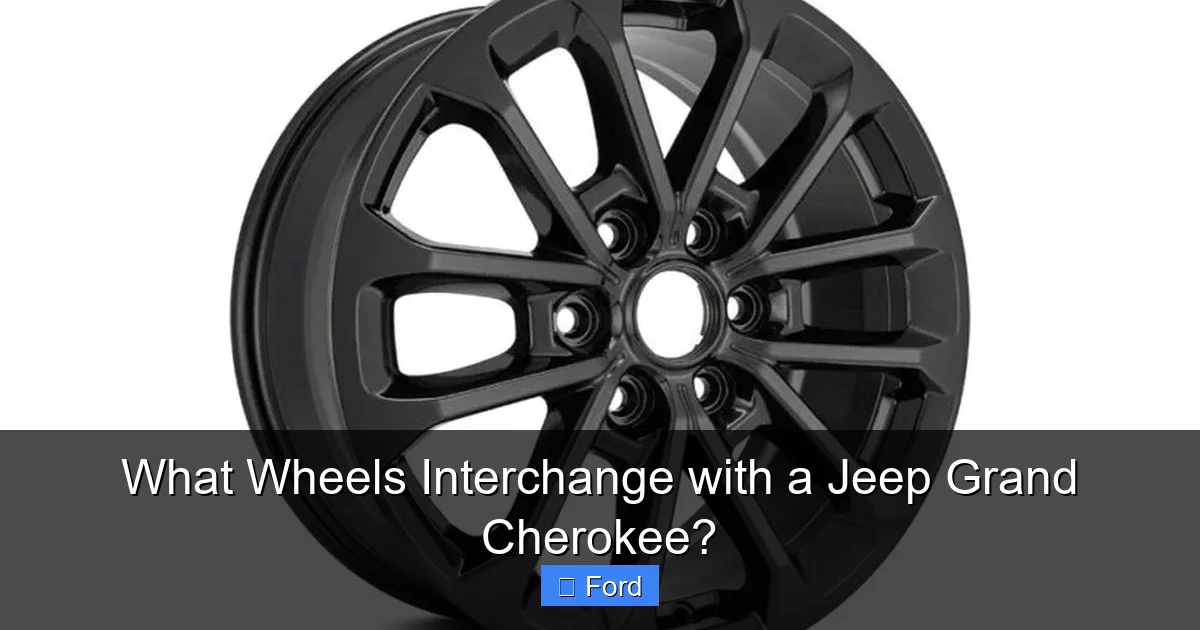
Visual guide about What Wheels Interchange with a Jeep Grand Cherokee?
Image source: carsoid.net
How to Confirm Your Grand Cherokee’s Bolt Pattern
Don’t just take our word for it. It’s easy to verify. Count the lug nuts (five, obviously). Then measure the distance from the center of one lug hole to the center of the lug hole farthest from it. That’s your diameter. For a 5-lug pattern, you measure skip-one style (center of one to center of the one two away). If it’s ~127mm or 5 inches, you’re in the standard Grand Cherokee family.
Pro Tip: Your vehicle’s owner’s manual or a sticker on the driver’s side door jamb will often list the factory wheel specifications, including bolt pattern. You can also use a trusted online wheel fitment calculator by entering your Grand Cherokee’s year, make, and model.
Jeep Grand Cherokee Generations and Their Bolt Pattern Consistency
The beauty of the Grand Cherokee’s lineage is the near-universal use of the 5×127 pattern across three decades. This means wheels from a 1995 model can physically bolt onto a 2021 model. However, “can” doesn’t always mean “should.” Here’s the generational breakdown.
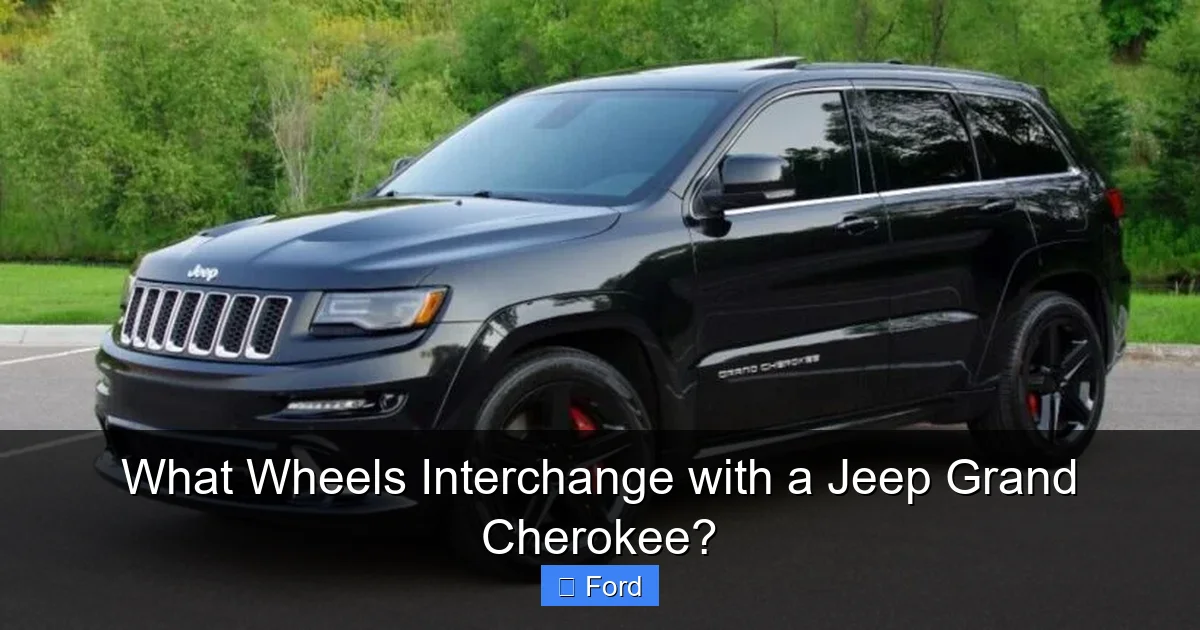
Visual guide about What Wheels Interchange with a Jeep Grand Cherokee?
Image source: carsoid.net
The Early Years: ZJ, WJ, WK (1993-2010)
These generations are the most interchangeable with each other in terms of basic bolt pattern. Factory wheel sizes ranged from 15-inch to 18-inch. The hub bore (the center hole that slides over the axle) was typically around 71.5mm to 72.5mm. Offset values varied but were generally in the range of ET35 to ET45 (positive offset). Wheels from any of these models will bolt onto any other, but you must pay attention to the physical wheel size and offset. A 20-inch wheel from a late WK2 might rub on a ZJ with stock suspension without modification.
The Modern Era: WK2 and WL (2011-Present)
Starting with the WK2 (2011-2022), the Grand Cherokee grew in size and capability. The bolt pattern stubbornly remained 5×127. Factory wheel sizes ballooned, with 20-inch and 21-inch wheels becoming common on higher trims. The hub bore size increased slightly, often to around 72.5mm or more. Offset also changed, sometimes moving towards a lower number (less positive offset) for a more aggressive stance. A wheel from a 2020 Grand Cherokee will bolt onto a 2015 model perfectly, but a wheel from a 2004 WJ might have a different center bore size, requiring a hub ring for a perfect, centered fit.
Real-World Example: A popular upgrade for WK2 owners is to take the factory 18-inch wheels from a base model WK2 (2011-2013) and put them on a higher-trim WK2 that came with 20s. The bolt pattern matches, sizes are compatible, and it’s a cost-effective way to get more tire sidewall for off-road comfort.
Within the Jeep family, the 5×127 pattern is a common thread for many larger models. This opens up a massive aftermarket and used-wheel market.
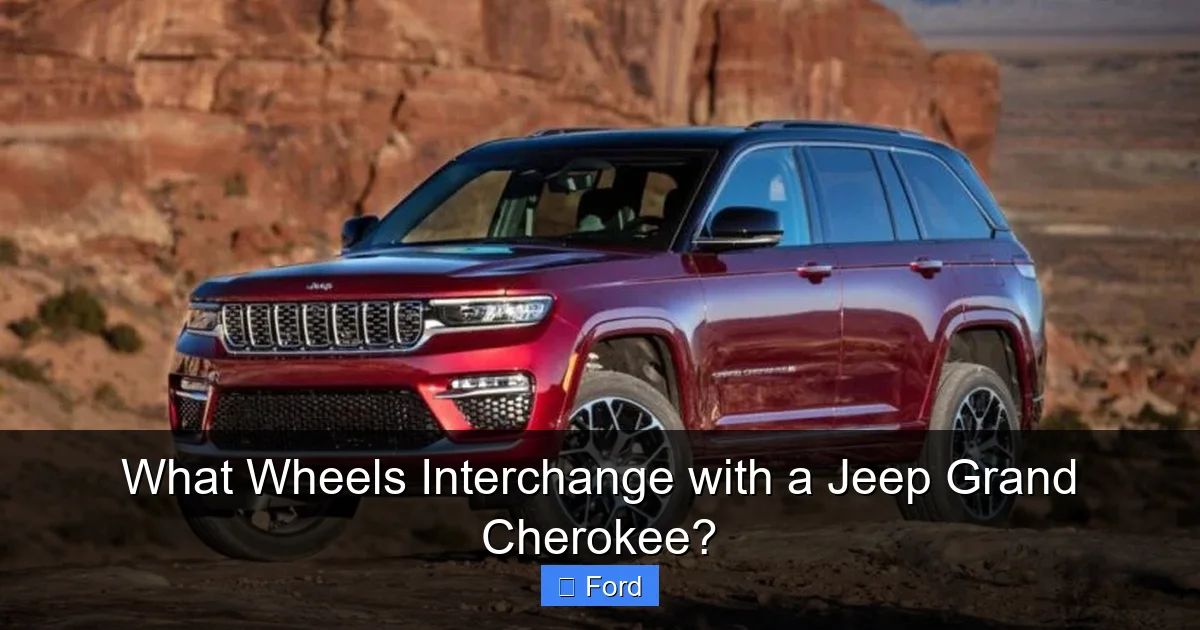
Visual guide about What Wheels Interchange with a Jeep Grand Cherokee?
Image source: carsoid.net
Jeep Wrangler (JL/JT and Earlier)
This is a big one. The modern Jeep Wrangler (JL, 2018+ and JT Gladiator, 2020+) uses a 5×127 bolt pattern. This means you can directly bolt Grand Cherokee wheels onto a Wrangler and vice-versa, with major caveats. The primary issue is offset and backspacing. Wrangler wheels typically have a much lower offset (often ET0 to ET-12) to accommodate wider tires and better scrub for steering. Putting a high-offset Grand Cherokee street wheel on a Wrangler with stock suspension will tuck the tire way under the fender, reducing turning radius and potentially causing rubbing at full lock. Conversely, putting a low-offset Wrangler wheel on a Grand Cherokee will push the tire out significantly, potentially causing fender and suspension component rubbing. You must match the offset to your vehicle’s geometry. Also, Wrangler wheels are often 17-inch, while Grand Cherokees commonly use 18-inch and up.
Jeep Cherokee (XJ and KL)
- Jeep Cherokee XJ (1984-2001): The classic XJ Cherokee used a 5×114.3 (5×4.5″) bolt pattern. This is NOT compatible with the Grand Cherokee’s 5×127. No direct bolt-on interchange here.
- Jeep Cherokee KL (2014-2023): The modern Cherokee, however, switched to the Jeep family standard of 5×127. This makes wheel interchange with the Grand Cherokee (WK2/WL era) perfect from a bolt-on perspective. Again, offset and size must be considered. A 17-inch wheel from a base Cherokee KL will fit a Grand Cherokee WK2, but a 20-inch Grand Cherokee wheel on a Cherokee KL may require fender modifications or a lift to clear.
Jeep Commander (XK, 2006-2010)
The Jeep Commander, being based on the Grand Cherokee platform (WK), shares the 5×127 bolt pattern. Wheel interchange is essentially direct between these two models. They also share similar size ranges and offsets, making them a great source for replacement or upgraded wheels.
Important Interchange Note: The Grand Wagoneer (SJ) & New Wagoneer
The classic Grand Wagoneer (SJ, 1963-1991) used a 5×5.5″ (139.7mm) pattern—not compatible. The all-new Wagoneer/Grand Wagoneer (2021+) returned to the modern Jeep standard of 5×127, making them fully compatible with the Grand Cherokee (WL) for wheel swaps.
Internal Link Insight: If you’re considering a wheel swap as part of a larger modification or upgrade project for your Grand Cherokee, understanding the vehicle’s value and history is helpful. You can research specific model years like the 2012 Jeep Grand Cherokee Laredo or the 2017 Jeep Grand Cherokee Limited to see common factory wheel sizes and setups for that generation.
Beyond Jeep: Dodge, Chrysler, and Other Compatible Brands
Here’s where things get really interesting. The 5×127 bolt pattern is a Chrysler Corporation staple for many of its rear-wheel-drive and all-wheel-drive cars and SUVs. This means your Grand Cherokee’s wheels can often find a home on these vehicles, and you can pull wheels from them for your Jeep.
Dodge & Chrysler Cars
- Dodge Charger (2006-Present): Almost all Chargers use 5×127. This includes the massive SRT Hellcat and Demon models. A set of 20-inch Charger SRT wheels can be a fantastic, aggressive-looking upgrade for a Grand Cherokee, but you must check the offset (Charger wheels often have lower offset) and ensure sufficient inner fender clearance.
- Chrysler 300 (2005-Present): Shares the 5×127 pattern with its Dodge platform mates. Factory 18-inch and 20-inch wheels are common and can be a cost-effective swap.
- Dodge Magnum (2005-2008): The station wagon sibling to the Charger, also on 5×127.
Dodge & Chrysler SUVs
- Dodge Durango (2004-Present): This is a prime candidate. The Durango has shared platforms with the Grand Cherokee at times (and even the same assembly plant). The bolt pattern is identical. Wheel sizes and offsets are very similar, making direct swaps between a Durango and Grand Cherokee of similar years exceptionally straightforward. A 2015 Durango wheel will likely fit a 2015 Grand Cherokee without issue.
- Chrysler Pacifica (Minivan, 2004-2007): The first-generation Pacifica minivan used 5×127. While the wheel sizes (typically 17-inch or 18-inch) and high offset are more “van-like,” they are mechanically compatible.
Important Considerations for Cross-Brand Swaps
When pulling wheels from a Dodge Charger or Chrysler 300 for your Grand Cherokee, the biggest differences are usually in offset and hub bore. Car wheels often have a lower offset (more “sticky-out”) than SUV wheels. You’ll need to measure your Grand Cherokee’s current offset and compare it to the donor wheel. A significant mismatch can cause poor handling, increased bearing wear, or rubbing. The hub bore on cars is often larger than on Jeeps; a hub ring (a cheap plastic or aluminum shim) will be required to center the wheel properly.
Safety First: Always check for brake caliper clearance, especially with larger diameter wheels. A 22-inch Charger wheel might look great but could interfere with the Grand Cherokee’s brake caliper. A simple test fit with the wheel hand-tightened is a mandatory step before final installation.
The Fine Print: Wheel Size, Offset, and Hub Bore
Matching the bolt pattern gets the wheel on the studs. These three measurements determine if it fits and performs correctly.
Wheel Diameter and Width
This is the easiest part. Your Grand Cherokee’s factory wheel size is listed on the door jamb sticker. You can generally go up or down by 1-2 inches in diameter without issue, provided the overall tire diameter remains similar (to avoid speedometer error and rubbing). Width is more flexible but affects tire choice and potential rubbing. A common upgrade is moving from a factory 18×8″ wheel to a 20×9″ wheel. The key is ensuring the new width and the corresponding tire size will fit inside your fender and not rub against suspension components at full lock or over bumps.
Offset (ET) and Backspacing
This is arguably the most important and misunderstood spec. Offset is the distance in millimeters from the wheel’s centerline to the mounting surface. A positive offset (e.g., ET45) mounts the wheel “inward” toward the vehicle’s suspension. A negative offset (e.g., ET-12) mounts it “outward.” Backspacing is the distance from the mounting surface to the inner lip of the wheel.
Grand Cherokees typically have a positive offset, ranging from ET35 to ET45 depending on year and trim. Swapping to a wheel with a significantly lower offset (like many Wrangler or car wheels) will push the wheel out, increasing the track width. This can lead to rubbing on the fender liner or control arms. A higher offset will tuck the wheel in, potentially causing inner fender or suspension rubbing. The goal is to stay within a safe range similar to your factory offset. A change of more than ET10-15 points usually requires fender modification or a lift/leveling kit.
Hub Bore (Center Bore)
This is the hole in the center of the wheel that slides over the vehicle’s axle hub. A perfect match (wheel bore = hub size) is ideal. If the wheel’s bore is larger than your Grand Cherokee’s hub (common when using car or aftermarket wheels), the wheel will be centered by the lug nuts alone, which can cause vibration and uneven stud wear. The solution is a hub ring—a plastic or aluminum spacer that fills the gap and ensures the wheel is perfectly centered on the hub. If the wheel’s bore is smaller, it simply won’t fit on the hub at all.
Practical Example: Many aftermarket wheels have a generic 73.1mm or 78.1mm bore. A Grand Cherokee’s hub is typically 71.5mm-72.6mm. You would use a 73.1mm to 72.6mm hub ring. These are inexpensive and crucial for a safe, vibration-free installation.
Practical Tips for Sourcing and Installing Interchangeable Wheels
Armed with the knowledge of bolt pattern, offset, and bore, here’s your action plan.
Step 1: Identify Your Exact Grand Cherokee’s Specs
Find the tire information sticker on your driver’s door jamb. It will list the factory tire size (e.g., P265/60R18) and often the wheel size (18×8.0, ET45). If not, measure your current wheels or search online for “[Your Year] Jeep Grand Cherokee wheel specifications.” Note the bolt pattern, hub bore, and offset.
Step 2: Source Your Donor Wheels
Now you know what you’re looking for. You can browse:
- Jeep/Dodge/Chrysler Forums: Owners selling take-off wheels from their stock vehicles are a goldmine.
- Online Marketplaces (eBay, Facebook Marketplace): Search for “Jeep Grand Cherokee wheels,” “Dodge Durango wheels,” or “5×127 wheels.” Filter by your desired size.
- Salvage Yards: A great place to test-fit wheels physically before buying.
- Tire Shops & Wheel Retailers: They can order specific wheels and often provide mounting, balancing, and necessary hardware (like hub rings and lug nuts).
Step 3: The Mandatory Test Fit
Never buy wheels sight-unseen without a return policy. Before having them mounted permanently, do a test fit. Place each wheel on the vehicle and hand-tighten the lug nuts. Check for:
- Clearance: Spin the wheel. Does it rub the brake caliper, ABS sensor wire, or sway bar? Push the suspension through its full travel (have someone rock the vehicle). Does it rub the fender liner or control arm at full compression and rebound?
- Lug Nut Engagement: Do the lug nuts thread on easily and fully? Are they the correct taper (most Jeeps use conical/ball seat lug nuts)? Do you need longer or shorter lug nuts for the new wheel’s thickness?
- Centering: Does the wheel sit flush against the hub? Any gap indicates a hub bore mismatch requiring a hub ring.
Internal Link Insight: The right wheels are only part of the equation. You need the right rubber to match. For excellent all-season performance on your newly fitted wheels, check out our expert-tested list of the 10 Best All Season Tires For Jeep Grand Cherokee.
Conclusion: Smart Swapping for a Safe, Stunning Grand Cherokee
The question “What wheels interchange with a Jeep Grand Cherokee?” has a powerful, liberating answer: a huge number of wheels from the Jeep, Dodge, and Chrysler families, plus countless aftermarket options, will physically fit. The secret sauce is in the details. Your Grand Cherokee’s steadfast 5×127 bolt pattern is the golden ticket, but you must honor the supporting characters: the correct offset, a suitable hub bore (or a hub ring), and absolutely no rubbing.
Embrace the interchangeability! It means you’re not stuck with expensive OEM replacements. You can source a unique set of wheels from a Dodge Durango, a high-trim Jeep Wrangler, or the aftermarket world. But always, always verify. Measure twice, test fit once. When in doubt, consult with a reputable wheel and tire shop. They have the databases and experience to confirm fitment. By doing your homework, you’ll enjoy a safe, head-turning upgrade that truly makes your Grand Cherokee your own.
Frequently Asked Questions
Can I put Jeep Wrangler (JL) wheels on my Grand Cherokee?
Yes, they share the 5×127 bolt pattern. However, Wrangler wheels typically have a much lower offset (more negative) to fit wider tires. You must check that the offset won’t cause severe rubbing on your Grand Cherokee’s fenders and suspension. A test fit is essential.
Will wheels from a Dodge Charger fit my Grand Cherokee?
They will bolt on due to the shared 5×127 pattern. The main issues are usually offset (Charger wheels are often lower offset) and hub bore size. You may need hub rings and must verify there’s no brake caliper or fender rubbing, especially with larger diameters like 20-inch or 21-inch Charger wheels.
Do I need to worry about the year of the Grand Cherokee when swapping wheels?
Yes. While the bolt pattern is consistent, hub bore size and factory offset ranges can change between generations (e.g., ZJ vs. WK2). A wheel from a 1998 Grand Cherokee might need a hub ring to fit a 2021 model. Always compare the specific wheel’s specs to your vehicle’s requirements.
What about Tire Pressure Monitoring System (TPMS) sensors?
If your Grand Cherokee uses TPMS (all models from 2007+ do), you must transfer the original sensors from your old wheels to the new ones, or purchase new compatible sensors. This is a required step for the tire pressure warning light to function correctly and is often done at the time of mounting.
Can I use wheel spacers or adapters to make incompatible wheels fit?
While wheel spacers that change the bolt pattern exist, we strongly advise against using them to force a fit. They alter suspension geometry, increase stress on wheel bearings and studs, and can be unsafe. It’s always better to find wheels with the correct native bolt pattern, offset, and bore.
My Grand Cherokee has 5×127, but a set of used wheels I like says 5×114.3. Will they fit?
No. 5×114.3 (common on Honda, Toyota, Nissan, and older Jeep XJ Cherokee) is a completely different bolt pattern. The lug spacing is different, and the wheels will not physically bolt onto your Grand Cherokee’s studs. No adapter can safely change the fundamental bolt circle diameter for a full-size SUV wheel. Stick to wheels marked 5×127.