What to Do When Car Key Is Lost
Losing your car key can be stressful, but knowing what to do next makes all the difference. From checking common hiding spots to contacting professionals, this guide walks you through every step to resolve the issue quickly and securely—without breaking the bank or risking your vehicle’s safety.
Losing your car key is one of those frustrating moments that can throw your entire day off track. Whether you’re rushing to work, picking up kids from school, or just heading out for groceries, suddenly realizing your key is missing can feel like hitting an unexpected roadblock. You might check your pockets, dig through your bag, or retrace your last few steps—only to come up empty-handed. And if your car uses a modern key fob or smart key, the stress can multiply, knowing that replacing it isn’t as simple as getting a duplicate cut at the hardware store.
But here’s the good news: you’re not alone, and there are clear, actionable steps you can take to resolve the situation efficiently. Millions of drivers lose their keys every year, and most recover access to their vehicles within hours—not days. The key (pun intended) is staying calm, acting quickly, and knowing who to call. This guide will walk you through everything from immediate actions to long-term prevention strategies, so you’re prepared whether it happens today or five years from now. We’ll cover how to assess the situation, where to look, who to contact, how much it might cost, and how to protect yourself from future mishaps.
In This Article
- 1 Key Takeaways
- 2 📑 Table of Contents
- 3 Step 1: Stay Calm and Assess the Situation
- 4 Step 2: Determine Your Key Type
- 5 Step 3: Contact the Right Professional
- 6 Step 4: Understand the Costs and Payment Options
- 7 Step 5: Secure Your Vehicle and Prevent Theft
- 8 Step 6: Prevent Future Key Loss
- 9 Conclusion
- 10 Frequently Asked Questions
Key Takeaways
- Stay calm and retrace your steps: Panic clouds judgment—take a breath and methodically search areas you’ve recently visited.
- Check for spare keys: Many people keep duplicates at home, with trusted friends, or in magnetic key holders under the car.
- Contact your dealership or a locksmith: Modern keys often require programming; only certified professionals can create functional replacements.
- Consider key replacement costs: Traditional keys cost $20–$100, while smart keys or fobs can range from $200–$500+ depending on the vehicle.
- Secure your vehicle immediately: If you suspect theft or unauthorized access, park in a safe location and consider temporary immobilizers.
- Prevent future losses: Use key finders, designate a key spot at home, and always carry a spare when traveling.
- Know your insurance coverage: Some auto policies include key replacement or roadside assistance—review your plan before paying out of pocket.
📑 Table of Contents
Step 1: Stay Calm and Assess the Situation
The first and most important step when you realize your car key is lost is to pause and take a deep breath. It’s easy to spiral into panic—especially if you’re in a hurry or far from home—but reacting emotionally can lead to poor decisions. Instead, give yourself a moment to think clearly. Ask yourself: When did I last use the key? Where was I? Did I lend it to anyone? Could it have fallen out of my pocket or bag?
Start by retracing your recent movements. Think about the last time you drove the car. Did you stop at a coffee shop, grocery store, or gas station? Keys often slip out of pockets when sitting down, reaching into bags, or handling other items. Check under seats, in coat pockets, inside purses or backpacks, and even in the glove compartment or center console of your car. Sometimes, keys fall into crevices or get buried under papers or clutter.
If you’re at home, do a thorough but calm search. Look in common “drop zones” like near the front door, on countertops, in laundry baskets, or under cushions. If you have children or pets, ask if they’ve seen it—kids sometimes treat keys like toys, and pets may carry them off to hidden spots.
It’s also worth checking if someone else in your household might have used the car recently and forgotten to return the key. A quick text or call can save you hours of searching.
Once you’ve done a reasonable search and still can’t find the key, it’s time to move to the next step: determining whether you have a spare.
Check for Spare Keys
Many people keep spare car keys as a backup—either at home, with a trusted friend or family member, or in a hidden magnetic key holder attached to the car’s undercarriage. If you’ve ever had a spare made, now is the time to use it.
Start by checking your home. Look in drawers, key boxes, or designated “key spots” like a bowl by the door or a hook in the hallway. Some people keep spares in safes or locked boxes for security. If you have a roommate, partner, or family member, ask if they know where a spare might be.
If you don’t have a spare at home, think about whether you’ve given one to someone else. Maybe your spouse, parent, or adult child has a copy. A quick phone call could solve the problem instantly.
Another option is a magnetic key box. These small, waterproof containers attach to hidden parts of your car—like under the bumper, behind a wheel well, or near the chassis—and hold a spare key. They’re inexpensive (usually under $20) and widely used by travelers or people who frequently misplace keys. If you’ve installed one before, now’s the time to retrieve it. Just be cautious: if you suspect someone else might know about the hidden key, it could pose a security risk.
If you don’t have a spare and can’t find the original, it’s time to consider professional help.
Step 2: Determine Your Key Type
Visual guide about What to Do When Car Key Is Lost
Image source: dubailocksmith247.com
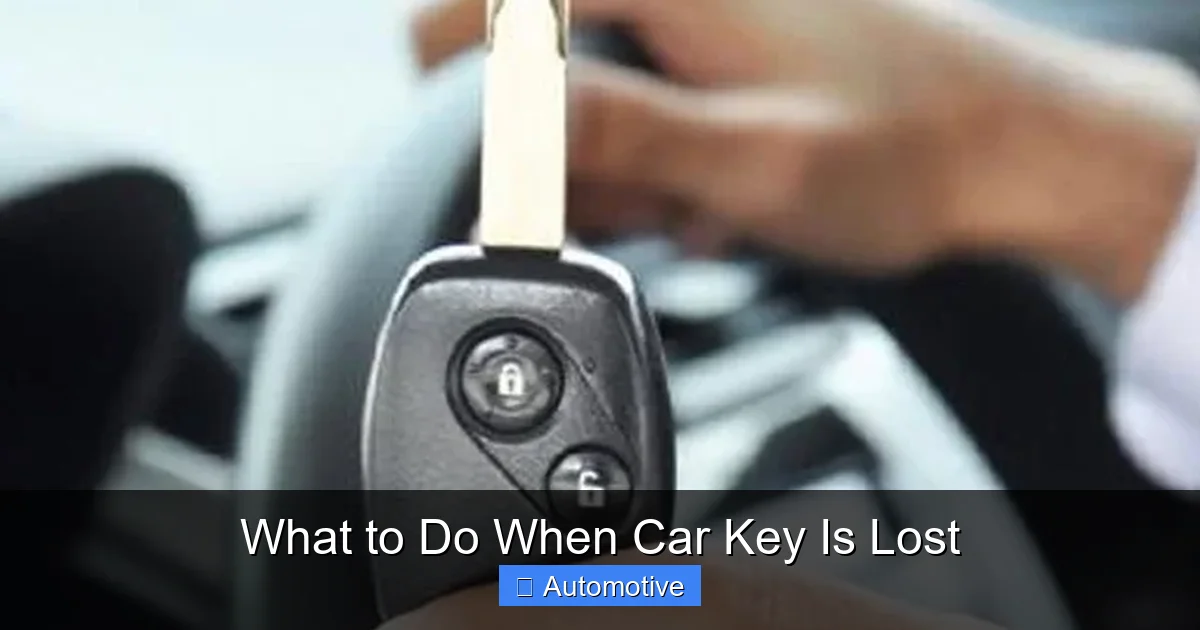
Not all car keys are created equal, and the type of key you have will significantly impact your next steps—and your wallet. Understanding the difference between traditional keys, transponder keys, remote keys, and smart keys will help you make informed decisions.
Traditional Metal Keys
These are the simplest type: a plain metal key with no electronics. They’re common in older vehicles (typically pre-2000 models) and some budget or base-model cars. If you have one of these, you’re in luck—replacing it is usually straightforward and affordable. You can often get a duplicate cut at a hardware store, locksmith, or even some big-box retailers like Walmart or Home Depot for $5–$20. No programming is needed; just bring the VIN (Vehicle Identification Number) or an existing key if you have one.
Transponder Keys
Introduced in the mid-1990s, transponder keys have a small chip embedded in the plastic head. When you insert the key into the ignition, the chip sends a unique signal to the car’s immobilizer system. If the signal doesn’t match, the engine won’t start—even if the key physically turns the lock. This adds a layer of security but also complexity. Replacing a transponder key requires both cutting the metal blade and programming the chip to match your vehicle. This usually costs $50–$150 and must be done by a dealership or a locksmith with the right equipment.
Remote Key Fobs
These keys combine a traditional or transponder key with a remote control for locking, unlocking, and sometimes starting the car. They often have buttons for trunk release, panic alarms, and remote start. If you lose one, you’ll need both a new fob and programming to sync it with your car. Costs vary widely—$100–$300 is common, and some luxury brands charge even more. Dealerships are the most reliable source, but independent locksmiths may offer lower prices.
Smart Keys (Keyless Entry/Start)
Smart keys, also known as proximity keys or key fobs with push-button start, allow you to unlock and start your car without inserting a key. You just need to have the fob nearby. These are common in newer vehicles (2010 and later) and offer convenience but come with a high replacement cost. A new smart key can range from $200 to $500 or more, depending on the make and model. Programming is complex and typically requires dealership tools or specialized locksmith services.
Knowing your key type helps you estimate costs and choose the right professional. If you’re unsure, check your owner’s manual or look up your vehicle’s specifications online using the VIN.
Step 3: Contact the Right Professional
Visual guide about What to Do When Car Key Is Lost
Image source: vehq.com
Once you’ve determined your key type and confirmed you don’t have a spare, it’s time to get help. Your options include your car dealership, a local locksmith, or roadside assistance services. Each has pros and cons.
Dealership
Going to your car’s dealership is often the most reliable option, especially for modern or high-security keys. Dealerships have access to manufacturer-specific tools and databases, ensuring your new key is programmed correctly and securely. They can also verify your ownership using your VIN and registration.
However, dealerships tend to be the most expensive option. Expect to pay a premium for parts and labor, and you may need to schedule an appointment. Some dealerships offer mobile services, where a technician comes to your location, but this can add to the cost.
Certified Automotive Locksmith
A licensed automotive locksmith is usually faster and more affordable than a dealership. Many offer 24/7 emergency services and can come to your location—whether you’re at home, work, or stranded on the side of the road. They carry portable programming tools and can cut and program most key types on the spot.
When choosing a locksmith, make sure they’re certified and insured. Look for reviews online or ask for recommendations. Avoid unlicensed operators, as they may damage your car or provide unreliable keys. Reputable locksmiths will ask for proof of ownership (like your registration or ID) before proceeding.
Roadside Assistance Services
If you’re a member of AAA, your car insurance provider, or a manufacturer’s roadside assistance program, you may be eligible for key replacement or lockout help. These services often cover towing, lockout assistance, and sometimes key replacement—though coverage varies.
Call your provider and explain the situation. They may send a locksmith or tow your car to a dealership. Some plans even reimburse key replacement costs up to a certain amount. Always check your policy details to understand what’s covered.
DIY Key Programming (For Some Models)
In rare cases, certain vehicles allow you to program a new key yourself using a specific sequence of actions (like turning the ignition on and off in a pattern). This is more common with older models and should only be attempted if you have the exact instructions from your owner’s manual or a trusted source. Incorrect attempts can lock you out of the system or damage the immobilizer.
Step 4: Understand the Costs and Payment Options
Visual guide about What to Do When Car Key Is Lost
Image source: aaalocksmithseattle.com
Replacing a lost car key can be surprisingly expensive, especially for modern vehicles. Costs depend on your car’s make, model, year, and key type. Here’s a general breakdown:
– **Traditional metal key:** $5–$20
– **Transponder key:** $50–$150
– **Remote key fob:** $100–$300
– **Smart key/fob:** $200–$500+
Luxury brands like BMW, Mercedes, or Tesla can charge even more—sometimes over $600 for a single smart key. Programming fees, service calls, and after-hours charges can add to the total.
Insurance and Warranty Coverage
Check your auto insurance policy. Some comprehensive plans include key replacement or lockout assistance. Others offer optional add-ons for this purpose. If you have roadside assistance through your insurer or a third party, it may cover towing or locksmith services.
Manufacturer warranties rarely cover lost keys, but some extended service plans or certified pre-owned programs might. Call your dealer or review your contract to confirm.
Payment Tips
– Get a quote before authorizing work.
– Ask if the price includes programming and labor.
– Pay with a credit card for added protection and potential rewards.
– Keep the receipt—you may need it for insurance claims.
If cost is a concern, compare quotes from multiple providers. Some locksmiths offer discounts for first-time customers or seniors.
Step 5: Secure Your Vehicle and Prevent Theft
If you’ve lost your key—especially a smart key or fob—there’s a risk someone could find it and access your car. While most people are honest, it’s smart to take precautions.
Park in a Safe Location
If possible, move your car to a secure, well-lit area like a garage, monitored parking lot, or your driveway. Avoid leaving it on a quiet street or isolated area where it could be targeted.
Disable Remote Access (If Possible)
Some vehicles allow you to temporarily disable the key fob through the infotainment system or by removing a fuse. Check your owner’s manual for instructions. This won’t prevent someone from hot-wiring an older car, but it can stop remote unlocking.
Consider a Steering Wheel Lock
A visible deterrent like a steering wheel lock (e.g., The Club) can discourage thieves. It’s not foolproof, but it adds a layer of security while you’re waiting for a replacement key.
Monitor for Unusual Activity
Keep an eye on your car. If you notice anything suspicious—like the car being moved, windows broken, or personal items missing—contact the police immediately.
Step 6: Prevent Future Key Loss
Once you’ve resolved the immediate issue, take steps to avoid repeating the problem.
Use a Key Finder
Bluetooth key finders like Tile or Apple AirTag can attach to your keychain and help you locate lost keys using your smartphone. They’re affordable ($25–$40) and highly effective.
Designate a Key Spot
Create a consistent place to store your keys at home—like a hook, bowl, or drawer. Train yourself to return them there every time you come inside.
Carry a Spare
Keep a spare key with a trusted person or in a secure location. If you travel frequently, consider a magnetic key box on your car (but change the location periodically for security).
Use a Keychain with a Tracker
Some keychains come with built-in GPS or Bluetooth tracking. They’re bulkier but offer peace of mind.
Make a Copy Before You Need It
Don’t wait until you lose your key to get a spare. Visit a locksmith or dealership when you have time and budget for it.
Conclusion
Losing your car key is inconvenient, but it doesn’t have to be a disaster. By staying calm, assessing your options, and acting quickly, you can regain access to your vehicle safely and affordably. Whether you have a simple metal key or a high-tech smart fob, there are professionals who can help. And with a few preventive habits—like using a key finder or keeping a spare—you can reduce the chances of this happening again.
Remember: the worst thing you can do is panic. The best thing? Knowing exactly what to do next. Keep this guide handy, and you’ll be ready the next time your keys decide to take an unexpected vacation.
Frequently Asked Questions
Can I start my car without a key?
In most modern vehicles, no—especially if you have a transponder or smart key. These systems require a programmed key to start the engine. Older cars may be vulnerable to hot-wiring, but this is illegal without ownership proof and not recommended.
How long does it take to get a replacement car key?
It depends on the key type and service provider. A traditional key can be cut in minutes, while smart keys may take 30–60 minutes to program. If the dealership needs to order a fob, it could take days.
Will my insurance cover a lost car key?
Some comprehensive auto insurance policies include key replacement or lockout assistance. Check your policy or call your insurer to confirm coverage limits and deductibles.
Can a locksmith make a key for any car?
Most certified automotive locksmiths can handle a wide range of vehicles, including transponder and remote keys. However, some high-security or luxury models may require dealership tools.
Is it safe to keep a spare key under my car?
It can be convenient, but it’s not the most secure option. Thieves know common hiding spots. If you use a magnetic key box, change the location occasionally and avoid obvious areas like under the bumper.
What should I do if I lose my key while traveling?
Contact your roadside assistance provider or a local locksmith. If you’re far from home, your insurance or credit card may offer emergency services. Keep your VIN and registration accessible for verification.