What to Do About a Chipped Windshield on a Car

Contents
- 1 Key Takeaways
- 2 📑 Table of Contents
- 3 What to Do About a Chipped Windshield on a Car
- 4 Understanding Windshield Damage: Types and Causes
- 5 Can You Repair a Chipped Windshield?
- 6 Step-by-Step: How to Fix a Chipped Windshield at Home
- 7 Professional Windshield Repair: What to Expect
- 8 Preventing Future Windshield Damage
- 9 Why Ignoring a Chipped Windshield Is a Bad Idea
- 10 Conclusion: Take Action Today
- 11 Frequently Asked Questions

LED Indicator Light

Car Windshield Wiper Blades

Anti Rust Spray

Side Mirror Rain Guard
A chipped windshield isn’t just a cosmetic issue—it can compromise your safety and lead to costly replacements if ignored. Acting quickly with the right steps can prevent cracks from spreading and save you time and money.
Key Takeaways
- Act fast: Small chips can turn into large cracks in hours, especially with temperature changes or road vibrations.
- Assess the damage: Location, size, and depth determine whether repair or replacement is needed.
- DIY kits work for minor chips: Clear, small chips in the outer layer can often be fixed at home with a resin kit.
- Professional repair is safer for complex damage: Deep, large, or edge chips usually require expert attention.
- Insurance may cover it: Many auto policies include windshield coverage with little or no deductible.
- Prevention matters: Maintain safe following distances and avoid extreme temperature changes to reduce risk.
- Don’t ignore it: A damaged windshield weakens structural integrity and can fail in a crash or rollover.
📑 Table of Contents
- What to Do About a Chipped Windshield on a Car
- Understanding Windshield Damage: Types and Causes
- Can You Repair a Chipped Windshield?
- Step-by-Step: How to Fix a Chipped Windshield at Home
- Professional Windshield Repair: What to Expect
- Preventing Future Windshield Damage
- Why Ignoring a Chipped Windshield Is a Bad Idea
- Conclusion: Take Action Today
What to Do About a Chipped Windshield on a Car
You’re cruising down the highway, enjoying the view, when suddenly—*ping!* A tiny rock hits your windshield, leaving behind a small but noticeable chip. It might seem harmless at first, but that little flaw can quickly become a big problem if you don’t act fast. A chipped windshield isn’t just an eyesore—it’s a safety hazard that can compromise your visibility, weaken your car’s structural integrity, and even lead to a full windshield replacement if left untreated.
The good news? Many chips can be repaired quickly and affordably, often for less than $100. But timing is everything. The longer you wait, the more likely that chip will spread into a crack, especially when exposed to temperature swings, road vibrations, or pressure changes. Whether you’re dealing with a tiny pit from a pebble or a deeper star-shaped break, knowing what to do about a chipped windshield on a car can save you stress, money, and potentially your safety.
In this guide, we’ll walk you through everything you need to know—from identifying the type of damage to deciding between DIY fixes and professional repairs. We’ll also cover insurance options, prevention tips, and why ignoring that chip could cost you far more down the road. So grab a cup of coffee, and let’s get your windshield back in top shape.
Understanding Windshield Damage: Types and Causes

Visual guide about What to Do About a Chipped Windshield on a Car
Image source: d1hv7ee95zft1i.cloudfront.net
Before you can decide what to do about a chipped windshield on a car, it helps to understand what kind of damage you’re dealing with. Not all chips are created equal, and the type of damage will determine your next steps.
Common Types of Windshield Chips
There are several common types of windshield damage, each with its own characteristics:
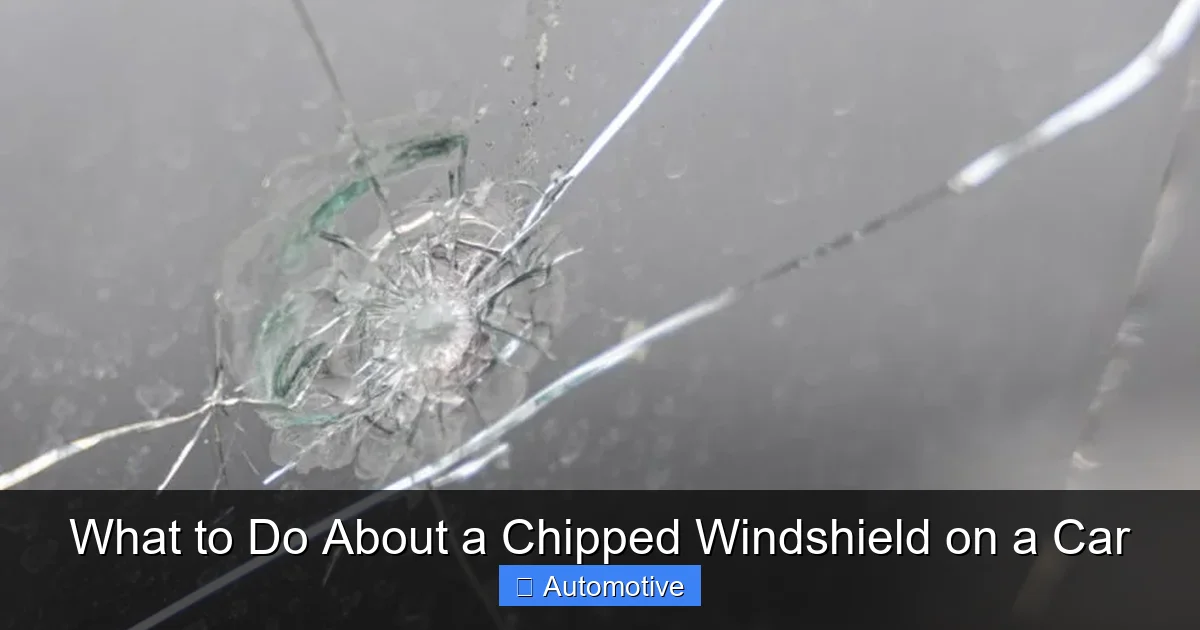
– **Bullseye chip:** Circular with a cone-shaped impact point and a dark center. Often caused by a round object like a stone.
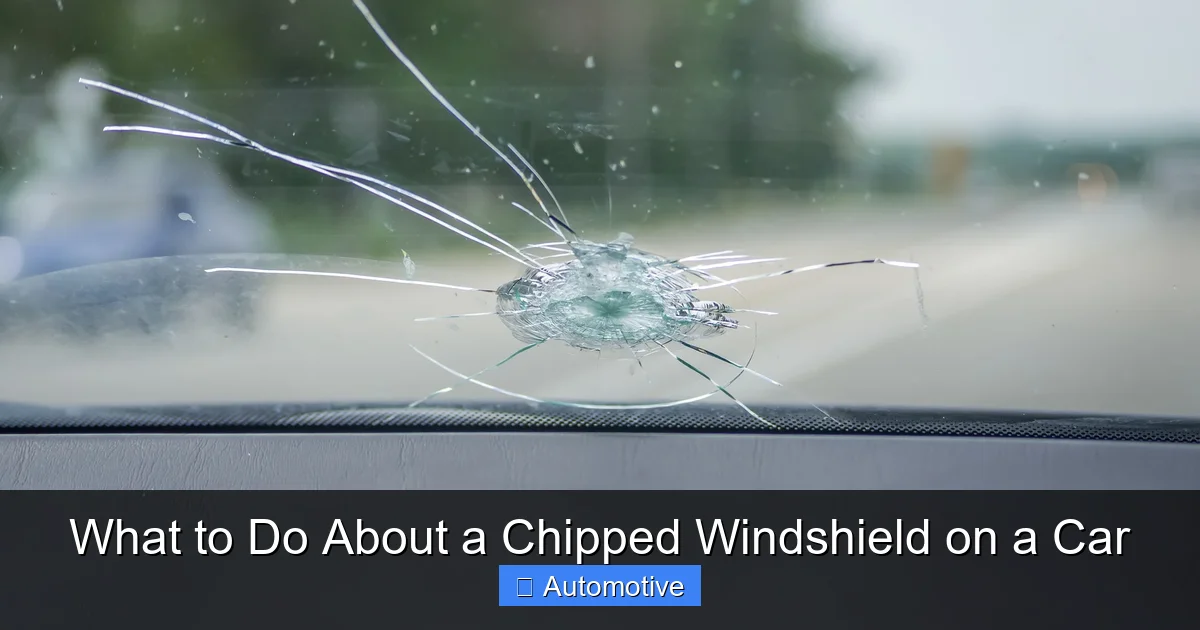
– **Star break:** A series of short cracks radiating from the impact point, resembling a star. These can spread quickly.
– **Combination break:** A mix of bullseye, star, and crack patterns. These are more complex and harder to repair.
– **Crack:** A straight or jagged line that may start from a chip or form independently. Cracks longer than 6 inches usually require replacement.
– **Pit:** A small, shallow dent in the outer layer of glass. Often cosmetic but can weaken the glass over time.
What Causes Windshield Damage?
Most windshield chips are caused by road debris—pebbles, gravel, or chunks of asphalt kicked up by other vehicles. But other factors can contribute:
– **Temperature changes:** Rapid heating or cooling (like using hot water on a cold windshield) can cause existing weak spots to crack.
– **Poor installation:** If the windshield wasn’t sealed properly, stress points can develop.
– **Structural stress:** Hitting a pothole or driving on rough roads can put pressure on the glass.
– **Age and wear:** Over time, glass becomes more brittle and prone to damage.
Understanding the cause helps you prevent future issues. For example, if you frequently drive on gravel roads, you might want to increase your following distance to reduce debris impact.
Why Location Matters
Where the chip is located on your windshield plays a big role in whether it can be repaired. Chips in the **driver’s line of sight** are more concerning because they can distort vision, especially at night when headlights hit the damaged area. Chips near the **edge of the windshield** are also riskier because the edge is under more stress and more likely to crack.
In general, chips smaller than a quarter and located away from the edges and driver’s view have the best chance of successful repair.
Can You Repair a Chipped Windshield?

Visual guide about What to Do About a Chipped Windshield on a Car
Image source: autoglassamerica.com
The short answer? Yes—most of the time. But it depends on the size, depth, location, and type of damage.
When Repair Is Possible
Windshield repair is typically recommended for:
– Chips smaller than 1 inch in diameter
– Cracks shorter than 3 inches
– Damage that hasn’t penetrated both layers of glass
– Chips not in the driver’s direct line of sight
– Damage not near the edge (within 1–2 inches)
Modern repair techniques use high-quality resin to fill the chip, restoring strength and clarity. The process is quick—usually under 30 minutes—and much cheaper than replacement.
When Replacement Is Necessary
You’ll likely need a full windshield replacement if:
– The chip is larger than a quarter
– The crack is longer than 6 inches
– The damage is in the driver’s line of sight and distorts vision
– The chip is near the edge of the windshield
– The glass is shattered or has multiple large cracks
– The damage has compromised the structural integrity of the windshield
Replacing a windshield is more involved and can cost $200–$600 or more, depending on your vehicle. But it’s essential for safety, especially since modern windshields are designed to support the roof in a rollover and work with airbag sensors.
DIY vs. Professional Repair
So, should you fix it yourself or call a pro?
**DIY repair kits** are widely available at auto parts stores and online for $10–$30. They work well for small, shallow chips and can be a good temporary fix. However, they require careful application and may not restore full strength or clarity.
**Professional repair**, on the other hand, uses industrial-grade equipment and resin. Technicians can often complete the job in under an hour, and many offer mobile services—coming to your home or office. Most importantly, pros can assess whether repair is safe and effective.
If you’re unsure, it’s always better to get a professional opinion. A botched DIY repair can make the damage worse or void your insurance coverage.
Step-by-Step: How to Fix a Chipped Windshield at Home
Visual guide about What to Do About a Chipped Windshield on a Car
Image source: wakeuproma.org
If you’ve assessed the damage and decided a DIY repair is appropriate, here’s how to do it safely and effectively.
Gather Your Supplies
You’ll need:
– A windshield repair kit (look for one with UV-cured resin)
– Clean microfiber cloths
– Glass cleaner or isopropyl alcohol
– Razor blade or scraper
– Clear tape (optional)
– Safety glasses
Prepare the Area
1. **Clean the windshield:** Use glass cleaner and a microfiber cloth to remove dirt, wax, and debris from the chip and surrounding area. Let it dry completely.
2. **Park in the shade:** Direct sunlight can cause the resin to cure too quickly, reducing effectiveness.
3. **Protect yourself:** Wear safety glasses to avoid resin in your eyes.
Apply the Repair Kit
Follow the instructions in your kit, but here’s a general guide:
1. **Position the applicator:** Most kits include a suction cup or bridge that holds the resin injector over the chip.
2. **Inject the resin:** Slowly press the resin into the chip. You may need to apply pressure or use a vacuum step to remove air bubbles.
3. **Cure the resin:** Use the UV light (if included) or let it cure in sunlight for 10–15 minutes.
4. **Scrape off excess:** Use a razor blade to carefully remove any hardened resin on the surface.
5. **Polish the area:** Buff gently with a clean cloth to restore clarity.
Tips for Success
– Work in a clean, dry environment.
– Don’t rush—take your time with each step.
– If the resin doesn’t fill the chip completely, you may need a second application.
– Avoid driving immediately after repair—wait at least an hour for the resin to fully cure.
While DIY repairs can be effective, they’re not a permanent solution for deep or complex damage. If the chip spreads or visibility is affected, see a professional.
Professional Windshield Repair: What to Expect
If your chip is too large, deep, or in a critical area, professional repair is the best option. Here’s what you can expect when you take your car to a technician.
The Repair Process
1. **Inspection:** The technician will examine the chip to determine if repair is possible.
2. **Cleaning:** The area is thoroughly cleaned to remove contaminants.
3. **Drilling (if needed):** For deeper chips, a small hole may be drilled to allow resin to penetrate fully.
4. **Resin injection:** High-quality resin is injected under pressure to fill the chip and bond the glass layers.
5. **Curing:** UV light is used to harden the resin quickly.
6. **Finishing:** Excess resin is scraped off, and the surface is polished for clarity.
The entire process usually takes 20–45 minutes, and you can often drive away immediately.
Benefits of Professional Repair
– **Higher success rate:** Technicians have the tools and experience to handle complex damage.
– **Warranty:** Many shops offer a warranty on repairs—often 1 year or more.
– **Mobile service:** Many companies come to you, saving time and hassle.
– **Insurance coordination:** Professionals can often bill your insurance directly.
Cost and Insurance Coverage
The average cost of professional windshield repair ranges from $60 to $150, depending on the damage and location. But here’s the best part: **many auto insurance policies cover windshield repair with no deductible**.
Comprehensive coverage typically includes glass repair, and some insurers even offer “full glass coverage” with zero out-of-pocket cost. Check your policy or call your agent to confirm.
Even if you don’t have comprehensive coverage, the cost of repair is often less than your deductible, making it worth paying out of pocket to avoid a full replacement later.
Preventing Future Windshield Damage
Once your windshield is fixed, you’ll want to avoid another chip. While you can’t control every pebble on the road, there are steps you can take to reduce your risk.
Drive Smart
– **Increase following distance:** Stay at least 3–4 car lengths behind large trucks or vehicles that kick up debris.
– **Avoid gravel roads when possible:** If you must drive on them, slow down and keep a safe distance.
– **Use lower speeds:** High speeds increase the force of impact from small objects.
Maintain Your Vehicle
– **Check tire pressure:** Underinflated tires can throw more debris.
– **Replace worn wipers:** Damaged wipers can scratch the glass and hide early signs of damage.
– **Park wisely:** Avoid parking under trees (falling branches) or near construction zones.
Protect Your Windshield
– **Use a windshield cover:** In winter, a cover prevents ice buildup and reduces the need for scraping.
– **Avoid extreme temperature changes:** Don’t blast hot air on a frozen windshield or pour hot water on cold glass.
– **Inspect regularly:** Check your windshield weekly for new chips or cracks.
Consider a Windshield Protection Plan
Some auto shops and insurers offer windshield protection plans that cover repairs or replacements for a monthly fee. These can be worth it if you drive frequently or in high-risk areas.
Why Ignoring a Chipped Windshield Is a Bad Idea
It’s tempting to ignore a small chip—especially if it’s not in your line of sight. But doing so can have serious consequences.
Safety Risks
Modern windshields are not just glass—they’re a critical part of your car’s safety system. They:
– Support the roof in a rollover
– Help deploy passenger airbags correctly
– Maintain structural integrity in a crash
A weakened windshield may not perform as designed in an accident, putting you and your passengers at risk.
Legal and Inspection Issues
In many states, a cracked or chipped windshield can cause you to fail a safety inspection. Even if it’s legal to drive with minor damage, a large crack could result in a ticket or require immediate repair.
Costly Consequences
A $75 repair today could turn into a $400 replacement tomorrow if the chip spreads. And if the damage affects your car’s ADAS (Advanced Driver Assistance Systems)—like lane departure warnings or automatic braking—calibration may be needed after replacement, adding $100–$300 to the cost.
Reduced Resale Value
A damaged windshield can lower your car’s resale value. Buyers may see it as a sign of poor maintenance or assume other issues exist.
Conclusion: Take Action Today
A chipped windshield might seem like a minor annoyance, but it’s one of those car issues that can snowball quickly if ignored. Whether you choose a DIY fix or professional repair, the key is to act fast. Assess the damage, understand your options, and don’t hesitate to call a pro if you’re unsure.
Remember, your windshield is more than just a piece of glass—it’s a vital safety component. Taking care of it protects not only your wallet but also your life. So the next time you hear that telltale *ping*, don’t brush it off. Do something about that chipped windshield on your car today. Your future self will thank you.
Frequently Asked Questions
Can a chipped windshield be repaired?
Yes, most small chips (under 1 inch) can be repaired, especially if they’re not in the driver’s line of sight or near the edge. Professional repair uses resin to fill the chip and restore strength.
How much does it cost to fix a chipped windshield?
DIY kits cost $10–$30, while professional repairs range from $60 to $150. Many insurance plans cover the cost with no deductible.
Will a chip turn into a crack?
Yes, especially with temperature changes, road vibrations, or pressure. Acting quickly can prevent spreading.
Can I drive with a chipped windshield?
You can usually drive short distances, but avoid high speeds or rough roads. Get it repaired as soon as possible to prevent cracks.
Does insurance cover windshield repair?
Most comprehensive auto policies cover windshield repair, often with no out-of-pocket cost. Check your policy for details.
How long does a windshield repair take?
Professional repairs take 20–45 minutes. DIY repairs may take 30–60 minutes, plus curing time. You can usually drive immediately after.