
What Size Wiper Blades Does a 2016 Toyota Camry Use?

The 2016 Toyota Camry uses 26-inch driver-side and 16-inch passenger-side front wiper blades, plus a 12-inch rear wiper blade for the trunk lid. Getting the exact size is critical for full windshield coverage and streak-free cleaning. Always verify your specific trim, as some models may vary, and consider upgrading to premium beam-style blades for better performance in all weather conditions.
Let’s talk about something we all rely on but rarely think about until it’s too late: your windshield wiper blades. You’re driving your reliable 2016 Toyota Camry, a car known for its comfort and dependability, when suddenly a summer thunderstorm or a winter slush storm hits. You flick the wiper switch, and instead of a clear view, you get a smeared, streaky windshield that makes you squint and lean forward. That’s not just annoying—it’s a serious safety hazard. The culprit is almost always worn-out or incorrectly sized wiper blades. So, what size wiper blades does a 2016 Toyota Camry use? Getting this simple detail right is the first step to ensuring you always have a clear view, no matter what the weather throws at you. This guide will walk you through the exact sizes, why they matter, how to choose the best replacement, and how to install them yourself with confidence.
Key Takeaways
- Front Wiper Sizes: The driver-side blade is 26 inches, and the passenger-side is 16 inches for all 2016 Camry trims.
- Rear Wiper Size: The trunk-mounted rear wiper blade measures 12 inches, which is common for many midsize sedans.
- Size Verification: Always double-check your owner’s manual or existing blade part numbers, as rare fleet or special editions could differ.
- Blade Type Matters: Consider upgrading from traditional bracket-style to beam blades for improved contact and durability, especially in snow and ice.
- Installation is Simple: Most 2016 Camry wipers use a standard J-hook connector; replacement typically takes under 5 minutes per blade with no tools.
- Regular Replacement is Key: Replace wiper blades every 6-12 months to maintain visibility; signs include skipping, squeaking, or smearing.
- Match the Connector: Ensure new blades have the correct adapter (usually a J-hook) for your Camry’s wiper arm; most universal packs include multiple adapters.
📑 Table of Contents
- Why the Correct Wiper Blade Size is Non-Negotiable for Safety
- The Exact 2016 Toyota Camry Wiper Blade Sizes
- Choosing the Right Type of Wiper Blade: Not All Are Created Equal
- Step-by-Step Guide to Replacing Your 2016 Camry Wiper Blades
- Maintenance Tips to Maximize Wiper Blade Life on Your Camry
- Frequently Asked Questions (FAQs)
Why the Correct Wiper Blade Size is Non-Negotiable for Safety
Before we dive into the specific measurements, it’s crucial to understand why size is so important. Wiper blades aren’t one-size-fits-all. Each vehicle’s windshield has a unique curvature and width. The manufacturer engineers the wiper blade length and the arm’s sweep pattern to cover every single square inch of glass without leaving any uncovered spots or causing the blades to collide.
Using a blade that’s too short means large sections of your windshield, especially the corners, will remain untouched by the rubber. Water, snow, and debris will accumulate there, severely limiting your visibility. On the other hand, a blade that’s too long can cause the wiper arms to hit each other or the edge of the windshield frame. This can damage the arms, the blades themselves, and even the windshield seal over time. The correct size ensures the blades work in perfect harmony, arcing across the glass to provide a clean, consistent wipe. For a family sedan like the Camry, which is often used for daily commuting and road trips, this reliability is paramount. It’s a small part with a huge impact on your ability to see the road, other cars, and pedestrians clearly.
The Science of the Sweep Pattern
The wiper system on your 2016 Camry uses a tandem or opposed pattern, where the two blades move toward each other and then away in a synchronized motion. The driver’s side blade (26″) is longer because it has to cover a larger area of the windshield, reaching from the center pivot point all the way to the far-right edge (for left-hand drive models). The shorter passenger-side blade (16″) starts from the center and wipes the left section. The rear wiper (12″) on the trunk lid uses a single-arm pivot to clear the back glass. If you disrupt this precise choreography with the wrong blade length, the entire system fails, leaving you with blind spots right in your line of sight.
The Exact 2016 Toyota Camry Wiper Blade Sizes
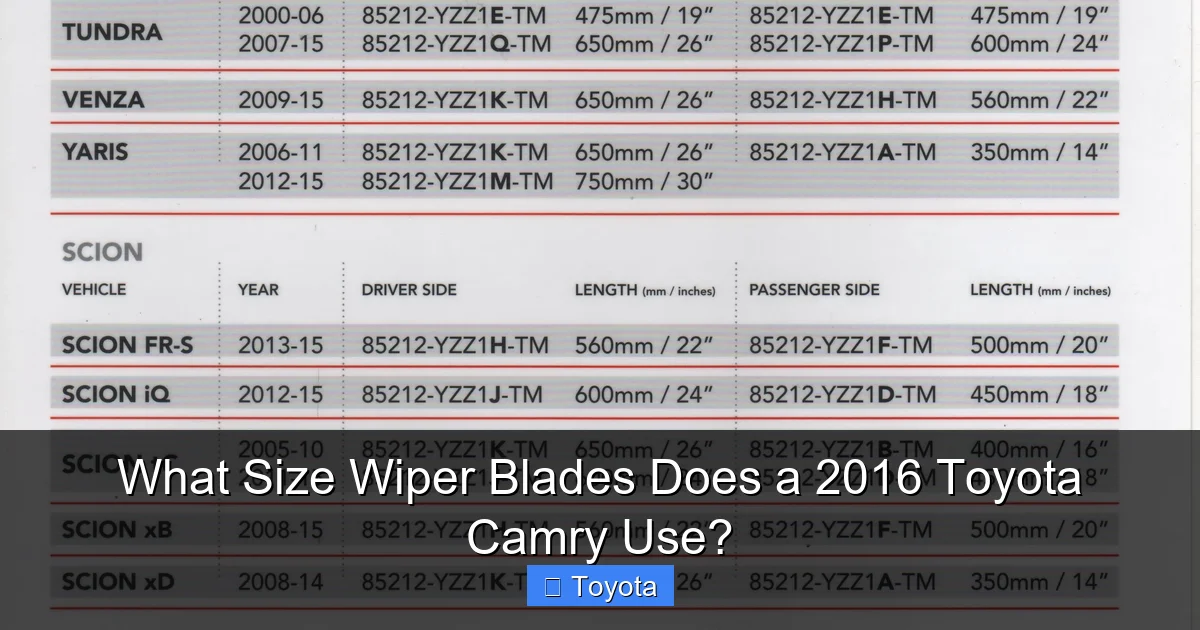
Now, for the answer you’ve been waiting for. For the 2016 model year, the Toyota Camry (all trims including L, LE, SE, XLE, and XSE) uses the following standard wiper blade sizes:
Visual guide about What Size Wiper Blades Does a 2016 Toyota Camry Use?
Image source: s3.amazonaws.com
- Driver’s Side Front Wiper Blade: 26 inches (66 cm)
- Passenger’s Side Front Wiper Blade: 16 inches (41 cm)
- Rear Trunk Lid Wiper Blade: 12 inches (30 cm)
It’s important to note that these are the blade refill or squeegee lengths. The overall assembly you purchase will be slightly longer due to the plastic or metal backbone that holds the rubber. When you shop, you’ll see them listed as “26-inch” and “16-inch” blades, which refers to the usable wiping edge.
How to Confirm for Your Specific Vehicle
While these are the standard sizes, there are rare exceptions. Fleet Vehicles: What Every Driver Should Know”>Fleet vehicles or cars with special dealer-installed packages could have variations. The absolute best way to confirm is to:
- Check your owner’s manual. The specifications section, often under “Capacities and Specifications” or “Maintenance,” will list the exact sizes.
- Look at the part number on your existing blades. Lift the wiper arms away from the glass (carefully!) and look for a printed code on the rubber or the arm connector. You can search this part number online for a guaranteed match.
- Use an auto parts store lookup. Stores like AutoZone, O’Reilly, or Advance Auto Parts have systems where you input your year, make, model, and trim, and it will list the correct sizes and part numbers. This is a very reliable method.
For most 2016 Camry owners, the 26″/16″/12″ combo is the definitive answer. If you’re looking at a related model, you might find that a 2013 Toyota RAV4 uses different sizes due to its different windshield shape, which highlights why model-specific information is essential.
Choosing the Right Type of Wiper Blade: Not All Are Created Equal
Knowing the length is only half the battle. The type of wiper blade you choose significantly affects performance, longevity, and noise. For your 2016 Camry, you have a few primary options:

Visual guide about What Size Wiper Blades Does a 2016 Toyota Camry Use?
Image source: i.pinimg.com
Traditional Bracket-Style Blades
These are the classic design you’re probably familiar with: a metal frame with multiple contact points holding a rubber refill. They are the most affordable and widely available. Pros: Low cost, easy to find. Cons: The frame can collect ice and snow, reducing flexibility and performance in winter. The multiple pressure points can sometimes lead to uneven wear and streaking as the rubber ages. They are adequate for mild climates but can struggle in heavy precipitation.
Beam Blades (or Frameless Blades)
This is the modern standard and our top recommendation for a 2016 Camry. Beam blades have a single, streamlined piece of spring steel or plastic that curves to match the windshield’s shape, with the rubber element bonded directly to it. Pros: Excellent all-weather performance—the lack of a frame prevents snow/ice buildup. They maintain consistent pressure across the entire blade edge, leading to a smoother, streak-free wipe. They are quieter and often last longer. Cons: Slightly higher initial cost (though prices have dropped significantly). For a car like the Camry that sees year-round use, beam blades are a worthwhile investment for safety and convenience.
Material Matters: Rubber vs. Silicone
Within both bracket and beam styles, the wiping element material varies.
- Natural/Synthetic Rubber: The standard. It’s effective and affordable but can degrade faster under UV exposure and ozone. Expect 6-12 months of life.
- Silicone: A premium option. Silicone repels water better and is far more resistant to weathering from sun and ozone. A good silicone blade can last 1-2 years and often leaves a hydrophobic coating on the glass that helps water bead and roll off more easily. If you live in an area with harsh sun or frequent rain, silicone is an excellent upgrade.
For your 2016 Camry, a 26-inch beam blade and a 16-inch beam blade (both with silicone if you want the extra longevity) is the optimal combination for all-season performance.
Step-by-Step Guide to Replacing Your 2016 Camry Wiper Blades
Replacing wiper blades is one of the easiest DIY auto maintenance tasks. You don’t need any tools for most aftermarket blades on the Camry. Here’s how to do it safely and correctly:

Visual guide about What Size Wiper Blades Does a 2016 Toyota Camry Use?
Image source: yardandgardenguru.com
Step 1: Lift the Wiper Arms
Park your Camry on a level surface, engage the parking brake, and turn the ignition to “ON” (or “ACC”) but don’t start the engine. Turn the wipers on until they are in the “parked” position at the bottom of the windshield. Then, turn the ignition off. Lift the driver’s side wiper arm straight out from the glass until it clicks or stays in place. Important: Be gentle. Do not let the wiper arm snap back against the windshield—this can crack the glass. If needed, place a folded towel on the windshield under the arm for cushioning.
Step 2: Remove the Old Blade
Look at the connector where the blade attaches to the arm. The 2016 Camry uses a very common J-hook connector. To release it, you typically press a small tab or lever on the connector while pulling the blade downward (away from the arm). The blade should slide off the hook. If it’s a stubborn older blade, wiggle it gently. Take note of how it came off—this is crucial for installing the new one correctly.
Step 3: Attach the New Blade
Take your new 26-inch or 16-inch blade. Ensure you have the correct adapter installed on the connector. Most universal blades come with a bag of adapters; the J-hook is usually pre-installed or is the only option. Align the J-hook on the wiper arm with the slot on the new blade’s connector. Push the blade firmly onto the arm until you hear or feel a definitive click. Give it a gentle tug to ensure it’s locked in place. Never install a blade that doesn’t click securely—it could fly off while driving.
Step 4: Repeat and Lower Carefully
Repeat steps 2 and 3 for the other front blade and the rear blade (the rear uses the same J-hook principle on the trunk lid arm). Once all new blades are on, carefully lower each wiper arm back onto the windshield. Do not let them drop. Turn the ignition on and test the wipers. Watch for smooth, chatter-free movement across the entire windshield. If you hear tapping or see skipping, turn them off, lift the arm, and re-seat the blade connector.
This entire process should take 10-15 minutes. If you run into any confusion, many auto parts stores offer free installation with purchase, or you can find detailed video tutorials for the 2013 Honda Civic wiper replacement which follows a nearly identical process for many Japanese sedans.
Maintenance Tips to Maximize Wiper Blade Life on Your Camry
Even the best blades need care. Here’s how to get the most out of your investment and ensure they perform when you need them most:
Regular Cleaning is Half the Battle
Wiper blades are constantly exposed to road grime, bug splatter, tree sap, and mineral deposits from hard water. These contaminants act like sandpaper on the rubber, accelerating wear and causing streaks. Once a month, especially during bug-heavy seasons, clean the rubber element. Lift the wiper arms and gently wipe the rubber edge with a soft cloth dampened with isopropyl alcohol (rubbing alcohol) or a dedicated wiper blade cleaner. This removes debris and restores the rubber’s flexibility. Also, clean the windshield itself regularly with a glass cleaner to remove abrasive particles.
Don’t Use Wipers as an Ice Scraper
This is a cardinal sin. If your Camry is parked out in a winter storm, the wipers will be frozen to the glass. Never turn the wipers on to try and break the ice. This strains the motor, torques the arms, and shreds the rubber. Instead, start your car, let it warm up, and use a proper ice scraper. You can also spray a de-icer or mix a vinegar-water solution (3:1) on the windshield the night before a freeze to prevent adhesion. For heavy snow, lift the wiper arms away from the glass before the storm hits so they don’t get buried.
Inspect and Replace Proactively
Don’t wait for a downpour to discover your blades are shot. Every few months, do a quick visual and tactile inspection. Look for:
- Cracks, splits, or chunks missing from the rubber.
- Hard, brittle rubber that doesn’t bend easily.
- Metal corrosion on the blade frame (for bracket styles).
- Constant streaking or squeaking even on a clean, wet windshield.
As a rule of thumb, replace wiper blades at least once a year, even if they look okay. The rubber degrades from UV sunlight and ozone exposure just sitting on your parked car. For maximum safety, many experts recommend a 6-month replacement interval, especially if you live in a climate with intense sun or frequent use.
Frequently Asked Questions (FAQs)
Can I use a different size wiper blade on my 2016 Camry?
We strongly advise against it. Using a size other than 26″ driver and 16″ passenger will leave uncovered areas on your windshield or cause the arms to collide. Always use the manufacturer-specified sizes for full coverage and safe operation.
How often should I replace the wiper blades on my 2016 Toyota Camry?
For optimal safety, replace them every 6 to 12 months. Signs of wear include skipping, squeaking, smearing, or visible damage to the rubber. If your Camry is parked outside in harsh sun or used frequently in winter, lean toward the 6-month interval.
What size is the rear wiper blade on a 2016 Toyota Camry?
The rear wiper blade for the trunk lid is 12 inches. It’s a single blade that clears the entire rear glass with a single-arm pivot. Don’t forget to replace this one too, as rear visibility is equally important, especially when reversing or in poor weather.
Are beam blades worth the extra cost for a 2016 Camry?
Absolutely. Beam blades offer superior all-weather performance, especially in snow and ice where traditional frames can clog. They provide more consistent pressure for a streak-free wipe, are quieter, and often last longer due to less complex wear points. For a daily-driven Camry, they are a smart upgrade.
My wiper arms seem loose after I installed new blades. Is that normal?
A slight amount of play is normal as the new blade’s spring tension settles. However, if the arm wobbles significantly or the blade flops around, the blade is likely not properly locked onto the J-hook connector. Turn off the car, lift the arm, and re-install the blade, ensuring you hear a firm click.
Do I need to lubricate the wiper blade or the windshield?
No. Do not apply oil, wax, or silicone spray to the rubber or glass. These create a slippery surface that causes the blades to skip and smear. Clean glass with a dedicated automotive glass cleaner. If you want a water-repellent effect on the glass, apply a separate glass sealant or coating product to the clean, dry windshield, not to the wiper blades themselves.
Frequently Asked Questions
What is What Size Wiper Blades Does a 2016 Toyota Camry Use??
What Size Wiper Blades Does a 2016 Toyota Camry Use? is an important topic with many practical applications.
