What Size Tires Fit a Toyota 4runner?

Contents
- 1 Key Takeaways
- 2 📑 Table of Contents
- 3 Understanding Tire Sizing Basics
- 4 Factory Tire Sizes by 4Runner Generation
- 5 Upgrading Tire Size: Plus-Sizing and Lift Kits
- 6 Best Tire Types for Different Driving Needs
- 7 Installation, Maintenance, and Safety Tips
- 8 Common Mistakes to Avoid
- 9 Final Thoughts: Finding Your Perfect Fit
- 10 Frequently Asked Questions



Choosing the correct tire size for your Toyota 4Runner is essential for safety, performance, and fuel efficiency. This guide covers factory-recommended sizes, plus aftermarket options for different driving needs—from daily commuting to serious off-roading.
Key Takeaways
- Factory tire sizes vary by model year and trim: Most 4Runners come with 265/70R16, 265/65R17, or 275/55R20 depending on the generation and package.
- Plus-sizing is possible: You can safely go up one or two sizes with proper wheel and suspension compatibility.
- Lift kits expand tire options: A 2- to 3-inch lift allows larger tires (up to 33” or 35”) without rubbing.
- Tire width affects handling and fuel economy: Wider tires improve grip but may reduce mileage and increase road noise.
- Always check clearance and speedometer accuracy: Larger tires can alter gearing and require recalibration.
- All-terrain and mud-terrain tires are popular upgrades: They offer better off-road traction while maintaining decent on-road manners.
- Consult a tire professional before major changes: Improper sizing can damage drivetrain components or void warranties.
📑 Table of Contents
Understanding Tire Sizing Basics
Before diving into specific sizes for your Toyota 4Runner, it helps to understand how tire sizing works. Tire sizes are written in a standardized format like “265/70R16.” Let’s break that down:
- 265 = Tire width in millimeters (the distance from sidewall to sidewall).
- 70 = Aspect ratio (the height of the sidewall as a percentage of the width—so 70% of 265mm).
- R = Radial construction (almost all modern tires use this).
- 16 = Wheel diameter in inches.
This system applies across all vehicles, but the right combination for your 4Runner depends on its generation, trim level, and intended use. For example, a stock 2023 TRD Pro will have different factory specs than a 2005 SR5. Getting familiar with these numbers helps you make informed decisions when upgrading or replacing tires.
Another important concept is overall diameter. This determines how tall your tire is from ground to top. Staying within 3% of your original tire’s diameter is generally safe to avoid speedometer errors, ABS issues, or transmission shifting problems. Most tire retailers and online calculators can help you compare diameters when considering upgrades.
Why Tire Size Matters for Your 4Runner
The Toyota 4Runner is built for versatility—it handles city streets, highways, and rugged trails with equal confidence. But that versatility means tire choice directly impacts performance. Too small, and you lose ground clearance and traction. Too large, and you risk rubbing, reduced fuel economy, or even drivetrain strain.
Stock tires are engineered to balance comfort, noise, wear, and capability. However, many owners upgrade for specific needs: better snow performance, quieter highway rides, or aggressive off-road looks. Understanding your driving habits—whether you tow frequently, explore backcountry trails, or just want a more commanding stance—will guide your tire selection.
Factory Tire Sizes by 4Runner Generation
Toyota has produced the 4Runner in five generations since 1984, and each brought changes in wheel and tire specifications. Below is a breakdown of common factory sizes by era.
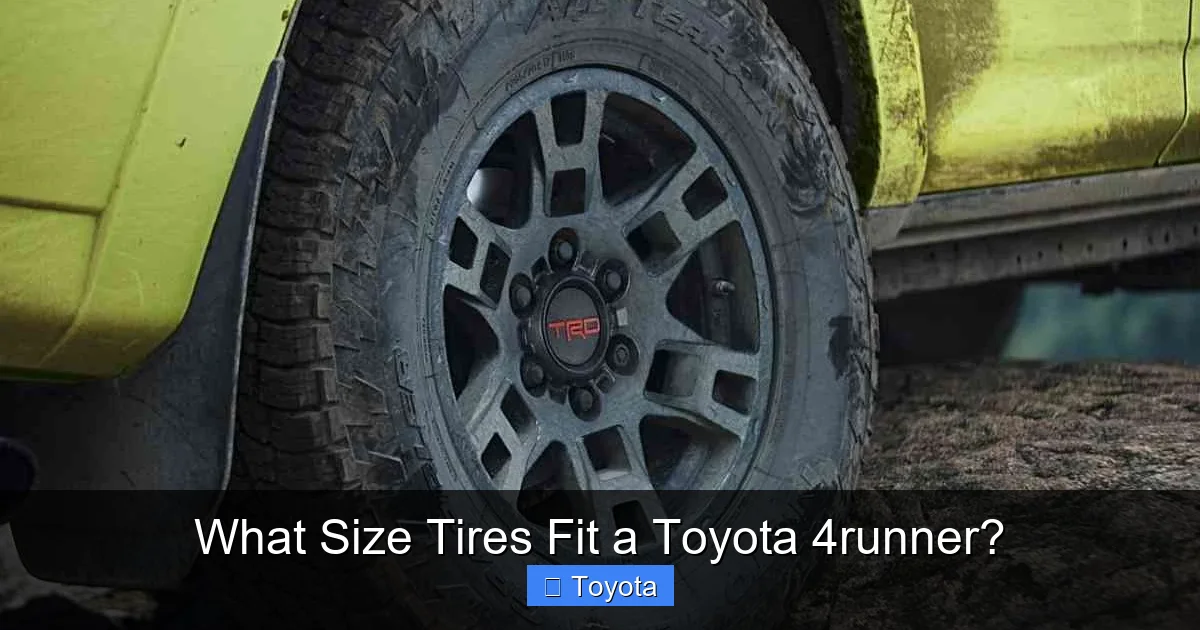
Visual guide about What Size Tires Fit a Toyota 4runner?
Image source: fourwheeltrends.com
Third Generation (1996–2002)
This generation introduced more modern styling and improved off-road capability. Most models came with:
- SR5 and Limited trims: 265/70R16 on 16-inch wheels
- TRD Off-Road packages (later years): Same size, but often paired with all-terrain tires
These tires offer a good balance of comfort and capability. The 265mm width provides solid grip, while the 70 aspect ratio gives a tall sidewall for absorbing bumps—ideal for rough terrain.
Fourth Generation (2003–2009)
The fourth-gen 4Runner grew slightly larger and adopted more refined suspension. Common sizes included:
- Base and SR5: 265/70R16
- Sport and Limited trims: 265/65R17 (slightly shorter sidewall, wider stance)
The shift to 17-inch wheels reflected a trend toward sportier handling. The 265/65R17 tire is about 1 inch shorter in overall diameter than the 265/70R16, which improves steering response but reduces cushioning over rocks or potholes.
Fifth Generation (2010–Present)
The current generation offers the most variety in tire and wheel combinations. Here’s what you’ll typically find:
- SR5 and TRD Off-Road: 265/70R17 (a popular all-around size)
- TRD Sport and Limited: 275/55R20 (lower profile, sportier look)
- TRD Pro (2015+): 275/65R17 (wider and taller, designed for off-road performance)
Note that the TRD Pro’s 275/65R17 is actually very close in diameter to the older 265/70R16—both are roughly 31.1 inches tall—but the wider tread improves traction on loose surfaces.
If you’re unsure of your factory size, check the sticker inside the driver’s door jamb or your owner’s manual. You can also look at the sidewall of your current tires.
Upgrading Tire Size: Plus-Sizing and Lift Kits
Many 4Runner owners want bigger tires for better ground clearance, improved off-road performance, or a more aggressive appearance. But you can’t just slap on any size—you need to consider compatibility.
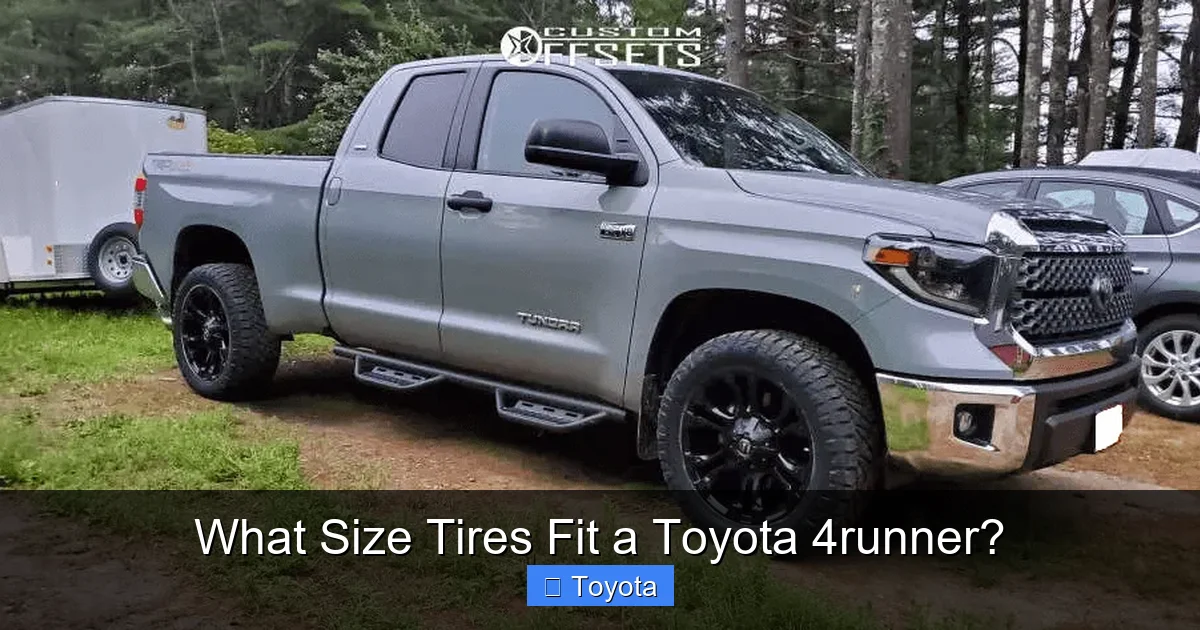
Visual guide about What Size Tires Fit a Toyota 4runner?
Image source: tiresdoc.com
What Is Plus-Sizing?
Plus-sizing means increasing wheel diameter while maintaining the same overall tire diameter. For example, moving from 17-inch to 18-inch wheels with a lower-profile tire. This keeps your speedometer accurate and avoids clearance issues.
Common safe plus-sizes for 4Runners:
- From 16″ to 17″: Use 265/65R17 instead of 265/70R16
- From 17″ to 18″: Use 265/60R18 (requires checking fender clearance)
- From 17″ to 20″: Only recommended if you have a lift or are okay with minor trimming
Always verify that the new combo doesn’t rub during full suspension compression or full steering lock.
Lift Kits Open Up Bigger Options
If you’re serious about off-roading, a suspension lift is almost essential for fitting larger tires. Here’s what’s possible:
- 2-inch lift: Fits up to 33-inch tires (e.g., 285/70R17) with minor modifications
- 3-inch lift: Handles 35-inch tires (e.g., 315/70R17) but may require extended brake lines, speedometer recalibration, and fender trimming
Popular 33-inch options include 285/70R17 (about 32.7” tall) and 255/80R17 (33.1”). Both work well on lifted 4Runners and provide excellent trail performance.
⚠️ Warning: Installing tires significantly larger than stock without proper supporting mods can strain your differentials, transfer case, and axles. Always consult a 4×4 specialist before going beyond 33 inches.
Tire Width vs. Wheel Width
Your tire size must match your wheel width. A general rule:
- A 265mm tire fits best on a 7.5–8.5″ wide wheel
- A 275mm tire needs 8–9″ width
- A 285mm tire requires 8.5–9.5″ width
Using a tire too narrow or too wide for your wheel can cause poor handling, uneven wear, or even tire failure. When upgrading wheels, check manufacturer recommendations for compatible tire widths.
Best Tire Types for Different Driving Needs
Once you’ve settled on a size, the next decision is tread type. Not all tires are created equal—even at the same size.

Visual guide about What Size Tires Fit a Toyota 4runner?
Image source: rxmechanic.com
All-Season Highway Tires
Ideal for daily drivers who prioritize comfort, quiet, and longevity. Examples include the Michelin Defender LTX or Bridgestone Dueler H/L. These offer good wet/dry traction and last 60,000+ miles but lack serious off-road chops.
All-Terrain Tires
The sweet spot for most 4Runner owners. They handle pavement well while providing solid performance on dirt, gravel, and light mud. Top picks:
- BFG KO2 (285/70R17 is a favorite for lifted 4Runners)
- Goodyear Wrangler DuraTrac
- Falken Wildpeak AT3W
All-terrains typically last 40,000–50,000 miles and offer a balanced ride. They’re quieter than mud-terrains and better in snow.
Mud-Terrain Tires
For hardcore off-roaders who frequently tackle deep mud, rocks, or sand. Examples: Nitto Trail Grappler, Mickey Thompson Baja Boss MT. These have aggressive tread blocks and self-cleaning channels but are noisy on pavement and wear faster.
Only choose mud-terrains if you spend significant time off-road. Otherwise, the trade-offs aren’t worth it.
Winter/Snow Tires
If you live in a snowy climate, consider dedicated winter tires like the Nokian Hakkapeliitta LT3 or Cooper Discoverer SnowTX. They use softer rubber compounds that stay flexible in cold temps, providing far better grip than all-seasons in ice and snow.
💡 Pro Tip: Many owners run two sets—all-terrains for summer and winters for cold months. It extends tire life and improves safety.
Installation, Maintenance, and Safety Tips
Getting the right tire is only half the battle. Proper installation and care ensure longevity and safety.
Professional Mounting Is Key
Always have tires mounted by a reputable shop with experience on SUVs and trucks. They’ll check for runout, balance properly, and torque lug nuts to spec. Improper mounting can cause vibrations, uneven wear, or even wheel separation.
Rotation and Alignment
Rotate tires every 5,000–7,000 miles to promote even wear. Front tires on 4Runners often wear faster due to steering and weight distribution. Also, get a wheel alignment after installing new tires or a lift kit—misalignment causes rapid shoulder wear.
Monitor Tire Pressure
The 4Runner’s recommended pressure is usually 33–35 PSI (check your door jamb sticker). Underinflated tires overheat and wear faster; overinflated ones reduce traction and cause center wear. Use a quality gauge and check pressure when tires are cold.
Speedometer and TPMS Considerations
Larger tires rotate fewer times per mile, making your speedometer read slow. At 70 mph, you might actually be going 73+. This can lead to speeding tickets or incorrect odometer readings.
Most modern 4Runners have a Tire Pressure Monitoring System (TPMS). Changing tire size may trigger false warnings unless the system is recalibrated. Some shops can reprogram it; others require a scan tool or dealership visit.
Load Rating and Speed Rating
Never go below the original tire’s load index (e.g., 115 = 2,679 lbs per tire). The 4Runner is a heavy vehicle, especially when loaded with gear or towing. Speed ratings (like S, T, or H) should also match or exceed OEM specs for safety.
Common Mistakes to Avoid
Even experienced owners make tire mistakes. Here’s what to watch out for:
- Ignoring fender clearance: Test-fit new tires before driving. Turn the wheel lock-to-lock and compress the suspension to check for rubbing.
- Mixing tire types or tread patterns: Always replace in sets of four. Mixing can cause handling issues and damage the 4WD system.
- Overlooking spare tire compatibility: If you upgrade your main tires, your spare should match in size and type. A mismatched spare is useless in an emergency.
- Buying used tires: Avoid unless you know their history. Old tires can dry-rot or have hidden damage, even if they look fine.
- Skipping the alignment: New tires + old alignment = uneven wear. Always align after changes.
Final Thoughts: Finding Your Perfect Fit
The Toyota 4Runner is a legend for a reason—it’s tough, reliable, and endlessly customizable. Choosing the right tire size enhances everything you love about it: capability, comfort, and confidence behind the wheel.
Start with your factory specs, then consider your driving style. Daily driver? Stick close to stock or try a mild all-terrain upgrade. Weekend warrior? A 2-inch lift with 33s might be your sweet spot. Hardcore overlander? Go bigger—but do it smartly, with supporting mods and professional guidance.
Remember: tires are your only contact with the road (or trail). Investing in the right set pays dividends in safety, performance, and peace of mind. Whether you’re cruising down I-5 or crawling over boulders in Moab, the perfect tire size for your 4Runner is out there—you just have to find it.
Frequently Asked Questions
What is the stock tire size on a 2020 Toyota 4Runner TRD Pro?
The 2020 TRD Pro comes factory-equipped with 275/65R17 tires on 17-inch wheels. This size offers a great balance of off-road capability and on-road comfort, with a tall sidewall for shock absorption.
Can I put 35-inch tires on my stock 4Runner?
Generally, no—35-inch tires will rub on stock suspension and fenders. You’ll need at least a 3-inch lift, possible fender trimming, and extended brake lines to fit them safely.
Will larger tires hurt my fuel economy?
Yes, larger and heavier tires increase rolling resistance and aerodynamic drag, which can reduce fuel economy by 1–3 MPG. Wider tires also create more friction on pavement.
Do I need new wheels when changing tire size?
Not always. If you’re staying within one size (e.g., 265/70R16 to 265/65R17), your existing wheels may work. But for significant changes—especially wider tires—you’ll likely need new wheels with proper backspacing and width.
How do I know if my new tires will fit without rubbing?
Use a tire size calculator to compare overall diameter and width. Then, test-fit one tire and turn the steering wheel fully left and right while gently bouncing the suspension to check clearance.
Are all-terrain tires good for highway driving?
Yes, modern all-terrain tires like the BFG KO2 or Falken Wildpeak are designed for quiet, comfortable highway use while still offering excellent off-road performance. They’re the most popular choice for 4Runner owners.