

What Size Allen Wrench Is Needed for Dodge Durango Brakes?

Contents
- 1 Key Takeaways
- 2 📑 Table of Contents
- 3 What Size Allen Wrench Is Needed for Dodge Durango Brakes?
- 4 Understanding Brake Caliper Bolts on the Dodge Durango
- 5 Allen Wrench Sizes by Dodge Durango Model Year
- 6 Front vs. Rear Brake Caliper Bolts: What’s the Difference?
- 7 Tools You’ll Need Beyond the Allen Wrench
- 8 Step-by-Step Guide to Removing Durango Brake Caliper Bolts
- 9 Safety Tips and Best Practices
- 10 When to Call a Professional
- 11 Conclusion
- 12 Frequently Asked Questions


When working on Dodge Durango brakes, knowing the right Allen wrench size is crucial for safety and efficiency. Most models require a 6mm or 8mm Allen wrench for caliper bolts, but exact sizes vary by year and trim. Always consult your owner’s manual or a trusted mechanic before starting any brake job.
Key Takeaways
- Common Allen Wrench Sizes: Most Dodge Durango brake caliper bolts use 6mm or 8mm Allen (hex) keys, depending on the model year and brake setup.
- Model Year Matters: Earlier Durango models (1998–2003) often use 6mm, while newer models (2011–present) may require 8mm or even Torx bits.
- Front vs. Rear Brakes: Front caliper bolts typically need larger Allen wrenches than rear ones—don’t assume they’re the same.
- Use a Quality Tool: Invest in a durable, properly sized Allen wrench or hex key set to avoid stripping bolts or damaging components.
- Safety First: Always disconnect the battery, use jack stands, and wear safety gear when working on brakes.
- When in Doubt, Check: If you’re unsure, refer to the vehicle’s service manual or consult a certified mechanic.
- Torx Bits Are Common Too: Many newer Durangos use Torx bolts (like T40 or T50) instead of Allen heads—don’t confuse the two.
📑 Table of Contents
- What Size Allen Wrench Is Needed for Dodge Durango Brakes?
- Understanding Brake Caliper Bolts on the Dodge Durango
- Allen Wrench Sizes by Dodge Durango Model Year
- Front vs. Rear Brake Caliper Bolts: What’s the Difference?
- Tools You’ll Need Beyond the Allen Wrench
- Step-by-Step Guide to Removing Durango Brake Caliper Bolts
- Safety Tips and Best Practices
- When to Call a Professional
- Conclusion
What Size Allen Wrench Is Needed for Dodge Durango Brakes?
If you’re diving into a brake job on your Dodge Durango, one of the first questions you’ll likely ask is: “What size Allen wrench do I need?” It’s a fair question—after all, using the wrong tool can lead to stripped bolts, damaged calipers, or even unsafe braking performance. The good news? Once you know the right size and a few key tips, replacing or servicing your Durango’s brakes becomes much more manageable.
The Dodge Durango has been a popular SUV since its debut in the late 1990s, evolving through multiple generations with different brake systems. Because of this evolution, the tools required—especially Allen (hex) wrenches—can vary depending on your model year, trim level, and whether you’re working on the front or rear brakes. While many DIYers assume all brake bolts use standard sizes, the reality is a bit more nuanced. Some models use traditional hex bolts, while others have switched to Torx-style fasteners for better torque and reduced cam-out.
In this guide, we’ll break down exactly which Allen wrench sizes you’ll need for various Durango models, explain why these sizes differ, and offer practical advice to make your brake job smoother and safer. Whether you’re a weekend warrior or a first-time mechanic, understanding your tools is the first step toward a successful repair.
Understanding Brake Caliper Bolts on the Dodge Durango

Visual guide about What Size Allen Wrench Is Needed for Dodge Durango Brakes?
Image source: i.imgur.com
Before we get into specific Allen wrench sizes, it helps to understand what these bolts actually do. On most Dodge Durangos, the brake caliper is mounted to the steering knuckle or axle carrier using two or more bolts. These bolts hold the caliper in place so it can clamp the brake pads onto the rotor when you press the brake pedal. Over time, these bolts can become corroded, overtightened, or simply worn out—especially if the vehicle has seen a lot of miles or harsh driving conditions.
When you remove the caliper to replace brake pads or rotors, you’ll need to loosen these mounting bolts. On many Durango models, these bolts have a hexagonal (six-sided) head that requires an Allen wrench—also known as a hex key—to turn. The size of the wrench needed depends on the diameter of the bolt’s internal hex socket.
It’s important to note that not all Durango brake bolts use Allen heads. Some models, especially newer ones, use Torx bolts, which have a star-shaped pattern and require a Torx bit (like a T40 or T50). Confusing an Allen wrench with a Torx bit—or using the wrong size—can round off the bolt head, making removal nearly impossible without special tools.
Why Allen Wrenches Are Used on Brake Systems
Allen bolts are popular in automotive applications because they allow for high torque with minimal space. Their recessed design helps prevent the tool from slipping, which is crucial when working in tight engine bays or under the vehicle. On the Durango, manufacturers often choose Allen or Torx fasteners for brake calipers to ensure a secure, vibration-resistant connection.
Another advantage of Allen bolts is that they’re less likely to strip compared to standard hex bolts when used with the correct tool. However, this only holds true if you use the right size wrench and apply force evenly. Using a wrench that’s too small can damage the bolt, while one that’s too large won’t fit properly and may slip.
Common Misconceptions About Brake Bolt Sizes
One of the biggest mistakes DIYers make is assuming all brake caliper bolts are the same size. For example, someone might try using a 5mm Allen wrench on a 6mm bolt because it “fits loosely,” only to strip the head. Others might assume that because their friend’s Durango uses an 8mm wrench, theirs does too—but model years and trims can differ significantly.
Another common error is confusing Allen wrenches with Torx bits. While they may look similar at a glance, they are not interchangeable. Using a Torx bit in an Allen bolt (or vice versa) can damage both the tool and the fastener. Always inspect the bolt head carefully before selecting your tool.
Allen Wrench Sizes by Dodge Durango Model Year

Visual guide about What Size Allen Wrench Is Needed for Dodge Durango Brakes?
Image source: moparpartsgiant.com
Now that we understand the basics, let’s get into the specifics. The Allen wrench size you’ll need depends heavily on your Durango’s model year. Below is a breakdown by generation to help you identify the correct tool.
First Generation (1998–2003)
The original Dodge Durango (1998–2003) typically uses a 6mm Allen wrench for the front brake caliper bolts. These models often have simpler brake systems with traditional hex-head bolts. The rear caliper bolts may also use 6mm, though some trims or aftermarket setups could differ.
If you’re working on a first-gen Durango, a standard 6mm Allen key should do the trick. However, due to age and potential corrosion, these bolts can be stubborn. Applying penetrating oil (like PB Blaster) and letting it soak for 15–30 minutes before attempting removal is highly recommended.
Second Generation (2004–2009)
The second-generation Durango introduced more refined braking systems, but the Allen wrench size remained largely consistent. Most 2004–2009 models still use a 6mm Allen wrench for front caliper bolts. However, some higher-trim models or those with performance packages may use 8mm bolts, especially if they have larger calipers or upgraded brake components.
Always double-check the bolt head before inserting your wrench. If the 6mm fits snugly, you’re good to go. If it’s too loose, try the 8mm. Never force a tool—this is a sure sign you’ve got the wrong size.
Third Generation (2011–2020)
This is where things start to change. The third-generation Durango (2011–2020) saw a shift toward more modern fastening systems. While some models still use Allen bolts, many now feature Torx-head caliper bolts—particularly on the front axle.
For example, a 2015 Durango R/T with performance brakes may use T50 Torx bolts instead of Allen heads. In such cases, you’ll need a Torx bit and a ratchet or breaker bar, not an Allen wrench. That said, some base models or rear calipers might still use 6mm or 8mm Allen bolts, so it’s essential to inspect each bolt individually.
Fourth Generation (2021–Present)
The latest Durango models continue the trend toward Torx fasteners. Most 2021 and newer Durangos use Torx bolts (T40, T50, or even T60) for caliper mounting. Allen wrenches are becoming less common, though they may still appear on certain components like brake pad wear sensors or bracket screws.
If you own a recent Durango, don’t assume you’ll need an Allen wrench at all. Bring a full set of Torx bits to your brake job, and keep a 6mm and 8mm Allen key on hand just in case.
Front vs. Rear Brake Caliper Bolts: What’s the Difference?
Visual guide about What Size Allen Wrench Is Needed for Dodge Durango Brakes?
Image source: justanswer.com
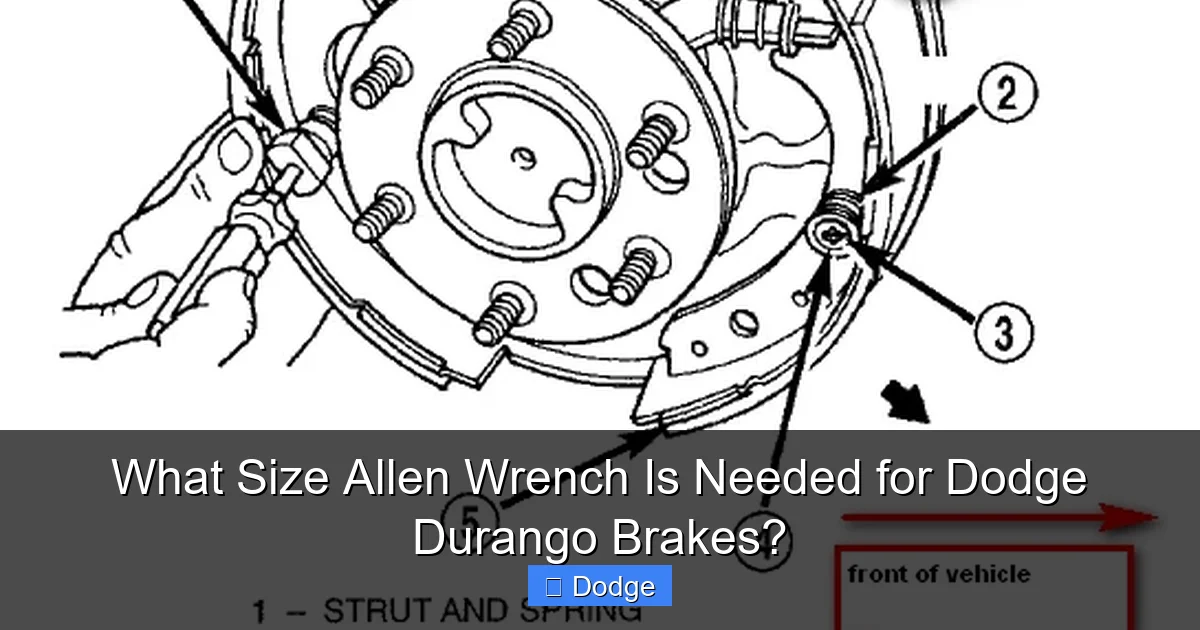
Another important factor is whether you’re working on the front or rear brakes. In most vehicles, including the Durango, front brake systems are larger and handle more stopping power, so they often use bigger bolts and fasteners.
Front Brake Caliper Bolts
Front caliper bolts on the Durango are typically larger and require more torque to remove. As mentioned, earlier models use 6mm Allen wrenches, while newer ones may use 8mm or Torx. Because these bolts endure significant stress, they’re often tightened to high specifications—sometimes over 100 ft-lbs. This means you’ll need a sturdy wrench and possibly a breaker bar to loosen them.
When removing front caliper bolts, always support the caliper with a wire or bungee cord after detachment. Letting it hang by the brake hose can damage the line and cause leaks.
Rear Brake Caliper Bolts
Rear caliper bolts are usually smaller and easier to access. On many Durango models, the rear bolts use a 6mm Allen wrench, even on newer vehicles. However, some rear calipers—especially those with integrated parking brakes—may use different fasteners or require special tools for retraction.
For example, some Durango rear calipers need to be rotated while being pushed in to reset the piston. In these cases, you’ll need a caliper tool or a C-clamp with a special adapter, in addition to the correct Allen wrench for the mounting bolts.
Tools You’ll Need Beyond the Allen Wrench
While the Allen wrench is essential, it’s just one piece of the puzzle. A successful brake job on your Durango requires a few other key tools and supplies.
Essential Tools for Brake Service
- Allen Wrench Set: A full set of metric Allen keys (4mm to 10mm) ensures you’re prepared for any bolt size.
- Torx Bit Set: Include T30, T40, T50, and T60 bits for newer Durango models.
- Breaker Bar and Ratchet: For loosening tight caliper bolts, especially on high-torque applications.
- C-Clamp or Caliper Tool: To compress the caliper piston when installing new pads.
- Jack and Jack Stands: Never rely on a jack alone—always use stands for safety.
- Lug Wrench and Torque Wrench: To safely remove wheels and tighten lug nuts to spec.
- Penetrating Oil: Like WD-40 or PB Blaster, to loosen rusty bolts.
- Safety Gear: Gloves, safety glasses, and a mask to protect against brake dust.
Optional but Helpful Tools
- Impact Driver: Useful for stubborn Allen or Torx bolts that won’t budge.
- Brake Cleaner: To clean rotors, calipers, and pads before reassembly.
- Anti-Seize Compound: Apply sparingly to bolt threads to prevent future seizing.
- Digital Caliper: To measure rotor thickness and ensure they’re within spec.
Step-by-Step Guide to Removing Durango Brake Caliper Bolts
Now that you know the right tools, here’s a practical walkthrough for removing caliper bolts using an Allen wrench.
Step 1: Prepare the Vehicle
Park on a flat surface, engage the parking brake, and chock the rear wheels. Loosen the lug nuts on the wheel you’re working on (but don’t remove them yet). Then, lift the vehicle with a jack and secure it on jack stands. Remove the wheel to access the brake assembly.
Step 2: Disconnect the Brake Line (If Necessary)
On most pad replacements, you won’t need to disconnect the brake line. However, if you’re replacing the caliper, you’ll need to disconnect the brake hose. Use a flare nut wrench to avoid rounding the fitting, and have a catch pan ready for brake fluid.
Step 3: Remove the Caliper Bolts
Locate the two caliper mounting bolts on the back of the caliper. Insert the correct Allen wrench (usually 6mm or 8mm) and turn counterclockwise. If the bolt won’t budge, apply penetrating oil and wait 15–30 minutes. For extra leverage, use a breaker bar or attach a pipe to the wrench handle.
Step 4: Support the Caliper
Once the bolts are out, carefully swing the caliper away from the rotor. Use a wire or bungee to hang it from the suspension—don’t let it dangle by the brake hose.
Step 5: Replace Pads or Rotor
With the caliper out of the way, you can now remove the old brake pads and inspect the rotor. If the rotor is worn or warped, remove the caliper bracket (which may require additional Allen or Torx bolts) to take it off.
Step 6: Reassemble
Install the new rotor (if needed), then compress the caliper piston using a C-clamp or caliper tool. Slide in the new pads, reposition the caliper, and reinstall the bolts. Tighten them to the manufacturer’s torque specification (usually listed in the service manual).
Safety Tips and Best Practices
Working on brakes isn’t just about tools—it’s about safety. A mistake here can lead to brake failure, which is extremely dangerous.
Always Use Jack Stands
Never work under a vehicle supported only by a jack. Jacks can fail. Use sturdy jack stands rated for your vehicle’s weight.
Wear Protective Gear
Brake dust contains harmful particles. Wear a mask, gloves, and safety glasses to protect your lungs and eyes.
Torque Bolts to Spec
Over-tightening can strip threads; under-tightening can lead to loose calipers. Always use a torque wrench for final tightening.
Test Before Driving
After reassembly, pump the brake pedal several times to restore pressure. Then, take a short test drive in a safe area to ensure everything works properly.
When to Call a Professional
While many Durango brake jobs are DIY-friendly, some situations call for a certified mechanic. If you encounter severely rusted bolts, damaged threads, or complex electronic brake systems (like those with electronic parking brakes), it’s best to seek professional help. Also, if you’re unsure about the correct Allen wrench size or tool, don’t guess—ask an expert.
Conclusion
Knowing the right Allen wrench size for your Dodge Durango brakes can save you time, money, and frustration. While 6mm and 8mm are the most common sizes, always inspect your specific model and year before starting. Don’t forget that newer Durangos often use Torx bolts instead of Allen heads, so come prepared with the right tools.
By following this guide, using quality tools, and prioritizing safety, you can confidently tackle your Durango’s brake service. Whether you’re replacing pads, rotors, or calipers, the right preparation makes all the difference. And remember—when in doubt, consult your owner’s manual or a trusted mechanic. Your safety—and your vehicle’s performance—depends on it.
Frequently Asked Questions
What size Allen wrench do I need for a 2005 Dodge Durango brake caliper?
Most 2005 Dodge Durango models use a 6mm Allen wrench for the front brake caliper bolts. Rear caliper bolts may also use 6mm, but always double-check before applying force.
Can I use a Torx bit instead of an Allen wrench on my Durango brakes?
No, Torx bits and Allen wrenches are not interchangeable. Using the wrong tool can damage the bolt head. Only use a Torx bit if the bolt has a star-shaped pattern.
Do all Dodge Durango models use the same Allen wrench size?
No, Allen wrench sizes vary by model year and trim. Earlier models often use 6mm, while newer ones may use 8mm or Torx bolts. Always verify before starting.
What if my Allen wrench doesn’t fit the brake bolt?
If the wrench is too loose or too tight, you likely have the wrong size. Try the next size up or down, or check if the bolt is actually a Torx type.
Can I use an impact wrench to remove Durango caliper bolts?
It’s not recommended. Impact wrenches can over-torque or strip Allen and Torx bolts. Use a breaker bar or ratchet with steady, controlled force instead.
How tight should I tighten the caliper bolts?
Always tighten caliper bolts to the manufacturer’s torque specification, usually found in the service manual. Over-tightening can damage threads; under-tightening can cause failure.


