What Kind of Oil Does a Buick Encore Take

Contents
- 1 Key Takeaways
- 2 📑 Table of Contents
- 3 Understanding the Why: Oil Basics for Modern Engines
- 4 Buick Encore Oil Specifications: By Model Year & Engine
- 5 How to Check and Add Oil Properly in Your Buick Encore
- 6 Oil Change Best Practices: DIY or Professional?
- 7 Common Mistakes & Misconceptions to Avoid
- 8 The Critical Link: Oil, Fuel Economy, and Performance
- 9 Conclusion: Your Simple, Actionable Checklist
- 10 Frequently Asked Questions


Your Buick Encore requires 0W-20 full synthetic oil for optimal performance and fuel economy across all recent model years. The specific oil capacity varies slightly depending on whether you have the 1.4L turbocharged or newer 1.2L turbocharged engine. Always consult your owner’s manual for the precise specification, but using a high-quality API-certified 0W-20 synthetic is non-negotiable for protecting your modern engine and maintaining your warranty.
The simple question, “What kind of oil does a Buick Encore take?” has a critically important answer for any owner. Getting this wrong isn’t just a minor detail—it’s a direct path to accelerated engine wear, poor performance, and potentially costly repairs. The Buick Encore, GM’s successful compact crossover, is powered exclusively by modern, turbocharged gasoline engines. These efficient powerplants have tighter tolerances and rely on specific, low-viscosity synthetic oils to function correctly. This guide will dismantle the confusion and give you the exact, actionable information you need to keep your Encore’s heart beatingstrong for years to come.
Key Takeaways
- Mandatory Viscosity: All Buick Encore models from the 2013 model year onward require 0W-20 full synthetic oil. This is a strict specification, not a recommendation.
- Synthetic is Non-Negotiable: The Encore’s turbocharged engines are designed for and require the superior protection of full synthetic oil. Conventional or synthetic blend oils are inadequate.
- Capacity Varies by Engine: The 1.4L turbo engine holds approximately 4.2 quarts (4.0L) with a filter change. The newer 1.2L turbo holds about 4.5 quarts (4.3L). Always verify.
- API Certification is Key: Look for the API “Donut” symbol with “SP” (for gasoline engines) and ensure it meets General Motors’ dexos1™ Gen 3 specification for maximum engine protection.
- Follow Service Intervals: With 0W-20 synthetic, oil change intervals are typically extended. Use the Encore’s Oil Life Monitoring System, but never exceed 12 months or 10,000 miles.
- Check Your Manual First: While this guide is comprehensive, your vehicle’s owner’s manual is the final authority. It lists the exact specification for your specific VIN and model year.
- Wrong Oil Causes Damage: Using incorrect viscosity or non-synthetic oil can lead to increased wear, turbocharger failure, reduced fuel economy, and potential voiding of your powertrain warranty.
📑 Table of Contents
- Understanding the Why: Oil Basics for Modern Engines
- Buick Encore Oil Specifications: By Model Year & Engine
- How to Check and Add Oil Properly in Your Buick Encore
- Oil Change Best Practices: DIY or Professional?
- Common Mistakes & Misconceptions to Avoid
- The Critical Link: Oil, Fuel Economy, and Performance
- Conclusion: Your Simple, Actionable Checklist
Understanding the Why: Oil Basics for Modern Engines
Before we dive into the specific “what,” it’s crucial to understand the “why.” Engine oil does far more than just lubricate. It’s the lifeblood of your engine, performing several vital functions:
- Lubrication: It forms a protective film between metal surfaces (like pistons and cylinder walls) to prevent direct contact and wear.
- Cooling: Oil carries heat away from critical components like the turbocharger and piston crowns, supplementing the coolant system.
- Cleaning: Detergents and dispersants in modern oils keep sludge, varnish, and deposits suspended so they can be filtered out.
- Sealing: It helps seal piston rings against cylinder walls, maintaining compression and efficiency.
- Protection: Additives combat oxidation, rust, and corrosion, and neutralize acidic byproducts from combustion.
For a turbocharged engine like the Encore’s, oil faces even greater challenges. The turbo spins at over 200,000 RPM and operates at extreme temperatures. The oil must flow quickly to lubricate the turbo’s bearings upon startup (before the turbo is spinning fast and pressurizing its own oil feed) and must resist thickening and breaking down under intense heat. This is precisely why the specification is so strict.
Decoding the Viscosity: What “0W-20” Really Means
The number “0W-20” is the oil’s viscosity grade, set by the SAE (Society of Automotive Engineers). It’s a two-number system:
- The “W” number (0W): Stands for “Winter.” This number indicates how easily the oil flows at cold temperatures. A lower number means better cold-weather flow. “0W” means the oil behaves like a single-grade 0-weight oil at start-up in cold conditions. This is crucial for immediate lubrication on cold mornings, reducing engine wear during the most vulnerable period—the first few seconds after startup.
- The second number (20): This indicates the oil’s viscosity at the standard operating temperature (100°C/212°F). “20” means it’s relatively thin at high temps. A thinner oil at operating temperature reduces internal friction, which directly improves fuel economy—a key design goal for the Encore.
Using a thicker oil like 5W-30 in an engine designed for 0W-20 can cause sluggish circulation on startup, increased drag on moving parts, and poor fuel economy. It can also prevent the engine’s variable valve timing systems (which rely on hydraulic oil pressure) from functioning correctly. Conversely, using a thinner oil than specified (like a 0W-16) may not provide a thick enough film to protect bearings and other high-load components under stress. Stick to 0W-20.
Buick Encore Oil Specifications: By Model Year & Engine
The Buick Encore has been powered by two primary turbocharged engine families during its production run. The oil specification has been consistent, but the capacity differs slightly.

Visual guide about What Kind of Oil Does a Buick Encore Take
Image source: di-sitebuilder-assets.dealerinspire.com
The 1.4L Turbocharged Engine (L16 / A14NET – 2013-2022 Models)
This was the sole engine for the Encore from its 2013 introduction until the 2023 model year refresh in some markets. It’s a 1.4-liter, 4-cylinder, direct-injected, turbocharged unit.
- Required Oil: SAE 0W-20
- Oil Type: Full Synthetic
- Required Specification: Must meet General Motors dexos1™ Gen 3 specification (for gasoline engines). This is the single most important certification to look for on the oil container. It’s often denoted by the dexos1 logo or listed in the specifications.
- API Certification: Must meet or exceed API SP (or the older SN/SN Plus, but SP is current and preferred). The API “donut” symbol should be clearly visible.
- Oil Capacity (with filter): Approximately 4.2 quarts (4.0 liters). This is a common figure, but always check your dipstick after a drain and fill.
- Oil Capacity (without filter): Approximately 4.0 quarts (3.8L).
Practical Tip: When purchasing oil, you’ll typically find it in 1-quart (946ml) or 5-quart (4.73L) containers. For a 1.4L Encore, buying a 5-quart jug gives you enough for the change with a little leftover for top-offs. Always replace the oil filter with a high-quality filter (like ACDelco, Fram, or Mobil 1) that is designed for your engine and meets OEM specifications.
The 1.2L Turbocharged Engine (LAH / LIH – 2023+ Models)
For the 2023 model year (in North America and other markets), Buick introduced a new, more efficient 1.2-liter turbocharged three-cylinder engine (marketed as “1.2L Turbo”). While the engine architecture is new, the oil philosophy remains the same.
- Required Oil: SAE 0W-20
- Oil Type: Full Synthetic
- Required Specification: Must meet General Motors dexos1™ Gen 3.
- API Certification: Must meet or exceed API SP.
- Oil Capacity (with filter): Approximately 4.5 quarts (4.3 liters).
- Oil Capacity (without filter): Approximately 4.3 quarts (4.1L).
It’s vital to confirm your specific engine size. You can find it on a sticker under the hood, in your owner’s manual, or by checking your VIN (Vehicle Identification Number). The 10th character of the VIN often denotes the engine type. A quick VIN decode online or a call to your dealer can confirm this.
What About Older or Different Models?
If you own a Buick Encore from the very first 2013 model year, the specification is still 0W-20 full synthetic. There has been no change to the requirement across the entire production span for the gasoline models. The only exception would be a non-US market vehicle with a completely different engine (e.g., a diesel), which is exceptionally rare for the Encore in North America. For any doubt, your glove box owner’s manual is the ultimate source of truth.
For owners of other GM vehicles, it’s worth noting that the dexos1™ Gen 3 standard is backward-compatible. An oil that meets Gen 3 will also protect engines that previously required Gen 2 or the original dexos1. This means you can confidently use a modern dexos1 Gen 3 oil in your older Encore if you’re unsure of the original spec, but always verify capacity.
How to Check and Add Oil Properly in Your Buick Encore
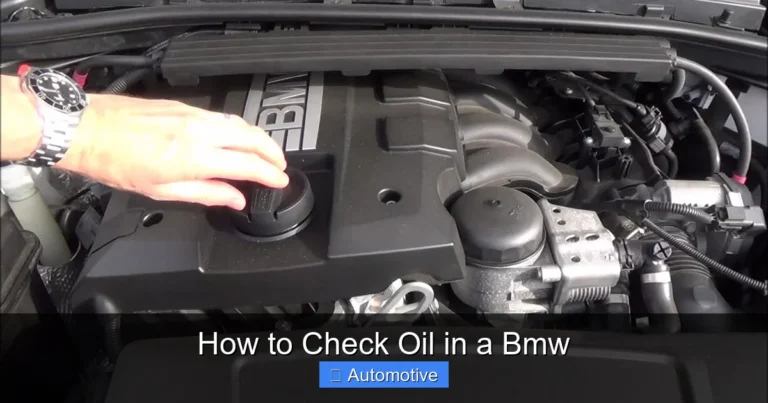
Knowing how to check your oil level is a fundamental skill every car owner should have. The Encore makes this easy with a traditional dipstick (not all modern cars have one!). Here is the correct, safe procedure:

Visual guide about What Kind of Oil Does a Buick Encore Take
Image source: i0.wp.com
- Park Level & Cool: Park your Encore on a level surface. For the most accurate reading, the engine should be off and have been off for at least 10-15 minutes. This allows oil to fully drain back into the oil pan.
- Locate the Dipstick: Open the hood. The dipstick has a bright yellow or orange ring handle and is labeled with an oil can icon. It’s typically near the front of the engine bay.
- Pull & Wipe: Pull the dipstick all the way out. Wipe the end clean with a lint-free cloth or paper towel.
- Reinsert Fully: Push the dipstick all the way back into its tube until it seats properly.
- Read the Level: Pull the dipstick out again and read the oil level. There will be two notches or marks, labeled “MIN” (minimum) and “MAX” (maximum) or “L” (low) and “F” (full). The oil film should be between these two marks. If it’s at or below the MIN mark, you need to add oil immediately.
- Adding Oil: If adding oil, remove the oil filler cap (the larger cap on the top of the engine, also usually yellow). Add approximately 0.5 quarts at a time, using a funnel. Wait a minute for the oil to settle, then re-check the dipstick. Do not overfill! Overfilling can cause aeration (foaming), which destroys the oil’s lubricating ability and can lead to engine damage.
Important: If you find yourself adding more than a quart of oil between scheduled changes, you have a leak or the engine is burning oil. Have it inspected by a professional immediately. A properly functioning Encore should consume very little oil between changes.
Choosing the Right Oil Brand and Product
As long as the oil meets the SAE 0W-20, full synthetic, API SP, and dexos1 Gen 3 requirements, you are free to choose from many reputable brands. Here are some top-tier examples that are widely available and carry the necessary certifications:
- GM Brand (OEM): ACDelco dexos1™ Gen 3 Full Synthetic. This is the oil General Motors engineers designed the engines to use. It’s an excellent, guaranteed-compliant choice.
- Major National Brands: Mobil 1 Extended Performance 0W-20, Pennzoil Platinum Full Synthetic 0W-20, Valvoline Full Synthetic 0W-20 with Max Life™, Shell Helix Ultra 0W-20, Castrol EDGE Full Synthetic 0W-20. All of these carry the dexos1 Gen 3 license when you check the back label.
- Store Brands: Many auto parts stores (AutoZone, Advance Auto Parts, O’Reilly, NAPA) have their own full synthetic 0W-20 that is dexos1 Gen 3 certified. These are often excellent value options. Just be sure to read the label to confirm the certifications.
Do not be swayed by marketing terms like “energy conserving” or “high mileage” as your primary guide. The specification (dexos1 Gen 3) is the only guarantee the oil has the correct additive package for your Encore’s turbocharged engine. “High mileage” oils are for engines with significant wear (75,000+ miles) and have seal conditioners that are unnecessary for a properly maintained engine. Stick to the standard dexos1 Gen 3 formula unless you have a known, diagnosed consumption issue.
Oil Change Best Practices: DIY or Professional?
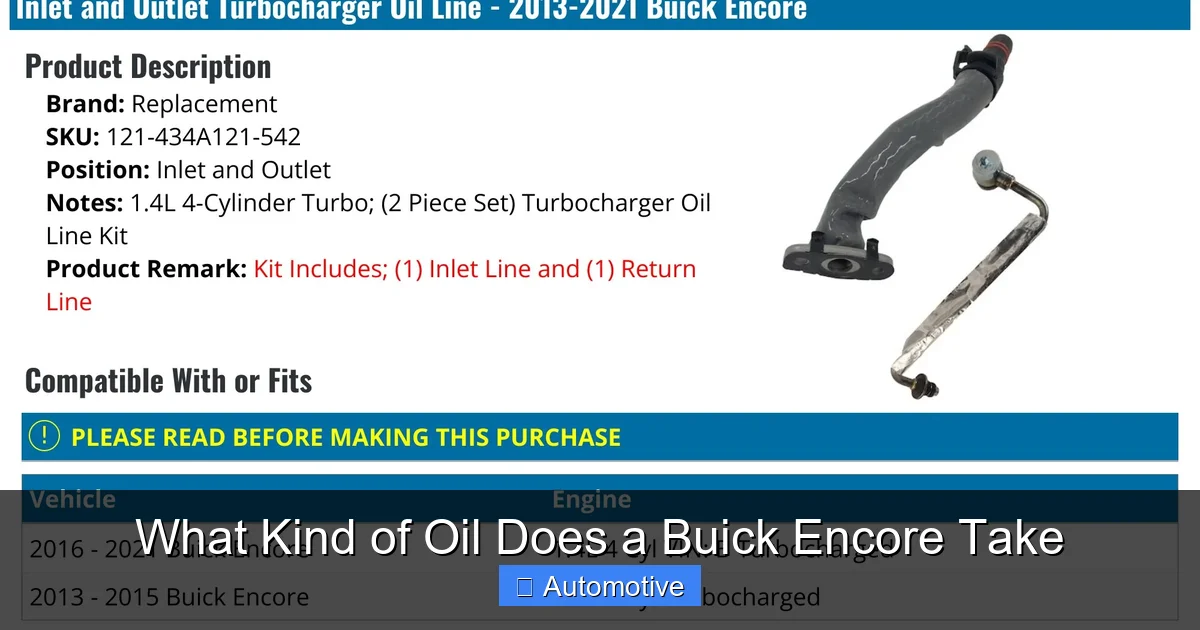
Changing your own oil is a rewarding and cost-effective task for those with basic mechanical skills and the proper tools (socket wrench, drain pan, filter wrench, funnel). However, for a turbocharged engine, attention to detail is paramount.
Visual guide about What Kind of Oil Does a Buick Encore Take
Image source: partsgeek.com
Essential Steps for a DIY Oil Change
- Warm the Engine: Run the engine for 5-10 minutes. Warm oil flows more freely and carries more contaminants out of the engine.
- Safety First: Use jack stands on solid ground, never just a jack. Never get under a car supported only by a jack.
- Drain the Oil: Remove the drain plug. Let the oil drain completely (15-20 minutes). This old oil contains abrasive metal particles.
- Replace the Filter: Before the oil pan drain plug is reinstalled, remove the old oil filter. Use a filter wrench. Before installing the new filter, lightly coat the rubber gasket on the filter with fresh new oil. This ensures a good seal and prevents the gasket from sticking. Screw the new filter on by hand until the gasket contacts the mounting surface, then tighten according to the filter’s instructions (usually 3/4 to 1 turn after contact—do not overtighten).
- Reinstall Drain Plug: Clean the plug and its sealing washer (if equipped—many modern cars have a crush washer). Reinstall and torque to specification (usually 20-30 ft-lbs—check your manual).
- Fill with New Oil: Remove the filler cap. Pour in the specified amount of new oil (4.2 or 4.5 quarts). Replace the cap.
- Check for Leaks & Level: Start the engine and let it run for 30 seconds. Check under the car for leaks at the drain plug and filter. Shut off the engine, wait 2 minutes, and re-check the dipstick. Top off if necessary to the MAX mark.
- Dispose Properly: Take the used oil and filter to a designated recycling center (most auto parts stores accept them for free). Never pour down the drain or throw in the trash.
When to Consider a Professional Service
If you lack tools, space, or confidence, a professional service is a great option. When choosing a shop:
- Specify the Oil: Tell them explicitly: “It requires 0W-20 full synthetic that meets GM dexos1 Gen 3.” Do not let them substitute with a “similar” oil.
- Ask About the Filter: Ensure they are using a quality filter (OEM ACDelco or equivalent). Some quick-lube places use cheap filters that can restrict flow or have poor bypass valves.
- Verify Capacity: Confirm they are putting in the correct amount (4.2 or 4.5 quarts). Overfilling is a common mistake at some shops.
- Keep Records: Get a detailed receipt listing the oil brand, viscosity, and specification (dexos1 Gen 3), and the filter part number. This is vital for warranty claims.
For ultimate peace of mind and to maintain your factory warranty, taking your Encore to a Buick/GMC dealer service department is always a safe bet, though typically more expensive.
Common Mistakes & Misconceptions to Avoid
Even knowledgeable owners can fall into traps. Here are the most frequent errors:
“It’s Just Oil—Any 0W-20 Will Do”
This is the biggest and most dangerous myth. Not all 0W-20 synthetic oils are created equal. The dexos1™ Gen 3 specification mandates a rigorous set of tests for wear protection, sludge prevention, turbocharger deposit control, and fuel economy retention. An oil that simply says “0W-20 Synthetic” but lacks the dexos1 license may not have the robust additive package needed to protect your Encore’s turbocharged engine from low-speed pre-ignition (LSPI) or turbo bearing deposits. Always look for the dexos1 logo or wording.
Using “High Mileage” Oil Too Early
High-mileage oils contain seal conditioners designed to soften and swell older, brittle seals to reduce leaks. In a newer, healthy engine with original seals, these conditioners are unnecessary and can sometimes cause issues. They are formulated for engines with 75,000+ miles showing signs of minor seepage. Stick with standard dexos1 Gen 3 oil for your Encore until it has high mileage or a diagnosed seal issue.
Ignoring the Oil Life Monitoring System (OLMS)
The Buick Encore has a sophisticated computer algorithm that monitors your driving habits (engine revolutions, temperature, trip length) to calculate oil life. This system is designed for use with dexos1-approved 0W-20 synthetic oil. When the “Change Engine Oil” message appears, change the oil within the next 500-1000 miles. Do not simply reset the light without changing the oil. The system does not sense oil level or contamination directly.
Neglecting Other Fluid Interactions
Engine oil health can be affected by other systems. A failing PCV (Positive Crankcase Ventilation) system can force combustion gases and fuel vapors into the oil, diluting it and causing premature degradation. Coolant leaks into the oil (from a failed head gasket or cooler) are catastrophic. Stay alert to unusual oil consumption, milky sludge on the dipstick (sign of coolant), or a strong fuel smell on the dipstick.
The Critical Link: Oil, Fuel Economy, and Performance
The choice of 0W-20 isn’t arbitrary; it’s a core component of the Encore’s design philosophy of efficiency. The lower viscosity reduces internal friction, which the engine computer (ECU) is tuned to expect. Using a thicker oil can:
- Increase fuel consumption by 1-2% or more.
- Cause the variable valve timing system to operate outside its optimal range, leading to reduced power, rough idle, and potential diagnostic trouble codes (P0010, P0011, etc.).
- Increase wear during cold starts due to slower circulation.
Conversely, a high-quality 0W-20 synthetic that meets dexos1 Gen 3 will:
- Provide faster cold-start protection, reducing wear on startup.
- Maintain optimal fuel economy numbers.
- Offer superior shear stability, meaning it resists thinning out under high engine loads and temperatures—crucial for the turbo.
- Keep the engine and turbo cleaner for longer, maintaining performance.
Think of it this way: Using the correct oil is part of your Encore’s maintenance schedule, just like tire rotations and air filter changes. It’s an investment in the vehicle’s longevity, efficiency, and resale value. A well-maintained Encore with a complete service history using the correct fluids will command a higher price on the used market.
Conclusion: Your Simple, Actionable Checklist
So, what kind of oil does a Buick Encore take? The answer is precise and unwavering: SAE 0W-20 full synthetic oil that meets the General Motors dexos1™ Gen 3 specification.
To summarize your action plan:
- Identify Your Engine: 1.4L Turbo (most common) or 1.2L Turbo (2023+). Capacity is ~4.2 or ~4.5 quarts with filter.
- Buy the Right Oil: Look for the dexos1 Gen 3 logo on the bottle and API SP. Brands like ACDelco, Mobil 1, Pennzoil Platinum, and Valvoline are safe bets.
- Change on Schedule: Follow the Oil Life Monitor, but never exceed 12 months or 10,000 miles. Use a high-quality filter.
- Check Level Regularly: Monthly or before long trips, using the dipstick when the engine is cold and off.
- Document Everything: Keep receipts with the oil brand and specification noted. This is your warranty protection.
By following this guide, you are doing the single most important thing you can do to ensure your Buick Encore’s turbocharged engine delivers reliable, efficient, and enjoyable performance for the long haul. Don’t gamble with generic oil; give your Encore the specific, engineered lubrication it demands. For more detailed information on other GM models, you can read our guide on what kind of oil a 2014 Buick Enclave takes, which uses similar specifications. Understanding the universal principles of modern oil requirements is also covered in our article what kind of oil does my car need. Remember, when in doubt, your owner’s manual is your best friend.
Frequently Asked Questions
Can I use 5W-30 oil in my Buick Encore instead of 0W-20?
No. Using 5W-30 is not recommended and can cause problems. The Encore’s engine is specifically engineered for the low friction and rapid cold-flow properties of 0W-20. Thicker 5W-30 can reduce fuel economy, impair variable valve timing function, and potentially cause increased wear during cold starts. Always use the specified 0W-20.
Is full synthetic oil really required, or can I use a synthetic blend?
Full synthetic oil is absolutely required. The “synthetic blend” does not meet the rigorous performance standards of dexos1 Gen 3 for this turbocharged engine. The turbocharger’s extreme operating conditions demand the superior thermal stability, shear strength, and deposit protection of a full synthetic. Using a blend risks turbo failure and engine damage.
How often should I change the oil in my Buick Encore?
With 0W-20 full synthetic, the factory Oil Life Monitoring System (OLMS) will typically call for a change every 7,500 to 10,000 miles under normal driving conditions. For severe conditions (mostly short trips, extreme temperatures, dusty environments), the interval may be shorter. Never automatically change at a fixed mileage; always let the OLMS calculate based on your actual driving. As a safe rule, do not exceed 12 months or 10,000 miles.
Does the oil filter matter as much as the oil itself?
Yes, the filter is critically important. A low-quality filter can have a poor quality filter media (allowing contaminants through), a weak bypass valve (which can cause oil starvation if the filter clogs), or poor sealing. Always use a filter that meets OEM specifications, such as an ACDelco Professional, Fram Ultra, or Mobil 1 filter. A cheap filter can negate the benefits of your expensive synthetic oil.
What does “dexos1” mean, and why is it so important?
dexos1 is General Motors’ proprietary engine oil specification. It’s a performance standard, not a brand. Oils bearing the dexos1 Gen 3 logo have passed a battery of GM-designed tests for wear protection, sludge prevention, fuel economy retention, and crucially, turbocharger deposit control. It ensures the oil has the correct additive chemistry to protect your Encore’s specific engine design. Using a non-dexos1 oil risks voiding your powertrain warranty.
If I accidentally added a quart of regular 5W-30 to my full 0W-20, is my engine ruined?
No, a single quart of the wrong oil mixed in is not a catastrophe, but it should be corrected. The incorrect oil will slightly dilute the beneficial properties of the 0W-20. You should plan to change the oil and filter soon (within the next 500 miles) using the correct 0W-20 dexos1 Gen 3 oil. Do not continue driving for an entire service interval with the wrong oil in the sump. For future top-offs, always keep a bottle of the correct 0W-20 in your trunk.