What Is the Voltage for a Car Battery

Understanding what is the voltage for a car battery is essential for maintaining your vehicle’s reliability and performance. Most car batteries operate at 12 volts, but actual voltage can vary based on charge level, temperature, and battery health. Knowing how to measure and interpret these readings helps prevent breakdowns and extends battery life.
In This Article
- 1 Key Takeaways
- 2 📑 Table of Contents
- 3 What Is the Voltage for a Car Battery? A Complete Guide
- 4 Understanding Car Battery Voltage Basics
- 5 How to Measure Car Battery Voltage
- 6 Factors That Affect Car Battery Voltage
- 7 What Voltage Means for Starting Your Car
- 8 Maintaining Optimal Battery Voltage
- 9 When to Replace Your Car Battery
- 10 Conclusion
- 11 Frequently Asked Questions
- 11.1 What voltage should a car battery show when fully charged?
- 11.2 Can a car battery have 12 volts and still be bad?
- 11.3 What voltage is too low to start a car?
- 11.4 Why does my car battery voltage drop overnight?
- 11.5 How often should I check my car battery voltage?
- 11.6 Does cold weather affect car battery voltage?
Key Takeaways
- Standard car battery voltage is 12 volts: This is the nominal voltage for most passenger vehicles, though actual readings may differ slightly.
- Fully charged battery reads 12.6 volts or higher: A reading below 12.4 volts indicates a partial or full discharge.
- Engine running increases voltage to 13.7–14.7 volts: This shows the alternator is charging the battery properly.
- Low voltage can prevent starting: A battery under 11.8 volts often won’t have enough power to turn the starter motor.
- Temperature affects voltage readings: Cold weather reduces battery output, while heat accelerates internal degradation.
- Regular testing prevents unexpected failures: Use a multimeter or voltmeter to check voltage monthly or before long trips.
- Battery maintenance improves longevity: Clean terminals, secure connections, and proper charging habits extend battery life.
📑 Table of Contents
What Is the Voltage for a Car Battery? A Complete Guide
Have you ever turned the key in your ignition, only to hear a faint click or silence instead of the engine roaring to life? If so, you’ve likely experienced the frustration of a weak or dead car battery. One of the most common culprits behind this issue is low voltage. But what exactly is the voltage for a car battery, and why does it matter so much?
At its core, voltage is the electrical pressure that pushes current through your vehicle’s electrical system. Think of it like water pressure in a hose—without enough pressure, nothing flows. In a car, that “flow” powers everything from the starter motor to the headlights, radio, and onboard computers. Most modern cars use a 12-volt electrical system, meaning the battery is designed to deliver around 12 volts of direct current (DC). However, the actual voltage can fluctuate depending on whether the engine is running, how charged the battery is, and even the weather outside.
Understanding what is the voltage for a car battery isn’t just for mechanics or car enthusiasts—it’s a practical skill every driver should have. Whether you’re troubleshooting a no-start issue, preparing for winter, or simply trying to extend your battery’s lifespan, knowing how to check and interpret voltage readings can save you time, money, and stress. In this guide, we’ll break down everything you need to know about car battery voltage, from the basics to advanced tips for maintenance and diagnostics.
Understanding Car Battery Voltage Basics
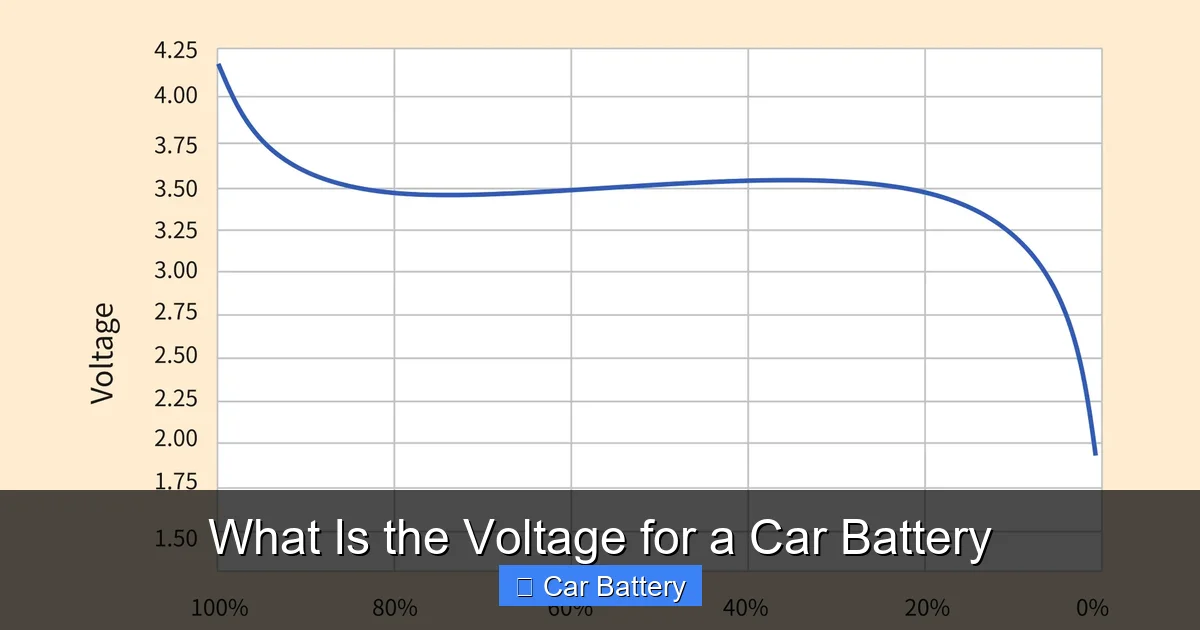
To grasp what is the voltage for a car battery, it helps to start with the fundamentals. Voltage, measured in volts (V), is the force that drives electric current through a circuit. In automotive terms, it’s the energy supplied by the battery to power the vehicle’s electrical components. Most passenger vehicles—cars, SUVs, light trucks—use a 12-volt battery system. This doesn’t mean the battery always outputs exactly 12 volts; rather, 12 volts is the nominal or average voltage under normal conditions.
Visual guide about What Is the Voltage for a Car Battery
Image source: cdn.shopify.com
Why 12 Volts?
The 12-volt standard became widespread in the 1950s as automotive electrical systems grew more complex. Before that, many cars used 6-volt systems, but as vehicles added more electronics—like power windows, radios, and fuel injection—the demand for more power increased. A 12-volt system provides enough energy to run these components efficiently while remaining safe and cost-effective. Today, nearly all gasoline-powered cars and many hybrids use 12-volt batteries, even if they also have high-voltage traction batteries (like in electric vehicles).
How Voltage Relates to Battery Chemistry
Car batteries are typically lead-acid batteries, made up of six cells connected in series. Each cell produces about 2.1 volts when fully charged, so 6 cells × 2.1 volts = 12.6 volts. This is why a fully charged car battery usually reads around 12.6 volts when the engine is off. The chemistry inside the battery—lead plates submerged in sulfuric acid electrolyte—creates a chemical reaction that generates this voltage. Over time, as the battery discharges, the voltage drops because the chemical reaction slows down.
Voltage vs. State of Charge
One of the most important things to understand is how voltage correlates with the battery’s state of charge (SoC). Here’s a quick reference:
- 12.6V or higher: Fully charged (100% SoC)
- 12.4V: About 75% charged
- 12.2V: About 50% charged
- 12.0V: About 25% charged
- 11.9V or lower: Fully discharged or potentially damaged
These values are measured with the engine off and the battery at rest (no recent charging or discharging). If you check the voltage immediately after driving, it may read higher due to surface charge, which can give a false impression of health.
How to Measure Car Battery Voltage
Now that you know what is the voltage for a car battery, the next step is learning how to measure it. Fortunately, it’s a simple process that requires minimal tools and no special expertise. All you need is a digital multimeter (also called a voltmeter), which you can find at most auto parts stores or online for under $20.
Step-by-Step Guide to Testing Voltage
Follow these steps to get an accurate reading:
- Turn off the engine and all electrical accessories: This includes lights, radio, air conditioning, and phone chargers. These draw power and can affect the reading.
- Let the battery rest for at least 1 hour: This allows surface charge to dissipate, giving a true reading of the battery’s state.
- Set your multimeter to DC voltage (usually marked as “V~” or “V with a straight line”): Make sure it’s set to a range higher than 20 volts (e.g., 20V or 200V).
- Connect the probes: Touch the red probe to the positive terminal (+) and the black probe to the negative terminal (–). Be careful not to let the probes touch each other or metal parts.
- Read the display: The number shown is the battery’s voltage. Compare it to the state of charge chart above.
Interpreting the Results
Once you have your reading, here’s what it means:
- 12.6V or higher: Your battery is in great shape. No action needed.
- 12.4V to 12.5V: The battery is partially charged. Consider charging it soon, especially if you don’t drive often.
- 12.2V to 12.3V: The battery is low. It may struggle to start the car, especially in cold weather.
- 12.0V or lower: The battery is deeply discharged. It may not start the car at all and could be damaged.
Testing Voltage with the Engine Running
You can also test voltage while the engine is running to check if the alternator is charging the battery properly. With the engine on and all accessories off, a healthy system should show 13.7 to 14.7 volts. If it’s below 13.7V, the alternator may not be charging effectively. If it’s above 14.7V, the voltage regulator might be faulty, which can overcharge and damage the battery.
Factors That Affect Car Battery Voltage
While the standard answer to “what is the voltage for a car battery?” is 12 volts, real-world conditions can cause significant variations. Several factors influence battery voltage, and understanding them helps you diagnose issues and maintain optimal performance.
State of Charge
This is the most direct factor. A battery that hasn’t been used for days or has been drained by leaving lights on will have lower voltage. Conversely, a recently driven car will have higher voltage due to charging from the alternator. Always test voltage after the battery has rested for accuracy.
Temperature
Temperature plays a major role in battery performance. Cold weather slows down the chemical reactions inside the battery, reducing its ability to deliver voltage. In freezing conditions, a fully charged battery might still struggle to start the engine. On the flip side, high temperatures accelerate internal corrosion and evaporation of electrolyte, shortening battery life. For every 15°F drop in temperature, a battery can lose up to 20% of its cranking power.
Battery Age and Condition
As batteries age, their internal components degrade. Sulfation—the buildup of lead sulfate crystals on the plates—reduces capacity and voltage output. A battery older than 3–5 years may show normal voltage when resting but fail under load (like starting the engine). This is why voltage alone isn’t always enough to assess health; a load test is often needed.
Electrical Load
The more electrical devices you use, the more voltage the battery must supply. Running headlights, heated seats, and the stereo while the engine is off can quickly drain the battery. Even small parasitic drains—like a faulty glove box light or aftermarket alarm—can slowly discharge the battery over time.
Charging System Health
The alternator and voltage regulator work together to recharge the battery while driving. If either component fails, the battery won’t receive proper charging, leading to chronic low voltage. Symptoms include dimming lights, slow cranking, and frequent need for jump-starts.
What Voltage Means for Starting Your Car
Now that you know what is the voltage for a car battery and what affects it, let’s talk about why it matters for starting your vehicle. The starter motor requires a significant burst of power to turn the engine over—typically 100–200 amps or more. This demand can only be met if the battery has sufficient voltage and capacity.
Minimum Voltage to Start an Engine
Most cars need at least 11.8 to 12.0 volts to start reliably. Below this threshold, the starter may turn slowly or not at all. In cold weather, the required voltage increases because engine oil thickens and internal resistance rises. A battery that starts your car in summer might fail in winter, even if it shows 12.2 volts.
Cranking Amps and Cold Cranking Amps (CCA)
Voltage isn’t the only factor—current (measured in amps) is equally important. Cold Cranking Amps (CCA) is a rating that tells you how many amps a battery can deliver at 0°F for 30 seconds while maintaining at least 7.2 volts. A higher CCA rating means better cold-weather performance. For example, a battery with 600 CCA is better suited for northern climates than one with 400 CCA.
Signs of Low Voltage When Starting
Watch for these symptoms that indicate low battery voltage:
- Slow cranking: The engine turns over sluggishly.
- Clicking sound: A rapid clicking noise usually means the battery doesn’t have enough power to engage the starter.
- Dim lights: Headlights and interior lights flicker or dim when you try to start the car.
- No response: Nothing happens when you turn the key—this could mean the battery is completely dead.
Jump-Starting and Voltage
If your battery voltage is too low to start the car, jump-starting can help. Connecting jumper cables from a healthy battery provides the extra voltage and current needed to turn the engine. However, jump-starting doesn’t fix the underlying issue—once the external power is removed, the weak battery may not hold a charge. After jump-starting, drive the car for at least 30 minutes to allow the alternator to recharge the battery.
Maintaining Optimal Battery Voltage
Knowing what is the voltage for a car battery is only half the battle—keeping it in the right range is what ensures reliability. Regular maintenance and smart habits can prevent voltage drops and extend battery life.
Regular Voltage Checks
Make it a habit to test your battery voltage every month, especially before long trips or seasonal changes. A quick multimeter check takes less than 5 minutes and can catch problems early. If you notice a gradual decline in voltage over time, it may be a sign the battery is nearing the end of its life.
Keep Terminals Clean and Tight
Corrosion on battery terminals creates resistance, reducing the flow of electricity and lowering effective voltage. Clean the terminals with a mixture of baking soda and water, then scrub with a wire brush. Apply a thin layer of petroleum jelly or terminal protector to prevent future corrosion. Also, ensure the cables are tightly secured—loose connections can cause voltage drops and even sparks.
Avoid Parasitic Drains
Unplug devices like phone chargers, dash cams, and GPS units when the car is off. Even small draws can add up over time. If your battery frequently dies overnight, consider having a mechanic check for parasitic drains using a multimeter in current mode.
Drive Regularly
Batteries self-discharge over time, even when not in use. If you let your car sit for weeks, the voltage will drop. Short trips don’t allow the alternator enough time to fully recharge the battery. Aim to drive at least 20–30 minutes several times a week to keep the battery charged.
Use a Battery Maintainer
If you have a classic car, RV, or vehicle that sits for long periods, consider using a battery maintainer (also called a trickle charger). These devices provide a low, steady charge to keep the battery at full voltage without overcharging. Smart chargers are even better—they automatically adjust the charge rate based on the battery’s condition.
Replace Old Batteries Proactively
Most car batteries last 3–5 years. Even if a battery shows 12.6 volts, its internal resistance may be high, meaning it can’t deliver enough current under load. If your battery is older than 4 years, consider replacing it before it fails—especially if you live in a cold climate.
When to Replace Your Car Battery
Despite your best efforts, batteries eventually wear out. Knowing when to replace yours can prevent unexpected breakdowns. While voltage is a good indicator, it’s not the only one. Here’s how to tell it’s time for a new battery.
Age
Check the manufacture date on the battery label. Most have a code like “A123” where the letter represents the month (A=January, B=February, etc.) and the number is the year. If it’s more than 4 years old, start planning for a replacement.
Performance Issues
Frequent slow cranking, especially in cold weather, is a red flag. If you’ve had to jump-start the car more than once in a month, the battery may be failing.
Physical Signs
Look for swelling, leaks, or a bulging case—these indicate internal damage. A sulfur smell (like rotten eggs) suggests the battery is overheating or leaking acid.
Voltage Under Load
A resting voltage of 12.6V is good, but if the voltage drops below 9.6V when you try to start the car, the battery can’t handle the load. A professional load test at an auto shop can confirm this.
Warning Lights
The battery or check engine light on your dashboard may indicate a charging system problem. Don’t ignore it—have it checked promptly.
Conclusion
So, what is the voltage for a car battery? The simple answer is 12 volts, but the full story is more nuanced. A healthy, fully charged car battery should read around 12.6 volts when the engine is off and 13.7 to 14.7 volts when running. These numbers aren’t just technical details—they’re vital signs of your vehicle’s electrical health.
Understanding battery voltage empowers you to take control of your car’s reliability. By regularly checking voltage, maintaining clean connections, and driving consistently, you can prevent many common battery issues. And when problems do arise, knowing what the numbers mean helps you diagnose them quickly and accurately. Whether you’re a daily commuter or a weekend driver, a little knowledge about car battery voltage goes a long way in keeping you on the road—and out of the repair shop.
Frequently Asked Questions
What voltage should a car battery show when fully charged?
A fully charged car battery should read 12.6 volts or higher when the engine is off and the battery has rested for at least one hour. This indicates 100% state of charge.
Can a car battery have 12 volts and still be bad?
Yes. A battery may show 12 volts at rest but fail under load, especially if it’s old or damaged. A load test is needed to confirm its ability to deliver current.
What voltage is too low to start a car?
Most cars need at least 11.8 to 12.0 volts to start. Below this, the starter motor may not turn the engine over, especially in cold weather.
Why does my car battery voltage drop overnight?
This is usually due to parasitic drain—small electrical loads that continue when the car is off—or a failing battery that can’t hold a charge.
How often should I check my car battery voltage?
Check it monthly, especially before long trips or seasonal changes. Regular testing helps catch issues early and extends battery life.
Does cold weather affect car battery voltage?
Yes. Cold temperatures slow chemical reactions in the battery, reducing voltage output and cranking power. A fully charged battery performs better in winter than a partially charged one.