What Is the Triangle Warning Light on a 2013 Toyota Highlander?

Contents
- 1 Key Takeaways
- 2 📑 Table of Contents
- 3 Understanding the Master Warning Light: Your Highlander’s General Alert
- 4 Most Common and Benign Causes: The “Oh, That’s Easy” Fixes
- 5 Serious System Faults: When to Be Concerned
- 6 How to Diagnose and Address the Issue: A Step-by-Step Guide
- 7 Can You Reset It Yourself? The Truth About “Turning Off” the Light
- 8 Related Dashboard Lights and Systems in Your Highlander
- 9 When to Seek Professional Help Immediately
- 10 Conclusion: Your Triangle Light is a Communication Tool
- 11 Frequently Asked Questions


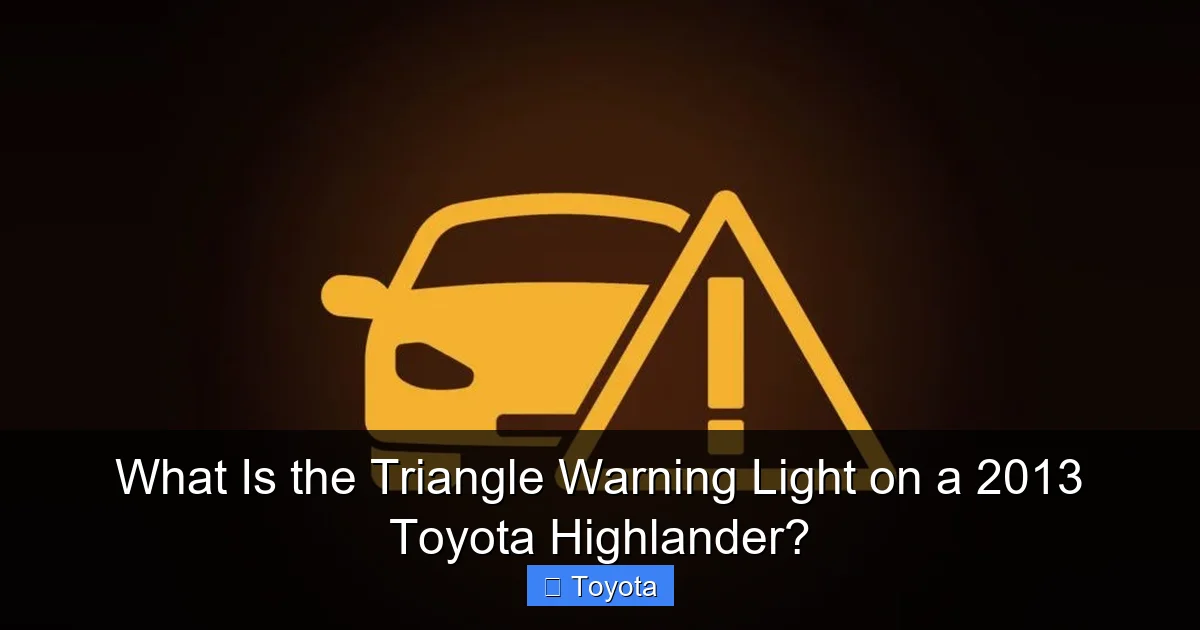
The triangle warning light on a 2013 Toyota Highlander is the Master Warning Light. It’s a general alert that something requires your attention, ranging from a simple issue like an open door or low washer fluid to a more serious system malfunction. It does not point to one specific problem but signals you to check your multi-information display for a detailed message. Always investigate the cause promptly to ensure your safety and prevent potential damage.
Key Takeaways
- It’s the Master Warning Light: The triangle is not a specific fault code but a master alert system for various non-critical and critical issues.
- Check the Display First: Your first step is always to look at the multi-information display between the gauges for a specific text message explaining the issue.
- Common Causes are Often Simple: Frequent triggers include an unlatched door, trunk, or hood; low fuel; or low windshield washer fluid.
- Can Indicate Serious System Faults: It can also illuminate for issues with the charging system, ABS, VSC, or other safety systems.
- Do Not Ignore It: Even if the car seems fine, the light indicates a system is not operating as designed. Address the specific cause promptly.
- Reset Procedures Vary: You cannot simply “reset” the light; you must resolve the underlying problem. Some issues will clear the light automatically once fixed; others may require a scan tool.
- Consult Your Owner’s Manual: Your manual has the definitive list of all possible messages that can accompany the triangle light for your specific model year and trim.
📑 Table of Contents
- Understanding the Master Warning Light: Your Highlander’s General Alert
- Most Common and Benign Causes: The “Oh, That’s Easy” Fixes
- Serious System Faults: When to Be Concerned
- How to Diagnose and Address the Issue: A Step-by-Step Guide
- Can You Reset It Yourself? The Truth About “Turning Off” the Light
- Related Dashboard Lights and Systems in Your Highlander
- When to Seek Professional Help Immediately
- Conclusion: Your Triangle Light is a Communication Tool
Understanding the Master Warning Light: Your Highlander’s General Alert
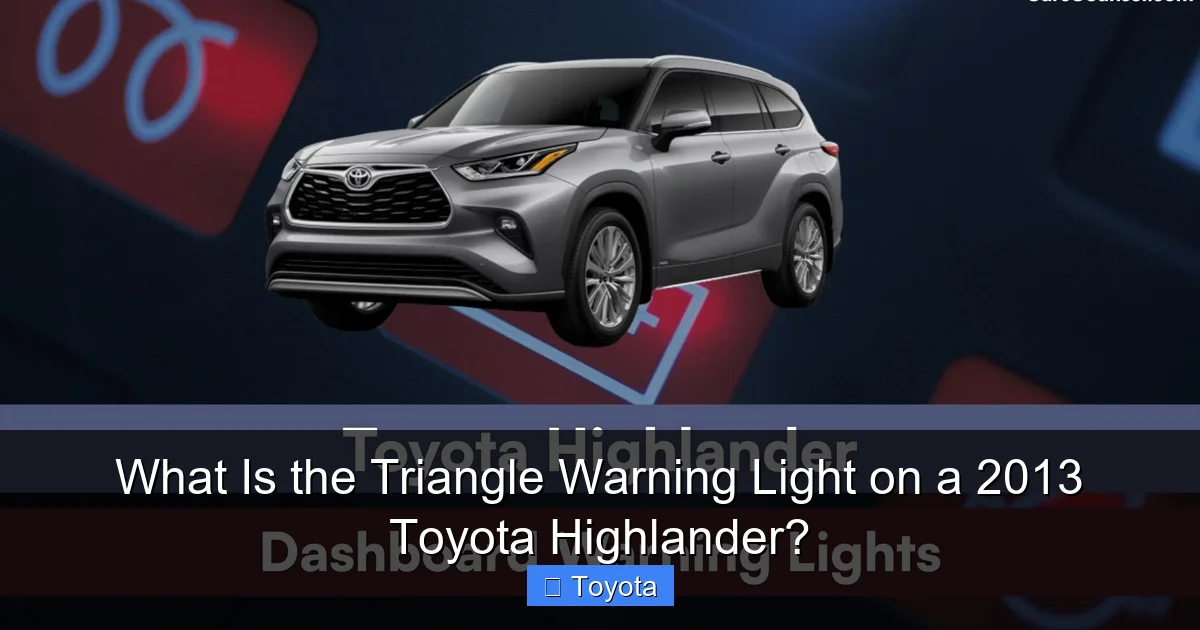
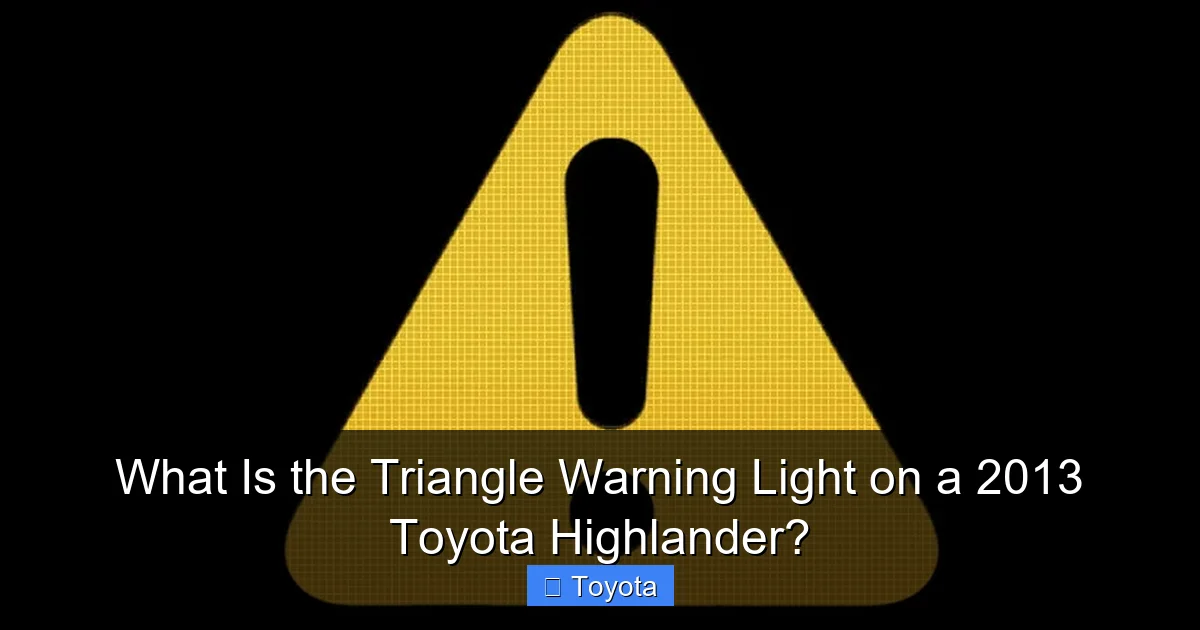
That bright yellow or amber triangle with an exclamation point that suddenly appears on your dashboard can be an unsettling sight. In your 2013 Toyota Highlander, this symbol is known as the Master Warning Light. Think of it as your vehicle’s way of saying, “Hey, pay attention to something!” It’s a catch-all indicator, unlike the more specific Check Engine Light (which is usually an engine-shaped icon) or the oil pressure warning. Its purpose is to get you to look at the additional information provided in your instrument cluster’s multi-information display. This display, located centrally between your speedometer and tachometer, will often show a text message like “DOOR OPEN,” “LOW WASHER FLUID,” or “CHECK VSC SYSTEM” to clarify exactly what triggered the master alert. The light itself is designed to be noticeable but not as urgent as a red warning light, giving you time to safely pull over and investigate if necessary.
Why a “Master” Light? The Philosophy Behind the Design
Toyota and many other manufacturers use a master warning system to reduce dashboard clutter. Instead of having a unique light for every possible minor issue (like a trunk being ajar), they use one prominent symbol and pair it with a specific message. This design philosophy prioritizes clarity. A single, recognizable symbol that always means “check the message” is easier for drivers to learn than memorizing dozens of different icons. For the 2013 Highlander, this system is integrated with the vehicle’s onboard computer network, which constantly monitors dozens of sensors and switches. When a parameter falls outside its normal range or a switch state changes (like a door latch sensor), the computer can illuminate the master warning and command the display to show the relevant text.
Most Common and Benign Causes: The “Oh, That’s Easy” Fixes
Before you assume the worst, know that a significant percentage of Master Warning Light activations in the Highlander are due to very simple, non-threatening issues. These are the kinds of things you can check and often fix yourself in under a minute. Addressing these promptly is still important—for example, driving with an open trunk can be a security and aerodynamics issue—but they won’t cause engine damage.
Visual guide about What Is the Triangle Warning Light on a 2013 Toyota Highlander?
Image source: carscounsel.com
The Usual Suspects: Doors, Trunk, Hood, and Fuel
The most frequent culprit is an unsecured entry point. The Highlander’s system has sensors in each door latch, the tailgate, and the hood. If any of these are not fully closed and latched when you start driving or after a certain speed, the Master Warning Light will flash or stay on, accompanied by a “DOOR OPEN” or “HOOD OPEN” message. Always give all doors and the tailgate a firm push to ensure they’re locked. Similarly, the light will activate with a “LOW FUEL” message when your fuel level drops to a critical point (typically around 2-3 gallons remaining). This is your final reminder to refuel. Another very common and easily resolved cause is low windshield washer fluid, which will trigger a “LOW WASHER FLUID” message. Simply pop the hood, find the blue-capped reservoir (often near the front of the engine bay), and top it off with the proper fluid.
Less Obvious Simple Triggers
Sometimes the message might be less direct. A “CHECK SPARE TIRE” message can appear if the pressure in your compact spare tire (if equipped) is low. You’ll need to check its inflation with a gauge. A message related to the “TIRE PRESSURE” system might indicate a slow leak in one of your main tires. The system monitors the rotational speed of each wheel; a significantly lower pressure causes a tire to spin slightly faster, triggering the alert. In colder weather, a temporary drop in tire pressure can cause this, and the light may go off after driving a few miles as the tires warm up and pressure increases. However, you should still verify and adjust the pressure when cold.
Serious System Faults: When to Be Concerned
While many causes are simple, the Master Warning Light is also the designated alert for several critical vehicle systems. If the accompanying message points to a system like VSC (Vehicle Stability Control), ABS (Anti-lock Braking System), or the charging system, it requires immediate and serious attention. These systems are vital for your safety and the vehicle’s operational integrity.
Visual guide about What Is the Triangle Warning Light on a 2013 Toyota Highlander?
Image source: dash-lights.com
Safety System Warnings: VSC, ABS, and AWD
If you see messages like “CHECK VSC SYSTEM,” “CHECK ABS SYSTEM,” or “AWD SYSTEM OFF,” it means a fault has been detected in one of these electronic safety networks. The VSC and ABS systems share many sensors (like wheel speed sensors) and have their own dedicated control modules. A failure could be due to a damaged sensor (often from hitting a pothole), a broken wiring harness, or an internal module failure. When these systems are disabled, you lose traction control, stability correction during cornering, and anti-lock braking functionality. While your basic hydraulic brakes will still work, the advanced safety nets are offline. Driving in slippery conditions without them is riskier. An “AWD SYSTEM OFF” message on your Highlander indicates the all-wheel-drive clutch or control system has malfunctioned, defaulting the vehicle to front-wheel drive only. This reduces traction capability, especially in snow or off-road situations.
Charging System and Other Critical Alerts
A message like “CHECK CHARGING SYSTEM” or “ALTERNATOR” is a red flag. This means your vehicle’s alternator is not generating sufficient electrical power, and the car is running on battery reserves alone. You might notice dimming headlights or dashboard lights, or the radio cutting out. If the battery drains completely, the engine will stall, and you’ll be stranded. This requires immediate diagnosis, typically at a repair shop. Less common but serious messages could include “BRAKE FLUID LOW” (a severe safety hazard) or “ENGINE OIL PRESSURE LOW” (which is usually accompanied by a separate red oil pressure warning light). Any message suggesting a loss of fluid pressure or a major engine system fault warrants stopping the vehicle safely and seeking professional help.
How to Diagnose and Address the Issue: A Step-by-Step Guide
When the triangle appears, don’t panic. Follow a logical sequence to identify and resolve the cause. Your primary tool is the multi-information display and your owner’s manual.
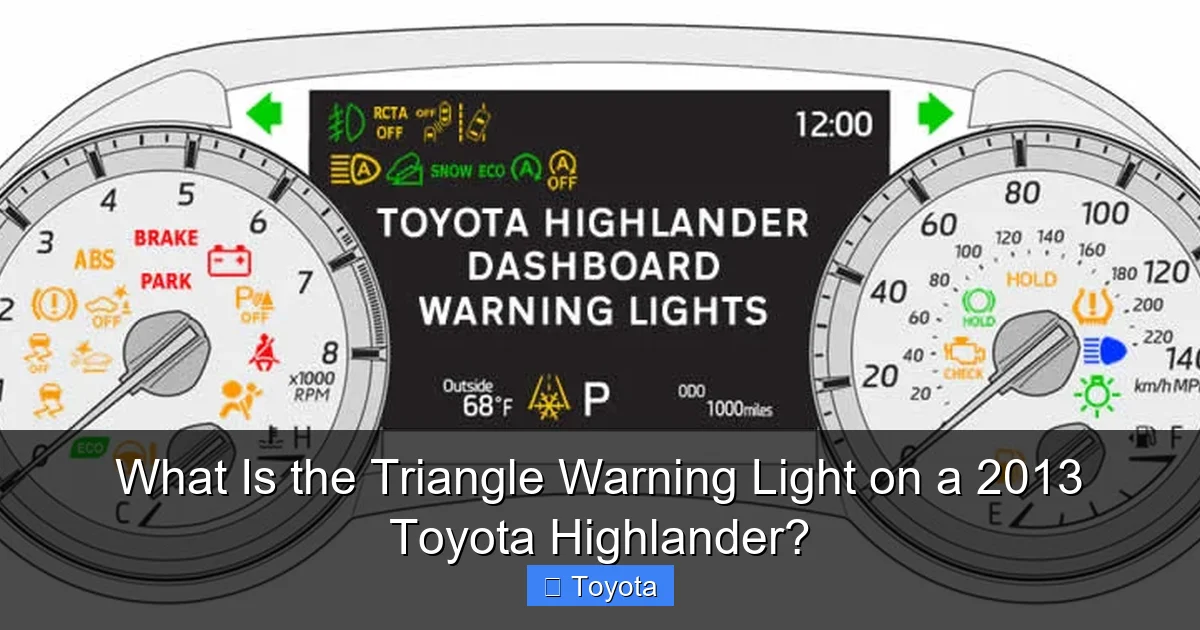
Visual guide about What Is the Triangle Warning Light on a 2013 Toyota Highlander?
Image source: dash-lights.com
Step 1: Immediate Safe Response
First, safely note the exact text message on your display. If it’s a simple “DOOR OPEN” or “LOW FUEL,” you can address it at your next stop. However, if the message indicates a safety system (VSC, ABS) or charging system, you should drive with extreme caution and minimize driving distance. Find a safe place to pull over if the message is flashing or you experience any unusual vehicle behavior (loss of power steering, stiff brakes, strange noises). For critical warnings like brake fluid or oil pressure, stop driving immediately.
Step 2: Perform Basic Visual and Physical Checks
Park safely, engage the parking brake, and turn off the engine. Then, perform these checks in order:
- All Doors, Hood, and Tailgate: Physically push on each one to ensure it’s fully latched. Listen for the distinct “thunk” of the latch engaging.
- Fuel Level: Is the gauge showing low? If so, refuel.
- Windshield Washer Fluid: Open the hood and visually inspect the translucent washer fluid reservoir. Top it off if the level is at or below the “MIN” line.
- Tire Pressures: Use a tire pressure gauge to check all four tires and the spare (if equipped). Inflate to the pressure listed on the driver’s door jamb sticker, not the tire sidewall.
- Engine Compartment: A quick glance for any obvious leaks (oil, coolant, fluid puddles) or loose, disconnected wires can provide clues, especially for charging or brake system warnings.
After addressing any obvious issues, restart the engine. Often, the light and message will extinguish immediately if the problem is resolved (like closing a door). If the message was for a low fluid, topping it off may clear the light after a few minutes of driving as the sensor registers the new level.
Step 3: When the Light Persists or the Message is Complex
If you’ve corrected all simple issues and the light remains on, or if the initial message was for a complex system (VSC, ABS), you have a genuine fault. At this point, a professional diagnosis is necessary. A technician will use a specialized scan tool (not a basic OBD-II code reader for the Check Engine Light) to communicate with the Highlander’s various control modules (ABS/VSC module, Hybrid system control if applicable, etc.). These modules store detailed diagnostic trouble codes (DTCs) that pinpoint the faulty circuit or sensor. For example, a code for a “Right Rear Wheel Speed Sensor” circuit would direct the mechanic to inspect that specific sensor and its wiring, which is a common failure point. Attempting to guess or replace parts without this diagnostic data is inefficient and costly.
Can You Reset It Yourself? The Truth About “Turning Off” the Light
This is a critical point: you cannot and should not try to simply “turn off” or “reset” the Master Warning Light without fixing the underlying problem. The light is a symptom, not the disease. If you clear the code or disconnect the battery without repairing the fault, the light will return as soon as the vehicle’s computer re-detects the problem, which could be within minutes or after a few drive cycles. Moreover, for safety system warnings, resetting the light without repair means you are driving with compromised electronic stability and braking control—a major risk.
The “Disconnect the Battery” Myth
Some older vehicles or generic advice suggests disconnecting the negative battery terminal for a few minutes to reset all warning lights. While this can clear some temporary electronic glitches, it is a blunt instrument with significant downsides for a modern 2013 Highlander. It will reset your radio presets, clock, and potentially the adaptive learning values in the engine and transmission control modules, which could lead to rough running or poor shift quality for a short period as the system re-learns. Crucially, it will not fix a persistent mechanical or electrical fault. The moment you restart the car and the faulty sensor or switch is still present, the Master Warning Light will illuminate again, often with the same message. This method is ineffective and potentially counterproductive.
Proper Reset Procedures After Repair
The only time a reset is appropriate is after a verified repair has been completed. For many simple fixes—like replacing a washer fluid sensor (if it has one), fixing a door latch wiring issue, or inflating tires—the light and message may clear automatically after you drive for a few minutes and the system verifies the parameter is back within normal range. For more complex repairs involving the ABS or VSC modules, a technician will use their scan tool to perform a specific “clear codes” procedure after the repair is complete. They may also need to perform a system initialization or calibration, such as for the steering angle sensor after an alignment, to fully restore functionality and extinguish the warning. If you’ve fixed something and the light lingers, a short drive cycle (10-15 minutes of varied driving) is often needed before the computer acknowledges the fix.
Related Dashboard Lights and Systems in Your Highlander
The Master Warning Light doesn’t operate in a vacuum. It’s part of a larger dashboard communication system. Understanding how it interacts with other lights can give you a fuller picture of your vehicle’s health. For instance, the triangle light might illuminate simultaneously with the “VSC OFF” indicator (which is a separate light that looks like a car with squiggly lines behind it) if there’s a VSC system fault. It’s also distinct from the “MAINTENANCE REQUIRED” or “SERVICE ENGINE SOON” light, which is usually a wrench icon or the word “MAINTENANCE” and is based on mileage/time intervals for routine service like oil changes. Resetting that service light is a separate, simple procedure you can often do yourself after an oil change, as detailed in guides for how to reset the maintenance light on a 2013 Toyota Highlander. The Master Warning, however, is for immediate operational concerns, not scheduled maintenance.
The Snow Mode Connection
On certain Highlander trims, you might have a dedicated “SNOW” button on the dashboard or center console. This button modifies the throttle response and transmission shift points for better traction in slippery conditions. If you see a message about the snow mode system or if the snow mode fails to engage, the Master Warning Light might illuminate to draw your attention. The system itself is separate from the core VSC/ABS functions but is part of the vehicle’s overall traction management strategy. Understanding what each button does, like the snow button on a Toyota Highlander, can help you rule out user error versus a true system fault.
Differentiating from the “Wrench” Light
It’s easy to confuse a general warning symbol with another. The Master Warning Light is a triangle with an exclamation point. On some model years or in other vehicles, a wrench icon is used to indicate a required maintenance service or, in some cases, a powertrain issue. For example, on certain Honda models, the wrench light means maintenance is due or there’s a throttle control issue. In your 2013 Highlander, the wrench symbol is typically the maintenance reminder. So, if you see a triangle, think “master alert,” and if you see a wrench, think “service interval.” This distinction helps you prioritize your response.
When to Seek Professional Help Immediately
Your safest course of action is always to consult your owner’s manual for the complete list of messages that can accompany the triangle. However, some warnings demand you stop driving and call for assistance. Pull over safely and turn on your hazard lights if you see any of the following alongside the triangle:
- Messages about Brake Fluid, Oil Pressure, or Engine Temperature: These indicate a loss of a critical fluid or severe overheating, which can cause catastrophic engine or brake failure within minutes.
- Flashing Triangle with a “CHECK HYBRID SYSTEM” message (on Hybrid models): This could indicate a high-voltage battery or motor issue. While the car may default to gas-engine operation, the hybrid system fault should be diagnosed immediately.
- Any message accompanied by unusual noises, smells (like burning), smoke, or a complete loss of power steering/brake assist: These are signs of a dangerous, active failure. Stop the engine if it is safe to do so and call for a tow.
- Persistent “CHECK CHARGING SYSTEM” after basic checks: A failing alternator will leave you stranded. Get it checked at the nearest service facility.
For all other messages—especially those related to VSC, ABS, or tire pressure—you can typically drive cautiously to a trusted mechanic or dealership for diagnosis. Explain the exact message you saw. A proper diagnosis using manufacturer-specific scan tools is the only way to accurately identify the faulty component, whether it’s a $50 wheel speed sensor or a more complex module issue.
Conclusion: Your Triangle Light is a Communication Tool
The triangle warning light on your 2013 Toyota Highlander is not something to fear, but it is absolutely something to respect. It is your car’s primary voice for a wide range of issues, from the mundane (“I forgot to close the tailgate!”) to the serious (“My stability control system has failed.”). The key to mastering this alert is to treat it as a two-part message: the light gets your attention, and the text on your multi-information display tells you what to think about. By following a systematic approach—checking the simple things first, understanding the severity of different messages, and knowing when to call a professional—you can handle this warning with confidence. Remember, ignoring the master warning is like ignoring a messenger who tells you your house has a leak; you might not see the water yet, but the problem is real and will worsen with time. Address the message, not just the light, and keep your Highlander running safely and reliably for years to come.
Frequently Asked Questions
What does a flashing triangle mean on my 2013 Highlander?
A flashing Master Warning Light typically indicates a more urgent issue that requires immediate attention, such as a critical system failure or a condition that could lead to loss of vehicle control. You should safely pull over as soon as possible to check the accompanying message on your display.
Can I drive with the triangle warning light on?
It depends entirely on the message. If it says “DOOR OPEN” or “LOW WASHER FLUID,” you can drive cautiously to your destination and fix it. However, if the message relates to brakes, oil pressure, charging, or stability systems (VSC/ABS), you should drive minimally and with extreme caution, or seek a tow, as these are safety-critical systems.
Will the triangle light reset itself?
It will only reset itself if the condition that triggered it is resolved and the vehicle’s computer verifies the parameter is back to normal. For example, closing a door or topping off washer fluid will often clear the light automatically. For system faults like a bad sensor, the light will remain on until the faulty component is repaired and the code is cleared with a scan tool.
Is the triangle light the same as the Check Engine Light?
No. The Check Engine Light (usually yellow and engine-shaped) is specifically for emissions-related engine and transmission faults. The Master Warning Light (triangle) is for a broader set of issues, including vehicle systems, body electronics, and maintenance reminders. They are monitored by different control modules.
What’s the difference between the triangle and the “Service Engine Soon” light?
The “Service Engine Soon” or wrench light is typically a maintenance reminder based on mileage/time intervals (like an oil change). The triangle Master Warning Light is for immediate operational concerns that need your attention now, not for scheduled service. One is for “take me in for service,” the other is for “check me now.”
My triangle light is on but the display shows no message. What do I do?
This is unusual but can happen if there’s a fault in the display circuit itself or a very early stage of a system fault. First, try turning the car off and restarting it. If the light persists with no message, consult your owner’s manual, as it may list this scenario. Ultimately, you will need a professional scan tool to check for stored trouble codes in the various vehicle control modules to diagnose the source.