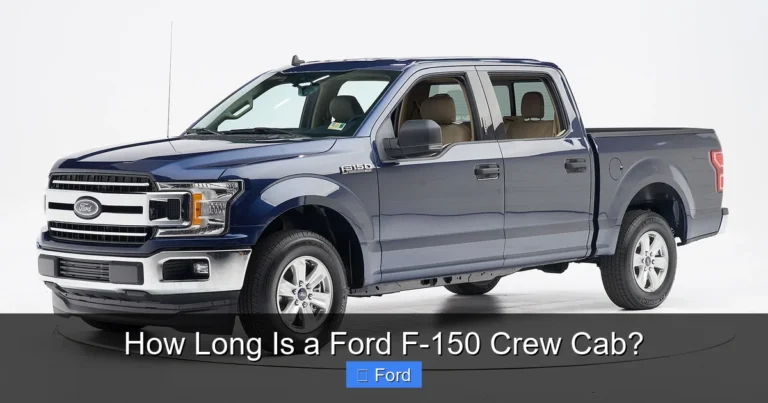
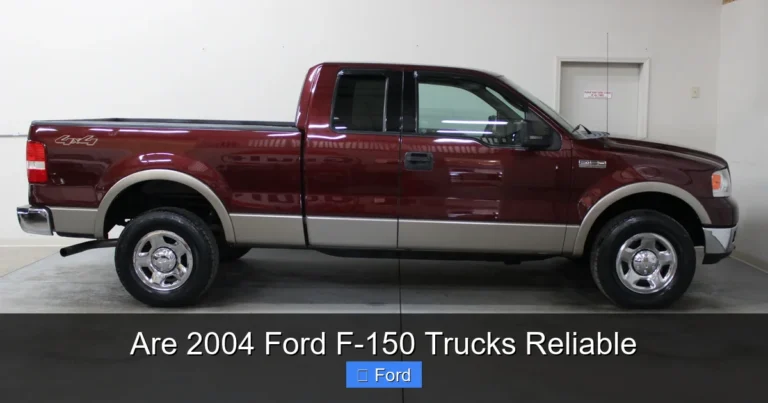
What Is the Correct Tire Pressure for a Ford F-150

Contents
- 1 Key Takeaways
- 2 📑 Table of Contents
- 3 Why the “Correct” Pressure Isn’t a Single Number
- 4 Decoding Your Ford F-150’s Door Jamb Sticker
- 5 The Critical Role of Load and Towing
- 6 Seasonal Adjustments and Temperature Effects
- 7 Understanding Your Ford F-150’s TPMS (Tire Pressure Monitoring System)
- 8 Practical Maintenance: Checking, Filling, and Choosing the Right Tools
- 9 Frequently Asked Questions




Finding the correct tire pressure for your Ford F-150 is critical for safety, fuel economy, and tire longevity. The definitive answer is always on the yellow and white sticker inside your driver’s door jamb, not a one-size-fits-all number. Pressure varies by model year, engine, drivetrain, and whether you’re carrying a heavy load or towing. Always check your door jamb sticker for your specific truck’s requirements.
So, you popped the hood, checked the oil, and gave your Ford F-150 a once-over. But when you glance at the tires, a simple question stumps even seasoned truck owners: “What is the correct tire pressure for this thing?” You might hear advice from a friend, see a number on the tire sidewall, or remember a vague “35 psi” rule of thumb. But for your specific Ford F-150, the real answer is a precise, engineered number that changes with your truck’s exact setup. Getting it right isn’t just about avoiding a TPMS light; it’s fundamental to your truck’s safety, how it handles, how much fuel it drinks, and how long those expensive tires will last. Let’s cut through the noise and find the exact, correct pressure for your F-150, no matter the year or trim.
Key Takeaways
- The driver’s door jamb sticker is the ultimate authority: Your F-150’s specific recommended pressures are printed on a permanent sticker inside the driver’s door frame. This is the only number you should follow for standard driving.
- Pressure varies by model year and configuration: A 2021 F-150 with 20″ wheels and the 3.5L EcoBoost will have different specs than a 2015 model with 18″ wheels and the 5.0L V8. Your sticker accounts for all these factory variables.
- There are often two sets of numbers: You’ll typically see a “normal” pressure (e.g., 35 psi) and a higher “maximum” or “loaded” pressure (e.g., 40-45 psi) for heavy cargo, towing, or high-speed operation.
- Check pressure when tires are cold: For an accurate reading, check your tires first thing in the morning or after the truck has been parked for 3+ hours. Driving heats tires and increases pressure readings.
- The TPMS light is a warning, not a maintenance schedule: Your Tire Pressure Monitoring System alerts you to significant loss (usually 25% below spec). It doesn’t tell you the *correct* pressure; you still need to consult your door jamb sticker to know what to fill to.
- Seasonal changes require checks: Temperature drops about 1 psi for every 10°F decrease. Check and adjust pressures more frequently in fall and winter to maintain your truck’s specified cold inflation pressure.
- Using the wrong pressure is dangerous: Underinflation causes poor handling, premature tire wear, and overheating. Overinflation reduces traction, causes a harsh ride, and leads to uneven center tread wear.
📑 Table of Contents
- Why the “Correct” Pressure Isn’t a Single Number
- Decoding Your Ford F-150’s Door Jamb Sticker
- The Critical Role of Load and Towing
- Seasonal Adjustments and Temperature Effects
- Understanding Your Ford F-150’s TPMS (Tire Pressure Monitoring System)
- Practical Maintenance: Checking, Filling, and Choosing the Right Tools
Why the “Correct” Pressure Isn’t a Single Number
This is the first and most important thing to understand. There is no universal “correct tire pressure for a Ford F-150.” Why? Because your F-150 could be a lightweight, two-wheel-drive, base XL model with 17-inch steel wheels, or a towering, four-wheel-drive, Limited trim with massive 22-inch alloy wheels and all-terrain tires. The weight distribution, tire size, and intended load capacity are completely different. Ford engineers calculate the precise pressure needed for each specific configuration to ensure optimal contact patch, load-bearing capacity, and safety under normal operating conditions. Using the wrong pressure—even if it’s close—can degrade performance and safety.
The Sidewall Number vs. The Door Jamb Sticker
This is the most common point of confusion. The number molded into your tire’s sidewall (e.g., “MAX 65 PSI”) is the maximum pressure that tire can safely hold. It is not the recommended operating pressure for your vehicle. That number is set by the tire manufacturer for structural integrity under extreme conditions. The only number you should use for daily driving is on the yellow and white sticker permanently affixed to your truck’s door jamb—specifically, the driver’s side door pillar, where the door latch is. When you open your driver’s door, this sticker is right there, usually near the bottom. It lists pressures for the front and rear tires, often for both “normal” and “heavy load” scenarios. This sticker is your bible for tire inflation.
Decoding Your Ford F-150’s Door Jamb Sticker
Let’s take a trip to your driver’s door. Open it and look for the sticker. It contains a wealth of information. For tire pressure, you’re looking for a section that says something like “TIRE PRESSURE” or “COLD INFLATION PRESSURE.” It will list pressures in pounds per square inch (PSI) for different tire sizes and often for different axle loads. A typical sticker for a modern F-150 might look like this in simplified form:

Visual guide about What Is the Correct Tire Pressure for a Ford F-150
Image source: i.ytimg.com
- Front Tires: 35 PSI (Normal) / 40 PSI (Max Load)
- Rear Tires: 35 PSI (Normal) / 45 PSI (Max Load)
- Spare Tire: 60 PSI (or a specific size/psi)
The “Normal” or “Normal Load” pressure is what you use for everyday driving with the truck empty or lightly loaded. The “Maximum,” “Maximum Load,” or “High Load” pressure is what you use when your truck is fully loaded with cargo in the bed, or when you’re towing a trailer near the truck’s maximum capacity. This higher pressure compensates for the extra weight to prevent excessive tire deflection and overheating. Never exceed the maximum pressure listed for your specific tire size on that sticker.
Variations by Model Year and Generation
Ford has made 14 generations of the F-150, and tire pressure specs have evolved. While the principle remains the same, the exact numbers differ.
- Pre-2004 (10th Gen and earlier): Often used lower pressures, commonly 30-35 PSI for normal load, depending on tire size (like P245/70R17). The door jamb sticker is still the source.
- 2004-2008 (11th Gen): Common normal pressures were 35 PSI for most trims with standard tires. The 2004-2008 models with the popular 5.4L V8 often called for 35 PSI all around on the door sticker.
- 2009-2014 (12th Gen): Pressures stayed similar, often 35 PSI normal. However, with the introduction of the popular 3.7L V6 and continued 5.0L/6.2L V8s, and various wheel sizes from 17″ to 20″, the door sticker became even more critical. A 2012 F-150 with 18″ wheels might read 35 PSI, while one with 20″ wheels might read 40 PSI normal.
- 2015-2020 (13th Gen): This generation saw a major shift with the aluminum body. Pressures often increased slightly to 35-40 PSI normal depending on configuration. The powerful 3.5L EcoBoost and 5.0L V8, especially with larger wheels or the FX4 off-road package, frequently specified 40 PSI for normal load on the door sticker.
- 2021-Present (14th Gen): The latest generation continues the trend. Normal pressures commonly range from 35 to 40 PSI. The hybrid (PowerBoost) models and those with the high-output 3.5L EcoBoost may have specific requirements. The door jamb sticker is non-negotiable here. For example, a 2023 F-150 with 20″ all-terrain tires might list 37 PSI front / 37 PSI rear for normal load.
The takeaway: A 2015 F-150 XLT with 18″ wheels might be 35 PSI, while a 2015 Lariat with 22″ wheels might be 40 PSI. Your neighbor’s F-150 might have a different number. Always, always read your own door jamb.
The Critical Role of Load and Towing
This is where many F-150 owners get it wrong. The “Normal” pressure on your door sticker assumes a typical passenger/cargo load—basically, the truck with a driver, maybe a passenger, and light items in the bed. It does not assume you’re carrying a full bed of gravel, a large camper, or towing a heavy trailer. When you add significant weight, the tire’s sidewalls and internal structure bear more stress. The correct response is to increase pressure to the “Maximum” or “Loaded” spec on your door jamb sticker.

Visual guide about What Is the Correct Tire Pressure for a Ford F-150
Image source: i.ytimg.com
How to Know When to Use “Maximum” or “Loaded” Pressure
You should increase to the higher pressure when:
- The truck is fully loaded with cargo (bed is full or near its payload capacity).
- You are towing a trailer, especially a heavy fifth-wheel or gooseneck that puts weight on the truck’s rear axle.
- You are taking a long highway trip with a fully loaded truck and/or trailer.
- You are operating at or near the truck’s Gross Vehicle Weight Rating (GVWR) or Gross Combined Weight Rating (GCWR). Your owner’s manual will explain these ratings.
The reason is twofold: First, it prevents the tire from overheating due to excessive flexing under load, which is a leading cause of tire failure. Second, it maintains the correct tire shape for stability and handling when the suspension is compressed by weight. Never decrease pressure below the “Normal” spec to get a softer ride when loaded. This is dangerous and will cause dangerous tire overheating and rapid wear. If the ride is too harsh at the higher pressure, you may need suspension upgrades like heavier springs or air bags, not underinflated tires.
Practical Example: A Family Hauler vs. A Work Truck
Imagine two identical 2020 Ford F-150 XLT SuperCrew 4×4 trucks with the 5.0L V8 and 18″ wheels. Their door jamb sticker says: Normal: 35 PSI all around. Max Load: 40 PSI Front / 45 PSI Rear.
- Truck A is used to haul kids to soccer practice and groceries. It’s usually empty or has light cargo. It should be kept at 35 PSI cold.
- Truck B is a contractor’s work truck that carries tools, lumber, and equipment in the bed daily, often near its 1,800 lb payload. It should be inflated to 40 PSI front / 45 PSI rear when loaded. On weekends when empty, it can be safely reduced to 35 PSI for a more comfortable ride, but it must be checked and adjusted before the next workday’s load.
This example shows how the same truck, used differently, requires different pressures. If you only do one thing, check your door jamb and follow the “Normal” pressure. If you frequently carry heavy loads or tow, learn the “Max Load” numbers and use them appropriately.
Seasonal Adjustments and Temperature Effects
Physics is unforgiving: tire pressure changes with temperature. For every 10°F (5.6°C) drop in ambient temperature, your tire’s pressure decreases by about 1-2 PSI. Conversely, it rises with heat. This means your perfectly set 35 PSI in a 70°F summer morning could drop to 31 PSI on a 30°F winter morning. That’s a 4 PSI loss, which is enough to trigger your TPMS warning light and, more importantly, cause underinflation issues.

Visual guide about What Is the Correct Tire Pressure for a Ford F-150
Image source: lesschwab.com
When and How to Check and Adjust
The key rule is to always set your pressures when the tires are “cold.” “Cold” means the vehicle has been parked for at least 3 hours or driven less than 1-2 miles at low speed. Driving even a short distance warms the tires and air inside, giving a falsely high reading. Check your pressures at least once a month and before any long trip.
- Fall/Winter: Check pressures more frequently as temperatures plummet. You will likely need to add air to bring them back up to your door jamb’s specified cold inflation pressure. Do not reduce pressure in winter to “compensate” for cold; the goal is to maintain the specified cold pressure.
- Spring/Summer: Check pressures as temperatures rise. You may find pressures are now a few PSI above your door jamb spec. If they are significantly over (e.g., 3+ PSI), you can let a small amount of air out to return to the correct cold pressure spec. Never intentionally overinflate tires in summer; the heat of driving will increase pressure further.
For example, your door says 35 PSI cold. In July, after driving, your gauge reads 38 PSI. That’s normal. You do nothing. In January, your cold gauge reads 32 PSI. You need to add about 3 PSI to reach the 35 PSI target. This regular adjustment maintains the correct tire contact and performance year-round.
The Spare Tire is Not an Afterthought
Don’t forget your spare! Your door jamb sticker will list a recommended pressure for the spare tire, which is often much higher than the regular tires—commonly 60 PSI or more for a full-size spare, or a specific high pressure for a temporary “donut” spare (like 60 PSI). A underinflated spare is useless when you need it. Check its pressure when you check the others, especially seasonally. A temporary spare is only for short-distance, low-speed use to get you to a repair shop.
Understanding Your Ford F-150’s TPMS (Tire Pressure Monitoring System)
Since 2007, all F-150s have had a direct TPMS—a sensor inside each wheel that radio-transmits the individual tire’s pressure to your truck’s computer. When one or more tires drop 25% or more below the vehicle’s recommended cold inflation pressure, the low tire pressure warning light (a yellow horseshoe with an exclamation point) illuminates on your instrument cluster.
What the TPMS Light Does NOT Tell You
This is a major misconception. The TPMS light tells you that a tire is low. It does not tell you by how much it is low, nor does it tell you what the correct pressure is. You must still use your door jamb sticker as the reference. The light might come on at 26 PSI if your spec is 35 PSI (a 26% drop). Your job is to find the low tire with a gauge, then inflate it to the correct psi from your door sticker, not just until the light goes off. Simply adding a little air to turn off the light leaves the tire significantly underinflated.
Common TPMS Scenarios and Resets
- Light comes on in cold weather: Almost always due to natural pressure drop. Check all tires cold, inflate to door jamb spec. The light should turn off after a few miles of driving as the system re-reads the corrected pressures.
- Light comes on after getting new tires: This can happen for a few reasons. The tire shop may have inflated to a sidewall number or their shop standard, not your door jamb spec. Or, a sensor was damaged during mounting. First, verify all pressures are to your door jamb spec. If they are and the light persists, the sensor may need to be replaced or the system may need a manual relearn procedure. Some shops, like those that specialize in winter tire changes for Ford F-150s, are very familiar with TPMS sensor handling and can address this.
- Light is on but all tires look fine: Use a reliable tire pressure gauge to check each one. The spare is often included in the TPMS on newer models. A slow leak from a nail or a faulty sensor could be the culprit. If all pressures are correct, the system may need a professional diagnostic.
- Resetting the light: Most modern F-150s will automatically reset the light once all tires are at the correct pressure and the vehicle is driven for a few minutes. Some models have a TPMS reset button in the glovebox or under the dash. Consult your owner’s manual for the exact procedure for your model year. You can also find model-specific guides, like those for resetting TPMS on other vehicles, which illustrate the general concept, but always defer to your F-150’s manual.
Practical Maintenance: Checking, Filling, and Choosing the Right Tools
Knowing the correct number is only half the battle. You need the right tools and habits to maintain it.
The Essential Tools
- A Quality Digital Tire Pressure Gauge: Ditch the cheap pencil gauge. A good digital gauge ($15-$30) is accurate, easy to read, and often has a light for night use. Analog dial gauges are also good if high-quality. Check its accuracy occasionally against a known good gauge.
- An Air Compressor: A portable 12V compressor that plugs into your cigarette lighter/power socket is a must-have for any truck owner. They range from basic to high-volume. For a large F-150 with big tires, a higher-volume compressor (like those from Viair or Smittybilt) will fill tires much faster than a slow, cheap unit.
- Valve Stem Caps: Always keep the caps on. They keep dirt and moisture out of the valve core, which is a common cause of slow leaks. Replace them if the seals are cracked.
Step-by-Step: How to Check and Adjust Properly
- Park and Cool: Park your F-150 on a level surface. Ensure tires have been parked for at least 3 hours or driven less than 2 miles.
- Find Your Spec: Open the driver’s door and note the correct cold inflation pressure for your tire size (front and rear, normal vs. loaded if applicable).
- Remove the Cap and Check: Remove the valve stem cap. Press your gauge firmly onto the valve stem. Listen for the hissing to stop, then read the pressure. Do this for all four tires and the spare.
- Compare and Adjust: Compare each reading to your door jamb spec. If a tire is low, use your air compressor to add air in short bursts, re-checking frequently. If a tire is high, press the gauge lightly onto the valve stem to release a small amount of air, then re-check.
- Replace Caps: Once all tires are at the correct pressure, screw the valve caps back on tightly.
- Reset TPMS (if needed): If the light was on and you’ve corrected the pressures, drive the truck for 5-10 minutes at over 20 mph. The light should go off. If not, consult your manual for a reset procedure.
A Special Note on Aftermarket Wheies and Tires
If you’ve installed aftermarket wheels and tires, the door jamb sticker’s pressure for your original equipment tire size may not be correct for your new setup. The load capacity of the new tire and wheel combination is the key factor. You must:
- Find the “Maximum Load” and corresponding “Maximum Pressure” molded into the sidewall of your new tire (e.g., 265/70R18 114T, where 114 is the load index).
- Use a load/pressure chart (available from tire manufacturers like Michelin or Goodyear) to determine the minimum pressure needed to carry your truck’s weight. This is complex.
- Best Practice: Consult with a professional tire retailer when buying new tires/wheels. They can help determine a safe pressure that meets or exceeds the load requirements. Often, for a light truck like the F-150 with all-terrain or mud-terrain tires, a pressure of 35-40 PSI cold is a common starting point for normal driving, but you must verify it’s sufficient for your specific tire’s load rating at your truck’s curb weight. When in doubt, start with your door jamb’s “Normal” pressure and monitor tire wear; if you see excessive wear on the outer edges, pressure may be too low; if the center wears quickly, it may be too high.
Frequently Asked Questions
Can I use the tire pressure listed on the tire’s sidewall?
No. The sidewall number is the tire’s maximum safe pressure, not your F-150’s recommended operating pressure. Always use the pressure on your driver’s door jamb sticker for normal driving conditions.
My TPMS light is on, but my tires look fine. What do I do?
Do not rely on appearance. Use a digital tire pressure gauge to check all four tires and the spare when they are cold. Compare the readings to the specs on your door jamb sticker. Inflate any low tire to the correct pressure. If all pressures are correct and the light stays on, you may have a faulty sensor or need a system reset, which may require a professional scan tool.
Is it okay to overinflate my tires a few PSI above the door jamb spec for a stiffer ride?
No. Overinflation reduces the tire’s contact patch, leading to poor traction, a harsh, bouncy ride, and rapid, uneven wear (center of the tread wears out first). It also increases stress on suspension components. Always stay at or below the maximum pressure listed on your door jamb sticker for your specific tire size.
What pressure should I use when towing a heavy trailer?
When towing near your F-150’s maximum capacity, you should generally inflate your rear tires to the “Maximum” or “Loaded” pressure listed on your door jamb sticker. Front tires may stay at the “Normal” pressure unless heavily loaded. Consult your owner’s manual towing section for specific guidance, as some manufacturers recommend a uniform higher pressure when towing.
Why does my tire pressure drop significantly in winter?
This is normal physics. For every 10°F drop in temperature, tire pressure decreases by about 1-2 PSI. The air inside the tire contracts. You must add air to bring the pressure back up to your door jamb’s specified cold inflation pressure. Check and adjust pressures more frequently during cold months.
Do I need to adjust pressure for off-road driving, like on a trail?
Yes, but in the opposite direction. For serious off-road use (rock crawling, deep sand/mud), experienced drivers often reduce tire pressure (called “airing down”) by 5-15 PSI from the normal street pressure. This increases the tire’s footprint and flex, improving traction and providing a smoother ride over obstacles. However, you must re-inflate to your normal street pressure before returning to high-speed highway driving. Never use reduced off-road pressures for regular on-road driving.