
What Is Haval’s Fuel Efficiency?

Haval’s fuel efficiency varies by model and powertrain, with most SUVs offering competitive real-world mileage thanks to turbocharged engines and hybrid technology. Whether you’re eyeing the Haval H6 or the Jolion, understanding fuel economy helps you make a smarter, greener choice.
Key Takeaways
- Haval offers a range of fuel-efficient SUVs: From compact crossovers like the Jolion to midsize models like the H6, Haval balances power and economy.
- Hybrid models lead in efficiency: The Haval H6 GT Hybrid and Jolion Hybrid deliver up to 5.2L/100km, making them top picks for eco-conscious drivers.
- Turbocharged engines improve mileage: Haval’s 1.5L and 2.0L turbo engines optimize fuel use without sacrificing performance.
- Real-world efficiency often beats official figures: Many drivers report better-than-advertised fuel economy thanks to smooth gearboxes and aerodynamic designs.
- Driving habits impact fuel use: Gentle acceleration, steady speeds, and regular maintenance can boost Haval’s fuel efficiency by up to 20%.
- Haval invests in green tech: With hybrid and plug-in hybrid options, Haval is shifting toward sustainable mobility without compromising SUV practicality.
- Fuel efficiency varies by region: Australian, European, and Asian markets see different ratings due to testing standards and driving conditions.
📑 Table of Contents
What Is Haval’s Fuel Efficiency? A Complete Guide
When shopping for a new SUV, fuel efficiency is often one of the top concerns. You want a vehicle that’s powerful, spacious, and stylish—but also kind to your wallet at the pump. That’s where Haval comes in. As one of China’s fastest-growing automotive brands, Haval has made a name for itself with rugged, feature-packed SUVs that don’t break the bank to run. But what is Haval’s fuel efficiency really like? Is it competitive with Toyota, Hyundai, or Mazda? And how do hybrid models stack up?
The short answer? Haval’s fuel efficiency is impressively strong—especially in recent years. With a growing lineup of turbocharged and hybrid-powered SUVs, Haval has shifted from being a budget-focused brand to a serious contender in the fuel-efficient SUV space. Whether you’re driving the compact Jolion around the city or taking the H6 on a long road trip, Haval offers a blend of performance and economy that’s hard to ignore. In this guide, we’ll dive deep into what makes Haval’s fuel efficiency stand out, how different models compare, and what you can do to get the most miles per litre.
Understanding Haval’s Engine Technology
To understand what is Haval’s fuel efficiency, you first need to know what’s under the hood. Haval doesn’t rely on outdated engines or sluggish transmissions. Instead, the brand has invested heavily in modern powertrains that deliver both power and economy. Most of their current models use turbocharged four-cylinder engines, which are smaller in size but pack a punch thanks to forced induction.
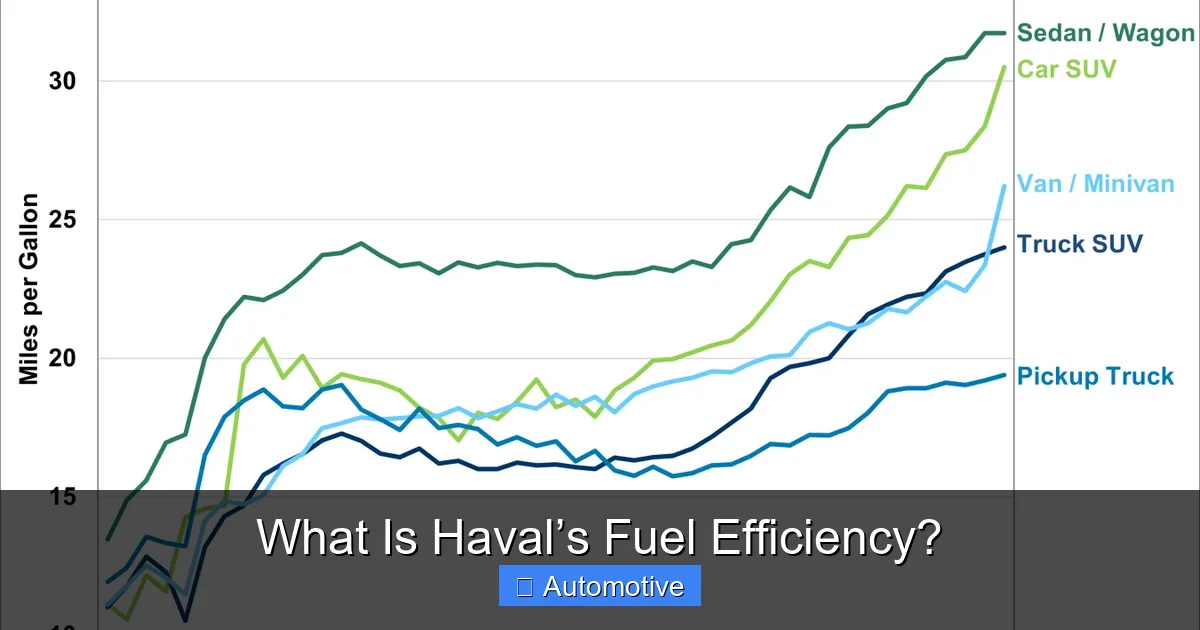
Visual guide about What Is Haval’s Fuel Efficiency?
Image source: energy.gov
Turbocharged 1.5L and 2.0L Engines
The backbone of Haval’s lineup is the 1.5-liter turbocharged engine. Found in models like the Haval Jolion and H6, this engine produces around 150 horsepower and 220 Nm of torque. Despite its modest size, it’s surprisingly responsive, especially in city driving. The turbocharger kicks in early, giving you strong acceleration without needing to rev the engine high—this helps save fuel.
The 2.0-liter turbo engine, used in higher trims of the H6 and the Haval Chitu, delivers up to 224 horsepower. While it uses more fuel than the 1.5L, it’s still efficient for its class. Thanks to direct fuel injection and variable valve timing, these engines burn fuel more cleanly and efficiently. Haval also pairs them with 7-speed dual-clutch transmissions (DCT), which shift quickly and keep the engine in its most efficient RPM range.
Hybrid and Plug-in Hybrid Systems
Haval’s real fuel efficiency game-changer is its hybrid technology. The brand launched its “柠檬混动DHT” (Lemon Hybrid DHT) system in 2021, a smart dual-motor setup that blends petrol and electric power seamlessly. This system is used in the Haval H6 GT Hybrid and Jolion Hybrid, and it’s one of the most advanced in its price range.
The hybrid system works by using an electric motor to assist the petrol engine during acceleration, reducing load and fuel consumption. At low speeds, the car can run on electric power alone. The system also recaptures energy during braking (regenerative braking), which recharges the battery without plugging in. For drivers who want even more efficiency, Haval offers plug-in hybrid (PHEV) versions, like the Haval H6 PHEV, which can travel up to 100 km on electric power alone.
Haval Fuel Efficiency by Model
Now that we’ve covered the tech, let’s look at real numbers. What is Haval’s fuel efficiency across its most popular models? We’ll break it down by vehicle, using official figures and real-world reports from owners.
Visual guide about What Is Haval’s Fuel Efficiency?
Image source: static.pakwheels.com
Haval Jolion: The Compact Fuel Sipper
The Haval Jolion is one of the brand’s best-selling models, and for good reason. It’s stylish, affordable, and surprisingly fuel-efficient. The standard 1.5L turbo engine delivers an official combined fuel consumption of around 6.8L/100km. In real-world driving—especially in mixed city and highway conditions—many owners report figures between 7.0 and 7.5L/100km, which is excellent for a compact SUV.
The Jolion Hybrid takes things further. With its hybrid powertrain, it achieves an official rating of just 5.2L/100km. That’s on par with some of the most efficient hybrids from Toyota and Honda. In city driving, where hybrids shine, the Jolion Hybrid can drop below 5.0L/100km. It’s a great choice for urban commuters who want low running costs without sacrificing space or tech.
Haval H6: The Family SUV with Surprising Economy
The Haval H6 is the brand’s flagship midsize SUV, and it’s a favorite among families. The standard 1.5L turbo version has an official fuel consumption of 7.1L/100km. The 2.0L turbo model sits at around 7.8L/100km. While not as frugal as the Jolion, these numbers are still competitive with rivals like the Toyota RAV4 (7.3L/100km) and Mazda CX-5 (7.2L/100km).
But the real star is the Haval H6 GT Hybrid. With its advanced DHT system, it achieves an official 5.5L/100km. In real-world tests, drivers have reported averages between 6.0 and 6.5L/100km—still impressive for a vehicle this size. The plug-in hybrid version (H6 PHEV) offers even more savings, with an electric-only range of up to 100 km. That means many daily commutes can be done without using a drop of petrol.
Haval Chitu and Dagou: Performance Meets Efficiency
The Haval Chitu and Dagou are sportier models aimed at drivers who want a bit more excitement. The Chitu, for example, uses the 2.0L turbo engine and delivers strong performance. Its official fuel consumption is around 7.9L/100km, which is reasonable for a performance-oriented SUV. The Dagou, a newer model, offers similar efficiency with a more rugged design.
While these models aren’t the most fuel-efficient in the lineup, they show that Haval can balance power and economy. With features like cylinder deactivation and start-stop technology, even the sportier models are designed to save fuel when possible.
Real-World Fuel Efficiency: What Owners Are Saying
Official fuel consumption figures are a great starting point, but real-world driving tells the true story. So, what is Haval’s fuel efficiency like when you’re not on a test track? We looked at owner reviews, forums, and driving tests from Australia, Europe, and Southeast Asia—key markets for Haval.
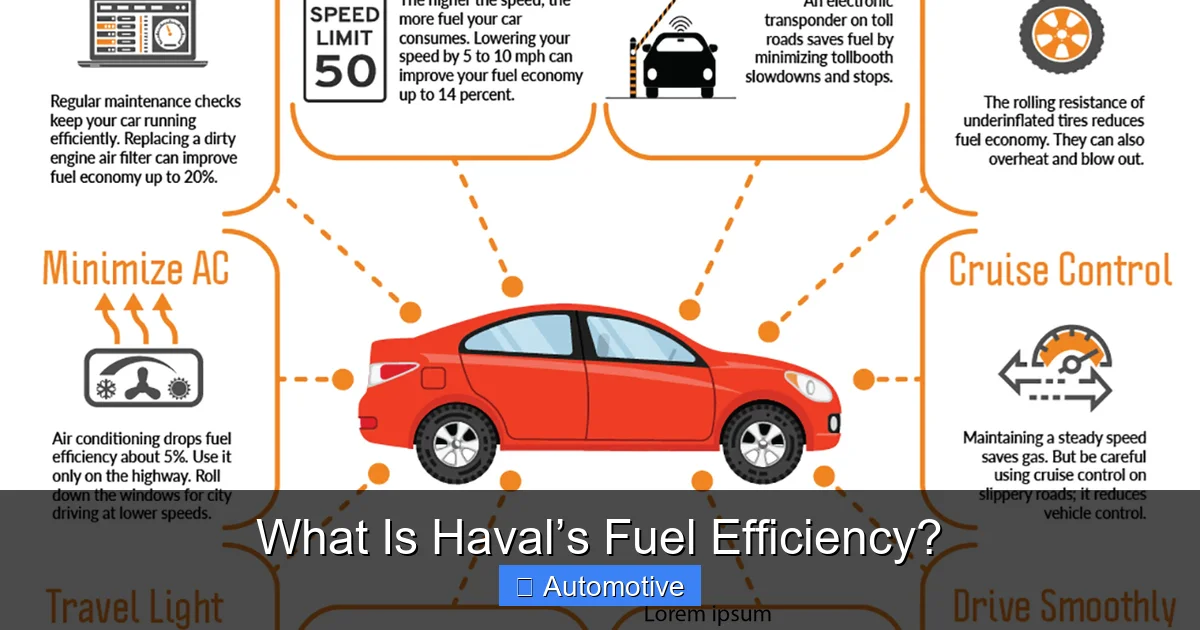
Visual guide about What Is Haval’s Fuel Efficiency?
Image source: nizaricu.org
City vs. Highway Driving
In city driving, Haval’s turbo engines perform well, especially with stop-start traffic. The 1.5L turbo in the Jolion averages around 8.0L/100km in heavy traffic, which is better than many competitors. The hybrid models shine here, with some Jolion Hybrid owners reporting as low as 4.8L/100km in urban areas.
On the highway, efficiency improves. The H6 1.5L turbo drops to around 6.5L/100km at a steady 100 km/h. The hybrid models maintain their advantage, with the H6 GT Hybrid averaging 5.8L/100km on long trips. These numbers show that Haval’s engines are tuned for real-world conditions, not just lab tests.
Climate and Terrain Impact
Fuel efficiency can vary based on climate and terrain. In colder regions, like parts of Europe or northern Australia, fuel consumption may increase by 10–15% due to engine warm-up time and heater use. Similarly, driving in hilly or mountainous areas can reduce efficiency, especially for non-hybrid models.
However, Haval’s hybrid systems help mitigate these effects. The electric motor provides instant torque on hills, reducing the load on the petrol engine. In hot climates, the air conditioning system can increase fuel use, but Haval’s efficient climate control systems help keep the impact low.
Owner Tips for Better Mileage
Many Haval owners share tips for maximizing fuel efficiency. One common suggestion is to use the “Eco” driving mode, which softens throttle response and adjusts transmission shifts for better economy. Another tip is to avoid rapid acceleration and hard braking—smooth driving can improve fuel use by up to 20%.
Regular maintenance also plays a big role. Keeping tires properly inflated, using the recommended oil, and servicing the air filter can all help maintain optimal efficiency. Some owners also recommend using premium fuel, though Haval engines are designed to run well on regular unleaded.
How Haval Compares to the Competition
So, how does Haval stack up against brands like Toyota, Hyundai, and Mazda? Let’s compare fuel efficiency across similar models.
Haval Jolion vs. Toyota Corolla Cross
The Toyota Corolla Cross Hybrid is one of the most fuel-efficient compact SUVs, with an official rating of 4.3L/100km. That’s better than the Jolion Hybrid’s 5.2L/100km. However, the Jolion offers more standard features, a larger infotainment screen, and a lower price point. For buyers who want value and decent efficiency, the Jolion is a strong alternative.
Haval H6 vs. Mazda CX-5
The Mazda CX-5 with its 2.5L engine has an official fuel consumption of 7.2L/100km. The Haval H6 1.5L turbo is close at 7.1L/100km, and the hybrid version beats it handily at 5.5L/100km. The CX-5 has a more premium feel and better handling, but the H6 offers more tech and space for the price.
Haval H6 PHEV vs. Mitsubishi Outlander PHEV
The Mitsubishi Outlander PHEV has been a leader in plug-in hybrid SUVs, with an electric range of around 54 km and combined fuel use of 1.5L/100km. The Haval H6 PHEV offers a longer electric range (up to 100 km) and similar combined efficiency. It’s a newer, more modern option with better tech and a lower price.
Overall, Haval holds its own against established brands. While it may not lead in every category, it offers excellent value, modern tech, and competitive fuel efficiency—especially in hybrid form.
Tips to Maximize Haval’s Fuel Efficiency
Even the most efficient SUV can waste fuel if not driven properly. Here are some practical tips to get the most out of your Haval’s fuel tank.
Drive Smoothly
Aggressive driving—rapid acceleration, hard braking, and speeding—can increase fuel consumption by up to 30%. Instead, aim for smooth, gradual inputs. Use cruise control on highways to maintain a steady speed, which helps the engine run efficiently.
Use Eco Mode
Most Haval models come with an Eco driving mode. This adjusts throttle response, transmission shifts, and climate control to prioritize fuel savings. It’s ideal for city driving and long trips. While it may feel a bit sluggish at first, you’ll quickly adapt—and your wallet will thank you.
Keep Up with Maintenance
A well-maintained car is a fuel-efficient car. Follow Haval’s service schedule, including oil changes, air filter replacements, and spark plug checks. Dirty air filters can reduce airflow to the engine, forcing it to work harder and burn more fuel.
Check Tire Pressure
Underinflated tires increase rolling resistance, which means the engine has to work harder. Check your tire pressure monthly and keep it at the recommended level (usually found on the driver’s door jamb). Properly inflated tires can improve fuel efficiency by up to 3%.
Reduce Weight and Drag
Extra weight in the trunk or roof racks can hurt fuel economy. Remove unnecessary items and take off roof boxes when not in use. Even small changes, like closing windows at high speeds, can reduce aerodynamic drag and save fuel.
Plan Your Trips
Combining errands into one trip reduces cold starts, which are less efficient. Use navigation apps to avoid traffic and find the most direct route. Idling for long periods also wastes fuel—if you’re stopped for more than a minute, consider turning off the engine (if safe to do so).
The Future of Haval’s Fuel Efficiency
Haval isn’t standing still. The brand is investing heavily in electrification and smart driving tech. In the coming years, we can expect more hybrid and plug-in models, along with improvements in battery technology and energy management.
Haval has also announced plans to expand its electric vehicle (EV) lineup, with fully electric SUVs expected by 2025. These models will likely offer even greater efficiency, with zero fuel consumption and lower running costs. The brand is also working on advanced driver-assistance systems (ADAS) that can optimize speed and routing for maximum efficiency.
As fuel prices rise and environmental concerns grow, Haval’s focus on fuel efficiency positions it well for the future. Whether you’re looking for a budget-friendly SUV or a high-tech hybrid, Haval offers compelling options that balance performance, practicality, and economy.
Conclusion
So, what is Haval’s fuel efficiency? In short, it’s competitive, improving, and increasingly impressive—especially with hybrid and plug-in models leading the charge. From the compact Jolion to the family-friendly H6, Haval delivers strong real-world mileage without sacrificing power or features.
While it may not yet match the brand loyalty of Toyota or the refinement of Mazda, Haval offers exceptional value and modern tech at an affordable price. With smart driving habits and regular maintenance, you can maximize every litre and enjoy a smoother, greener ride. If you’re in the market for a fuel-efficient SUV that doesn’t compromise on space or style, Haval is definitely worth a closer look.
Frequently Asked Questions
What is Haval’s average fuel efficiency?
Haval’s average fuel efficiency ranges from 5.2L/100km for hybrid models to around 7.8L/100km for turbocharged petrol versions. Real-world figures are often slightly higher but still competitive with other SUVs in their class.
Which Haval model is the most fuel-efficient?
The Haval Jolion Hybrid is the most fuel-efficient model, with an official rating of 5.2L/100km. The Haval H6 GT Hybrid and H6 PHEV also offer excellent efficiency, especially for longer commutes.
Do Haval hybrids need to be plugged in?
The standard hybrid models (like the Jolion Hybrid and H6 GT Hybrid) do not need to be plugged in—they recharge through regenerative braking. However, the plug-in hybrid (PHEV) versions, like the H6 PHEV, require charging for full electric range.
How does Haval’s fuel efficiency compare to Toyota?
Haval’s hybrid models are slightly less efficient than Toyota’s hybrids (e.g., Corolla Cross Hybrid at 4.3L/100km), but they offer more features and a lower price. For buyers prioritizing value, Haval is a strong alternative.
Can driving habits improve Haval’s fuel efficiency?
Yes, smooth driving, using Eco mode, maintaining proper tire pressure, and reducing weight can improve fuel efficiency by up to 20%. Regular maintenance also plays a key role in long-term economy.
Are Haval SUVs reliable for long-term fuel savings?
Haval has improved significantly in reliability and build quality. With proper care, their engines and hybrid systems are designed for long-term efficiency, making them a smart choice for fuel-conscious drivers.