What Is a Good Voltage for a Car Battery
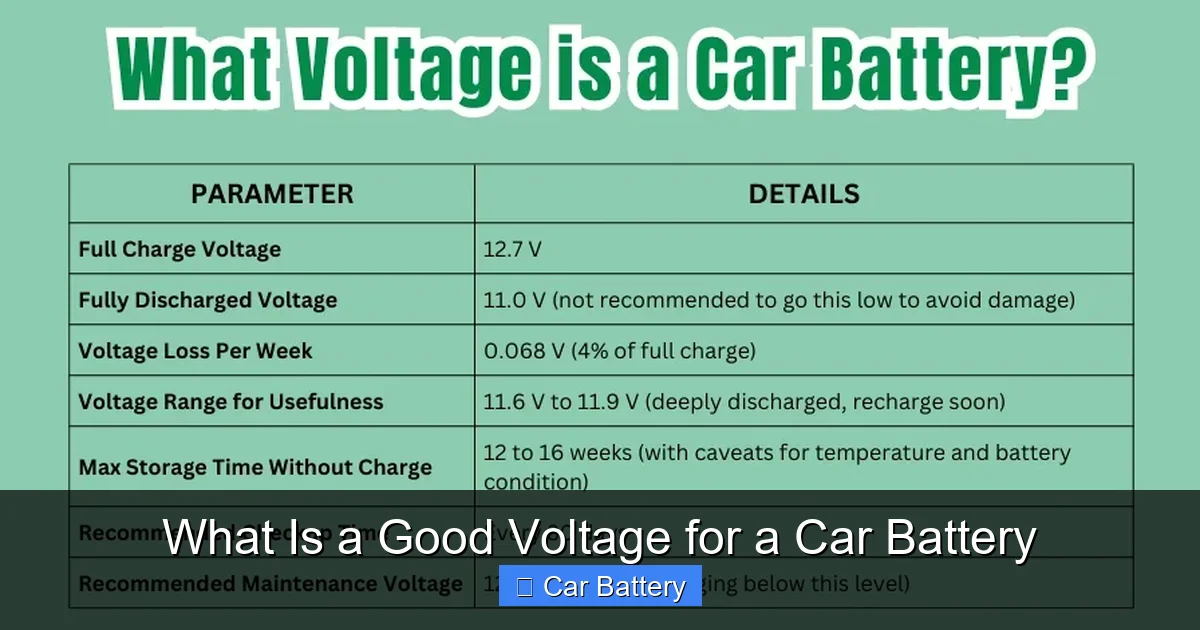
A good voltage for a car battery is typically between 12.4 and 12.7 volts when the engine is off. This range indicates a healthy, fully charged battery ready to start your vehicle reliably. Understanding voltage levels helps prevent breakdowns and extends battery life.
In This Article
- 1 Key Takeaways
- 2 📑 Table of Contents
- 3 Understanding Car Battery Voltage: The Basics
- 4 What Is a Good Voltage for a Car Battery When Off?
- 5 Voltage While the Engine Is Running
- 6 Voltage During Engine Cranking
- 7 How Temperature Affects Battery Voltage
- 8 How to Test Your Car Battery Voltage
- 9 Signs Your Battery Voltage Is Too Low
- 10 Maintaining Optimal Battery Voltage
- 11 Conclusion
- 12 Frequently Asked Questions
Key Takeaways
- Normal resting voltage: A fully charged car battery should read 12.6 to 12.7 volts when the engine is off and the car has been sitting for at least an hour.
- Voltage under load: When starting the engine, voltage may drop to 9.6 to 10.5 volts briefly—this is normal. If it drops below 9.6 volts, the battery may be weak.
- Running voltage: With the engine running, the alternator should maintain battery voltage between 13.7 and 14.7 volts to properly recharge the battery.
- Low voltage warning signs: Voltage below 12.4 volts when off suggests the battery is undercharged; below 12.0 volts may mean it’s time for a replacement.
- Temperature matters: Cold weather reduces battery efficiency, so voltage readings may be slightly lower in winter—plan accordingly.
- Regular testing helps: Use a multimeter or visit a mechanic to check voltage every few months to catch issues early.
- Maintenance extends life: Keep terminals clean, avoid short trips, and use a trickle charger during long storage to maintain ideal voltage.
📑 Table of Contents
- Understanding Car Battery Voltage: The Basics
- What Is a Good Voltage for a Car Battery When Off?
- Voltage While the Engine Is Running
- Voltage During Engine Cranking
- How Temperature Affects Battery Voltage
- How to Test Your Car Battery Voltage
- Signs Your Battery Voltage Is Too Low
- Maintaining Optimal Battery Voltage
- Conclusion
Understanding Car Battery Voltage: The Basics
You’ve probably heard people talk about car battery voltage, but what does it really mean—and why should you care? Simply put, voltage is the electrical pressure that pushes current through your car’s electrical system. Think of it like water pressure in a hose: without enough pressure, nothing flows. In your car, that “flow” powers everything from the starter motor to the radio, lights, and onboard computers.
Most modern cars use a 12-volt electrical system, which means the battery is designed to deliver around 12 volts of electrical potential. But here’s the catch: the actual voltage isn’t always exactly 12.0 volts. It changes depending on whether the engine is running, how long the car has been sitting, and even the temperature outside. So when someone asks, “What is a good voltage for a car battery?” the answer isn’t a single number—it’s a range that tells you how healthy your battery really is.
Knowing this range helps you avoid being stranded with a dead battery. It also helps you decide when to recharge, maintain, or replace your battery before it fails. Whether you’re a weekend driver or rely on your car for daily commutes, understanding battery voltage is a simple but powerful way to keep your vehicle running smoothly.
What Is a Good Voltage for a Car Battery When Off?
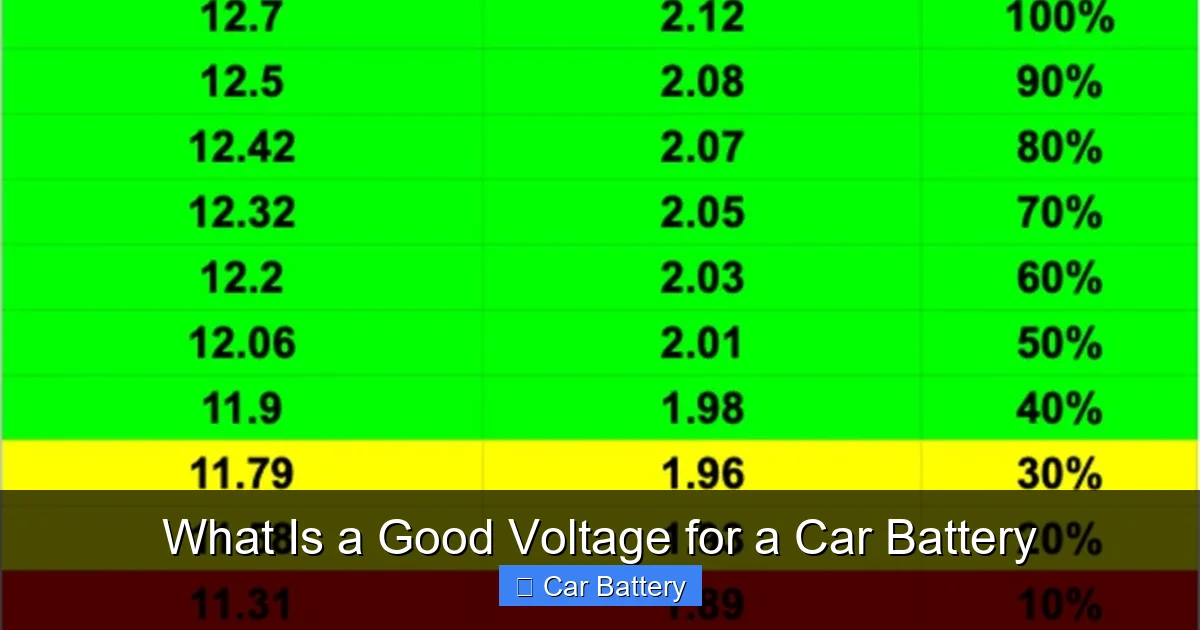
Let’s start with the most common scenario: checking your battery when the engine is off and the car has been sitting for at least an hour. This is called the “resting voltage,” and it gives you the clearest picture of your battery’s true charge level.
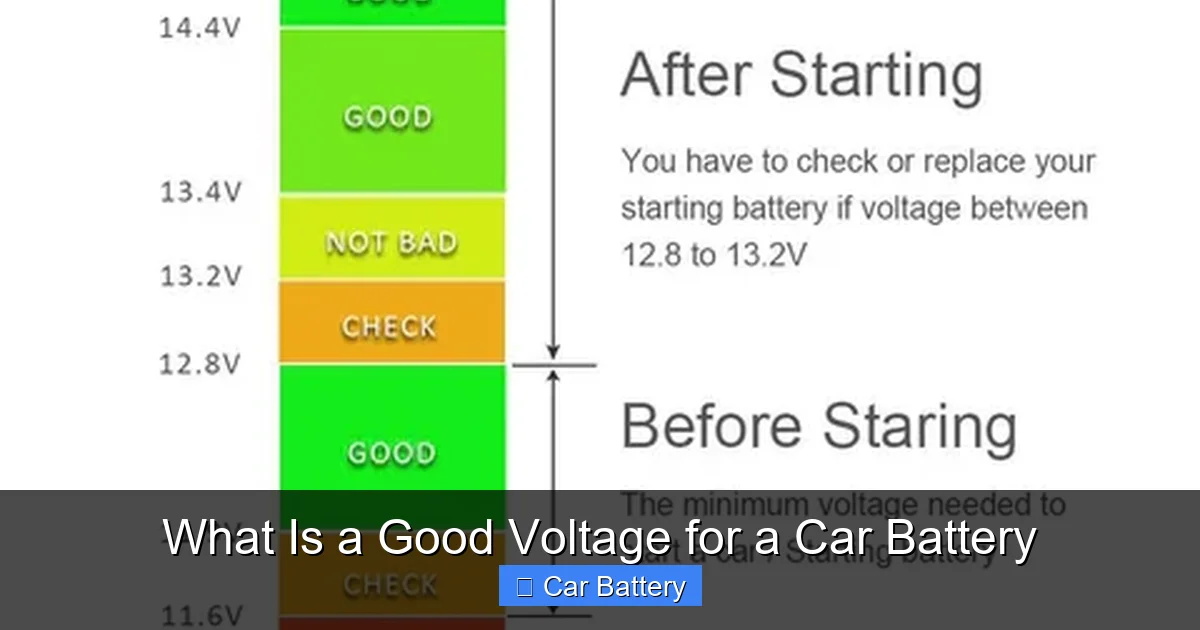
Visual guide about What Is a Good Voltage for a Car Battery
Image source: cdn.shopify.com
Ideal Resting Voltage Range
A fully charged, healthy car battery should read between 12.6 and 12.7 volts when the engine is off. This means the battery is at 100% state of charge and ready to deliver the power needed to start your engine. If your multimeter shows 12.4 to 12.5 volts, the battery is still in good shape—just slightly discharged, maybe from leaving the lights on or a short drive that didn’t allow the alternator to fully recharge it.
What Lower Voltage Means
If your battery reads between 12.0 and 12.3 volts, it’s considered partially discharged. This doesn’t necessarily mean it’s bad—just that it needs charging. You might still be able to start your car, but repeated low voltage can shorten the battery’s lifespan. Below 12.0 volts, the battery is significantly depleted. At this point, starting your car may become difficult, especially in cold weather. A reading under 11.9 volts usually indicates a deeply discharged or failing battery that may not hold a charge.
Example: Testing Your Battery at Home
Imagine you come home from work, turn off the car, and wait an hour. Then you grab a multimeter, set it to DC voltage, and touch the red probe to the positive terminal and the black probe to the negative terminal. If it reads 12.65 volts, great—your battery is in excellent condition. But if it shows 12.1 volts, you might want to take the car for a longer drive or use a battery charger to top it off.
Why Resting Voltage Matters
Checking voltage immediately after turning off the engine can give a false reading because the battery may still have surface charge. Waiting at least an hour allows the charge to stabilize, giving you an accurate measurement. This resting voltage is the gold standard for assessing battery health.
Voltage While the Engine Is Running
Once your engine is running, the alternator takes over, generating electricity to power the car’s systems and recharge the battery. This changes the voltage significantly—and it’s just as important to monitor.
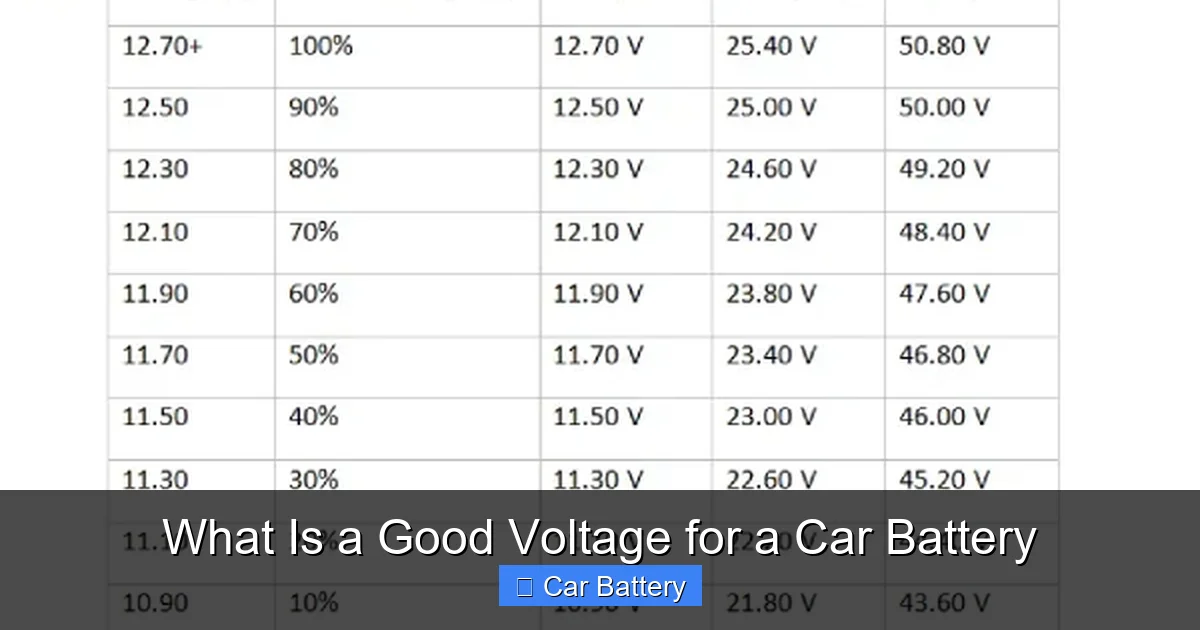
Visual guide about What Is a Good Voltage for a Car Battery
Image source: ufinebattery.com
Normal Running Voltage Range
With the engine running, a healthy charging system should maintain battery voltage between 13.7 and 14.7 volts. This range ensures the battery is being recharged properly without overcharging, which can damage it. If your multimeter shows a reading in this range while the engine is at idle or slightly above, your alternator and battery are working well together.
What Abnormal Readings Indicate
If the voltage is below 13.7 volts while the engine is running, the alternator may not be charging the battery effectively. This could be due to a faulty alternator, a worn belt, or a wiring issue. Over time, this leads to a drained battery and eventual failure to start.
On the other hand, if the voltage exceeds 14.7 volts, the battery may be overcharging. This can cause the electrolyte to boil, leading to corrosion, swelling, and a shortened battery life. In extreme cases, it can even cause the battery to leak or explode.
Practical Tip: Test While Driving
You don’t need to be a mechanic to check this. Many modern cars have a built-in voltage gauge in the dashboard or infotainment system. If yours doesn’t, you can use a portable multimeter or a Bluetooth OBD2 scanner that displays real-time voltage. Just make sure the engine is running and all electrical loads (like headlights, AC, and radio) are turned on to simulate real driving conditions.
Example: Alternator Failure Warning
Suppose you notice your headlights dimming at idle, or your car struggles to start even after a full night of charging. You check the voltage with the engine running and it reads only 12.8 volts. That’s a red flag—your alternator isn’t doing its job. In this case, the battery is slowly dying because it’s not being recharged while driving.
Voltage During Engine Cranking
Starting your car is the most demanding task your battery performs. When you turn the key, the starter motor draws a huge burst of current—often over 200 amps—to crank the engine. This causes a temporary voltage drop, and how low it goes tells you a lot about your battery’s condition.
Visual guide about What Is a Good Voltage for a Car Battery
Image source: vehiclefreedom.com
Acceptable Voltage Drop While Cranking
During engine cranking, it’s normal for voltage to drop to between 9.6 and 10.5 volts. This is a brief dip that lasts only a few seconds. If your battery can maintain voltage above 9.6 volts while cranking, it’s considered strong and capable of starting your engine reliably.
When Voltage Drop Is a Problem
If the voltage drops below 9.6 volts during cranking, the battery may be weak, old, or damaged. You might notice slow cranking, a clicking sound, or the engine failing to start. In cold weather, this problem gets worse because chemical reactions in the battery slow down, reducing its ability to deliver power.
Testing Cranking Voltage
To test this, you’ll need a multimeter and someone to help you. Set the multimeter to DC voltage, connect it to the battery terminals, and have a friend turn the key to start the engine. Watch the display—it should dip briefly but stay above 9.6 volts. If it plummets to 8 volts or lower, your battery is likely failing.
Real-World Example
Let’s say it’s a cold winter morning. You get in your car, turn the key, and the engine cranks slowly. You check the cranking voltage and it drops to 8.9 volts. That’s a clear sign the battery is struggling. Even if it starts, it’s time to consider a replacement before it leaves you stranded.
How Temperature Affects Battery Voltage
Temperature plays a huge role in battery performance—and voltage readings. Both extreme cold and extreme heat can impact how your battery behaves, so it’s important to understand these effects.
Cold Weather Impact
In cold weather, the chemical reactions inside the battery slow down. This reduces its ability to deliver power, which can make voltage readings appear lower than they actually are. For example, a battery that reads 12.4 volts at 70°F might read 12.2 volts at 32°F—even if it’s fully charged.
More importantly, cold weather increases the load on the battery when starting the engine. Oil thickens, engine parts resist movement, and the starter motor has to work harder. This is why so many batteries fail in winter—they simply can’t deliver the power needed to overcome these challenges.
Hot Weather Impact
High temperatures can also be harmful. While heat doesn’t reduce voltage as dramatically as cold, it accelerates chemical reactions inside the battery, which can lead to faster degradation. Over time, this causes the plates to corrode and the electrolyte to evaporate, reducing battery life.
In extreme heat, a battery might show a slightly higher resting voltage—say, 12.8 volts—but this doesn’t mean it’s healthier. It could actually be a sign of overcharging or internal damage.
Tips for Extreme Temperatures
- In cold climates, use a battery blanket or trickle charger to keep the battery warm and maintain charge.
- Avoid short trips in winter—they don’t give the alternator enough time to recharge the battery.
- In hot climates, park in the shade or use a reflective windshield cover to reduce under-hood heat.
- Check voltage more frequently during seasonal changes to catch issues early.
Example: Winter Battery Check
You live in Minnesota, and it’s January. You check your battery voltage after a cold night and it reads 12.3 volts. At first glance, that seems low—but remember, cold temperatures can depress readings. If the car starts fine and the running voltage is normal, the battery may still be okay. But if it struggles to start, it’s time for a load test or replacement.
How to Test Your Car Battery Voltage
Testing your car battery voltage is easier than you might think—and it’s one of the best ways to stay ahead of problems. You don’t need fancy tools or a degree in electrical engineering. All you need is a basic multimeter and a few minutes of your time.
Step-by-Step Voltage Test
- Turn off the engine and all electrical loads. This includes lights, radio, AC, and phone chargers. Wait at least one hour to allow the battery to stabilize.
- Set your multimeter to DC voltage (usually marked as “V~” or “V–”). Choose a range higher than 12 volts, like 20V.
- Connect the probes. Touch the red probe to the positive terminal (+) and the black probe to the negative terminal (−). Make sure you have a solid connection.
- Read the display. A healthy battery should show 12.6–12.7 volts. Anything below 12.4 volts suggests it needs charging.
- Test with the engine running. Repeat the test with the engine on. Voltage should now be between 13.7 and 14.7 volts.
- Test during cranking (optional). Have a friend start the engine while you watch the multimeter. Voltage should not drop below 9.6 volts.
Choosing the Right Tool
You can buy a basic digital multimeter for under $20 at most auto parts stores or online. Look for one with clear displays and auto-ranging features. Alternatively, many auto shops offer free battery testing—just drive in and ask.
When to Test
Make it a habit to test your battery voltage:
- Every 3–6 months as part of routine maintenance.
- Before long trips, especially in extreme weather.
- After noticing slow cranking, dim lights, or electrical issues.
- When your car has been sitting unused for more than a week.
Example: DIY Battery Check
It’s a Saturday morning, and you’re planning a road trip. You grab your multimeter, pop the hood, and test the battery. It reads 12.68 volts with the engine off—perfect. You start the car, and the voltage jumps to 14.2 volts. Everything looks good. You feel confident hitting the road, knowing your battery is ready for the journey.
Signs Your Battery Voltage Is Too Low
Even if you don’t have a multimeter handy, your car will often give you clues that the battery voltage is too low. Paying attention to these signs can help you act before a total failure.
Common Warning Signs
- Slow engine cranking: The engine turns over sluggishly when you start the car.
- Dim headlights: Lights are noticeably dimmer when the engine is off or at idle.
- Electrical issues: Power windows, locks, or infotainment systems work slowly or not at all.
- Check engine or battery warning light: These dashboard lights may indicate charging system problems.
- Frequent need for jump-starts: If you’re regularly jump-starting your car, the battery or alternator is likely failing.
What to Do If You Notice These Signs
First, test the battery voltage to confirm the issue. If it’s low, try charging it with a battery charger or taking a long drive to let the alternator recharge it. If the voltage doesn’t improve, or if the battery is more than 3–5 years old, it’s probably time for a replacement.
Example: The Clicking Sound
You get in your car, turn the key, and hear a rapid clicking sound—but the engine doesn’t start. This is a classic sign of a dead or very low battery. The starter solenoid is trying to engage, but there’s not enough voltage to turn the motor. In this case, a jump-start might get you going, but you should test the battery as soon as possible.
Maintaining Optimal Battery Voltage
Good battery voltage doesn’t happen by accident—it’s the result of regular care and smart driving habits. Here’s how to keep your battery in top shape.
Keep Terminals Clean
Corrosion on the battery terminals can block electrical flow, leading to voltage drops. Clean the terminals every 6 months using a mixture of baking soda and water, a wire brush, and a terminal cleaner tool. Apply a thin layer of petroleum jelly or terminal protector to prevent future corrosion.
Avoid Short Trips
Short trips don’t give the alternator enough time to fully recharge the battery. Over time, this leads to a gradual voltage drop. If you mostly drive short distances, consider using a trickle charger or taking longer drives occasionally.
Use a Battery Maintainer
If you don’t drive your car often—like with a classic car or seasonal vehicle—use a smart trickle charger or battery maintainer. These devices keep the battery at optimal voltage without overcharging.
Check the Charging System
A faulty alternator or voltage regulator can cause low voltage even with a new battery. If your voltage readings are consistently low while driving, have a mechanic inspect the charging system.
Replace Old Batteries
Most car batteries last 3–5 years. Even if the voltage seems okay, an old battery is more likely to fail unexpectedly. Consider replacing it proactively, especially before winter.
Conclusion
So, what is a good voltage for a car battery? The short answer: 12.6 to 12.7 volts when the engine is off, and 13.7 to 14.7 volts when it’s running. These ranges indicate a healthy, fully charged battery that’s ready to start your car and power your electronics.
But voltage is more than just a number—it’s a window into your battery’s health. By understanding what different readings mean, testing regularly, and maintaining your battery properly, you can avoid unexpected breakdowns and extend the life of your vehicle’s electrical system. Whether you’re a seasoned driver or just learning the basics, keeping an eye on battery voltage is one of the simplest and most effective ways to stay safe and reliable on the road.
Frequently Asked Questions
What voltage is too low for a car battery?
A car battery is considered too low if it reads below 12.4 volts when the engine is off. Below 12.0 volts, the battery is significantly discharged and may struggle to start the car. If it drops under 11.9 volts, replacement is usually needed.
Can a car battery have good voltage but still be bad?
Yes. A battery can show normal voltage but fail under load. This is why a load test is important—it checks how the battery performs when delivering high current, like during engine cranking.
How often should I check my car battery voltage?
Check your battery voltage every 3–6 months, or before long trips and seasonal changes. More frequent checks are wise in extreme temperatures or if you notice performance issues.
Is 12.4 volts OK for a car battery?
12.4 volts indicates the battery is about 75% charged. It’s not ideal but still functional. Recharge it soon to avoid further discharge, especially before cold weather.
Why does my battery voltage drop overnight?
Small electrical loads—like clocks, alarms, or onboard computers—can slowly drain the battery. This is normal, but if the drop is large, there may be a parasitic drain or a failing battery.
Can I drive with low battery voltage?
You might be able to drive short distances, but low voltage means the alternator is working harder to recharge the battery. Prolonged driving with low voltage can damage the battery and alternator, so address the issue quickly.