What Happens If Your Electric Car Runs Out of Battery

Running out of battery in an electric car won’t leave you stranded like running out of gas—but it’s still inconvenient. Modern EVs warn you well in advance and offer features like range prediction and emergency charging. With proper planning and awareness, you can avoid a dead battery and keep your journey smooth.
In This Article
- 1 Key Takeaways
- 2 📑 Table of Contents
- 3 Introduction: The Myth of the Sudden Stop
- 4 How Electric Car Batteries Work (And Why They Don’t Just Die)
- 5 Signs Your EV Is Running Low on Battery
- 6 What Actually Happens When the Battery Reaches Zero?
- 7 How to Avoid Running Out of Battery
- 8 What to Do If You Run Out of Battery
- 9 The Future of EV Range and Charging
- 10 Conclusion: Stay Informed, Stay Charged
- 11 Frequently Asked Questions
- 11.1 Can an electric car stop suddenly if the battery dies?
- 11.2 Can you push an electric car if the battery is dead?
- 11.3 How far can an electric car go on 0% battery?
- 11.4 Is it expensive to tow an electric car?
- 11.5 Can you charge an EV with a portable generator?
- 11.6 Do electric cars have a backup battery?
Key Takeaways
- You won’t suddenly stop: Electric cars gradually reduce power and give multiple warnings before the battery is fully depleted.
- Range anxiety is real but manageable: Most EVs offer 200–400 miles of range, and apps help you find nearby chargers.
- Towing is required, not refueling: Unlike gas cars, you can’t just add a battery pack—your EV must be towed to a charging station.
- Emergency features help: Many EVs have low-power modes, regenerative braking, and built-in navigation to the nearest charger.
- Prevention is key: Regular charging habits, route planning, and using in-car tools can prevent a dead battery.
- Costs can add up: Roadside assistance and towing fees may apply if you run out of charge unexpectedly.
- Future tech is improving: Battery advancements and expanding charging networks are making range issues less common.
📑 Table of Contents
- Introduction: The Myth of the Sudden Stop
- How Electric Car Batteries Work (And Why They Don’t Just Die)
- Signs Your EV Is Running Low on Battery
- What Actually Happens When the Battery Reaches Zero?
- How to Avoid Running Out of Battery
- What to Do If You Run Out of Battery
- The Future of EV Range and Charging
- Conclusion: Stay Informed, Stay Charged
Introduction: The Myth of the Sudden Stop
Imagine you’re cruising down the highway in your sleek electric vehicle (EV), music playing, climate control humming—everything feels smooth and silent. Then, out of nowhere, the car slows down, the dashboard lights up like a Christmas tree, and you’re suddenly coasting to a stop on the shoulder. Sound scary? That’s the fear many people have about electric cars: what happens if your electric car runs out of battery?
The good news? It’s not as dramatic as it sounds. Unlike a gas-powered car that can sputter and die the moment the fuel tank hits empty, electric vehicles are designed with multiple safety nets. They don’t just shut off. Instead, they give you plenty of warning—lights, alerts, reduced power—and even guide you to the nearest charging station. So while running out of battery is definitely not ideal, it’s far from a roadside disaster.
Still, it’s important to understand what really happens, how to avoid it, and what your options are if it does occur. Whether you’re a new EV owner or just considering making the switch, knowing how your car behaves when the battery gets low can save you stress, time, and money. Let’s dive into the details of what happens when your electric car runs out of battery—and how you can stay one step ahead.
How Electric Car Batteries Work (And Why They Don’t Just Die)
Visual guide about What Happens If Your Electric Car Runs Out of Battery
Image source: images.squarespace-cdn.com
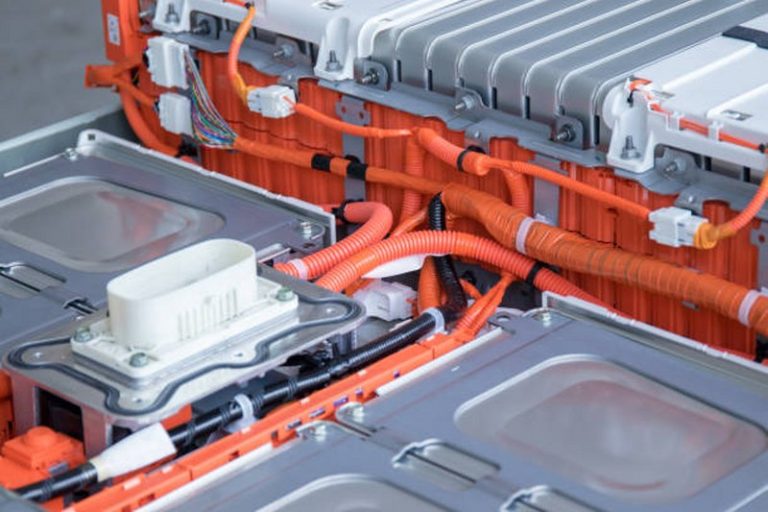
Before we talk about what happens when your battery dies, let’s quickly understand how EV batteries function. Unlike a gas tank that holds fuel, an electric car’s battery is a complex system of lithium-ion cells that store electrical energy. This energy powers the motor, lights, infotainment system, and everything else in the car.
Most modern EVs have a usable battery capacity between 60 and 100 kilowatt-hours (kWh), which translates to a range of roughly 200 to 400 miles on a full charge—depending on the model, driving conditions, and weather. But here’s the key: the battery isn’t used all the way down to zero. Manufacturers build in a buffer, so the car never actually reaches 0% in real-world use. This protects the battery from deep discharge, which can damage its lifespan.
Gradual Power Reduction, Not Sudden Failure
One of the biggest misconceptions about EVs is that they’ll stop dead in their tracks when the battery runs out. That’s simply not true. Instead, electric cars are programmed to reduce power gradually as the charge level drops. For example, when your battery hits around 10–15%, the car may limit acceleration, turn off non-essential systems (like heated seats or air conditioning), and display warnings on the dashboard.
This is called “limp mode” or “turtle mode”—a safety feature that gives you time to find a charger or pull over safely. You might notice the car feels sluggish, but it won’t just shut off. This gradual reduction is designed to prevent sudden stops, especially on highways or busy roads.
Regenerative Braking: A Hidden Lifesaver
Another feature that helps prevent a dead battery is regenerative braking. When you slow down or brake, the electric motor reverses its function and acts like a generator, converting kinetic energy back into electricity to recharge the battery. This process adds a small amount of charge back into the battery—usually 10–20% over time, depending on driving style.
While regenerative braking won’t save you if you’re already critically low, it can extend your range in stop-and-go traffic or on downhill drives. It’s one of the many smart systems that help EVs manage energy efficiently and reduce the risk of running out of power unexpectedly.
Signs Your EV Is Running Low on Battery
Visual guide about What Happens If Your Electric Car Runs Out of Battery
Image source: moveelectric.com
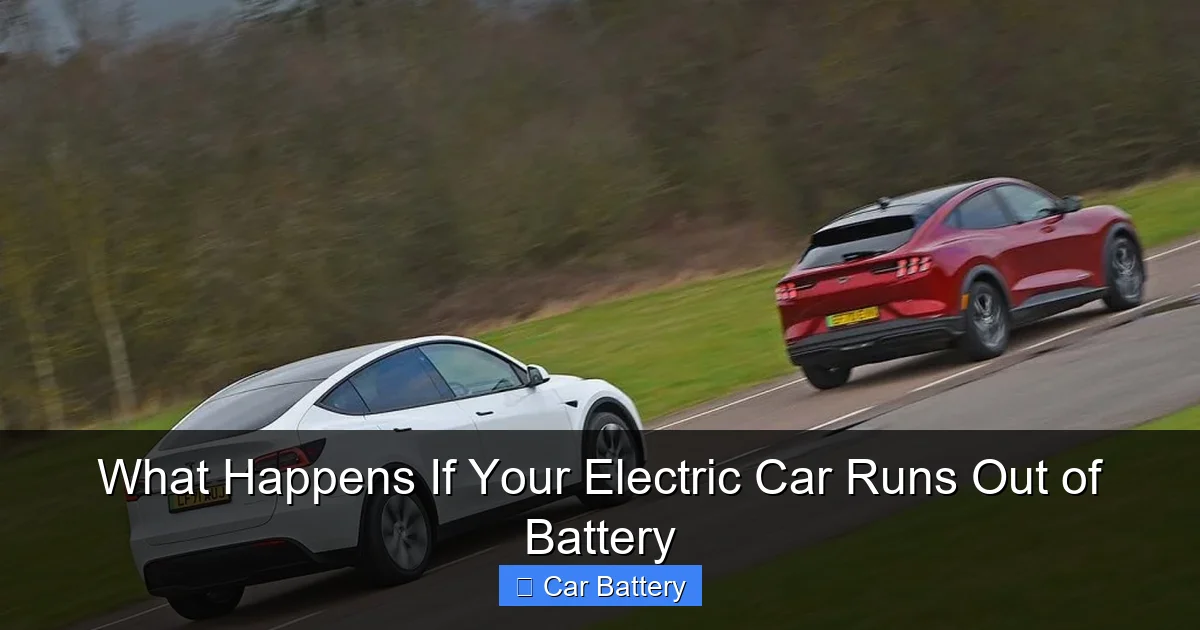
Knowing the warning signs can help you avoid a dead battery altogether. Most electric cars are equipped with advanced battery management systems that monitor charge levels and provide real-time feedback. Here’s what to watch for:
Dashboard Alerts and Warnings
As your battery level drops, your EV will start sending alerts. These usually begin around 20–30% charge and become more urgent as you go lower. You might see messages like “Low Battery” or “Find Charger Soon” on your dashboard or infotainment screen. Some cars even use color-coded indicators—green for good, yellow for caution, red for critical.
These warnings are your first line of defense. Don’t ignore them. If you see a low battery alert, start planning your next charge stop, even if you think you have enough range left.
Reduced Performance and Speed Limits
When the battery gets very low—typically below 10%—your car may enter a reduced power mode. This means the motor won’t deliver full acceleration, and top speed may be limited to 30–40 mph. Some EVs also disable features like fast acceleration, climate control, or heated seats to conserve energy.
For example, a Tesla might limit performance and suggest using “Range Mode” to extend driving distance. Similarly, a Nissan Leaf may reduce power and display a turtle icon on the dashboard. These measures are designed to help you reach a charger safely.
One of the most helpful features in modern EVs is built-in navigation that directs you to the nearest charging station. As your battery depletes, the system will automatically suggest nearby chargers and estimate how much charge you’ll have upon arrival.
For instance, if you’re driving a Chevrolet Bolt and your battery hits 15%, the car might pop up a message: “Nearest charger: 8 miles away. Estimated arrival charge: 5%.” This helps you make informed decisions—do you risk it, or pull over now?
What Actually Happens When the Battery Reaches Zero?
Visual guide about What Happens If Your Electric Car Runs Out of Battery
Image source: moveelectric.com
So, what happens if your electric car runs out of battery despite all the warnings? Let’s be clear: it’s rare, but it can happen—especially if you ignore alerts, take a wrong turn, or miscalculate your range.
The Car Doesn’t Just Stop—It Slows Down
When the battery is critically low, the car will reduce power to the motor and eventually come to a stop. But it won’t happen instantly. You’ll likely coast to a halt, especially if you’re on a flat road or downhill. The car may still have enough residual power to keep essential systems running—like lights, hazard signals, and the infotainment screen—for a short time.
This gives you a chance to pull over safely, turn on your hazards, and call for help. It’s not ideal, but it’s far from dangerous if you’re prepared.
You Can’t “Jump-Start” an EV Like a Gas Car
Here’s a common misconception: can you jump-start an electric car like you would a gas-powered vehicle with a dead battery? The answer is no—not in the traditional sense. While EVs do have a 12-volt auxiliary battery (used for lights, locks, and electronics), the main traction battery (the big one that powers the motor) can’t be jump-started with cables.
If your main battery is dead, you’ll need to be towed to a charging station. Some roadside assistance services offer mobile charging units that can give you a small boost—enough to get to a nearby charger—but this isn’t widely available yet.
Towing Is the Only Option
Unlike gas cars, where you can add a few gallons of fuel and keep going, electric cars must be towed when the battery is fully depleted. This is because there’s no quick way to “refuel” an EV on the side of the road. You can’t carry a spare battery pack (they’re too heavy and expensive), and portable chargers take hours to deliver meaningful charge.
Most EV manufacturers recommend flatbed towing to avoid damaging the drivetrain. Some services, like Tesla’s roadside assistance, will tow your car to the nearest Supercharger or service center at no extra cost if you have roadside coverage.
How to Avoid Running Out of Battery
The best way to handle a dead battery is to never let it happen in the first place. With a little planning and awareness, you can drive your EV with confidence—even on long trips.
Plan Your Charging Stops
Before you hit the road, especially on a long journey, use apps like PlugShare, A Better Routeplanner (ABRP), or the built-in navigation in your EV to map out charging stations along your route. These tools show real-time availability, charger types (Level 2, DC fast charging), and even estimate charging time.
For example, if you’re driving from Los Angeles to San Francisco in a Tesla Model 3, the car’s navigation will automatically route you through Supercharger stations, calculating how long to stop at each one. Planning ahead eliminates surprises.
Charge Regularly—Don’t Wait Until You’re Low
One of the biggest mistakes new EV owners make is waiting until the battery is nearly empty before charging. Just like your phone, it’s better to top up frequently. Aim to keep your battery between 20% and 80% for daily driving. This not only extends battery life but also ensures you always have a buffer.
If you’re at home, plug in every night—even if you only used 10% of your range. At work or shopping centers, take advantage of public chargers to add a little extra juice.
Use Eco Mode and Drive Efficiently
Most EVs come with an “Eco Mode” that optimizes energy use by limiting acceleration, reducing climate control, and adjusting regenerative braking. Using this mode can extend your range by 10–15%, especially in city driving.
Also, practice smooth driving: avoid rapid acceleration and hard braking. Use cruise control on highways to maintain a steady speed. These small habits add up and can make a big difference in how far you can go on a single charge.
Monitor Weather and Terrain
Cold weather can reduce EV range by up to 40% because batteries are less efficient in the cold. Precondition your car while it’s still plugged in—this warms the battery and cabin using grid power, not battery power.
Similarly, driving uphill uses more energy. If you’re heading into the mountains, plan extra charging stops and expect reduced range.
What to Do If You Run Out of Battery
Despite your best efforts, there’s always a chance you might miscalculate and run out of charge. Here’s what to do if it happens.
Stay Calm and Pull Over Safely
First, don’t panic. Turn on your hazard lights and steer your car to the side of the road or a safe location. If you’re on a highway, try to get to the shoulder or an exit ramp. Avoid stopping in traffic lanes.
Call Roadside Assistance
Most EV manufacturers include roadside assistance with new vehicles. Tesla, for example, offers 24/7 support and will tow your car to the nearest charger. Contact your provider and explain the situation. Be ready to share your location and vehicle details.
Some services now offer mobile charging—where a truck brings a portable charger to give you a small boost. This can get you to a nearby station, but it’s not available everywhere yet.
Use Emergency Charging Options
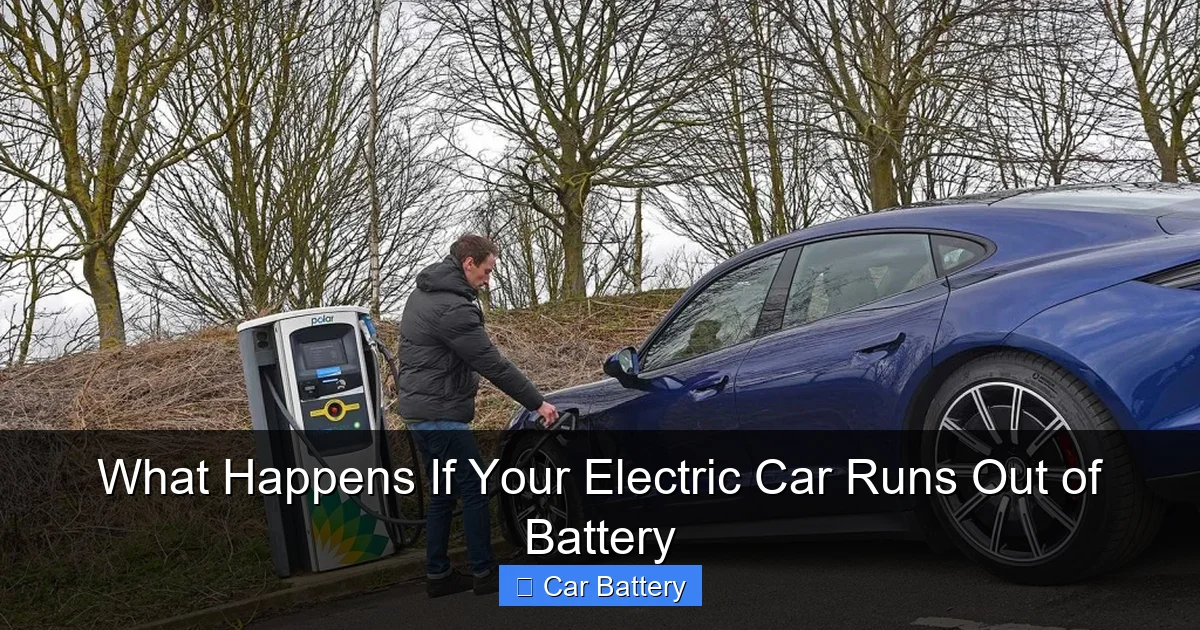
In rare cases, you might find a public charger nearby. If your car has a portable Level 1 charger (the kind that plugs into a regular outlet), you can use it—but it will charge very slowly (2–5 miles of range per hour). This is only practical if you’re close to a charger and can wait.
Some newer EVs, like the Ford F-150 Lightning, offer bidirectional charging—meaning you can use your car’s battery to power other devices or even another EV in an emergency. This technology is still emerging but could become a game-changer.
The Future of EV Range and Charging
As battery technology improves, the risk of running out of charge is decreasing. Newer EVs are offering longer ranges—some over 500 miles—and faster charging times. Solid-state batteries, currently in development, promise even greater energy density and safety.
Meanwhile, charging infrastructure is expanding rapidly. Companies like Electrify America, ChargePoint, and Tesla are adding thousands of new chargers across the U.S. and Europe. In the near future, finding a charger may be as easy as finding a gas station today.
Automakers are also improving predictive systems. Your car may soon learn your driving habits, weather patterns, and traffic conditions to give ultra-accurate range estimates. Some are even testing solar roofs and wireless charging roads to keep batteries topped up on the go.
Conclusion: Stay Informed, Stay Charged
So, what happens if your electric car runs out of battery? The short answer: it’s inconvenient, but not catastrophic. Modern EVs are designed to warn you early, reduce power gradually, and guide you to safety. With proper planning, regular charging, and awareness of your car’s features, you can avoid a dead battery altogether.
Remember, electric cars are different from gas vehicles—but in many ways, they’re smarter and safer. They won’t leave you stranded without warning. Instead, they give you tools to stay in control. Whether you’re commuting to work or road-tripping across the country, understanding how your EV behaves when the battery is low will help you drive with confidence.
So charge up, plan ahead, and enjoy the quiet, smooth ride. The future of driving is electric—and it’s getting better every day.
Frequently Asked Questions
Can an electric car stop suddenly if the battery dies?
No, electric cars don’t stop suddenly. They reduce power gradually and give multiple warnings before coming to a halt. This gives you time to pull over safely.
Can you push an electric car if the battery is dead?
No, you can’t push an EV like a gas car. The motor and drivetrain are electronically controlled, so the car must be towed to a charging station.
How far can an electric car go on 0% battery?
Most EVs won’t let you reach 0%. They stop working around 5–10% to protect the battery. The exact distance depends on the model and driving conditions.
Is it expensive to tow an electric car?
Towing costs vary, but many EV manufacturers include free roadside assistance for the first few years. After that, towing fees can range from $100 to $300 depending on distance.
Can you charge an EV with a portable generator?
Technically yes, but it’s inefficient and not recommended. Most portable generators don’t provide clean, stable power, which can damage the car’s charging system.
Do electric cars have a backup battery?
Yes, EVs have a small 12-volt battery for lights and electronics, but it can’t power the motor. If the main battery is dead, the 12-volt system may still work for a short time.