What Happens After the Car Insurance Adjuster Comes Out?

Contents
- 1 Key Takeaways
- 2 📑 Table of Contents
- 3 What Happens After the Car Insurance Adjuster Comes Out?
- 4 The Adjuster’s Report: What It Includes and Why It Matters
- 5 Receiving Your Repair Estimate: What to Expect
- 6 Choosing a Repair Shop: Your Rights and Options
- 7 The Repair Process: From Approval to Completion
- 8 Payment and Reimbursement: How the Money Flows
- 9 What to Do If You’re Not Satisfied with the Outcome
- 10 Final Tips for a Smooth Claims Experience
- 11 Frequently Asked Questions


After the car insurance adjuster comes out, your claim moves into evaluation and resolution. This includes damage assessment, repair estimates, negotiations, and final payment—understanding each step helps you get fair compensation and timely repairs.
Key Takeaways
- Damage Assessment Is Just the Start: The adjuster’s inspection kicks off the formal claims process, but it’s only the first step toward resolution.
- You’ll Receive a Repair Estimate: Based on their evaluation, the adjuster provides a detailed estimate outlining repair costs and recommended shops.
- Negotiation May Be Necessary: If you believe the estimate is too low, you can challenge it with your own estimates or expert opinions.
- Repairs Can Begin After Approval: Once you accept the estimate, your insurer typically authorizes repairs at a network or preferred shop.
- Payment Comes in Stages: Insurers often pay shops directly, but you may receive a check for deductibles or supplemental costs.
- Total Loss Claims Follow a Different Path: If your car is declared totaled, the insurer will offer a settlement based on its pre-accident value minus your deductible.
- Stay Involved Throughout: Being proactive, documenting everything, and asking questions ensures you’re treated fairly and informed at every stage.
📑 Table of Contents
- What Happens After the Car Insurance Adjuster Comes Out?
- The Adjuster’s Report: What It Includes and Why It Matters
- Receiving Your Repair Estimate: What to Expect
- Choosing a Repair Shop: Your Rights and Options
- The Repair Process: From Approval to Completion
- Payment and Reimbursement: How the Money Flows
- What to Do If You’re Not Satisfied with the Outcome
- Final Tips for a Smooth Claims Experience
What Happens After the Car Insurance Adjuster Comes Out?
You’ve been in a car accident—maybe a fender bender in the parking lot or a more serious collision on the highway. The police have come and gone, you’ve exchanged information with the other driver, and now your insurance company has sent an adjuster to inspect your vehicle. You might think, “Okay, they’ve seen the damage. Now what?”
The truth is, the adjuster’s visit is just the beginning of a multi-step process that determines how your claim is resolved. What happens after the car insurance adjuster comes out can significantly impact how quickly your car gets repaired, how much money you receive, and whether you’re satisfied with the outcome. Understanding this process empowers you to make informed decisions, avoid common pitfalls, and ensure you’re treated fairly by your insurer.
In this guide, we’ll walk you through every stage that follows the adjuster’s inspection—from receiving your repair estimate to getting your car back on the road (or receiving a settlement if it’s totaled). Whether you’re dealing with minor scratches or major structural damage, knowing what to expect helps reduce stress and confusion during an already challenging time.
The Adjuster’s Report: What It Includes and Why It Matters
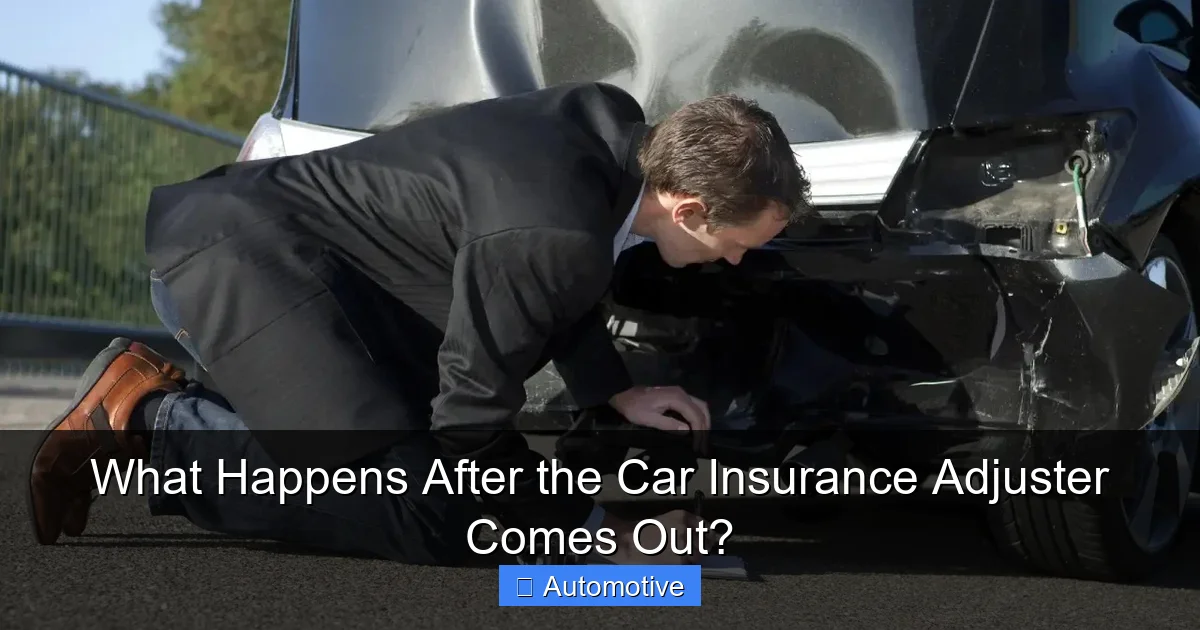
Once the insurance adjuster completes their inspection, they compile a detailed report that becomes the foundation of your claim. This document isn’t just a casual summary—it’s a formal assessment used by the insurance company to determine liability, estimate repair costs, and decide how much to pay out.

Visual guide about What Happens After the Car Insurance Adjuster Comes Out?
Image source: livewell.com
Key Components of the Adjuster’s Report
The report typically includes:
- Photos of the damage: High-resolution images from multiple angles to document the extent of the harm.
- Description of the incident: A summary of how the accident occurred, based on your statement and any available evidence (like police reports or witness accounts).
- Vehicle identification details: Make, model, year, VIN, mileage, and pre-accident condition.
- List of damaged parts: Every component that needs repair or replacement, from bumpers and headlights to airbags and frame alignment.
- Recommended repair methods: Whether parts should be replaced, repaired, or refinished.
- Estimated labor hours: Time required for each repair task, factoring in shop rates.
- Total cost estimate: The sum of parts, labor, and any additional fees (like paint or disposal).
For example, if your front bumper was crushed in a rear-end collision, the adjuster might note that the bumper cover, reinforcement bar, and fog lights need replacement, while the hood only requires repainting. They’ll assign a dollar value to each item based on local labor rates and parts pricing.
How the Report Affects Your Claim
This report directly influences how much your insurer offers to pay. If the adjuster underestimates the damage—say, by missing hidden frame damage or underestimating paint time—you could end up paying out of pocket for uncovered repairs. That’s why it’s crucial to review the report carefully and speak up if something seems off.
Keep in mind: adjusters work for the insurance company, not for you. Their goal is to settle claims accurately and efficiently, but they may err on the side of minimizing payouts to protect the insurer’s bottom line. Being informed and involved helps balance the scales.
Receiving Your Repair Estimate: What to Expect
Within a few days of the inspection, you’ll receive a formal repair estimate—sometimes called a “supplement” or “initial estimate.” This document outlines exactly what the insurer believes needs to be fixed and how much it will cost.
Visual guide about What Happens After the Car Insurance Adjuster Comes Out?
Image source: livewell.com
Understanding the Estimate Breakdown
A typical estimate includes:
- Parts: OEM (original equipment manufacturer) vs. aftermarket or recycled parts. OEM parts are made by your car’s manufacturer and often cost more, while aftermarket parts are cheaper alternatives. Some insurers prefer aftermarket parts to save money.
- Labor rates: Charged per hour, usually based on local market averages. For instance, a body shop in Los Angeles might charge $65/hour, while one in rural Ohio charges $45/hour.
- Paint and materials: Includes paint, primer, clear coat, and masking materials.
- Additional fees: Disposal, hazardous material handling, or storage if your car is at a tow yard.
Let’s say your estimate totals $4,200: $1,800 for parts, $2,000 for labor, $300 for paint, and $100 in miscellaneous fees. This number is what the insurer is willing to pay—unless you challenge it.
What If the Estimate Seems Too Low?
It’s not uncommon for estimates to fall short, especially if the adjuster missed hidden damage or used outdated pricing. If you think the number is too low, you have options:
- Get a second opinion: Take your car to a trusted repair shop and ask for their estimate. Many shops will do this for free or a small fee.
- Submit a supplement request: If the shop finds additional damage (like rust under a panel or misaligned suspension), they can submit a “supplement” to your insurer for extra funds.
- Provide documentation: Photos, repair quotes, or expert assessments can strengthen your case.
For example, Maria’s adjuster estimated $3,000 to fix her side mirror and door dent. But when she took her car to a certified body shop, they discovered the door frame was bent and the window regulator damaged—adding $1,200 to the repair cost. She submitted the shop’s estimate, and her insurer approved the supplement.
Choosing a Repair Shop: Your Rights and Options
One of the most common questions after the adjuster visit is: “Can I choose my own repair shop?” The short answer is yes—in most cases, you have the legal right to select where your car is repaired.

Visual guide about What Happens After the Car Insurance Adjuster Comes Out?
Image source: livewell.com
Insurance Networks vs. Independent Shops
Many insurers have “preferred” or “direct repair program” (DRP) shops that have agreements to work with them. These shops often promise faster turnaround times, direct billing (so you don’t pay upfront), and guaranteed repairs. However, you’re not required to use them.
Choosing an independent shop gives you more control over quality and pricing. You can pick a shop with excellent reviews, certified technicians, or specialization in your car’s make. Just be aware that some insurers may require you to pay upfront and get reimbursed, or they might not guarantee the work if it’s done outside their network.
Tips for Selecting the Right Shop
- Check certifications: Look for ASE (Automotive Service Excellence) or I-CAR certifications, which indicate trained, qualified technicians.
- Read reviews: Sites like Google, Yelp, and the Better Business Bureau can reveal customer experiences.
- Ask about warranties: Reputable shops offer warranties on parts and labor—typically 1–3 years.
- Get a written estimate: Before any work begins, ensure the shop provides a detailed, signed estimate.
For instance, James chose an independent shop over his insurer’s preferred provider because the shop specialized in European cars and offered a lifetime warranty on paintwork. His insurer still covered the cost, and he felt confident in the quality.
The Repair Process: From Approval to Completion
Once you’ve accepted the estimate and chosen a shop, the repair process begins. This phase can take anywhere from a few days to several weeks, depending on the extent of the damage and parts availability.
Authorization and Parts Ordering
Your insurer will authorize the repair shop to begin work. The shop then orders the necessary parts. If OEM parts are specified, they may take longer to arrive than aftermarket ones. Some shops keep common parts in stock, while others must wait for shipments.
During this time, you might be offered a rental car if your policy includes rental reimbursement. Be sure to check your coverage limits—some policies cap daily rates or total rental days.
Repair Timeline and Communication
Repairs typically follow this sequence:
- Disassembly: The shop removes damaged parts to assess hidden damage.
- Structural repair: If the frame or unibody is bent, it’s straightened using specialized equipment.
- Parts replacement: New or repaired parts are installed.
- Bodywork and sanding: Panels are smoothed and prepared for paint.
- Painting: Primer, base coat, and clear coat are applied in a climate-controlled booth.
- Reassembly and detailing: Trim, lights, and interior components are reinstalled, and the car is cleaned.
Throughout this process, the shop should keep you updated. If they find additional damage—like corrosion under a fender or a cracked windshield—they’ll contact your insurer for a supplement before proceeding.
Quality Control and Final Inspection
Before you pick up your car, the shop should perform a final inspection to ensure everything is aligned, functional, and visually flawless. This includes checking door gaps, headlight aim, paint match, and electronic systems.
You should also do your own walk-around. Test all lights, locks, windows, and mirrors. Sit in the driver’s seat and make sure the car feels right. If something seems off—like a squeak, misaligned panel, or paint mismatch—speak up immediately.
Payment and Reimbursement: How the Money Flows
Understanding how and when you get paid is crucial, especially if you’re covering a deductible or paying for extras out of pocket.
Direct Payment to the Shop
In most cases, the insurer pays the repair shop directly—especially if it’s a DRP shop. You’ll only be responsible for your deductible, which you pay to the shop when you pick up your car.
For example, if your repair costs $5,000 and your deductible is $500, the insurer sends $4,500 to the shop, and you pay $500 at pickup.
Reimbursement for Out-of-Pocket Costs
If you paid upfront at an independent shop, you’ll need to submit receipts to your insurer for reimbursement. This can take 5–10 business days. To speed things up:
- Submit all documentation promptly.
- Use your insurer’s online portal or mobile app.
- Follow up if you don’t hear back within a week.
Supplemental Payments
If additional damage is found during repairs, the shop submits a supplement. Once approved, the insurer issues a second payment—either to the shop or to you, depending on the arrangement.
Total Loss Settlements
If your car is declared a total loss (meaning repair costs exceed a certain percentage of its value—usually 70–80%), the process changes. Instead of repairs, you’ll receive a settlement based on your car’s actual cash value (ACV) before the accident.
The insurer considers factors like:
- Make, model, and year
- Mileage and condition
- Local market prices (using sources like Kelley Blue Book or NADA)
- Optional features and upgrades
For example, a 2018 Honda Accord with 60,000 miles in good condition might be valued at $16,000. If your deductible is $1,000, you’d receive a check for $15,000. You can then use that money to buy a replacement vehicle.
What to Do If You’re Not Satisfied with the Outcome
Even with the best intentions, disputes can arise. Maybe the repair quality is poor, the estimate was too low, or the settlement offer feels unfair. Here’s how to handle it.
File a Complaint with Your Insurer
Start by contacting your claims representative. Explain your concerns clearly and provide evidence—photos, estimates, or expert opinions. Most insurers have internal review processes to resolve disputes.
Request a Second Inspection
If you believe the adjuster missed damage, ask for a re-inspection. Some insurers will send a different adjuster or a supervisor to reassess the vehicle.
Contact Your State Insurance Department
If your insurer refuses to cooperate, you can file a complaint with your state’s insurance regulator. They can investigate unfair practices and help mediate the dispute.
Consider Legal Action
In rare cases—especially with severe underpayment or bad faith practices—you may need to consult an attorney. Most car insurance disputes are resolved without going to court, but legal advice can be valuable if your claim is large or complex.
Final Tips for a Smooth Claims Experience
While no one wants to deal with car damage, being prepared can make the process much easier. Here are a few final tips:
- Document everything: Take photos before and after repairs, save all receipts, and keep copies of estimates and correspondence.
- Stay in touch: Regularly check in with your adjuster and repair shop to stay informed.
- Know your policy: Understand your coverage limits, deductibles, and rental car benefits before you need them.
- Be polite but persistent: Insurance professionals are more likely to help someone who is respectful but assertive.
- Don’t rush: Take time to review estimates and repair quality—don’t feel pressured to accept the first offer.
Remember, the adjuster’s visit is just one step in a longer journey. What happens after the car insurance adjuster comes out determines how quickly and fairly you’re made whole again. By staying informed and proactive, you can navigate the process with confidence and get back on the road—safely and satisfied.
Frequently Asked Questions
How long does it take to get a repair estimate after the adjuster visits?
Most insurers provide a repair estimate within 24 to 72 hours of the adjuster’s inspection. Delays can occur if additional documentation or photos are needed.
Can I choose my own repair shop after the adjuster comes out?
Yes, in most states you have the legal right to choose any licensed repair shop. Your insurer cannot force you to use their preferred network, though they may not guarantee work done outside it.
What if the repair shop finds more damage after starting work?
The shop can submit a supplement request to your insurer for additional funds. Once approved, the extra cost is covered, and repairs continue.
Will my insurance pay for a rental car while my vehicle is being repaired?
Only if your policy includes rental reimbursement coverage. Check your policy details—most plans cover a set daily amount and total number of days.
What happens if my car is declared a total loss?
The insurer will offer a settlement based on your car’s pre-accident market value minus your deductible. You can use the payment to buy a replacement vehicle.
Can I negotiate the repair estimate if I think it’s too low?
Yes, you can provide a second estimate from a trusted repair shop or request a re-inspection. Insurers often adjust estimates when presented with credible evidence.