What Does Maintenance Required Mean on a 2006 Toyota Corolla?

Contents
- 1 Key Takeaways
- 2 📑 Table of Contents
- 3 Introduction: That Little Wrench on Your Dash
- 4 What “Maintenance Required” Actually Means
- 5 How the Maintenance Reminder System Works
- 6 Common Maintenance Triggers for a 2006 Corolla
- 7 How to Reset the “Maintenance Required” Light
- 8 Why You Should Never Ignore the Light
- 9 Professional Service vs. DIY: What’s Right for You?
- 10 Conclusion: Your Partnership with Your Corolla
- 11 Frequently Asked Questions


The “Maintenance Required” light on a 2006 Toyota Corolla is not a warning of immediate danger. It’s a friendly, scheduled reminder from your car’s computer that it’s time for routine, preventative maintenance based on your driving habits and mileage. This system, known as the Maintenance Reminder System, tracks oil changes, tire rotations, and other key services. Ignoring it can lead to reduced fuel economy, premature wear, and costly repairs. Resetting it is a simple process after the work is done, but the light itself is a crucial tool for keeping your Corolla running reliably for years to come.
Key Takeaways
- It’s a Reminder, Not an Emergency: The light indicates scheduled maintenance is due, not that something is catastrophically wrong. You have time to schedule service.
- It’s Based on Actual Driving Data: Unlike a simple mileage-based sticker, the 2006 Corolla’s system calculates service intervals using engine run-time, speed, and temperature data.
- Oil Change is the Primary Trigger: The most common reason for the light to illuminate is that the engine oil life has reached a predetermined threshold, typically around 15% remaining.
- You Must Perform the Service First: The light should only be reset after the required maintenance (like an oil and filter change) has been completed by a professional or yourself.
- Ignoring It Has Consequences: Delaying service can lead to sludge buildup, poor performance, failed emissions tests, and damage to components like the catalytic converter.
- Resetting is a Simple Procedure: With the ignition on and odometer displayed, you can reset the light in under a minute using the trip meter reset button—no tools required.
- Consult Your Owner’s Manual: The manual provides the exact maintenance schedule and specific tasks associated with the light for your model year and engine type.
📑 Table of Contents
- Introduction: That Little Wrench on Your Dash
- What “Maintenance Required” Actually Means
- How the Maintenance Reminder System Works
- Common Maintenance Triggers for a 2006 Corolla
- How to Reset the “Maintenance Required” Light
- Why You Should Never Ignore the Light
- Professional Service vs. DIY: What’s Right for You?
- Conclusion: Your Partnership with Your Corolla
Introduction: That Little Wrench on Your Dash
You’re driving your trusty 2006 Toyota Corolla, maybe on your daily commute or a weekend errand. Everything feels normal. Then, you glance at the instrument cluster and see it: a small, amber icon that looks like a little wrench or a service key. Next to it, the words “MAINTENANCE REQUIRED.” A wave of questions might hit you. Is this serious? Did something break? How much is this going to cost? How long can I keep driving?
First, take a breath. For owners of the 2006 model year Corolla, this light is one of the most common dashboard indicators, and it is not an SOS signal. It is, instead, a sophisticated piece of preventative care from Toyota. It’s your car’s way of saying, “Hey, I’ve been working hard. Let’s get me some attention before a small issue becomes a big, expensive problem.” This article is your complete guide to demystifying that wrench. We’ll explore exactly what it means, how the system that controls it works, what specific services it’s likely calling for, how to reset it properly, and why listening to this reminder is one of the smartest things you can do for your vehicle’s longevity and your wallet.
What “Maintenance Required” Actually Means
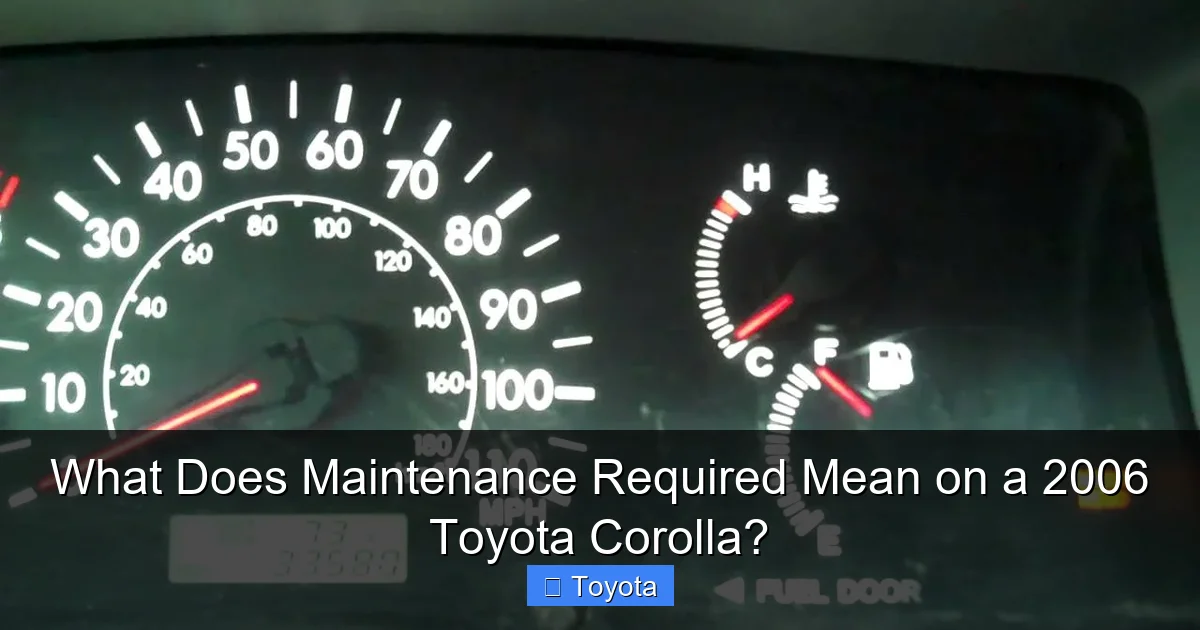
The “Maintenance Required” light on your 2006 Toyota Corolla is part of a system officially called the Maintenance Reminder System (MRS). Its sole purpose is to notify you that one or more items in the vehicle’s scheduled maintenance program are due. This is a predictive system, not just a simple mileage counter. It uses input from various engine sensors to calculate “engine oil life” based on factors like:
Visual guide about What Does Maintenance Required Mean on a 2006 Toyota Corolla?
Image source: i.ytimg.com
- Engine revolutions: How hard the engine is working.
- Engine run time: How long the engine has been on.
- Vehicle speed: Consistent highway vs. stop-and-go city driving.
- Engine temperature: How often the engine reaches optimal operating temperature.
Severe driving conditions—like frequent short trips where the engine doesn’t fully warm up, extremely hot or cold weather, dusty environments, or lots of idling—will cause the oil life to degrade faster. The MRS accounts for this. When the system calculates that the engine oil has about 15% of its useful life remaining, it illuminates the “MAINTENANCE REQUIRED” light. It’s a preemptive alert, giving you a window to schedule service before the oil becomes critically degraded.
The Primary Culprit: Engine Oil Life
For the vast majority of 2006 Corolla owners, the light coming on means it’s time for an oil and filter change. The system is calibrated around the use of Toyota-approved oil that meets certain specifications. While you might be using a high-quality synthetic oil that could theoretically last longer, the MRS is programmed with a conservative algorithm for the standard mineral or synthetic blend oils recommended at the time. It’s designed to prompt service before oil turns to sludge. Think of it as a safety margin built into your car’s brain.
Other Scheduled Services It May Incorporate
While oil change is the #1 trigger, the MRS is also integrated with other time/mileage-based services. In some cases, the light coming on might also signal that it’s time for a tire rotation (typically every 5,000-7,500 miles) or other inspections listed in your maintenance schedule. The system doesn’t differentiate; it simply says “maintenance is due.” That’s why it’s critical to either have a mechanic check the full maintenance history or consult your owner’s manual to see the complete list of services associated with the current interval for your specific Corolla (1.8L 1ZZ-FE engine vs. other variants).
How the Maintenance Reminder System Works
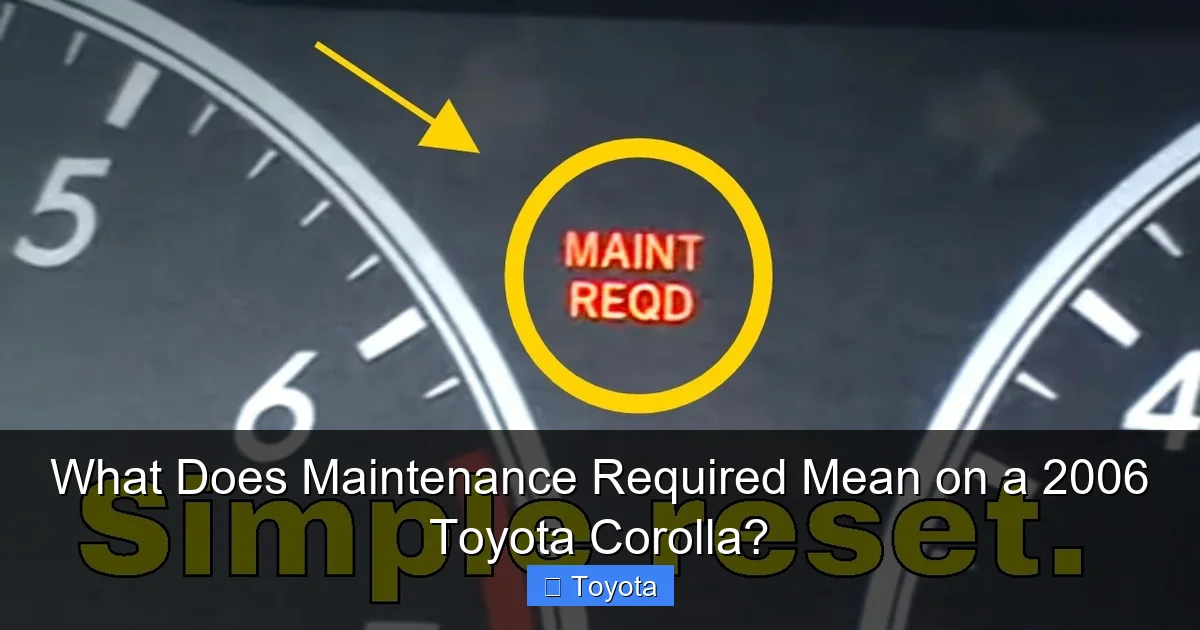
Understanding the “how” helps you trust the “why.” The system isn’t magical, but it’s more advanced than a simple sticker on your windshield. Here’s a simplified breakdown of its operation:
Visual guide about What Does Maintenance Required Mean on a 2006 Toyota Corolla?
Image source: i.ytimg.com
Deep within your Corolla’s Engine Control Unit (ECU), there’s software running the MRS algorithm. Every time you start the car, it begins tallying data. It knows the exact里程 (odometer reading) and monitors engine parameters in real-time. The core of the system is the “oil life percentage” calculation. Toyota engineers determined, through extensive testing, the average rate of oil degradation under various conditions. The system’s software uses this data as a baseline.
- Example A – Highway Commuter: You drive 30 miles daily on the freeway. Your engine warms up quickly, runs at steady RPMs, and experiences less thermal stress. The oil life percentage will decrease slowly. You might go 7,500 miles before the light comes on.
- Example B – City Traffic: Your 10-mile commute is in constant stop-and-go traffic. The engine runs longer at lower RPMs, accumulates more combustion byproducts, and may not reach peak temperature as often. The oil degrades faster. You might see the light at only 5,000 miles.
This personalized approach is far more accurate than a generic “change oil every 3,000 miles” rule from decades past. It ensures you’re not throwing away good oil and money unnecessarily, while also protecting you from the dangers of extended drain intervals in severe service. It’s a perfect example of your car’s computer working to optimize your ownership experience.
Common Maintenance Triggers for a 2006 Corolla
So, the light is on. What exactly does your Corolla need? While the definitive list is in your owner’s manual, here are the most common services that trigger the “MAINTENANCE REQUIRED” alert for this model year. These are typically bundled into “Service A” and “Service B” intervals.
Visual guide about What Does Maintenance Required Mean on a 2006 Toyota Corolla?
Image source: i.ytimg.com
Service A (Typically Every 5,000-7,500 Miles)
This is the most frequent visit and is almost always oil and filter change centric.
- Engine Oil & Filter Change: The non-negotiable heart of Service A. Use the viscosity grade specified in your manual (likely 5W-30).
- Tire Rotation: Promotes even tread wear. Essential for tire longevity.
- Multi-Point Inspection: A technician will check fluid levels (coolant, brake, washer), belts, hoses, battery, lights, and suspension components.
- Brake Inspection: Checking pad/shoe thickness and rotor/drum condition.
Service B (Typically Every 15,000-30,000 Miles)
This is a more comprehensive service that includes all Service A items plus:
- Cabin Air Filter Replacement: Crucial for HVAC system health and interior air quality. Often overlooked!
- Engine Air Filter Replacement: Ensures your engine breathes clean air for efficiency and power.
- Fuel Filter Inspection/Replacement: (Location varies; some are in-tank and have a long service life).
- Additional Fluid Checks/Changes: Such as transmission fluid (check level/condition, may not require change at this interval), and differential fluid if applicable.
- Spark Plug Inspection/Replacement: For the 1.8L engine, plugs often last 100k+ miles, but are inspected.
- Throttle Body Cleaning: May be recommended at higher mileage intervals to prevent idle issues.
Pro Tip: The light coming on is your cue to ask for a complete maintenance report based on your car’s specific mileage. Don’t just get an oil change; verify all due items from the official Toyota schedule for your 2006 Corolla are addressed. You can find this schedule in your owner’s manual or online through Toyota’s resources.
How to Reset the “Maintenance Required” Light
Important: Only reset the light after the required maintenance has been performed. Resetting it without doing the work defeats the entire purpose of the system and can lead to engine damage. The process for a 2006 Corolla is straightforward and requires no tools.
Step-by-Step Reset Procedure
- Turn the Ignition On: Insert your key and turn it to the “ON” position (the position right before “START” where all dashboard lights come on). Do not start the engine.
- Display Odometer: Use the “ODO/TRIP” button on your instrument cluster to cycle the display until you see the total odometer reading (not a trip meter A or B).
- Turn the Ignition Off: Turn the key back to the “OFF” position.
- Press and Hold the Trip Meter Reset Button: While the key is in the “OFF” position, locate the small black button used to reset the trip meters (usually on the instrument cluster itself). Press and hold this button down.
- Turn the Ignition Back On (while holding): While continuing to hold the reset button, turn the key back to the “ON” position (again, do not start).
- Watch the Display: The odometer display will change. It will show a series of dashes “—–” which then count down to “0”. This process takes about 5-10 seconds.
- Release the Button: Once the display shows “0” or returns to the odometer reading, release the button. The “MAINTENANCE REQUIRED” light should be off.
- Verify: Turn the ignition off and back on to confirm the light does not reappear.
If this procedure doesn’t work, double-check that you started with the total odometer displayed (not a trip meter) and that you held the button through the entire sequence. Some models have a slightly different sequence involving the “ODO/TRIP” button being pressed while turning the key on. Your owner’s manual is the final authority.
Why You Should Never Ignore the Light
It’s tempting to think, “The car seems fine, I’ll get to it next week.” This mindset is how minor maintenance issues snowball into major, bank-account-breaking repairs. Here’s what’s at stake when you dismiss the “MAINTENANCE REQUIRED” warning:
- Engine Damage from Oil Sludge: This is the biggest risk. As oil degrades, it loses its lubricating and cleaning properties. It forms deposits and sludge that can clog oil passages, starve bearings of lubrication, and lead to catastrophic engine failure. Replacing an engine costs thousands; an oil change costs tens of dollars.
- Poor Fuel Economy (MPG): Dirty air filters, old spark plugs, and incorrect tire pressure (often checked during these services) all force your engine to work harder, burning more gasoline. You’ll feel it at the pump.
- Emissions Test Failure: A poorly maintained engine burns fuel inefficiently, leading to higher exhaust emissions. A failed emissions test can prevent you from registering your vehicle, and fixing the underlying cause (like a faulty oxygen sensor that wasn’t caught early) is more expensive than routine service.
- Premature Tire Wear: Skipping tire rotations leads to uneven wear, meaning you need to replace your tires much sooner than their expected lifespan. A set of new tires is a significant expense.
- Brake System Compromise: During the multi-point inspection, brake pads/shoes are checked. Worn pads can damage rotors, leading to a much more expensive repair. Low brake fluid can indicate worn pads or a leak in the system.
- Voiding Warranty/Extended Service Contracts: If your Corolla is still under any form of warranty or an extended service contract, failing to adhere to the manufacturer’s recommended maintenance schedule can void coverage for related components.
The light is your cheapest insurance policy against massive repair bills. It’s a direct line of communication from the engineers who built your car, telling you exactly what it needs to stay healthy.
Professional Service vs. DIY: What’s Right for You?
The “MAINTENANCE REQUIRED” light presents a fork in the road: take it to a professional or roll up your sleeves. Both paths are valid, but they have different requirements and implications.
The Professional Route (Dealership or Trusted Independent Shop)
Best for: Most owners, especially those less mechanically inclined, those under warranty, or when the light indicates a Service B interval.
Advantages:
- Completeness: They will perform the full, factory-specified service menu for your mileage, not just an oil change.
- Diagnostics: They have the scan tools to check for any hidden trouble codes that might not have triggered a separate warning light yet.
- Record-Keeping: They provide a stamped service record, which is invaluable for resale value and warranty claims.
- Peace of Mind: Professional training, lifts, and proper disposal of fluids.
- Warranty Compliance: Dealership service (or a shop using OEM parts and following the manual) satisfies warranty requirements.
Considerations: Cost is higher than DIY, and you need to schedule an appointment and wait.
The DIY Route
Best for: Enthusiasts with basic mechanical skills, those wanting to save money on simple oil changes, or those with a trusted parts supply.
What You Can Easily Do:
- Oil & Filter Change: The #1 task. Requires correct oil type/quantity, a new filter, a drain pan, a socket/wrench for the drain plug and filter, and a way to safely dispose of old oil.
- Tire Rotation: Requires a jack, jack stands, and a lug wrench. Safety is paramount. Ensure the car is securely supported.
- Cabin Air Filter: Usually located behind the glovebox and is a simple clip-on/clip-off job (may require removing a few screws).
- Engine Air Filter: Typically in a black box on top of the engine. Usually secured by clips or a couple of screws. Very quick.
What to Leave to Pros: Anything involving brakes, transmission fluid, coolant system bleeding, or major inspections. Also, if you reset the light yourself, keep your own meticulous records of what was done and when.
Critical Reminder: If you do the work yourself, you are now responsible for knowing the full maintenance schedule. You must perform all required tasks, not just the oil change, before resetting the light. Use your owner’s manual as your guide.
Conclusion: Your Partnership with Your Corolla
The “Maintenance Required” light on your 2006 Toyota Corolla is not an adversary; it’s an ally. It’s a feature, not a flaw—a testament to Toyota’s engineering that provides personalized maintenance guidance. This little wrench symbol represents a conversation between you and your car. When it illuminates, your Corolla is asking for its scheduled check-up, just like you would for your own health.
By understanding that this light is based on real-time data about your engine’s oil life, you can appreciate its intelligence. By knowing the common services it triggers—primarily the oil change but also tire rotations and filter replacements—you can have an informed discussion with your mechanic. By mastering the simple reset procedure, you complete the cycle of care.
Ultimately, heeding this reminder is the single most effective thing you can do to ensure your 2006 Corolla lives up to its legendary reputation for reliability. It protects your engine, saves you money on fuel and big repairs, maintains your car’s value, and keeps you safe on the road. So the next time that amber wrench appears, don’t panic. Smile, knowing your car is looking out for you. Schedule your service, get the work done, reset the light, and enjoy many more miles of worry-free driving in your dependable Toyota Corolla. You and your car are in this together.
Frequently Asked Questions
Is it safe to drive my 2006 Corolla with the Maintenance Required light on?
Yes, it is generally safe to drive for a limited time (a few hundred miles) to schedule service. However, you should not ignore it for months. The light means oil life is low, and driving with severely degraded oil risks engine damage. Plan to have the service done within your next few fuel stops or weekly drives.
How many miles can I drive after the light comes on before getting service?
The system illuminates the light when oil life is approximately 15%. With normal driving, this typically gives you a buffer of about 500-1,000 miles. However, this is not a guarantee. If your driving is mostly severe (short trips, extreme heat/cold), you should schedule service more promptly. Use it as a firm reminder, not an extended deadline.
Will the light turn off by itself after a while?
No. The “MAINTENANCE REQUIRED” light will remain illuminated continuously once it is triggered. It is designed to stay on until it is manually reset using the procedure in your owner’s manual. It will not turn off on its own, even if you add oil or drive more miles. This ensures you cannot accidentally ignore the reminder.
What if the light comes on right after I just had an oil change?
This can happen if the reset procedure was not performed after the previous service. The light is based on a computer calculation, not on the new oil itself. After getting an oil change, you or your mechanic must reset the system. If it comes on soon after, return to the shop and have them verify the reset was done correctly. Also, ensure they used the correct oil type and filter.
Does the Maintenance Required light affect my car’s performance or fuel economy?
The light itself does not affect performance or fuel economy; it’s just an indicator. However, the underlying condition it signifies—degraded engine oil and potentially other neglected maintenance—can negatively impact both. Old, sludgy oil increases engine friction, reducing efficiency and power. Addressing the maintenance will restore optimal performance and MPG.
Can a bad battery or electrical issue cause the Maintenance Required light to come on?
Unlikely. This light is controlled by the Engine Control Unit (ECU) based on its internal maintenance algorithm, not by a simple voltage sensor. A weak battery might cause other dashboard lights to flicker or cause starting issues, but it won’t trigger the MRS light. If the light is on, assume it’s for its intended purpose: scheduled maintenance. If it’s flashing (which it does not do on a 2006 Corolla), that would indicate a different, more serious issue.