What Do You Need to Sell a Car in Missouri

Selling a car in Missouri involves more than just finding a buyer—you need the right paperwork, a clean title, and knowledge of state laws. This guide walks you through every requirement, from odometer disclosures to notarization, so you can sell your vehicle safely and legally.
Selling a car can feel overwhelming, especially when you’re not sure what steps to take or what paperwork is required. Whether you’re upgrading to a newer model, downsizing, or simply ready to part ways with your current vehicle, knowing exactly what you need to sell a car in Missouri is essential. The good news? Missouri has a straightforward process—but only if you follow the rules.
Missouri law requires specific documentation and procedures to ensure the sale is legal and protects both the seller and the buyer. Missing a single step—like forgetting to sign the title or failing to file a release of liability—can lead to headaches down the road. For example, if you sell your car but don’t officially notify the state, you could still be held responsible if the new owner gets a ticket or causes an accident. That’s why understanding the full process is so important.
In this guide, we’ll break down everything you need to sell a car in Missouri, from gathering the right documents to completing the transfer safely. We’ll cover legal requirements, practical tips, and common pitfalls to avoid. Whether you’re selling privately or trading in at a dealership, this information will help you navigate the process with confidence.
In This Article
- 1 Key Takeaways
- 2 📑 Table of Contents
- 3 1. Gather the Required Documents
- 4 2. Prepare Your Vehicle for Sale
- 5 3. Determine the Right Sale Price
- 6 4. Advertise Your Vehicle Effectively
- 7 5. Complete the Sale Safely and Legally
- 8 6. Post-Sale Responsibilities
- 9 Conclusion
- 10 Frequently Asked Questions
- 10.1 Do I need a bill of sale to sell a car in Missouri?
- 10.2 Can I sell a car in Missouri without a title?
- 10.3 Do I need to notarize the title when selling a car in Missouri?
- 10.4 What happens if I don’t file a release of liability?
- 10.5 Can I sell a car with a lien in Missouri?
- 10.6 Do I need a vehicle inspection to sell a car in Missouri?
Key Takeaways
- Valid Vehicle Title: You must have a clear, signed title in your name to transfer ownership in Missouri.
- Bill of Sale: While not always required, a bill of sale protects both buyer and seller and is highly recommended.
- Odometer Disclosure: Federal law requires accurate mileage reporting for vehicles under 10 years old.
- Release of Liability: File this with the Missouri DOR to avoid future responsibility for the vehicle.
- Vehicle Inspection: Some buyers may require a safety or emissions inspection, especially in St. Louis and Kansas City.
- Notarization: Certain documents, like the title, may need to be notarized depending on the transaction.
- Payment and Handover: Use secure payment methods and complete the transfer in person when possible.
📑 Table of Contents
1. Gather the Required Documents
Before you even list your car for sale, you need to make sure you have all the necessary paperwork. Missing documents are one of the most common reasons car sales fall through or get delayed. In Missouri, the core documents you’ll need include the vehicle title, a bill of sale, odometer disclosure, and possibly a release of liability form.
Vehicle Title
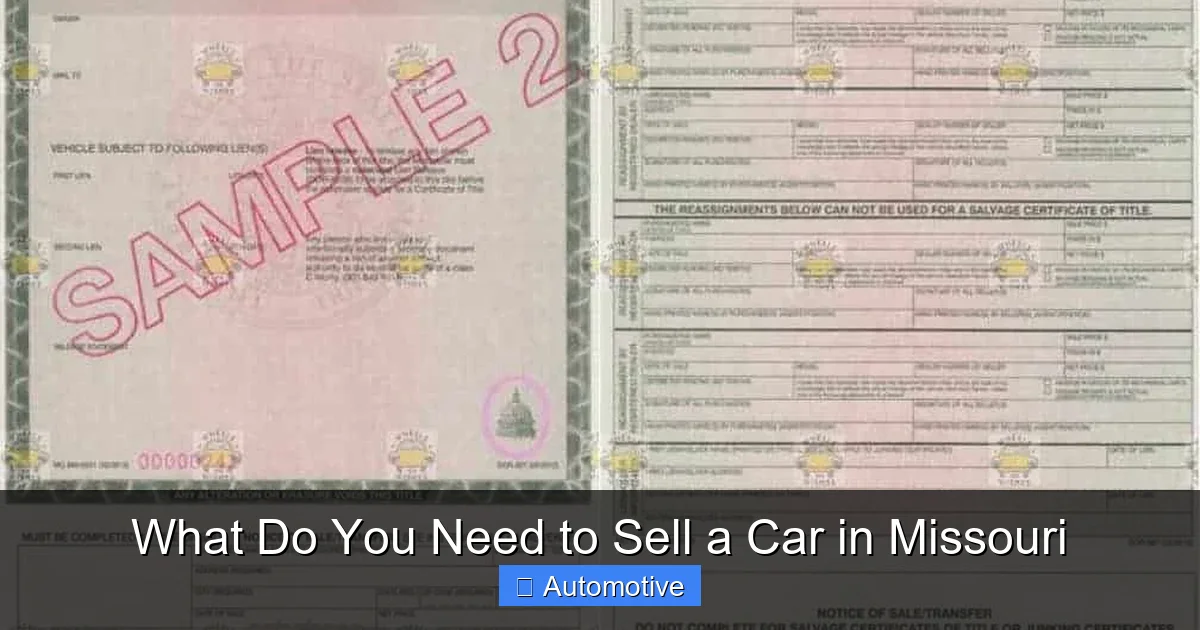
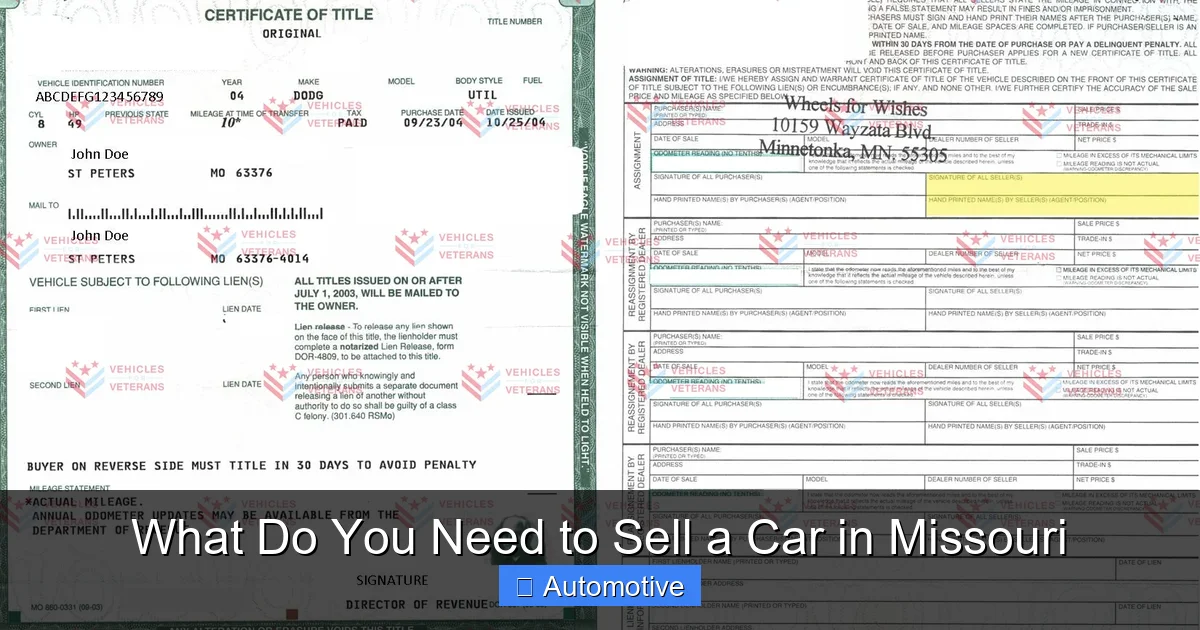
The vehicle title is the most important document when selling a car in Missouri. It proves ownership and must be transferred to the buyer upon sale. The title must be in your name, and there should be no liens (outstanding loans) against the vehicle. If there is a lien, you’ll need to pay it off before selling—or arrange for the buyer to pay the lender directly at the time of sale.
When you sign the title over to the buyer, make sure to fill out all required sections correctly. This includes the sale price, odometer reading, and both parties’ signatures. Missouri allows the back of the title to be used for the transfer, but it must be completed accurately. Any errors—like a misspelled name or incorrect mileage—can cause delays or rejection at the DMV.
Bill of Sale
While Missouri does not legally require a bill of sale for private vehicle transactions, it’s strongly recommended. A bill of sale acts as a receipt and legal record of the transaction. It protects both you and the buyer by clearly stating the terms of the sale, including the vehicle’s condition, sale price, and date of transfer.
You can create a simple bill of sale using a template from the Missouri Department of Revenue (DOR) website or a trusted legal document provider. Include details like the vehicle identification number (VIN), make, model, year, license plate number, buyer and seller names and addresses, sale price, and signatures. Keep a copy for your records.
Odometer Disclosure Statement
Federal law requires an odometer disclosure for vehicles that are 10 years old or newer. This means if your car was manufactured in 2014 or later (as of 2024), you must provide an accurate mileage reading. The disclosure is typically completed on the back of the title, but you can also use a separate form if needed.
Be honest about the mileage. Tampering with or misrepresenting the odometer reading is a federal crime and can result in serious penalties. If the odometer is broken or the mileage is unknown, you must state that clearly on the form.
Release of Liability Form
After the sale, you must file a Release of Liability with the Missouri DOR. This form notifies the state that you are no longer responsible for the vehicle. You can submit it online, by mail, or in person at a local DOR office. It’s free and takes just a few minutes.
Filing this form is crucial. Without it, you could still be liable for parking tickets, toll violations, or even accidents caused by the new owner. The DOR recommends submitting the form within 30 days of the sale, but the sooner, the better.
2. Prepare Your Vehicle for Sale
Visual guide about What Do You Need to Sell a Car in Missouri
Image source: wheelsforwishes.org
Once your paperwork is in order, it’s time to get your car ready to sell. A well-prepared vehicle not only sells faster but can also fetch a higher price. Buyers are more likely to trust a seller who presents a clean, well-maintained car with full documentation.
Clean and Detail the Car
First impressions matter. Give your car a thorough cleaning—both inside and out. Wash the exterior, wax it if possible, and clean the windows. Vacuum the interior, wipe down surfaces, and remove any personal items. Consider using an odor eliminator if there are lingering smells from pets, smoking, or food.
If your budget allows, invest in professional detailing. A detailed car looks newer and well-cared-for, which can justify a higher asking price. Even small touches like cleaning the dashboard or polishing the headlights can make a big difference.
Address Minor Repairs
You don’t need to overhaul the entire vehicle, but fixing minor issues can increase its value. Replace burnt-out bulbs, fix small dents or scratches, and top off fluids. If the tires are worn or the brakes are squeaking, consider addressing those issues—especially if they could raise safety concerns.
Keep receipts for any repairs or maintenance. These can be shown to potential buyers as proof of good upkeep. A well-documented service history builds trust and can help you negotiate a better price.
Gather Maintenance Records
Buyers appreciate transparency. Providing a record of regular oil changes, tire rotations, and major repairs shows that the car has been well-maintained. If you have the original owner’s manual, warranty information, or repair receipts, include those as well.
You can organize these documents in a folder or binder to present to interested buyers. This small effort can set you apart from other sellers and give buyers confidence in their purchase.
3. Determine the Right Sale Price
Visual guide about What Do You Need to Sell a Car in Missouri
Image source: vehiclesforveterans.org
Pricing your car correctly is one of the most important steps in the selling process. Overpricing can scare away buyers, while underpricing means leaving money on the table. To find the right price, you’ll need to research the market and consider your car’s condition, mileage, and features.
Research Comparable Vehicles
Start by looking at similar cars for sale in your area. Use websites like Kelley Blue Book (KBB), Edmunds, or Autotrader to find vehicles with the same make, model, year, mileage, and condition. Pay attention to how long they’ve been listed—cars that sit for weeks may be overpriced.
Take note of any extras that might affect value, such as leather seats, a sunroof, or advanced safety features. Also, consider your car’s location. Prices can vary between cities due to demand, climate, and local market conditions.
Use Online Valuation Tools
KBB and Edmunds offer free valuation tools that give you a price range based on your car’s details. These tools consider factors like mileage, condition, and regional trends. While they’re a great starting point, remember that they’re estimates—not guarantees.
For a more accurate assessment, consider getting a professional appraisal, especially if your car is rare, classic, or in exceptional condition.
Set a Competitive Price
Once you have your research, set a price that’s competitive but leaves room for negotiation. Most buyers expect to haggle, so pricing slightly above your target can give you flexibility. However, avoid pricing too high—buyers may skip over your listing entirely.
If you’re in a hurry to sell, consider pricing slightly below market value. This can generate quick interest and lead to multiple offers.
4. Advertise Your Vehicle Effectively
A great car at a fair price won’t sell if no one sees it. Effective advertising is key to attracting serious buyers. In today’s market, online listings are the most effective way to reach a large audience.
Choose the Right Platforms
Popular websites for selling cars include Craigslist, Facebook Marketplace, Autotrader, and Cars.com. Each platform has its pros and cons. Craigslist is free and widely used, but it can attract scammers. Facebook Marketplace is convenient and allows you to share listings with friends, but visibility may be limited.
Autotrader and Cars.com are more professional and attract serious buyers, but they often charge listing fees. Choose platforms based on your budget and target audience.
Write a Clear and Honest Description
Your listing should include essential details like the make, model, year, mileage, condition, and reason for selling. Be honest about any flaws—hiding problems can lead to disputes or failed inspections.
Highlight positive features, such as low mileage, recent repairs, or excellent fuel economy. Use bullet points to make the information easy to scan.
Take High-Quality Photos
Photos are the first thing buyers see. Take pictures in good lighting, from multiple angles. Include shots of the exterior, interior, engine, and trunk. Show any damage or wear so buyers know what to expect.
Avoid using filters or editing that misrepresents the car’s condition. Honesty builds trust and reduces the chance of last-minute cancellations.
5. Complete the Sale Safely and Legally
Once you’ve found a buyer, it’s time to finalize the sale. This step requires attention to detail to ensure the transfer is legal and secure.
Meet in a Safe Location
Always meet potential buyers in a public, well-lit place—like a police station parking lot or a busy shopping center. Avoid meeting at your home or in isolated areas. If possible, bring a friend or family member for added safety.
Verify Payment
Accept only secure forms of payment, such as cash, a cashier’s check, or a bank wire transfer. Personal checks can bounce, and digital payments like Venmo or PayPal can be reversed. If using a cashier’s check, verify it with the issuing bank before handing over the car.
Never release the vehicle until payment is confirmed and cleared.
Complete the Title Transfer
At the time of sale, both you and the buyer should sign the title. Make sure all information is accurate, including the sale price and odometer reading. The buyer will take the signed title to the DOR to register the vehicle in their name.
If the title requires notarization (check your specific title for instructions), both parties must sign in the presence of a notary public.
Provide a Bill of Sale
Hand over a completed bill of sale to the buyer. Keep a copy for your records. This document serves as proof of the transaction and can be useful if any issues arise later.
Remove License Plates and Cancel Insurance
In Missouri, license plates stay with the vehicle, so you don’t need to remove them. However, you should cancel your insurance policy as soon as the sale is complete. Contact your insurer to end coverage and request a refund for any unused premiums.
6. Post-Sale Responsibilities
Your responsibilities don’t end when the buyer drives away. There are a few final steps to protect yourself and ensure a smooth transition.
File the Release of Liability
As mentioned earlier, submit the Release of Liability form to the Missouri DOR. This can be done online at the DOR website. You’ll need the vehicle’s VIN, sale date, and buyer’s information.
Keep Records
Store copies of the title, bill of sale, and release of liability form in a safe place. These documents may be needed if the buyer has issues registering the vehicle or if there’s a dispute.
Notify Your Lender (If Applicable)
If you had a loan on the vehicle, notify your lender that the car has been sold. They may require proof of sale or help with the lien release process.
Conclusion
Selling a car in Missouri doesn’t have to be complicated—if you know what you’re doing. By gathering the right documents, preparing your vehicle, pricing it correctly, and completing the sale safely, you can avoid common pitfalls and ensure a smooth transaction. Remember, the key to a successful sale is transparency, preparation, and attention to detail.
Whether you’re selling to a private buyer or trading in at a dealership, following these steps will help you protect yourself legally and financially. Take the time to do it right, and you’ll walk away with peace of mind—and hopefully a fair price for your vehicle.
Frequently Asked Questions
Do I need a bill of sale to sell a car in Missouri?
No, a bill of sale is not legally required in Missouri for private vehicle sales. However, it’s highly recommended because it provides proof of the transaction and protects both parties.
Can I sell a car in Missouri without a title?
No, you must have a valid title to sell a car in Missouri. If your title is lost or damaged, you can apply for a duplicate from the Missouri DOR before selling.
Do I need to notarize the title when selling a car in Missouri?
Not always. Check the back of your title for specific instructions. Some titles require notarization, while others do not. When in doubt, contact your local DOR office.
What happens if I don’t file a release of liability?
If you don’t file a release of liability, you could still be held responsible for tickets, tolls, or accidents involving the vehicle after the sale. Always submit the form to protect yourself.
Can I sell a car with a lien in Missouri?
Yes, but the lien must be satisfied before or at the time of sale. You can pay off the loan yourself or arrange for the buyer to pay the lender directly during the transaction.
Do I need a vehicle inspection to sell a car in Missouri?
Missouri does not require a safety or emissions inspection for private sales, but some buyers—especially in St. Louis and Kansas City—may request one. It’s a good idea to be prepared.