Should I Disconnect My Car Battery When Not in Use
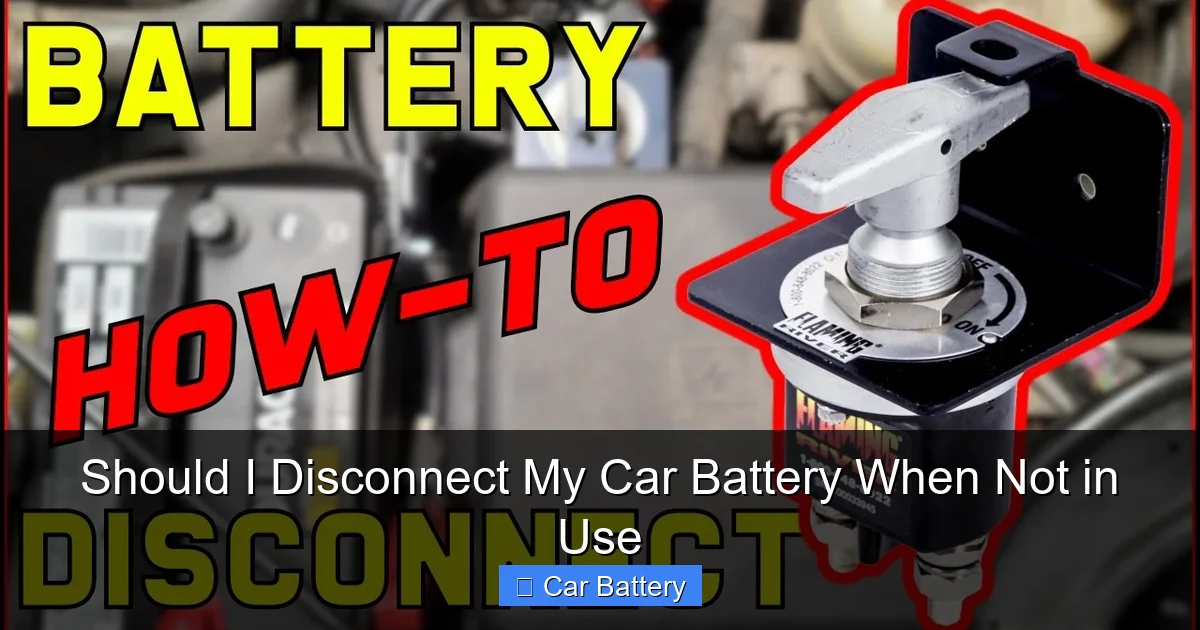
Disconnecting your car battery when the vehicle isn’t in use can prevent parasitic drain and extend battery life, especially during long storage periods. However, it’s not always necessary for short absences and may reset electronic settings. Weigh the benefits against potential inconveniences to decide what’s best for your situation.
In This Article
- 1 Key Takeaways
- 2 📑 Table of Contents
- 3 Should I Disconnect My Car Battery When Not in Use?
- 4 Understanding How Car Batteries Lose Power
- 5 Benefits of Disconnecting Your Car Battery
- 6 Drawbacks and Risks of Disconnecting the Battery
- 7 When Should You Disconnect Your Car Battery?
- 8 Alternatives to Disconnecting the Battery
- 9 How to Safely Disconnect and Reconnect Your Car Battery
- 10 Conclusion
- 11 Frequently Asked Questions
- 11.1 Is it safe to disconnect my car battery?
- 11.2 How long can a car battery last without being used?
- 11.3 Will disconnecting the battery harm my car’s computer?
- 11.4 Can I just remove the negative cable instead of the whole battery?
- 11.5 What’s the difference between a trickle charger and a battery maintainer?
- 11.6 Should I disconnect my battery if I’m going on a 2-week vacation?
Key Takeaways
- Prevents Parasitic Drain: Disconnecting the battery stops small electrical loads from slowly draining power over time.
- <>Extends Battery Life: Reducing unnecessary discharge helps maintain charge and prolongs overall battery health.
- Useful for Long-Term Storage: Ideal if your car will sit unused for weeks or months, especially in extreme temperatures.
- May Reset Vehicle Settings: Disconnection can erase radio presets, clock settings, and adaptive transmission data.
- Modern Cars May Require Reprogramming: Some vehicles with advanced electronics need a scan tool to reset after reconnection.
- Alternative Solutions Exist: Battery maintainers or trickle chargers offer a safer, more convenient option for regular use.
- Not Needed for Short Absences: If you’re only away for a few days, disconnecting is usually unnecessary and more hassle than help.
📑 Table of Contents
- Should I Disconnect My Car Battery When Not in Use?
- Understanding How Car Batteries Lose Power
- Benefits of Disconnecting Your Car Battery
- Drawbacks and Risks of Disconnecting the Battery
- When Should You Disconnect Your Car Battery?
- Alternatives to Disconnecting the Battery
- How to Safely Disconnect and Reconnect Your Car Battery
- Conclusion
Should I Disconnect My Car Battery When Not in Use?
You’ve probably been there—your car sits in the garage for a week or two, and when you go to start it, the engine cranks slowly or doesn’t turn over at all. Frustrating, right? One common question that comes up in these situations is: *Should I disconnect my car battery when not in use?* It’s a smart thought, especially if you’re planning to leave your vehicle unused for an extended period. But is it really the best move?
The short answer? It depends. Disconnecting your car battery can help preserve its charge and prevent unwanted power loss, particularly during long storage. But it’s not a one-size-fits-all solution. Modern vehicles come packed with electronics that rely on constant power, and simply pulling the battery cable might do more harm than good in some cases. Plus, there are easier, more effective alternatives like battery maintainers that can keep your battery in top shape without the hassle.
In this guide, we’ll walk you through everything you need to know about disconnecting your car battery when the vehicle isn’t in use. We’ll cover the benefits, the drawbacks, when it makes sense, and what you should consider before making the decision. Whether you’re storing a classic car for the winter, leaving your daily driver unused while on vacation, or just trying to extend your battery’s lifespan, this article will help you make an informed choice.
Understanding How Car Batteries Lose Power
Visual guide about Should I Disconnect My Car Battery When Not in Use
Image source: wikihow.com
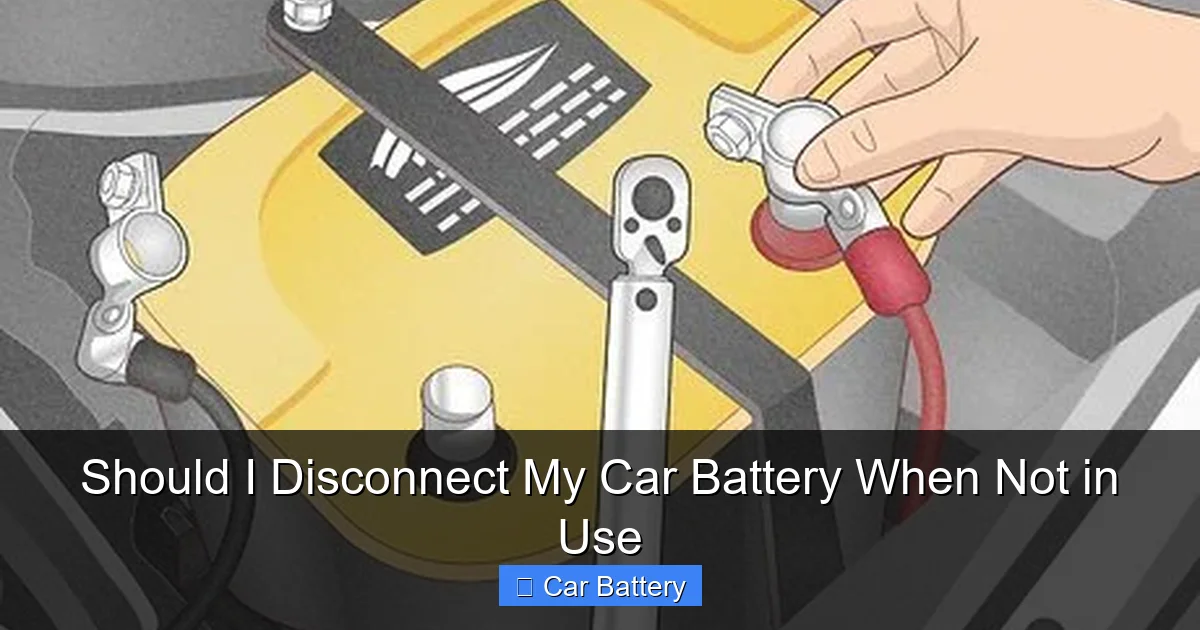
Before deciding whether to disconnect your battery, it helps to understand why car batteries lose charge in the first place. Even when your car is off, the battery continues to supply small amounts of power to various systems. This is known as parasitic drain—a normal but often overlooked phenomenon.
Parasitic drain occurs because modern vehicles are filled with electronics that remain active even when the engine isn’t running. Things like the clock, alarm system, key fob receiver, and onboard computers all draw a tiny bit of current from the battery. On most cars, this drain is minimal—usually between 20 to 50 milliamps. That might not sound like much, but over time, it adds up.
For example, if your car has a 50-milliamp drain and sits for two weeks (336 hours), it can lose over 16 amp-hours of charge. A typical car battery holds about 48 to 70 amp-hours, so that’s a significant chunk—especially if the battery was already partially discharged.
Factors That Accelerate Battery Drain
Several factors can increase the rate at which your battery loses power:
- Extreme Temperatures: Cold weather slows chemical reactions inside the battery, reducing its ability to hold a charge. Hot weather can cause the electrolyte to evaporate, damaging internal components.
- Old or Weak Batteries: As batteries age, their internal resistance increases, making them less efficient at storing and delivering power.
- Aftermarket Electronics: Devices like dash cams, GPS trackers, or upgraded stereos that are wired directly to the battery can increase parasitic drain.
- Faulty Electrical Components: A malfunctioning relay, glove box light that stays on, or a stuck relay can cause excessive drain, sometimes exceeding 100 milliamps.
Understanding these factors helps explain why some cars lose charge faster than others—and why simply disconnecting the battery might not always be the most practical solution.
Benefits of Disconnecting Your Car Battery
Visual guide about Should I Disconnect My Car Battery When Not in Use
Image source: motortrend.com
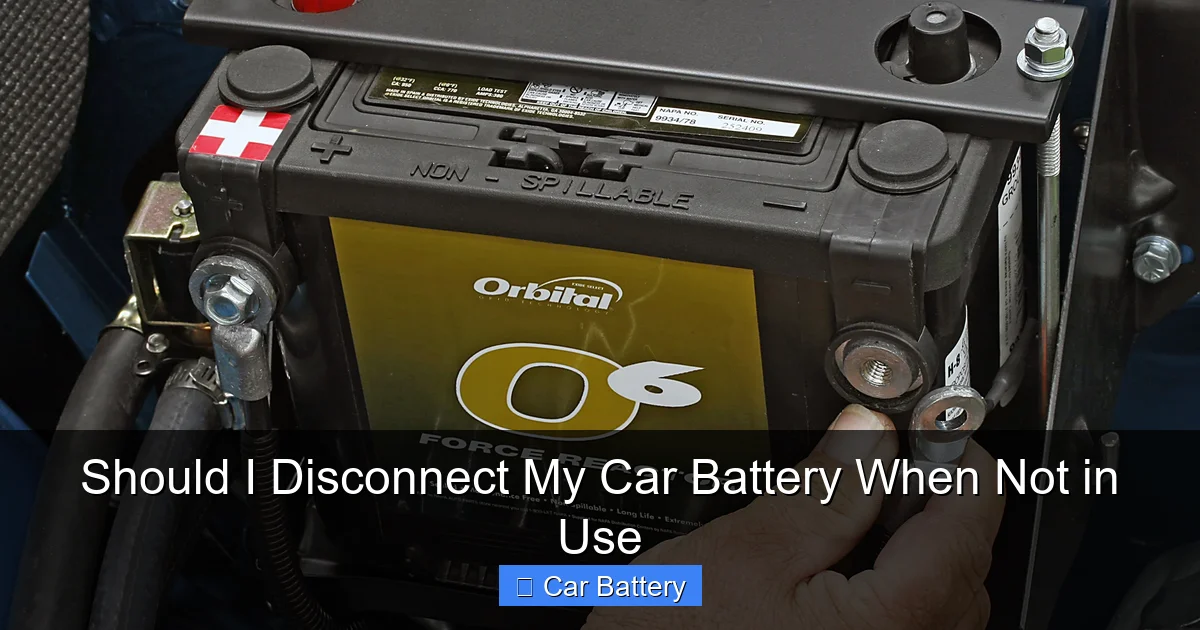
So, what are the real advantages of disconnecting your car battery when the vehicle isn’t in use? Let’s break it down.
Prevents Parasitic Drain
The most obvious benefit is that disconnecting the battery stops all electrical draw. No matter how small the parasitic load, cutting the power source eliminates it entirely. This is especially helpful if you’re storing your car for weeks or months—like during winter if you have a summer-only vehicle, or if you’re going on an extended trip.
Imagine you have a classic car you only drive a few times a year. If you leave the battery connected, even a small drain could leave it dead by the time you want to take it out for a weekend cruise. Disconnecting it ensures it stays charged and ready to go.
Extends Battery Life
Car batteries degrade over time, and one of the biggest contributors to that degradation is deep discharge. Every time a battery is drained below 50% of its capacity, it undergoes stress that shortens its lifespan. By disconnecting the battery, you prevent unnecessary discharge, helping it last longer.
For example, a battery that’s regularly drained and recharged may last only 2–3 years. But one that’s kept at a steady state of charge—thanks to disconnection or a maintainer—can last 4–6 years or more.
Protects Against Electrical Surges
Another benefit is protection from voltage spikes. While rare, power surges can occur due to lightning strikes, faulty alternators, or jump-starts gone wrong. Disconnecting the battery removes it from the circuit, reducing the risk of damage to sensitive electronics.
This is particularly useful if you live in an area with unstable power grids or frequent storms. It’s a simple step that adds an extra layer of protection.
Useful for Long-Term Storage
If you’re storing a vehicle for an extended period—say, a motorcycle over winter or a boat during the off-season—disconnecting the battery is a smart move. It ensures the battery doesn’t die and avoids the hassle of jump-starting or replacing it when you’re ready to use the vehicle again.
Just remember to store the battery properly: keep it in a cool, dry place, and ideally on a battery maintainer or trickle charger to keep it at optimal charge.
Drawbacks and Risks of Disconnecting the Battery
Visual guide about Should I Disconnect My Car Battery When Not in Use
Image source: media.torque.com.sg
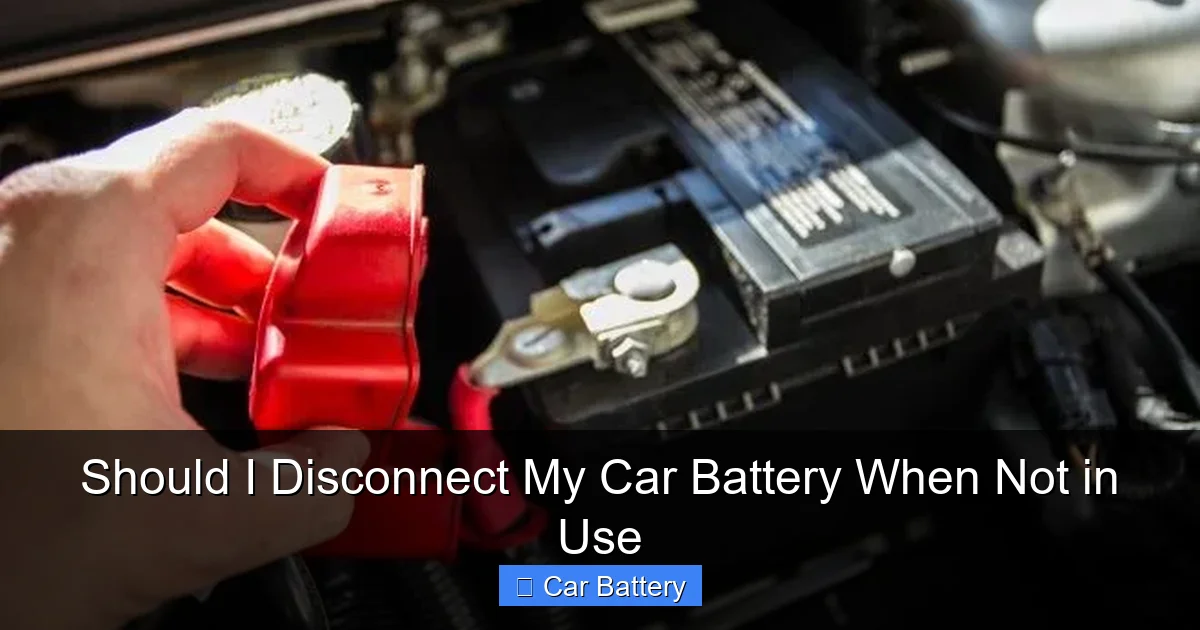
While disconnecting your car battery has clear benefits, it’s not without its downsides. In fact, for many modern vehicles, the risks may outweigh the rewards.
Resets Vehicle Settings
One of the most common complaints after disconnecting a battery is the loss of personalized settings. This includes:
- Radio presets and clock time
- Seat and mirror memory positions
- Adaptive transmission shift points
- Climate control preferences
For example, if you’ve spent time programming your favorite radio stations or adjusting your seat just right, you’ll have to do it all over again. On some luxury vehicles, this can be a tedious process.
Triggers Warning Lights and Error Codes
Modern cars rely on complex computer systems that monitor everything from engine performance to emissions. When the battery is disconnected, these systems lose power and may interpret the event as a fault.
As a result, you might see warning lights on the dashboard—like the check engine light or ABS light—even though nothing is actually wrong. In some cases, the vehicle may need to be driven for a certain distance or time for the systems to recalibrate.
May Require Reprogramming
Some vehicles, especially those with advanced driver-assistance systems (ADAS) like lane departure warning or adaptive cruise control, require a scan tool to reset after a battery disconnection. This isn’t something you can do at home—it often requires a visit to a dealership or mechanic.
For instance, a 2020 Honda Accord with Honda Sensing may need a professional reset to ensure the cameras and sensors are properly aligned after the battery is reconnected.
Inconvenience and Safety Concerns
Disconnecting and reconnecting a battery isn’t always easy. It requires tools, physical access to the battery (which may be in a tight space), and knowledge of proper procedures. There’s also a risk of short-circuiting the battery if the terminals are mishandled, which can cause sparks, burns, or even an explosion in rare cases.
Additionally, if you’re not careful, you might accidentally touch both terminals with a metal tool, creating a direct short. Always disconnect the negative terminal first and reconnect it last to minimize risk.
When Should You Disconnect Your Car Battery?
Now that you know the pros and cons, the next question is: *When is it actually worth it?* Here are some scenarios where disconnecting your battery makes sense.
Long-Term Storage (Weeks or Months)
If you’re storing your car for an extended period—like a classic car, RV, or seasonal vehicle—disconnecting the battery is a good idea. This prevents parasitic drain and helps preserve the battery’s charge.
Just remember to check the battery periodically and consider using a battery maintainer if possible.
Extreme Weather Conditions
In very cold climates, a weak battery can freeze if it’s discharged below 75%. Disconnecting it reduces the risk of deep discharge and freezing. Similarly, in hot climates, disconnecting can prevent overheating and electrolyte loss.
However, if temperatures are extremely low, storing the battery indoors (if possible) is even better.
Aftermarket Modifications or Repairs
If you’re working on your car’s electrical system—like installing a new stereo, alarm, or lighting—disconnecting the battery is a safety must. It prevents accidental shorts and protects both you and your vehicle.
When the Battery Is Already Weak
If your battery is old or showing signs of weakness (slow cranking, dim lights), disconnecting it during long absences can prevent a complete failure. But again, a maintainer is often a better long-term solution.
Alternatives to Disconnecting the Battery
Before you grab your wrench, consider these alternatives—they’re often safer, more convenient, and just as effective.
Use a Battery Maintainer or Trickle Charger
A battery maintainer (also called a smart charger) is a device that plugs into a wall outlet and connects to your battery. It monitors the charge level and delivers just enough power to keep the battery at 100% without overcharging.
Unlike a traditional trickle charger, which constantly feeds power, a smart maintainer adjusts the charge based on the battery’s needs. This makes it safe to leave connected for weeks or even months.
For example, the Battery Tender Plus is a popular model that works with most 12-volt batteries and can be left on indefinitely. It’s perfect for seasonal vehicles or cars that sit for long periods.
Install a Battery Disconnect Switch
A battery disconnect switch is a simple device that installs between the negative terminal and the cable. With the flip of a switch, you can cut power to the entire vehicle without removing the cable.
This is a great compromise—it prevents parasitic drain while keeping the battery in place. Some models even have a built-in voltmeter so you can check the charge level at a glance.
Use a Portable Jump Starter
If you’re worried about a dead battery but don’t want to disconnect it, keep a portable jump starter in your car. These compact devices can jump-start your vehicle without another car or cables.
Many models also double as phone chargers and flashlights, making them handy for emergencies.
Regular Driving and Maintenance
The best way to keep your battery healthy is to drive your car regularly. A 20–30 minute drive once a week is usually enough to recharge the battery and keep the alternator working properly.
Also, have your battery and charging system tested annually—most auto parts stores offer this service for free.
How to Safely Disconnect and Reconnect Your Car Battery
If you’ve decided to disconnect your battery, follow these steps to do it safely and correctly.
Step 1: Turn Off the Engine and Remove the Key
Make sure the car is completely off and the key is out of the ignition. This prevents accidental electrical surges.
Step 2: Locate the Battery
Most batteries are under the hood, but some are in the trunk or under the rear seat (common in hybrids). Refer to your owner’s manual if you’re unsure.
Step 3: Disconnect the Negative Terminal First
Use a wrench to loosen the nut on the negative terminal (marked with a “-” or black cover). Remove the cable and secure it away from the terminal so it doesn’t accidentally touch.
Step 4: Disconnect the Positive Terminal
Repeat the process for the positive terminal (marked with a “+” or red cover). Always disconnect negative first and reconnect it last to avoid sparks.
Step 5: Store the Battery Properly
If removing the battery, store it in a cool, dry place. Avoid concrete floors, which can drain static electricity. Keep it upright and away from children and pets.
Step 6: Reconnect in Reverse Order
When reconnecting, attach the positive terminal first, then the negative. Tighten securely but don’t over-tighten.
Step 7: Reset Systems if Needed
Turn on the car and reset the clock, radio, and other settings. Drive the vehicle for 15–20 minutes to allow the computer systems to recalibrate.
Conclusion
So, should you disconnect your car battery when not in use? The answer isn’t black and white. For long-term storage, extreme weather, or safety during repairs, disconnecting can be a smart move. It prevents parasitic drain, extends battery life, and protects against electrical issues.
But for short absences or modern vehicles with complex electronics, the drawbacks—like reset settings and potential error codes—may outweigh the benefits. In those cases, a battery maintainer or disconnect switch is often a better choice.
Ultimately, the best approach depends on your vehicle, how long it will sit unused, and your personal preferences. By understanding the pros and cons, you can make a decision that keeps your car reliable and your battery healthy.
Remember: a little prevention goes a long way. Whether you disconnect, use a maintainer, or just drive regularly, taking care of your battery ensures your car starts when you need it most.
Frequently Asked Questions
Is it safe to disconnect my car battery?
Yes, it’s generally safe if done correctly. Always disconnect the negative terminal first and avoid touching both terminals with metal tools. Wear safety glasses and work in a well-ventilated area.
How long can a car battery last without being used?
A fully charged battery can last 2–4 weeks without use, depending on parasitic drain and temperature. After that, it may not have enough power to start the engine.
Will disconnecting the battery harm my car’s computer?
It won’t damage the computer, but it may reset adaptive settings and trigger warning lights. Some vehicles require a scan tool to recalibrate after reconnection.
Can I just remove the negative cable instead of the whole battery?
Yes, removing just the negative cable is sufficient to cut power. Just make sure it doesn’t touch the terminal or any metal part of the car.
What’s the difference between a trickle charger and a battery maintainer?
A trickle charger delivers a constant low current, which can overcharge if left too long. A maintainer (or smart charger) monitors the battery and adjusts the charge automatically, making it safer for long-term use.
Should I disconnect my battery if I’m going on a 2-week vacation?
It’s usually unnecessary for such a short time. A better option is to drive the car for 20 minutes before leaving or use a battery maintainer if you’re concerned about drain.