Sell Your Sports Car

Selling your sports car doesn’t have to be stressful or confusing. With the right strategy, you can attract serious buyers, get top dollar, and complete the sale quickly—whether you’re upgrading, downsizing, or just ready for a change.
In This Article
- 1 Key Takeaways
- 2 📑 Table of Contents
- 3 Why Sell Your Sports Car? Understanding Your Motivation
- 4 How to Determine the Value of Your Sports Car
- 5 Preparing Your Sports Car for Sale
- 6 Choosing the Best Way to Sell Your Sports Car
- 7 Creating a Winning Listing
- 8 Handling Inquiries and Test Drives Safely
- 9 Completing the Sale and Transferring Ownership
- 10 Timing Your Sale for Maximum Impact
- 11 Frequently Asked Questions
- 11.1 How long does it take to sell a sports car privately?
- 11.2 Should I sell my sports car before or after a major service?
- 11.3 Can I sell my sports car if it has a loan?
- 11.4 Is it better to sell a sports car in winter or summer?
- 11.5 Do modifications increase the value of my sports car?
- 11.6 What’s the safest way to accept payment for a high-value sports car?
Key Takeaways
- Know your car’s true market value: Use trusted pricing tools like Kelley Blue Book, Edmunds, or Hagerty to research fair market prices based on year, mileage, condition, and modifications.
- Prepare your car like a pro: Clean it thoroughly, fix minor issues, and gather maintenance records to boost buyer confidence and justify a higher price.
- Choose the right selling platform: Decide between private sale, dealership trade-in, or online marketplaces like Cars.com, Autotrader, or Bring a Trailer based on speed, convenience, and profit goals.
- Write a compelling listing: Use high-quality photos, detailed descriptions, and highlight unique features to stand out in a competitive market.
- Be safe and smart during showings: Meet in public places, verify buyer interest, and avoid sharing personal financial details until the deal is finalized.
- Handle paperwork correctly: Complete the title transfer, bill of sale, and any state-specific requirements to avoid legal or tax issues after the sale.
- Time your sale strategically: Spring and early summer often see higher demand for sports cars, especially convertibles and performance models.
📑 Table of Contents
- Why Sell Your Sports Car? Understanding Your Motivation
- How to Determine the Value of Your Sports Car
- Preparing Your Sports Car for Sale
- Choosing the Best Way to Sell Your Sports Car
- Creating a Winning Listing
- Handling Inquiries and Test Drives Safely
- Completing the Sale and Transferring Ownership
- Timing Your Sale for Maximum Impact
Why Sell Your Sports Car? Understanding Your Motivation
Maybe you’ve outgrown the thrill of weekend canyon runs. Or perhaps your dream of daily-driving a Lamborghini Huracán has collided with reality—literally, thanks to potholes and parking anxiety. Whatever the reason, deciding to sell your sports car is a big step. It’s not just a vehicle; it’s a symbol of passion, performance, and personal achievement.
But before you list it online or trade it in, take a moment to reflect. Are you selling because of high maintenance costs? Insurance premiums that make your heart race faster than the car’s 0-60 time? Or maybe you’re upgrading to something even more exotic—like trading your Porsche 911 for a McLaren 720S? Understanding your “why” helps you set realistic expectations and choose the best selling path.
For many owners, the emotional attachment makes letting go tough. That midnight-blue Ferrari F430 isn’t just metal and rubber—it’s memories of road trips, compliments at car meets, and the pure joy of hearing that V8 roar. But remember: selling doesn’t mean failure. It means you’re making a smart financial or lifestyle decision. And with the right approach, you can turn that emotional investment into real cash.
Common Reasons People Sell Their Sports Cars
Let’s break down the most frequent motivations:
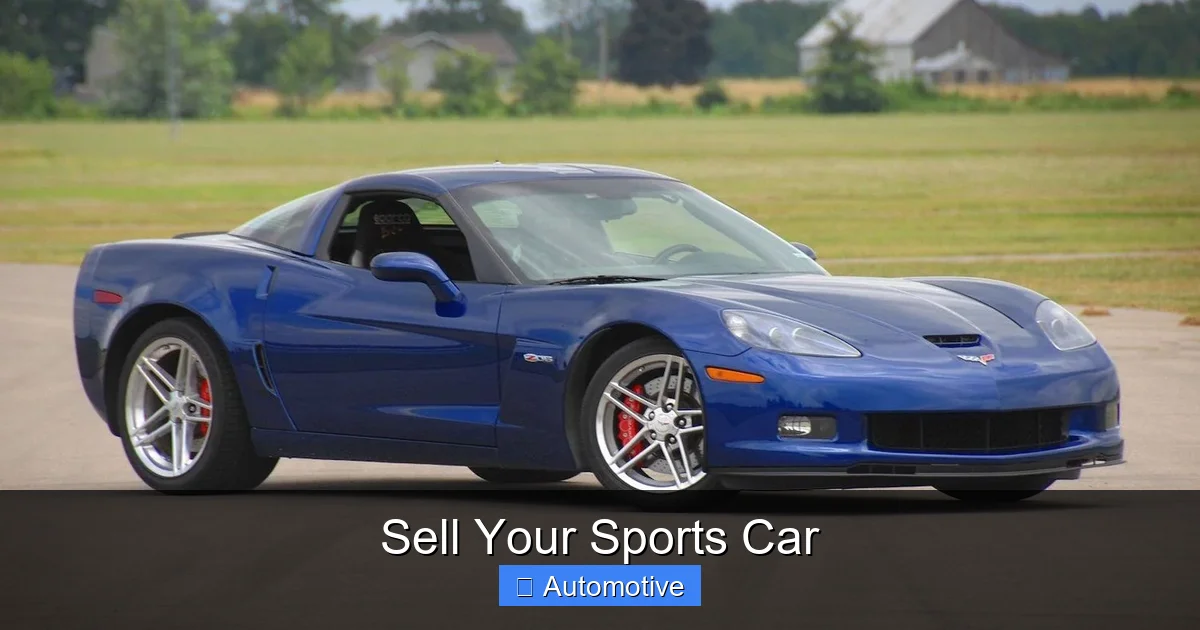
– **High Ownership Costs:** Sports cars often come with steep insurance, fuel, tire, and repair bills. A set of performance tires for a Corvette Z06 can cost over $2,000. If these expenses are straining your budget, selling might be the most practical move.
– **Lifestyle Changes:** Got a new job with a long commute? Welcoming a baby? Suddenly, a two-seater with minimal cargo space isn’t so practical. Many owners realize their sports car no longer fits their daily life.
– **Upgrading or Downsizing:** Some sellers want to move up to a newer model or switch brands. Others are simplifying—selling their Audi R8 to buy a reliable SUV or even a classic cruiser they can restore.
– **Lack of Use:** If your track-day toy sits in the garage 90% of the time, it might be time to free up space (and cash). Depreciation doesn’t stop just because you’re not driving it.
– **Financial Need:** Unexpected expenses—medical bills, home repairs, or debt—can force even the most passionate enthusiasts to part with their prized possession.
Whatever your reason, selling your sports car can be a liberating experience—especially when you do it right.
How to Determine the Value of Your Sports Car
Visual guide about Sell Your Sports Car
Image source: exoticcarlist.com
One of the biggest mistakes sellers make is pricing their car too high or too low. Overpricing scares off buyers; underpricing leaves money on the table. So how do you find that sweet spot?
Start by researching your car’s fair market value. Don’t rely on gut feeling or what your neighbor got for his similar model last year. Market conditions change, and so do values—especially for high-demand or limited-edition models.
Use Trusted Valuation Tools
Begin with reputable sources:
– **Kelley Blue Book (KBB):** Great for mainstream sports cars like the Ford Mustang GT, Chevrolet Camaro SS, or Nissan 370Z. KBB offers “Private Party” and “Dealer Retail” values based on condition, mileage, and location.
– **Edmunds True Market Value (TMV):** Similar to KBB but often more detailed in its regional adjustments. Useful for cars like the Subaru WRX STI or BMW M3.
– **Hagerty Valuation Tool:** Essential for classic, vintage, or collector sports cars—think Jaguar E-Type, Porsche 911 (air-cooled), or Dodge Viper. Hagerty considers rarity, provenance, and market trends.
– **Bring a Trailer (BaT):** If your car is a sought-after performance model (e.g., Porsche 911 GT3, Audi RS6 Avant), check recent BaT auction results. These reflect real-world selling prices in a competitive, enthusiast-driven marketplace.
For example, a 2018 Porsche 911 Carrera S with 25,000 miles might list for $95,000 on KBB, but if it has full service records, rare color, and low ownership, it could fetch $105,000 on BaT.
Factor in Condition, Modifications, and History
Not all sports cars are created equal. A clean, unmodified example will typically command a premium over a heavily modified one—even if the mods are high-quality. Why? Because modifications can scare off purists and complicate financing or insurance.
Ask yourself:
– Is the car in excellent, good, fair, or poor condition?
– Are there any mechanical issues or warning lights?
– Has it been in an accident? Even minor fender-benders can affect value.
– Are service records available? A documented maintenance history adds credibility.
– Are there aftermarket parts? List them honestly—some buyers love turbos and coilovers; others prefer stock.
Also, consider mileage. Low-mileage examples (under 10,000 miles per year) often sell for significantly more. A 2015 Chevrolet Corvette Z06 with 8,000 miles will outsell one with 60,000 miles by $15,000 or more.
Check Recent Sales Data
Go beyond pricing guides. Search completed listings on eBay Motors, Cars.com, or Facebook Marketplace for your exact make, model, year, and trim. Filter by “sold” or “completed” to see what buyers actually paid.
For instance, if three 2020 Ford Mustang Shelby GT500s sold privately in your area for $78,000, $80,500, and $82,000, you know your $85,000 asking price might be optimistic—unless your car has something special (like a track package or celebrity ownership).
Preparing Your Sports Car for Sale

Visual guide about Sell Your Sports Car
Image source: carrecoveryabudhabi.ae
You wouldn’t show up to a job interview in wrinkled clothes, right? The same principle applies to selling your sports car. First impressions matter—especially when buyers are scrolling through dozens of listings.
A well-prepared car not only sells faster but also justifies a higher price. Think of it as an investment: spend a few hundred dollars now to earn thousands more later.
Deep Clean Inside and Out
Start with a professional detail—or do it yourself if you’re meticulous. Here’s what to focus on:
– **Exterior:** Wash, clay bar, polish, and wax. Remove water spots, bird droppings, and light scratches. Clean wheels and tires thoroughly. A shiny finish reflects care and attention.
– **Interior:** Vacuum seats, carpets, and trunk. Wipe down dash, door panels, and console with a microfiber cloth. Use a leather conditioner if applicable. Remove personal items—sunglasses, chargers, gym bags.
– **Engine Bay:** A clean engine shows the car has been maintained. Use a degreaser and soft brush, then rinse gently. Avoid high-pressure water near electronics.
– **Odor Control:** Eliminate smoke, food, or pet smells. Use an ozone treatment or odor neutralizer. Place a new air freshener—subtle scents like “new car” or “leather” work best.
Address Minor Repairs and Maintenance
You don’t need to rebuild the engine, but fix small issues that buyers will notice:
– Replace burnt-out bulbs (headlights, taillights, interior).
– Fix sticky window regulators or door locks.
– Top off fluids and ensure the AC blows cold.
– Replace worn wiper blades.
– Touch up paint chips or rock dings.
These fixes cost little but signal that the car has been well cared for. A buyer seeing a fresh oil change sticker and new brake pads will feel more confident.
Gather Documentation
Organize all paperwork in a folder or binder:
– **Service Records:** Show regular oil changes, brake jobs, and major services.
– **Owner’s Manual and Warranty Info:** Adds value and reassurance.
– **Title and Registration:** Ensure the title is clean (no liens) and matches your name.
– **Recall Information:** Note if any recalls were completed.
– **Modification Receipts:** If you’ve added performance parts, include receipts and installation details.
For classic or high-end cars, consider a pre-sale inspection by a certified mechanic. A clean bill of health from a reputable shop can be a powerful selling tool.
Choosing the Best Way to Sell Your Sports Car

Visual guide about Sell Your Sports Car
Image source: img3.ugamezone.com
Now that your car is ready, it’s time to decide how to sell it. Each method has pros and cons. Your choice depends on your priorities: speed, profit, convenience, or control.
Private Sale: Maximum Profit, More Effort
Selling privately typically yields the highest return. You set the price, negotiate directly, and avoid dealer markups. But it requires time, effort, and patience.
**Best for:** Enthusiasts, rare models, or cars in excellent condition.
**Platforms to use:**
– **Cars.com** and **Autotrader:** Great for reaching serious buyers. Both offer listing tools, pricing guides, and fraud protection.
– **Facebook Marketplace:** Free and easy, but attracts more tire-kickers. Use clear photos and detailed descriptions.
– **eBay Motors:** Ideal for rare or high-value cars. You can list with a reserve price or go no-reserve for maximum exposure.
– **Bring a Trailer:** The go-to for collector and performance cars. BaT handles marketing, bidding, and escrow, but takes a commission (usually 5-8%).
**Example:** A 2017 McLaren 570S sold privately on BaT for $142,000—$18,000 more than a dealer trade-in offer.
Trade-In at a Dealership: Fast and Easy
Trading in your sports car is the quickest option. You drive in, get an offer, and walk out with a new car—or cash. But convenience comes at a cost.
Dealers need to make a profit, so trade-in values are usually 10-20% below private sale prices. They also factor in reconditioning costs and market risk.
**Best for:** Buyers upgrading to a new vehicle or those who value speed over profit.
**Tip:** Get multiple trade-in offers. Use tools like CarMax’s online appraisal or visit local exotic car dealers. Compare all offers before deciding.
Sell to a Specialty Buyer or Broker
Some companies specialize in buying sports and exotic cars—often for cash, with same-day pickup. Examples include:
– **CarMax:** Offers free appraisals and buys cars regardless of condition.
– **Vroom and Carvana:** Online platforms that provide instant offers.
– **Local exotic car dealers:** May buy outright or consign your car.
These options are fast but usually pay less than private sales. However, they’re ideal if you need to sell quickly due to relocation, financial urgency, or lack of time.
Auction Your Car
For rare, vintage, or high-performance models, auctions can generate competitive bidding. Options include:
– **Bring a Trailer:** Online auctions with a passionate buyer base.
– **Mecum, Barrett-Jackson, RM Sotheby’s:** Live auctions for collector cars.
– **Local car club auctions:** Smaller scale, but great for regional exposure.
Auctions work best for cars with strong demand. A 1995 Ferrari F50 might fetch $3 million at RM Sotheby’s but struggle to sell privately in a slow market.
Creating a Winning Listing
Your listing is your car’s first impression. A great one grabs attention, builds trust, and sells the dream. A weak one gets ignored—no matter how amazing the car is.
Write a Clear, Honest Title
Include key details: year, make, model, trim, mileage, and a standout feature.
✅ Good: “2019 Porsche 911 Turbo S – 12k Miles, Full PPF, Ceramic Coating”
❌ Bad: “Fast Car for Sale – Must Go!”
Use High-Quality Photos
Take photos in natural light, preferably during golden hour (early morning or late afternoon). Shoot from multiple angles:
– Front, rear, and side profiles
– Interior (dashboard, seats, trunk)
– Engine bay
– Wheels and tires
– Close-ups of unique features (badges, exhaust, spoiler)
Avoid shadows, glare, or cluttered backgrounds. A clean, well-lit photo of a red Ferrari F8 Tributo against a mountain backdrop is far more compelling than a dim garage shot.
Craft a Detailed Description
Tell a story. Explain why you bought the car, how you’ve maintained it, and what makes it special. Be honest about flaws—buyers appreciate transparency.
Example:
> “I purchased this 2020 Chevrolet Corvette Stingray Z51 new and have driven it only 9,500 miles. It’s been garage-kept, never tracked, and serviced every 3,000 miles at a certified Chevy dealer. The car has the optional carbon fiber spoiler, performance exhaust, and MagneRide suspension. Recent upgrades include Michelin Pilot Sport 4S tires and a ceramic coating. No accidents, no modifications—just pure, unadulterated American performance.”
Highlight:
– Low mileage
– Maintenance history
– Optional packages
– Recent upgrades
– Condition (no accidents, no rust)
Avoid hype words like “mint,” “perfect,” or “flawless”—they sound suspicious. Instead, use specific, verifiable details.
Set a Competitive Price
Price your car fairly based on your research. Consider pricing slightly below market to attract quick offers, or at market value if you’re willing to wait.
Example: If similar cars sell for $80,000, list yours at $79,500 to stand out.
Handling Inquiries and Test Drives Safely
Once your listing goes live, inquiries will start rolling in. Some will be serious buyers; others will be scammers or time-wasters. Stay safe and professional.
Screen Buyers Carefully
Ask questions:
– “Have you driven a car like this before?”
– “Are you pre-approved for financing?”
– “What’s your timeline for purchase?”
Red flags:
– Requests to wire money or use unsecured payment apps.
– Buyers who refuse to meet in person.
– Offers to pay more than asking price with a check.
Meet in a Safe, Public Place
Choose a well-lit, populated location like a mall parking lot, police station (many have designated safe exchange zones), or dealership.
Bring a friend. Never meet alone.
Supervise Test Drives
Always ride along during a test drive. Check the buyer’s license and insurance. Set ground rules: no hard launches, no track-style driving.
For high-value cars, consider using a third-party inspection service or requiring a deposit before the drive.
Negotiate with Confidence
Buyers will try to negotiate. Know your bottom line in advance. If they offer $75,000 on an $80,000 listing, decide whether to counter, hold firm, or walk away.
Stay calm and polite. Remember: you’re not desperate.
Completing the Sale and Transferring Ownership
Congratulations—you’ve found a buyer! Now it’s time to finalize the deal legally and securely.
Accept Secure Payment
Avoid cash for high-value sales. Use:
– **Cashier’s check:** Verify it’s legitimate at the bank.
– **Wire transfer:** Fast and secure, but confirm receipt before handing over keys.
– **Escrow service:** For cars over $50,000, especially in private sales.
Never accept personal checks or cryptocurrency unless you’re certain of the buyer’s credibility.
Complete the Paperwork
Required documents vary by state, but typically include:
– **Bill of Sale:** States the sale price, date, and both parties’ info.
– **Title Transfer:** Sign over the title; some states require a notarized signature.
– **Odometer Disclosure:** Required for cars under 10 years old.
– **Release of Liability:** File with your DMV to avoid future tickets or fees.
Keep copies of everything.
Remove License Plates and Cancel Insurance
In most states, you must remove plates before handing over the car. Cancel or transfer your insurance immediately after the sale to avoid unnecessary premiums.
Timing Your Sale for Maximum Impact
When you sell can affect how much you get. Sports cars—especially convertibles and summer performers—sell best in spring and early summer.
– **March–June:** Peak demand for open-top cars like the Mazda MX-5 Miata or BMW Z4.
– **Fall/Winter:** Slower market, but less competition. Ideal for rare or high-end models.
– **Holiday Sales:** Some buyers look for year-end deals, especially on newer models.
Monitor market trends. If gas prices spike, demand for high-performance cars may dip. If a new model is announced, older versions may lose value quickly.
Frequently Asked Questions
How long does it take to sell a sports car privately?
It typically takes 2 to 8 weeks to sell a sports car privately, depending on price, condition, and market demand. Well-priced, clean cars with good photos often sell within days.
Should I sell my sports car before or after a major service?
Sell after a major service if it improves reliability or adds value (like a timing belt replacement). But don’t delay the sale for minor maintenance—buyers expect some wear.
Can I sell my sports car if it has a loan?
Yes, but you must pay off the loan first or arrange for the buyer to assume it. Most lenders require the balance to be settled before releasing the title.
Is it better to sell a sports car in winter or summer?
Summer is generally better for convertibles and weekend cruisers. Winter can work for rare or high-demand models, especially if priced competitively.
Do modifications increase the value of my sports car?
Not always. While some buyers love performance upgrades, others prefer stock. Modified cars often appeal to a smaller audience and may take longer to sell.
What’s the safest way to accept payment for a high-value sports car?
Use a bank wire transfer or verified cashier’s check. For cars over $50,000, consider an escrow service to protect both buyer and seller until funds clear.