Sell My Car That Is Not Running
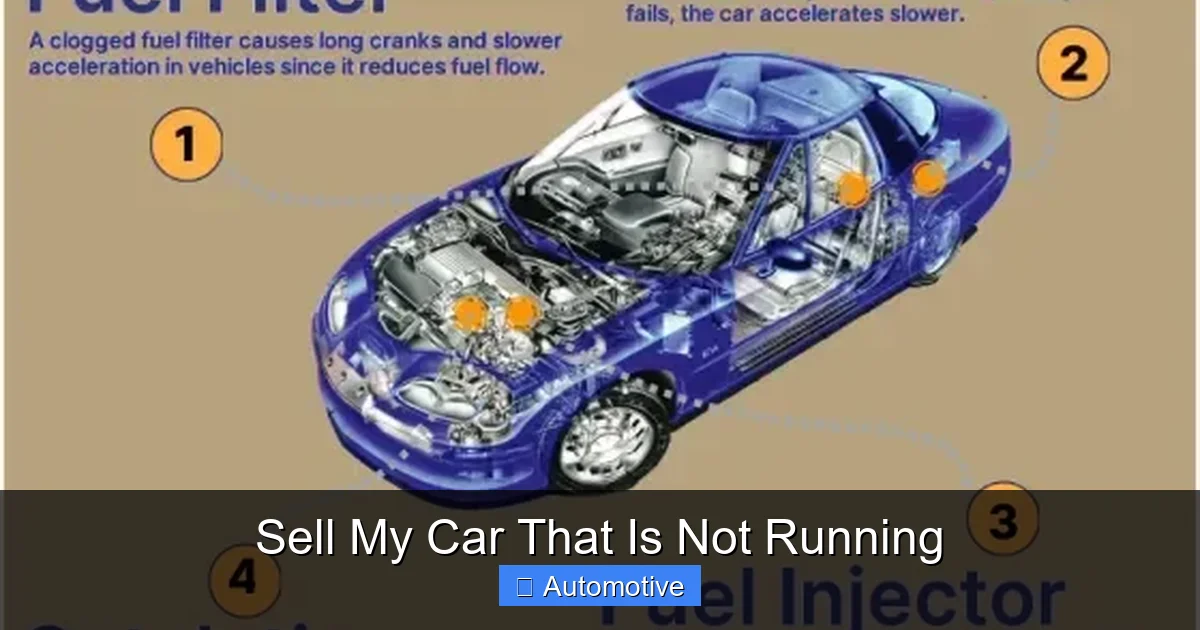
If you’re thinking, “sell my car that is not running,” you’re not alone—and you’re in luck. Many buyers and services specialize in purchasing vehicles in any condition, even if they won’t start. With the right approach, you can turn that broken-down car into quick cash without spending a dime on repairs.
In This Article
- 1 Key Takeaways
- 2 📑 Table of Contents
- 3 Can You Really Sell My Car That Is Not Running?
- 4 Why People Want to Sell My Car That Is Not Running
- 5 How Much Can You Get for a Non-Running Car?
- 6 Where to Sell My Car That Is Not Running
- 7 What You Need to Sell a Non-Running Car
- 8 Common Mistakes to Avoid When Selling a Non-Running Car
- 9 Final Thoughts: Turn That Dead Car Into Cash
- 10 Frequently Asked Questions
- 10.1 Can I sell my car that is not running if I don’t have the title?
- 10.2 Will a junk car buyer tow my non-running car for free?
- 10.3 How fast can I sell my car that is not running?
- 10.4 What if my car is damaged or wrecked?
- 10.5 Do I need to remove the battery or fluids before selling?
- 10.6 Can I sell a car that doesn’t run to a private buyer?
Key Takeaways
- You can sell a non-running car: Many companies and individuals buy cars that don’t start, often offering same-day pickup and payment.
- No repairs needed: Selling as-is means you avoid costly fixes—perfect for old, damaged, or mechanically failed vehicles.
- Get cash fast: Most junk car buyers pay on the spot, helping you clear space and earn money quickly.
- Free towing included: Reputable buyers usually offer free towing, so you don’t pay to move the car.
- Know your car’s value: Even non-running cars have worth based on make, model, year, and scrap metal value.
- Choose the right buyer: Compare offers from junkyards, online buyers, and private sellers to get the best deal.
- Prepare paperwork: Have your title and ID ready to ensure a smooth, legal sale.
📑 Table of Contents
- Can You Really Sell My Car That Is Not Running?
- Why People Want to Sell My Car That Is Not Running
- How Much Can You Get for a Non-Running Car?
- Where to Sell My Car That Is Not Running
- What You Need to Sell a Non-Running Car
- Common Mistakes to Avoid When Selling a Non-Running Car
- Final Thoughts: Turn That Dead Car Into Cash
Can You Really Sell My Car That Is Not Running?
You’ve got a car sitting in your driveway—maybe it hasn’t started in months, or it broke down on the side of the road last week. The engine won’t turn over, the transmission is shot, or it’s been declared a total loss after an accident. You’re probably wondering: *Can I even sell my car that is not running?*
The short answer? Absolutely. In fact, thousands of people successfully sell non-running cars every year. Whether your vehicle is completely dead or just unreliable, there’s a market for it. You don’t need to fix it, tow it yourself, or wait months for a buyer. Companies exist specifically to buy cars in any condition—running or not.
The key is knowing where to look and how to present your vehicle. While a running car might fetch a higher price, a non-running one still has value. That value comes from parts, scrap metal, and the potential for restoration. Even if your car is beyond repair, someone out there sees worth in it. The trick is finding the right buyer who understands that value and is willing to pay for it—without you lifting a finger.
Why People Want to Sell My Car That Is Not Running

Visual guide about Sell My Car That Is Not Running
Image source: dollarbreak.com
There are plenty of reasons why someone might want to sell a car that doesn’t run. Maybe it’s been sitting idle for years, collecting dust and becoming an eyesore. Or perhaps it broke down unexpectedly, and repairs would cost more than the car is worth. Whatever the reason, the desire to get rid of it quickly and for cash is universal.
One common scenario is the “mechanical failure” case. Your car starts making strange noises, then one day it just won’t start. You take it to a mechanic, and they tell you the engine needs a full rebuild—costing $4,000. But your 2008 sedan is only worth $3,500 in good condition. Suddenly, repairing it makes no financial sense. Instead of sinking money into a money pit, you decide to sell it as-is.
Another frequent situation is the “total loss” after an accident. Your car was in a fender bender, and the insurance company declared it totaled. They paid you the ACV (actual cash value), but now you’re left with a wrecked vehicle. You don’t want to deal with repairs or part it out yourself. So you ask: *Can I sell my car that is not running after an accident?* The answer is yes—many buyers specialize in wrecked and salvage vehicles.
Then there’s the “long-term storage” issue. Maybe you bought a new car and parked the old one in the garage. Over time, the battery died, the tires went flat, and the fluids leaked. Now it’s just taking up space. You don’t have the time or money to revive it. Selling it as a non-running vehicle is the easiest way to clear it out and make some cash.
In all these cases, the goal is the same: get rid of the car quickly, legally, and for the best possible price—without spending money on repairs or towing.
How Much Can You Get for a Non-Running Car?

Visual guide about Sell My Car That Is Not Running
Image source: imgv2-2-f.scribdassets.com
One of the biggest questions people have is: *How much can I really get for a car that doesn’t run?* The answer depends on several factors, but the good news is that even a dead car has value.
Let’s break it down. The value of a non-running car is based on three main components:
1. Scrap Metal Value
Every car contains valuable metals like steel, aluminum, and copper. When a car is beyond repair, it’s often sold to a scrapyard or metal recycler. The weight of the vehicle determines how much it’s worth. On average, a mid-sized car weighs about 3,000 pounds. At current scrap metal prices (around $150–$250 per ton), that’s roughly $225–$375 just for the metal.
2. Parts Value
Even if the engine is dead, other parts may still be functional. Alternators, transmissions, catalytic converters, wheels, and electronics can be removed and resold. For example, a catalytic converter alone can fetch $100–$300 depending on the model. A good transmission might be worth $500–$1,000 to a rebuild shop.
3. Make, Model, and Year
Some cars hold their value better than others—even when they don’t run. A 2015 Honda Civic with a blown engine might still get $1,500–$2,500 because it’s a reliable model with high demand for parts. Meanwhile, a 2002 Ford Taurus with the same issue might only get $500–$800.
Let’s look at a real-world example. Suppose you have a 2010 Toyota Camry that won’t start due to a seized engine. It’s in decent cosmetic condition, with low mileage (110,000 miles), and all the interior electronics work. A junk car buyer might offer $1,200. That’s because:
– Scrap value: ~$300
– Parts value: ~$600 (transmission, alternator, wheels, etc.)
– Brand reputation: Toyota parts are in high demand
Compare that to a 2005 Dodge Neon with the same issue. It might only get $600 because parts are less valuable and the car has a weaker resale reputation.
So while you won’t get full market value, you can still walk away with a few hundred to over a thousand dollars—depending on the car. And remember: this is cash in hand, with no repair costs.
Where to Sell My Car That Is Not Running
Now that you know your non-running car has value, the next step is figuring out *where* to sell it. There are several options, each with pros and cons. The best choice depends on your priorities: speed, price, or convenience.
1. Online Junk Car Buyers
These are companies that specialize in buying non-running, damaged, or end-of-life vehicles. They operate nationwide and often provide instant quotes online. Examples include Cash Cars Buyer, Peddle, and CarBrain.
How it works:
– Visit their website and enter your car’s details (make, model, year, condition).
– Get an instant offer—usually within minutes.
– If you accept, they schedule free towing and pay you on pickup.
Pros:
– Fast and easy
– Free towing
– No need to advertise or meet buyers
– Often pay more than local junkyards
Cons:
– Offers may be lower than private sale
– Some companies have hidden fees (rare, but possible)
Tip: Get quotes from 2–3 online buyers to compare. Some will beat competitors’ offers.
2. Local Junkyards and Salvage Yards
These are physical locations that buy cars for parts and scrap. They’re often willing to take non-running vehicles, sometimes even if they’re not drivable.
How it works:
– Call or visit the junkyard and describe your car.
– They’ll give you a quote based on weight and parts.
– If you agree, they’ll tow it for free or you can drop it off.
Pros:
– Immediate cash
– No advertising needed
– May pay more for certain models
Cons:
– Offers can vary widely between yards
– Some only pay by weight, ignoring parts value
– May require you to remove fluids or batteries
Tip: Call multiple junkyards in your area. One might offer $200 more just because they need that specific model for parts.
3. Private Buyers
Yes, you *can* sell a non-running car privately—especially if it’s a popular model or has valuable parts. Some mechanics, restorers, or hobbyists look for project cars.
How it works:
– List your car on Craigslist, Facebook Marketplace, or OfferUp.
– Be honest: “2007 Honda Accord, engine won’t start, needs tow. As-is.”
– Interested buyers will contact you, inspect the car, and make an offer.
Pros:
– Potential for higher price
– You control the sale
– Can negotiate
Cons:
– Takes more time and effort
– Risk of scams or no-shows
– You may need to arrange towing
Tip: Include clear photos and a detailed description. Mention if the title is clean and whether the car has any valuable parts.
4. Car Removal Services
These are companies that specialize in towing away old, broken, or abandoned cars—often for free or even paying you. They’re common in urban areas and usually partner with recyclers.
How it works:
– Search “free car removal near me” or “cash for junk cars.”
– Provide your car’s info and location.
– They send a tow truck and pay you on the spot.
Pros:
– Fast and hassle-free
– Free towing
– No advertising
Cons:
– Offers may be lower
– Some services are scams—research before committing
Tip: Check reviews on Google or BBB. Avoid companies that ask for upfront fees.
No matter which route you choose, the key is to act quickly. The longer a car sits, the more it deteriorates—and the less it’s worth.
What You Need to Sell a Non-Running Car
Selling a car that doesn’t run is easier than you think, but there are a few things you’ll need to make the process smooth and legal.
1. Vehicle Title
This is the most important document. It proves you own the car and have the right to sell it. If you’ve lost the title, contact your state’s DMV to get a duplicate. Most buyers won’t purchase a car without a title—especially if it’s non-running.
2. Valid ID
You’ll need a government-issued ID (driver’s license or passport) to verify your identity. This is standard for any car sale.
3. Proof of Ownership
If the title is in someone else’s name (like a family member), you’ll need a signed bill of sale or power of attorney.
4. Release of Liability
After the sale, you must notify the DMV that you’re no longer responsible for the car. This protects you if the new owner gets a ticket or causes an accident. Most states allow you to file this online.
5. Odometer Disclosure
If your car is under 10 years old, you may need to provide the current mileage—even if it doesn’t run. This is required by federal law.
6. Remove Personal Items
Before the car is towed, go through the interior and trunk. Remove all personal belongings, including registration cards, garage door openers, and old receipts.
7. Cancel Insurance
Once the car is sold, call your insurance company to cancel coverage. Don’t wait—you’re still paying for a car you no longer own.
Having these items ready will speed up the sale and prevent delays. Most buyers can complete the transaction in under 30 minutes.
Common Mistakes to Avoid When Selling a Non-Running Car
Even though selling a dead car is straightforward, people often make mistakes that cost them time or money. Here are the most common pitfalls—and how to avoid them.
1. Not Getting Multiple Quotes
One junkyard might offer $500, while another offers $900 for the same car. Don’t accept the first offer. Get at least 2–3 quotes to ensure you’re getting a fair price.
2. Forgetting the Title
Trying to sell a car without a title is a major red flag. Most buyers won’t touch it. If you’ve lost yours, order a duplicate immediately—don’t wait.
3. Paying for Towing
Legitimate buyers offer free towing. If a company asks you to pay for a tow truck, walk away. That’s a scam.
4. Not Removing License Plates
In most states, you must remove your license plates before the car is towed. Leaving them on could lead to fines or registration issues.
5. Selling to the First “Cash Offer” You See
Some fly-by-night operators will offer cash on the spot—but then lowball you or disappear after taking the car. Always research the buyer first.
6. Not Canceling Insurance
Keep paying insurance on a car you’ve sold? That’s throwing money away. Cancel it the same day the car leaves your property.
Avoiding these mistakes will save you stress and ensure you get the best possible deal.
Final Thoughts: Turn That Dead Car Into Cash
If you’ve been staring at a car that won’t start, wondering what to do with it, the answer is simple: sell it. You don’t need to fix it, drive it, or wait for a miracle. There are buyers out there who want your non-running car—and they’ll pay you for it.
Whether you choose an online buyer, a local junkyard, or a private sale, the process is easier than you think. With free towing, instant quotes, and same-day payment, there’s no reason to let that car take up space any longer.
So go ahead—take that first step. Get a few quotes, gather your paperwork, and turn that broken-down vehicle into cash. Your driveway (and wallet) will thank you.
Frequently Asked Questions
Can I sell my car that is not running if I don’t have the title?
It’s difficult, but not impossible. Some states allow you to sell a car with a duplicate title or a notarized bill of sale. However, most buyers require a clean title to complete the sale. Contact your local DMV to get a replacement title as soon as possible.
Will a junk car buyer tow my non-running car for free?
Yes, most reputable junk car buyers offer free towing as part of their service. They’ll send a tow truck to your location—whether it’s your home, workplace, or a repair shop—and haul the car away at no cost to you.
How fast can I sell my car that is not running?
Many buyers can pick up your car within 24 to 48 hours of accepting their offer. Some even offer same-day pickup, especially if you’re in a major city. The entire process—from quote to payment—can take less than a day.
What if my car is damaged or wrecked?
Damaged or wrecked cars are still valuable. Buyers purchase them for parts, scrap metal, or restoration. Be honest about the damage when getting quotes—this helps you get an accurate offer and avoids surprises later.
Do I need to remove the battery or fluids before selling?
Most buyers handle fluid and battery removal themselves. However, it’s a good idea to drain gasoline and remove personal items beforehand. Check with your buyer to see if they have specific requirements.
Can I sell a car that doesn’t run to a private buyer?
Yes, especially if it’s a popular model or has valuable parts. Mechanics, restorers, and hobbyists often look for project cars. Just be transparent about the condition and expect to negotiate the price.