
Safety 1st Grow and Go Sprint All-in-One Convertible Car Seat Review

Quick Answer
The Safety 1st Grow and Go Sprint is a practical all-in-one convertible car seat for families who want one seat covering rear-facing, forward-facing harness, and booster stages. Its strongest everyday advantages are its broad child-size range, QuickFit harness, washable seat pad, and simple comfort features, according to the official Safety 1st Grow and Go Sprint specifications.
Why it stands out
- Three stages: It supports rear-facing, forward-facing harness, and belt-positioning booster use.
- Wide range: Published limits span 5–100 pounds across its three modes.
- Quick adjustments: The QuickFit system adjusts the harness and headrest together.
- Easier cleanup: The seat pad is machine-washable and dryer-safe.
- Daily convenience: Harness holders, two removable cup holders, and device storage reduce small frustrations.
Before buying
- Confirm that the seat fits your vehicle, your child fits the required mode, and you can achieve a correct installation every time.
The Safety 1st Grow and Go Sprint All-in-One Convertible Car Seat aims to simplify one of the biggest child-passenger decisions: how many seats you will need as your child grows. Instead of changing products at every stage, it combines three modes in one shell.
I look at an all-in-one seat differently from a short-term infant seat. Convenience matters, but correct fit, usable limits, installation, and everyday consistency matter more.
In This Guide
- Is the Safety 1st Grow and Go Sprint Worth It in 2026?
- What Are the Grow and Go Sprint Weight and Height Limits?
- Which Everyday Features Matter Most?
- How Do You Install and Use the Grow and Go Sprint Correctly?
- How Easy Is the Grow and Go Sprint to Clean and Live With?
- Frequently Asked Questions
- Who Should Buy the Safety 1st Grow and Go Sprint?
Is the Safety 1st Grow and Go Sprint Worth It in 2026?
For many families, yes. The Grow and Go Sprint makes the most sense if you value long-term versatility, straightforward adjustments, and washable materials over premium convenience features.
The seat provides three modes of use. Safety 1st lists it for children from 5 pounds in rear-facing mode through 100 pounds in booster mode.
- Rear-facing: 5–40 pounds and 19–40 inches.
- Forward-facing harness: 30–65 pounds and 34.4–49 inches.
- Belt-positioning booster: 40–100 pounds and 43.4–52 inches.
Those numbers do not mean every child will use every stage to its maximum. Safety 1st specifically notes that actual fit varies and some children may not comfortably fit for the entire published range.
That detail matters. A car seat limit is a boundary, not a promise that one seat will fit every child’s body shape until the final listed pound or inch.
Definition: An all-in-one convertible car seat is a child restraint designed to change modes as a child grows. The Grow and Go Sprint moves from rear-facing to forward-facing harness use and then to a belt-positioning booster.
From a daily-driver perspective, I like that the Sprint focuses on features parents touch every day. Adjusting the harness, getting a child into the seat, and cleaning crumbs often affect real-world usability more than a long feature list.
- Good fit for: Families wanting one seat for several stages.
- Good fit for: Parents who value machine-washable upholstery.
- Good fit for: Caregivers who want a no-rethread-style headrest and harness adjustment.
- Think twice if: You specifically want rotation, premium lock-off hardware, or another specialized installation feature not listed for this model.
Do not judge any car seat by marketing language alone. The safest choice is one that fits your child, fits your vehicle, and can be installed and used correctly every ride.
What Are the Grow and Go Sprint Weight and Height Limits?
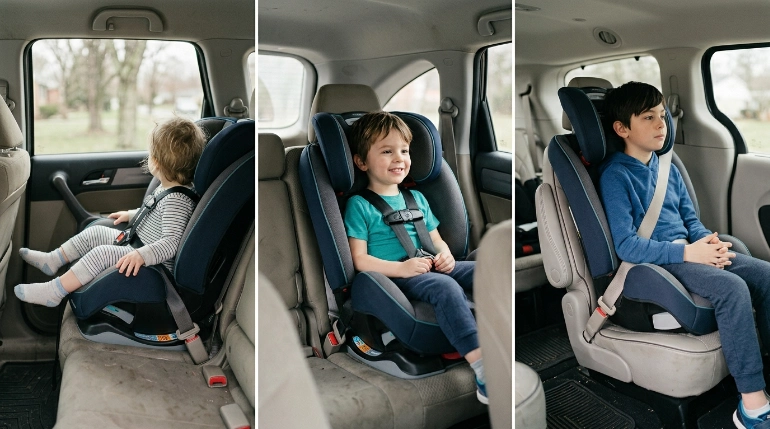
The Grow and Go Sprint has separate weight and height limits for each mode. Your child needs to meet the manufacturer’s requirements for the mode you are using.
| Mode | Weight Range | Height Range | Practical Stage |
|---|---|---|---|
| Rear-facing | 5–40 lb | 19–40 in | Infant and young-child rear-facing use |
| Forward-facing harness | 30–65 lb | 34.4–49 in | Forward-facing with harness and tether |
| Belt-positioning booster | 40–100 lb | 43.4–52 in | Vehicle lap-and-shoulder belt positioning |
The overlap between modes does not mean you should switch as soon as your child reaches the minimum for the next stage. A 40-pound child, for example, may technically fall inside more than one published weight range.
NHTSA child-passenger guidance recommends keeping children rear-facing until they reach the top height or weight limit allowed by the seat manufacturer. After that, children should use a forward-facing seat with a harness and tether until that stage is outgrown.
Do not rush the transition. The maximum permitted fit of the current stage is more important than reaching the minimum number for the next stage.
- Check weight: Use a recent child weight, not an estimate.
- Check standing height: Compare it with the exact limits in the manual.
- Check harness fit: Correct strap position changes between rear-facing and forward-facing use.
- Check the manual: Follow any additional fit rules printed for your exact model.
The manufacturer’s advertised “birth to 10 years” description is best viewed as an intended usage span. A child’s proportions and vehicle fit can change how long the seat works comfortably.
Which Everyday Features Matter Most?
The Grow and Go Sprint’s strongest features focus on daily convenience. None replaces correct installation, but they can make correct everyday use less frustrating.
QuickFit Harness and Headrest Adjustment
The QuickFit system lets the harness and headrest move together. That avoids manually rethreading harness straps through different slots as your child grows.
This is the feature I would value most during a growth spurt. An adjustment that takes less effort is easier to check instead of postponing.
Three-Position Recline
Safety 1st lists three recline positions. Recline adjustment helps you work toward the permitted angle and vehicle fit described in the manual.
Rear-facing recline deserves special attention with babies. Never choose an angle based only on what looks comfortable.
Harness Holders
The built-in harness holders are designed to keep straps out of the seating area. This can make loading a squirming toddler less annoying.
They do not change harness safety rules. Once buckled, the straps still need to lie flat and fit snugly.
Cup Holders and Device Storage
- Two cup holders: Both are removable and listed as dishwasher-safe.
- Device area: The seat includes a designated storage area for a device.
- Grow-with-baby pillows: Included comfort padding supports smaller occupants when used according to the manual.
Only use padding supplied or approved for the exact seat. Extra aftermarket padding can interfere with harness fit and should not be added simply for comfort.
Washable Seat Pad
The seat pad is machine-washable and dryer-safe according to Safety 1st. For families dealing with snacks, milk, muddy shoes, or motion sickness, that is a meaningful maintenance feature.
Easy cleaning also makes it more realistic to keep the seat usable for several years. Always follow the manufacturer’s washing instructions rather than using aggressive cleaners on harness components.
How Do You Install and Use the Grow and Go Sprint Correctly?
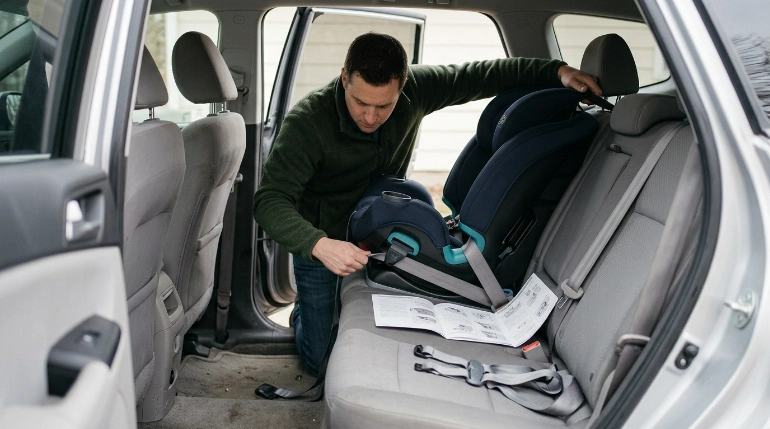
Correct installation depends on the mode, vehicle, and exact instructions supplied with the seat. Read both the Grow and Go Sprint manual and your vehicle owner’s manual before installation.
A feature-rich seat cannot protect as intended when installed or harnessed incorrectly. Treat the manual as part of the restraint system.
Rear-Facing Use
In rear-facing mode, the Sprint is listed for children weighing 5–40 pounds and measuring 19–40 inches. Keep a child rear-facing until the applicable manufacturer limit is reached.
NHTSA’s rear-facing installation guidance says the restraint should not move more than one inch side-to-side or front-to-back when checked at the belt path.
- Place harness straps at or below the child’s shoulders unless your manual states otherwise.
- Keep the straps flat and free of twists.
- Tighten until you cannot pinch excess harness material at the shoulder.
- Position the chest clip at armpit level.
- Confirm the permitted rear-facing recline angle.
Forward-Facing Harness Use
Safety 1st lists forward-facing use from 30–65 pounds and 34.4–49 inches. Reaching 30 pounds alone does not mean a child should immediately turn forward.
Once rear-facing is outgrown, follow the manufacturer’s forward-facing instructions. NHTSA’s forward-facing installation guide emphasizes using the tether and achieving a tight installation.
- Harness straps generally sit at or above the shoulders for forward-facing use.
- Keep the chest clip at armpit level.
- Remove twists before tightening.
- Use the vehicle’s designated tether anchor as directed.
- Check movement at the belt path, not at the top of the seat.
Booster Mode
The Sprint’s belt-positioning booster range is 40–100 pounds and 43.4–52 inches. A child also needs the maturity to stay properly positioned for the whole trip.
In booster mode, the vehicle lap-and-shoulder belt does the restraining. The lap portion should sit low across the upper thighs, while the shoulder belt crosses the chest and shoulder correctly.
If the belt repeatedly falls into a poor position, the setup needs attention. Do not move to an adult seat belt simply because booster use feels inconvenient.
You can also check NHTSA’s recall database using the car seat’s manufacturer and model information. Registering a new car seat with its manufacturer also helps ensure you receive applicable safety notices.
How Easy Is the Grow and Go Sprint to Clean and Live With?
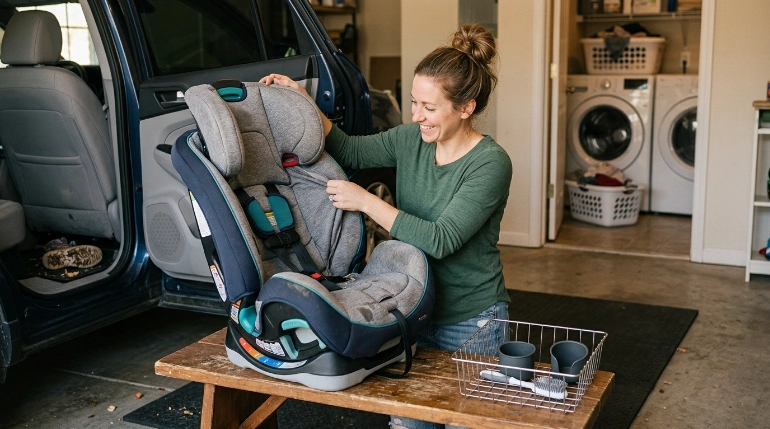
Cleaning is one of the Sprint’s better practical areas. Safety 1st says the pad can be machine-washed and dried, while the two removable cup holders are dishwasher-safe.
That matters more after six months of daily use than it does in a showroom. Crumbs, sunscreen, juice, and muddy shoes eventually find their way into almost every family car.
- Seat pad: Machine-washable and dryer-safe.
- Cup holders: Removable and dishwasher-safe.
- Harness holders: Keep straps out of the way while loading your child.
- Headrest adjustment: Moves with the harness through the QuickFit system.
- Recline: Three adjustment positions are provided.
Do not assume every component can go into the washing machine. Harness straps, buckles, foam, and structural components may have separate cleaning restrictions.
Avoid soaking or applying strong chemicals unless the manual specifically allows them. Cleaning products can affect materials in ways that are not obvious by appearance.
Comfort is more subjective. Safety 1st includes grow-with-baby pillows, but the company also warns that children may not comfortably fit through every inch and pound of the published limits.
Vehicle space matters too. A rear-facing all-in-one seat may interact differently with the front passenger seat in a compact sedan than in a larger SUV.
Before committing to any convertible seat, check the intended seating position in your own vehicle. A seat you can install confidently is more useful than one with a longer feature list that constantly fights your cabin layout.
Frequently Asked Questions
Is the Safety 1st Grow and Go Sprint a 3-in-1 car seat?
Yes. The Grow and Go Sprint has three modes: rear-facing, forward-facing with a harness, and belt-positioning booster use. Each mode has its own child weight and height limits.
What is the rear-facing weight limit?
The published rear-facing range is 5–40 pounds, with a child height range of 19–40 inches. NHTSA recommends keeping children rear-facing until they reach the top height or weight limit permitted by the manufacturer.
When can the Grow and Go Sprint face forward?
The seat’s published forward-facing range starts at 30 pounds and 34.4 inches. However, a child should remain rear-facing until the rear-facing limit is reached rather than turning forward as soon as the forward-facing minimum is met.
What is the booster weight limit?
Safety 1st lists the belt-positioning booster range as 40–100 pounds and 43.4–52 inches. The child must also be able to remain correctly positioned with the vehicle lap-and-shoulder belt throughout the ride.
Does the Grow and Go Sprint have a no-rethread harness?
The seat uses Safety 1st’s QuickFit system, which adjusts the headrest and harness together. The manufacturer describes the adjustment as requiring no rethreading of the harness during normal height changes.
Can you machine-wash the Grow and Go Sprint cover?
Yes. Safety 1st lists the seat pad as machine-washable and dryer-safe. Follow the care instructions for your exact seat, because the harness, buckle, and other components can have different cleaning rules.
Does meeting federal standards mean this seat is safer than other car seats?
No comparative safety conclusion should be made from compliance alone. Safety 1st states that the Sprint is engineered and tested to meet or exceed applicable federal safety standards and meets the federal side-impact standard, but that does not prove it outperforms another compliant seat.
Who Should Buy the Safety 1st Grow and Go Sprint?
The Safety 1st Grow and Go Sprint is best suited to families who want a straightforward all-in-one seat with practical daily-use features. Its three-stage design covers rear-facing, forward-facing harness, and booster use without requiring a completely different seat at each transition.
Its biggest strengths are easy harness-height adjustment, washable fabric, removable cup holders, harness holders, and clearly published size ranges. Those are features caregivers can use repeatedly rather than occasionally.
| Choose It If… | Consider Another Seat If… |
|---|---|
| You want three modes in one seat. | You need a specific premium installation feature. |
| Washable fabric is a priority. | The seat does not fit your vehicle well. |
| You want a QuickFit harness adjustment. | Your child cannot achieve correct fit in the required mode. |
| You value cup holders and harness holders. | You specifically need a rotating car seat. |
I would make the buying decision in this order: child fit, vehicle fit, correct installation, and then convenience features. That order keeps the important factors from getting buried under marketing claims.
Before the first ride, read the manual from start to finish and test the installation in the vehicle you use most. If you are uncertain, use a certified child-passenger safety inspection resource rather than guessing.
Final takeaway: The Grow and Go Sprint offers a useful combination of long-term versatility and everyday convenience, but its value depends on correct fit and use. Confirm those two things first, then decide whether its features match your family’s routine.
