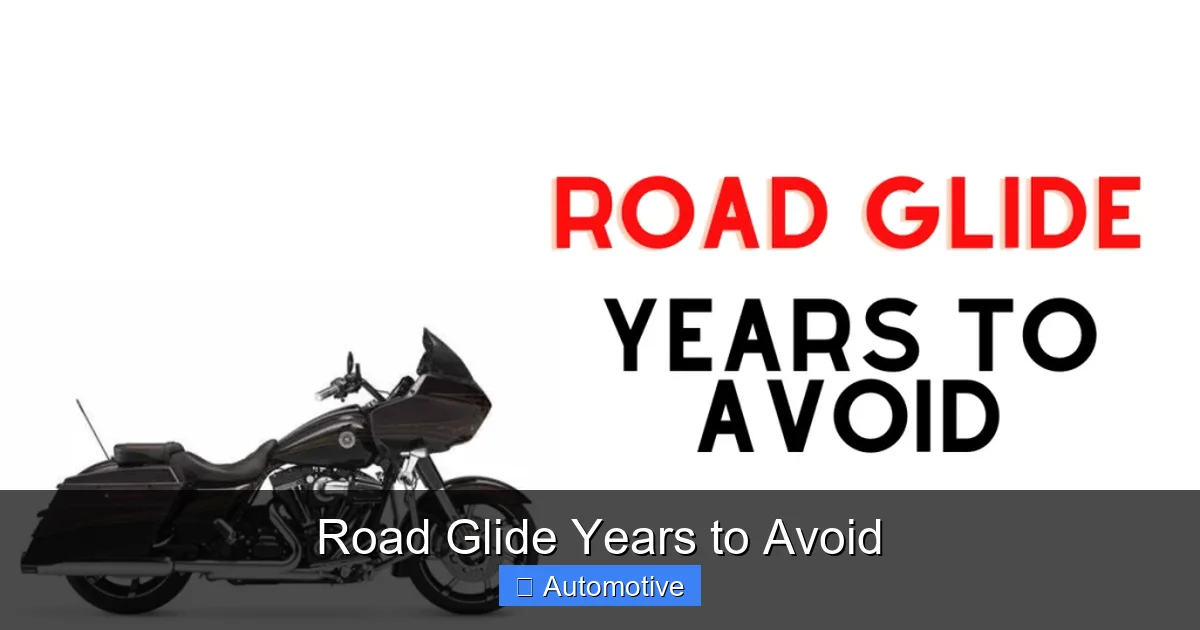
Road Glide Years to Avoid

Contents
- 1 Key Takeaways
- 2 📑 Table of Contents
- 3 Why Model Year Matters for Road Glide Buyers
- 4 The Twin-Cooled Engine Era: 2014–2016 Road Glides
- 5 Electrical Nightmares: 2017–2018 Road Glides
- 6 Recall-Prone Models: 2020–2021 Road Glides
- 7 Older Models with Hidden Problems: 2012–2013 Road Glides
- 8 Newer Isn’t Always Better: 2022+ Road Glides
- 9 How to Avoid Buying a Lemon
- 10 Conclusion
- 11 Frequently Asked Questions

Car USB Charger

Reflective Stickers
Car Neck Pillow

Side Mirror Rain Guard
Not every Harley-Davidson Road Glide is built the same—some model years have recurring mechanical flaws, electrical gremlins, or costly recalls. This guide highlights the Road Glide years to avoid, helping riders make smarter, safer, and more reliable purchases.
If you’re in the market for a Harley-Davidson Road Glide, you’re probably drawn to its aggressive shark-nose fairing, long-distance comfort, and signature touring presence. But here’s the truth: not all Road Glides are created equal. Some model years come with a laundry list of problems—engine troubles, electrical nightmares, and even safety recalls—that can turn your dream ride into a money pit. Whether you’re buying used or considering a new purchase, knowing which Road Glide years to avoid can save you thousands in repairs and countless headaches on the road.
Harley-Davidson has built the Road Glide since 1994, but it wasn’t until the late 2000s and early 2010s that the model truly evolved into the high-performance touring machine we know today. With each redesign, Harley introduced new engines, frames, and technology—sometimes with mixed results. While many Road Glides are rock-solid, a handful of model years stand out for their recurring issues. This guide dives deep into those problematic years, explaining what went wrong, why it matters, and how to spot trouble before you buy.
Key Takeaways
- Avoid 2014–2016 Road Glides: These models suffered from chronic engine overheating, oil pump failures, and transmission issues due to the Twin-Cooled High Output 103 engine.
- 2017–2018 models have electrical concerns: Faulty wiring harnesses and CAN bus system glitches led to intermittent power loss and dashboard malfunctions.
- Early 2020s ABS and braking recalls: Some 2020–2021 models were recalled for defective brake line routing and ABS module failures.
- 2012–2013 models had frame and suspension complaints: Owners reported premature rear suspension wear and frame flex during long rides.
- Always check VIN for recalls: Even “good” model years may have individual units affected by manufacturing defects or service bulletins.
- Pre-purchase inspections are essential: A thorough inspection by a Harley-certified mechanic can uncover hidden issues in any model year.
- Newer isn’t always better: While 2022+ models improved significantly, early adopters of new tech (like the 2022 infotainment update) faced software bugs.
📑 Table of Contents
- Why Model Year Matters for Road Glide Buyers
- The Twin-Cooled Engine Era: 2014–2016 Road Glides
- Electrical Nightmares: 2017–2018 Road Glides
- Recall-Prone Models: 2020–2021 Road Glides
- Older Models with Hidden Problems: 2012–2013 Road Glides
- Newer Isn’t Always Better: 2022+ Road Glides
- How to Avoid Buying a Lemon
- Conclusion
Why Model Year Matters for Road Glide Buyers
When shopping for a used motorcycle, especially a high-mileage touring bike like the Road Glide, the model year is one of the most critical factors. Unlike cars, motorcycles often see heavy use, frequent modifications, and inconsistent maintenance. A bike that’s been babied by one owner might be a ticking time bomb if the previous rider ignored service intervals or pushed it hard on long trips. But even with perfect care, certain model years have inherent design flaws or manufacturing defects that no amount of TLC can fully fix.
Harley-Davidson’s engineering team makes incremental updates each year, but sometimes those changes introduce new problems. For example, the switch to the Milwaukee-Eight engine in 2017 brought more power and smoother operation—but also new electrical complexities. Similarly, the 2022 infotainment overhaul improved connectivity but initially caused software crashes and GPS failures. Understanding these generational shifts helps you avoid bikes that are more trouble than they’re worth.
The Role of Recalls and Service Bulletins
One of the best ways to assess a Road Glide’s reliability is by checking for open recalls and Technical Service Bulletins (TSBs). Recalls are issued when a safety defect is discovered—like faulty brakes or fuel systems—and require immediate repair at no cost to the owner. TSBs, on the other hand, are less severe but still important; they alert dealers to common issues and recommended fixes, such as oil leaks or sensor malfunctions.
For instance, the National Highway Traffic Safety Administration (NHTSA) has issued multiple recalls for Road Glides over the years, including a major 2020 recall for brake line routing that could lead to fluid leaks. These aren’t just paperwork—they’re red flags. A bike with unresolved recalls may be unsafe or difficult to insure. Always run the VIN through Harley’s official recall lookup tool or the NHTSA website before making a purchase.
Common Red Flags in Used Road Glides
Beyond recalls, there are telltale signs that a Road Glide might be one of the years to avoid. Listen for unusual engine noises, especially knocking or ticking from the top end—this could indicate lifter or cam chain issues. Check the oil for metal shavings or a burnt smell, which suggests internal wear. Inspect the wiring harness for frayed insulation or corrosion, particularly around the handlebars and under the seat, where moisture tends to accumulate.
Also, pay attention to how the bike shifts. Rough or delayed shifting, especially into first or second gear, could point to transmission problems. And don’t ignore the dashboard: flickering lights, error messages, or a dead infotainment screen might signal deeper electrical issues. These symptoms are especially common in certain model years, which we’ll explore in detail below.
The Twin-Cooled Engine Era: 2014–2016 Road Glides
Visual guide about Road Glide Years to Avoid
Image source: usamotorcycling.com
The 2014 model year marked a major shift for the Road Glide. Harley introduced the Twin-Cooled High Output 103 engine, a liquid-cooled variant of the classic air-cooled V-twin. The goal was to reduce heat buildup during stop-and-go traffic and improve performance in hot climates. Sounds great, right? Unfortunately, the execution left much to be desired.
Chronic Overheating and Cooling System Failures
One of the most widespread complaints about 2014–2016 Road Glides is engine overheating. Despite the addition of liquid cooling, many owners reported that the engine would still run excessively hot, especially in traffic or during summer rides. This wasn’t just a comfort issue—it led to premature engine wear, warped heads, and even seized pistons in extreme cases.
The root cause? A flawed cooling system design. The radiator was undersized for the engine’s output, and the coolant flow was restricted by narrow passages in the engine block. Additionally, the thermostat often failed to open properly, trapping hot coolant and causing temperatures to spike. Some riders resorted to aftermarket radiators or electric fans, but these fixes were costly and didn’t always solve the problem.
Oil Pump and Cam Chain Tensioner Issues
Another major flaw in these years was the oil pump and cam chain tensioner design. The Twin-Cooled engine used a hydraulic tensioner to keep the cam chains tight, but it was prone to failure. When the tensioner wore out, the chains would rattle, leading to valve train damage and, in some cases, catastrophic engine failure.
The oil pump itself was also problematic. Early versions had a tendency to develop leaks, and the pump gears could wear down over time, reducing oil pressure. Low oil pressure is a serious issue—it can cause bearing failure, camshaft damage, and even engine seizure. Many owners didn’t realize there was a problem until it was too late, especially since Harley didn’t issue a widespread recall for these components.
Transmission and Clutch Problems
The 2014–2016 Road Glides also suffered from transmission issues. The six-speed gearbox was new at the time, and it had a reputation for being clunky and hard to shift, especially when cold. Some riders reported grinding noises or difficulty finding neutral, which made city riding frustrating.
The clutch was another weak point. The hydraulic clutch system was sensitive to air bubbles and required frequent bleeding. If not maintained properly, the clutch could slip under heavy load or fail to disengage fully, making gear changes difficult. Combined with the engine and cooling issues, these problems made the 2014–2016 Road Glides some of the most troublesome in the model’s history.
Electrical Nightmares: 2017–2018 Road Glides
Visual guide about Road Glide Years to Avoid
Image source: usamotorcycling.com
With the 2017 model year, Harley introduced the Milwaukee-Eight engine, a significant upgrade that promised more power, better fuel efficiency, and smoother operation. The Road Glide got a fresh look, updated suspension, and a new frame. But beneath the shiny exterior, a new set of problems emerged—this time, in the electrical system.
CAN Bus and Wiring Harness Failures
The Milwaukee-Eight engine relied heavily on the Controller Area Network (CAN) bus system, a digital communication network that connects the engine control unit (ECU), instrument cluster, ABS module, and other components. While this system improved diagnostics and functionality, it also introduced new vulnerabilities.
Many 2017–2018 Road Glides experienced intermittent power loss, dashboard flickering, and random warning lights. In some cases, the bike would stall at low speeds or fail to start altogether. The culprit? Faulty wiring harnesses and poor connections within the CAN bus network. Moisture intrusion, vibration, and subpar factory soldering caused wires to corrode or short out, disrupting communication between critical systems.
Harley eventually issued service bulletins to address these issues, but the fixes were often temporary. Some owners had to replace entire wiring harnesses, a job that could cost over $1,000 and take days to complete. Even then, the problem could resurface if the root cause—poor sealing and routing—wasn’t properly addressed.
Infotainment and Display Glitches
The 2017–2018 Road Glides also came with Harley’s new Boom! Box infotainment system, featuring a 6.5-inch touchscreen, GPS navigation, and Bluetooth connectivity. While the system looked modern, it was plagued by software bugs and hardware failures.
Common issues included frozen screens, unresponsive touch controls, and GPS dropouts. Some riders reported that the system would reboot randomly while riding, causing the radio to cut out and navigation to reset. In cold weather, the screen would sometimes go completely black, requiring a full power cycle to restore functionality.
Harley released several software updates to fix these problems, but many owners found that the updates didn’t fully resolve the issues. The hardware itself—particularly the display module—was prone to failure, and replacements were expensive and hard to find.
ABS and Brake System Concerns
Another area of concern for 2017–2018 models was the ABS system. Some bikes experienced false activation of the anti-lock brakes, especially on wet or uneven surfaces. This could cause the rear wheel to lock up unexpectedly, increasing the risk of a skid or fall.
Additionally, there were reports of brake fluid leaks from the master cylinder and caliper seals. While not as widespread as the electrical issues, these problems could compromise braking performance and safety. Owners were advised to inspect their brake systems regularly and replace worn components promptly.
Recall-Prone Models: 2020–2021 Road Glides

Visual guide about Road Glide Years to Avoid
Image source: usamotorcycling.com
The 2020 and 2021 Road Glides brought further refinements, including improved suspension, better aerodynamics, and updated electronics. But these model years were also hit with several high-profile recalls, making them some of the Road Glide years to avoid if you’re not prepared for potential repairs.
Brake Line Routing Recall
In 2020, Harley issued a major recall affecting thousands of Road Glides due to improperly routed brake lines. The issue involved the front brake line, which could rub against the front fender during suspension travel. Over time, this friction could wear through the brake line, leading to a sudden loss of braking power.
The recall required dealers to inspect and reroute the brake line to prevent contact with the fender. While the fix was relatively simple, it highlighted a serious design flaw that could have had deadly consequences. Owners who ignored the recall risked catastrophic brake failure, especially during hard stops or emergency maneuvers.
ABS Module Failures
Another recall in 2021 targeted the ABS control module. Some Road Glides were found to have defective modules that could fail without warning, disabling the anti-lock braking system. This was particularly dangerous on wet or slippery roads, where ABS is critical for maintaining control.
The recall required replacement of the ABS module, a job that typically took several hours and cost hundreds of dollars if not covered under warranty. Even after the repair, some owners reported ongoing issues with brake sensitivity and modulation, suggesting that the underlying design may still have weaknesses.
Fuel Pump and Sensor Issues
In addition to the major recalls, 2020–2021 Road Glides also experienced problems with the fuel pump and oxygen sensors. Some bikes would stall unexpectedly due to fuel delivery issues, while others showed poor fuel economy and rough idling.
The oxygen sensors, which monitor exhaust gases to optimize the air-fuel mixture, were prone to premature failure. When these sensors went bad, the engine would run rich or lean, causing performance issues and increased emissions. Replacing the sensors was straightforward, but diagnosing the problem often required a trip to the dealer.
Older Models with Hidden Problems: 2012–2013 Road Glides
While newer models get most of the attention, older Road Glides—particularly the 2012 and 2013 models—also have their share of issues. These bikes were part of the final years of the Twin Cam engine era, and while they’re generally reliable, there are some red flags to watch for.
Frame and Suspension Wear
One of the most common complaints about 2012–2013 Road Glides is premature wear in the rear suspension and frame components. The rear shocks were known to degrade quickly, especially on bikes that saw heavy use or long-distance touring. Owners reported sagging rear ends, poor ride quality, and increased vibration.
The frame itself, while strong, was susceptible to flex under heavy loads. Some riders noticed that the bike would feel “loose” or unstable at high speeds, particularly when carrying a passenger or luggage. This wasn’t necessarily a safety issue, but it could affect handling and comfort on long rides.
Engine and Transmission Quirks
The Twin Cam 103 engine used in these models was generally reliable, but it had some quirks. The hydraulic lifters could develop ticking noises, especially when cold, and the cam chain tensioner was prone to wear. While not as severe as the issues in the Twin-Cooled engines, these problems could lead to costly repairs if ignored.
The transmission was also a point of contention. The five-speed gearbox was adequate but not exceptional, and some riders found it clunky compared to newer six-speed units. Clutch wear was common, especially on bikes that were ridden aggressively or used for towing.
Electrical and Lighting Problems
Electrical issues were less common in 2012–2013 models than in later years, but they still occurred. Some owners reported problems with the headlight, turn signals, and instrument cluster. The wiring harnesses were less complex than in newer models, but they could still suffer from corrosion or loose connections, especially in humid or rainy climates.
Newer Isn’t Always Better: 2022+ Road Glides
With the 2022 model year, Harley introduced a major redesign of the Road Glide, including a new frame, updated suspension, and a completely revamped infotainment system. The bike looked sharper, handled better, and offered more tech than ever before. But as with any major update, there were growing pains.
Infotainment Software Bugs
The new Boom! Box GTS system featured a larger 12-inch touchscreen, Apple CarPlay, Android Auto, and improved navigation. But early adopters quickly discovered that the software was buggy. Common issues included slow boot times, app crashes, and GPS inaccuracies.
Some riders reported that the system would freeze during rides, requiring a hard reset. Others found that Bluetooth connections were unreliable, dropping calls or music streams at inopportune moments. Harley released several software updates, but many owners still experienced glitches well into 2023.
Suspension and Handling Adjustments
The 2022 Road Glide received a new rear suspension system with adjustable preload and damping. While this improved ride quality, some riders found the setup too stiff or too soft, depending on their preferences. Tuning the suspension required trial and error, and not all dealers were equipped to help.
Additionally, the new frame geometry changed the bike’s handling characteristics. Some riders noticed that the Road Glide felt more responsive but also less stable at highway speeds. This wasn’t necessarily a flaw, but it was a noticeable change that took time to get used to.
Early Production Quality Control Issues
As with any new model, early production units of the 2022 Road Glide had some quality control issues. There were reports of misaligned fairings, loose fasteners, and paint defects. While these problems were typically caught during pre-delivery inspections, they highlighted the challenges of launching a complex new design.
How to Avoid Buying a Lemon
No matter which model year you’re considering, there are steps you can take to avoid buying a problematic Road Glide. First, always check the VIN for recalls and service history. Harley’s website and the NHTSA database are free resources that can reveal hidden issues.
Second, get a pre-purchase inspection from a Harley-certified mechanic. They’ll check the engine, transmission, electrical system, and frame for signs of wear or damage. This small investment can save you thousands in repairs down the road.
Third, test ride the bike thoroughly. Pay attention to how it shifts, brakes, and handles. Listen for unusual noises and watch for warning lights on the dashboard. If something feels off, walk away.
Finally, research the specific model year online. Forums like Harley-Davidson’s official community, Reddit’s r/Harley, and motorcycle review sites are full of real-world feedback from owners. If a particular year has a pattern of complaints, it’s best to steer clear.
Conclusion
The Harley-Davidson Road Glide is a legendary touring motorcycle, but not every model year lives up to its reputation. From the overheating Twin-Cooled engines of 2014–2016 to the electrical gremlins of 2017–2018 and the recall-prone 2020–2021 models, there are clear Road Glide years to avoid. Even newer models aren’t immune to issues, as the 2022 redesign introduced new software and handling challenges.
By understanding these pitfalls and doing your homework, you can find a Road Glide that’s reliable, safe, and built for the long haul. Whether you’re buying new or used, knowledge is your best tool. Don’t let a bad model year ruin your riding experience—choose wisely, inspect thoroughly, and ride with confidence.
Frequently Asked Questions
Which Road Glide model year is the most reliable?
The 2019 Road Glide is often considered one of the most reliable, thanks to the refined Milwaukee-Eight engine and fewer electrical issues compared to earlier models. It avoids the major problems of the 2014–2016 and 2017–2018 years.
Are Road Glides expensive to maintain?
Like all Harley-Davidson motorcycles, Road Glides require regular maintenance, including oil changes, brake inspections, and tire replacements. Costs can add up, especially if you encounter issues common in certain model years, so budget accordingly.
Can I fix the electrical issues in a 2017 Road Glide myself?
Some minor electrical fixes, like replacing fuses or cleaning connectors, can be done at home. However, CAN bus and wiring harness problems often require professional diagnosis and repair, especially if the issue involves the ECU or ABS module.
Is it safe to buy a used Road Glide with high mileage?
Yes, but only if it has a solid maintenance history and no unresolved recalls. High-mileage bikes can be reliable if well cared for, but avoid models known for engine or transmission issues unless you’re prepared for potential repairs.
Do Road Glide recalls cover used bikes?
Yes, recalls apply to all affected vehicles regardless of ownership. If a recall is open on a used Road Glide, the repair should be done free of charge at any Harley-Davidson dealership.
What should I look for during a test ride?
Listen for engine knocking or ticking, check for smooth shifting and braking, and watch for dashboard warning lights. Also, test the infotainment system, lights, and turn signals to ensure everything works properly.