Power of Attorney Form to Sell a Car
A power of attorney form to sell a car allows someone else to handle the sale on your behalf, saving time and hassle. Whether you’re out of town, ill, or simply busy, this legal document ensures a smooth, lawful transaction—no need to be present at every step.
In This Article
- 1 Key Takeaways
- 2 📑 Table of Contents
- 3 What Is a Power of Attorney Form to Sell a Car?
- 4 When Do You Need a Power of Attorney to Sell a Car?
- 5 How to Create a Power of Attorney Form to Sell a Car
- 6 Choosing the Right Person as Your Agent
- 7 State-Specific Rules and DMV Requirements
- 8 Common Mistakes to Avoid
- 9 Conclusion
- 10 Frequently Asked Questions
- 10.1 Can I use a power of attorney to sell a car in any state?
- 10.2 Does the agent need to be present at the DMV?
- 10.3 Can I revoke a power of attorney after signing it?
- 10.4 What if the buyer doesn’t trust the agent?
- 10.5 Can a power of attorney be used for a leased car?
- 10.6 Is a power of attorney the same as a bill of sale?
Key Takeaways
- What It Is: A power of attorney (POA) form to sell a car legally authorizes another person to act as your agent in selling your vehicle.
- When You Need It: Use it when you can’t be physically present for the sale due to travel, illness, military duty, or other commitments.
- Legal Requirements: The form must be signed, notarized, and meet state-specific rules to be valid and accepted by DMVs and buyers.
- Scope of Authority: You decide what powers your agent has—limited to selling the car or including additional tasks like signing titles and handling paperwork.
- Choosing the Right Agent: Pick someone trustworthy, organized, and familiar with car sales to avoid misunderstandings or fraud.
- State Variations: POA rules differ by state—always check your local DMV or legal guidelines before completing the form.
- Safety Tips: Protect yourself by using a limited POA, keeping copies, and staying in communication with your agent throughout the process.
📑 Table of Contents
What Is a Power of Attorney Form to Sell a Car?
Imagine you’ve decided to sell your car, but you’re about to leave the country for a month. Or maybe you’re recovering from surgery and can’t drive or meet with buyers. Or perhaps you’re deployed overseas with the military. In any of these situations, you still want to sell your vehicle—but you can’t be there in person to sign papers, meet the buyer, or handle the DMV paperwork.
This is where a power of attorney form to sell a car comes in. It’s a legal document that gives someone else—your “agent” or “attorney-in-fact”—the authority to act on your behalf in selling your vehicle. Think of it like giving a trusted friend or family member a legal “pass” to complete the sale for you. They can sign the title, negotiate the price (within your limits), and even handle the transfer of ownership at the DMV.
The key thing to understand is that this isn’t a general power of attorney that gives broad control over your finances or property. Instead, it’s typically a limited or special power of attorney, meaning it only applies to one specific task: selling your car. Once the sale is complete, the authority ends. This keeps things focused and reduces the risk of misuse.
Why Use a POA Instead of Selling Yourself?
You might wonder, “Can’t I just mail the title and handle everything remotely?” In some cases, yes—but it’s not always that simple. Many buyers want to meet the seller, inspect the car in person, and complete the transaction face-to-face. DMVs often require the seller’s signature to be notarized, and some states won’t accept a mailed-in title without additional verification.
Using a power of attorney form to sell a car solves these problems. It gives your agent the legal standing to represent you, making the process smoother for everyone involved. Plus, it adds a layer of protection—your agent is legally obligated to act in your best interest, and you can set clear boundaries on what they’re allowed to do.
Real-Life Example: Sarah’s Story
Let’s say Sarah lives in Texas and needs to sell her 2018 Honda Civic before moving to Germany for a new job. She lists the car online and finds a buyer within a week. But she’s already packed and preparing to leave. Instead of delaying the sale or risking a long-distance transaction, Sarah creates a power of attorney form naming her brother, Mark, as her agent. She gives him authority to sign the title, accept payment, and complete the DMV transfer. With the POA notarized and in hand, Mark handles the final sale while Sarah boards her flight—peace of mind included.
When Do You Need a Power of Attorney to Sell a Car?
Not every car sale requires a power of attorney. If you’re able to meet the buyer, sign the title, and handle the paperwork yourself, you probably don’t need one. But there are several common situations where a POA becomes essential.
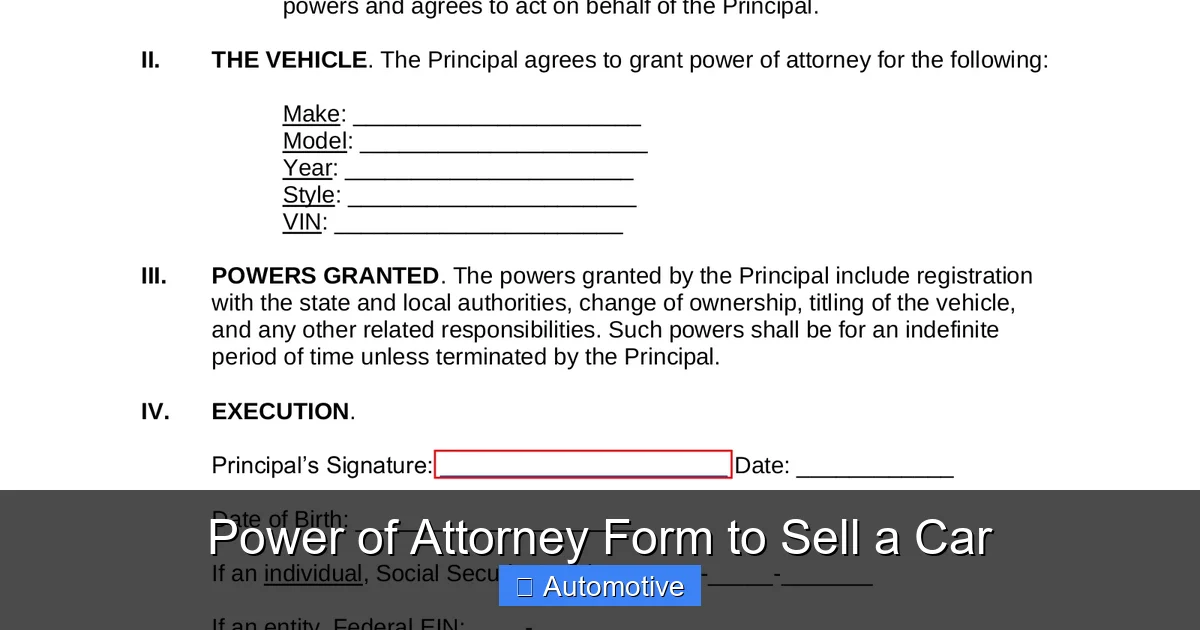
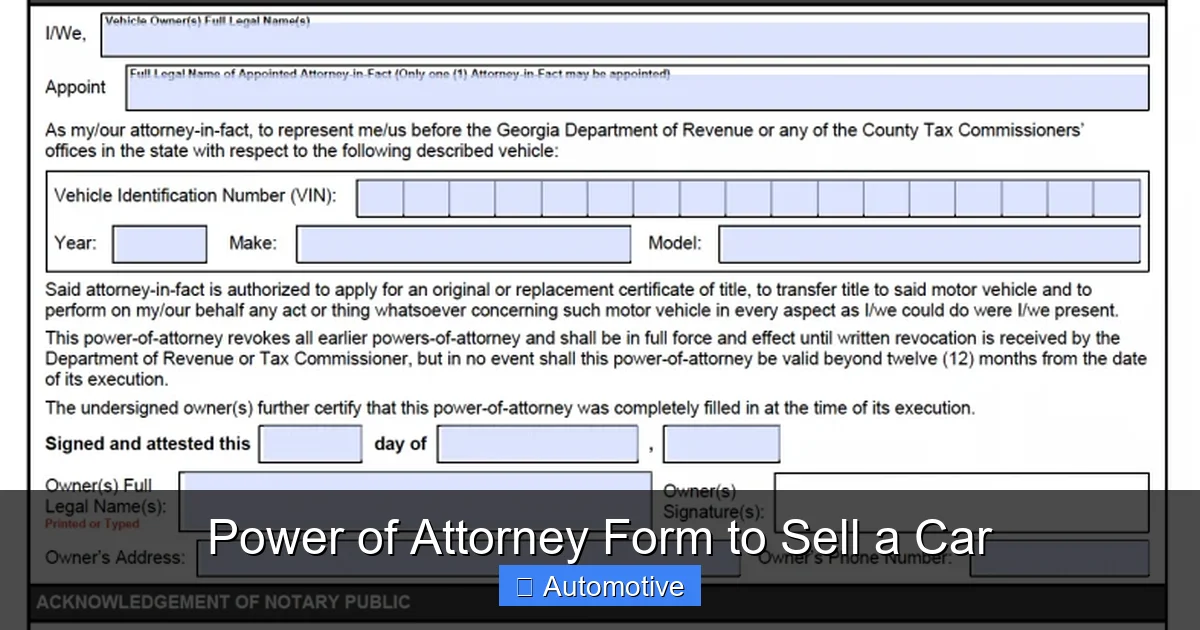
Visual guide about Power of Attorney Form to Sell a Car
Image source: eforms.com
You’re Traveling or Out of State
If you’re on vacation, traveling for work, or relocating and can’t return for the sale, a POA lets someone local handle the transaction. This is especially helpful if the buyer wants to complete the deal quickly or if the DMV requires in-person signatures.
You’re Unable to Physically Participate
Illness, injury, or disability might prevent you from driving, meeting buyers, or standing in line at the DMV. In these cases, a trusted agent can take over without delaying the sale. For example, an elderly parent might appoint their adult child to sell their car while they recover in a rehab facility.
Military Deployment or Overseas Assignment
Service members often use a power of attorney form to sell a car before deployment or while stationed abroad. The military even provides guidance on using POAs for vehicle sales, recognizing the unique challenges faced by active-duty personnel.
You’re Selling a Car for Someone Else
Sometimes, you might be helping a family member sell their car—perhaps an aging relative who no longer drives or someone who has passed away. In these cases, a POA (or a similar legal document like a letter of authorization) may be needed to prove you have the right to act on their behalf.
You Want to Avoid In-Person Hassles
Even if you’re physically able, you might prefer to avoid the stress of negotiating with buyers, meeting strangers, or dealing with DMV lines. A POA lets you delegate the task to someone you trust, freeing up your time and energy.
Example: Deployed Soldier Sells Car
James, a U.S. Army sergeant, is deploying to South Korea for 12 months. He owns a 2016 Ford F-150 and wants to sell it before leaving. He creates a limited power of attorney form authorizing his wife, Lisa, to sell the truck. The form specifies that Lisa can set the price (up to $18,000), sign the title, and complete the DMV transfer. With the POA notarized and filed, Lisa lists the truck online, negotiates with buyers, and completes the sale while James is overseas—no delays, no complications.
How to Create a Power of Attorney Form to Sell a Car
Creating a valid power of attorney form to sell a car isn’t complicated, but it does require attention to detail. Skipping steps or using the wrong language can result in a rejected form, delays, or even legal issues. Here’s a step-by-step guide to getting it right.
Visual guide about Power of Attorney Form to Sell a Car
Image source: sellmax.com
Step 1: Decide on the Type of POA
Start by choosing between a general and a limited power of attorney. For selling a car, a limited POA is almost always the better choice. It restricts your agent’s authority to only the tasks related to the vehicle sale, reducing the risk of misuse.
A limited POA might say something like: “I authorize [Agent’s Name] to sell my 2019 Toyota Camry, VIN 123456789, including signing the title, accepting payment, and completing DMV paperwork.” This keeps the scope narrow and clear.
Step 2: Include Essential Information
Your POA form should include the following details:
- Your full legal name and address (the “principal”)
- Your agent’s full legal name and address (the “attorney-in-fact”)
- A clear description of the vehicle (make, model, year, VIN)
- The specific powers granted (e.g., “to sell, transfer, and sign documents related to the vehicle”)
- The effective date and expiration date (if applicable)
- A statement that the POA is durable (remains valid if you become incapacitated) or non-durable (ends if you’re unable to make decisions)
For car sales, a non-durable POA is usually sufficient, but check your state’s requirements.
Step 3: Use the Right Language
Avoid vague terms like “handle my car.” Instead, use precise language such as:
“I hereby grant [Agent’s Name] the authority to sell, transfer, and convey my 2020 Subaru Outback, VIN JF2SKJRC6LH123456, including but not limited to signing the certificate of title, accepting payment, and completing all necessary DMV forms and procedures.”
This leaves no room for confusion and ensures the DMV and buyer understand the agent’s authority.
Step 4: Sign and Notarize the Form
In most states, a power of attorney form to sell a car must be signed by you (the principal) and notarized to be valid. Some states also require witnesses. Check your local DMV or legal guidelines to confirm the requirements.
Notarization adds a layer of authenticity. A notary public verifies your identity, ensures you’re signing willingly, and stamps the document with their official seal. This step is crucial—many DMVs won’t accept a POA without it.
Step 5: Provide Copies to Your Agent and Keep Records
Give your agent the original signed and notarized POA, along with a copy of your ID and the car’s title (if applicable). Keep copies for your records, and consider storing digital versions in a secure cloud folder.
Tip: Let your agent know they may need to show the POA to the buyer, the DMV, or a bank during the transaction. Having multiple copies on hand prevents delays.
Example: Filling Out a POA Form
Maria is selling her 2017 Nissan Altima while recovering from surgery. She downloads a state-approved POA template and fills it out as follows:
- Principal: Maria Gonzalez, 123 Oak Street, Austin, TX 78701
- Agent: Carlos Rivera, 456 Pine Avenue, Austin, TX 78702
- Vehicle: 2017 Nissan Altima, VIN 1N4AL3AP5HC123456
- Powers: “To sell, transfer, and sign all documents related to the above vehicle, including the certificate of title and DMV transfer forms.”
- Effective: Immediately
- Expiration: Upon completion of the sale
She signs the form in front of a notary, gives the original to Carlos, and keeps two copies. Carlos uses the POA to meet the buyer, sign the title, and complete the DMV transfer—all while Maria rests at home.
Choosing the Right Person as Your Agent
The success of your car sale often depends on who you choose as your agent. This person will have legal authority to act in your name, so trust and reliability are essential. Here’s how to pick the right one.
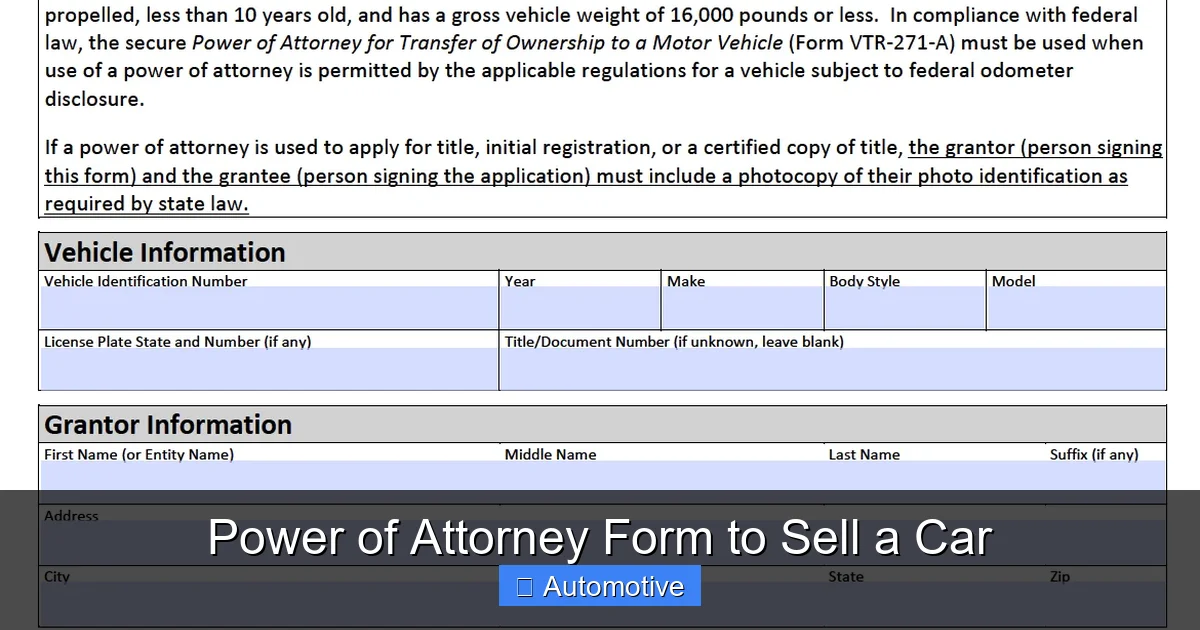
Visual guide about Power of Attorney Form to Sell a Car
Image source: powerofattorney.com
Look for Trustworthiness and Responsibility
Your agent should be someone you trust completely—someone who wouldn’t misuse their authority or make impulsive decisions. Avoid choosing someone who has a history of financial trouble, dishonesty, or poor judgment.
Ask yourself: Would I trust this person to handle my money? If the answer is no, they’re probably not the right choice for a POA.
Consider Their Availability and Location
Your agent should be available to meet with buyers, answer calls, and visit the DMV if needed. If they live in another state or are frequently unavailable, it could slow down the sale.
For example, if you’re selling your car in California but your cousin lives in New York, it might be harder for them to handle last-minute issues or in-person requirements.
Choose Someone Familiar with Car Sales
While not required, it helps if your agent has some experience with car transactions. They’ll understand how to negotiate, what paperwork is needed, and how to spot red flags from buyers.
If your agent has never sold a car before, provide them with a simple checklist: verify the buyer’s ID, ensure payment is secure (cash or cashier’s check), and double-check all signatures on the title and DMV forms.
Communicate Clearly and Set Boundaries
Before signing the POA, have a conversation with your agent. Explain your expectations, such as:
- The minimum acceptable sale price
- Whether they can negotiate or must stick to your listed price
- How payment should be handled (e.g., direct deposit, check made out to you)
- How often you want updates
Putting these details in writing—either in the POA or a separate letter—can prevent misunderstandings.
Example: Choosing the Right Agent
David is selling his motorcycle before a long hiking trip. He considers two people: his friend Jake, who’s reliable but lives two hours away, and his sister Emily, who lives nearby and has sold cars before. David chooses Emily because she’s local, trustworthy, and knows the process. He gives her a POA and a note saying, “Don’t accept less than $4,500. Let me know once the sale is complete.” Emily handles everything smoothly while David enjoys the mountains.
State-Specific Rules and DMV Requirements
One of the most important things to remember is that power of attorney rules vary by state. What works in Florida might not be accepted in Oregon. Always check your local DMV or legal guidelines before creating or using a POA.
Notarization and Witness Requirements
Most states require the POA to be notarized. Some also require one or two witnesses to sign. For example:
- California: Requires notarization but no witnesses for a POA.
- New York: Requires notarization and one witness.
- Texas: Requires notarization; witnesses are optional but recommended.
Check your state’s official DMV website or consult a legal professional to confirm the rules.
DMV Acceptance of POA Forms
Even with a properly signed and notarized POA, some DMVs may have additional requirements. For instance:
- The POA must be submitted with the title and bill of sale.
- The agent may need to appear in person with the buyer.
- Some states require the POA to be recorded with the county clerk.
Call your local DMV ahead of time to ask about their specific process. This can save you and your agent a trip and a headache.
Example: State Differences in Action
Lena lives in Illinois and creates a POA to sell her car while visiting family in Arizona. She notarizes the form in Illinois and gives it to her brother, who lives nearby. When he goes to the DMV, he’s told the POA must be notarized in Arizona or accompanied by an Illinois apostille (a certification for out-of-state documents). Lena has to get the document certified before the sale can proceed—delaying the process by a week.
This shows why it’s crucial to research state rules in advance, especially if you’re selling across state lines.
Common Mistakes to Avoid
Even with the best intentions, people often make mistakes when using a power of attorney form to sell a car. Avoid these common pitfalls to ensure a smooth transaction.
Using a Generic or Outdated Form
Don’t download a random POA template from the internet without checking if it meets your state’s requirements. Some forms are too vague, missing key details, or not legally valid in your area.
Always use a state-specific template or consult a legal professional to ensure compliance.
Granting Too Much Authority
Avoid giving your agent broad powers like “handle all my vehicles” or “manage my finances.” This increases the risk of fraud or misuse. Stick to a limited scope: only the sale of one specific car.
Forgetting to Include the VIN
The vehicle identification number (VIN) is essential. Without it, the DMV or buyer may question whether the POA applies to the correct car. Always include the full 17-digit VIN in the document.
Not Keeping Communication Open
Just because your agent is handling the sale doesn’t mean you should go silent. Stay in touch, ask for updates, and review the final paperwork before the transaction is complete. This protects you and ensures everything goes as planned.
Example: The Missing VIN Mistake
Tom creates a POA to sell his truck but forgets to include the VIN. When his agent goes to the DMV, the clerk says the form is incomplete and can’t be processed. Tom has to create a new POA, get it notarized again, and delay the sale by several days—all because of one missing detail.
Conclusion
A power of attorney form to sell a car is a smart, practical solution when you can’t be there in person. It gives you peace of mind, saves time, and ensures the sale happens smoothly—even from afar. Whether you’re traveling, recovering, or simply prefer to delegate, a properly executed POA can make all the difference.
Remember to choose a trustworthy agent, use clear and specific language, follow your state’s legal requirements, and keep communication open throughout the process. With the right preparation, selling your car through a power of attorney can be just as secure and efficient as doing it yourself.
So the next time life gets in the way of a car sale, don’t stress—just empower someone you trust to handle it for you. It’s one less thing to worry about, and one more step toward a successful, hassle-free transaction.
Frequently Asked Questions
Can I use a power of attorney to sell a car in any state?
Most states accept a properly notarized power of attorney form to sell a car, but rules vary. Always check your local DMV requirements, especially if the sale crosses state lines or involves out-of-state notarization.
Does the agent need to be present at the DMV?
In many cases, yes—the agent may need to appear in person with the buyer to complete the transfer. Some DMVs allow mail-in submissions, but in-person visits are often required for POA-based sales.
Can I revoke a power of attorney after signing it?
Yes, you can revoke a POA at any time by providing written notice to your agent and, if possible, retrieving the original document. Notify the DMV if the POA was already used or submitted.
What if the buyer doesn’t trust the agent?
The buyer may request to see the POA, your ID, and proof of ownership. Providing clear documentation and being transparent can help build trust. Some buyers may also want to speak with you directly to confirm the arrangement.
Can a power of attorney be used for a leased car?
It depends on the lease agreement. Most leasing companies require the lessee to handle the sale or transfer. Contact your leasing company first—they may need to approve the POA or handle the transfer themselves.
Is a power of attorney the same as a bill of sale?
No. A power of attorney authorizes someone to act on your behalf, while a bill of sale is a receipt proving the transfer of ownership. Both documents are often used together in a car sale.