Portable Jump Starter

Contents
- 1 Key Takeaways
- 2 📑 Table of Contents
- 3 What Is a Portable Jump Starter?
- 4 How Does a Portable Jump Starter Work?
- 5 Why Every Driver Needs a Portable Jump Starter
- 6 Key Features to Look for in a Portable Jump Starter
- 7 Top Portable Jump Starter Models in 2024
- 8 How to Use a Portable Jump Starter Safely
- 9 Maintenance and Care Tips
- 10 Conclusion
- 11 Frequently Asked Questions



A portable jump starter is a compact, battery-powered device that revives dead car batteries without needing another vehicle or jumper cables. It’s a must-have emergency tool for drivers, offering peace of mind on road trips, daily commutes, or in cold weather when batteries fail.
Key Takeaways
- No second vehicle required: Unlike traditional jump-starting, a portable jump starter works independently, making it ideal for remote locations or solo drivers.
- Compact and lightweight: Most models fit in a glove compartment or trunk, weighing under 2 pounds, so you can carry them anywhere.
- Multi-functional features: Many units include USB ports, LED flashlights, and even air compressors, turning them into all-in-one emergency tools.
- Safe and easy to use: Built-in safety protections prevent reverse polarity, short circuits, and overcharging, reducing the risk of damage or injury.
- Works in extreme temperatures: High-quality jump starters perform reliably in both freezing winters and hot summers, unlike some car batteries.
- Rechargeable and long-lasting: A single charge can last months, and most models support multiple jump starts before needing a recharge.
- Cost-effective over time: Avoiding towing fees and roadside assistance calls makes a portable jump starter a smart long-term investment.
📑 Table of Contents
What Is a Portable Jump Starter?
A portable jump starter is a small, rechargeable battery pack designed to jump-start a dead car battery without the need for another vehicle or jumper cables. Think of it as a personal roadside rescue kit that fits in your glove box. These devices have become increasingly popular among drivers who want to avoid the hassle and uncertainty of waiting for help when their car won’t start.
Unlike traditional jump-starting methods that require a second car and a set of jumper cables, a portable jump starter works independently. You simply connect the clamps to your car’s battery terminals, press a button, and your engine roars back to life. It’s like having a mini power station in your trunk—ready whenever you need it.
Modern portable jump starters are powered by lithium-ion or lithium-polymer batteries, which offer high energy density in a compact size. They’re engineered to deliver a strong burst of power (measured in peak amps) to crank your engine, even in cold weather when batteries struggle the most. Whether you’re stuck in a parking lot at midnight or on a remote highway, this device can save the day.
How Does a Portable Jump Starter Work?
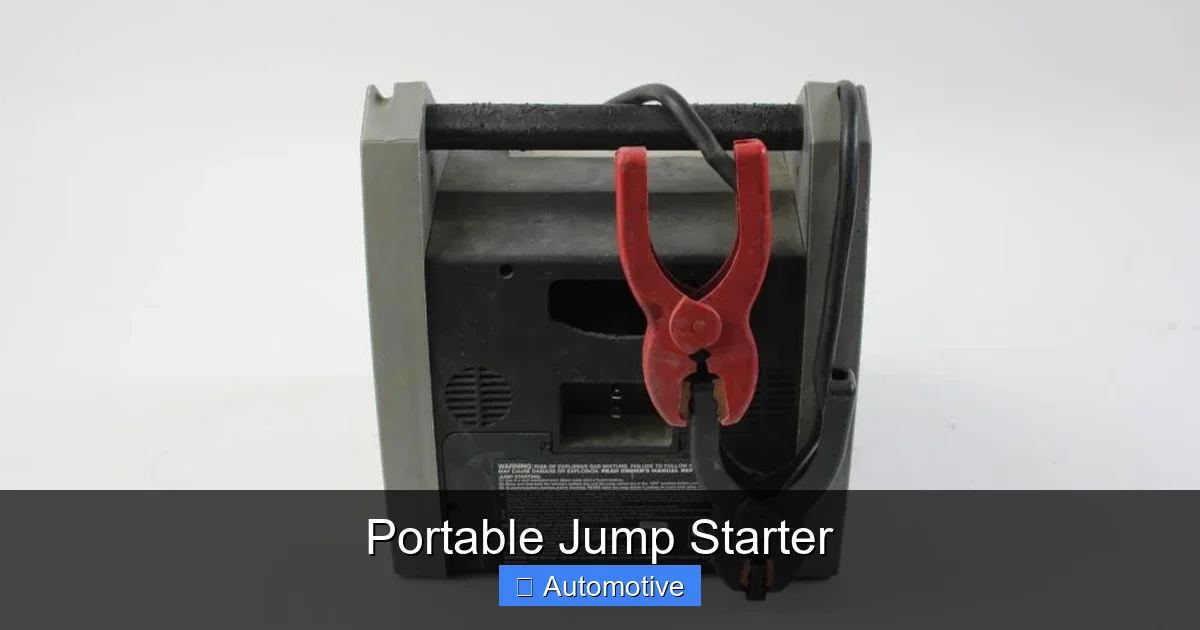
At its core, a portable jump starter works by transferring stored electrical energy from its internal battery to your car’s dead battery. When your car battery is drained—perhaps from leaving the lights on or extreme cold—it lacks the power to turn over the engine. The jump starter provides that missing jolt, allowing the alternator to take over and recharge the battery once the engine is running.
Visual guide about Portable Jump Starter
Image source: content.propertyroom.com
The Jump-Starting Process
Using a portable jump starter is simple and typically involves three steps:
- Connect the clamps: Attach the red (positive) clamp to the positive terminal of your car battery and the black (negative) clamp to a grounded metal surface on the engine block—never directly to the negative terminal unless instructed.
- Power on the device: Turn on the jump starter. Most models have an indicator light or display that shows it’s ready.
- Start the engine: Turn the key and attempt to start your car. If it doesn’t start immediately, wait 30 seconds and try again. Once running, disconnect the clamps in reverse order.
It’s important to follow the manufacturer’s instructions closely. Some jump starters have smart cables with built-in safety features that detect incorrect connections and shut off automatically to prevent damage.
Safety Mechanisms
One of the biggest concerns with jump-starting is safety—especially the risk of sparks, reverse polarity, or overcharging. High-quality portable jump starters come equipped with multiple safety protections:
- Reverse polarity protection: Prevents damage if the clamps are connected incorrectly.
- Short circuit protection: Shuts off power if a short is detected.
- Overcharge and over-discharge protection: Safeguards both the jump starter and your car’s electrical system.
- Spark-proof technology: Ensures safe connections without dangerous sparks.
These features make modern jump starters much safer than older methods, especially for inexperienced users. You don’t need to be a mechanic to use one confidently.
Why Every Driver Needs a Portable Jump Starter
Imagine this: It’s 7 a.m., you’re running late for work, and your car won’t start. The battery is dead. You call a friend, but they’re across town. Roadside assistance will take an hour. Sound familiar? A portable jump starter eliminates this stress. It gives you independence and control over your situation.
Visual guide about Portable Jump Starter
Image source: content.propertyroom.com
But it’s not just about convenience. A dead battery can happen anytime—during a snowstorm, on a road trip, or after leaving the headlights on overnight. According to the American Automobile Association (AAA), dead batteries are one of the top reasons for roadside assistance calls, especially in winter. A portable jump starter helps you avoid those costly towing fees and long waits.
Perfect for Emergencies
Emergencies don’t come with a warning. Whether you’re stranded in a rural area with no cell service or stuck in a busy parking lot, a portable jump starter can get you moving again quickly. Some models even include built-in LED flashlights with SOS modes, making them useful during nighttime breakdowns or power outages.
For example, the NOCO Boost Plus GB40 is a popular model that can jump-start vehicles up to 6.0L gas and 3.0L diesel engines. It’s small enough to fit in a backpack and has a 100-lumen flashlight with strobe and SOS settings. That means you’re not just solving a battery issue—you’re also prepared for other emergencies.
Great for Frequent Travelers
If you travel often—whether for work or leisure—a portable jump starter is a smart addition to your travel kit. Long drives, extreme weather, and unfamiliar terrain can all increase the risk of battery failure. Having a reliable jump starter means you’re never truly stranded.
Consider a road trip through the mountains in winter. Temperatures drop, and your battery struggles. Instead of waiting hours for help, you pop the hood, connect the jump starter, and get back on the road in minutes. It’s peace of mind in a compact package.
Ideal for Older Vehicles
Older cars are more prone to battery issues due to aging electrical systems and less efficient alternators. If you drive a classic car or a vehicle over 10 years old, a portable jump starter is especially valuable. It reduces the wear and tear on your battery and alternator by providing a clean, strong power boost when needed.
Plus, many jump starters can also charge your phone, tablet, or laptop via USB ports. That means you can stay connected even when your car’s battery is dead.
Key Features to Look for in a Portable Jump Starter
Not all portable jump starters are created equal. With so many models on the market, it’s important to know what features matter most. Here’s what to look for when shopping for one:
Visual guide about Portable Jump Starter
Image source: docerp.s3.amazonaws.com
Peak Amps and Cranking Power
The most important spec is the peak amperage (peak amps), which measures the maximum power the device can deliver in a short burst. For most cars, a jump starter with 400–600 peak amps is sufficient. Larger vehicles like trucks or SUVs may need 1000+ peak amps.
- Compact cars: 400–600 peak amps
- Mid-size sedans and SUVs: 600–1000 peak amps
- Trucks and diesel engines: 1000+ peak amps
Also check the cranking amps (CA) and cold cranking amps (CCA). These indicate how well the device performs in normal and cold temperatures. A higher CCA rating means better performance in winter.
Battery Capacity and Type
Most portable jump starters use lithium-ion batteries because they’re lightweight, rechargeable, and hold a charge well. Look for a model with at least 10,000mAh capacity—this ensures enough power for multiple jumps and device charging.
Some high-end models use lithium iron phosphate (LiFePO4) batteries, which are more durable and have a longer lifespan (up to 2000 charge cycles). They’re also safer and perform better in extreme temperatures.
Multi-Functionality
The best portable jump starters do more than just jump-start your car. Many include:
- USB charging ports: Charge smartphones, tablets, or GPS devices.
- LED flashlight: Useful for nighttime repairs or emergencies.
- Air compressor: Some models include a built-in pump to inflate tires.
- 12V DC outlet: Powers car accessories like coolers or vacuums.
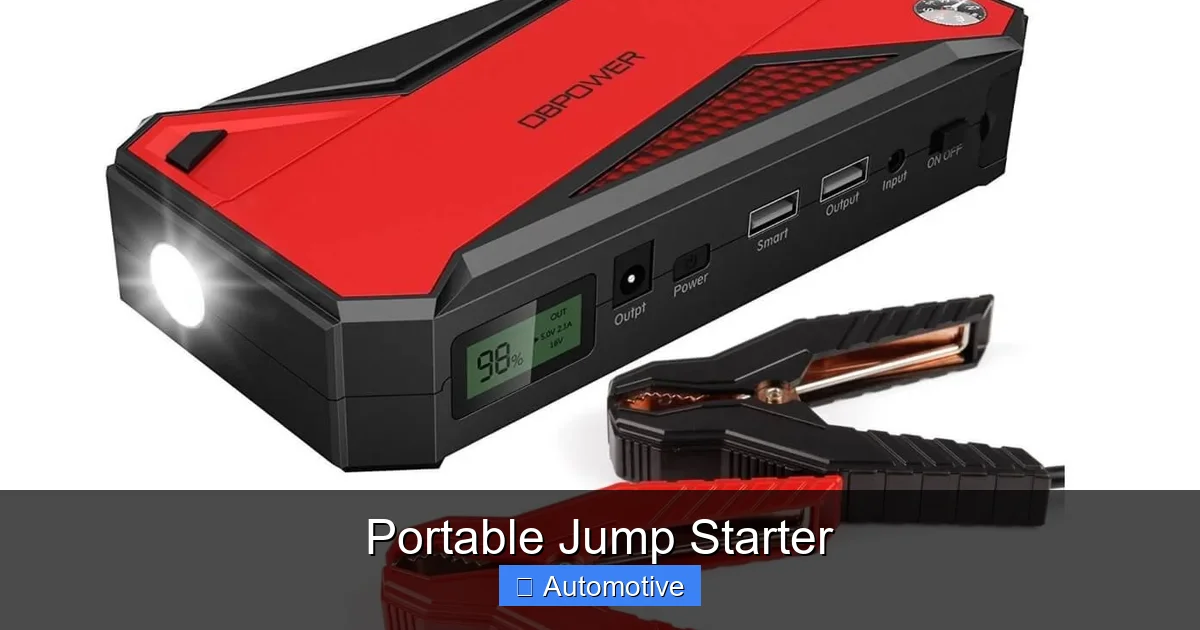
For example, the DBPower 2000A Jump Starter includes two USB ports, a bright LED light, and a digital display showing battery level. It’s like carrying a mini emergency kit in one device.
Size, Weight, and Portability
Since the whole point is portability, choose a model that’s easy to carry and store. Most quality jump starters weigh between 1 and 3 pounds and fit in a small carrying case. Avoid bulky models unless you need extreme power for large vehicles.
Look for a compact design with a comfortable handle or strap. Some even come with a carrying case that organizes the clamps and cables neatly.
Safety and Smart Features
As mentioned earlier, safety is crucial. Always choose a jump starter with built-in protections like reverse polarity alerts, spark-proof clamps, and automatic shutoff. Some models even have digital displays that show error messages or battery status.
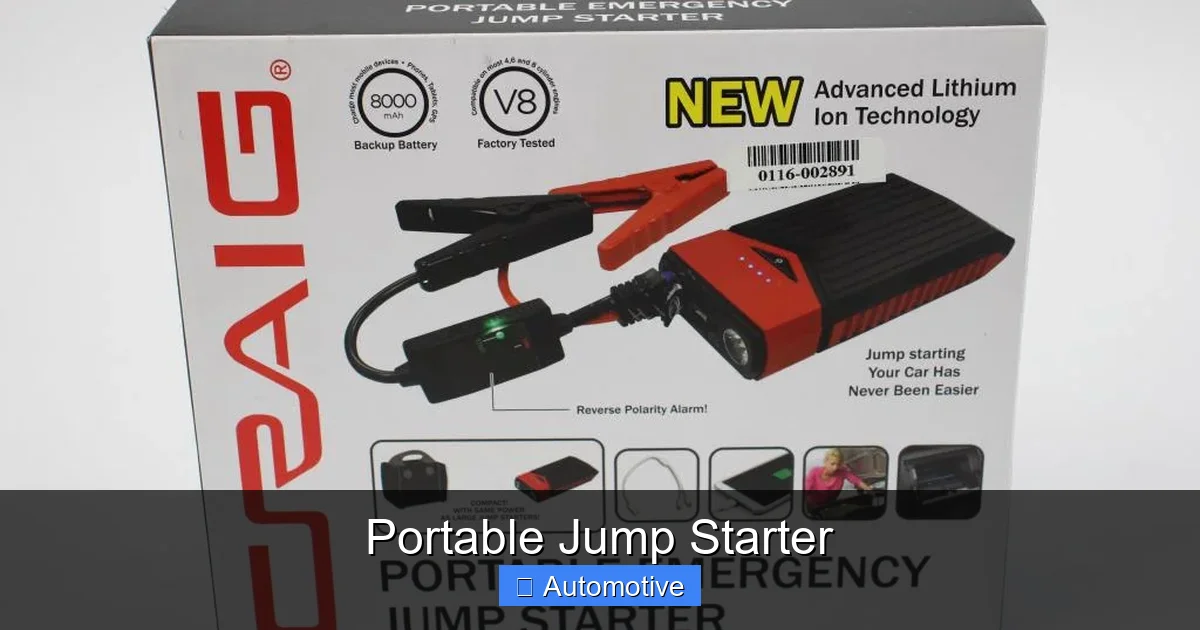
Smart cables with indicator lights are a great feature—they glow green when connected correctly and red if there’s a problem. This takes the guesswork out of jump-starting.
Top Portable Jump Starter Models in 2024
With so many options available, it can be hard to choose the right one. Here are some of the best portable jump starters on the market today, based on performance, features, and user reviews:
1. NOCO Boost Plus GB40
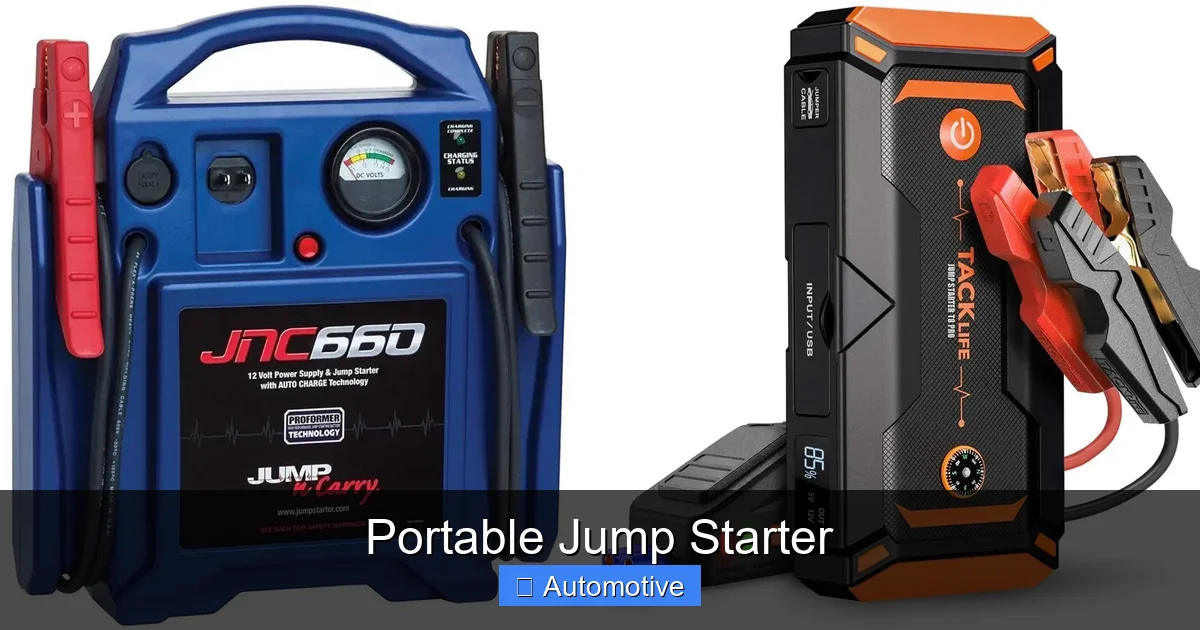
The NOCO GB40 is a top-rated jump starter known for its reliability and compact design. It delivers 1000 peak amps and can jump-start vehicles up to 6.0L gas and 3.0L diesel engines. It weighs just 2.4 pounds and includes a 100-lumen LED flashlight with multiple modes. It also has USB charging and smart clamp technology for safe connections.
Users love its durability and long battery life—it holds a charge for up to a year. It’s perfect for everyday drivers who want a dependable, no-fuss solution.
2. DBPower 2000A Jump Starter
If you need serious power, the DBPower 2000A is a great choice. With 2000 peak amps, it can handle large trucks, RVs, and diesel engines. It features a digital display, two USB ports, and a built-in air compressor for tires. The LED flashlight has three modes, including SOS.
It’s a bit heavier at 3.5 pounds, but the extra power and features make it worth it for frequent travelers or those with larger vehicles.
3. GOOLOO GP4000
The GOOLOO GP4000 offers 4000 peak amps—making it one of the most powerful portable jump starters available. It’s ideal for heavy-duty vehicles and commercial use. Despite its power, it’s surprisingly compact and includes a large LCD screen, USB-C charging, and a bright LED light.
It also has a built-in compass and can charge laptops via a 12V DC port. This model is perfect for adventurers, truck drivers, or anyone who needs maximum reliability.
4. Clore Automotive Jump-N-Carry JNC660
For those who prefer a more traditional design, the JNC660 is a heavy-duty jump starter with 1700 peak amps. It uses a lead-acid battery, which is bulkier but extremely durable. It’s great for professional mechanics or people who need a workhorse device.
It includes a built-in flashlight and a 12V outlet. While not as portable as lithium models, it’s incredibly reliable and can handle multiple jumps in a row.
5. Tacklife T8 Pro
The Tacklife T8 Pro is a budget-friendly option that doesn’t skimp on features. It delivers 800 peak amps and includes two USB ports, a bright LED light, and a digital display. It’s lightweight and comes with a carrying case.
It’s a great entry-level model for new drivers or those on a tight budget. It may not handle large trucks, but it’s perfect for sedans and compact cars.
How to Use a Portable Jump Starter Safely
Using a portable jump starter is simple, but safety should always come first. Follow these steps to ensure a smooth and safe jump-start:
Step-by-Step Guide
- Turn off the engine and all electronics: Make sure the car is off, and remove the keys from the ignition.
- Locate the battery: Open the hood and find the battery. Identify the positive (+) and negative (-) terminals.
- Connect the clamps: Attach the red clamp to the positive terminal and the black clamp to a grounded metal part of the engine block (not the battery terminal).
- Power on the jump starter: Turn on the device. Wait for the indicator light to show it’s ready.
- Start the engine: Turn the key and attempt to start the car. If it doesn’t start, wait 30 seconds and try again.
- Disconnect in reverse order: Once the engine is running, turn off the jump starter and remove the black clamp first, then the red.
Safety Tips
- Never connect the black clamp to the negative terminal unless the manual specifically says to do so.
- Avoid touching the clamps together or letting them touch metal surfaces.
- Keep the jump starter away from water, heat, and direct sunlight when not in use.
- Store it in a cool, dry place and recharge it every 3–6 months to maintain battery health.
- If the jump starter feels hot or smells burnt, stop using it immediately.
Remember, even with safety features, always treat the device with care. It’s powerful—and with great power comes great responsibility.
Maintenance and Care Tips
To keep your portable jump starter working reliably, regular maintenance is key. Here’s how to care for it:
Recharge Regularly
Even if you don’t use it, recharge your jump starter every 3–6 months. Lithium batteries lose charge over time, and a dead jump starter is useless when you need it most. Most models have indicator lights that show the charge level—green means full, red means low.
Clean the Clamps and Ports
Dirt, grease, and corrosion can interfere with connections. Wipe the clamps and USB ports with a dry cloth regularly. Avoid using water or cleaning solutions unless specified by the manufacturer.
Store Properly
Keep your jump starter in its carrying case and store it in a cool, dry place. Avoid extreme temperatures—don’t leave it in a hot car or freezing garage for long periods. High heat can damage the battery, while extreme cold reduces performance.
Check for Damage
Inspect the cables, clamps, and casing for cracks, fraying, or wear. If you notice any damage, stop using the device and contact the manufacturer. A damaged jump starter can be dangerous.
Update Firmware (if applicable)
Some advanced models have firmware that can be updated via USB or an app. Check the manufacturer’s website periodically for updates that improve performance or safety.
Conclusion
A portable jump starter is more than just a gadget—it’s a lifeline for drivers. It gives you the freedom to handle battery emergencies on your own, without relying on strangers, towing services, or waiting in the cold. Whether you’re a daily commuter, a weekend adventurer, or a parent driving kids to school, this device offers unmatched peace of mind.
With advancements in battery technology and safety features, portable jump starters are now more reliable, compact, and user-friendly than ever. They’re not just for emergencies—they’re for everyday confidence. Investing in one is a small price to pay for the security of knowing you’ll never be truly stranded.
So, the next time you’re shopping for car accessories, don’t overlook the portable jump starter. It’s a smart, practical, and potentially life-saving tool that every driver should have in their vehicle. Stay charged, stay safe, and keep moving.
Frequently Asked Questions
Can a portable jump starter damage my car?
No, a high-quality portable jump starter with built-in safety features will not damage your car. Models with reverse polarity protection, spark-proof clamps, and automatic shutoff prevent common risks. Always follow the manufacturer’s instructions to ensure safe use.
How many times can a portable jump starter be used on a single charge?
Most portable jump starters can perform 3 to 10 jump starts on a single charge, depending on the model and vehicle size. Smaller cars require less power, so you’ll get more jumps. Always check the product specs for exact numbers.
Can I use a portable jump starter in the rain?
It’s not recommended to use a jump starter in heavy rain or wet conditions. While many models are water-resistant, they’re not waterproof. Moisture can cause short circuits or damage the device. If you must use it in damp weather, keep it as dry as possible.
How long does it take to recharge a portable jump starter?
Recharge time varies by model, but most take 3 to 5 hours to fully charge using a standard wall outlet. Some support fast charging via USB-C, which can reduce time to under 2 hours. Always use the included charger for best results.
Can a portable jump starter charge my phone?
Yes, most modern portable jump starters include USB ports that can charge smartphones, tablets, and other USB-powered devices. This makes them useful during power outages or when you’re away from outlets.
What’s the difference between peak amps and cranking amps?
Peak amps measure the maximum power a jump starter can deliver in a short burst—important for starting the engine. Cranking amps (CA) and cold cranking amps (CCA) indicate performance in normal and cold temperatures. Higher numbers mean better performance, especially in winter.