
Peg Perego Primo Viaggio 4-35 Infant Car Seat Atmosphere Review (2026)

Quick Answer
The Peg Perego Primo Viaggio 4-35 Infant Car Seat in Atmosphere is a premium rear-facing infant seat with a relatively narrow 17-inch body, a 4–35-pound child weight range, and a 32-inch maximum height limit. Its strongest points are its supportive padding, adjustable side-impact head protection, anti-rebound base, and flexible installation options. Before buying an older or secondhand example in 2026, confirm its manufacture date, history, labels, and current status using NHTSA car-seat guidance.
Who Is It Best For?
- Premium-seat buyers: It combines a well-padded carrier with a more upscale feel than many basic infant seats.
- Smaller vehicles: Its roughly 17-inch width can make side-to-side fit easier than with many wider seats.
- Newborn families: The dual-stage cushion system supports smaller babies within the manufacturer’s approved limits.
- Travel-system users: The removable carrier design works well for families moving between the vehicle and a compatible stroller.
- Used-seat shoppers: It can still be considered, but age and crash history matter more than cosmetic condition.
My Quick Verdict
- The classic 4-35 remains appealing if you find a safe, in-date example, but compare it carefully with newer Peg Perego infant seats before buying.
If you’re searching for the Peg Perego Primo Viaggio 4-35 Infant Car Seat Atmosphere, you’re probably trying to decide whether this older premium infant seat is still worth buying. That’s a more important question in 2026 than simply asking whether the seat has good features.
I look at three things first with an older infant-seat design: whether it fits the child, whether it fits the vehicle, and whether its history can be verified. This guide covers those points without treating a nice-looking used seat as automatically safe.
In This Guide
- What Is the Peg Perego Primo Viaggio 4-35 Atmosphere?
- Is the Peg Perego Primo Viaggio 4-35 Worth It in 2026?
- What Are the Main Specs and Features?
- How Do You Install the Primo Viaggio 4-35?
- How Practical Is It for Everyday Use?
- How Does the 4-35 Compare With the Nido and Lounge?
- Frequently Asked Questions
What Is the Peg Perego Primo Viaggio 4-35 Atmosphere?
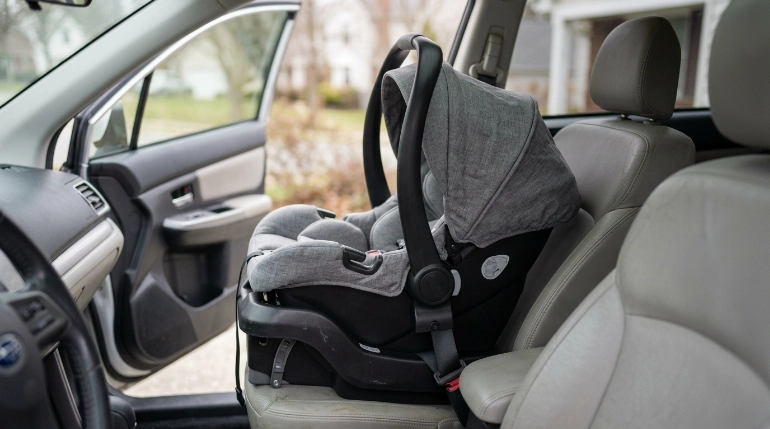
The Primo Viaggio 4-35 is a rear-facing-only infant car seat from Italian manufacturer Peg Perego. Atmosphere refers to the seat’s color or upholstery treatment rather than a separate type of restraint.
That distinction matters when shopping online. A seller may write “Primo Viaggio Atmosphere” while leaving out whether the carrier is the standard 4-35, Nido, or another Primo Viaggio version.
Definition: A rear-facing infant car seat is a removable child restraint designed only for rear-facing travel. The carrier usually locks into a vehicle base and can often attach to a compatible stroller.
What size child fits the Primo Viaggio 4-35?
The classic U.S.-market Primo Viaggio 4-35 was designed for children from 4 to 35 pounds and up to 32 inches tall. You must stop using it when your child reaches a manufacturer limit or no longer meets the required fit rules.
- Minimum weight: 4 pounds
- Maximum weight: 35 pounds
- Maximum height: 32 inches
- Orientation: Rear-facing only
- Carrier style: Removable infant carrier
Never choose a car seat only because your baby falls below its maximum weight. Head clearance, harness position, and the instructions for your exact model also matter.
Is Atmosphere a different model?
No. Atmosphere is associated with the upholstery and colorway, not a separate 4-35 safety category.
Peg Perego has also sold Atmosphere components for the Primo Viaggio 4-35 Nido. That is one reason you should identify the complete model name before ordering replacement parts.
Section Takeaway: The important words are “Primo Viaggio 4-35.” Atmosphere tells you the appearance, while the model label tells you which instructions, base, limits, and replacement parts apply.
Is the Peg Perego Primo Viaggio 4-35 Worth It in 2026?
It can still make sense in 2026, but I wouldn’t buy one based on brand reputation alone. The individual seat’s age and history now matter enormously because the classic 4-35 has been around for years.
A new current-generation infant seat is usually the simpler choice when your budget allows it. An older 4-35 becomes more interesting when its condition and complete history are documented.
Reasons I still like the design
- Manageable carrier weight: The classic carrier is listed at about 9.5 pounds before adding your child.
- 17-inch width: This can help in vehicles where rear-seat space is tight.
- Anti-rebound base: The base uses an anti-rebound bar designed to control movement during a collision.
- Adjustable protection: The headrest and harness height can be adjusted as the baby grows.
- Newborn support: Peg Perego’s dual-stage cushion system provides additional support for smaller infants.
Reasons I would hesitate
The biggest concern isn’t that the design suddenly becomes bad. It’s that an older seat may have an unknown crash history, missing parts, expired components, worn webbing, or an unreadable model label.
- Unknown previous ownership
- Missing original padding or inserts
- Damage from improper cleaning
- Unknown storage conditions
- No owner’s manual
- Unverified recall status
- Manufacture date approaching the seat’s service-life limit
Before using any secondhand restraint, I would check the model and manufacture labels first. I’d then compare them with the manufacturer’s instructions and the NHTSA recall database.
A cosmetic inspection comes later. Clean fabric cannot prove that the shell, harness, or energy-managing components have never experienced damaging forces.
Section Takeaway: A verified, complete, in-date 4-35 can still be useful. An unknown-history seat isn’t a bargain simply because the upholstery looks excellent.
What Are the Main Specs and Features?
The original Primo Viaggio 4-35 focused on premium padding, relatively compact width, and a removable carrier/base design. The specifications below refer to the classic 4-35 rather than every later Primo Viaggio version.
| Specification | Primo Viaggio 4-35 | Why It Matters |
|---|---|---|
| Child weight range | 4–35 lb | Covers the normal infant-seat stage, subject to all fit limits. |
| Maximum child height | 32 in | A tall baby may outgrow the seat by height before weight. |
| Carrier dimensions | About 25.9 × 17 × 23.9 in | The 17-inch width can help in tighter rear seats. |
| Carrier weight | About 9.5 lb | Reasonable for a premium infant carrier, though the child quickly adds weight. |
| Base weight | About 7.4 lb | The base usually stays installed in the vehicle. |
| Direction | Rear-facing only | You’ll need another restraint after the infant seat is outgrown. |
Adjustable side-impact head protection
The seat uses an adjustable head-protection section that moves with the harness. The goal is to keep the harness positioned correctly as the child grows without repeatedly rethreading shoulder straps through fixed slots.
For a rear-facing child, harness positioning must follow the exact instructions in the manual. Don’t assume a setting is correct because it looks symmetrical.
Dual-stage infant cushion
Peg Perego designed the 4-35 with removable support cushions for smaller babies. These pieces aren’t generic pillows, so they shouldn’t be replaced with aftermarket padding.
If you’re buying used, check that the included insert matches the exact model. Peg Perego’s current infant car-seat lineup also helps show why model identification matters; several Primo Viaggio versions now coexist.
Anti-rebound bar
The classic 4-35 base incorporates an anti-rebound bar. This component rests toward the vehicle seatback and is designed to help manage rebound movement during a crash.
Don’t confuse that bar with the load leg supplied with certain Nido bases. The original standard 4-35 and Nido aren’t identical systems.
How Do You Install the Primo Viaggio 4-35?
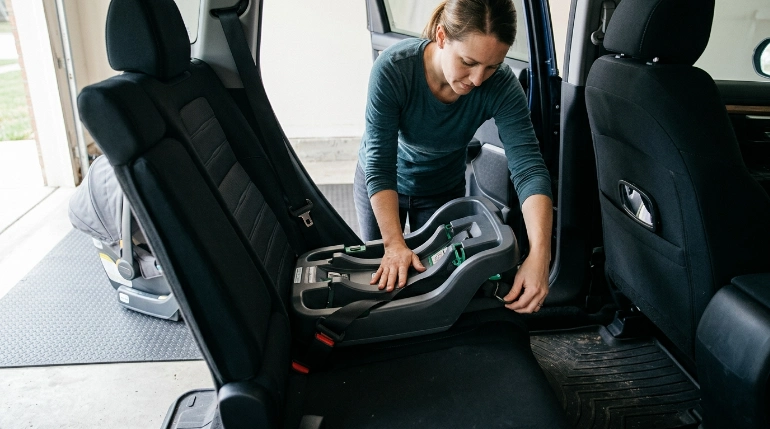
The Primo Viaggio 4-35 can be installed as allowed by its instructions using its vehicle base. The carrier also supports vehicle-seat-belt installation without the base when the exact manual permits it.
Whichever method you choose, follow both the car-seat manual and vehicle owner’s manual. NHTSA also warns that not every seat fits every vehicle equally well.
Installing with the base
- Choose a suitable rear seating position. Check your vehicle manual for approved child-restraint locations.
- Place and level the base. Use the seat’s approved recline guidance rather than estimating the angle by eye.
- Choose one approved attachment method. Follow the manual for lower anchors or the vehicle seat belt.
- Tighten the installation. Check movement where the base follows the vehicle belt path.
- Lock the carrier into the base. Confirm that it fully engages before driving.
- Check the installation again. A correct initial installation can still be disturbed when a base gets moved or removed.
NHTSA advises using either the lower anchors or seat belt for a typical rear-facing installation unless the restraint and vehicle instructions specifically say otherwise. Using extra attachment methods doesn’t automatically make a seat safer.
Can you install it without the base?
A baseless installation can be useful for taxis, travel, or a second vehicle. It also demands careful belt routing and tightening every time you reinstall the carrier.
I wouldn’t choose the baseless method just because it uses fewer parts. The best method is the one allowed by the manufacturer that you can reproduce correctly on every trip.
How tight should the harness be?
The harness should lie flat and snug against the child without bulky material trapped beneath it. Follow the manual’s harness-height and fit instructions rather than adding third-party cushions or strap covers.
The Primo Viaggio manual also warns against securing a child while wearing bulky winter clothing under the harness. Thick coats can prevent the straps from fitting closely to the body.
Mechanic Alert: If the vehicle’s seat belts, lower anchors, or seating hardware appear damaged, don’t improvise a car-seat installation. Have the vehicle inspected by a qualified professional and get installation help from a certified Child Passenger Safety Technician when needed.
Section Takeaway: Correct installation matters more than choosing LATCH versus a seat belt. Use one approved method, follow both manuals, and verify the carrier is properly locked before every drive.
How Practical Is the Primo Viaggio 4-35 for Everyday Use?
The 4-35’s everyday strengths are its compact width, supportive interior, and removable-carrier convenience. Its main limitation is common to premium infant seats: carrying gets harder as the baby grows.
A 9.5-pound empty carrier may sound light. Add a 20-pound baby, and you’re handling almost 30 pounds before counting a blanket or other permitted items.
Is the 17-inch width useful?
Yes, especially when side-to-side space is limited. A 17-inch exterior width gives the seat an advantage over bulky infant restraints when you’re arranging multiple passengers in the back.
Width isn’t the only measurement that matters, though. Front-to-back space can determine whether the carrier fits behind a tall driver or passenger.
- For compact cars: Test the reclined seat behind the actual driver and passenger positions.
- For three-across setups: Check how bases, armrests, seat contours, and buckles interact.
- For SUVs: Confirm the base sits properly on the vehicle cushion rather than assuming a larger cabin guarantees compatibility.
What is the Atmosphere fabric like?
Atmosphere is a neutral gray-toned option associated with this Peg Perego line. The color hides some everyday visual wear better than very pale fabrics, but fabric condition tells you little about the shell’s history.
For cleaning, follow the care label and original manual. The 4-35 instructions warn against chlorine bleach, dry cleaning, tumble drying, ironing, and solvent-based stain removal.
Is it good for newborns?
The seat’s 4-pound minimum and dual-stage cushion system make it suitable for some small newborns when all fit requirements are met. A numerical weight rating alone doesn’t guarantee good harness fit for every baby.
I would check shoulder-strap position, head position, recline, and harness tightness before the first ride home. That’s more useful than judging newborn support from padding thickness alone.
How Does the 4-35 Compare With the Nido and Lounge?
The classic 4-35 sits at the simpler end of Peg Perego’s premium infant-seat family. The Nido added a heavier base with a load leg, while the Lounge added a reclining comfort feature and more carrier weight.
| Legacy Model | Carrier Weight | Base Weight | Key Difference |
|---|---|---|---|
| Primo Viaggio 4-35 | 9.5 lb | 7.4 lb | Lighter basic 4-35 package with anti-rebound base |
| Primo Viaggio 4-35 Nido | 10 lb | 11 lb | Base adds a load leg alongside anti-rebound protection |
| Primo Viaggio 4-35 Lounge | 12 lb on the legacy specification | 11 lb | Adds a three-position comfort recline system |
These figures are useful for understanding the older lineup, but don’t apply them automatically to a newer seat carrying a similar Primo Viaggio name. Peg Perego has revised its product range over time.
Should you buy a used Primo Viaggio 4-35 Atmosphere?
Only consider one when you can verify its history. I would walk away from a mystery seat even if the price is tempting.
- Find the manufacture label: It should be present and readable.
- Check the service-life rule: Follow the expiration guidance for that exact model and production date.
- Confirm crash history: Don’t rely on “looks fine” as proof.
- Check recalls: Search the exact manufacturer and model information.
- Inspect the shell: Look for cracks, deformation, stress marks, or damaged attachment points.
- Inspect the harness: Watch for cuts, fraying, twisting, contamination, or altered webbing.
- Verify every part: Make sure required inserts, hardware, base components, and labels are present.
- Get the correct manual: Don’t use instructions for the Nido, Lounge, or another Primo Viaggio version.
NHTSA specifically provides guidance for evaluating secondhand child restraints. That’s especially relevant to a discontinued or older model that may now appear frequently in resale listings.
Should you choose a newer seat instead?
For many families, yes. A current seat removes much of the uncertainty around age, storage history, previous crashes, and missing components.
It also lets you compare newer models using current independent testing. Consumer Reports continues to evaluate infant car seats in 2026 for factors including ease of use and crash performance.
Section Takeaway: The original 4-35 is lighter than the older Nido and Lounge versions, but a newer seat may be the better purchase when the history or age of a used 4-35 cannot be proven.
Frequently Asked Questions
Is the Peg Perego Primo Viaggio 4-35 rear-facing only?
Yes. The Primo Viaggio 4-35 is an infant car seat designed for rear-facing use. Once the child exceeds the applicable height, weight, or fit limit, you’ll need an appropriate next-stage car seat rather than turning the 4-35 forward-facing.
What does “Atmosphere” mean on a Peg Perego car seat?
Atmosphere identifies a color or upholstery option used on Primo Viaggio products. It doesn’t by itself identify whether the seat is the standard 4-35, 4-35 Nido, or another version, so always check the full model label.
What is the weight limit for the Primo Viaggio 4-35?
The classic Primo Viaggio 4-35 is rated for children from 4 to 35 pounds, with a maximum stated height of 32 inches. The child must also meet all harness-position and fit requirements described in the owner’s manual.
How much does the Peg Perego Primo Viaggio 4-35 weigh?
Peg Perego listed the classic 4-35 carrier at about 9.5 pounds and its base at about 7.4 pounds. Later Primo Viaggio versions have different weights, so don’t use these numbers for a Nido, Lounge, or current-generation model.
Can you install the Primo Viaggio 4-35 without its base?
The classic carrier supports approved seat-belt installation without the base when installed according to its manual. This can be useful for travel, but you must repeat the correct belt routing, recline, and tightening process each time.
Is the Primo Viaggio 4-35 good for a small car?
Its approximately 17-inch width can make it useful in compact vehicles. However, you still need to test front-to-back clearance, recline, vehicle-seat shape, and access to approved anchors or seat belts before deciding it fits well.
Is a used Peg Perego Primo Viaggio 4-35 safe?
A used seat may be acceptable only when you can verify its age, crash history, condition, required parts, labels, and recall status. If important history is unknown, replacing it with a seat whose history you know is the safer buying decision.
My final take: the Peg Perego Primo Viaggio 4-35 Infant Car Seat Atmosphere still has several appealing qualities, including a relatively narrow shell, premium newborn support, and a manageable carrier weight.
For a 2026 purchase, though, condition and history come first. Verify the exact model label and manufacture information before spending money, and choose a newer infant seat whenever an older 4-35’s history cannot be confirmed.