Is Toyota Ae86 a Good Car?

Contents
- 1 Key Takeaways
- 2 📑 Table of Contents
- 3 Is Toyota AE86 a Good Car? A Deep Dive into the Hachi-Roku Legend
- 4 Why the AE86 Became a Legend
- 5 Driving Experience: What It’s Like Behind the Wheel
- 6 Common Issues and Maintenance
- 7 Is the AE86 a Good Investment?
- 8 Who Should Buy a Toyota AE86?
- 9 Final Verdict: Is the Toyota AE86 a Good Car?
- 10 Frequently Asked Questions


The Toyota AE86, famously known as the “Hachi-Roku,” is more than just a car—it’s a cultural icon. With its lightweight design, balanced chassis, and rear-wheel-drive layout, it offers an engaging driving experience that modern cars often lack.
[FEATURED_IMAGE_PLACEHODEL]
Key Takeaways
- Legendary Handling: The AE86’s near 50:50 weight distribution and lightweight body make it incredibly agile and fun to drive, especially on twisty roads or race tracks.
- Rear-Wheel Drive Appeal: Unlike most economy cars of its era, the AE86 features rear-wheel drive, giving it a sporty edge and making it ideal for drifting and performance driving.
- Cult Following & Drift Heritage: Immortalized in the anime “Initial D” and popularized in drifting circles, the AE86 has a passionate global fanbase and strong aftermarket support.
- Affordable Entry Point: While prices have risen, the AE86 remains relatively affordable compared to other classic performance cars, especially if you buy one in need of restoration.
- Reliable 4A-GEU Engine: The 1.6L twin-cam engine is simple, tunable, and reliable when maintained properly, offering a great foundation for both stock and modified builds.
- Challenging to Find in Good Condition: Rust, wear, and poor modifications are common issues, so careful inspection is essential when buying.
- Modern Relevance: Despite being over 40 years old, the AE86 still influences car design and remains a benchmark for driver-focused, analog sports cars.
📑 Table of Contents
Is Toyota AE86 a Good Car? A Deep Dive into the Hachi-Roku Legend
If you’ve ever been around car enthusiasts, especially those into JDM (Japanese Domestic Market) culture, you’ve probably heard the name “AE86.” It’s not just a model number—it’s a legend. Whether you know it as the Toyota Corolla Levin, Sprinter Trueno, or simply the “Hachi-Roku” (Japanese for “eight-six”), this little rear-wheel-drive coupe from the 1980s has earned a permanent spot in automotive history.
But is the Toyota AE86 a good car in practical terms? Or is it just a nostalgic icon wrapped in anime fame and drift videos? The answer isn’t black and white. The AE86 is a car that divides opinion. Some call it the ultimate driver’s car. Others say it’s outdated, underpowered, and rust-prone. So, let’s cut through the hype and take a balanced, honest look at what makes the AE86 tick—and whether it’s worth your time, money, and garage space.
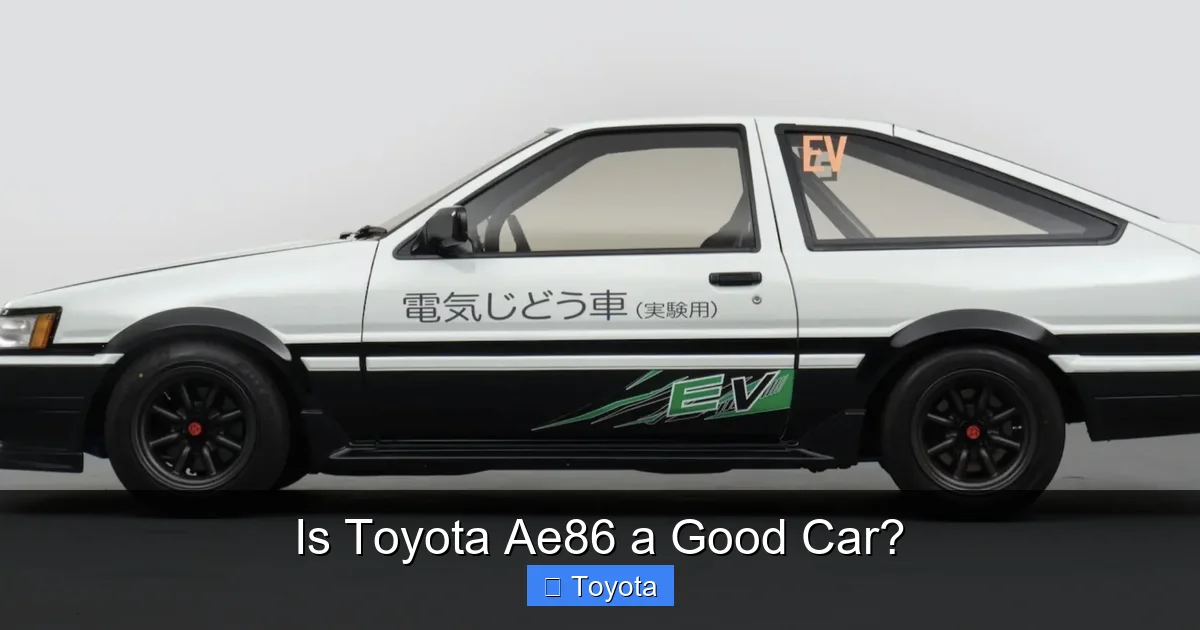
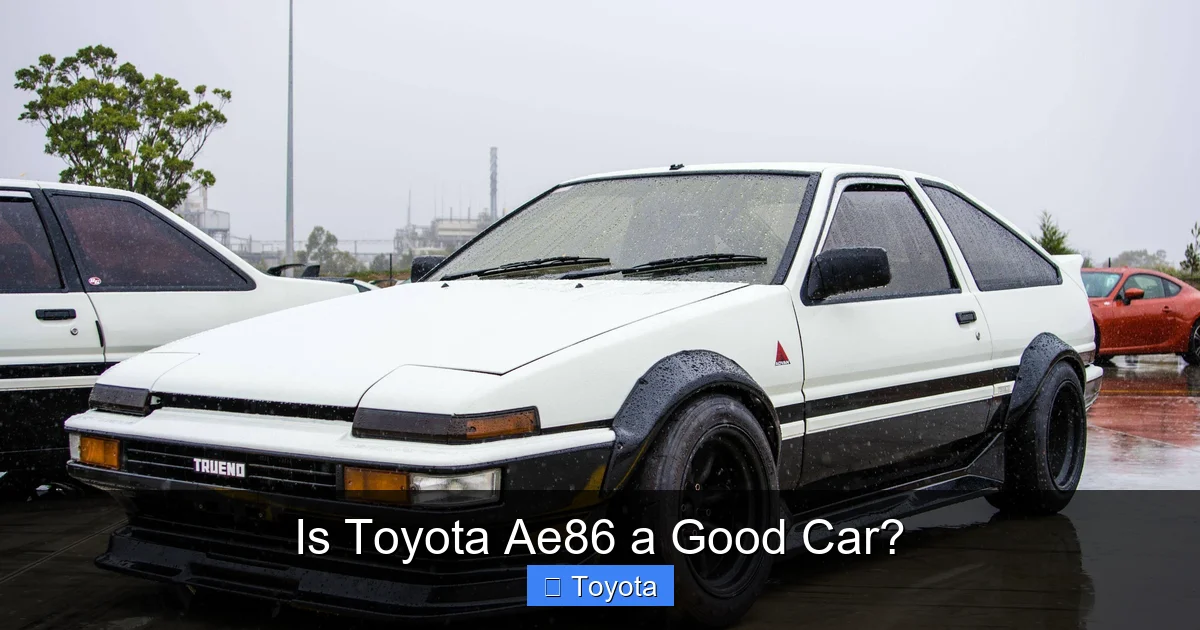
At its core, the AE86 is a lightweight, rear-wheel-drive compact coupe built by Toyota between 1983 and 1987. It was part of the fifth-generation Corolla lineup and came in two main body styles: the Corolla Levin (with fixed headlights) and the Sprinter Trueno (with pop-up headlights). Both were mechanically identical, differing only in styling and trim. Under the hood sat the now-famous 4A-GEU 1.6-liter inline-four engine, producing around 128 horsepower—modest by today’s standards, but more than enough to make the 2,200-pound car feel lively.
What really sets the AE86 apart isn’t power—it’s balance. With a near-perfect 50:50 front-to-rear weight distribution, a low center of gravity, and a simple, responsive chassis, the AE86 delivers a driving experience that’s raw, tactile, and deeply engaging. It’s a car that rewards skill, encourages exploration, and makes you feel connected to the road in a way few modern vehicles can match.
Why the AE86 Became a Legend
Visual guide about Is Toyota Ae86 a Good Car?
Image source: wallpapercave.com
To understand whether the AE86 is a good car, you have to understand why it became a legend in the first place. It wasn’t always seen as a performance icon. When it first launched, the AE86 was just another economy car—a practical, affordable coupe for young drivers in Japan. But over time, its unique combination of traits turned it into something much more.
The Birth of a Drift King
The AE86’s rise to fame began on the mountain passes of Japan, particularly in the touge (mountain road) racing scene. Young drivers discovered that the car’s lightweight body, rear-wheel-drive layout, and responsive steering made it perfect for sliding through corners with precision and flair. Unlike heavier, front-wheel-drive cars of the time, the AE86 could be easily controlled during oversteer, allowing drivers to “drift” with confidence.
This grassroots popularity eventually caught the attention of professional racers and tuners. By the late 1980s and early 1990s, the AE86 was a common sight in Japanese touring car races and grassroots motorsport events. Its success on track proved that you didn’t need a V8 or turbocharger to be competitive—just good balance, driver skill, and the right setup.
Pop Culture Explosion: Initial D and Beyond
The AE86’s cultural status exploded in the late 1990s with the release of the manga and anime series *Initial D*. The story follows a young tofu delivery driver named Takumi Fujiwara who becomes a legendary street racer using his father’s humble AE86. The series showcased the car’s agility, reliability, and drifting prowess, turning it into a symbol of underdog triumph and driving purity.
Suddenly, the AE86 wasn’t just a car—it was a lifestyle. Fans around the world began seeking out AE86s, importing them from Japan and modifying them for performance. Drifting, once a niche motorsport, went mainstream, and the AE86 became its poster child. Even today, you’ll see AE86s featured in video games like *Gran Turismo* and *Forza*, further cementing its place in pop culture.
Simplicity and Tunability
Another reason for the AE86’s enduring appeal is its mechanical simplicity. The 4A-GEU engine is a naturally aspirated, dual overhead cam (DOHC) inline-four with a 16-valve head. It’s not high-tech by modern standards, but it’s robust, easy to work on, and highly tunable. With basic bolt-ons like headers, intake, and exhaust, you can gain 20–30 horsepower. Add a turbo kit, and 200+ horsepower is achievable without major engine surgery.
The suspension is equally straightforward: MacPherson struts up front and a live rear axle with coil springs and trailing arms. While not as sophisticated as independent rear suspension, this setup is durable, easy to modify, and ideal for drifting. Coilovers, sway bars, and limited-slip differentials (LSDs) are popular upgrades that dramatically improve handling.
Driving Experience: What It’s Like Behind the Wheel
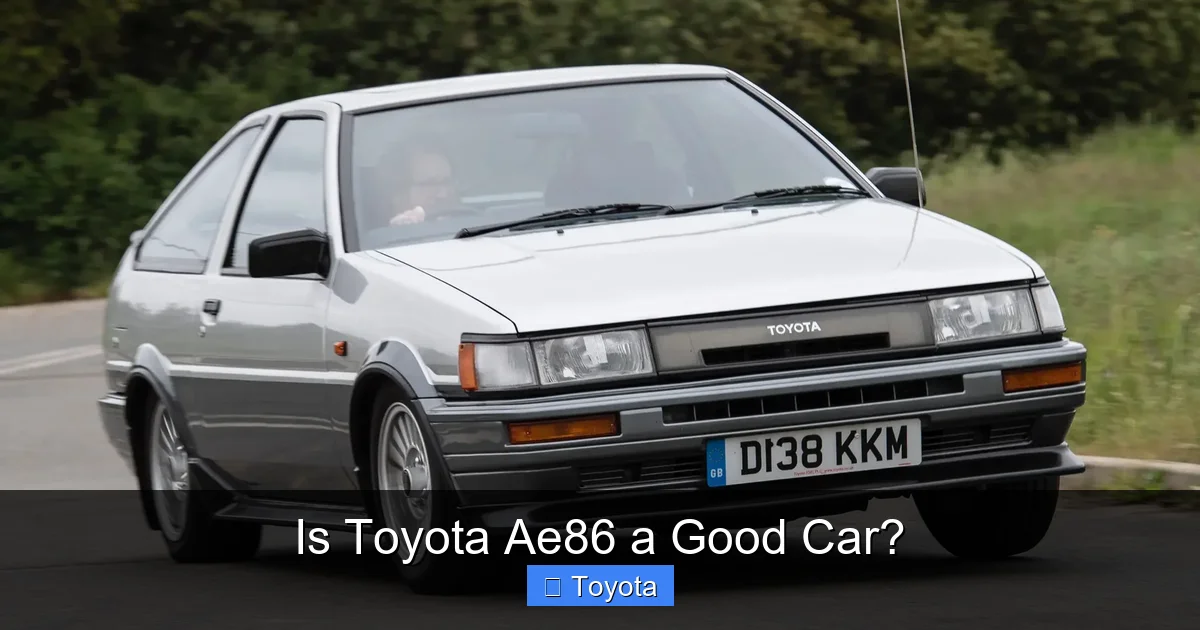
Visual guide about Is Toyota Ae86 a Good Car?
Image source: car-images.bauersecure.com
So, what’s it actually like to drive a Toyota AE86? If you’re used to modern cars with power steering, traction control, and turbocharged engines, the AE86 will feel like a time machine—but not in a bad way.
Raw and Connected
The first thing you’ll notice is the steering. There’s no power assist—just pure, unfiltered feedback from the road. Turn the wheel, and the car responds instantly. You feel every bump, every camber change, every shift in grip. It’s a workout, especially at low speeds, but it builds trust and precision at higher speeds.
The 4A-GEU engine loves to rev. Redline is at 7,200 RPM, and the car feels most alive when you’re dancing near the top of the rev range. The exhaust note is crisp and mechanical, with a satisfying growl when you push it. It’s not loud or aggressive, but it has character—something many modern engines lack.
Balanced and Predictable
The AE86’s handling is its greatest strength. With a near-perfect weight balance and a short wheelbase, the car rotates beautifully through corners. It’s not the fastest car on a straight line, but on a twisty road, it feels incredibly nimble and responsive. The rear end will step out if you’re aggressive with the throttle, but it’s easy to catch and control—making it a fantastic car for learning car control and drifting.
The live rear axle can feel a bit bouncy on rough roads, and the ride is firm even in stock form. But that’s part of the charm. This isn’t a luxury cruiser—it’s a driver’s car. Every input matters, and every mistake is felt. That’s what makes it so rewarding.
Everyday Usability: Yes, It’s Possible
Can you drive an AE86 every day? Absolutely—if you’re willing to make some compromises. The cabin is basic: manual windows, minimal sound insulation, and a simple analog dashboard. There’s no air conditioning on most models (though some later versions had it), and the heater can be slow to warm up.
But for short commutes or weekend drives, it’s more than capable. Fuel economy is excellent—around 25–30 mpg—and the car is small enough to park easily in tight spaces. Just be prepared for a bit of noise, a firm ride, and the occasional curious glance from passersby.
Common Issues and Maintenance
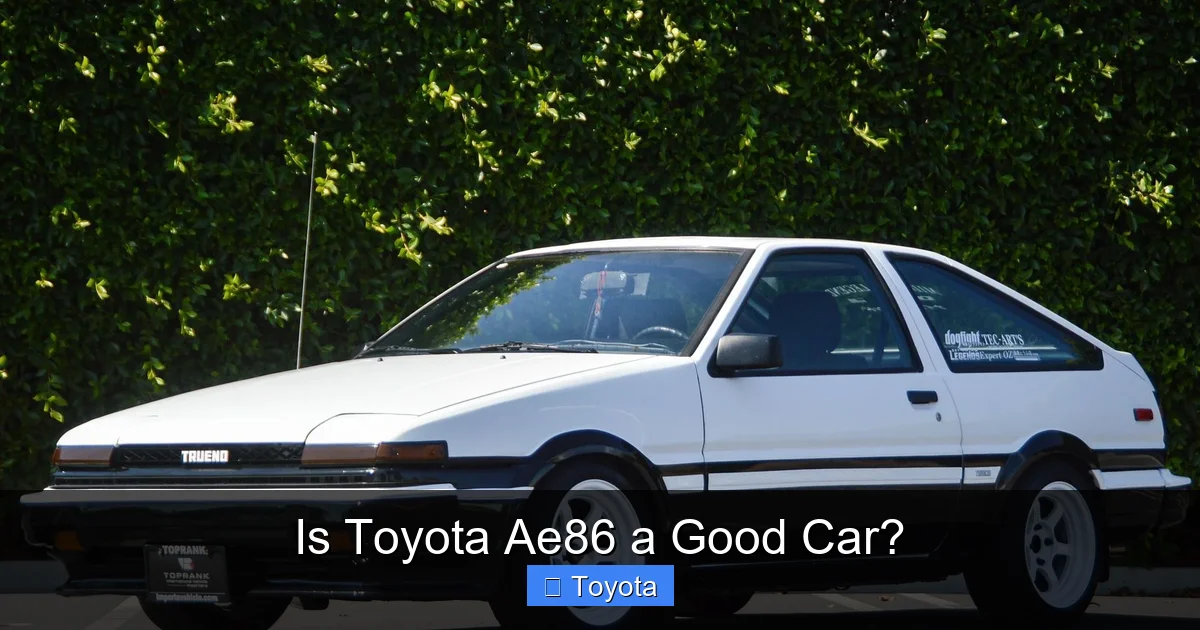
Visual guide about Is Toyota Ae86 a Good Car?
Image source: cdn.dealeraccelerate.com
Like any 40-year-old car, the AE86 isn’t without its problems. But with proper care, it can be a reliable and enjoyable machine.
Rust: The Silent Killer
Rust is the AE86’s biggest enemy. Common problem areas include the wheel arches, rocker panels, floor pans, and trunk. Salted roads (in colder climates) and humid environments accelerate corrosion. Before buying, inspect the car thoroughly—look for bubbling paint, soft metal, and signs of repair. A rust-free AE86 is rare and valuable; a rusty one can become a money pit.
Engine and Drivetrain Wear
The 4A-GEU engine is tough, but it’s not immortal. Timing belts should be replaced every 60,000–90,000 miles (or every 5–7 years). Neglecting this can lead to catastrophic engine failure. Oil leaks are common around the valve cover and rear main seal, but they’re usually easy and cheap to fix.
The transmission and differential are generally reliable, but worn synchros can make shifting rough. A limited-slip differential (LSD) is a worthwhile upgrade if you plan to drive hard.
Electrical and Interior Issues
Old wiring can be fragile, leading to flickering lights or non-functional accessories. The pop-up headlights on Trueno models are fun but prone to motor failure. Interior trim cracks, seats wear out, and rubber seals dry out over time. These aren’t deal-breakers, but they add to the cost of ownership.
Maintenance Tips
– Use high-quality engine oil and change it regularly.
– Inspect suspension bushings and shocks—replace if cracked or leaking.
– Check for oil leaks and address them early.
– Keep the car garaged or covered to prevent rust.
– Join an AE86 forum or club for advice and parts sourcing.
Is the AE86 a Good Investment?
With rising interest in classic JDM cars, AE86 prices have climbed significantly in recent years. A clean, unmodified example can cost $15,000–$25,000 or more, depending on condition, mileage, and location. Modified or race-prepped cars can go even higher.
Value Trends
The AE86 isn’t just a car—it’s a collectible. Well-preserved, low-mileage examples are becoming harder to find, driving up prices. The pop-up headlight Trueno models are especially sought after, especially in black or white.
However, be cautious. Many AE86s have been heavily modified, raced, or poorly restored. A cheap AE86 might seem like a bargain, but hidden rust, engine issues, or botched modifications can cost thousands to fix.
Restoration vs. Modification
If you’re buying an AE86 as an investment, aim for a stock or lightly modified example with documentation. Restored cars with original parts and paint hold value better than heavily modified ones.
That said, if you’re buying for driving enjoyment, don’t be afraid to modify it. A well-tuned AE86 with coilovers, LSD, and a mild engine tune can be more fun than a pristine museum piece.
Who Should Buy a Toyota AE86?
The AE86 isn’t for everyone. It’s a car that demands attention, effort, and a love for driving. But if you fit any of these profiles, it might be perfect for you:
The Enthusiast
If you love driving for the sake of driving—feeling the road, mastering car control, and enjoying the mechanical connection between driver and machine—the AE86 is a dream come true. It’s a car that rewards skill and patience.
The Drifter
Want to learn how to drift? The AE86 is one of the best platforms to start. Its balance, rear-wheel drive, and forgiving nature make it ideal for sliding sideways with control. Many professional drifters got their start in an AE86.
The Restorer
If you enjoy working on cars, the AE86 is a fantastic project. Parts are still available, and the simplicity of the design makes it accessible for DIY mechanics. Restoring one can be a deeply satisfying experience.
The Collector
For collectors of JDM classics, the AE86 is a must-have. Its cultural significance, limited numbers, and rising value make it a smart addition to any collection.
Final Verdict: Is the Toyota AE86 a Good Car?
So, is the Toyota AE86 a good car? The answer depends on what you’re looking for.
If you want a fast, comfortable, high-tech daily driver, look elsewhere. The AE86 won’t win drag races, and it won’t coddle you with luxury. It’s loud, firm, and basic.
But if you value driving purity, mechanical simplicity, and a deep connection to the road, the AE86 is one of the best cars ever made. It’s not about speed—it’s about sensation. It’s about the joy of sliding through a corner, the thrill of revving out the engine, and the satisfaction of mastering a car that demands your full attention.
In a world of electronic aids, turbo lag, and insulated cabins, the AE86 stands as a reminder of what driving used to be—and what it can still be. It’s a car that teaches you, challenges you, and rewards you in ways few others can.
Yes, it has flaws. Rust, age, and limited practicality are real concerns. But for the right person, those flaws are part of the charm. The AE86 isn’t just a good car—it’s a great one. And for many, it’s the greatest.
Frequently Asked Questions
Is the Toyota AE86 reliable?
The AE86 is generally reliable when properly maintained. The 4A-GEU engine is robust and simple, but like any older car, it requires regular servicing. Watch for rust, timing belt wear, and oil leaks.
How much horsepower does a stock AE86 have?
A stock AE86 produces around 128 horsepower and 109 lb-ft of torque. While modest today, it was strong for a lightweight 1.6L engine in the 1980s.
Can you daily drive a Toyota AE86?
Yes, many people daily drive AE86s. It’s fuel-efficient, compact, and fun. However, expect a firm ride, minimal comfort features, and potential rust issues over time.
What’s the difference between the Levin and Trueno?
The Corolla Levin has fixed headlights, while the Sprinter Trueno has pop-up headlights. Mechanically, they’re identical. The Trueno is often more desirable due to its iconic styling.
Is the AE86 good for drifting?
Absolutely. The AE86 is one of the most popular drift cars in the world. Its rear-wheel drive, balanced chassis, and predictable handling make it ideal for learning and mastering drift techniques.
Are AE86 parts still available?
Yes, many OEM and aftermarket parts are still available. Enthusiast communities, online retailers, and JDM importers help keep the AE86 alive with support and components.