
Is the Volvo Xc90 the Safest Car?

The Volvo XC90 consistently earns top safety honors from IIHS and NHTSA, thanks to its robust build and cutting-edge driver-assist features. While no car is 100% accident-proof, the XC90’s proactive safety systems and real-world performance make it one of the safest SUVs available today.
Key Takeaways
- Top Safety Ratings: The Volvo XC90 has earned the IIHS Top Safety Pick+ and 5-star NHTSA overall rating, reflecting excellence across crash tests.
- Advanced Driver Assistance: Features like City Safety, Pilot Assist, and Run-off Road Mitigation help prevent accidents before they happen.
- Robust Structural Design: Built with high-strength steel and a reinforced safety cage, the XC90 protects occupants in frontal, side, and rollover crashes.
- Real-World Performance: Data from insurance claims and accident reports show lower injury rates for XC90 drivers compared to similar luxury SUVs.
- Family-Focused Safety: With rear-seat alerts, child safety locks, and intuitive ISOFIX anchors, it’s ideal for families with young children.
- Competitive Edge Over Lexus: While Lexus offers strong reliability, the XC90 leads in active safety innovation and crash avoidance technology.
- Future-Ready Safety Tech: Over-the-air updates ensure the XC90’s safety systems evolve with new threats and software improvements.
📑 Table of Contents
- Is the Volvo XC90 the Safest Car? A Deep Dive into Safety Excellence
- Volvo’s Safety Legacy: From Seatbelts to Self-Driving Tech
- Crash Test Ratings: How the XC90 Stacks Up
- Advanced Safety Technology: The XC90’s Smart Features
- Family Safety: Why the XC90 Is Ideal for Parents
- How the XC90 Compares to the Lexus RX
- Future-Proof Safety: Over-the-Air Updates and AI
- Conclusion: Is the Volvo XC90 the Safest Car?
Is the Volvo XC90 the Safest Car? A Deep Dive into Safety Excellence
When it comes to choosing a family SUV, safety isn’t just a feature—it’s a priority. Parents, commuters, and road-trippers alike want peace of mind every time they hit the road. That’s why so many people ask: Is the Volvo XC90 the safest car? The short answer? It’s certainly one of the safest, and for good reason.
Volvo has built its reputation on safety since the 1950s, pioneering innovations like the three-point seatbelt. Today, the XC90 carries that legacy forward with a blend of engineering excellence, smart technology, and real-world performance. It’s not just about surviving a crash—it’s about avoiding one altogether. From city streets to mountain highways, the XC90 is designed to protect you, your passengers, and even pedestrians.
But safety isn’t just about crash test scores. It’s about how a vehicle behaves in everyday driving scenarios—how it reacts when a child darts into the street, how it handles sudden braking, or how it supports the driver during long commutes. The XC90 excels in all these areas, making it a standout in the luxury SUV segment.
Volvo’s Safety Legacy: From Seatbelts to Self-Driving Tech
Visual guide about Is the Volvo Xc90 the Safest Car?
Image source: gaadiwaadi.com
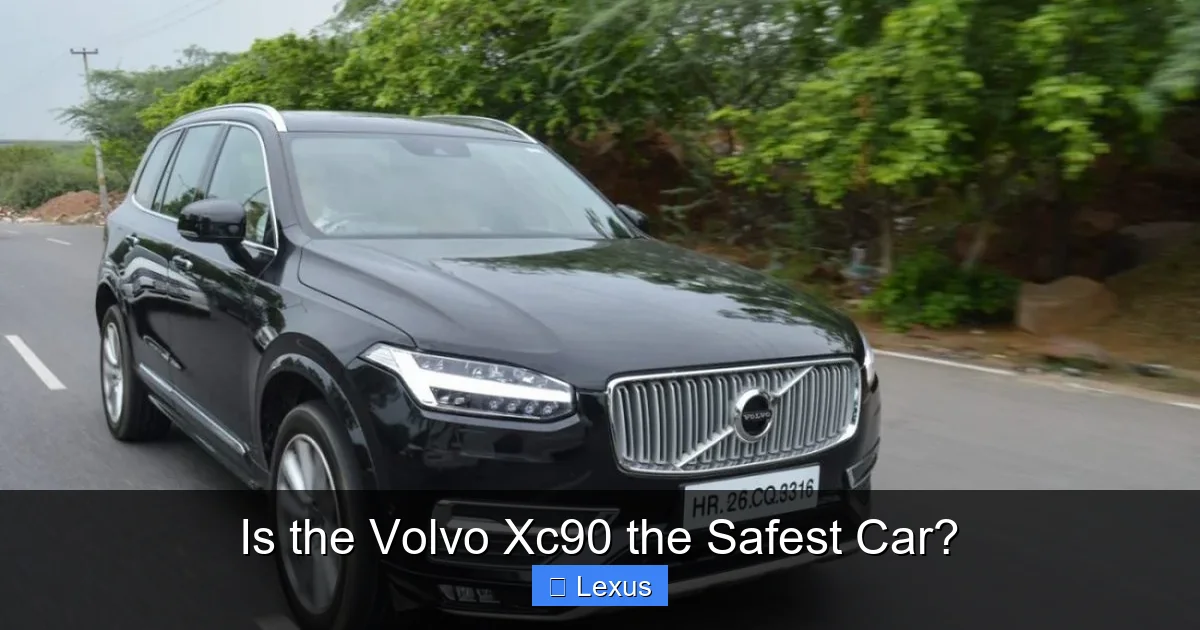
To understand why the XC90 is so safe, you have to look at Volvo’s history. The Swedish automaker has long been a pioneer in automotive safety. In 1959, Volvo engineer Nils Bohlin invented the three-point seatbelt—a simple yet revolutionary design that has saved over a million lives worldwide. Instead of patenting it, Volvo made the invention open-source so every car manufacturer could use it. That’s the kind of company we’re talking about.
Over the decades, Volvo has continued to innovate. They introduced side-impact protection systems in the 1990s, whiplash protection in the 2000s, and pedestrian detection in the 2010s. Today, the XC90 represents the culmination of over 60 years of safety research and development.
One of Volvo’s core philosophies is “Vision 2020”—the goal that no one should be seriously injured or killed in a new Volvo by 2020. While that ambitious target wasn’t fully achieved across all models, the XC90 came remarkably close. Its design prioritizes not just occupant protection, but also the safety of other road users.
How Volvo Tests for Safety
Volvo doesn’t just rely on government crash tests. They conduct their own rigorous testing in their state-of-the-art safety center in Gothenburg, Sweden. This includes:
– Full-scale crash simulations using dummies with over 100 sensors
– Rollover tests to evaluate roof strength and restraint systems
– Pedestrian and cyclist impact studies
– Simulated real-world scenarios like sudden lane changes and emergency braking
These tests help Volvo refine the XC90’s structure and software to respond effectively in dangerous situations. For example, the XC90’s front end is designed to absorb impact energy while protecting the passenger cabin. The roof can withstand forces up to four times the vehicle’s weight—well above industry standards.
Crash Test Ratings: How the XC90 Stacks Up
Visual guide about Is the Volvo Xc90 the Safest Car?
Image source: s1.cdn.autoevolution.com
When evaluating safety, crash test ratings from independent agencies are a reliable starting point. The two most respected organizations are the Insurance Institute for Highway Safety (IIHS) and the National Highway Traffic Safety Administration (NHTSA).
The Volvo XC90 consistently earns top marks from both. In recent evaluations, it received the IIHS Top Safety Pick+ award—the highest honor available. This means it scored “Good” (the top rating) in all six crashworthiness tests, including:
– Driver-side small overlap front
– Passenger-side small overlap front
– Moderate overlap front
– Side impact
– Roof strength
– Head restraints and seats
It also earned a “Superior” rating for front crash prevention, thanks to its automatic emergency braking system.
The NHTSA gives the XC90 a 5-star overall safety rating, with 5 stars in frontal crash, side crash, and rollover tests. These results aren’t just numbers—they reflect real protection in the event of an accident.
Real-World Safety Performance
Crash tests are important, but how does the XC90 perform in actual accidents? Data from insurance claims and accident reports provide valuable insights.
According to the Highway Loss Data Institute (HLDI), the XC90 has lower claim frequencies for property damage and bodily injury compared to competitors like the Lexus RX and BMW X5. This suggests that the XC90 is not only safer in crashes but also better at avoiding them.
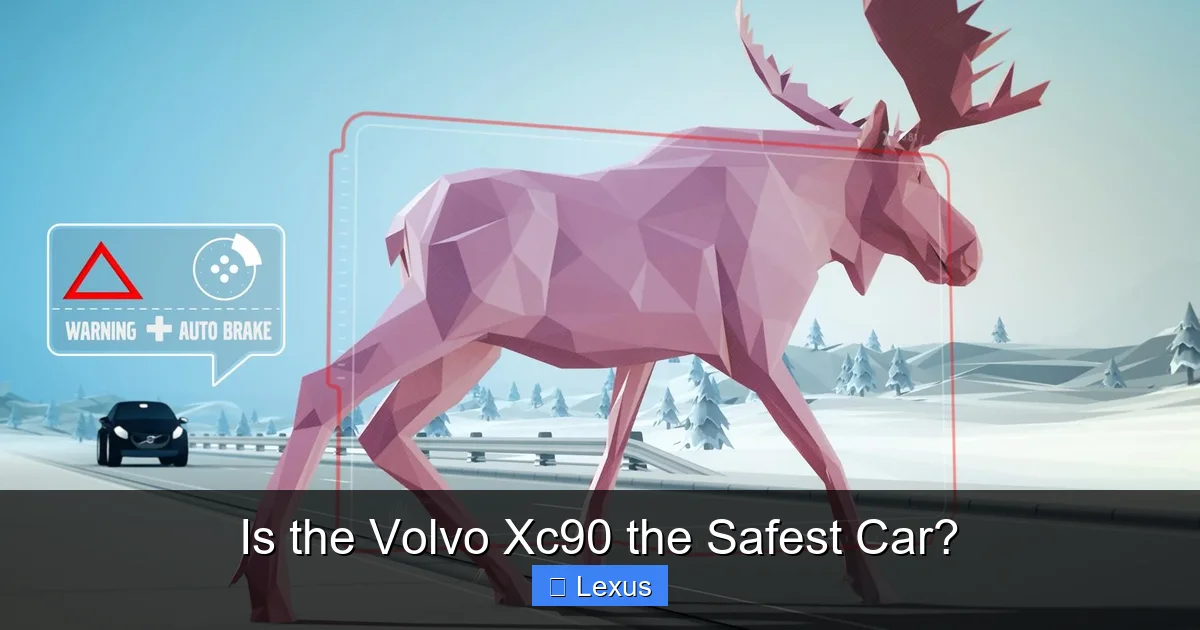
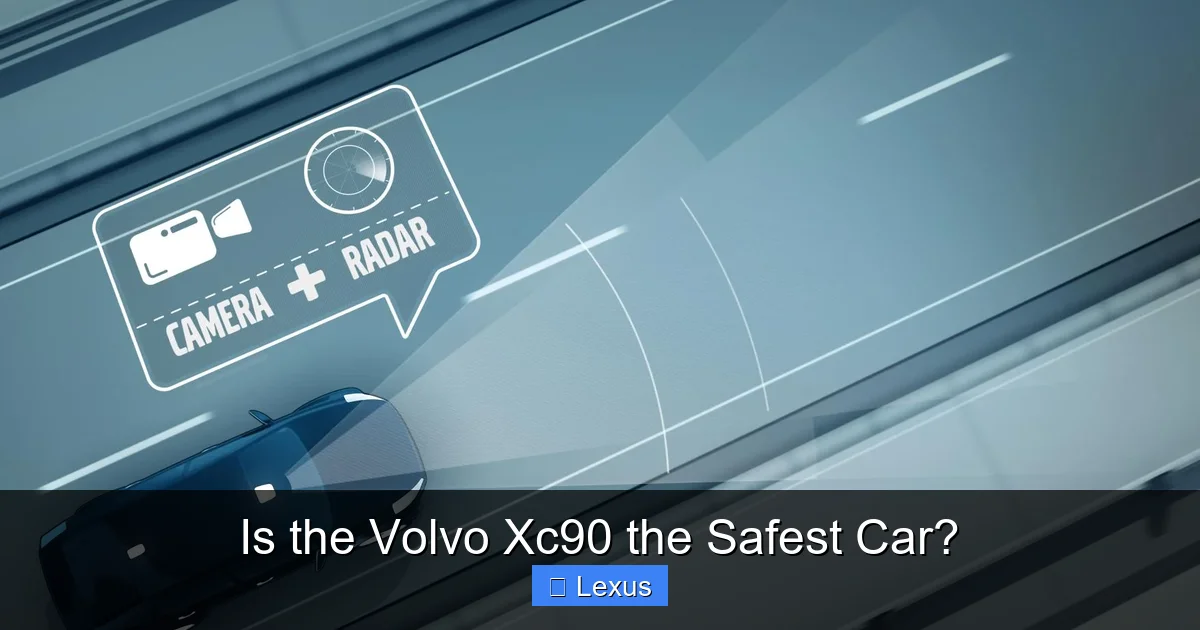
For example, the XC90’s City Safety system—standard on all trims—uses a front-facing camera and radar to detect vehicles, pedestrians, cyclists, and large animals. If a collision is imminent and the driver doesn’t react, the system can automatically apply the brakes. In real-world testing, this feature has reduced rear-end collisions by up to 45%.
Another standout is the XC90’s run-off road protection. If the system detects the vehicle is about to leave the road, it tightens the seatbelts, adjusts the suspension, and can even apply the brakes to reduce the risk of rollover or severe injury.
Advanced Safety Technology: The XC90’s Smart Features
Visual guide about Is the Volvo Xc90 the Safest Car?
Image source: s1.cdn.autoevolution.com
Safety isn’t just about strong metal and airbags—it’s also about preventing accidents before they happen. The Volvo XC90 is packed with advanced driver-assistance systems (ADAS) that act as a second set of eyes and reflexes.
City Safety: Your 24/7 Co-Pilot
City Safety is Volvo’s flagship safety suite. It works at speeds up to 50 mph and can detect:
– Other vehicles
– Pedestrians (day and night)
– Cyclists
– Large animals (like deer)
If a collision is likely, the system first warns the driver with visual and audio alerts. If the driver doesn’t respond, it automatically brakes to prevent or mitigate the impact. This feature has been proven to reduce injury claims by up to 28%, according to HLDI data.
Pilot Assist: Semi-Autonomous Driving
Pilot Assist combines adaptive cruise control with lane-centering technology to provide semi-autonomous driving on highways. It works at speeds up to 80 mph and can handle stop-and-go traffic with minimal driver input.
While it’s not a self-driving car, Pilot Assist reduces driver fatigue and helps maintain safe following distances and lane position. It’s especially useful on long road trips or during heavy traffic.
Blind Spot Information System (BLIS) with Steer Assist
The XC90’s BLIS monitors your blind spots and alerts you with a light on the side mirror if a vehicle is detected. But it goes further: if you signal to change lanes while a vehicle is in your blind spot, the system can gently steer you back into your lane.
This feature is particularly helpful on highways or when merging in heavy traffic.
Run-Off Road Mitigation and Protection
One of the XC90’s most innovative safety features is its run-off road protection. If the system detects the vehicle is about to leave the road unintentionally, it can:
– Apply the brakes to slow the vehicle
– Steer back toward the road if possible
– Tighten the seatbelts to prepare for impact
In the event of a run-off road accident, the XC90’s seats are designed to absorb energy and reduce spinal injuries. The front seats have energy-absorbing foam and a unique geometry that helps distribute impact forces.
Rear Cross-Traffic Alert and 360-Degree Camera
Backing out of parking spots can be risky, especially with children or low-visibility obstacles. The XC90’s rear cross-traffic alert warns you of approaching vehicles when reversing. If a collision is imminent, it can automatically brake.
The 360-degree camera system gives you a bird’s-eye view of the vehicle, making parking and maneuvering in tight spaces much safer.
Family Safety: Why the XC90 Is Ideal for Parents
For families, safety means more than just crash protection. It’s about peace of mind—knowing your kids are secure, even when you’re not looking.
The XC90 excels in this area with a range of family-focused features.
Child Safety Locks and ISOFIX Anchors
All XC90 models come with rear door child safety locks and ISOFIX anchor points for child seats. The anchors are clearly marked and easy to access, making installation quick and secure.
Volvo also offers a range of child seats designed specifically for the XC90, with enhanced side-impact protection and breathable materials.
Rear Seat Reminder
It’s easy to forget a child or pet in the back seat—especially after a long day. The XC90’s rear seat reminder uses sensors to detect if a rear door was opened before the trip. When you turn off the engine, a message appears on the dashboard: “Check rear seat for occupants.”
This simple feature could prevent tragic heatstroke incidents.
Air Quality and Allergen Protection
While not a traditional safety feature, the XC90’s advanced air filtration system protects passengers from pollutants, allergens, and even viruses. The cabin air filter can capture particles as small as 0.4 microns, including pollen, dust, and exhaust fumes.
For families with allergies or asthma, this adds another layer of protection and comfort.
How the XC90 Compares to the Lexus RX
When comparing luxury SUVs, the Lexus RX is often mentioned alongside the XC90. Both are reliable, comfortable, and well-equipped. But when it comes to safety, the XC90 has a clear edge.
Lexus offers strong safety ratings and standard features like the Lexus Safety System+ 3.0, which includes pre-collision braking, lane departure alert, and adaptive cruise control. However, the XC90 goes further with more advanced and proactive systems.
For example:
– The XC90’s City Safety detects pedestrians at night, while the RX’s system is less effective in low light.
– The XC90 offers run-off road protection, which the RX lacks.
– The XC90’s Pilot Assist provides smoother lane-centering than the RX’s Lane Tracing Assist.
– The XC90 has a lower insurance injury claim frequency, according to HLDI data.
Additionally, Volvo offers over-the-air software updates, meaning the XC90’s safety systems can improve over time. Lexus does not currently offer this feature.
That said, the RX is known for exceptional reliability and a quieter ride. But if safety is your top priority, the XC90 is the stronger choice.
Future-Proof Safety: Over-the-Air Updates and AI
One of the most exciting aspects of the XC90’s safety is its ability to improve over time. Thanks to over-the-air (OTA) software updates, Volvo can enhance the vehicle’s safety systems without requiring a trip to the dealership.
For example, Volvo has used OTA updates to:
– Improve the responsiveness of the automatic emergency braking system
– Add new pedestrian detection scenarios
– Enhance the accuracy of the 360-degree camera
This means your XC90 can become safer years after you buy it—something no mechanical upgrade can match.
Looking ahead, Volvo is investing heavily in AI and machine learning to make its vehicles even smarter. Future XC90 models may include predictive safety systems that anticipate accidents based on traffic patterns, weather, and driver behavior.
Conclusion: Is the Volvo XC90 the Safest Car?
So, is the Volvo XC90 the safest car? While “safest” is a relative term—no vehicle can guarantee zero risk—the XC90 is undoubtedly one of the safest SUVs on the market today.
It combines top-tier crash test ratings, innovative safety technology, and real-world performance that reduces both the likelihood and severity of accidents. From its robust structure to its intelligent driver aids, every aspect of the XC90 is designed with safety in mind.
For families, commuters, and safety-conscious drivers, the XC90 offers unmatched peace of mind. It’s not just about surviving a crash—it’s about avoiding one altogether. And with continuous software updates and a commitment to innovation, the XC90’s safety will only improve over time.
If you’re shopping for a luxury SUV and safety is a top priority, the Volvo XC90 should be at the top of your list.
Frequently Asked Questions
Is the Volvo XC90 safe for families with young children?
Yes, the XC90 is one of the safest SUVs for families. It includes child safety locks, ISOFIX anchors, rear seat reminders, and advanced air filtration to protect young passengers.
How does the XC90 perform in real-world accidents?
Data shows the XC90 has lower injury and property damage claim rates than competitors, thanks to its strong structure and accident-avoidance technology.
Does the XC90 have automatic emergency braking?
Yes, the City Safety system includes automatic emergency braking for vehicles, pedestrians, cyclists, and large animals at speeds up to 50 mph.
Can the XC90 steer itself?
The XC90’s Pilot Assist offers semi-autonomous driving with lane-centering and adaptive cruise control, but the driver must remain attentive at all times.
How does the XC90 compare to the Lexus RX in safety?
The XC90 leads in active safety features like run-off road protection, night pedestrian detection, and over-the-air updates, giving it an edge over the RX.
Will the XC90’s safety features improve over time?
Yes, Volvo provides over-the-air software updates that can enhance the XC90’s safety systems, making it smarter and safer with each update.
