Is It Legal to Sell Car Seats
Selling car seats is legal in most cases, but strict safety regulations and liability risks apply. Whether you’re selling new or used, understanding federal standards, expiration dates, and recall status is essential to stay compliant and protect child safety.
In This Article
- 1 Key Takeaways
- 2 Is It Legal to Sell Car Seats? A Complete Guide for Buyers and Sellers
- 3 Understanding the Legal Framework for Selling Car Seats
- 4 Can You Sell Used Car Seats?
- 5 Expiration Dates and Why They Matter
- 6 Selling Car Seats Online: Rules and Platform Policies
- 7 Retailers vs. Private Sellers: Different Rules Apply
- 8 Child Safety First: The Ethical Side of Selling Car Seats
- 9 Conclusion: Sell Smart, Stay Legal, Keep Kids Safe
- 10 FAQs
- 10.1 Can I legally sell a used car seat on Facebook Marketplace?
- 10.2 Is it illegal to sell an expired car seat?
- 10.3 Do I have to include the manual when selling a car seat?
- 10.4 Can I sell a car seat that was in a minor accident?
- 10.5 How do I check if a car seat has been recalled?
- 10.6 Can a business sell used car seats?
- 11 Key Takeaways
- 12 Frequently Asked Questions
Key Takeaways
- It is legal to sell car seats as long as they meet current federal safety standards and are not recalled or expired.
- Used car seats can be sold, but only if they’ve never been in an accident, have all original parts, and include the manual.
- Car seats have expiration dates—typically 6 to 10 years from manufacture—and selling expired seats is unsafe and potentially illegal.
- Sellers must disclose critical information such as accident history, recalls, and expiration dates to buyers.
- Online marketplaces like eBay and Facebook Marketplace allow car seat sales but often require disclaimers and adherence to platform policies.
- Retailers and private sellers face different rules—retailers must comply with stricter labeling and certification requirements.
- Child safety should always come first—selling a compromised car seat can lead to serious injury and legal consequences.
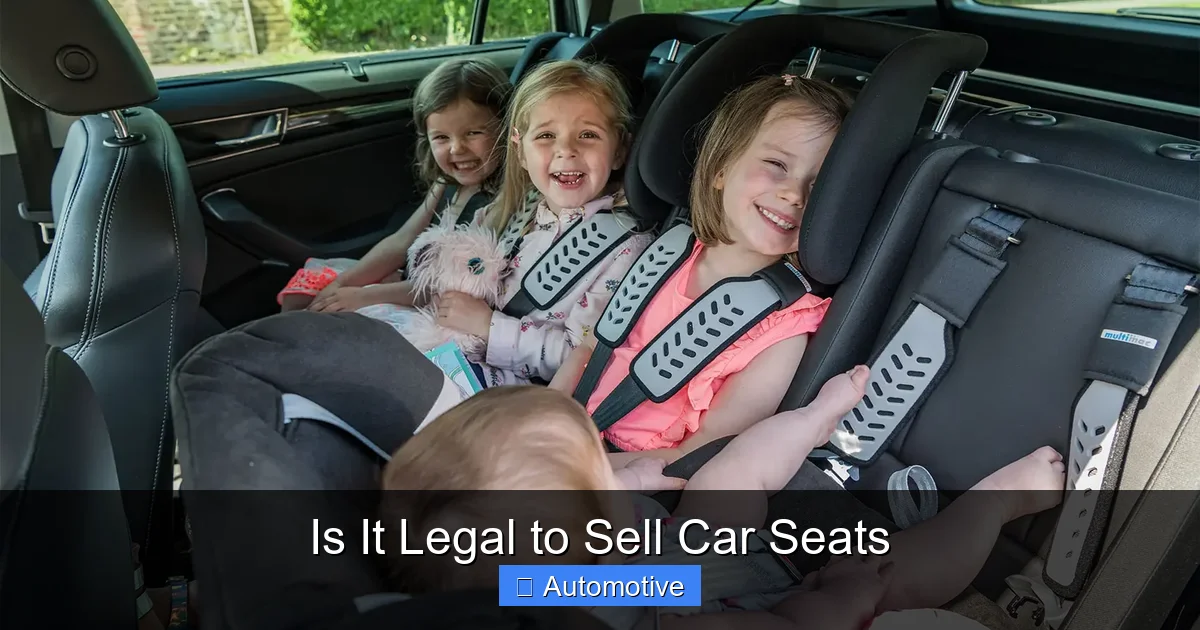
[FEATURED_IMAGE_PLACEHOLDER]
Is It Legal to Sell Car Seats? A Complete Guide for Buyers and Sellers
If you’ve ever cleaned out your garage or prepared for a new baby, you’ve probably wondered: Can I sell my old car seat? Or maybe you’re thinking about starting a small business selling baby gear online. Either way, the question of whether it’s legal to sell car seats is more complex than it seems.
Car seats are not like toys or clothes. They’re critical safety devices designed to protect children in the event of a crash. Because of this, they’re heavily regulated by federal agencies like the National Highway Traffic Safety Administration (NHTSA). While selling a car seat isn’t illegal outright, there are important rules and responsibilities that come with it. Ignoring these can put children at risk—and expose sellers to liability.
Whether you’re a parent looking to recoup some costs or an entrepreneur exploring a niche market, understanding the legal and safety landscape is essential. This guide will walk you through everything you need to know about selling car seats legally, safely, and responsibly.
Understanding the Legal Framework for Selling Car Seats
The short answer? Yes, it is legal to sell car seats in the United States—but only under specific conditions. The legality hinges on compliance with federal safety standards, accurate disclosure, and adherence to consumer protection laws.
The primary regulatory body overseeing car seat safety is the National Highway Traffic Safety Administration (NHTSA). Under the Federal Motor Vehicle Safety Standards (FMVSS) No. 213, all car seats sold in the U.S. must meet rigorous crash test and design requirements. This applies to both new and used seats.
When you sell a car seat—whether new or used—you’re essentially transferring a safety-critical product. That means you have a responsibility to ensure it’s safe for use. Selling a recalled, expired, or damaged car seat can be considered negligent, especially if it leads to injury.
Federal Regulations and Compliance
All car seats manufactured after January 1, 1981, must meet FMVSS No. 213. This standard covers everything from harness strength to buckle durability and side-impact protection. Seats must also display a label with the manufacturer’s name, model number, date of manufacture, and compliance statement.
If you’re selling a car seat, it must still meet these standards. That means:
– The seat must not be expired (more on that below).
– It must not have been in a moderate or severe crash.
– All parts—including harnesses, buckles, and padding—must be intact and functional.
– The original instruction manual should be included.
Selling a seat that fails any of these criteria could violate consumer protection laws, even if unintentional.
State Laws and Local Variations
While federal law sets the baseline, some states have additional rules. For example, California requires that used car seats sold at retail stores include a notice about expiration dates and crash history. Other states may have stricter liability laws if a sold seat fails and causes harm.
Private sellers (like individuals on Facebook Marketplace) are generally held to a lower standard than retailers, but they’re still expected to act in good faith. Misrepresenting a car seat’s condition—such as claiming it’s “like new” when it’s expired—can lead to civil liability.
Can You Sell Used Car Seats?
This is one of the most common questions among parents. The answer is: Yes, you can sell used car seats, but with major caveats.
Used car seats are legal to sell as long as they meet safety criteria. However, many experts and organizations—including the NHTSA and the American Academy of Pediatrics (AAP)—strongly advise against buying or selling used seats unless you can verify their full history.
When Is It Safe to Sell a Used Car Seat?
You should only sell a used car seat if:
– It has never been in a car accident, even a minor one. Crashes can weaken internal structures that aren’t visible.
– It is not expired. Most car seats expire 6 to 10 years from the date of manufacture.
– It has all original parts, including the harness, chest clip, base (if applicable), and padding.
– The instruction manual is included.
– It has not been recalled. You can check recalls at NHTSA’s recall lookup tool.
If any of these conditions aren’t met, selling the seat is not recommended—and could be considered unethical or even illegal.
Why Selling Used Car Seats Is Risky
Used car seats come with unknowns. You don’t know:
– If the seat was stored in extreme heat or cold (which can degrade materials).
– If it was cleaned with harsh chemicals that weakened the plastic or fabric.
– If the harness was ever twisted or improperly adjusted.
– If it was recalled and never repaired.
Even a seat that looks perfect could have hidden damage. For this reason, many pediatricians and safety advocates recommend only buying new car seats.
Best Practices for Selling Used Car Seats
If you decide to sell a used car seat, follow these steps to protect yourself and the buyer:
1. Disclose everything: Be honest about the seat’s age, usage, and any incidents.
2. Include the manual: This helps the buyer install and use the seat correctly.
3. Provide the manufacture date: Found on a label on the bottom or back of the seat.
4. Check for recalls: Use the NHTSA website to verify the seat hasn’t been recalled.
5. Clean it properly: Use mild soap and water—avoid bleach or harsh cleaners.
6. Add a disclaimer: Especially on online listings, state that the buyer assumes all risk and should inspect the seat thoroughly.
Example listing:
“Selling gently used Graco 4Ever car seat, manufactured in 2020. Never in an accident. All parts included, manual present. Expires 2026. Buyer assumes responsibility for inspection and use.”
Expiration Dates and Why They Matter
One of the most overlooked aspects of car seat safety is the expiration date. Yes, car seats expire—and selling an expired seat is not only unsafe but could be illegal.
Most car seats have an expiration date of 6 to 10 years from the date of manufacture. This is because materials like plastic and foam degrade over time, especially when exposed to heat, sunlight, and temperature fluctuations.
How to Find the Expiration Date
The expiration date is usually stamped on a label on the bottom or back of the seat. It may say “Do not use after” or “EXP” followed by a date. Some manufacturers also include the manufacture date, from which you can calculate the expiration.
For example, if a seat was made in March 2018 and has a 6-year lifespan, it expires in March 2024.
Why Expiration Dates Exist
Car seat materials break down over time. The plastic shell can become brittle, the harness webbing may weaken, and the foam padding can lose its ability to absorb impact. Even if the seat looks fine, it may not perform as intended in a crash.
Additionally, safety standards evolve. A seat made 10 years ago may not meet current side-impact or tethering requirements.
Selling Expired Car Seats: Legal and Ethical Concerns
Selling an expired car seat is a gray area legally, but it’s widely considered unethical. While there’s no federal law that explicitly prohibits selling expired seats, doing so could be seen as negligent if the seat fails and causes injury.
Some states, like California, require disclosure of expiration dates in used sales. Failing to disclose could lead to liability.
Tip: If your car seat is expired, recycle it instead. Many retailers (like Target and Walmart) offer car seat recycling programs. Some even give discounts on new seats.
Selling Car Seats Online: Rules and Platform Policies
Online marketplaces like eBay, Facebook Marketplace, and Craigslist have made it easier than ever to sell used items—including car seats. But just because you can sell a car seat online doesn’t mean you should without caution.
Platform-Specific Rules
Each platform has its own policies:
– eBay: Allows used car seat sales but requires sellers to disclose expiration dates, crash history, and recalls. Listings must include clear photos and accurate descriptions.
– Facebook Marketplace: Permits car seat sales but encourages honesty. Many buyers message sellers to ask about accident history.
– Craigslist: No formal policy, but local laws still apply. Sellers are encouraged to meet in public places and provide full disclosure.
Tips for Safe Online Sales
1. Take clear photos: Show the seat from all angles, including labels and harnesses.
2. Write a detailed description: Include brand, model, manufacture date, expiration, usage history, and condition.
3. Mention recalls: State whether the seat has been recalled and if repairs were made.
4. Use secure payment methods: Avoid cash-only transactions when possible.
5. Meet in a safe location: Police stations often have designated safe exchange zones.
Example:
“Selling Britax Boulevard ClickTight, made in 2019, expires 2025. Used for one child, never in a crash. All parts included, manual present. No recalls. Smoke-free home. Pickup only.”
Avoiding Scams and Liability
Unfortunately, some sellers misrepresent car seats. To protect yourself:
– Never sell a seat you know is damaged or expired.
– Don’t claim a seat is “new” if it’s used.
– Avoid shipping car seats unless you’re certain they’re safe and properly packaged.
If a buyer uses a defective seat and a child is injured, you could be held liable—even years later.
Retailers vs. Private Sellers: Different Rules Apply
There’s a big difference between selling car seats as a retailer and selling them as a private individual.
Retailers Must Follow Strict Guidelines
If you’re selling car seats as a business—whether online or in-store—you’re subject to additional regulations:
– Seats must be new and unused unless clearly labeled as refurbished.
– All seats must have proper labeling with compliance statements.
– Retailers must provide warranty information and return policies.
– They may be required to register with state consumer protection agencies.
Selling used car seats as a retailer is rare and usually only done by certified refurbishers who inspect and recertify seats.
Private Sellers Have More Flexibility—But Still Have Responsibilities
Private sellers (like parents on Facebook Marketplace) aren’t held to the same standards as retailers. However, they still have a duty to:
– Not sell knowingly defective products.
– Disclose known issues.
– Avoid fraudulent misrepresentation.
In legal terms, this falls under “negligent misrepresentation” or “product liability.” If you sell a car seat you know is expired or damaged, and it fails, you could be sued.
Insurance and Liability Considerations
Most homeowners or renters insurance policies don’t cover liability from selling used items. If you’re selling frequently, consider adding a personal liability umbrella policy.
For retailers, product liability insurance is essential.
Child Safety First: The Ethical Side of Selling Car Seats
Beyond legality, there’s a moral obligation to prioritize child safety. Car seats save lives—over 370 children under age 5 were saved by car seats in 2022 alone, according to NHTSA.
When you sell a car seat, you’re not just selling a product. You’re entrusting a child’s safety to someone else. That’s a big responsibility.
When to Avoid Selling a Car Seat
Don’t sell a car seat if:
– It’s been in a crash (even a fender bender).
– It’s missing parts or the manual.
– It’s expired or close to expiring.
– You’re unsure of its history.
– It’s been recalled and not repaired.
In these cases, it’s better to recycle or donate the seat to a program that can safely repurpose it.
Alternatives to Selling
If your car seat doesn’t meet safety standards for resale, consider:
– Donating to a car seat recycling program: Many retailers and nonprofits accept expired or damaged seats.
– Passing it to a trusted friend or family member: Only if the seat is safe and you disclose all details.
– Using it for parts: Some organizations recycle car seat materials into new products.
Conclusion: Sell Smart, Stay Legal, Keep Kids Safe
So, is it legal to sell car seats? Yes—but only when done responsibly and in compliance with safety standards. Whether you’re selling a gently used seat on Facebook Marketplace or running a baby gear business, your actions have real consequences.
The key is transparency. Always disclose the seat’s age, history, and condition. Never sell expired, recalled, or damaged seats. And when in doubt, err on the side of caution.
Remember: a few extra dollars isn’t worth risking a child’s life. By following the rules and prioritizing safety, you can sell car seats legally, ethically, and with peace of mind.
FAQs
Can I legally sell a used car seat on Facebook Marketplace?
Yes, you can sell a used car seat on Facebook Marketplace as long as it meets safety standards, hasn’t been in an accident, and isn’t expired. Be sure to disclose all relevant details to the buyer.
Is it illegal to sell an expired car seat?
There’s no federal law banning the sale of expired car seats, but doing so is unsafe and could lead to liability if the seat fails. Many states require disclosure of expiration dates.
Do I have to include the manual when selling a car seat?
While not legally required, including the manual is strongly recommended. It helps the buyer install and use the seat correctly, reducing the risk of misuse.
Can I sell a car seat that was in a minor accident?
No. Even minor crashes can damage internal structures. The NHTSA advises against using—or selling—any car seat that’s been in a moderate or severe crash.
How do I check if a car seat has been recalled?
Visit the NHTSA website and use their recall lookup tool. Enter the seat’s model number and manufacture date to see if it’s been recalled.
Can a business sell used car seats?
Generally, no. Retailers are expected to sell new, certified seats. Used seats are typically only sold by private individuals or certified refurbishers who inspect and recertify them.
This is a comprehensive guide about is it legal to sell car seats.
Key Takeaways
- Understanding is it legal to sell car seats: Provides essential knowledge
Frequently Asked Questions
What is is it legal to sell car seats?
is it legal to sell car seats is an important topic with many practical applications.