Is It Legal to Sell a Used Car with an Open Recall
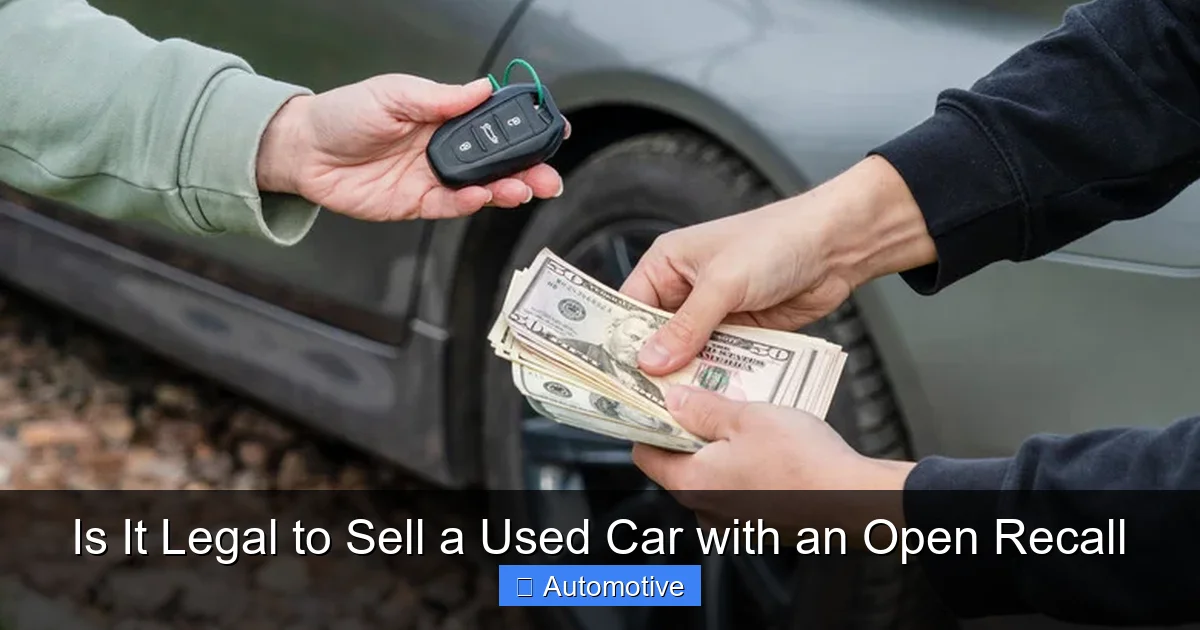
Selling a used car with an open recall is legal in most U.S. states, but it comes with serious responsibilities. Sellers must disclose the recall to buyers and, in some cases, complete repairs before sale. Failing to do so can lead to legal trouble, safety risks, and damage to your reputation.
In This Article
- 1 Key Takeaways
- 2 📑 Table of Contents
- 3 Is It Legal to Sell a Used Car with an Open Recall?
- 4 Understanding Vehicle Recalls: What They Are and Why They Matter
- 5 Federal Laws and Regulations on Selling Recalled Vehicles
- 6 State Laws: Where the Real Rules Kick In
- 7 Ethical and Practical Considerations
- 8 Best Practices for Selling a Car with an Open Recall
- 9 Real-Life Examples and Case Studies
- 10 Conclusion: Do the Right Thing
- 11 Frequently Asked Questions
- 11.1 Can I legally sell a used car with an open recall?
- 11.2 Do I have to fix a recall before selling my car?
- 11.3 What happens if I sell a car with a recall and don’t tell the buyer?
- 11.4 How do I check if my car has an open recall?
- 11.5 Can a buyer return a car after discovering an undisclosed recall?
- 11.6 Are dealerships held to different standards than private sellers?
Key Takeaways
- It’s generally legal to sell a used car with an open recall in most states, but disclosure is often required by law or ethical practice.
- Federal law does not ban the sale of recalled vehicles, but some states have stricter rules requiring repairs or clear warnings.
- You must disclose known recalls to avoid fraud claims, especially if the issue affects safety, emissions, or value.
- Dealerships face stricter regulations than private sellers, often needing to fix recalls before resale.
- Not fixing a recall can put the buyer at risk and may expose you to liability if an accident occurs due to the defect.
- Always check for open recalls using the NHTSA website before listing your car for sale.
- Document everything—keep records of disclosures, communications, and repair attempts to protect yourself legally.
📑 Table of Contents
- Is It Legal to Sell a Used Car with an Open Recall?
- Understanding Vehicle Recalls: What They Are and Why They Matter
- Federal Laws and Regulations on Selling Recalled Vehicles
- State Laws: Where the Real Rules Kick In
- Ethical and Practical Considerations
- Best Practices for Selling a Car with an Open Recall
- Real-Life Examples and Case Studies
- Conclusion: Do the Right Thing
Is It Legal to Sell a Used Car with an Open Recall?
So, you’ve decided to sell your used car—maybe you’re upgrading, downsizing, or just ready for a change. But then you discover there’s an open recall on your vehicle. Now you’re wondering: Can I still sell it? Is it even legal?
The short answer? Yes, in most cases, it’s legal to sell a used car with an open recall. But that doesn’t mean it’s simple—or risk-free.
Recalls happen when a manufacturer identifies a defect that could affect safety, performance, or compliance with federal standards. These issues range from faulty airbags and brake problems to software glitches and fuel system flaws. When a recall is issued, the manufacturer is required to fix the problem—usually at no cost to the owner—but only if the vehicle is brought in for service.
Now, here’s the catch: Just because a recall exists doesn’t mean the car is automatically unsafe to drive or sell. But it does mean you, as the seller, have certain responsibilities. Ignoring them could lead to legal trouble, angry buyers, or even harm to someone down the road.
In this guide, we’ll walk you through everything you need to know about selling a used car with an open recall—what the law says, what your obligations are, and how to protect yourself and your buyer.
Understanding Vehicle Recalls: What They Are and Why They Matter
Visual guide about Is It Legal to Sell a Used Car with an Open Recall
Image source: vinmentor.com
Before diving into the legalities, let’s make sure we’re on the same page about what a recall actually is.
A vehicle recall is a formal notice from a manufacturer—or mandated by the National Highway Traffic Safety Administration (NHTSA)—that a specific model or batch of vehicles has a defect that could compromise safety, emissions, or compliance with federal regulations. These defects might involve mechanical parts, electrical systems, software, or even child seat anchors.
For example, in 2014, General Motors issued a massive recall affecting over 30 million vehicles due to a faulty ignition switch that could cause engines to shut off unexpectedly, disabling airbags. That’s a serious safety issue. On the other hand, a recall might involve a minor software update for the infotainment system that doesn’t affect driving safety.
Recalls are not the same as technical service bulletins (TSBs), which are advisories from manufacturers about known issues that may not require immediate action. Only recalls involve a formal repair process offered free of charge by the manufacturer.
Why do recalls matter when selling a car? Because they directly impact the vehicle’s safety, reliability, and value. A car with an unresolved recall may be more likely to experience mechanical failure, and in worst-case scenarios, could contribute to an accident.
How Recalls Are Issued
Recalls can be initiated in two ways:
1. **Voluntarily by the manufacturer**: If a company discovers a defect during testing or after customer complaints, they may issue a recall to fix it proactively.
2. **Mandated by the NHTSA**: If the government agency investigates and determines a safety risk exists, it can order a manufacturer to issue a recall.
Once a recall is active, the manufacturer must notify registered owners by mail and offer free repairs at authorized dealerships. However, many owners never receive the notice, forget about it, or simply never get around to fixing it—leading to millions of vehicles on the road with open recalls.
The Scale of the Problem
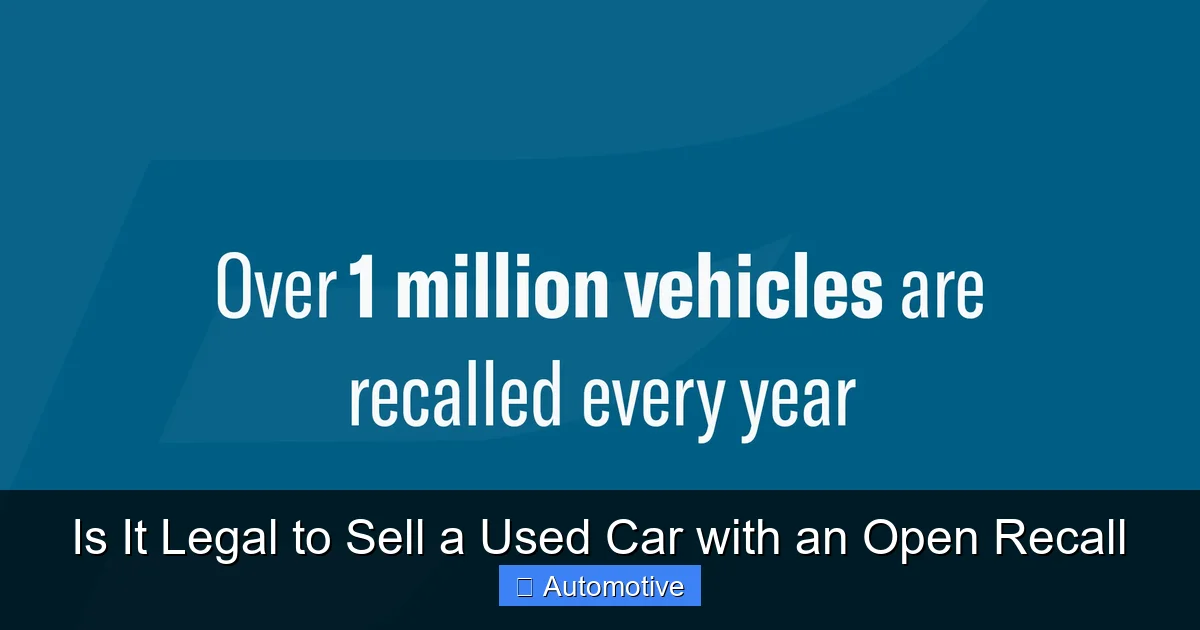
Believe it or not, there are currently tens of millions of vehicles in the U.S. with unresolved recalls. According to the NHTSA, as of 2023, over 50 million vehicles had at least one open recall. That’s about 1 in 5 cars on the road.
Common recall issues include:
– Faulty airbags (especially Takata airbags, which have caused injuries and deaths)
– Defective fuel pumps that can cause engine stalling
– Brake system failures
– Software glitches affecting braking or steering
– Seat belt or child seat anchor defects
These aren’t just minor inconveniences—they can be life-threatening.
Federal Laws and Regulations on Selling Recalled Vehicles
Visual guide about Is It Legal to Sell a Used Car with an Open Recall
Image source: endurancewarranty.com
Now, let’s get into the legal side of things. What does federal law say about selling a used car with an open recall?
The short answer: **There is no federal law that outright bans the sale of a used car with an open recall.**
That might surprise you. After all, if a car has a known safety defect, shouldn’t it be illegal to sell it? Not necessarily.
The U.S. government regulates vehicle safety through the NHTSA, but its authority is focused on manufacturers—not private sellers. The NHTSA can force automakers to issue recalls and fix defects, but it doesn’t have the power to prohibit individuals from selling their cars, even if those cars have unresolved recalls.
However, this doesn’t mean sellers are off the hook. Federal laws like the **Magnuson-Moss Warranty Act** and **truth-in-advertising guidelines** from the Federal Trade Commission (FTC) still apply. These laws require that sellers provide accurate information about the vehicle’s condition and not engage in deceptive practices.
For example, if you list your car online and claim it’s “in excellent condition” but fail to mention a major recall involving the brakes, that could be considered misleading—especially if the buyer later discovers the issue and feels misled.
Dealerships vs. Private Sellers
Here’s where things get more complicated. While private sellers have more leeway, **dealerships face stricter federal and state regulations**.
Under federal law, dealerships are required to disclose known safety defects, including open recalls, to potential buyers. In some cases, they may even be required to fix certain recalls before selling the vehicle—especially if the defect poses an immediate safety risk.
For instance, if a dealership is selling a car with a recall for a defective fuel pump that could cause the engine to stall on the highway, they could be held liable if they sell it without fixing it or disclosing it.
Additionally, the FTC’s **Used Car Rule** requires dealerships to display a Buyer’s Guide on every used vehicle they sell. This guide must include information about the vehicle’s warranty status and any known defects. While it doesn’t specifically mention recalls, failing to disclose a major safety issue could violate the rule’s requirement for honesty and transparency.
The Role of the NHTSA
The NHTSA doesn’t regulate private sales, but it does provide tools to help buyers and sellers check for recalls. The agency maintains a free, searchable database at [www.nhtsa.gov/recalls](https://www.nhtsa.gov/recalls), where you can enter a vehicle’s VIN to see if it has any open recalls.
Sellers are encouraged—and in some cases, ethically obligated—to use this tool before listing their car. It’s a simple step that can prevent misunderstandings and protect you from liability.
State Laws: Where the Real Rules Kick In
Visual guide about Is It Legal to Sell a Used Car with an Open Recall
Image source: media.consumeraffairs.com
While federal law sets a baseline, **state laws are where the real action happens** when it comes to selling recalled vehicles.
Every state has its own rules about vehicle sales, disclosures, and consumer protection. Some states are very strict, while others are more lenient.
States That Require Recall Disclosure
Several states have laws that explicitly require sellers to disclose open recalls, especially if the defect affects safety.
For example:
– **California**: Under the state’s consumer protection laws, sellers must disclose known safety defects, including recalls. Failure to do so could result in civil penalties or a lawsuit.
– **New York**: The state’s General Business Law requires honesty in sales. If a seller knows about a recall and hides it, they could be accused of fraud.
– **Texas**: While there’s no specific recall disclosure law, the state’s Deceptive Trade Practices Act (DTPA) prohibits misleading statements. Omitting a major recall could be considered deceptive.
In these states, selling a car with an open recall without telling the buyer could lead to legal consequences, including fines, lawsuits, or even criminal charges in extreme cases.
States That Require Repairs Before Sale
A few states go even further and require that certain recalls be fixed before a vehicle can be sold.
For example:
– **Massachusetts**: State law requires that any safety-related recall be repaired before a vehicle can be sold by a dealer. Private sellers are encouraged to do the same, though enforcement is less strict.
– **New Jersey**: Dealers must fix any open safety recalls before selling a used car. Private sellers are not held to the same standard, but disclosure is still recommended.
These laws are designed to protect consumers and reduce the number of unsafe vehicles on the road.
What About “As-Is” Sales?
You might be thinking: “But I’m selling the car ‘as-is’—doesn’t that mean I don’t have to disclose anything?”
Not exactly.
While “as-is” sales do limit your liability for future problems, they don’t give you a free pass to hide known defects—especially safety-related ones. Courts have ruled that even in “as-is” transactions, sellers must not actively conceal or misrepresent the vehicle’s condition.
For example, if you know about a recall involving faulty airbags and you tell the buyer the car is “perfectly safe,” that could be considered fraud—even if the sale is “as-is.”
The bottom line: “As-is” doesn’t mean “hide the truth.”
Ethical and Practical Considerations
Even if it’s legal to sell a car with an open recall, is it the right thing to do?
This is where ethics come into play. Just because you *can* do something doesn’t mean you *should*.
The Safety Risk
Let’s be honest: A recall exists for a reason. If the manufacturer or government has identified a defect that could cause injury or death, selling the car without fixing it—or at least disclosing it—puts the next driver at risk.
Imagine selling a car with a recall for a defective brake line. The buyer doesn’t know about it, doesn’t get it fixed, and later gets into an accident because the brakes failed. Could you live with that?
Many recalls involve critical safety systems. Selling a car with an unresolved recall isn’t just legally risky—it’s morally questionable.
The Impact on Resale Value
Even if you disclose the recall, it will likely affect the car’s value. Buyers may be hesitant to purchase a vehicle with an open safety issue, even if it’s fixable for free.
You might have to lower your asking price or offer to cover the cost of a pre-purchase inspection. In some cases, the buyer may walk away entirely.
But transparency builds trust. If you’re upfront about the recall and offer to help the buyer get it fixed, you’re more likely to make a sale—and avoid future disputes.
Protecting Yourself from Liability
If you sell a car with an open recall and don’t disclose it, you could be held liable if something goes wrong.
For example, if the buyer gets into an accident due to the recalled defect and sues you for negligence, you could be on the hook for damages—especially if you knew about the issue and said nothing.
Even if the lawsuit doesn’t succeed, the legal fees and stress aren’t worth it.
Best Practices for Selling a Car with an Open Recall
So, what should you do if you discover an open recall on your car before selling it?
Here’s a step-by-step guide to doing it the right way:
1. Check for Recalls Using the VIN
Before listing your car, visit the NHTSA website and enter your Vehicle Identification Number (VIN). This will show you all open recalls for your specific vehicle.
Don’t rely on memory or old mailers—recalls can be issued at any time, and you might have missed one.
2. Get the Recall Repaired (If Possible)
The best option? Get the recall fixed before selling.
Most recalls are repaired for free at authorized dealerships. Call your local dealer, schedule an appointment, and have the issue resolved. It usually takes less than a day.
Once it’s fixed, you’ll receive a confirmation letter or sticker. Keep this documentation—it proves the recall was addressed.
3. Disclose the Recall to Potential Buyers
If you can’t get the repair done before sale, you must disclose the recall.
Be honest and clear. Say something like:
“This vehicle has an open recall for [specific issue]. The repair is free at any authorized dealership. I haven’t had it fixed yet, but I’m happy to help you schedule the service.”
Put it in writing. Include the recall information in your listing, and provide a copy of the NHTSA report or recall notice.
4. Offer to Help with the Repair
Go the extra mile by offering to help the buyer get the recall fixed. You could:
– Provide a list of nearby dealerships
– Offer to drive the car to the dealer after the sale
– Include a small credit toward the buyer’s time or travel
This shows goodwill and reduces the buyer’s hesitation.
5. Document Everything
Keep records of:
– The recall notice
– Your disclosure to the buyer (emails, texts, written statements)
– Any communication about the repair
If a dispute arises later, this documentation can protect you.
6. Consider a Lower Price
Since the car has an unresolved recall, you may need to adjust your price. Buyers will factor in the inconvenience and potential risk.
A small discount can make your car more attractive and show you’re being fair.
Real-Life Examples and Case Studies
Let’s look at a few real-world scenarios to see how this plays out.
Example 1: The Private Seller
Maria is selling her 2016 Honda Civic. She checks the NHTSA site and finds a recall for a faulty fuel pump that could cause engine stalling. She hasn’t had it fixed.
Instead of hiding it, she includes the recall info in her Craigslist ad:
“2016 Honda Civic, 60k miles, excellent condition. Note: There is an open recall for the fuel pump. Repair is free at any Honda dealer. I haven’t scheduled it yet but can help you do so after purchase.”
She gets a few inquiries. One buyer asks if the car is safe to drive. Maria explains that while the recall is serious, the car has been driving fine for years—but she recommends getting it fixed ASAP.
The buyer appreciates her honesty, negotiates a $500 discount, and buys the car. Maria provides the VIN and dealer info, and the buyer gets the repair done the next week.
Result: A fair sale, no drama, and a satisfied customer.
Example 2: The Dealer Who Cut Corners
A used car dealership in Ohio buys a 2018 Ford F-150 with an open recall for a defective transmission control module. Instead of fixing it, they sell the truck “as-is” without mentioning the recall.
The buyer, unaware of the issue, drives the truck for three months before it stalls on the highway. He later discovers the recall and sues the dealer for fraud.
The court rules in the buyer’s favor, citing the dealer’s failure to disclose a known safety defect. The dealer is ordered to refund the purchase price plus damages.
Result: Legal trouble, financial loss, and a damaged reputation.
Conclusion: Do the Right Thing
So, is it legal to sell a used car with an open recall? In most cases, yes—but that doesn’t mean it’s without risk.
Federal law doesn’t ban the sale of recalled vehicles, but state laws, ethical considerations, and potential liability mean you can’t just ignore the issue.
The best approach? Be proactive. Check for recalls, disclose them honestly, and—if possible—get them fixed before selling. It protects the buyer, protects you, and helps keep our roads safer.
Remember: A little transparency goes a long way. You might sell the car a bit slower or for a bit less money, but you’ll sleep better at night knowing you did the right thing.
And in the end, that’s worth more than any quick sale.
Frequently Asked Questions
Can I legally sell a used car with an open recall?
Yes, in most U.S. states, it is legal to sell a used car with an open recall. However, you must disclose the recall to the buyer, especially if it involves a safety issue. Failure to disclose could lead to legal consequences.
Do I have to fix a recall before selling my car?
No, private sellers are not legally required to fix a recall before selling, but it’s strongly recommended. Some states require dealers to fix safety recalls before resale. Getting it fixed can also make your car more attractive to buyers.
What happens if I sell a car with a recall and don’t tell the buyer?
If you knowingly hide a recall—especially a safety-related one—you could be sued for fraud or misrepresentation. The buyer may seek damages, and you could face fines or legal penalties depending on your state’s laws.
How do I check if my car has an open recall?
Visit the National Highway Traffic Safety Administration (NHTSA) website at www.nhtsa.gov/recalls and enter your Vehicle Identification Number (VIN). It’s free and takes less than a minute.
Can a buyer return a car after discovering an undisclosed recall?
It depends on your state’s laws and whether the sale was “as-is.” If you failed to disclose a known safety defect, the buyer may have grounds to return the car or sue for damages, even in an as-is sale.
Are dealerships held to different standards than private sellers?
Yes. Dealerships are subject to stricter regulations, including the FTC’s Used Car Rule and state laws that may require recall repairs or clear disclosures before sale. Private sellers have more flexibility but still must avoid deception.