Is It Illegal to Sell a Car with a Blown Head Gasket
Selling a car with a blown head gasket isn’t automatically illegal, but failing to disclose it can lead to serious legal trouble. Laws vary by state, but most require honesty about major mechanical issues. Always check local regulations and consider full transparency to avoid lawsuits or fines.
In This Article
- 1 Key Takeaways
- 2 Is It Illegal to Sell a Car with a Blown Head Gasket?
- 3 Understanding What a Blown Head Gasket Means
- 4 Legal Requirements for Disclosing Mechanical Issues
- 5 Real-Life Examples and Case Studies
- 6 How to Legally Sell a Car with a Blown Head Gasket
- 7 What Buyers Should Know
- 8 Ethical Considerations Beyond the Law
- 9 Conclusion
- 10 FAQs
- 10.1 Can I sell my car if it has a blown head gasket?
- 10.2 Do I have to fix the head gasket before selling?
- 10.3 What happens if I don’t disclose a blown head gasket?
- 10.4 Does “as-is” mean I don’t have to disclose anything?
- 10.5 Can a buyer return a car with a blown head gasket?
- 10.6 How can I prove I disclosed the problem?
- 11 Key Takeaways
- 12 Frequently Asked Questions
Key Takeaways
- Disclosure is key: Most states require sellers to disclose known major defects like a blown head gasket, especially if it affects safety or drivability.
- “As-is” sales don’t erase responsibility: Even if you sell a car “as-is,” you can still be held liable for hiding known problems.
- State laws vary widely: Some states have strict lemon laws or consumer protection statutes that apply to used car sales, including private transactions.
- Intent matters in court: If you knowingly conceal a blown head gasket, you could face fraud charges or be forced to refund the purchase price.
- Document everything: Keep repair records, inspection reports, and written disclosures to protect yourself legally.
- Buyers have rights: Purchasers may be able to return the vehicle or seek compensation if they weren’t properly informed about the issue.
- Get a pre-sale inspection: Having an independent mechanic assess the car builds trust and reduces legal risk for both parties.
[FEATURED_IMAGE_PLACEHOLDER]
Is It Illegal to Sell a Car with a Blown Head Gasket?
So, you’ve got a car that’s been acting up—maybe it’s overheating, spewing white smoke from the exhaust, or losing coolant fast. You suspect a blown head gasket. Now you’re thinking about selling it, but you’re not sure if it’s legal. Can you just slap an “as-is” sign on it and walk away? Or are you stepping into dangerous legal territory?
The short answer? It’s not automatically illegal to sell a car with a blown head gasket—but how you go about it makes all the difference. The real issue isn’t the mechanical problem itself; it’s whether you’re honest about it. In most places, hiding a known major defect like a blown head gasket can land you in hot water, even if you’re selling privately. Consumer protection laws, state disclosure requirements, and common-sense ethics all come into play.
Think of it this way: selling a car isn’t just a transaction—it’s a transfer of responsibility. If you knowingly pass off a vehicle with a serious engine issue without telling the buyer, you could be accused of fraud, misrepresentation, or even violating state lemon laws. And while “buyer beware” still applies in many used car sales, that doesn’t give sellers a free pass to lie or omit critical information.
In this guide, we’ll break down the legal landscape around selling a car with a blown head gasket. We’ll cover what the law says in different states, how “as-is” sales really work, and what steps you can take to protect yourself—whether you’re selling or buying. By the end, you’ll know exactly what’s expected of you and how to handle this tricky situation with confidence and integrity.
Understanding What a Blown Head Gasket Means
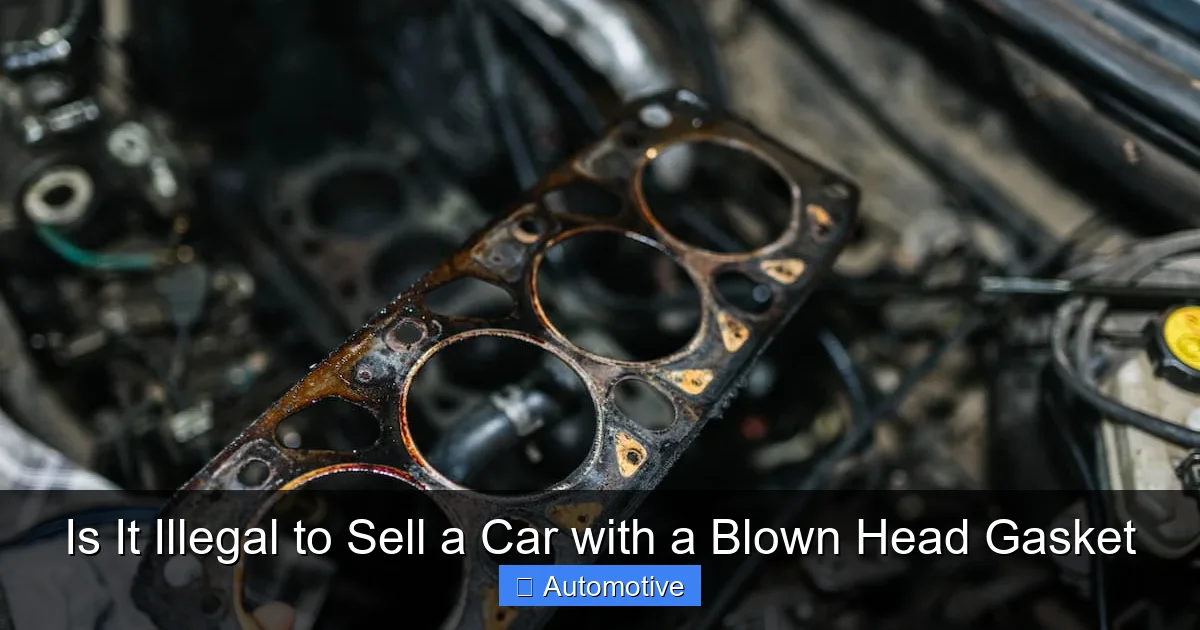
Before diving into the legalities, it’s important to understand what a blown head gasket actually is—and why it’s such a big deal. The head gasket is a critical seal located between the engine block and the cylinder head. Its job is to keep coolant, oil, and combustion gases separated while maintaining proper compression in the cylinders. When this gasket fails, those fluids and gases can mix, leading to a cascade of problems.
Symptoms of a Blown Head Gasket
A blown head gasket doesn’t happen overnight—it usually gives warning signs. Common symptoms include:
- Engine overheating, often with no obvious coolant leak
- White smoke (steam) coming from the exhaust
- Coolant loss without visible leaks—coolant may be burning in the combustion chamber
- Milky or frothy oil on the dipstick (a sign of coolant mixing with oil)
- Bubbles in the radiator or coolant overflow tank
- Loss of engine power or rough idling
- Check engine light, often with codes related to coolant temperature or misfires
These symptoms aren’t just annoying—they indicate serious internal engine damage. If left unaddressed, a blown head gasket can lead to warped cylinder heads, cracked engine blocks, or complete engine failure. That’s why it’s considered one of the most severe and costly repairs in a gasoline-powered vehicle.
Why It’s a Major Mechanical Issue
Unlike a flat tire or a broken window, a blown head gasket affects the core functionality and safety of the vehicle. It can cause the engine to overheat rapidly, which may result in a breakdown on the highway or even a fire in extreme cases. Additionally, mixing coolant and oil reduces lubrication, accelerating wear on internal engine components.
Repair costs typically range from $1,500 to $3,000 or more, depending on the vehicle make and model. In some cases, especially with older cars, the repair cost can exceed the vehicle’s market value—making it a total loss in practical terms. This high cost and potential safety risk are exactly why disclosure is so important when selling.
Legal Requirements for Disclosing Mechanical Issues
Now that we understand the severity of a blown head gasket, let’s talk about the law. In the U.S., there’s no single federal law that governs used car sales disclosures, but each state has its own rules. These laws are designed to protect consumers from deceptive practices and ensure fair transactions.
State Disclosure Laws Vary Widely
Some states require sellers to complete a written disclosure form that lists known defects. For example:
- California: Sellers must fill out a “Transfer and Release of Liability” form and disclose any known mechanical issues, including engine problems.
- Texas: Private sellers aren’t required to provide a written disclosure, but they cannot actively conceal or misrepresent known defects.
- New York: Requires a “Statement of Condition” for vehicles under 10 years old, detailing known issues.
- Florida: Mandates a written disclosure for any defect that affects the vehicle’s safety or value, including engine troubles.
Even in states without strict disclosure forms, the principle of “caveat venditor” (let the seller beware) is giving way to stronger consumer protections. Courts often side with buyers who were misled, especially if the seller knew about the problem and didn’t mention it.
The Role of “As-Is” Sales
Many private sellers assume that selling a car “as-is” means they’re off the hook for any problems. While “as-is” does mean the buyer accepts the vehicle in its current condition, it doesn’t protect sellers from liability for fraud or intentional misrepresentation.
For example, if you tell a buyer the engine runs great but you know the head gasket is blown and the car overheats after 10 minutes of driving, that’s deception. The “as-is” label won’t save you if you actively lied or hid the truth. In fact, some states require sellers to explicitly state whether a vehicle is sold “as-is” in writing—and even then, full disclosure of known issues is still expected.
Fraud and Misrepresentation Risks
If a buyer discovers a blown head gasket shortly after purchase and can prove you knew about it but didn’t disclose it, you could be sued for fraud. Fraud doesn’t require a written contract—it’s based on the idea that you intentionally misled someone to make a sale.
Courts look at several factors:
- Did the seller know about the problem?
- Did they take steps to hide it (e.g., topping off coolant before showing the car)?
- Did they make false statements about the vehicle’s condition?
- Was the defect significant enough to affect the car’s value or safety?
If the answer to these is “yes,” you could be on the hook for a refund, repair costs, or even punitive damages. In extreme cases, repeat offenders have faced criminal charges for auto fraud.
Real-Life Examples and Case Studies
To understand how these laws play out in real life, let’s look at a few examples.
Case 1: The Odometer Rollback and Hidden Engine Trouble
In 2019, a private seller in Ohio sold a 2008 Honda Accord for $4,500. The buyer noticed white smoke and overheating within a week. A mechanic confirmed a blown head gasket. The buyer sued, claiming the seller had rolled back the odometer and hidden the engine issue. The court ruled in favor of the buyer, ordering a full refund plus $2,000 in damages. The seller was also reported to the state attorney general for investigation.
Case 2: The “As-Is” Sale That Backfired
A seller in Arizona listed a 2005 Ford F-150 on Craigslist, stating “runs great, no issues, sold as-is.” The buyer, a mechanic, noticed coolant loss during a test drive but was assured it was “just a minor leak.” After purchase, the head gasket failed. The buyer took the seller to small claims court, presenting text messages where the seller downplayed the issue. The judge ruled the seller had misrepresented the condition and ordered a $3,200 refund.
Case 3: The Honest Seller Who Stayed Out of Trouble
In contrast, a seller in Washington listed a 2003 Toyota Camry with a clear description: “Blown head gasket—engine overheats after 15 minutes. Needs major repair. Selling for parts or repair only. $800 as-is.” The buyer, a mechanic, purchased it knowing the issue. Six months later, the buyer tried to return it, claiming it was unsafe. The court dismissed the case, noting the seller had fully disclosed the problem and the buyer accepted the risk.
These cases show a clear pattern: honesty protects sellers. When you’re upfront about major issues, you reduce legal risk and build trust—even if the sale price is lower.
How to Legally Sell a Car with a Blown Head Gasket
If you’re dealing with a blown head gasket and want to sell your car, here’s how to do it the right way.
Step 1: Get a Professional Diagnosis
Before listing the car, take it to a trusted mechanic for a full inspection. Get a written report that confirms the blown head gasket and outlines the necessary repairs. This document serves two purposes: it gives you an accurate assessment of the car’s condition, and it provides proof that you’re not guessing—you know the problem exists.
Step 2: Disclose the Issue Clearly and in Writing
When creating your listing (online, in print, or in person), be explicit. Use phrases like:
- “Blown head gasket confirmed by mechanic—engine overheats and loses coolant.”
- “Major engine repair needed. Not safe to drive long distances.”
- “Sold as-is with known head gasket failure. No warranty.”
Include the mechanic’s report in the listing or offer to share it with serious buyers. Transparency builds credibility and deters dishonest buyers from making false claims later.
Step 3: Price the Car Fairly
A car with a blown head gasket is worth significantly less than one in good condition. Use pricing guides like Kelley Blue Book or Edmunds, but adjust for the repair cost. For example, if a similar car in good condition is worth $5,000, and the head gasket repair costs $2,000, price your car between $2,500 and $3,000—depending on other factors like mileage and body condition.
Pricing it too high can raise red flags. Buyers may assume you’re trying to hide something or overcharge for a broken vehicle.
Step 4: Use a Bill of Sale with Disclosure
When finalizing the sale, use a bill of sale that includes a disclosure section. Many states provide templates online. Make sure it states:
- The vehicle is sold “as-is.”
- The buyer acknowledges the blown head gasket and understands the risks.
- The seller has disclosed all known mechanical issues.
Both parties should sign and date the document. Keep a copy for your records.
Step 5: Avoid High-Pressure Sales Tactics
Don’t rush the buyer or discourage them from getting an inspection. In fact, encourage it. Say something like, “I recommend you have your mechanic look it over—here’s the report I have.” This shows you’re confident in your disclosure and not hiding anything.
What Buyers Should Know
If you’re on the buying side, it’s crucial to protect yourself when shopping for used cars—especially those with known issues.
Always Get a Pre-Purchase Inspection
Even if the seller says the car is fine, pay $100–$150 for an independent inspection. A good mechanic can spot signs of a blown head gasket that aren’t obvious, like compression test results or coolant system pressure issues.
Ask Direct Questions
Don’t be shy. Ask:
- “Has the car ever overheated?”
- “Have you noticed white smoke or coolant loss?”
- “Has a mechanic ever mentioned head gasket problems?”
Pay attention to vague answers or defensiveness—those are warning signs.
Check the Vehicle History Report
Use services like Carfax or AutoCheck to see if the car has a history of accidents, flood damage, or repeated overheating issues. While these reports won’t always mention a blown head gasket, patterns of engine trouble can be revealing.
Know Your Rights
If you buy a car and discover a blown head gasket that wasn’t disclosed, you may have legal recourse. Contact your state’s consumer protection agency or consult a lawyer. In some cases, you can demand a refund or compensation—especially if the seller lied.
Ethical Considerations Beyond the Law
While the law sets the minimum standard, ethics go further. Selling a car with a blown head gasket isn’t just about avoiding lawsuits—it’s about doing the right thing.
Imagine you’re the buyer. Would you want to discover a $2,000 repair a week after buying a car? Probably not. By being honest, you’re not only protecting yourself legally—you’re also treating the buyer with respect.
Moreover, word travels fast. If you sell a car dishonestly, it could damage your reputation, especially in local communities or online forums. On the flip side, a transparent sale—even of a damaged car—can earn you trust and referrals.
Conclusion
So, is it illegal to sell a car with a blown head gasket? Not necessarily—but failing to disclose it can be. The key is honesty. Laws in most states require sellers to reveal known major defects, and courts often side with buyers who were misled. Even “as-is” sales don’t protect you from fraud if you hide the truth.
The best approach? Get a professional diagnosis, disclose the issue clearly, price the car fairly, and document everything. This protects you legally, builds trust with buyers, and aligns with ethical selling practices.
Whether you’re selling or buying, knowledge is power. Understand the risks, know your rights, and always prioritize transparency. A blown head gasket is a serious issue—but with the right approach, it doesn’t have to lead to legal trouble or broken trust.
FAQs
Can I sell my car if it has a blown head gasket?
Yes, you can sell a car with a blown head gasket, but you must disclose the issue to the buyer. Selling it without telling the buyer could lead to legal consequences, especially if they can prove you knew about the problem.
Do I have to fix the head gasket before selling?
No, you don’t have to fix it, but you must be honest about the condition. Many sellers choose to sell the car “as-is” with full disclosure, often at a reduced price to reflect the repair cost.
What happens if I don’t disclose a blown head gasket?
If you fail to disclose a known blown head gasket, the buyer may sue you for fraud or misrepresentation. You could be forced to refund the purchase price or pay damages, depending on state laws.
Does “as-is” mean I don’t have to disclose anything?
No. “As-is” means the buyer accepts the car in its current condition, but you still cannot lie or hide known major defects. Full disclosure is still required to avoid legal trouble.
Can a buyer return a car with a blown head gasket?
It depends. If the issue was disclosed, the buyer likely cannot return it. But if it was hidden or misrepresented, the buyer may have grounds for a refund or legal action.
How can I prove I disclosed the problem?
Keep records: a written disclosure in the ad, a signed bill of sale, mechanic’s report, and text/email messages with the buyer. These documents protect you if a dispute arises.
This is a comprehensive guide about is it illegal to sell a car with a blown head gasket.
Key Takeaways
- Understanding is it illegal to sell a car with a blown head gasket: Provides essential knowledge
Frequently Asked Questions
What is is it illegal to sell a car with a blown head gasket?
is it illegal to sell a car with a blown head gasket is an important topic with many practical applications.