Is Bentley Owned by Vw?

Contents
- 1 Key Takeaways
- 2 📑 Table of Contents
- 3 Is Bentley Owned by VW?
- 4 A Brief History of Bentley Motors
- 5 The Volkswagen Acquisition: How It Happened
- 6 Bentley Under Volkswagen: What Changed?
- 7 Shared Platforms and Technology: The VW Connection
- 8 Bentley’s Brand Identity: British Soul, German Precision
- 9 The Future of Bentley: Electric and Autonomous
- 10 Data Table: Bentley Models and VW Platform Connections
- 11 Conclusion: Yes, Bentley Is Owned by VW—And That’s a Good Thing
- 12 Frequently Asked Questions

Multipurpose Lubricant Spray

Car Tire Inflator

Magnetic Car Phone Mount

Tire Shine Spray
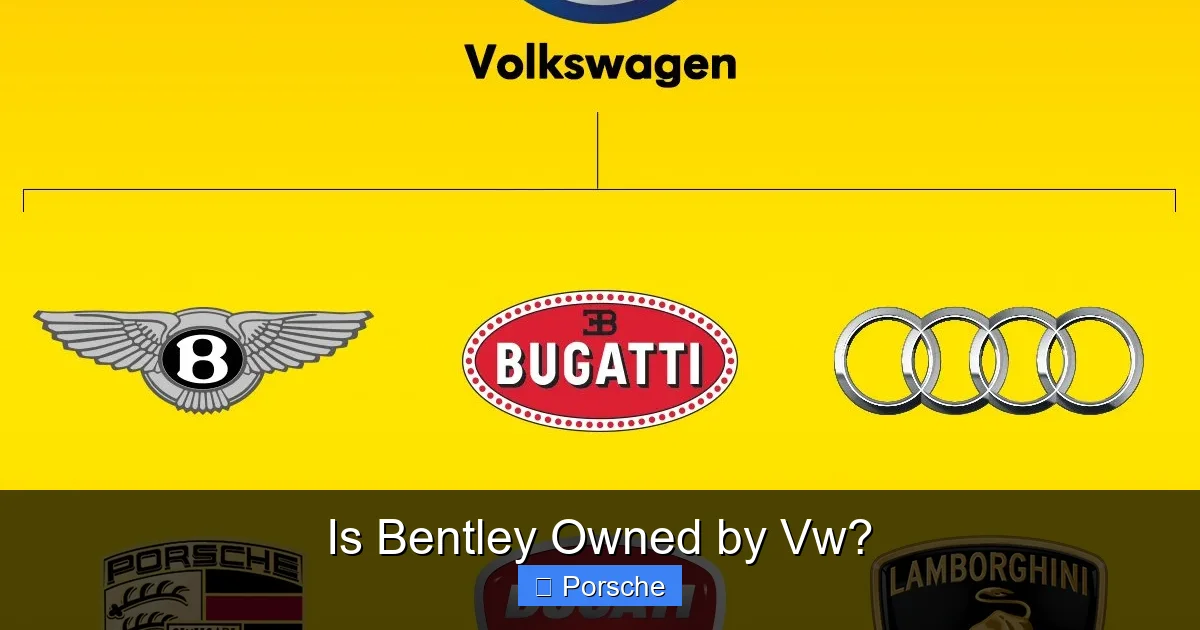
Yes, Bentley is owned by Volkswagen Group. The luxury automaker has been a subsidiary of VW since 1998, when Volkswagen acquired it from Vickers plc. This acquisition brought Bentley under the same umbrella as other premium brands like Audi, Lamborghini, and Porsche, strengthening VW’s presence in the high-end automotive market.
Key Takeaways
- Bentley is owned by Volkswagen Group: Acquired in 1998, it operates as a luxury subsidiary.
- Shared technology and platforms: Bentley uses VW-engineered systems for efficiency and innovation.
- Maintains brand exclusivity: Despite ownership, Bentley preserves its premium image and craftsmanship.
- Global production under VW oversight: Factories and supply chains align with Volkswagen’s standards.
- Strategic synergy benefits both brands: VW gains luxury prestige; Bentley accesses advanced R&D.
📑 Table of Contents
- Is Bentley Owned by VW?
- A Brief History of Bentley Motors
- The Volkswagen Acquisition: How It Happened
- Bentley Under Volkswagen: What Changed?
- Shared Platforms and Technology: The VW Connection
- Bentley’s Brand Identity: British Soul, German Precision
- The Future of Bentley: Electric and Autonomous
- Data Table: Bentley Models and VW Platform Connections
- Conclusion: Yes, Bentley Is Owned by VW—And That’s a Good Thing
Is Bentley Owned by VW?
Imagine you’re at a high-end car show, surrounded by gleaming chrome, hand-stitched leather, and the quiet hum of engineering excellence. You spot a Bentley—its iconic grille, stately presence, and unmistakable badge radiating luxury. You might wonder: who’s really behind this British icon? Is Bentley owned by VW? The short answer is yes, but the full story is far more fascinating than a simple corporate headline.
Bentley Motors has long been synonymous with British craftsmanship, aristocratic elegance, and performance that rivals the best in the world. Founded in 1919 by W.O. Bentley, the brand quickly became a legend on the racetrack and in the garages of the elite. But by the late 20th century, financial struggles and shifting market dynamics left Bentley at a crossroads. Enter Volkswagen Group—a German automotive giant with a vision to expand its luxury portfolio. In 1998, VW acquired Bentley, marking the beginning of a new era for the marque. But what does that really mean for the brand, its cars, and its future? Let’s dive in.
A Brief History of Bentley Motors
Before we explore the VW connection, it’s important to understand where Bentley came from. The brand was born out of a passion for speed and engineering. W.O. Bentley, a former Royal Naval Air Service pilot, believed that high-performance engines could be both powerful and refined. His first car, the 3-liter, debuted in 1921 and quickly gained a reputation for reliability and speed, winning the 24 Hours of Le Mans in 1924.
Visual guide about Is Bentley Owned by Vw?
Image source: carglassadvisor.com
The Golden Age of British Luxury
Throughout the 1920s and 1930s, Bentley became a symbol of British motoring excellence. The brand was known for its robust engines, hand-built bodies, and dominance in endurance racing. Models like the Speed Six and the 4½ Litre “Blower” Bentley became legends. However, the Great Depression and rising production costs took a toll. In 1931, Bentley was acquired by Rolls-Royce, another British luxury icon. For decades, the two brands operated under the same umbrella, sharing platforms and production facilities.
Struggles and the Road to Change
By the 1980s and 1990s, Bentley faced stiff competition from German and Japanese automakers. While Rolls-Royce focused on ultra-luxury, Bentley aimed for a sportier, more driver-focused experience. But without significant investment, the brand struggled to innovate. The 1990s saw the introduction of the Bentley Continental R and the Arnage, but sales remained modest. The writing was on the wall: Bentley needed a new owner with deep pockets and global reach.
The Volkswagen Acquisition: How It Happened
The late 1990s were a pivotal time for the automotive industry. Luxury brands were becoming increasingly valuable, and consolidation was the name of the game. In 1998, a bidding war erupted between two German giants: Volkswagen Group and BMW. Both wanted control of Rolls-Royce and Bentley, but the outcome was more complex than a simple auction.
Visual guide about Is Bentley Owned by Vw?
Image source: uploads.vw-mms.de
The Battle for Rolls-Royce and Bentley
BMW initially seemed poised to win. They had been supplying engines to Rolls-Royce and Bentley since the 1960s and had a strong relationship with the brands. In fact, BMW had already signed a deal to acquire the rights to the Rolls-Royce name and logo. But Volkswagen, led by Ferdinand Piëch, made a surprise move. VW purchased the Crewe factory—the physical production facility for both brands—along with the Bentley name and trademarks. This created a bizarre situation: BMW owned the Rolls-Royce brand, but VW owned the factory and Bentley.
The Compromise and the Birth of a New Era
The legal battle that followed was intense. Eventually, a compromise was reached. BMW would take over Rolls-Royce Motor Cars in 2003, while Volkswagen retained full ownership of Bentley. VW invested heavily in modernizing the Crewe plant, introducing new models, and expanding global distribution. This marked the true beginning of Bentley’s renaissance under German ownership.
Bentley Under Volkswagen: What Changed?
So, what happened after VW took the wheel? The changes were both strategic and cultural. Volkswagen brought financial stability, engineering expertise, and access to advanced technology. But it also respected Bentley’s heritage, ensuring the brand retained its British soul.

Visual guide about Is Bentley Owned by Vw?
Image source: c8.alamy.com
Investment in Innovation and Design
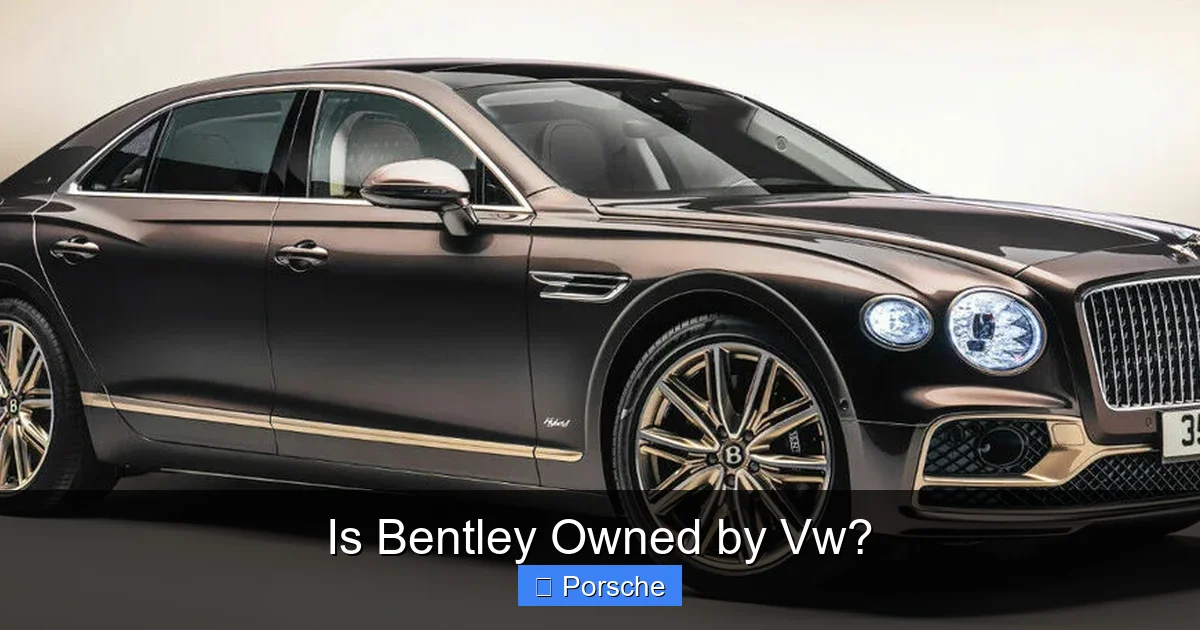
One of VW’s first moves was to invest in new platforms and powertrains. The introduction of the Bentley Continental GT in 2003 was a game-changer. Built on the Volkswagen Group’s D1 platform (shared with the Audi A8), the Continental GT combined luxury with performance in a way Bentley had never achieved before. It featured a 6.0-liter W12 engine—developed by VW—and all-wheel drive, making it a true grand tourer.
Expanding the Lineup
Under VW, Bentley expanded its model range significantly. The Continental GT was followed by the convertible GTC, the four-door Flying Spur, and the ultra-luxurious Mulsanne. Each model benefited from VW’s engineering resources. For example, the Flying Spur shares its platform with the Audi A8, allowing Bentley to offer advanced features like adaptive air suspension and all-wheel steering at a lower development cost.
Maintaining British Craftsmanship
Despite the German ownership, Bentley remained committed to hand-built quality. The Crewe factory still employs hundreds of skilled artisans who spend days assembling each car by hand. From hand-stitched leather to hand-polished wood veneers, the attention to detail is unmatched. VW understood that Bentley’s value lies not just in performance, but in its artisanal heritage.
One of the most significant aspects of Bentley’s ownership by VW is the sharing of platforms and technology. This isn’t about making Bentleys into rebadged Audis—it’s about leveraging economies of scale while maintaining brand identity.
Platform Sharing: A Smart Strategy
Bentley’s current lineup is built on modified versions of VW Group platforms. The Continental GT and GTC use the MSB platform, also used by the Porsche Panamera. The Flying Spur and Bentayga SUV share architecture with the Audi A8 and Q7. This allows Bentley to benefit from VW’s R&D investments while focusing on luxury and customization.
Engine Development and Performance
Volkswagen’s engineering prowess is evident in Bentley’s engines. The W12 engine, for instance, was developed by VW and first appeared in the Phaeton luxury sedan. Bentley refined it for higher output and smoother operation. The 6.0-liter W12 in the Continental GT produces over 600 horsepower, enabling a 0-60 mph time of under 4 seconds. More recently, Bentley has introduced hybrid powertrains, like the Bentayga Hybrid, which combines a V6 engine with an electric motor—technology derived from VW’s broader electrification strategy.
Infotainment and Driver Assistance
Bentley vehicles now feature advanced infotainment systems based on VW’s MIB (Modular Infotainment Platform). While the interface is customized for Bentley’s luxury aesthetic, the underlying technology is shared with Audi and Porsche. Features like adaptive cruise control, lane-keeping assist, and night vision are available, bringing Bentley into the modern age without sacrificing its classic appeal.
Bentley’s Brand Identity: British Soul, German Precision
A common question among car enthusiasts is whether Bentley has lost its British identity under German ownership. The answer is nuanced. While VW provides the backbone, Bentley remains distinctly British in spirit.
Design Language and Heritage
Bentley’s design team, led by Luc Donckerwolke (formerly of Lamborghini and Audi), has worked to modernize the brand while honoring its roots. The current Continental GT features a bold grille, muscular haunches, and elegant proportions—hallmarks of classic Bentleys. The interior continues to emphasize handcrafted details, with options like Mulliner customization allowing buyers to create truly unique vehicles.
Production in Crewe: A British Tradition
All Bentleys are still manufactured in Crewe, England. The factory employs over 4,000 people and is a cornerstone of the local economy. VW has invested over £1 billion in the facility since the acquisition, ensuring it remains state-of-the-art. This commitment to British manufacturing helps preserve Bentley’s heritage and supports skilled jobs in the UK.
Marketing and Customer Experience
Bentley’s marketing emphasizes its British origins. Campaigns often feature iconic British locations, classic models, and a sense of timeless elegance. The brand hosts exclusive events like the Goodwood Festival of Speed and sponsors British cultural institutions. This focus on heritage helps differentiate Bentley from other VW-owned luxury brands like Lamborghini or Bugatti.
The Future of Bentley: Electric and Autonomous
As the automotive industry shifts toward electrification and autonomy, Bentley is positioning itself for the future—still under the VW umbrella.
The Road to Electrification
Bentley has announced plans to go fully electric by 2030. The first step is the Bentayga Hybrid, which offers a combined 449 horsepower and an all-electric range of around 30 miles. The next phase will include plug-in hybrid versions of the Continental GT and Flying Spur, followed by fully electric models. VW’s investment in battery technology and charging infrastructure will be crucial to this transition.
Autonomous Driving and Connectivity
While Bentley is not rushing into full autonomy, it is incorporating advanced driver-assistance systems (ADAS). Features like traffic jam assist and remote parking are already available. The brand aims to offer a “luxury chauffeur” experience—where the car can handle routine driving, but the driver remains in control for the joy of driving.
Sustainability and Responsibility
Bentley is also focusing on sustainability. The Crewe factory is carbon-neutral, and the brand uses recycled materials in its interiors. VW’s broader sustainability goals, including the use of renewable energy and ethical sourcing, influence Bentley’s strategy. This alignment with environmental responsibility is increasingly important to luxury buyers.
Data Table: Bentley Models and VW Platform Connections
| Bentley Model | Platform | VW Group Sibling | Engine Options | Key Features |
|---|---|---|---|---|
| Continental GT | MSB (Modular Standard Platform) | Porsche Panamera | 4.0L V8, 6.0L W12 | All-wheel drive, adaptive suspension, luxury interior |
| Flying Spur | MLB Evo | Audi A8, Porsche Panamera | 4.0L V8, 6.0L W12 | Four-door luxury, rear-seat entertainment, massage seats |
| Bentayga | MLB Evo | Audi Q7, Porsche Cayenne | 3.0L V6 Hybrid, 4.0L V8, 6.0L W12 | SUV luxury, off-road capability, hybrid option |
| Mulsanne | Custom (Discontinued in 2020) | None (Unique platform) | 6.75L V8 | Hand-built, ultra-luxury, long-wheelbase option |
Conclusion: Yes, Bentley Is Owned by VW—And That’s a Good Thing
So, is Bentley owned by VW? Absolutely. But far from diluting the brand, Volkswagen’s ownership has been a lifeline. It brought financial stability, technological advancement, and global reach. Without VW, Bentley might have faded into obscurity, like so many other British marques.
Yet, Bentley hasn’t lost its soul. The cars are still built in Crewe, still hand-assembled by skilled craftspeople, and still embody the spirit of British luxury. The W12 engine may be German-engineered, but the way it’s tuned and integrated into a Bentley is uniquely British. The interiors may use shared infotainment systems, but the materials, the stitching, the wood—everything speaks of tradition and artistry.
Looking ahead, Bentley’s future under VW looks bright. The shift to electrification, the focus on sustainability, and the continued investment in craftsmanship ensure that the brand will remain relevant for decades to come. Whether you’re driving a Continental GT on the Autobahn or a Flying Spur through London, you’re experiencing the best of both worlds: German engineering and British elegance.
If you’re considering a Bentley, don’t let the VW ownership deter you. Instead, see it as a sign of strength. It means the brand has the resources to innovate, the stability to endure, and the vision to lead. Bentley isn’t just surviving—it’s thriving. And that’s something worth celebrating.
Frequently Asked Questions
Is Bentley owned by VW?
Yes, Bentley Motors is owned by Volkswagen Group. VW acquired Bentley in 1998 as part of its purchase of Rolls-Royce and Bentley from Vickers.
When did Volkswagen buy Bentley?
Volkswagen purchased Bentley in 1998. The acquisition was part of a larger deal that also included the rights to the Bentley and Rolls-Royce brands at the time.
Is Bentley still under Volkswagen ownership today?
Yes, Bentley remains a wholly-owned subsidiary of Volkswagen Group. It operates as a luxury automotive brand under VW’s portfolio alongside Audi, Porsche, and Lamborghini.
Why did Volkswagen acquire Bentley?
Volkswagen acquired Bentley to expand its presence in the ultra-luxury car market. The move allowed VW to leverage Bentley’s heritage and craftsmanship to compete with other high-end manufacturers.
Does Volkswagen influence Bentley’s car designs?
While Bentley maintains its own design identity, it shares some technology and platforms with other VW Group brands. This synergy helps reduce development costs while preserving Bentley’s luxury appeal.
Can Bentley operate independently despite being owned by VW?
Yes, Bentley operates with a high degree of autonomy under Volkswagen’s ownership. It maintains its own headquarters, production facilities, and brand strategy to uphold its prestigious image.