Is a Notary Required to Sell a Car

Selling a car doesn’t always require a notary, but it depends on your state’s laws. While some states mandate notarized signatures on title transfers, others only recommend it for added security. Understanding your local requirements ensures a smooth, legally sound sale.
In This Article
- 1 Key Takeaways
- 2 📑 Table of Contents
- 3 Is a Notary Required to Sell a Car? A Complete Guide
- 4 What Is a Notary and Why Do They Matter in Car Sales?
- 5 State-by-State Breakdown: When Is a Notary Required?
- 6 Private Sale vs. Dealership: Does It Make a Difference?
- 7 Why You Should Consider Notarization Even If It’s Not Required
- 8 How to Get a Notary for Your Car Sale
- 9 Common Mistakes to Avoid
- 10 Conclusion: When in Doubt, Get It Notarized
- 11 Frequently Asked Questions
- 11.1 Do I need a notary to sell a car in California?
- 11.2 Can I sell my car without a notary in Texas?
- 11.3 What happens if I don’t get the title notarized when it’s required?
- 11.4 Can a family member notarize my car title?
- 11.5 Is remote online notarization allowed for car titles?
- 11.6 Do I need a notary if I’m selling my car to a dealership?
Key Takeaways
- Notary requirements vary by state: Some states require notarization for car title transfers, while others do not.
- Check your state’s DMV guidelines: Always verify current rules with your local Department of Motor Vehicles (DMV) or equivalent agency.
- Notarization adds legal protection: Even when not required, having a notary witness signatures can prevent fraud and disputes.
- Private sales vs. dealerships differ: Dealerships often handle paperwork internally, but private sellers usually manage title transfers themselves.
- Out-of-state sales may have extra rules: Selling across state lines could involve additional documentation or notarization.
- Electronic titles reduce need for notaries: States with digital titling systems may eliminate the need for in-person notarization.
- Keep records of the transaction: Save copies of the bill of sale, title, and any notarized documents for your records.
📑 Table of Contents
- Is a Notary Required to Sell a Car? A Complete Guide
- What Is a Notary and Why Do They Matter in Car Sales?
- State-by-State Breakdown: When Is a Notary Required?
- Private Sale vs. Dealership: Does It Make a Difference?
- Why You Should Consider Notarization Even If It’s Not Required
- How to Get a Notary for Your Car Sale
- Common Mistakes to Avoid
- Conclusion: When in Doubt, Get It Notarized
Is a Notary Required to Sell a Car? A Complete Guide
So, you’ve decided to sell your car. Maybe you’re upgrading to something newer, downsizing, or just ready for a change. Whatever the reason, one of the first questions that pops up is: “Do I need a notary to sell my car?” It’s a smart question—because getting the paperwork right is just as important as finding the right buyer.
The short answer? It depends. Not every state in the U.S. requires a notary public to witness the signing of a car title during a private sale. But some do. And even in states where it’s not mandatory, many experts recommend it to protect both buyer and seller from fraud, disputes, or future legal headaches.
In this guide, we’ll walk you through everything you need to know about notarization when selling a car. We’ll break down state-specific rules, explain why notaries matter, and give you practical tips to make your sale smooth, legal, and stress-free. Whether you’re selling to a friend, posting an ad online, or handing over the keys to a stranger, knowing the rules will save you time, money, and potential trouble down the road.
What Is a Notary and Why Do They Matter in Car Sales?
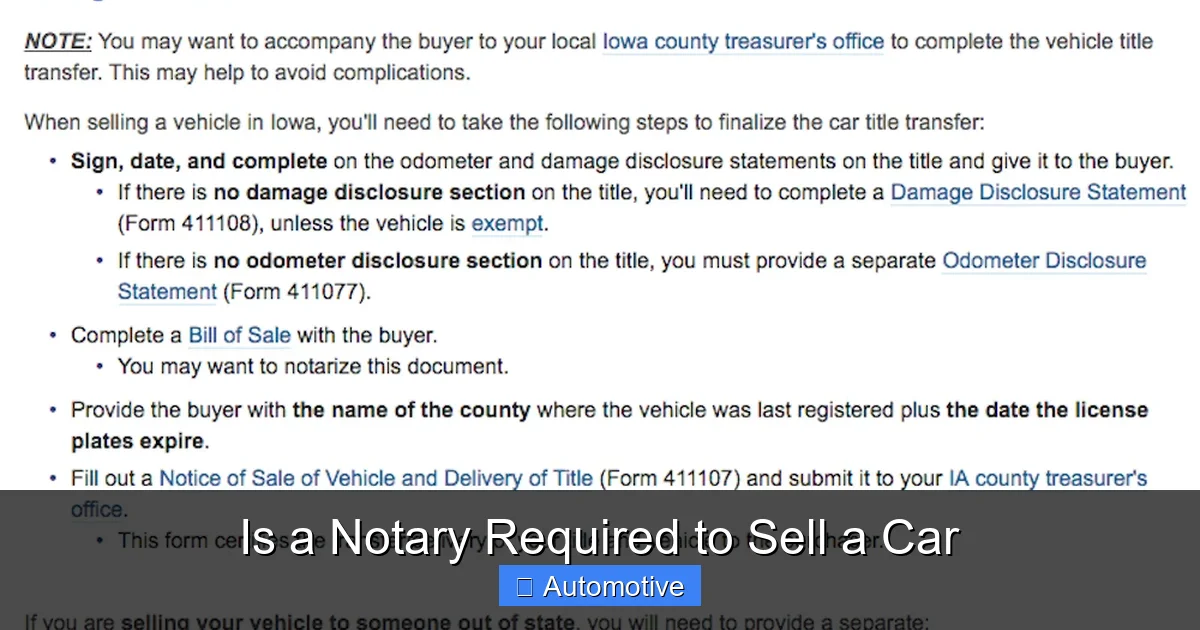
Visual guide about Is a Notary Required to Sell a Car
Image source: vollaw.org
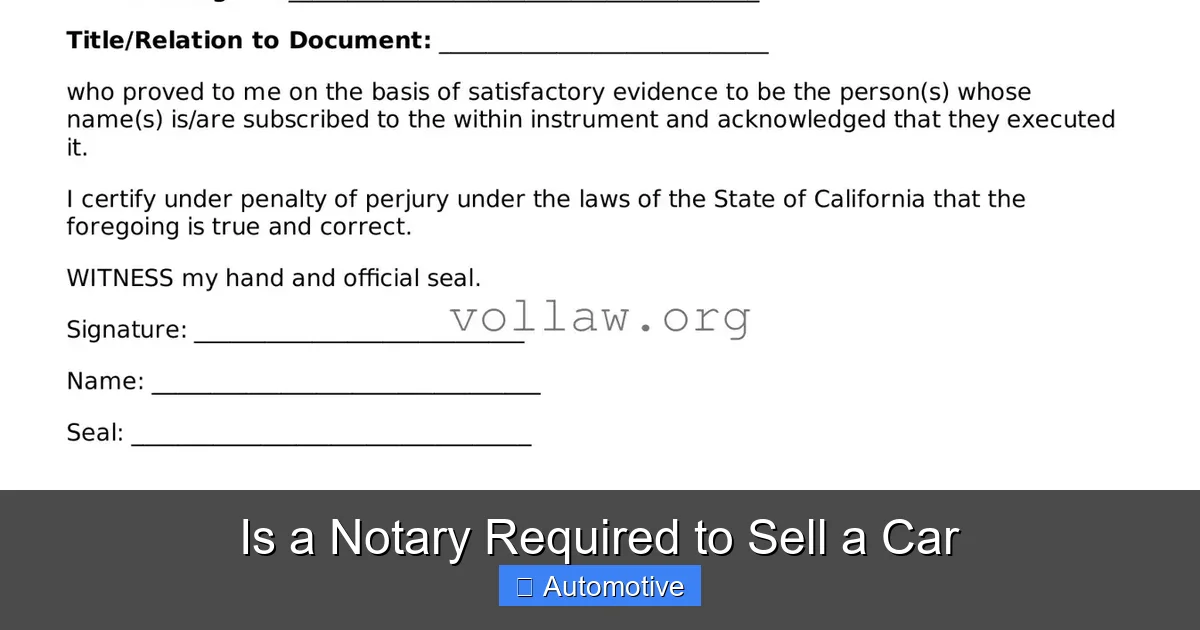
Before diving into state laws, let’s clarify what a notary public actually does. A notary is a state-appointed official whose job is to witness the signing of important documents and verify the identity of the people signing them. They don’t provide legal advice, but they do help prevent fraud by ensuring that signatures are genuine and that signers are who they claim to be.
In the context of selling a car, a notary typically witnesses the seller signing over the title to the buyer. This process is called “notarizing” the signature. The notary then stamps or seals the document, confirming that they observed the signing and verified the identity of the signer.
Now, why does this matter? Car titles are legal documents that prove ownership. If a title is signed fraudulently—say, someone forges your signature—you could be held responsible for taxes, fees, or even accidents involving the vehicle after it’s sold. A notarized signature adds a layer of protection. It shows that the seller willingly and knowingly transferred ownership, reducing the risk of disputes later.
Even in states where notarization isn’t required, many DMVs and law enforcement agencies view notarized titles as more credible. If there’s ever a question about the validity of the transfer, a notarized document is much harder to challenge.
How Notaries Prevent Fraud
One of the biggest risks in private car sales is title fraud. This can happen when someone steals your title, forges your signature, and sells your car without your knowledge. Or worse—when a buyer claims you never signed over the title, even though you did.
A notary helps prevent this by:
– Checking government-issued photo ID (like a driver’s license)
– Confirming the person signing is the actual owner
– Watching the signature happen in real time
– Recording the transaction in their notary journal (in most states)
This process makes it much harder for bad actors to pull off scams. And if something does go wrong, the notary’s records can serve as evidence in court.
Notary vs. Witness: What’s the Difference?
You might be wondering: “Can’t I just have a friend witness the signing instead of a notary?” In some cases, yes—but there’s a key difference.
A witness simply observes the signing and confirms it happened. They don’t verify identity or check for fraud. A notary, on the other hand, has legal authority to authenticate the signer and the document. Their seal carries legal weight.
Some states allow a witness instead of a notary, especially for simple transactions. But if your state requires notarization, a friend’s signature won’t cut it. Always check your local DMV rules to be sure.
State-by-State Breakdown: When Is a Notary Required?
Visual guide about Is a Notary Required to Sell a Car
Image source: typecalendar.com
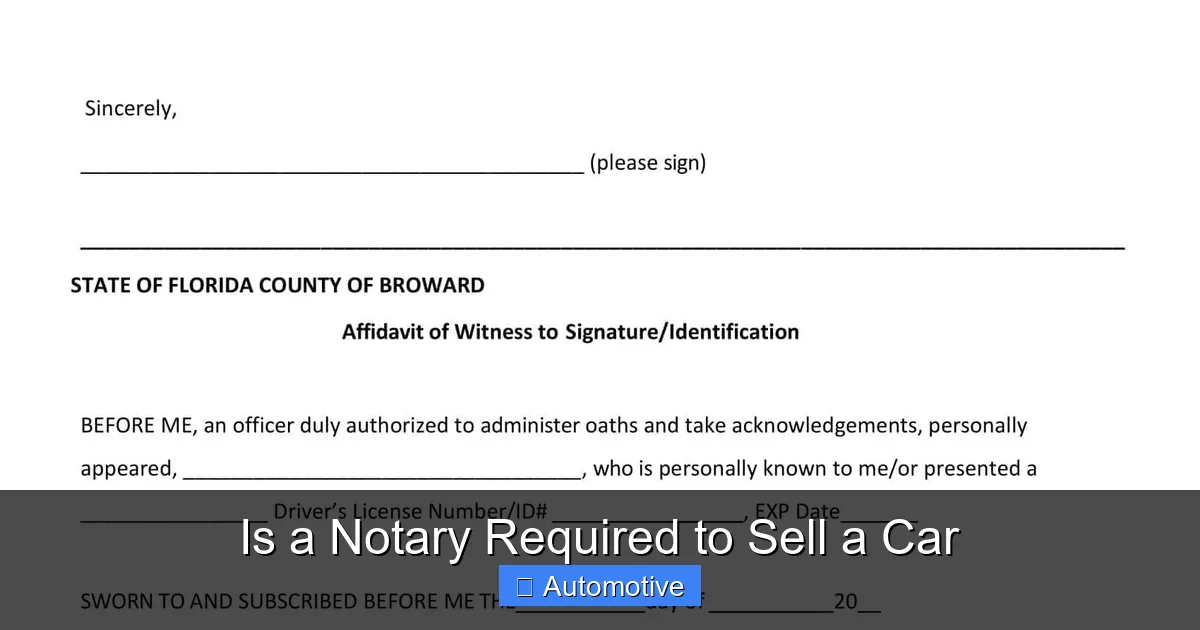
This is where things get tricky. Every state has its own rules about notarization for car title transfers. Some require it, some don’t, and a few have special conditions. Let’s break it down.
States That Require Notarization
In these states, a notarized signature on the title is mandatory for a valid transfer:
– **Alaska**: Notarization is required for all private vehicle title transfers.
– **Arizona**: The seller’s signature must be notarized.
– **California**: Not required for most private sales, but recommended. However, certain transactions (like gifts or out-of-state buyers) may require it.
– **Colorado**: Notarization is required for the seller’s signature.
– **Idaho**: Not required, but highly recommended.
– **Illinois**: Not required for most sales, but some counties or situations (like estate sales) may need it.
– **Indiana**: Not required, but the DMV encourages it.
– **Kansas**: Not required, but a notarized bill of sale is recommended.
– **Louisiana**: Notarization is required for most vehicle transfers.
– **Michigan**: Not required, but a notarized bill of sale is strongly advised.
– **Minnesota**: Not required, but recommended for added protection.
– **Missouri**: Not required, but a notarized bill of sale is recommended.
– **Montana**: Not required, but the DMV suggests it.
– **Nebraska**: Not required, but a notarized bill of sale is recommended.
– **Nevada**: Not required, but recommended.
– **New Mexico**: Not required, but a notarized bill of sale is recommended.
– **North Dakota**: Not required, but recommended.
– **Ohio**: Not required, but a notarized bill of sale is recommended.
– **Oklahoma**: Not required, but recommended.
– **South Dakota**: Not required, but recommended.
– **Texas**: Not required for most private sales, but a notarized bill of sale is recommended.
– **Utah**: Not required, but recommended.
– **Washington**: Not required, but recommended.
– **Wisconsin**: Not required, but recommended.
– **Wyoming**: Not required, but recommended.
Wait—that seems like a lot of “not required but recommended.” So which states actually *require* notarization?
The clear ones are:
– **Alaska**
– **Arizona**
– **Colorado**
– **Louisiana**
In these states, you *must* have the seller’s signature notarized on the title. If you skip this step, the DMV will likely reject the transfer.
States That Don’t Require Notarization (But May Recommend It)
In the majority of states, notarization is not legally required for a private car sale. However, the DMV or motor vehicle agency often recommends it to prevent fraud and ensure a clean transfer.
For example:
– **Florida**: No notarization required, but a notarized bill of sale is recommended.
– **Georgia**: Not required, but a notarized bill of sale is recommended.
– **New York**: Not required, but a notarized bill of sale is recommended.
– **Pennsylvania**: Not required, but a notarized bill of sale is recommended.
– **Virginia**: Not required, but a notarized bill of sale is recommended.
Even in these states, skipping notarization can lead to problems. If the buyer later claims the signature was forged, or if the DMV questions the validity of the transfer, you could be stuck proving your case without a notary’s record.
Special Cases and Exceptions
There are a few situations where notarization might be required even in states that don’t normally mandate it:
– **Out-of-state buyers**: If the buyer is from another state, some states require notarization to ensure the transfer is valid across jurisdictions.
– **Gift transfers**: If you’re giving the car as a gift (not selling it), some states require notarization to prove it’s not a disguised sale.
– **Estate sales**: If the car is being transferred from a deceased owner’s estate, notarization is often required as part of the probate process.
– **Power of attorney**: If someone is signing on behalf of the seller (e.g., due to illness), notarization is usually required to validate the power of attorney document.
Always check with your local DMV if your situation is unusual. Rules can vary, and it’s better to be safe than sorry.
Private Sale vs. Dealership: Does It Make a Difference?
Visual guide about Is a Notary Required to Sell a Car
Image source: res.cloudinary.com
Another important factor is whether you’re selling privately or trading in your car at a dealership. The rules can differ significantly.
Selling to a Private Buyer
When you sell your car directly to another person, you’re responsible for handling the title transfer, bill of sale, and any required paperwork. This is where notarization becomes most relevant.
In private sales:
– You (the seller) must sign the title over to the buyer.
– The buyer must sign the title (in most states).
– A bill of sale is usually required (and often recommended to be notarized).
– Odometer disclosure may be required (for vehicles under 10 years old).
– Smog or emissions testing may be needed (depending on the state).
Because private sales involve more direct responsibility, notarization adds valuable protection. It creates a clear, legally recognized record of the transaction.
Selling to a Dealership
When you trade in or sell your car to a dealership, the process is usually simpler. Dealerships are licensed businesses that handle title transfers as part of their standard operations. They often have in-house notaries or work with third-party services to ensure compliance.
In most cases:
– The dealership will handle the title transfer paperwork.
– They may require your signature, but notarization is often done on their end.
– You’ll receive a trade-in value or cash payment.
– The dealership takes care of registering the vehicle in their name.
Because dealerships are regulated and insured, the risk of fraud is lower. However, it’s still a good idea to review all documents before signing and keep copies for your records.
Online Sales and Remote Transactions
With more people selling cars online (through platforms like Craigslist, Facebook Marketplace, or CarGurus), remote transactions are becoming common. This raises new questions about notarization.
If you’re selling to someone in another state or can’t meet in person, can you still get the title notarized?
Yes—but it requires planning. Options include:
– **Mobile notaries**: Some notaries offer mobile services and can come to your location.
– **Remote online notarization (RON)**: A growing number of states allow notaries to witness signatures via video call. This is especially useful for out-of-state buyers.
– **Mail-in notarization**: In some cases, you can sign the document in front of a notary, mail it to the buyer, and have them sign it locally (though this is less secure).
Always confirm with your state whether remote notarization is allowed for vehicle titles. Not all states permit it, and rules are still evolving.
Why You Should Consider Notarization Even If It’s Not Required
Even in states where notarization isn’t mandatory, there are strong reasons to do it anyway.
Protects Against Fraud
Title fraud is more common than you might think. Scammers have been known to:
– Steal titles from mailboxes
– Forge signatures using high-quality copies
– Sell cars they don’t own
A notarized signature makes it much harder for someone to impersonate you. The notary checks your ID, watches you sign, and records the transaction. If someone later claims the signature was fake, the notary’s records can prove otherwise.
Speeds Up the DMV Process
DMVs are busy places. If your title transfer paperwork is incomplete or questionable, it can delay registration for the buyer—and create headaches for you.
A notarized title is seen as more credible. DMV staff are more likely to accept it without extra scrutiny. This means faster processing and fewer return trips.
Provides Legal Evidence
If a dispute arises—say, the buyer claims you never signed over the title, or you suspect the buyer is lying about the sale—having a notarized document gives you solid evidence.
In court, a notarized signature carries more weight than an unwitnessed one. It shows that the transaction was conducted openly and with proper verification.
Peace of Mind
Let’s face it—selling a car is a big deal. You’re transferring ownership of a valuable asset. Knowing that the paperwork is legally sound gives you confidence that the sale is final and protected.
It’s a small step that can prevent big problems later.
How to Get a Notary for Your Car Sale
If you’ve decided to get your title notarized, here’s how to do it.
Find a Notary Near You
Notaries are widely available. You can find them at:
– Banks and credit unions (often free for customers)
– UPS Stores and FedEx Office locations
– Law offices
– Public libraries (in some areas)
– Mobile notary services (search online)
Many notaries charge a small fee—usually $5 to $15 per signature. Some banks offer free notarization for account holders.
Bring the Right Documents
When you go to the notary, bring:
– The car title (signed by the seller)
– A government-issued photo ID (driver’s license, passport, etc.)
– The bill of sale (if required)
– Any other paperwork specified by your state
Make sure the title is filled out correctly before notarization. Mistakes can invalidate the document.
What to Expect During the Notarization
The process is simple:
1. The notary will ask to see your ID.
2. They’ll confirm you’re signing willingly and understand the document.
3. You’ll sign the title in front of them.
4. The notary will stamp or seal the document and complete their journal entry.
The whole process usually takes 5 to 10 minutes.
Tips for a Smooth Experience
– Call ahead to confirm the notary’s availability and fees.
– Bring exact change or ask about payment methods.
– Double-check the title for errors before signing.
– Keep a copy of the notarized document for your records.
Common Mistakes to Avoid
Even with good intentions, sellers often make mistakes that can delay or invalidate the transfer.
Signing the Title Incorrectly
Common errors include:
– Signing in the wrong section
– Using a nickname instead of your legal name
– Forgetting to include the sale date or odometer reading
Always follow your state’s DMV guidelines for title transfers. If in doubt, ask the notary or DMV for help.
Not Completing the Bill of Sale
A bill of sale is a legal document that records the details of the transaction, including:
– Vehicle identification number (VIN)
– Sale price
– Date of sale
– Names and addresses of buyer and seller
Even if not required, it’s a good idea to have one—and to notarize it if possible.
Forgetting to Remove License Plates
In most states, you must remove your license plates before handing over the car. Leaving them on could make you liable for tolls, parking tickets, or accidents.
Check your state’s rules—some allow plate transfers, but most require removal.
Not Notifying the DMV
After the sale, you should notify your DMV that you’ve transferred ownership. This protects you from future liability.
Some states require a “release of liability” form to be submitted within a certain timeframe (e.g., 5 to 10 days).
Conclusion: When in Doubt, Get It Notarized
So, is a notary required to sell a car? The answer depends on where you live. In a handful of states—Alaska, Arizona, Colorado, and Louisiana—yes, it’s mandatory. In most others, it’s not required but strongly recommended.
Regardless of your state’s rules, notarization is a smart move. It protects you from fraud, speeds up the DMV process, and gives you peace of mind. It’s a small step that can prevent big headaches down the road.
Before you sell your car, take a few minutes to check your local DMV website or call their office. Confirm the notarization requirements, gather the right documents, and find a notary near you. A little preparation now can save you time, money, and stress later.
Selling a car doesn’t have to be complicated. With the right knowledge and a little help from a notary, you can complete the transaction smoothly, legally, and with confidence.
Frequently Asked Questions
Do I need a notary to sell a car in California?
No, California does not require notarization for most private car sales. However, the DMV recommends it for added protection, especially for out-of-state buyers or gift transfers.
Can I sell my car without a notary in Texas?
Yes, Texas does not require notarization for private car sales. But a notarized bill of sale is recommended to prevent disputes and fraud.
What happens if I don’t get the title notarized when it’s required?
If your state requires notarization and you skip it, the DMV will likely reject the title transfer. You’ll need to return to a notary and complete the process correctly.
Can a family member notarize my car title?
No, a notary cannot notarize a document if they are a party to the transaction or have a financial interest in it. A family member selling or buying the car cannot act as the notary.
Is remote online notarization allowed for car titles?
It depends on your state. Some states allow remote online notarization (RON) for vehicle titles, while others do not. Check with your state’s notary commission or DMV for current rules.
Do I need a notary if I’m selling my car to a dealership?
Usually not. Dealerships handle title transfers internally and often have their own notaries. However, you should still review all documents before signing and keep copies.