How to Tell Which Tpms Sensor Is Bad on a Toyota

Contents
- 1 Key Takeaways
- 2 📑 Table of Contents
- 3 Understanding TPMS in Toyota Vehicles
- 4 Common Signs of a Bad TPMS Sensor
- 5 Tools You’ll Need to Diagnose a Bad TPMS Sensor
- 6 Step-by-Step Guide to Identifying the Faulty Sensor
- 7 What to Do Once You’ve Identified the Bad Sensor
- 8 Preventing Future TPMS Problems
- 9 Conclusion
- 10 Frequently Asked Questions


Identifying a faulty TPMS sensor on your Toyota doesn’t have to be confusing. This guide walks you through common symptoms, diagnostic tools, and step-by-step troubleshooting to pinpoint the exact sensor causing issues—so you can fix it fast and drive safely.
Key Takeaways
- Watch for the TPMS warning light: A steady or flashing light on your dashboard is the first sign of a potential sensor problem.
- Check tire pressure manually: Use a reliable gauge to verify if low pressure is real or just a sensor error.
- Use an OBD2 scanner with TPMS function: This tool can read sensor IDs and signal strength to identify the faulty unit.
- Look for inconsistent or missing readings: If one tire shows no data or fluctuates wildly, that sensor may be dead.
- Test sensor signal with a TPMS activator: These devices wake up sensors and confirm which one isn’t responding.
- Consider age and battery life: Most TPMS sensors last 5–10 years; older vehicles are more likely to have failing sensors.
- Visit a professional if unsure: Dealerships and tire shops have advanced tools to diagnose and reprogram sensors accurately.
📑 Table of Contents
Understanding TPMS in Toyota Vehicles
If you’ve ever seen a little tire icon with an exclamation point light up on your Toyota’s dashboard, you’ve encountered the Tire Pressure Monitoring System (TPMS). This safety feature is designed to alert you when one or more of your tires are significantly underinflated—typically 25% below the recommended pressure. While it’s a helpful tool, it’s not always clear which sensor is causing the alert, especially when the light comes on without an obvious flat tire.
Toyota has used TPMS in its vehicles since the early 2000s, and the system has evolved over time. Most modern Toyotas—like the Camry, RAV4, Highlander, and Corolla—use direct TPMS, which means each wheel has its own sensor mounted inside the tire, usually attached to the valve stem or wheel rim. These sensors measure air pressure and temperature and transmit that data wirelessly to the vehicle’s computer.
The system works by sending a unique ID code from each sensor to the TPMS control module. When the module detects low pressure or a missing signal, it triggers the warning light. But here’s the catch: the system doesn’t always tell you *which* sensor is faulty. That’s why knowing how to tell which TPMS sensor is bad on a Toyota is so important. Without proper diagnosis, you might end up replacing the wrong sensor or overlooking a real issue.
How Toyota TPMS Sensors Work
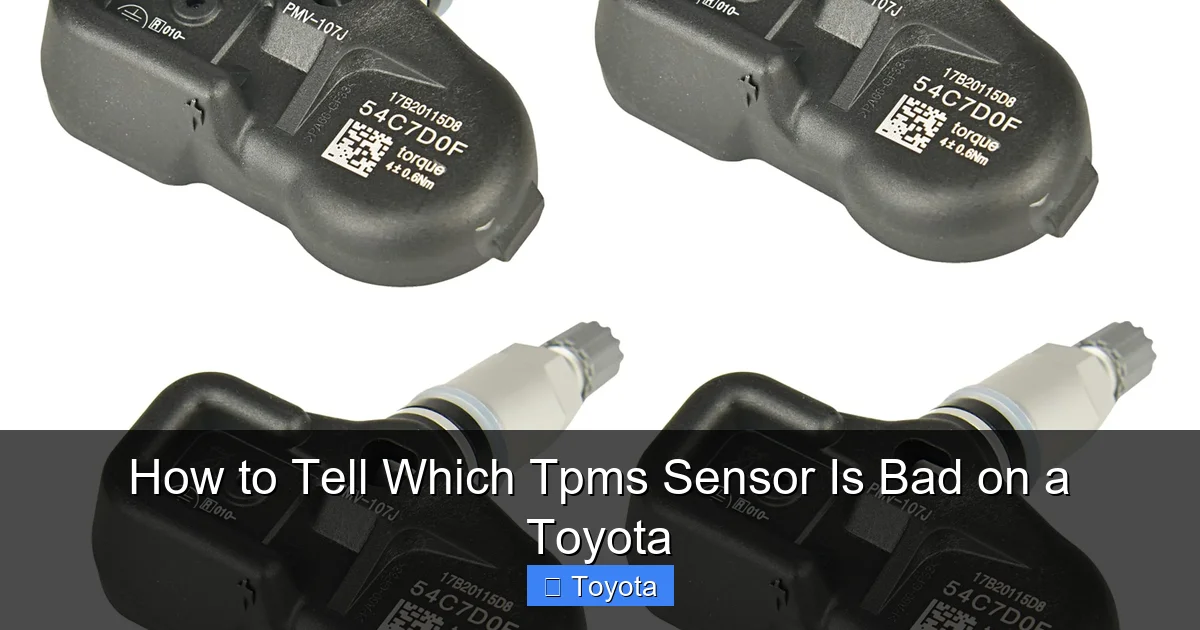
Each TPMS sensor in a Toyota is a small, battery-powered device that lives inside the wheel. It’s typically made of plastic and metal, with a rubber or metal valve stem. The sensor constantly monitors the air pressure and temperature inside the tire and sends updates to the vehicle’s onboard computer at regular intervals—usually every 5 to 10 minutes when the car is parked, and more frequently when driving.
When you start your Toyota, the system performs a self-check. If everything is working, the TPMS light will flash for a few seconds and then turn off. If it stays on or comes on while driving, there’s a problem. The sensor uses radio frequency (RF) signals to communicate with the receiver, usually located near the dashboard or under the hood. Each sensor has a unique identification number (ID), which the system uses to track which tire is which.
Over time, these sensors can fail due to battery depletion, physical damage, corrosion, or electronic malfunctions. Since the battery is sealed inside the sensor and not replaceable, the entire unit must be replaced when it dies. This is why understanding how to identify a bad sensor is crucial—especially as your Toyota ages.
Common Signs of a Bad TPMS Sensor
Visual guide about How to Tell Which Tpms Sensor Is Bad on a Toyota
Image source: i.ytimg.com
So, how do you know if a TPMS sensor is going bad? The warning light is the most obvious clue, but it’s not the only one. Here are the most common signs that one or more of your Toyota’s TPMS sensors may be malfunctioning.
The TPMS Warning Light Stays On
The most common indicator is a steady TPMS warning light on your dashboard. If the light comes on and stays on, it usually means one or more tires are underinflated—or one of the sensors isn’t working. However, if you’ve checked all your tires and they’re properly inflated, the issue is likely a faulty sensor.
For example, let’s say you drive a 2018 Toyota RAV4. You notice the TPMS light is on, so you check all four tires with a handheld gauge. They’re all at 32 PSI, which is the recommended pressure. Yet the light remains. This suggests the sensor isn’t sending accurate data—or isn’t sending anything at all.
The Light Flashes and Then Stays On
A flashing TPMS light for about a minute after startup, followed by a steady glow, is a strong sign of a system malfunction. Toyota’s diagnostic protocol uses this pattern to indicate a problem with the TPMS itself—not just low tire pressure. This could mean a sensor has failed, the system lost communication, or there’s an issue with the receiver or control module.
This flashing behavior is your Toyota’s way of saying, “Hey, I can’t trust the data I’m getting.” It’s a red flag that shouldn’t be ignored.
Inconsistent or Missing Readings
Some Toyota models display individual tire pressures on the multi-information display (MID) screen. If you notice that one tire shows “—” or “LO” while the others show normal readings, that’s a clear sign that sensor isn’t transmitting. For instance, your driver’s side front tire might show 32 PSI, the passenger front 31 PSI, the rear tires 30 and 32—but the passenger rear shows nothing. That missing data points to a dead or damaged sensor.
Sensor Doesn’t Respond After Tire Service
If you’ve recently had your tires rotated, repaired, or replaced, and the TPMS light comes on afterward, the sensor may have been damaged during the process. Technicians sometimes accidentally break the sensor stem or dislodge the unit when removing the tire from the rim. Even if the sensor looks fine, it might not be functioning properly.
We’ve heard stories from Toyota owners who took their car in for a simple tire rotation and left with a TPMS warning light. In one case, a 2015 Toyota Camry owner had all four tires rotated. The next day, the light came on. A diagnostic scan revealed that the sensor in the rear left tire wasn’t responding. It turned out the technician had cracked the sensor housing during dismounting.
Age of the Vehicle
TPMS sensors have a limited lifespan, primarily due to their internal battery. Most last between 5 and 10 years, depending on usage and environmental conditions. If your Toyota is over 7 years old, it’s wise to consider sensor failure as a likely cause of TPMS issues—even if the light just came on.
For example, a 2012 Toyota Highlander with 90,000 miles might start showing TPMS problems simply because the sensors are nearing the end of their life. Replacing all four sensors proactively can save you from repeated warnings and potential safety risks.
Tools You’ll Need to Diagnose a Bad TPMS Sensor
Visual guide about How to Tell Which Tpms Sensor Is Bad on a Toyota
Image source: m.media-amazon.com
Before you start troubleshooting, it helps to have the right tools. You don’t need to be a mechanic to figure out which TPMS sensor is bad on your Toyota, but a few gadgets can make the process much easier.
Handheld Tire Pressure Gauge
This is the simplest and most essential tool. A good digital or analog gauge lets you manually check the air pressure in each tire. Compare your readings to the recommended PSI listed on the driver’s side door jamb sticker. If all tires are properly inflated but the TPMS light is on, you can rule out low pressure and focus on the sensors.
Pro tip: Check your tires when they’re cold—meaning the car hasn’t been driven for at least three hours. Heat from driving increases pressure and can give false readings.
OBD2 Scanner with TPMS Function
Not all OBD2 scanners can read TPMS data, but many modern ones can. Look for a scanner that specifically supports TPMS diagnostics for Toyota vehicles. These tools plug into your car’s OBD2 port (usually under the dashboard near the steering wheel) and can read trouble codes, sensor IDs, and signal strength.
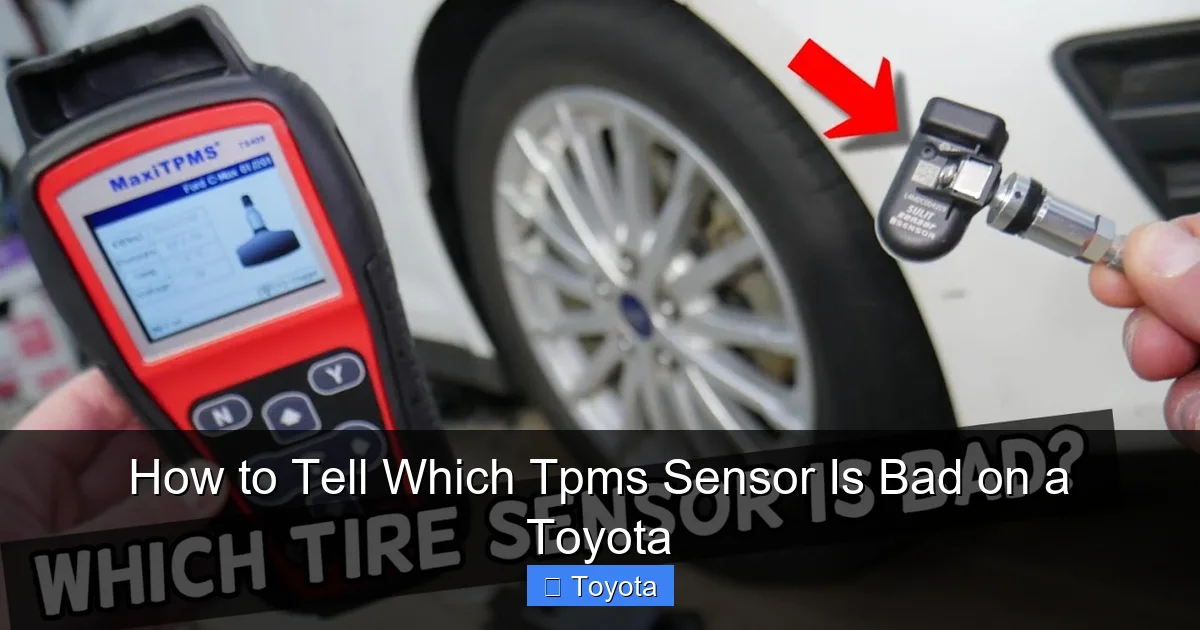
For example, the Foxwell NT510 or Autel MaxiTPMS TS401 are popular choices among DIYers. They can tell you which sensor is not responding, whether it’s sending weak signals, or if there’s a communication error. Some even allow you to reset the TPMS system after repairs.
TPMS Activation Tool (Trigger Tool)
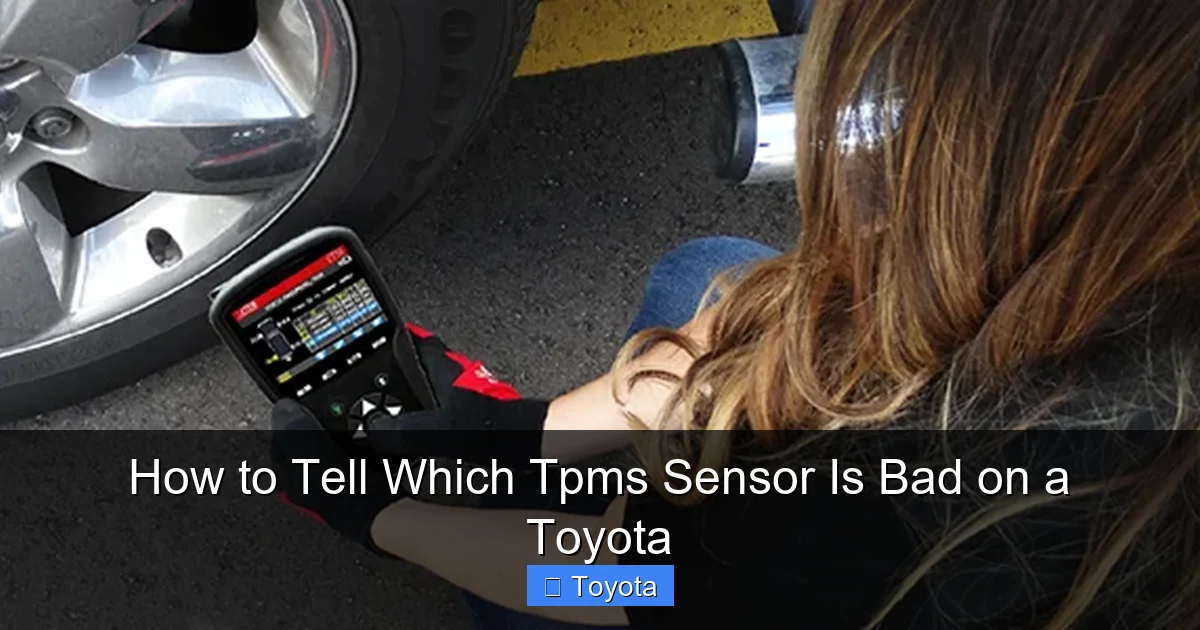
This handheld device sends a low-frequency signal to “wake up” each TPMS sensor so it transmits its data. You hold the tool near each tire valve stem, press a button, and the sensor responds by sending its pressure and ID to the scanner or your car’s display.
This is especially useful when you suspect one sensor is dead. If you activate the tool near the front left tire and get a reading, but get nothing from the rear right, that’s your culprit. Some advanced tools can even program new sensors or clone existing ones.
Smartphone Apps and Bluetooth Sensors (Optional)
If you’re tech-savvy, you might consider aftermarket Bluetooth TPMS sensors that connect to your phone. These replace your existing sensors and provide real-time pressure and temperature readings via an app. While not OEM, they can be a great way to monitor your tires and identify issues early.
However, keep in mind that these systems require installation and may not integrate with your Toyota’s factory TPMS warning system. They’re best used as a supplement, not a replacement.
Step-by-Step Guide to Identifying the Faulty Sensor
Visual guide about How to Tell Which Tpms Sensor Is Bad on a Toyota
Image source: thecarhow.com
Now that you know the signs and have the tools, let’s walk through a practical, step-by-step process to determine which TPMS sensor is bad on your Toyota.
Step 1: Check Tire Pressures Manually
Start by checking the air pressure in all four tires using your handheld gauge. Make sure the car has been parked for at least three hours so the tires are cold. Compare each reading to the recommended PSI on the door jamb sticker.
If one tire is significantly low—say, 20 PSI while the others are at 32—that’s likely the cause of the warning light. Inflate it to the correct pressure and see if the light turns off after driving for a few minutes.
But if all tires are properly inflated, move to the next step.
Step 2: Observe the TPMS Display (If Available)
If your Toyota has a multi-information display that shows individual tire pressures, check it while the car is running. Look for any tire showing “—”, “LO”, or no reading at all. That tire’s sensor is probably not transmitting.
For example, on a 2020 Toyota Corolla, you can access the tire pressure screen by pressing the “DISP” button on the steering wheel. If the rear left tire shows “—”, that’s a strong indicator of a failed sensor.
Step 3: Use an OBD2 Scanner to Read TPMS Codes
Plug your OBD2 scanner into the port under the dashboard. Turn the ignition to “ON” (but don’t start the engine). Navigate to the TPMS menu and look for any trouble codes.
Common codes include:
– C2160: No signal from front left sensor
– C2161: No signal from front right sensor
– C2162: No signal from rear left sensor
– C2163: No signal from rear right sensor
These codes directly tell you which sensor isn’t communicating. Some scanners also show signal strength—weak signals may indicate a dying battery or interference.
Step 4: Use a TPMS Activation Tool
If your scanner doesn’t give clear results, use a TPMS activator. Turn on the tool and hold it near the valve stem of the front left tire. Press the trigger button. The tool should light up or beep, indicating it received a signal.
Repeat this for each tire. If one tire doesn’t respond—no light, no beep—that sensor is likely dead. For example, if the front right tire doesn’t activate, that’s your bad sensor.
Step 5: Check for Physical Damage
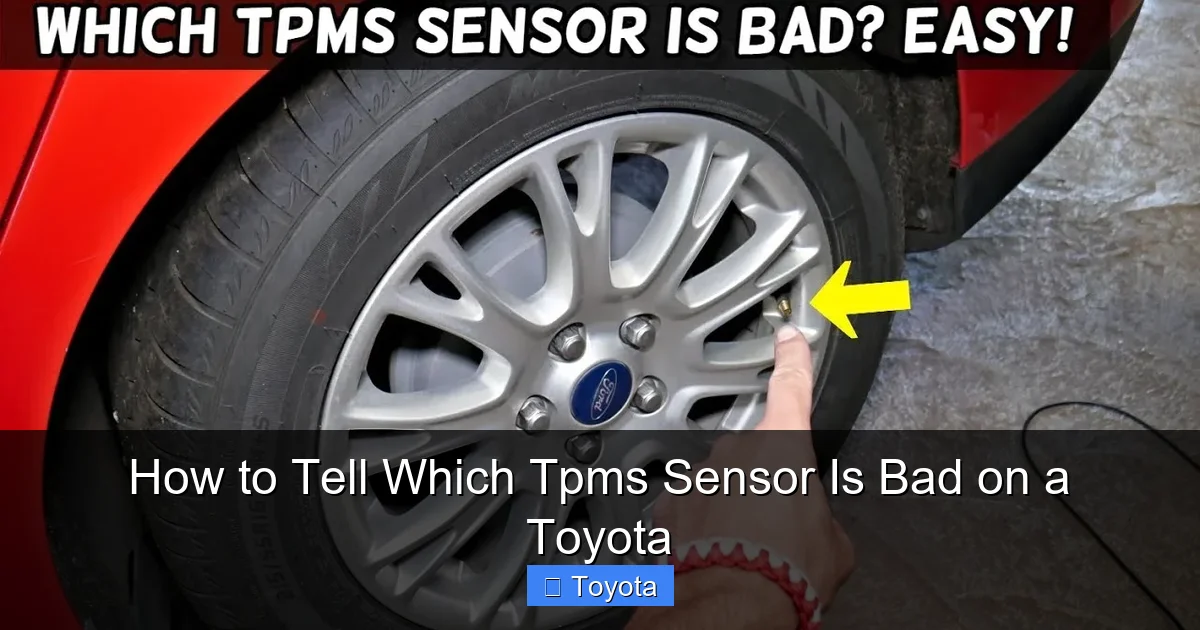
Visually inspect each sensor. Look for cracks in the housing, corrosion around the valve stem, or signs of impact. Sometimes, a sensor can look fine but still be internally damaged.
Also, check if the valve stem is bent or leaking. A damaged stem can cause slow leaks and trigger the TPMS light, even if the sensor itself is working.
Step 6: Consider Sensor Age and Replacement History
If your Toyota is over 7 years old and you’ve never replaced the TPMS sensors, it’s likely time. Even if only one sensor is bad, consider replacing all four for peace of mind. Sensors often fail around the same time, and replacing them in pairs or sets can save you money and hassle in the long run.
What to Do Once You’ve Identified the Bad Sensor
So you’ve found the faulty sensor—now what? Here’s how to move forward.
Replace the Sensor
You’ll need to visit a tire shop or dealership to have the bad sensor replaced. The process involves removing the tire from the rim, extracting the old sensor, installing a new one, and resealing the tire. Most shops charge between $50 and $150 per sensor, including labor and programming.
Make sure the new sensor is compatible with your Toyota’s make, model, and year. Some sensors are universal, while others are vehicle-specific.
Reprogram the System
After replacing the sensor, the TPMS system needs to be reset or reprogrammed. This ensures the new sensor’s ID is recognized and the system knows which tire is which.
Some Toyotas allow you to reset the system using the multi-information display. For example, on a 2019 Toyota RAV4, you can go to “Settings” > “Vehicle Settings” > “TPMS” > “Initialize” and follow the prompts.
However, if you’ve replaced the sensor, a professional tool is usually required to program the new ID into the system. Most tire shops have these tools and can do it quickly.
Test Drive and Monitor
After the repair, take your Toyota for a short drive. The TPMS light should turn off within a few minutes. If it stays on, there may be another issue—or the sensor wasn’t properly programmed.
Keep an eye on the tire pressure display (if equipped) to ensure all four tires are showing consistent readings.
Preventing Future TPMS Problems
Once you’ve fixed the issue, take steps to avoid future TPMS headaches.
Regular Tire Maintenance
Check your tire pressure at least once a month. Use a quality gauge and adjust as needed. Properly inflated tires not only prevent TPMS warnings but also improve fuel efficiency, handling, and tire life.
Protect Sensors During Service
When getting tires rotated, balanced, or repaired, remind the technician to handle TPMS sensors with care. Ask them to inspect the sensors for damage and ensure they’re properly reinstalled.
Replace Sensors Proactively
If your Toyota is approaching 7–10 years old, consider replacing all four TPMS sensors as a preventive measure. It’s cheaper than dealing with repeated warnings and potential safety risks.
Use Quality Sensors
Don’t skimp on cheap aftermarket sensors. While OEM (original equipment manufacturer) sensors are more expensive, they’re more reliable and often come with better warranties. Many Toyota owners report fewer issues with genuine Toyota TPMS sensors compared to generic brands.
Conclusion
Knowing how to tell which TPMS sensor is bad on a Toyota can save you time, money, and stress. By paying attention to warning lights, using the right tools, and following a systematic approach, you can quickly identify the faulty sensor and get it replaced. Whether you’re driving a Camry, RAV4, or Highlander, a well-maintained TPMS system ensures your tires stay properly inflated and your drives stay safe.
Remember, TPMS isn’t just about convenience—it’s a critical safety feature. Underinflated tires can overheat, wear unevenly, and even blow out at high speeds. By staying on top of your TPMS health, you’re not just fixing a warning light; you’re protecting yourself, your passengers, and everyone else on the road.
So the next time that little tire icon lights up, don’t panic. Grab your gauge, check your pressures, and use the steps in this guide to track down the problem. With a little know-how, you’ll have your Toyota’s TPMS system back in working order in no time.
Frequently Asked Questions
How long do Toyota TPMS sensors last?
Most Toyota TPMS sensors last between 5 and 10 years, depending on usage and environmental conditions. The internal battery is not replaceable, so the entire sensor must be replaced when it fails.
Can I drive with a bad TPMS sensor?
Yes, you can drive with a bad TPMS sensor, but it’s not recommended. You won’t receive low-pressure warnings, which could lead to unsafe driving conditions or tire damage.
Will a bad TPMS sensor cause a check engine light?
Not usually. A bad TPMS sensor typically triggers the TPMS warning light, not the check engine light. However, in rare cases, a communication error could affect other systems.
Can I replace just one TPMS sensor?
Yes, you can replace just the faulty sensor. However, if your Toyota is over 7 years old, consider replacing all four to avoid future failures.
Do I need a special tool to reset the TPMS on a Toyota?
Some Toyotas allow manual reset via the dashboard menu, but after sensor replacement, a professional TPMS tool is usually needed to program the new sensor ID.
Why does my TPMS light come on in cold weather?
Cold temperatures cause tire pressure to drop. If the pressure falls below the threshold, the TPMS light will activate. Inflate your tires to the recommended PSI when cold to prevent this.