How to Sell My Car in Arizona
Selling your car in Arizona doesn’t have to be complicated. With the right preparation, paperwork, and pricing strategy, you can sell your vehicle quickly and legally—whether you’re dealing with a private buyer, dealership, or online platform. This guide walks you through every step to ensure a smooth, profitable sale.
So, you’ve decided it’s time to sell your car in Arizona. Maybe you’re upgrading to something newer, downsizing, or just ready for a change. Whatever the reason, selling a car can feel overwhelming—especially if you’ve never done it before. But don’t worry. With the right approach, you can turn this process into a smooth, stress-free experience that puts cash in your pocket and peace of mind in your heart.
Arizona is a great state to sell a car. With a strong used car market, plenty of buyers, and clear state regulations, you have a solid foundation to work from. Whether you’re in Phoenix, Tucson, Flagstaff, or a smaller town, there are buyers looking for vehicles just like yours. The key is knowing how to present your car, price it fairly, and complete the sale legally and safely.
In this guide, we’ll walk you through every step of selling your car in Arizona—from prepping your vehicle to finalizing the paperwork. We’ll cover everything you need to know, including legal requirements, pricing strategies, where to sell, and how to avoid common pitfalls. By the end, you’ll feel confident and ready to sell your car the right way.
In This Article
- 1 Key Takeaways
- 2 📑 Table of Contents
- 3 Step 1: Prepare Your Car for Sale
- 4 Step 2: Determine Your Car’s Value
- 5 Step 3: Gather Required Documents
- 6 Step 4: Choose How to Sell Your Car
- 7 Step 5: Market Your Car Effectively
- 8 Step 6: Complete the Sale Safely and Legally
- 9 Conclusion
- 10 Frequently Asked Questions
- 10.1 Do I need a smog check to sell my car in Arizona?
- 10.2 Can I sell my car if I still owe money on it?
- 10.3 How long does it take to sell a car in Arizona?
- 10.4 What happens if I lose my car title in Arizona?
- 10.5 Do I have to pay taxes when selling my car in Arizona?
- 10.6 Can I sell my car without a bill of sale in Arizona?
Key Takeaways
- Prepare your car: Clean it thoroughly, fix minor issues, and gather maintenance records to boost buyer confidence and value.
- Know your car’s worth: Use tools like Kelley Blue Book or Edmunds to price your car competitively based on condition, mileage, and market trends.
- Gather required documents: You’ll need the title, vehicle history report, emissions test (if applicable), and a completed bill of sale.
- Choose your selling method: Decide between private sale, trade-in, or selling to a dealer or online car buyer based on speed, convenience, and profit.
- Complete the sale legally: Sign over the title correctly, notify the MVD, and provide a release of liability to protect yourself from future issues.
- Be safe during transactions: Meet in public places, accept secure payment methods, and avoid sharing personal information unnecessarily.
- Understand Arizona-specific rules: Emissions testing is required in certain counties, and sales tax applies when transferring ownership.
📑 Table of Contents
Step 1: Prepare Your Car for Sale
Before you even think about listing your car, take time to get it in the best possible shape. First impressions matter—especially when selling a used vehicle. A clean, well-maintained car not only attracts more buyers but can also increase its resale value.
Clean Inside and Out
Start with a thorough cleaning. Wash the exterior, wax it if possible, and clean the windows inside and out. Don’t forget the wheels and tires—dirty rims can make a car look neglected. Inside, vacuum the carpets, wipe down surfaces, and remove any trash or personal items. Consider using an odor eliminator if there are lingering smells from pets, smoke, or food.
If your car has stains on the upholstery or carpet, consider professional detailing. A $100–$200 detail job can make your car look nearly new and significantly boost buyer interest. It’s a small investment that often pays off in a higher sale price.
Address Minor Repairs
You don’t need to rebuild the engine, but fixing small issues can make a big difference. Replace burnt-out bulbs, fix cracked windshields, and top off fluids. If your brakes squeak or the check engine light is on, get them checked—buyers will ask, and unresolved issues can kill a deal.
For example, if your car has a small dent on the door, a $50 paintless dent repair can restore its appearance. Similarly, replacing worn wiper blades or a cracked side mirror shows you’ve taken care of the vehicle.
Gather Maintenance Records
Buyers love transparency. Collect all your service records, receipts, and warranty information. If you’ve kept up with oil changes, tire rotations, and major repairs, share that history. It builds trust and proves your car has been well-maintained.
Create a simple folder or digital file with documents like:
– Oil change logs
– Brake or transmission service records
– Tire replacement receipts
– Any warranty information
This extra effort can set your car apart from others on the market and justify a higher asking price.
Step 2: Determine Your Car’s Value
Visual guide about How to Sell My Car in Arizona
Image source: kajabi-storefronts-production.global.ssl.fastly.net
Pricing your car correctly is one of the most important steps in the selling process. Overprice it, and buyers will ignore it. Underprice it, and you leave money on the table. The goal is to find the sweet spot—fair market value.
Use Online Valuation Tools
Start by checking your car’s value using trusted sources like Kelley Blue Book (KBB), Edmunds, or NADA Guides. These tools ask for details like:
– Make, model, and year
– Mileage
– Trim level and options (sunroof, navigation, etc.)
– Condition (excellent, good, fair)
For example, a 2018 Honda Accord with 60,000 miles in “good” condition might be valued at $16,500 privately. But if it’s in “excellent” condition with low mileage and all service records, it could fetch $18,000 or more.
Compare Similar Listings
Next, search online marketplaces like Craigslist, Facebook Marketplace, Autotrader, or Cars.com for similar cars in your area. Look at vehicles with similar mileage, condition, and features. Note their asking prices—this gives you a real-world benchmark.
For instance, if three 2019 Toyota Camrys with 50,000 miles are listed between $17,000 and $18,500, you’ll know your price should fall in that range.
Adjust for Market Conditions
The used car market in Arizona can fluctuate based on season, demand, and economic factors. In summer, convertibles and trucks may sell faster. In winter, SUVs and AWD vehicles are in higher demand. Also, gas prices and new car shortages can drive up used car values.
If gas prices are high, fuel-efficient cars like hybrids may be more desirable. If new car inventory is low (as it was during the 2020–2022 chip shortage), used cars commanded premium prices. Stay aware of these trends to time your sale wisely.
Step 3: Gather Required Documents
Selling a car in Arizona involves more than just handing over the keys. You need the right paperwork to complete the sale legally and protect yourself from future liability.
Vehicle Title
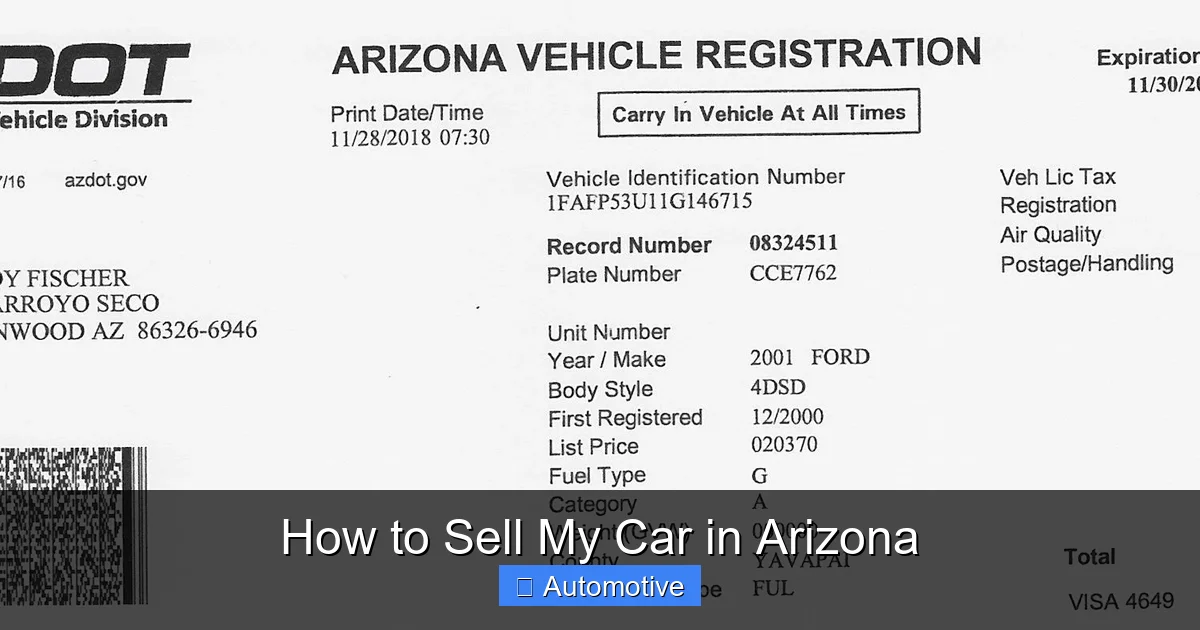
The title is the most important document. It proves you own the car and have the right to sell it. Make sure your name is correctly listed and there are no liens (loans) against the vehicle. If you still owe money on the car, you’ll need to pay off the loan before selling or coordinate with the lender.
If your title is lost, you can request a duplicate from the Arizona Motor Vehicle Division (MVD). Visit the MVD website or a local office to apply. There’s a small fee, and processing may take a few days.
Bill of Sale
Arizona requires a bill of sale for private vehicle transactions. This document records the sale details, including:
– Buyer and seller names and addresses
– Vehicle make, model, year, and VIN
– Sale price
– Date of sale
– Odometer reading
You can download a free Arizona bill of sale template from the MVD website or use a service like DMV.org. Both parties should sign it, and keep a copy for your records.
Vehicle History Report
While not legally required, providing a vehicle history report (like from Carfax or AutoCheck) builds buyer confidence. It shows accidents, title status, service records, and whether the car has been salvaged or flooded.
If your car has a clean history, this report can justify a higher price. If there are issues, be upfront—honesty builds trust and avoids problems later.
Emissions Test (If Required)
In Arizona, emissions testing is required for most vehicles in Maricopa and Pima counties (including Phoenix and Tucson). If your car is more than five years old and registered in these areas, it must pass an emissions test before it can be sold.
You can get the test at an authorized station. The cost is usually around $25–$30. If your car fails, you’ll need to repair it and retest. Some buyers may ask for a recent emissions certificate, so it’s smart to get it done before listing.
Release of Liability
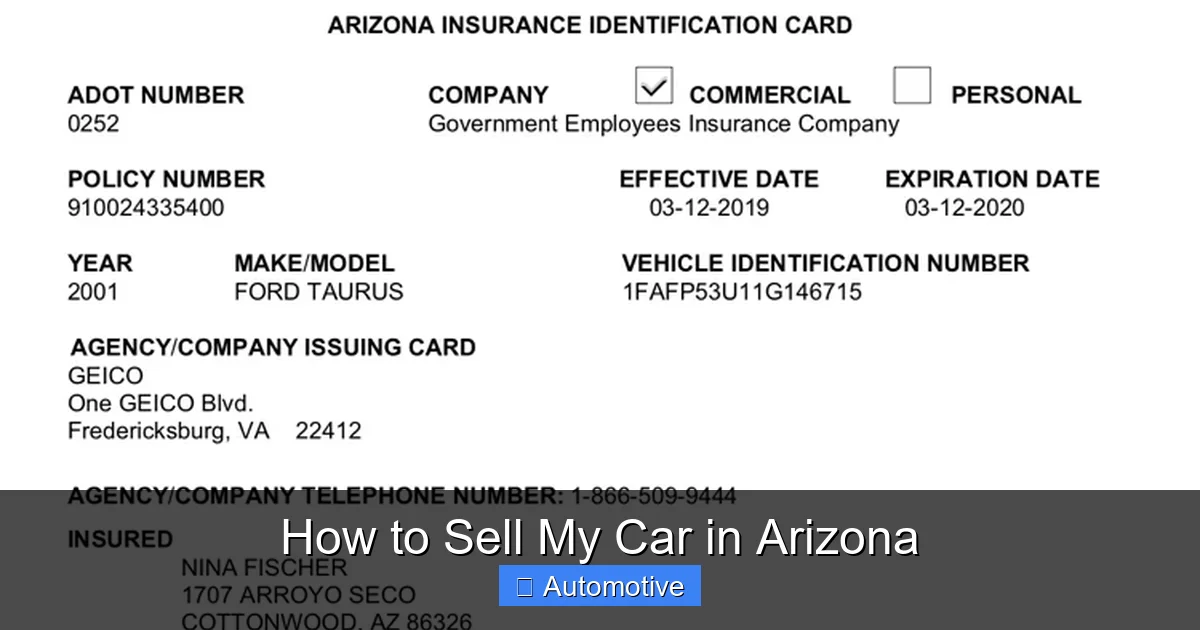
After the sale, you must notify the MVD that you’re no longer responsible for the vehicle. This is done by submitting a Release of Liability form (available on the MVD website). It protects you if the buyer gets a ticket, parks illegally, or causes an accident after the sale.
You can file this online or by mail within 10 days of the sale. Keep a copy as proof.
Step 4: Choose How to Sell Your Car
Now that your car is ready and your documents are in order, it’s time to decide how to sell. Each method has pros and cons, so choose based on your priorities—speed, convenience, or profit.
Private Sale
Selling directly to a private buyer typically yields the highest profit. You avoid dealer markups and can negotiate directly. Platforms like Facebook Marketplace, Craigslist, and OfferUp are popular in Arizona.
Pros:
– Higher sale price
– Full control over pricing and negotiation
– No middleman fees
Cons:
– More time and effort (photography, ads, meetings)
– Safety risks (meeting strangers)
– Longer selling process
Tip: Take high-quality photos in good lighting, write a detailed description, and respond quickly to inquiries.
Trade-In at a Dealership
If you’re buying a new car, trading in your old one is convenient. Dealerships handle the paperwork and apply the trade-in value toward your purchase.
Pros:
– Fast and hassle-free
– No need to find a buyer
– Tax savings (in Arizona, you only pay sales tax on the difference between the new car price and trade-in value)
Cons:
– Lower offer than private sale
– Less negotiation power
– May feel pressured to buy on the spot
Tip: Get multiple trade-in offers and compare them to private sale values. Don’t let the dealer lowball you.
Sell to a Dealer or Online Buyer
Companies like CarMax, Carvana, Vroom, and Shift buy cars directly. You can get an online offer in minutes, schedule a pickup, and get paid quickly.
Pros:
– Very fast and convenient
– No need to meet buyers
– Competitive offers (especially for popular models)
Cons:
– Offers may be lower than private sale
– Limited negotiation
– May require vehicle inspection
Tip: Get quotes from at least two services. CarMax, for example, often offers more than online-only buyers.
Auction or Consignment
Some sellers use auctions (like Manheim) or consignment services (where a dealer sells your car for a fee). These are less common for everyday sellers but can work for specialty or high-value vehicles.
Pros:
– Potential for high bids
– Professional handling
Cons:
– Fees and commissions
– Uncertain outcome
– Longer process
For most Arizona sellers, private sale or dealer trade-in are the best options.
Step 5: Market Your Car Effectively
Once you’ve chosen your selling method, it’s time to get the word out. A great listing can make all the difference in attracting serious buyers.
Write a Compelling Ad
Your ad should be clear, honest, and highlight your car’s best features. Include:
– Year, make, model, and trim
– Mileage
– Condition (mention any flaws honestly)
– Key features (AWD, backup camera, leather seats, etc.)
– Reason for selling
– Price and contact info
Example:
“2017 Subaru Outback, 78,000 miles, AWD, excellent condition. Single owner, all service records, new tires and brakes. Clean title, no accidents. Selling due to upgrade. $16,900 OBO. Call or text 555-1234.”
Take High-Quality Photos
Photos are the first thing buyers see. Take pictures in daylight, from multiple angles:
– Front, back, and sides
– Interior (dashboard, seats, trunk)
– Engine bay
– Tires and wheels
– Any damage (to be transparent)
Avoid shadows, glare, or cluttered backgrounds. A clean, well-lit photo can make your car look more appealing.
Choose the Right Platform
Different platforms attract different buyers:
– Facebook Marketplace: Great for local sales, easy to use
– Craigslist: Free, but requires caution
– Autotrader or Cars.com: More serious buyers, but may charge listing fees
– OfferUp: Mobile-friendly, popular in Arizona
Post on multiple platforms to reach more people. Update your listing regularly to keep it visible.
Respond Promptly and Professionally
When buyers message or call, reply quickly and politely. Answer questions honestly and schedule test drives safely. Avoid sharing personal info like your home address until you’re ready to meet.
Tip: Use a Google Voice number to protect your privacy.
Step 6: Complete the Sale Safely and Legally
The final step is closing the deal. Do it right, and you’ll walk away with cash and peace of mind.
Meet in a Safe Location
Always meet in a public place—like a police station parking lot, mall, or busy shopping center. Avoid your home or isolated areas. Bring a friend if possible.
Verify Payment
Accept secure payment methods:
– Cash (count it in front of the buyer)
– Cashier’s check (verify it’s real at a bank)
– Bank transfer (safe but may take time)
Avoid personal checks—they can bounce. Never release the car until payment is confirmed.
Sign Over the Title
On the back of the title, fill in the buyer’s name, address, sale price, and odometer reading. Sign and date it. Make sure the buyer signs too.
Tip: Write “Private Sale” or “As Is” on the title to clarify the terms.
Provide a Bill of Sale
Give the buyer a completed bill of sale. Both of you should keep a copy.
Remove License Plates and Accessories
In Arizona, you keep your license plates. Remove them before handing over the car. Also, take any personal items, garage door openers, or custom accessories unless included in the sale.
Notify the MVD
Within 10 days, submit the Release of Liability form to the MVD. This protects you from future tickets or accidents.
Cancel Insurance
Once the sale is complete, call your insurance company to cancel or transfer coverage. Don’t wait—you’re still liable until the policy is updated.
Conclusion
Selling your car in Arizona doesn’t have to be stressful. With the right preparation, pricing, and paperwork, you can sell your vehicle quickly, safely, and for a fair price. Start by cleaning and repairing your car, then research its value and gather all necessary documents. Choose the selling method that fits your needs—private sale, trade-in, or online buyer—and market your car with clear photos and a strong description. Finally, complete the sale legally by signing the title, providing a bill of sale, and notifying the MVD.
By following these steps, you’ll not only get the best deal but also avoid common pitfalls like scams, legal issues, or lowball offers. Whether you’re in Phoenix, Tucson, or a rural area, the Arizona used car market is active and ready for well-prepared sellers. So take a deep breath, follow this guide, and sell your car with confidence.
Frequently Asked Questions
Do I need a smog check to sell my car in Arizona?
Yes, if your vehicle is registered in Maricopa or Pima counties and is more than five years old, it must pass an emissions test before sale. This includes cities like Phoenix and Tucson. Vehicles in other counties may not require it.
Can I sell my car if I still owe money on it?
You can sell a car with an outstanding loan, but the buyer must pay off the remaining balance. Work with your lender to coordinate the payoff and title transfer. Some buyers may finance the purchase through the lender.
How long does it take to sell a car in Arizona?
It depends on the method. Private sales can take a few days to several weeks, while selling to a dealer or online buyer can happen in as little as 24 hours. Pricing competitively and marketing well speeds up the process.
What happens if I lose my car title in Arizona?
You can request a duplicate title from the Arizona MVD online, by mail, or in person. There’s a small fee, and you’ll need to provide ID and vehicle information. Processing usually takes 7–10 business days.
Do I have to pay taxes when selling my car in Arizona?
As the seller, you don’t pay sales tax—the buyer does when they register the vehicle. However, if you trade in your car, you only pay tax on the difference between the new car price and trade-in value.
Can I sell my car without a bill of sale in Arizona?
Technically, the bill of sale isn’t required by law, but it’s highly recommended. It protects both parties and is often needed for registration. The MVD provides a free template online.