How to Sell Car Parts on Ebay
Selling car parts on eBay can be a profitable side hustle or full-time business if done right. This guide walks you through everything you need—from sourcing inventory to optimizing listings and shipping efficiently—so you can succeed in the competitive automotive marketplace.
So, you’ve got a garage full of car parts—maybe from an old project car, a salvage yard haul, or just spare components you no longer need. Instead of letting them collect dust, why not turn them into cash? Selling car parts on eBay is one of the most effective ways to reach a massive audience of car enthusiasts, mechanics, and DIYers looking for exactly what you’ve got.
But here’s the thing: just slapping a photo and a price tag on eBay won’t cut it. The automotive parts market is competitive, and buyers are picky. They want to know exactly what they’re getting, whether it fits their vehicle, and if it’s worth the price. That’s why success on eBay isn’t just about listing items—it’s about strategy, presentation, and customer service.
Whether you’re selling a rare vintage carburetor, a set of performance brake pads, or a used alternator, this guide will walk you through every step of the process. From sourcing your inventory to shipping it safely, we’ll cover the insider tips and best practices that top sellers use to dominate the category. By the end, you’ll have a clear roadmap to start selling car parts on eBay—and doing it well.
In This Article
- 1 Key Takeaways
- 2 📑 Table of Contents
- 3 Why Sell Car Parts on eBay?
- 4 Finding and Sourcing Car Parts to Sell
- 5 Researching Demand and Pricing
- 6 Creating High-Converting eBay Listings
- 7 Choosing the Right Listing Format
- 8 Packaging and Shipping Car Parts
- 9 Providing Excellent Customer Service
- 10 Staying Compliant with eBay Policies
- 11 Scaling Your Car Parts Business
- 12 Frequently Asked Questions
Key Takeaways
- Research demand and pricing: Use eBay’s sold listings and keyword tools to find high-demand, profitable car parts before listing.
- Write clear, detailed titles and descriptions: Include part numbers, compatibility, condition, and key features to boost visibility and buyer confidence.
- Take high-quality photos: Use good lighting and multiple angles to show the part’s condition, especially for used or refurbished items.
- Choose the right listing format: Decide between auction and Buy It Now based on the part’s rarity, demand, and your sales goals.
- Ship safely and affordably: Use proper packaging, accurate weight/dimensions, and reliable carriers to avoid damage and extra costs.
- Provide excellent customer service: Respond quickly, handle returns professionally, and maintain a high seller rating to build trust.
- Stay compliant with eBay policies: Follow automotive part rules, avoid prohibited items, and use accurate fitment data to reduce disputes.
📑 Table of Contents
- Why Sell Car Parts on eBay?
- Finding and Sourcing Car Parts to Sell
- Researching Demand and Pricing
- Creating High-Converting eBay Listings
- Choosing the Right Listing Format
- Packaging and Shipping Car Parts
- Providing Excellent Customer Service
- Staying Compliant with eBay Policies
- Scaling Your Car Parts Business
Why Sell Car Parts on eBay?
eBay has been a go-to marketplace for automotive parts for over two decades, and for good reason. It’s one of the largest online platforms where car owners and repair shops actively search for both common and hard-to-find components. Unlike local classifieds or small forums, eBay gives you access to millions of potential buyers across the U.S. and even internationally.
One of the biggest advantages of selling car parts on eBay is the built-in trust and structure. Buyers know they’re protected by eBay’s Money Back Guarantee, which encourages them to purchase from sellers they might not know personally. For you, that means less hesitation and more sales. Plus, eBay’s search algorithm rewards well-optimized listings, so if you do your homework, your parts can appear right at the top when someone searches for “OEM Honda Civic alternator 2006.”
Another benefit is the flexibility. You can start small—maybe selling a few parts from your own car—and scale up as you learn what sells and how to manage inventory. Many successful sellers began as hobbyists and grew into full-time businesses, sourcing parts from salvage yards, auctions, or even estate sales. With low overhead and the ability to work from home, selling car parts on eBay offers a realistic path to passive income or even a career change.
Finding and Sourcing Car Parts to Sell
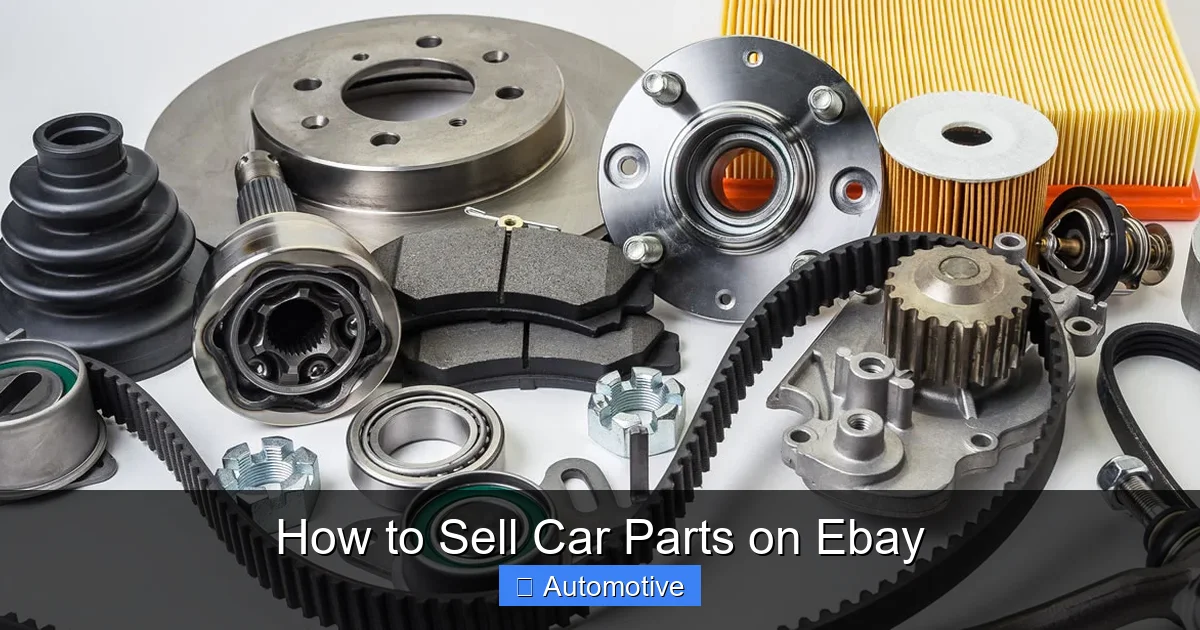
Visual guide about How to Sell Car Parts on Ebay
Image source: webretailer.com
Before you can sell, you need inventory. The good news? There are more ways to source car parts than you might think. The key is finding parts that are in demand, in good condition, and priced to sell.
Start with What You Have
The easiest place to begin is your own garage. Do you have an old car you’re parting out? Spare parts from a project that never got finished? Even small items like sensors, switches, or interior trim can sell if they’re in good shape. Take inventory of everything you have, and research each part to see if it has value.
For example, a used but functional oxygen sensor from a popular Toyota model might sell for $30–$50, while a set of leather seat covers in excellent condition could fetch $100 or more. Don’t overlook small components—buyers often need exact replacements and are willing to pay a premium for them.
Salvage Yards and Junkyards
Salvage yards are goldmines for car parts. Many yards allow you to pull parts yourself (known as “self-service” or “you-pull-it”), charging a small fee per visit or per part. Others offer full-service options where staff remove the parts for you, though this usually costs more.
When visiting a salvage yard, bring tools, gloves, and a list of parts you’re looking for. Focus on high-demand items like alternators, starters, transmissions, and body panels. Also, look for vehicles with low mileage or rare models—parts from these cars often sell for more.
Pro tip: Call ahead to see if the yard has a specific make and model in stock. Some yards even have online inventory systems you can search from home.
Online Auctions and Liquidation Sales
Websites like Copart, IAAI, and even government auctions sell damaged or totaled vehicles that can be a great source of usable parts. These cars are often sold “as-is,” so you’ll need to inspect them carefully—either in person or through detailed photos and videos.
While these auctions can be competitive, they’re a great way to get entire cars at a fraction of their value. For example, a flood-damaged sedan might be sold for $1,000, but if it has a working engine, transmission, and electronics, you could easily recoup your investment by selling individual parts.
Estate Sales and Private Sellers
Keep an eye on local estate sales, Facebook Marketplace, and Craigslist for people selling car parts or entire vehicles. Sometimes, families are clearing out a deceased relative’s garage and just want to get rid of everything quickly. You might find rare vintage parts, tools, or even classic cars at bargain prices.
When dealing with private sellers, always inspect the parts in person if possible. Ask about the car’s history, mileage, and why the parts were removed. This information can help you write a more accurate listing later.
Researching Demand and Pricing
Visual guide about How to Sell Car Parts on Ebay
Image source: assets-global.website-files.com
Not all car parts are created equal. Some sell fast and for top dollar, while others sit in your inventory for months. The key to success is knowing what’s in demand—and how much buyers are willing to pay.
Use eBay’s Sold Listings
One of the most powerful tools at your disposal is eBay’s “Sold Listings” filter. When you search for a part—say, “2008 Ford F-150 alternator”—click on “Sold Items” to see what similar parts have actually sold for in the past 90 days.
This gives you real-world data on pricing, condition, and buyer interest. For example, you might discover that OEM alternators sell for 30% more than aftermarket ones, or that parts with free shipping get more bids.
Check Completed Listings
If “Sold Listings” isn’t available, use “Completed Listings” instead. This shows items that have ended, whether they sold or not. A part that didn’t sell might be overpriced, poorly described, or not in demand. Use this info to adjust your strategy.
Use Keyword Research Tools
Tools like Terapeak (now part of eBay’s Seller Hub) or third-party apps like Zik Analytics can help you identify high-demand keywords and trends. For example, you might find that “LED headlights” or “turbocharger” are trending upward, indicating growing interest.
You can also use Google Trends to see seasonal patterns. For instance, demand for snow tires peaks in fall, while convertible tops sell better in spring.
Factor in Condition and Rarity
The condition of your part plays a huge role in pricing. A used part with minor wear might sell for 40–60% of a new one, while a rare or discontinued part—like a vintage carburetor or a limited-edition spoiler—could command a premium.
Always be honest about condition in your listing. Use terms like “New,” “Like New,” “Used – Excellent,” “Used – Good,” or “For Parts/Not Working” to set clear expectations.
Creating High-Converting eBay Listings
Visual guide about How to Sell Car Parts on Ebay
Image source: oeminteractive.com
A great listing is like a salesperson working 24/7. It needs to grab attention, answer questions, and convince buyers to click “Buy It Now” or place a bid. Here’s how to make yours stand out.
Craft a Clear, Keyword-Rich Title
Your title is the first thing buyers see—and it’s what eBay’s search algorithm uses to match your listing to searches. Keep it under 80 characters and include the most important details: year, make, model, part name, condition, and key features.
For example:
“2005-2010 Honda Odyssey OEM Alternator – Used – Tested – Free Shipping”
This title includes:
– Vehicle compatibility (2005-2010 Honda Odyssey)
– Part type (Alternator)
– Brand/OEM status (OEM)
– Condition (Used)
– Key selling point (Tested, Free Shipping)
Avoid filler words like “Awesome!” or “Great Deal!”—they don’t help with search and can look unprofessional.
Write a Detailed Description
Your description should answer every question a buyer might have. Use short paragraphs and bullet points for readability. Include:
– Exact part number (if available)
– Vehicle fitment (years, makes, models, engine types)
– Condition and any flaws
– Whether it’s OEM, aftermarket, or refurbished
– Testing results (e.g., “Bench tested and working”)
– Reason for sale
– Shipping details
Example:
“This OEM alternator was removed from a 2007 Honda Odyssey with 85,000 miles. It was tested on a bench and produces full voltage. Minor cosmetic wear on the casing, but fully functional. Includes pulley and mounting bolts.”
Take High-Quality Photos
Photos are critical—especially for used parts. Buyers want to see exactly what they’re getting. Use natural light or a well-lit area, and take multiple shots from different angles.
Include close-ups of labels, serial numbers, connectors, and any damage. If the part has a flaw, photograph it clearly and mention it in the description. Transparency builds trust.
Pro tip: Use a plain background (like a white sheet or cardboard) to keep the focus on the part. Avoid cluttered garages or messy workbenches.
Use eBay’s Item Specifics
eBay’s “Item Specifics” section helps buyers filter results and ensures your listing appears in relevant searches. Fill out every field you can, including:
– Brand
– Manufacturer Part Number
– Interchange Part Number
– Placement on Vehicle (Front, Rear, Left, Right)
– Warranty
– Condition
For example, if you’re selling a brake caliper, specify whether it’s for the front or rear, left or right side. This reduces the chance of returns due to incorrect fitment.
Choosing the Right Listing Format
eBay offers two main listing formats: auction and Buy It Now. Each has pros and cons, and the best choice depends on the part you’re selling.
Auction Listings
Auctions start at a low price (even $0.99) and let buyers bid over a set period (usually 3, 5, or 7 days). They’re ideal for:
– Rare or collectible parts
– Items with uncertain value
– Parts you want to sell quickly
Auctions create urgency and can drive up prices through competitive bidding. For example, a vintage carburetor might start at $50 but sell for $200 if multiple collectors are interested.
However, auctions are risky. If no one bids, you might sell for far less than expected. Also, they require patience—you won’t get paid until the auction ends.
Buy It Now Listings
Buy It Now (BIN) lets buyers purchase immediately at a fixed price. It’s best for:
– Common, high-demand parts
– Items with a clear market value
– Sellers who want predictable income
BIN listings are more reliable and faster to sell. You can also offer “Best Offer” to allow negotiation, which can help close deals without lowering your price upfront.
Many top sellers use a hybrid approach: start with a BIN price, and if it doesn’t sell in a week, relist as an auction to generate interest.
Promoted Listings
Once your listing is live, consider using eBay’s Promoted Listings feature. It’s a pay-per-sale advertising tool that boosts your item’s visibility in search results. You set a promotion rate (e.g., 5%), and eBay only charges you if the item sells through the promoted placement.
This is especially useful for competitive parts like brake pads or air filters, where visibility can make or break a sale.
Packaging and Shipping Car Parts
Shipping is where many sellers lose money or get negative feedback. Car parts come in all shapes and sizes—from tiny sensors to bulky bumpers—and each requires careful handling.
Use the Right Packaging
Protect your parts from damage during transit. Use:
– Bubble wrap or foam for fragile items
– Cardboard boxes that fit snugly (no empty space)
– Packing peanuts or crumpled paper to fill gaps
– Strong tape to seal boxes
For heavy or irregularly shaped parts (like transmissions or exhaust manifolds), use double-boxing: place the part in a smaller box, then put that inside a larger one with cushioning.
Weigh and Measure Accurately
eBay calculates shipping costs based on weight and dimensions. If you underestimate, you’ll pay the difference. If you overestimate, you’ll lose money or deter buyers.
Use a digital scale and a tape measure. For large items, measure the length, width, and height in inches, then use eBay’s shipping calculator to compare carriers.
Choose the Right Carrier
For small parts (under 1 lb), USPS First Class Package is often the cheapest. For heavier items, UPS Ground or FedEx Home Delivery may be more cost-effective.
Consider offering free shipping. Many buyers prefer it, and you can build the cost into your item price. Just make sure your profit margin still makes sense.
Insure High-Value Items
For parts over $100, add shipping insurance. It protects you if the package is lost or damaged. Most carriers offer it for a small fee, and eBay includes some coverage automatically.
Print Labels and Track Packages
Use eBay’s shipping tools to print labels at home. This saves time and often gives you discounted rates. Always include a tracking number and update the buyer once shipped.
Providing Excellent Customer Service
Great service turns one-time buyers into repeat customers and boosts your seller rating—which directly impacts your visibility on eBay.
Respond Quickly to Messages
Buyers often have questions about fitment, condition, or shipping. Aim to respond within 24 hours, preferably sooner. Use polite, clear language and include helpful details.
Example:
“Hi! This alternator fits 2005-2010 Honda Odyssey models with the 3.5L V6 engine. It was tested and works perfectly. Let me know if you need more photos!”
Handle Returns and Issues Professionally
Even the best sellers get returns. If a buyer claims the part doesn’t fit or is defective, stay calm and cooperative. Ask for photos or details, and offer a refund or replacement if appropriate.
eBay’s return policy allows you to set your own rules (e.g., 30-day returns, buyer pays return shipping), but being flexible can prevent negative feedback.
Leave Feedback and Ask for Reviews
After a successful transaction, leave positive feedback for the buyer. Many will return the favor. You can also politely ask for a review in your shipping confirmation message.
Example:
“Thanks for your purchase! If you’re happy with the part, please consider leaving positive feedback. It helps other buyers feel confident!”
Monitor Your Seller Performance
Check your eBay Seller Dashboard regularly. Look at your defect rate, late shipment rate, and feedback score. Aim to stay in the “Top Rated Seller” program, which gives you perks like better search placement and fee discounts.
Staying Compliant with eBay Policies
eBay has strict rules for automotive parts to protect buyers and ensure accuracy. Violating them can lead to listing removals, account restrictions, or even bans.
Use Accurate Fitment Data
eBay requires fitment data for most car parts. This means specifying which vehicles the part fits. Use eBay’s compatibility tool or third-party databases like Hollander Interchange to ensure accuracy.
Incorrect fitment is one of the top reasons for returns and disputes. Double-check every listing.
Avoid Prohibited Items
Some car parts are banned on eBay, including:
– Airbags (due to safety regulations)
– Certain emissions-related components
– Parts from stolen vehicles
Always check eBay’s Prohibited and Restricted Items page before listing.
Be Honest About Condition
Misrepresenting a part’s condition—like calling a broken sensor “working”—is a serious violation. Be transparent, and if in doubt, disclose potential issues.
Follow Listing Guidelines
Avoid keyword stuffing, misleading titles, or duplicate listings. Use high-quality images and complete all required fields. eBay’s algorithms favor well-structured, honest listings.
Scaling Your Car Parts Business
Once you’ve mastered the basics, you can grow your operation. Here’s how:
– **Source in bulk:** Partner with salvage yards or attend auctions to buy multiple parts at once.
– **Specialize:** Focus on a niche—like European imports, diesel trucks, or classic cars—to stand out.
– **Use inventory software:** Tools like InventoryLab or SellerApp help track listings, profits, and trends.
– **Expand internationally:** List with global shipping to reach buyers in Canada, Europe, or Australia.
– **Reinvest profits:** Use earnings to buy better tools, storage, or advertising.
Many top sellers treat eBay like a real business—with goals, budgets, and growth plans. With consistency and smart strategy, you can too.
Selling car parts on eBay isn’t just about making a quick buck. It’s about solving problems for buyers, building trust, and creating a sustainable income stream. Whether you’re clearing out your garage or building a full-time business, the platform offers endless opportunities—if you’re willing to put in the work.
Start small, learn from each sale, and keep improving. With the right approach, your next listing could be the one that changes everything.
Frequently Asked Questions
What car parts sell best on eBay?
High-demand parts include alternators, starters, brake components, sensors, lights, and OEM replacement parts for popular models like Honda, Toyota, and Ford. Rare or discontinued parts also sell well due to limited availability.
Can I sell used car parts on eBay?
Yes, used car parts are allowed as long as they’re accurately described and in working condition. Be transparent about wear and tear to avoid returns and negative feedback.
How do I know if a car part will fit a buyer’s vehicle?
Use eBay’s compatibility tool or cross-reference part numbers with databases like Hollander Interchange. Always include fitment details in your listing to reduce mismatches.
Should I offer free shipping on car parts?
Free shipping can increase sales, especially for lower-priced items. Just make sure to build the cost into your price. For heavy parts, consider offering free shipping only within the U.S.
How do I handle returns for car parts?
Set a clear return policy in your listing (e.g., 30 days, buyer pays return shipping). If a part is defective or doesn’t fit, offer a refund or replacement to maintain good seller ratings.
Is it worth selling small car parts like switches or clips?
Yes, if they’re in good condition and for popular vehicles. Small parts often have low competition and high margins, especially if they’re hard to find at local stores.

![Window Tint Percentage Examples [Advanced Visualization Tool Included]](https://aautomotives.com/wp-content/uploads/2025/10/Window-Tint-Percentage-Examples-Advanced-Visualization-Tool-Included-768x411.jpg "Window Tint Percentage Examples [Advanced Visualization Tool Included] 8")