How to Sell Car in Massachusetts
Selling a car in Massachusetts doesn’t have to be complicated. With the right preparation, knowledge of state-specific rules, and a clear plan, you can complete the process quickly and legally. This guide walks you through every step—from pricing to paperwork—so you can sell your car with confidence.
Selling a car in Massachusetts might seem like a daunting task, especially if it’s your first time. Between inspections, paperwork, pricing, and finding the right buyer, there’s a lot to juggle. But here’s the good news: with a little preparation and the right information, the process can be smooth, legal, and even profitable.
Whether you’re upgrading to a newer model, downsizing, or simply ready to part ways with your current vehicle, knowing the steps involved will save you time, stress, and potential legal headaches. Massachusetts has specific rules and regulations that differ from other states—like mandatory safety and emissions inspections—so it’s important to follow them closely. This guide is designed to walk you through every stage of selling your car in the Bay State, from the moment you decide to sell to the final handshake with your buyer.
We’ll cover everything from how to price your car competitively, prepare it for sale, and choose the best selling method, to handling the legal transfer of ownership and avoiding common mistakes. Think of this as your friendly, no-nonsense roadmap to selling your car in Massachusetts—without the confusion or surprises.
In This Article
- 1 Key Takeaways
- 2 📑 Table of Contents
- 3 Understand Massachusetts-Specific Requirements
- 4 Determine the Right Price for Your Car
- 5 Prepare Your Car for Sale
- 6 Choose the Best Selling Method
- 7 Create an Effective Listing
- 8 Complete the Sale Safely and Legally
- 9 Avoid Common Mistakes
- 10 Final Thoughts
- 11 Frequently Asked Questions
- 11.1 Do I need a safety inspection to sell my car in Massachusetts?
- 11.2 Can I sell my car if I still owe money on it?
- 11.3 What documents do I need to sell my car in Massachusetts?
- 11.4 How do I protect myself when selling privately?
- 11.5 Can the buyer drive the car home without plates?
- 11.6 What happens if I don’t file Form RMV-1?
Key Takeaways
- Know the legal requirements: Massachusetts requires a valid safety inspection, emissions test (if applicable), and proper title transfer to sell your car legally.
- Price your car fairly: Use tools like Kelley Blue Book or Edmunds to research market value based on make, model, year, mileage, and condition.
- Prepare necessary documents: Have your vehicle title, bill of sale, inspection certificate, and odometer disclosure ready before listing.
- Choose the right selling method: Decide between private sale, trade-in, or selling to a dealer—each has pros and cons in terms of time, effort, and profit.
- Advertise effectively: Use high-quality photos, write a detailed description, and list on trusted platforms like Craigslist, Facebook Marketplace, or Autotrader.
- Complete the sale safely: Meet in public places, accept secure payment methods, and file the RMV-1 form to notify the state of the sale.
- Avoid common pitfalls: Don’t skip inspections, forget to remove license plates, or fail to cancel insurance after the sale.
📑 Table of Contents
Understand Massachusetts-Specific Requirements
Before you even think about listing your car, it’s crucial to understand the legal and regulatory requirements unique to Massachusetts. Unlike some states, Massachusetts has strict rules around vehicle inspections and title transfers that directly impact how you sell your car.
Safety and Emissions Inspections
In Massachusetts, every vehicle must pass a safety inspection and, in most cases, an emissions test before it can be sold. This applies whether you’re selling privately or trading in. The inspection must be current—typically within the last 150 days—and the sticker must be valid at the time of sale.
The safety inspection checks critical components like brakes, lights, tires, steering, and windshield wipers. The emissions test measures pollutants from the exhaust and is required for most gasoline-powered vehicles under 10,000 pounds. Diesel vehicles have different rules, so check with your local inspection station.
If your car fails either test, you’ll need to make repairs and retest before you can legally sell it. While this might seem like an extra hassle, it actually adds value to your listing. Buyers are more confident purchasing a car that’s already inspected and road-ready.
You can get your inspection at any licensed inspection station in the state. The cost is around $35, and the process usually takes less than 30 minutes. Once passed, you’ll receive a sticker to place on your windshield and a certificate to include with your paperwork.
Title Transfer and Ownership
The vehicle title is the most important document when selling a car in Massachusetts. It proves ownership and must be properly signed over to the buyer. If you’re the sole owner, the process is straightforward. But if there are multiple owners listed, all must sign the title.
Before listing your car, make sure the title is free of liens. If you still owe money on the car (e.g., from a loan), you’ll need to pay it off before selling. The lienholder will release the title once the loan is satisfied. If you’re selling a car with an outstanding loan, you may need to coordinate with the lender to complete the sale—often through a third-party escrow service.
When transferring the title, both you and the buyer must complete the back of the title form. You’ll need to fill in the buyer’s name, address, sale price, and odometer reading. Be honest about the mileage—federal law requires accurate odometer disclosure.
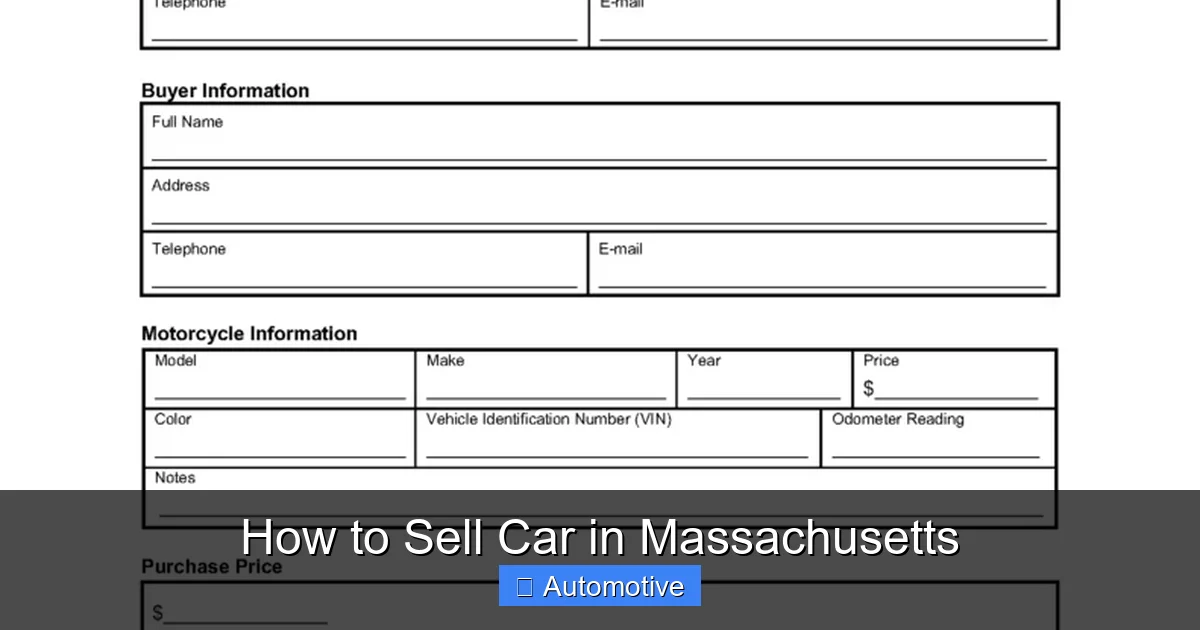
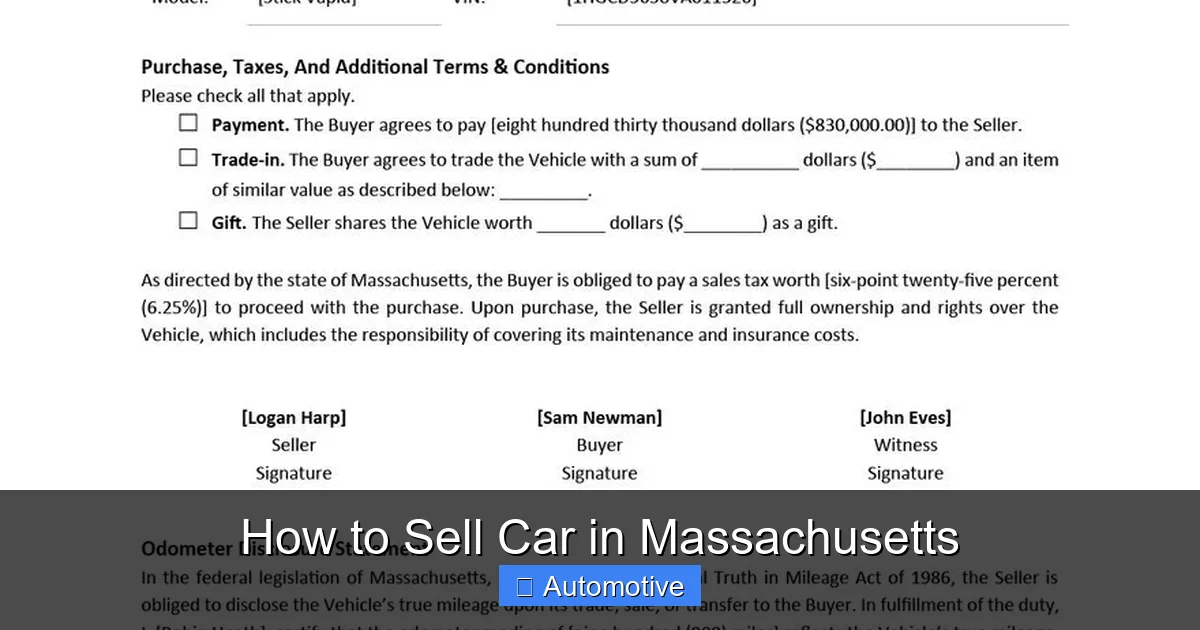
Massachusetts also requires a bill of sale, which acts as a receipt and legal record of the transaction. While not always mandatory, it’s highly recommended. You can download a free bill of sale template from the Massachusetts RMV website.
RMV Notification (Form RMV-1)
After the sale, you must notify the Massachusetts Registry of Motor Vehicles (RMV) that the vehicle has been transferred. This is done by submitting Form RMV-1, which releases you from liability for the car after the sale date.
You can file the RMV-1 form online through the Mass.gov RMV portal or mail it in. The form requires the vehicle’s VIN, sale date, buyer’s name and address, and your signature. Filing this form protects you if the buyer gets a ticket, causes an accident, or fails to register the car.
Determine the Right Price for Your Car
Visual guide about How to Sell Car in Massachusetts
Image source: legaltemplates.net
Pricing your car correctly is one of the most important steps in the selling process. Set it too high, and you’ll scare off buyers. Set it too low, and you’ll lose money. The key is finding that sweet spot where your car is competitive but still reflects its true value.
Research Market Value
Start by researching what similar cars are selling for in your area. Use trusted online tools like Kelley Blue Book (KBB), Edmunds, or NADA Guides. Enter your car’s make, model, year, mileage, trim level, and condition to get a fair market range.
For example, a 2018 Honda Civic LX with 60,000 miles in good condition might be valued between $16,000 and $18,000 in the Boston area. But if it has high mileage, accident history, or needs repairs, the value drops.
Don’t forget to check local listings on Craigslist, Facebook Marketplace, and Autotrader. See what other sellers are asking for similar vehicles. This gives you a real-world sense of demand and pricing trends in your region.
Adjust for Condition and Extras
Your car’s condition plays a big role in its value. A well-maintained vehicle with service records, new tires, and a clean interior will command a higher price than one with visible damage or mechanical issues.
Be honest about any flaws. If your car has a dent, cracked windshield, or transmission problems, factor that into your price. Buyers will find out eventually, and transparency builds trust.
On the flip side, highlight any upgrades or extras that add value. A premium sound system, leather seats, or a recent brake job can justify a higher asking price.
Consider Timing and Demand
The time of year can affect how quickly your car sells and for how much. Convertibles and sports cars tend to sell faster in spring and summer, while SUVs and trucks are in higher demand during winter.
Also, consider local events. If there’s a major snowstorm or economic downturn, demand might dip. Conversely, tax refund season often brings more buyers to the market.
Prepare Your Car for Sale
Visual guide about How to Sell Car in Massachusetts
Image source: images.template.net
First impressions matter—especially when selling a car. A clean, well-maintained vehicle not only attracts more buyers but also supports a higher sale price.
Clean and Detail Your Car
Start with a thorough cleaning. Wash the exterior, wax it if possible, and clean the windows inside and out. Vacuum the interior, wipe down surfaces, and remove any personal items or trash.
Consider professional detailing. For $100–$200, a detailer can make your car look nearly new—removing stains, polishing the paint, and conditioning the leather. It’s a small investment that can pay off in a faster sale and better offers.
Address Minor Repairs
Fix small issues that could turn buyers away. Replace burnt-out bulbs, fix a cracked windshield, or patch a small dent. These repairs are usually inexpensive but signal that the car has been well cared for.
If your car needs major repairs—like a transmission rebuild or engine work—you’ll need to decide whether to fix it or sell it “as-is.” Selling as-is means disclosing the problems and pricing accordingly. While you’ll get less money, you save time and hassle.
Gather Documentation
Buyers love transparency. Gather all relevant documents, including:
– Vehicle title
– Current inspection certificate
– Bill of sale (template available online)
– Odometer disclosure statement
– Maintenance and repair records
– Owner’s manual and spare keys
Having these ready shows you’re organized and trustworthy. It also speeds up the sale process.
Choose the Best Selling Method
Visual guide about How to Sell Car in Massachusetts
Image source: i0.wp.com
There are three main ways to sell your car in Massachusetts: private sale, trade-in, or selling to a dealer. Each has its own advantages and trade-offs.
Private Sale
Selling privately typically yields the highest profit. You set the price, negotiate directly with buyers, and avoid dealer fees. Platforms like Craigslist, Facebook Marketplace, and OfferUp make it easy to reach local buyers.
However, private sales take more time and effort. You’ll need to create a listing, respond to inquiries, schedule test drives, and handle the paperwork. There’s also a higher risk of scams or unsafe meetings.
To stay safe, always meet in public places, bring a friend, and avoid sharing personal information. Accept cash, cashier’s check, or bank transfer—never personal checks.
Trade-In at a Dealership
Trading in your car at a dealership is the easiest option. You drive in, get an appraisal, and apply the value toward a new purchase. It’s convenient and eliminates the need to find a buyer.
But trade-in values are usually lower than private sale prices. Dealers need to make a profit when they resell your car, so they offer less. If you’re not buying another car, this method may not be worth it.
Sell to a Dealer or Online Car Buyer
Some dealerships and online services (like CarMax, Carvana, or Vroom) will buy your car outright, even if you’re not purchasing a new one. They offer quick, no-hassle transactions and handle the paperwork.
Again, the trade-off is price. These companies often pay below market value to ensure a profit. But if you value speed and convenience over maximum profit, it can be a good choice.
Create an Effective Listing
Once your car is ready, it’s time to create a listing that grabs attention and builds trust.
Write a Clear, Honest Description
Your description should be detailed but concise. Include:
– Make, model, year, and trim
– Mileage
– Condition (excellent, good, fair)
– Key features (sunroof, backup camera, etc.)
– Recent repairs or maintenance
– Reason for selling
Avoid exaggerations. Saying your car is “like new” when it has 120,000 miles will backfire. Be honest, and you’ll attract serious buyers.
Use High-Quality Photos
Take photos in good lighting, preferably outdoors. Capture the exterior from multiple angles, the interior, engine bay, and any flaws. A well-lit, clean photo can make a huge difference.
Avoid dark, blurry, or cluttered shots. Buyers want to see what they’re getting.
Choose the Right Platform
List your car on platforms where buyers are active. Craigslist is popular in Massachusetts, especially in cities like Boston, Worcester, and Springfield. Facebook Marketplace is great for local reach, and Autotrader attracts serious buyers.
Avoid sites with high fees or poor reputations. Stick to trusted platforms with user reviews and safety features.
Complete the Sale Safely and Legally
The final step is closing the deal. This is where many sellers make mistakes—don’t let that be you.
Meet in a Safe Location
Always meet in a public place, like a police station parking lot or busy shopping center. Bring a friend if possible. Avoid meeting at your home or late at night.
Verify Payment
Accept secure payment methods. Cash is safest for private sales. If using a check, make sure it’s a cashier’s or certified check, and verify it clears before handing over the keys.
Never accept personal checks or wire transfers from unknown sources—these are common scam tactics.
Transfer Ownership Properly
At the meeting, complete the title transfer and bill of sale. Both you and the buyer should sign. Make sure the odometer reading is accurate.
Remove your license plates—Massachusetts requires you to keep them. The buyer will need to register the car and get new plates.
Notify the RMV
Within 10 days of the sale, submit Form RMV-1 to the Massachusetts RMV. This protects you from liability. You can do this online or by mail.
Cancel Insurance
Once the sale is complete, contact your insurance company to cancel or adjust your policy. Don’t wait—driving an uninsured car, even for a day, is illegal.
Avoid Common Mistakes
Even experienced sellers make errors. Here are a few to watch out for:
– Forgetting to get an inspection before selling
– Not filing the RMV-1 form
– Leaving license plates on the car
– Accepting unsafe payment methods
– Failing to disclose known issues
Double-check every step to ensure a smooth, legal sale.
Final Thoughts
Selling a car in Massachusetts doesn’t have to be stressful. With the right preparation, knowledge, and attention to detail, you can complete the process efficiently and legally. From inspections and pricing to paperwork and safety, every step matters.
Take your time, do your research, and don’t rush the sale. A well-prepared car and a transparent process will attract serious buyers and help you get the best possible price. Whether you’re selling privately or trading in, following this guide will set you up for success.
Remember: the goal isn’t just to sell your car—it’s to sell it the right way. That means protecting yourself legally, financially, and personally. When done correctly, selling your car can be a smooth, even rewarding, experience.
Frequently Asked Questions
Do I need a safety inspection to sell my car in Massachusetts?
Yes, Massachusetts law requires a valid safety inspection (and emissions test, if applicable) at the time of sale. The inspection must be current—within the last 150 days—and the sticker must be valid.
Can I sell my car if I still owe money on it?
You can sell a car with an outstanding loan, but the lien must be satisfied first. Coordinate with your lender to pay off the balance, often through an escrow service, before transferring ownership.
What documents do I need to sell my car in Massachusetts?
You’ll need the vehicle title, current inspection certificate, bill of sale, odometer disclosure, and Form RMV-1 to notify the state of the sale. Maintenance records are also helpful.
How do I protect myself when selling privately?
Meet in public places, bring a friend, accept secure payment (cash or cashier’s check), and file Form RMV-1 immediately after the sale to avoid liability.
Can the buyer drive the car home without plates?
No. The buyer must register the car and get new license plates before driving it. You must remove your plates after the sale.
What happens if I don’t file Form RMV-1?
If you don’t notify the RMV of the sale, you may remain liable for tickets, accidents, or registration issues involving the car—even after it’s sold. Always file the form within 10 days.