How to Sell a Used Car in Colorado
Selling a used car in Colorado doesn’t have to be stressful. With the right preparation, pricing, and paperwork, you can complete the process quickly and legally. This guide walks you through every step—from cleaning your car to finalizing the sale—so you get the best value with minimal hassle.
Selling a used car in Colorado can feel overwhelming—especially if it’s your first time. Between figuring out the right price, dealing with paperwork, and meeting potential buyers, there’s a lot to manage. But with the right approach, the process can be smooth, safe, and even profitable.
Whether you’re upgrading to a newer model, downsizing, or simply ready to part ways with your current ride, knowing the steps specific to Colorado makes all the difference. The state has its own rules for vehicle sales, including emissions testing requirements, title transfers, and DMV notifications. Missing one small detail could lead to fines or legal trouble down the road.
The good news? You don’t need to be a car expert or a legal guru to sell your car successfully. This guide breaks down everything you need to know—from prepping your vehicle to closing the deal—so you can sell with confidence. We’ll cover pricing strategies, advertising tips, safety precautions, and the exact paperwork required by Colorado law. By the end, you’ll be ready to hand over the keys and walk away with cash in hand.
In This Article
- 1 Key Takeaways
- 2 📑 Table of Contents
- 3 Understand Colorado’s Legal Requirements for Selling a Car
- 4 Price Your Car Fairly and Competitively
- 5 Prepare Your Vehicle for Sale
- 6 Advertise Your Car Effectively
- 7 Handle Test Drives and Buyer Inquiries Safely
- 8 Complete the Paperwork and Notify the DMV
- 9 Alternative Selling Options
- 10 Frequently Asked Questions
- 10.1 Do I need an emissions test to sell my car in Colorado?
- 10.2 How long do I have to notify the DMV after selling my car?
- 10.3 Can I sell my car without a title in Colorado?
- 10.4 What payment methods are safest when selling a car?
- 10.5 Can I sell my car if it has a lien?
- 10.6 Is a bill of sale required in Colorado?
Key Takeaways
- Know Colorado’s legal requirements: You must provide a valid emissions test (if applicable), complete a bill of sale, and sign over the title correctly to avoid liability.
- Price your car fairly: Use tools like Kelley Blue Book or Edmunds to research market value based on your car’s make, model, year, mileage, and condition.
- Prepare your vehicle: Clean it inside and out, fix minor issues, and gather maintenance records to boost buyer confidence and value.
- Advertise effectively: Take high-quality photos, write a clear description, and list on trusted platforms like Craigslist, Facebook Marketplace, or Autotrader.
- Handle test drives safely: Meet in public places, verify buyer’s license, and consider bringing a friend for security.
- Complete the transfer properly: Submit the title transfer to the Colorado DMV within 10 days and notify them of the sale to avoid future fines.
- Consider selling to a dealer or online buyer: For a faster, hassle-free sale, explore options like CarMax, Carvana, or Vroom, though you may get less than private sale prices.
📑 Table of Contents
Understand Colorado’s Legal Requirements for Selling a Car
Before you even think about listing your car, it’s crucial to understand the legal side of selling a vehicle in Colorado. The state has specific rules designed to protect both buyers and sellers, and failing to follow them can result in penalties or liability issues.
One of the most important requirements is the emissions test. If your vehicle is registered in certain counties—including Denver, Boulder, Jefferson, and others—it must pass an emissions inspection before it can be sold. This applies to gasoline-powered cars and light trucks that are four years old or newer. Diesel vehicles and motorcycles are exempt. You can find a list of participating counties and testing locations on the Colorado Department of Public Health and Environment (CDPHE) website.
Once your car passes inspection (or is exempt), you’ll receive a valid emissions certificate. This document must be provided to the buyer at the time of sale. Without it, the buyer may not be able to register the vehicle, which could kill the deal.
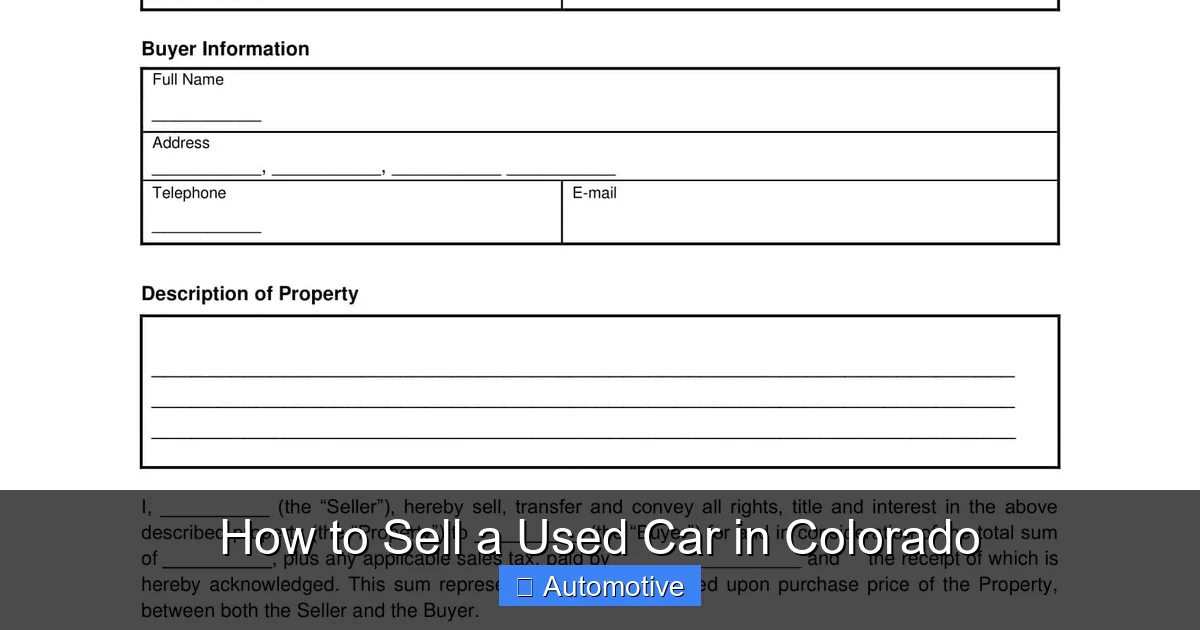
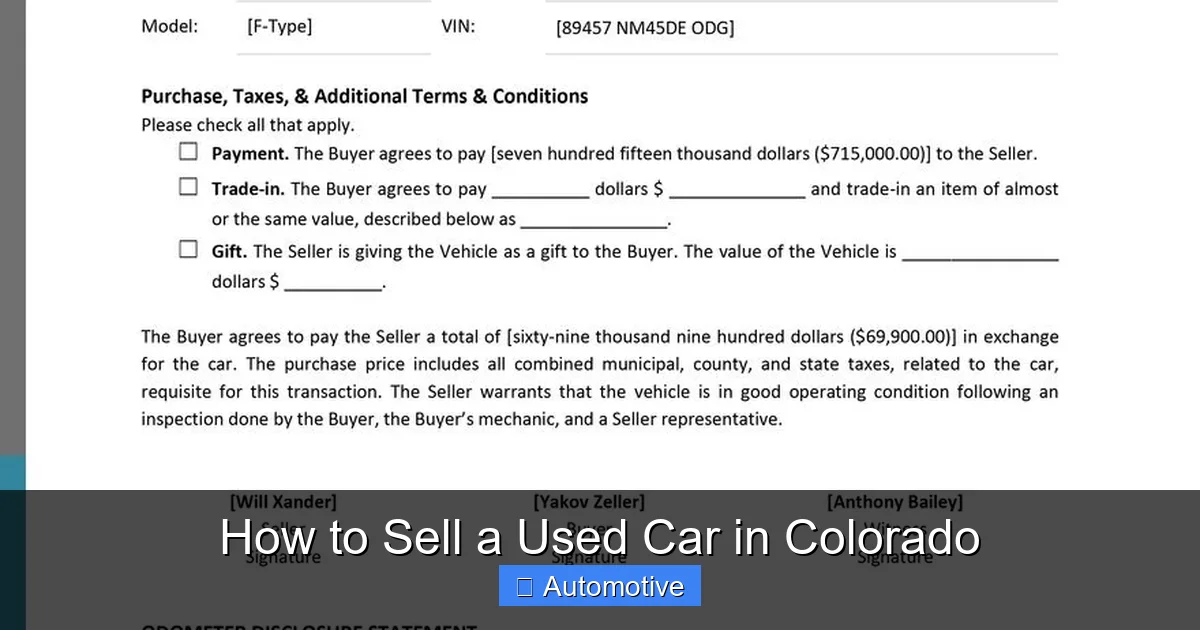
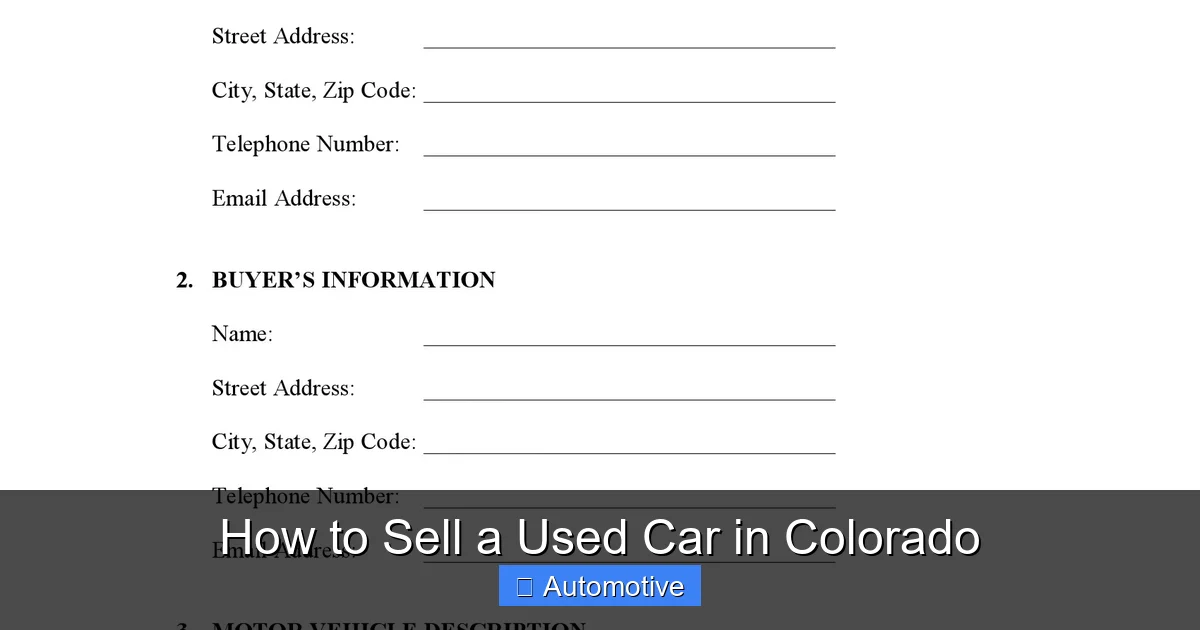
Another key requirement is the bill of sale. While Colorado doesn’t legally require a bill of sale for private vehicle transactions, it’s highly recommended. This document serves as proof of the sale and includes important details like the sale price, date, vehicle identification number (VIN), and signatures of both parties. You can download a free Colorado bill of sale template from the Colorado DMV website or use a reputable online form.
Title Transfer and Seller Responsibilities
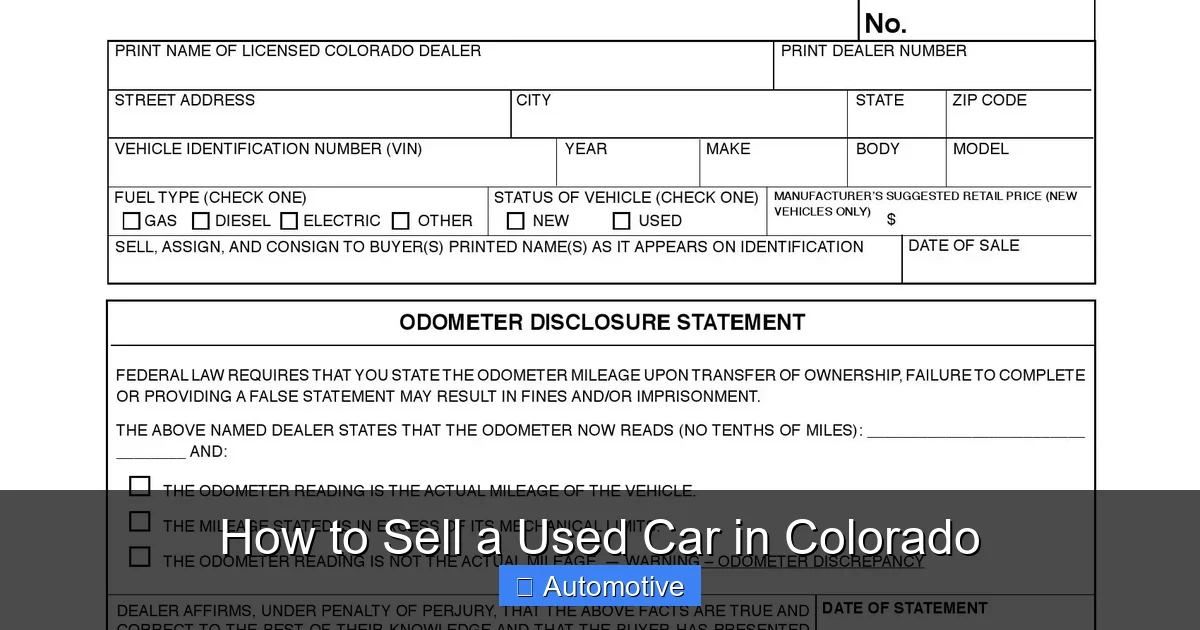
The title transfer is perhaps the most critical part of the sale. In Colorado, the seller must sign the back of the title and provide it to the buyer. Make sure the odometer reading is accurate and filled in—this is required for vehicles under 20 years old. If the title is lost, you’ll need to apply for a duplicate from the DMV before selling.
After the sale, you must notify the Colorado DMV within 10 days. This is done by submitting a “Notice of Sale” form, which releases you from liability for the vehicle after the transfer date. You can file this online, by mail, or in person. Failing to do so could leave you responsible for parking tickets, tolls, or even accidents involving the new owner.
It’s also wise to keep a copy of the signed title and bill of sale for your records. This protects you in case of disputes or if the buyer delays registration.
Price Your Car Fairly and Competitively
Visual guide about How to Sell a Used Car in Colorado
Image source: images.template.net
Pricing your used car correctly is one of the most important factors in getting a quick and profitable sale. Overprice it, and buyers will scroll past. Underprice it, and you leave money on the table. The goal is to find that sweet spot where your car looks like a great deal without being suspiciously cheap.
Start by researching the market value of your vehicle. Use trusted pricing tools like Kelley Blue Book (KBB), Edmunds, or NADA Guides. These platforms allow you to input your car’s make, model, year, mileage, trim level, and condition to get a fair market range. For example, a 2018 Honda Civic with 60,000 miles in good condition might be valued between $16,000 and $18,000 in the Denver area.
But don’t stop there. Look at actual listings for similar cars in your area. Check Craigslist, Facebook Marketplace, and Autotrader to see what others are asking. Are they including extras like winter tires or a full service history? Are they pricing high to leave room for negotiation? Use this data to adjust your asking price accordingly.
Factor in Condition, Upgrades, and Local Demand
Your car’s condition plays a huge role in its value. A well-maintained vehicle with clean interiors, no dents, and a full service record will command a higher price than one with visible wear and tear. If you’ve recently replaced the brakes, tires, or battery, mention it—these are selling points that justify a higher price.
Upgrades can also add value, but only if they’re desirable. A high-quality sound system or all-weather floor mats might appeal to some buyers, but don’t expect to recoup the full cost. On the other hand, aftermarket modifications like lifted suspensions or custom paint jobs can actually deter buyers, especially if they affect reliability or insurance costs.
Local demand matters too. In Colorado, SUVs and trucks often sell faster due to the state’s mountainous terrain and snowy winters. If you’re selling a 4WD pickup or a Subaru Outback, you might be able to ask a bit more. Conversely, compact cars may take longer to sell unless priced competitively.
Decide Whether to Negotiate or Set a Firm Price
Once you’ve set your price, decide how flexible you want to be. Some sellers list their car at a slightly higher price with the expectation of negotiating down. Others prefer a “firm price” approach to avoid haggling.
If you’re open to negotiation, consider pricing your car 5–10% above your target sale price. This gives you room to come down while still meeting your goal. For example, if you want $17,000, list it at $17,900. Buyers often feel like they’re getting a deal when they negotiate, even if the final price is close to your original ask.
On the other hand, if you’re in a hurry or dislike haggling, a firm price can attract serious buyers who value transparency. Just make sure your price is justified by the market data.
Prepare Your Vehicle for Sale
Visual guide about How to Sell a Used Car in Colorado
Image source: formspal.com
First impressions matter—especially when selling a car. A clean, well-maintained vehicle not only looks more appealing but also signals to buyers that it’s been cared for. Taking the time to prepare your car can significantly increase its value and speed up the sale.
Start with a thorough cleaning. Wash the exterior, wax it if possible, and clean the windows inside and out. Don’t forget the wheels and tires—grime and brake dust can make even a nice car look neglected. For the interior, vacuum the carpets, wipe down surfaces, and clean the seats. If you have leather, use a conditioner to restore shine. Remove any personal items, trash, or clutter.
Address Minor Repairs and Maintenance
Fixing small issues can make a big difference. Replace burnt-out bulbs, top off fluids, and fix minor dents or scratches if cost-effective. A cracked windshield or malfunctioning AC can be major red flags for buyers, so address these if possible.
Even if you can’t afford major repairs, showing that the car has been well-maintained builds trust. Gather all service records, receipts, and the owner’s manual. Create a simple folder or binder to present to potential buyers. This shows transparency and can justify a higher price.
If your car has high mileage, consider getting a pre-sale inspection from a trusted mechanic. This isn’t required, but it can reassure buyers and help you spot issues before they become deal-breakers. Some sellers even include the inspection report in their listing to build credibility.
Gather Necessary Documents
Before listing your car, make sure you have all the paperwork ready. This includes:
– The vehicle title (signed and ready to transfer)
– Valid emissions certificate (if required)
– Bill of sale (recommended)
– Maintenance and repair records
– Owner’s manual and warranty information (if applicable)
Having these documents organized and accessible saves time during the sale and makes you look professional. It also helps avoid last-minute scrambles when a buyer wants to see proof of upkeep.
Advertise Your Car Effectively
Visual guide about How to Sell a Used Car in Colorado
Image source: formspal.com
Once your car is clean and priced, it’s time to get the word out. The way you advertise can make or break your sale. A well-crafted listing with great photos and a clear description will attract more serious buyers and reduce wasted time.
Choose the Right Platforms
Start by listing your car on popular online marketplaces. Craigslist is a go-to for many Colorado sellers due to its local reach and free listings. Facebook Marketplace is another strong option—it’s integrated with social profiles, which can add a layer of trust. Autotrader and Cars.com are also effective, especially for higher-value vehicles, though they may charge listing fees.
Consider your target audience. If you’re selling a family SUV, Facebook Marketplace might reach more local parents. If it’s a sporty coupe, Autotrader could attract enthusiasts. You can also post on local buy/sell groups or community boards, but be cautious of scams.
Write a Clear and Honest Description
Your listing description should be detailed, honest, and easy to read. Start with the basics: year, make, model, trim, mileage, and price. Then highlight key features like fuel efficiency, safety ratings, recent maintenance, and any extras (e.g., sunroof, navigation, tow package).
Be transparent about any flaws. Mention minor scratches, dents, or mechanical issues upfront. Buyers appreciate honesty, and it saves you from awkward conversations later. For example: “Small dent on rear passenger door—cosmetic only, doesn’t affect function.”
Use bullet points to make your listing scannable. Avoid long paragraphs. Include keywords like “reliable,” “well-maintained,” and “clean title” to help your listing appear in searches.
Take High-Quality Photos
Photos are often the first thing buyers see, so make them count. Take pictures in natural daylight, preferably outdoors. Capture the exterior from multiple angles—front, back, sides, and 3/4 views. Show the interior, including the dashboard, seats, trunk, and back seat.
Highlight any special features, like a clean engine bay or upgraded stereo. If you’ve done recent repairs, include before-and-after shots if possible. Avoid cluttered backgrounds or dark, blurry images.
Aim for at least 8–10 high-resolution photos. More is better—buyers want to see every detail.
Handle Test Drives and Buyer Inquiries Safely
Once your car is listed, inquiries will start rolling in. Some will be serious, others not. Handling these interactions safely and professionally is key to a successful sale.
Screen Potential Buyers
Not every inquiry deserves a test drive. Ask basic questions to gauge seriousness: “Are you looking to buy soon?” or “Do you have financing ready?” Avoid sharing personal details like your home address or phone number too early.
Be wary of red flags: buyers who refuse to meet in person, ask for your VIN immediately, or offer to pay with a cashier’s check and ship the car. These are common scam tactics.
Conduct Safe Test Drives
When you’re ready for a test drive, prioritize safety. Always meet in a public place—like a shopping center or DMV parking lot. Bring a friend or family member with you, especially if you’re meeting someone alone.
Verify the buyer’s driver’s license and make sure they’re insured. You can ask to see their insurance card or proof of coverage. Never let a buyer drive your car without you in the passenger seat.
Keep your personal belongings out of sight during the test drive. Lock your purse, phone, or wallet in the trunk or take them with you.
Negotiate and Close the Deal
If the buyer is interested, be prepared to negotiate. Stay calm and stick to your bottom line. If they lowball, politely explain your pricing based on market research and condition.
Once you agree on a price, finalize the sale. Collect payment in a secure form—cash, cashier’s check, or bank transfer. Avoid personal checks, which can bounce.
Sign the title, complete the bill of sale, and hand over the keys and documents. Make sure the buyer understands they need to register the car within 30 days.
Complete the Paperwork and Notify the DMV
After the sale, your responsibilities aren’t over. You must complete the transfer and notify the DMV to avoid future liability.
Submit the Notice of Sale
Within 10 days of the sale, submit a Notice of Sale form to the Colorado DMV. This can be done online at the DMV website, by mail, or in person. The form includes the sale date, buyer’s name, and VIN. Once submitted, you’re no longer responsible for the vehicle.
Keep Records
Retain copies of the signed title, bill of sale, and Notice of Sale confirmation. Store them in a safe place for at least a few years in case of disputes.
Alternative Selling Options
If the private sale process feels too time-consuming, consider alternative options. Selling to a dealership, online car buyer, or using a consignment service can save time—though you may get less money.
Sell to a Dealer or Online Buyer
Companies like CarMax, Carvana, and Vroom offer quick, no-hassle sales. They’ll inspect your car, make an offer, and handle the paperwork. The trade-off? You’ll likely get 10–20% less than a private sale price.
Use a Consignment Service
Some auto brokers or dealerships offer consignment services. They’ll list and sell your car for a fee, usually 5–10% of the sale price. This can be a good middle ground if you want exposure without the legwork.
Selling a used car in Colorado doesn’t have to be complicated. With the right preparation, pricing, and paperwork, you can complete the process smoothly and legally. Whether you choose a private sale or go through a dealer, knowing the steps ensures you get the best value while staying compliant with state laws.
Frequently Asked Questions
Do I need an emissions test to sell my car in Colorado?
Yes, if your vehicle is registered in certain counties like Denver or Boulder and is four years old or newer, it must pass an emissions test before sale. Diesel vehicles and motorcycles are exempt. Check the CDPHE website for details.
How long do I have to notify the DMV after selling my car?
You must submit a Notice of Sale to the Colorado DMV within 10 days of the sale. This releases you from liability for the vehicle after the transfer date.
Can I sell my car without a title in Colorado?
No, you must have a valid title to sell your car. If the title is lost, apply for a duplicate from the DMV before listing the vehicle.
What payment methods are safest when selling a car?
Cash, cashier’s checks, or bank transfers are the safest options. Avoid personal checks, which can bounce, and never ship your car before payment clears.
Can I sell my car if it has a lien?
Yes, but the lien must be paid off before or at the time of sale. Contact your lender to coordinate the payoff and title release.
Is a bill of sale required in Colorado?
A bill of sale is not legally required for private sales, but it’s highly recommended. It protects both buyer and seller and serves as proof of the transaction.