How to Sell a Car Privately in New York

Selling a car privately in New York can get you more money than trading it in—but it takes planning. From pricing your vehicle right to handling DMV paperwork and meeting buyers safely, this guide walks you through every step to make the process smooth and successful.
So, you’ve decided to sell your car privately in New York. Maybe you’re upgrading to something newer, downsizing, or just ready for a change. Whatever your reason, selling privately often means more cash in your pocket compared to trading it in at a dealership. But let’s be honest—it also means more work. You’ll need to handle pricing, advertising, meeting strangers, paperwork, and legal transfers all on your own.
The good news? It’s totally doable—and many New Yorkers do it successfully every week. With the right preparation and mindset, you can sell your car quickly, safely, and for a fair price. This guide will walk you through every step, from cleaning your car to signing over the title. We’ll cover everything you need to know to avoid common pitfalls, impress buyers, and complete the sale without headaches.
Whether you’re in Manhattan, Brooklyn, Queens, or upstate near Albany, the process is largely the same. New York has specific rules for private car sales, especially around titling and registration, so we’ll make sure you’re compliant. By the end of this article, you’ll feel confident and ready to sell your car like a pro.
In This Article
- 1 Key Takeaways
- 2 📑 Table of Contents
- 3 Step 1: Get Your Car Ready to Sell
- 4 Step 2: Determine the Right Price
- 5 Step 3: Gather Required Paperwork
- 6 Step 4: Create an Effective Listing
- 7 Step 5: Handle Test Drives and Negotiations Safely
- 8 Step 6: Complete the Sale and Transfer Ownership
- 9 Final Tips for a Smooth Sale
- 10 Frequently Asked Questions
- 10.1 Do I need a Bill of Sale to sell a car in New York?
- 10.2 Can I sell my car if I still owe money on it?
- 10.3 What happens if I don’t notify the DMV after selling my car?
- 10.4 Can I sell my car without a valid registration?
- 10.5 Should I leave my license plates on the car?
- 10.6 Is it safe to sell a car online in New York?
Key Takeaways
- Price your car competitively: Use tools like Kelley Blue Book and Edmunds to research fair market value based on year, mileage, condition, and local demand.
- Prepare thorough documentation: Gather your title, registration, maintenance records, and a completed Bill of Sale to build buyer trust and streamline the transfer.
- Advertise effectively: Take high-quality photos, write a clear ad with honest details, and list on popular platforms like Craigslist, Facebook Marketplace, and Autotrader.
- Prioritize safety during showings: Meet in public places, bring a friend, verify buyer IDs, and avoid sharing personal information too early.
- Complete the DMV transfer correctly: Submit the required forms within 10 days of sale to avoid liability for parking tickets or accidents after the sale.
- Accept secure payment methods: Use cash, cashier’s checks, or bank transfers—never personal checks—and verify funds before handing over the keys.
- Cancel insurance promptly: Notify your insurer once the sale is finalized to stop coverage and avoid unnecessary premiums.
📑 Table of Contents
Step 1: Get Your Car Ready to Sell
Before you even think about listing your car, take time to get it in the best possible shape. First impressions matter—a lot. Buyers are more likely to pay top dollar (and less likely to lowball you) if your car looks clean, runs well, and seems well-maintained.
Clean Inside and Out
Start with a thorough wash and wax. Dirt, grime, and road salt (especially in winter) can hide scratches and make your car look neglected. Don’t skip the interior—vacuum the seats, wipe down surfaces, and remove any trash or personal items. Consider using an odor eliminator if there’s a lingering smell from food, pets, or smoke. A fresh scent goes a long way.
If you’re on a budget, you can do this yourself, but a professional detail can add $100–$200 to your sale price. It’s often worth the investment, especially for higher-end vehicles.
Address Minor Repairs
You don’t need to rebuild the engine, but fixing small issues can boost your car’s value. Replace burnt-out bulbs, fix wiper blades, top off fluids, and patch small dents or scratches if possible. If your tires are worn, consider replacing them—they’re a major safety concern and can scare off buyers.
For mechanical issues, be honest. If the transmission is acting up or the check engine light is on, disclose it upfront. Hiding problems can lead to disputes later and hurt your credibility.
Gather Maintenance Records
Buyers love seeing proof that your car has been well cared for. Collect all service receipts, oil change logs, and repair records. If you’ve kept digital copies, print them out or save them to a USB drive. This shows you’re responsible and helps justify your asking price.
Step 2: Determine the Right Price
Visual guide about How to Sell a Car Privately in New York
Image source: mindfulpoints.com
Pricing your car correctly is one of the most important steps. Overprice it, and it’ll sit on the market for months. Underprice it, and you’ll leave money on the table. The goal is to find that sweet spot where your car is attractive to buyers but still reflects its true value.
Research Comparable Listings
Start by checking online marketplaces like Craigslist, Facebook Marketplace, Autotrader, and Cars.com. Look for cars similar to yours—same make, model, year, mileage, and condition. Pay attention to how long they’ve been listed. If a car has been up for weeks, it might be overpriced.
For example, if you’re selling a 2018 Honda Civic with 60,000 miles, search for other 2018 Civics in your area with similar mileage. Note the prices and adjust based on features (like sunroof, navigation, or leather seats) and condition.
Use Pricing Tools
Websites like Kelley Blue Book (KBB), Edmunds, and NADA Guides offer free valuation tools. Enter your car’s details, and they’ll give you a range for “private party sale” value. These tools consider regional demand, so a car in snowy Buffalo might be priced differently than one in sunny Long Island.
KBB is especially popular in New York because it’s user-friendly and trusted by buyers. Many shoppers will reference it when negotiating, so it’s smart to use it too.
Adjust for Condition and Extras
If your car has low mileage, new tires, or recent major repairs (like a new transmission), you can price it on the higher end. Conversely, if it needs work or has high mileage, price it lower to attract buyers.
Don’t forget to factor in market trends. Convertibles sell better in spring and summer, while SUVs and trucks are in demand in fall and winter. Timing your sale can make a difference.
Step 3: Gather Required Paperwork
New York has specific requirements for private car sales. Having the right documents ready will make the process smoother and build trust with buyers.
Title and Registration
You must have a clean title in your name to sell the car. If your car is financed, you’ll need to pay off the loan first and get the title released. If you’ve lost your title, apply for a duplicate through the New York DMV.
Your registration should be current, but it’s not required for the sale. However, having it shows the car is legally registered and up to date.
Bill of Sale
New York doesn’t require a Bill of Sale by law, but it’s highly recommended. This document records the sale details: buyer and seller names, addresses, car info (VIN, make, model, year), sale price, and date. You can download a free template from the DMV website or create your own.
Both parties should sign it, and you should keep a copy for your records.
Odometer Disclosure
Federal law requires you to disclose the car’s mileage at the time of sale. This must be included on the title or a separate form. If the odometer is broken or has been replaced, note that clearly.
Release of Liability
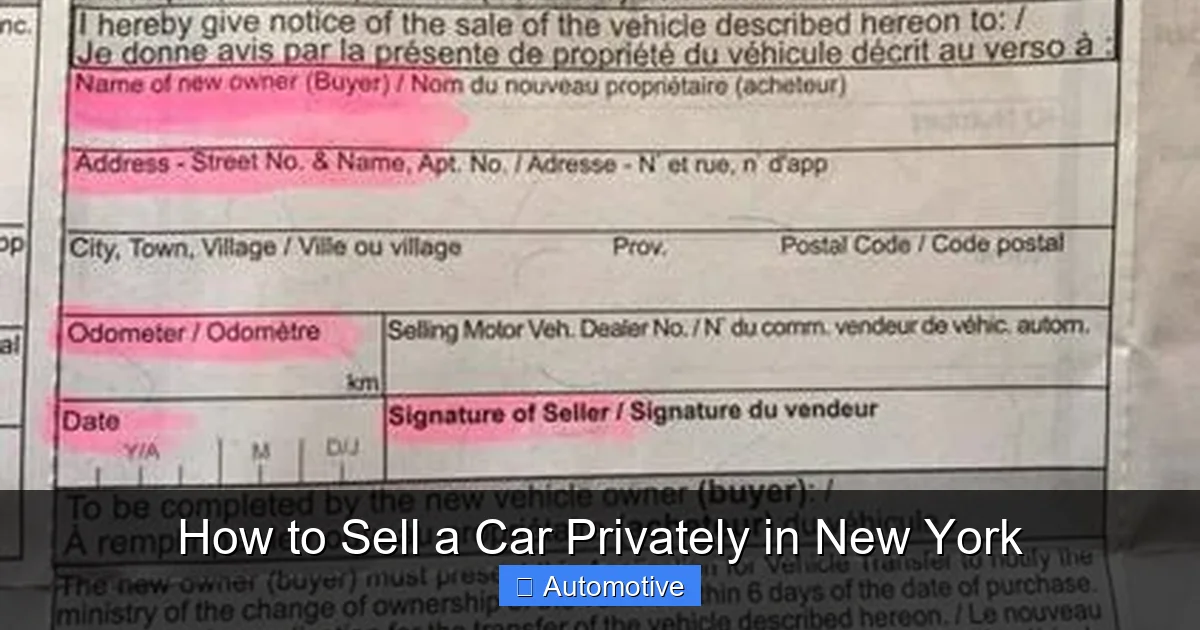
After the sale, you must notify the DMV that you’re no longer responsible for the vehicle. This protects you from liability for parking tickets, tolls, or accidents after the transfer. You can file this online or by mail within 10 days of the sale.
Step 4: Create an Effective Listing
Your ad is your first chance to impress buyers. A well-written, honest listing with great photos can generate serious interest—and help you sell faster.
Write a Clear, Honest Description
Start with the basics: year, make, model, mileage, and body style. Then highlight key features like fuel efficiency, safety ratings, recent repairs, and extras (sunroof, backup camera, etc.).
Be transparent about flaws. Saying “minor paint scratch on rear bumper” builds trust. Buyers appreciate honesty and are more likely to believe the rest of your claims.
Include why you’re selling. “Moving out of state” or “upgrading to a larger vehicle” sounds reasonable and reduces suspicion.
Take High-Quality Photos
Good photos are essential. Take pictures in daylight, in a clean, uncluttered area. Shoot from multiple angles: front, back, sides, interior, trunk, and engine bay.
Focus on details: clean seats, dashboard, wheels, and any unique features. Avoid shadows, glare, or busy backgrounds.
Choose the Right Platforms
List your car on multiple sites to reach more buyers. Popular options in New York include:
– **Craigslist**: Free, widely used, but requires caution due to scams.
– **Facebook Marketplace**: Great for local sales; buyers can message directly.
– **Autotrader**: Paid listing, but attracts serious buyers.
– **Cars.com**: Another paid option with strong reach.
Avoid posting the same ad everywhere with identical wording—customize it slightly for each platform.
Respond Promptly and Professionally
When buyers message or call, reply quickly and politely. Answer questions honestly and offer to schedule a viewing. If someone seems suspicious (asking for your SSN or wanting to pay with a money order), trust your gut and move on.
Step 5: Handle Test Drives and Negotiations Safely
Once you have interested buyers, it’s time to meet. Safety should be your top priority—especially in a busy city like New York.
Meet in a Safe, Public Location
Never invite strangers to your home. Instead, meet at a police station, mall parking lot, or busy shopping center. Some NYPD precincts even have “safe exchange zones” with cameras and lighting.
Bring a friend or family member with you. Let someone know where you’re going and when you expect to return.
Verify the Buyer’s Identity
Ask to see a valid driver’s license and confirm the name matches the one they used to contact you. You can also ask for a second form of ID, like a credit card or utility bill.
Supervise the Test Drive
Always ride along during the test drive. This protects you if something goes wrong and gives you a chance to answer questions.
Before driving, check that the buyer has a valid license and insurance. You can ask to see their insurance card, but don’t let them drive without it.
Negotiate Fairly
Be prepared to negotiate. Most buyers will try to lowball you. Know your bottom line ahead of time and stick to it.
If they offer less than you want, explain why your price is fair—mention recent repairs, low mileage, or high demand. You can also throw in extras like a full tank of gas or new floor mats to sweeten the deal.
Step 6: Complete the Sale and Transfer Ownership
Once you’ve agreed on a price, it’s time to finalize the sale. This step is critical to protect yourself legally and financially.
Accept Secure Payment
Only accept safe payment methods:
– **Cash**: Best for amounts under $10,000. Count it in front of the buyer.
– **Cashier’s Check**: Get it from a bank and verify it’s real before handing over the car.
– **Bank Transfer**: Use a verified service like Zelle or wire transfer. Confirm funds have cleared.
Never accept personal checks—they can bounce.
Sign Over the Title
On the back of the title, fill in the buyer’s name, address, sale price, and odometer reading. Sign and date it. Make sure the buyer signs too.
If you’re selling to a family member, the process is the same—don’t skip steps.
Provide a Bill of Sale
Give the buyer a signed copy of the Bill of Sale. Keep one for yourself.
Remove License Plates
In New York, license plates stay with the seller—not the car. Remove them before handing over the keys. You can reuse them on your next vehicle or return them to the DMV.
Notify the DMV
Within 10 days, submit a **Notice of Sale** (Form MV-13TD) to the DMV. You can do this online, by mail, or in person. This releases you from liability.
Cancel Your Insurance
Call your insurance company as soon as the sale is complete. They’ll stop coverage and may refund part of your premium.
Final Tips for a Smooth Sale
– **Be patient**: It may take a few weeks to find the right buyer.
– **Stay organized**: Keep all documents in one folder.
– **Don’t rush**: Take your time with paperwork to avoid mistakes.
– **Trust your instincts**: If something feels off, walk away.
Selling a car privately in New York doesn’t have to be stressful. With preparation, honesty, and caution, you can sell your car quickly and safely—and walk away with more money than you would from a trade-in.
Frequently Asked Questions
Do I need a Bill of Sale to sell a car in New York?
No, a Bill of Sale is not legally required in New York, but it’s strongly recommended. It protects both you and the buyer by documenting the sale details, including price, date, and vehicle information.
Can I sell my car if I still owe money on it?
No, you must pay off the loan first and obtain a clear title before selling. Contact your lender to arrange payoff and title release.
What happens if I don’t notify the DMV after selling my car?
If you fail to submit the Notice of Sale within 10 days, you may remain liable for parking tickets, tolls, or accidents involving the vehicle after the sale.
Can I sell my car without a valid registration?
Yes, you can sell a car without current registration, but having it shows the vehicle is legally registered and may make buyers more confident.
Should I leave my license plates on the car?
No, in New York, license plates belong to the owner, not the vehicle. Remove them before the sale and either reuse them or return them to the DMV.
Is it safe to sell a car online in New York?
Yes, if you take precautions. Meet in public places, bring a friend, verify buyer IDs, and avoid sharing personal information. Using trusted platforms also reduces risk.