How to Sell a Car in Pennsylvania

Selling a car in Pennsylvania doesn’t have to be stressful. With the right preparation, clear documentation, and smart marketing, you can sell your vehicle quickly and legally. This guide walks you through every step—from pricing to transferring ownership—so you can get the best deal with confidence.
Thinking about selling your car in Pennsylvania? Whether you’re upgrading to a newer model, downsizing, or just ready for a change, selling your vehicle can be a smooth and profitable process—if you know what you’re doing. Many people make the mistake of rushing into the sale without understanding the legal requirements, paperwork, or market value of their car. But with a little preparation and the right approach, you can sell your car quickly, safely, and for a fair price.
Pennsylvania has specific rules and regulations when it comes to selling a vehicle, and skipping even one step can lead to delays, fines, or even legal trouble down the road. From getting your car inspected to transferring the title correctly, every detail matters. The good news? This guide will walk you through the entire process, step by step, so you can sell your car with confidence. Whether you’re selling privately or trading in at a dealership, knowing your options and your rights will help you make the best decision for your situation.
In This Article
- 1 Key Takeaways
- 2 📑 Table of Contents
- 3 Step 1: Determine Your Car’s Value
- 4 Step 2: Gather the Necessary Paperwork
- 5 Step 3: Prepare Your Car for Sale
- 6 Step 4: Advertise Your Car
- 7 Step 5: Meet with Buyers Safely
- 8 Step 6: Complete the Sale and Transfer Ownership
- 9 Step 7: Avoid Common Scams and Pitfalls
- 10 Conclusion
- 11 Frequently Asked Questions
- 11.1 Do I need a safety inspection to sell my car in Pennsylvania?
- 11.2 Can I sell my car if I still owe money on it?
- 11.3 How long do I have to notify PennDOT after selling my car?
- 11.4 Can I sell my car without a title in Pennsylvania?
- 11.5 What if the buyer doesn’t register the car?
- 11.6 Is it better to sell privately or trade in at a dealership?
Key Takeaways
- Know your car’s value: Use tools like Kelley Blue Book or Edmunds to price your car competitively based on its condition, mileage, and market trends.
- Gather all required paperwork: You’ll need the title, bill of sale, odometer disclosure, and a valid emissions or safety inspection certificate.
- Complete a vehicle inspection: Pennsylvania requires a current safety and emissions inspection (if applicable) before transferring ownership.
- Advertise effectively: Use online platforms like Craigslist, Facebook Marketplace, or Autotrader to reach serious buyers quickly.
- Meet buyers safely: Always meet in public places, bring a friend, and verify payment before handing over the keys.
- Transfer ownership properly: Sign the title correctly, complete the MV-4ST form, and notify PennDOT within 24 hours of the sale.
- Avoid scams and fraud: Be cautious of overpayment offers, fake cashier’s checks, and buyers who refuse to meet in person.
📑 Table of Contents
Step 1: Determine Your Car’s Value
Before you even think about listing your car, you need to know how much it’s worth. Pricing your vehicle correctly is one of the most important steps in the selling process. If you price it too high, you’ll scare away potential buyers. If you price it too low, you’ll lose money unnecessarily. So how do you find that sweet spot?
Start by researching your car’s market value using trusted online tools. Websites like Kelley Blue Book (KBB), Edmunds, and NADA Guides allow you to enter your vehicle’s make, model, year, mileage, condition, and features to get an estimated value. These tools consider local market trends, so you’ll get a more accurate price for your area. For example, a 2018 Honda Civic with 60,000 miles in good condition might be worth around $16,000 in Philadelphia, but only $14,500 in a smaller town like Harrisburg due to lower demand.
Consider Your Car’s Condition
When pricing your car, be honest about its condition. Is it in excellent shape with no dents or mechanical issues? Or does it have some wear and tear, like scratches, a cracked windshield, or a check engine light? Buyers will notice these things, and trying to hide them can hurt your credibility and lead to failed negotiations.
If your car needs minor repairs—like replacing a headlight or fixing a dent—it might be worth investing a little money upfront. A $200 repair could increase your sale price by $500 or more. On the other hand, if the repairs are too expensive, you may want to sell the car “as-is” and adjust the price accordingly.
Check Local Listings
Another great way to gauge your car’s value is by looking at similar vehicles for sale in your area. Search for cars with the same make, model, year, and mileage on platforms like Craigslist, Facebook Marketplace, and Autotrader. Pay attention to how long they’ve been listed. If a similar car has been sitting for weeks, it might be overpriced. If it sold quickly, it was likely priced right.
For example, if you see three 2017 Toyota Camrys with around 70,000 miles listed between $13,000 and $14,500, you’ll know that pricing yours at $15,000 might be too high unless it has extra features or is in exceptional condition.
Adjust for Market Demand
Market demand can also affect your car’s value. SUVs and trucks tend to sell faster in rural areas, while compact cars and hybrids are more popular in cities. Seasonal trends matter too—convertibles sell better in spring and summer, while all-wheel-drive vehicles are in higher demand during winter months.
If you’re selling a fuel-efficient car during a gas price spike, you might be able to ask for a bit more. Conversely, if gas prices are low, buyers may be less interested in hybrids or small engines.
Step 2: Gather the Necessary Paperwork
Visual guide about How to Sell a Car in Pennsylvania
Image source: goodfreephotos.com
Once you’ve priced your car, it’s time to gather all the documents you’ll need to complete the sale. In Pennsylvania, certain paperwork is required by law, and missing even one item can delay the transfer of ownership or cause legal issues.
Title and Registration
The most important document is the vehicle’s title. This proves that you legally own the car and have the right to sell it. Make sure the title is in your name and that there are no liens (loans) against it. If you still owe money on the car, you’ll need to pay off the loan before you can sell it. Contact your lender to get the payoff amount and arrange for the title to be released.
If the title is lost or damaged, you’ll need to apply for a duplicate from PennDOT. You can do this online, by mail, or in person at a PennDOT office. There’s a small fee, usually around $29, and you’ll need to provide your driver’s license, vehicle identification number (VIN), and proof of insurance.
Bill of Sale
While not always required, a bill of sale is highly recommended. This document records the sale details, including the buyer’s and seller’s names, addresses, the vehicle’s VIN, sale price, and date of sale. It protects both parties and can be used as proof of the transaction if any disputes arise.
You can create your own bill of sale or use a free template from the PennDOT website. Make sure both you and the buyer sign it, and keep a copy for your records.
Odometer Disclosure
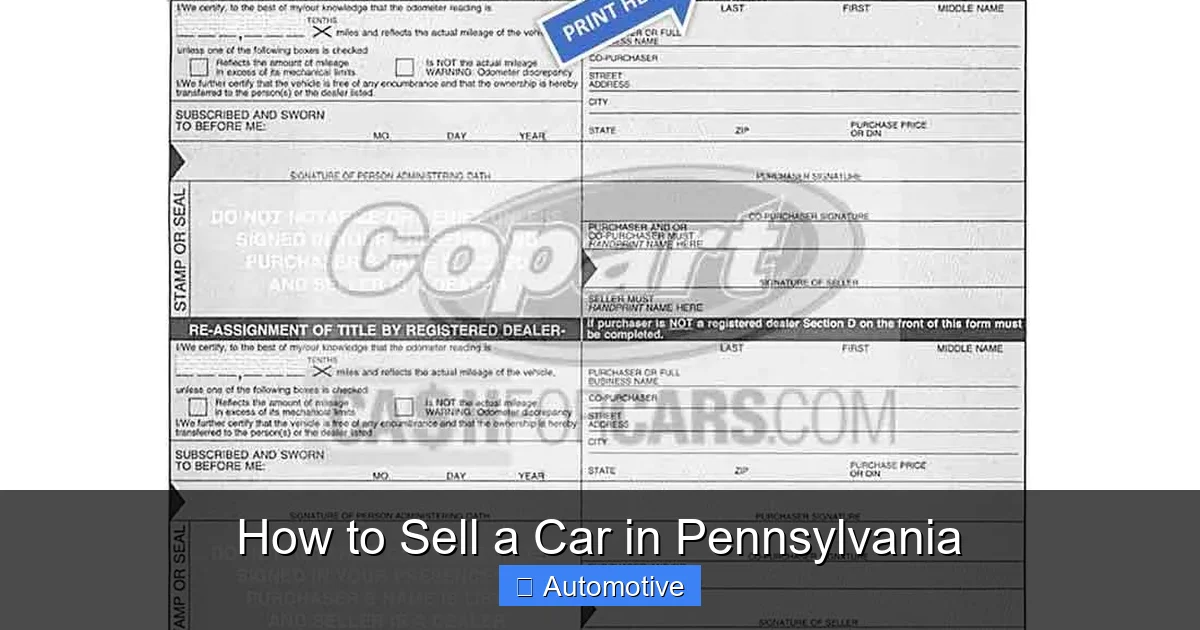
Federal law requires you to disclose the vehicle’s mileage at the time of sale. This is done on the back of the title or on a separate form. If the odometer is broken or the car has exceeded 999,999 miles, you’ll need to check the appropriate box and explain the situation.
Inspection Certificates
Pennsylvania requires all vehicles to have a current safety inspection and, in certain counties, an emissions inspection. The safety inspection checks brakes, lights, tires, steering, and other critical systems. The emissions test measures pollutants from the exhaust.
Your car must pass both inspections before you can transfer ownership. The inspection stickers are valid for one year, so make sure yours is still current. If it’s expired, you’ll need to get the car inspected before listing it for sale.
You can find a list of certified inspection stations on the PennDOT website. Most repair shops and dealerships offer inspection services, and the cost is usually around $50–$75.
Release of Liability
After the sale, you must notify PennDOT that you’re no longer responsible for the vehicle. This is done by completing the “Notice of Vehicle Sale” section on the back of the title or by submitting form MV-4ST online. This step is crucial—it protects you from liability if the buyer gets a ticket or causes an accident before registering the car in their name.
Step 3: Prepare Your Car for Sale
Visual guide about How to Sell a Car in Pennsylvania
Image source: c8.alamy.com
First impressions matter. A clean, well-maintained car is more likely to sell quickly and for a higher price. Take the time to detail your vehicle inside and out. This doesn’t mean you need to hire a professional detailer (though that can help), but a thorough cleaning can make a big difference.
Clean the Interior and Exterior
Start by removing all personal items—gloves, sunglasses, phone chargers, and anything else that doesn’t belong. Vacuum the seats, floor mats, and trunk. Wipe down surfaces with a microfiber cloth and use a cleaner for the dashboard, door panels, and center console.
For the exterior, wash the car thoroughly, including the wheels and undercarriage. Waxing the paint can restore shine and protect the finish. Don’t forget the windows—clean them inside and out for maximum visibility.
Fix Minor Issues
Small repairs can boost your car’s appeal. Replace burnt-out bulbs, fix cracked wipers, and touch up paint chips. If the tires are worn, consider replacing them—they’re a major safety concern and can turn buyers away.
If your car has a check engine light, get it diagnosed. Sometimes it’s a simple fix like a loose gas cap, but other times it could indicate a more serious problem. Be transparent about any known issues in your listing.
Take High-Quality Photos
Photos are your car’s first impression online. Take pictures in good lighting, preferably during the day. Capture the exterior from multiple angles—front, back, sides, and close-ups of the wheels and trim. Don’t forget the interior: show the dashboard, seats, trunk, and any special features like a sunroof or navigation system.
Avoid cluttered backgrounds and shadows. A clean, well-lit photo of your car in a driveway or parking lot will attract more buyers than a blurry shot taken at night.
Write a Compelling Ad
Your ad should be clear, honest, and informative. Include the make, model, year, mileage, condition, and key features. Mention recent repairs or upgrades, like new tires or a recent oil change. Be upfront about any flaws—buyers appreciate honesty.
Use a strong headline, like “2019 Honda CR-V – Excellent Condition, Low Miles, Clean Title.” Avoid vague terms like “runs great” or “must see.” Instead, provide specific details: “Only 45,000 miles, regularly serviced, no accidents, one owner.”
Step 4: Advertise Your Car
Visual guide about How to Sell a Car in Pennsylvania
Image source: cashforcars.com
Now that your car is ready, it’s time to find a buyer. There are several ways to advertise your vehicle, each with its own pros and cons.
Online Marketplaces
Online platforms are the most popular way to sell a car privately. Craigslist, Facebook Marketplace, and Autotrader are great options because they’re free or low-cost and reach a large audience.
Craigslist is simple to use and popular in most areas, but it can attract scammers. Facebook Marketplace allows you to see buyer profiles and message directly through Messenger. Autotrader is more professional but may charge a listing fee.
When posting, include your photos, detailed description, and contact information. Set your price slightly higher than your target to leave room for negotiation.
Local Classifieds and Flyers
Don’t overlook traditional methods. Place an ad in your local newspaper or community bulletin board. You can also create flyers and post them at grocery stores, libraries, or coffee shops.
These methods may not reach as many people as online ads, but they can attract serious local buyers who prefer in-person transactions.
Word of Mouth
Tell friends, family, and coworkers you’re selling your car. Someone in your network might be looking for a vehicle, or they might know someone who is. Word-of-mouth referrals often lead to quick, trustworthy sales.
Avoid Dealership Trade-Ins (Unless You’re in a Rush)
Trading in your car at a dealership is convenient, but you’ll usually get less money than selling it privately. Dealerships need to make a profit, so they’ll offer you less and then resell the car at a higher price.
However, if you’re buying a new car and want a hassle-free experience, a trade-in might be worth it. Just be sure to get a written offer and compare it to your private sale estimate.
Step 5: Meet with Buyers Safely
Once you start getting inquiries, it’s time to meet potential buyers. Safety should be your top priority.
Choose a Safe Location
Always meet in a public place—like a police station parking lot, shopping center, or busy street. Avoid meeting at your home or in remote areas. If possible, bring a friend or family member with you.
Some police departments even offer “safe exchange zones” with cameras and emergency phones. Check with your local department to see if this is available.
Verify Payment Beforehand
Never hand over the keys until you’re sure the payment is secure. Cash is the safest option, but it’s not always practical for large amounts. If the buyer wants to pay by check, make sure it’s a cashier’s check from a local bank. Ask to go to the bank together to verify the funds.
Avoid wire transfers, money orders, or personal checks—they can be fake. If a buyer offers to overpay and asks for a refund, it’s almost always a scam.
Test Drives and Inspections
Allow serious buyers to test drive the car, but always go with them. Keep your keys in your pocket and drive in a safe, familiar area. If the buyer wants a mechanic to inspect the car, that’s a good sign—they’re likely serious.
Step 6: Complete the Sale and Transfer Ownership
Once you’ve agreed on a price and the buyer is ready to purchase, it’s time to finalize the sale.
Sign the Title Correctly
On the back of the title, fill in the buyer’s name, address, sale price, and odometer reading. Sign your name exactly as it appears on the front. Make sure the buyer signs too.
If you’re selling to a dealership, they’ll handle most of the paperwork, but you still need to sign the title.
Complete the Bill of Sale
Fill out the bill of sale with all the required information. Both parties should sign and date it. Keep a copy for your records.
Notify PennDOT
Within 24 hours of the sale, submit the “Notice of Vehicle Sale” to PennDOT. You can do this online using the MV-4ST form or by mailing it. This step releases you from liability and ensures the buyer can register the car.
Cancel Your Insurance
Once the sale is complete, contact your insurance company to cancel or transfer coverage. You don’t want to keep paying for a car you no longer own.
Step 7: Avoid Common Scams and Pitfalls
Unfortunately, car scams are common. Here’s how to protect yourself:
– **Fake Cashier’s Checks:** Scammers send a check for more than the sale price and ask for a refund. The check later bounces.
– **Overpayment Scams:** Similar to fake checks, but the buyer sends extra money and asks you to wire it back.
– **Phishing Emails:** Be wary of buyers who ask for personal information or payment upfront.
– **No-Show Buyers:** If a buyer refuses to meet in person or keeps rescheduling, they may not be serious.
Always trust your instincts. If something feels off, walk away.
Conclusion
Selling a car in Pennsylvania doesn’t have to be complicated. By following these steps—pricing your car correctly, gathering the right paperwork, preparing it for sale, advertising effectively, meeting buyers safely, and transferring ownership properly—you can sell your vehicle quickly and legally. Take your time, stay organized, and don’t rush into a deal that doesn’t feel right. With a little effort and attention to detail, you’ll get a fair price and peace of mind knowing the sale was done the right way.
Frequently Asked Questions
Do I need a safety inspection to sell my car in Pennsylvania?
Yes, your car must have a current safety inspection to be sold legally in Pennsylvania. The inspection must be valid at the time of sale, and the buyer will need it to register the vehicle.
Can I sell my car if I still owe money on it?
No, you cannot sell a car with an outstanding loan unless the lienholder releases the title. Contact your lender to pay off the balance and obtain a clear title before selling.
How long do I have to notify PennDOT after selling my car?
You must notify PennDOT within 24 hours of the sale by submitting the “Notice of Vehicle Sale” section on the title or form MV-4ST. This protects you from liability.
Can I sell my car without a title in Pennsylvania?
No, you must have a valid title to sell your car. If the title is lost, apply for a duplicate from PennDOT before listing the vehicle.
What if the buyer doesn’t register the car?
Once you notify PennDOT of the sale, you’re no longer responsible for the vehicle. However, it’s a good idea to follow up with the buyer to ensure the registration is completed.
Is it better to sell privately or trade in at a dealership?
Selling privately usually gets you more money, but it takes more time and effort. Trading in is faster and more convenient, but you’ll likely receive a lower offer.