How to Sell a Car in Ontario
Selling a car in Ontario doesn’t have to be complicated—if you know the right steps. From preparing your vehicle and setting a fair price to handling paperwork and transferring ownership, this guide walks you through the entire process. Whether you’re selling privately or trading in, doing it right ensures a smooth, legal, and profitable sale.
In This Article
- 1 Key Takeaways
- 2 📑 Table of Contents
- 3 How to Sell a Car in Ontario: A Complete Step-by-Step Guide
- 4 Step 1: Prepare Your Car for Sale
- 5 Step 2: Determine the Right Price
- 6 Step 3: Advertise Your Car Effectively
- 7 Step 4: Handle Test Drives and Negotiations Safely
- 8 Step 5: Complete the Paperwork Correctly
- 9 Step 6: Finalize the Sale and Transfer Ownership
- 10 Conclusion
- 11 Frequently Asked Questions
- 11.1 Do I need a safety inspection to sell a car in Ontario?
- 11.2 Can I sell my car without a UVIP?
- 11.3 What happens if I don’t notify ServiceOntario after selling my car?
- 11.4 Can I sell my car if it has a lien on it?
- 11.5 Is it better to sell privately or trade in at a dealership?
- 11.6 What if the buyer wants to pay with a cheque?
Key Takeaways
- Prepare your car thoroughly: Clean it inside and out, fix minor issues, and gather maintenance records to boost buyer confidence and value.
- Price it right: Research similar vehicles on platforms like AutoTrader and Kijiji to set a competitive and realistic asking price.
- Advertise effectively: Use high-quality photos, write a clear description, and list on trusted platforms to attract serious buyers.
- Handle test drives safely: Meet in public, verify the buyer’s license, and consider bringing a friend for security.
- Complete the paperwork correctly: Fill out the Used Vehicle Information Package (UVIP), sign the bill of sale, and notify ServiceOntario of the sale.
- Transfer ownership legally: Ensure the buyer registers the vehicle and gets insurance before handing over the keys.
- Avoid scams and fraud: Be cautious of fake cheques, overpayments, and buyers who pressure you to act quickly.
📑 Table of Contents
- How to Sell a Car in Ontario: A Complete Step-by-Step Guide
- Step 1: Prepare Your Car for Sale
- Step 2: Determine the Right Price
- Step 3: Advertise Your Car Effectively
- Step 4: Handle Test Drives and Negotiations Safely
- Step 5: Complete the Paperwork Correctly
- Step 6: Finalize the Sale and Transfer Ownership
- Conclusion
How to Sell a Car in Ontario: A Complete Step-by-Step Guide
So, you’ve decided it’s time to sell your car. Maybe you’re upgrading to something newer, downsizing, or just ready for a change. Whatever the reason, selling a car in Ontario can feel overwhelming if you’ve never done it before. But don’t worry—this guide will walk you through every step, from cleaning your car to handing over the keys, so you can sell with confidence, legally, and for the best possible price.
Selling a car isn’t just about posting an ad and waiting for a buyer. It involves preparation, research, safety, and paperwork. Whether you’re selling privately or trading in at a dealership, understanding the process helps you avoid common pitfalls like lowball offers, scams, or legal issues. In Ontario, there are specific rules and requirements that protect both buyers and sellers, so it’s important to follow them closely.
This guide is designed for everyday drivers—no sales experience needed. We’ll keep things simple, practical, and jargon-free. By the end, you’ll know exactly how to sell your car in Ontario, whether it’s a 2010 sedan with high mileage or a nearly new SUV. Let’s get started.
Step 1: Prepare Your Car for Sale
Visual guide about How to Sell a Car in Ontario
Image source: thumbs.dreamstime.com
Before you even think about pricing or advertising, your car needs to be in the best possible condition. First impressions matter—especially when buyers are comparing multiple vehicles. A clean, well-maintained car not only looks more appealing but also suggests it’s been cared for, which can justify a higher price.
Clean It Inside and Out
Start with a thorough cleaning. Wash the exterior, wax it if possible, and clean the wheels and tires. Don’t forget the windows—clean glass makes the car look newer. Inside, vacuum the carpets, wipe down surfaces, and remove any personal items. Consider using an upholstery cleaner for seats and a dashboard cleaner for plastic parts. A fresh scent (like a mild air freshener) can make a big difference, but avoid anything too strong.
If your car has stubborn odors—like smoke or pet smells—consider professional detailing. It might cost $100–$200, but it can significantly increase your car’s appeal and resale value.
Fix Minor Issues
You don’t need to rebuild the engine, but addressing small problems can prevent buyers from using them as bargaining tools. Replace burnt-out light bulbs, fix wiper blades, and top up fluids. If the check engine light is on, get it diagnosed—even if it’s a minor sensor issue, buyers will worry about bigger problems.
Minor cosmetic fixes like touch-up paint for scratches or dents can also help. A $50 paint pen might save you $500 off your asking price. Remember: buyers often assume the worst, so showing that you’ve maintained the car builds trust.
Gather Documentation
Collect all relevant paperwork, including:
– Maintenance and repair records
– Owner’s manual
– Warranty information (if applicable)
– Original window sticker (Monroney label), if you have it
These documents show that the car has been well cared for and can reassure buyers about its history. If you’ve kept receipts for oil changes, brake jobs, or tire replacements, include them. A documented service history can be a strong selling point.
Step 2: Determine the Right Price
Visual guide about How to Sell a Car in Ontario
Image source: smartautorecycling.ca
Pricing your car correctly is one of the most important steps. Overprice it, and it may sit on the market for months. Underprice it, and you lose money. The goal is to find the sweet spot where your car is competitive but still reflects its value.
Research Comparable Listings
Start by checking online marketplaces like AutoTrader, Kijiji, and Facebook Marketplace. Look for vehicles that are similar to yours in terms of:
– Make, model, and year
– Mileage
– Trim level and features (e.g., sunroof, navigation, AWD)
– Condition (clean title, accident history)
For example, if you’re selling a 2018 Honda Civic LX with 80,000 km, search for other 2018 Civics with similar mileage and features. Note the asking prices—this gives you a realistic range.
Use Valuation Tools
Websites like Canadian Black Book, Kelley Blue Book (KBB), and Edmunds offer free valuation tools. Enter your car’s details, and they’ll give you an estimated market value based on recent sales data. These tools consider factors like location, seasonality, and demand.
Keep in mind that these are estimates. Private sale prices are usually higher than trade-in values because you’re cutting out the dealership’s markup. For instance, if a dealer offers $12,000 for your trade-in, you might be able to sell it privately for $14,000–$15,000.
Adjust for Condition and Extras
If your car is in excellent condition with low mileage and extra features (like leather seats or a premium sound system), you can price it toward the higher end of the range. Conversely, if it has high mileage, minor damage, or needs repairs, price it lower to attract buyers.
Be honest with yourself. A car with 120,000 km won’t sell for the same price as one with 60,000 km, even if it’s the same model. Transparency builds trust and reduces negotiation stress.
Step 3: Advertise Your Car Effectively
Visual guide about How to Sell a Car in Ontario
Image source: cdn-brochure.surex.com
Once your car is ready and priced, it’s time to find a buyer. Effective advertising increases your chances of a quick, profitable sale. The key is to present your car in the best light while being honest about its condition.
Write a Clear and Honest Description
Your ad should include:
– Make, model, year, and trim
– Mileage
– Transmission type (automatic or manual)
– Fuel type (gas, hybrid, electric)
– Key features (e.g., backup camera, heated seats, Apple CarPlay)
– Condition (mention any flaws honestly)
– Reason for selling (optional, but can build trust)
Example:
“2019 Toyota RAV4 LE AWD – 75,000 km – Automatic – Clean title – No accidents – Excellent condition – Well-maintained with full service records. Features include backup camera, Bluetooth, and all-weather floor mats. Selling because we’re upgrading to a larger vehicle.”
Avoid vague terms like “great car” or “must see.” Be specific and factual. Buyers appreciate honesty and are more likely to respond to detailed ads.
Take High-Quality Photos
Photos are the first thing buyers see. Take pictures in natural daylight, preferably outdoors. Capture:
– Exterior shots from multiple angles (front, back, sides)
– Close-ups of the wheels, headlights, and grille
– Interior shots of the dashboard, seats, and trunk
– Any unique features or upgrades
Avoid shadows, glare, or cluttered backgrounds. A clean, well-lit photo can make your car look more appealing than a similar model with poor photos.
Choose the Right Platforms
List your car on trusted websites where buyers are actively searching. Popular options in Ontario include:
– Kijiji (free and widely used)
– AutoTrader (paid listing, but reaches serious buyers)
– Facebook Marketplace (free, easy to use, and popular locally)
– Craigslist (still used in some areas)
Each platform has its pros and cons. Kijiji is great for local sales, while AutoTrader attracts buyers looking for specific models. Consider listing on more than one site to maximize exposure.
Respond Promptly to Inquiries
When buyers contact you, reply quickly and professionally. Answer questions honestly and provide additional photos if requested. If someone wants to see the car, schedule a viewing at a convenient time.
Avoid sharing personal information like your home address or phone number in the ad. Use the platform’s messaging system initially, and only share contact details once you’re comfortable.
Step 4: Handle Test Drives and Negotiations Safely
Once you have interested buyers, it’s time for test drives and price talks. This is where many sellers feel nervous—especially about safety and haggling. But with the right approach, you can protect yourself and close the deal smoothly.
Prepare for Test Drives
Before letting someone drive your car, take these precautions:
– Verify the buyer’s driver’s license (make sure it’s valid and matches their ID)
– Ask them to sign a test drive agreement (available online or from dealerships)
– Accompany them on the drive, or have a friend join you
– Meet in a public, well-lit area (like a mall parking lot or police station)
Never hand over your keys without verifying the buyer’s license. It’s also wise to check their insurance—some buyers may not be insured to drive your vehicle, which could be a liability.
Be Ready to Negotiate
Most buyers will try to negotiate. That’s normal. But you don’t have to accept every offer. Know your bottom line—the lowest price you’re willing to accept—and stick to it.
If a buyer offers $13,000 on a $15,000 listing, you can counter with $14,500. Be polite but firm. Explain why your car is worth the price—mention its condition, low mileage, or recent repairs.
Avoid getting emotional. Negotiation is part of the process. If a buyer is too pushy or disrespectful, it’s okay to walk away.
Watch Out for Red Flags
Be cautious of:
– Buyers who want to pay with a cheque or money order (especially if it’s over your asking price)
– Requests to ship the car or use a third-party escrow service
– Pressure to complete the sale quickly
– Buyers who refuse to meet in person
These could be signs of scams. Always meet in person, accept cash or certified cheques, and complete the sale locally.
Step 5: Complete the Paperwork Correctly
Once you’ve agreed on a price, it’s time to finalize the sale. In Ontario, there are specific legal requirements to transfer ownership properly. Skipping steps can lead to liability issues or fines.
Obtain the Used Vehicle Information Package (UVIP)
Before you sell, you must provide the buyer with a UVIP. This document includes:
– Vehicle history (accidents, liens, odometer readings)
– Safety standards certificate (if required)
– Emission test results (if applicable)
You can order the UVIP online from ServiceOntario for $50. It’s valid for 30 days, so order it close to the sale date. The buyer needs this to register the vehicle.
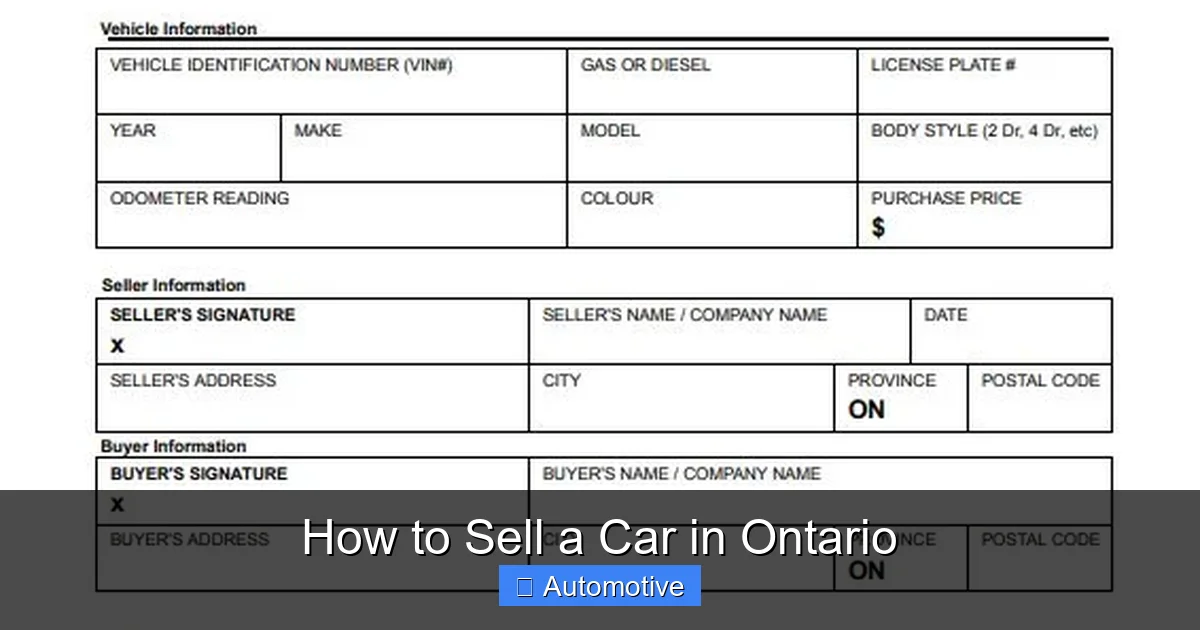
Complete the Bill of Sale
The bill of sale is a legal document that records the transaction. It should include:
– Seller and buyer names and addresses
– Vehicle details (VIN, make, model, year, plate number)
– Sale price
– Date of sale
– Signatures of both parties
You can download a free bill of sale template from the ServiceOntario website. Both you and the buyer must sign it.
Remove the License Plates
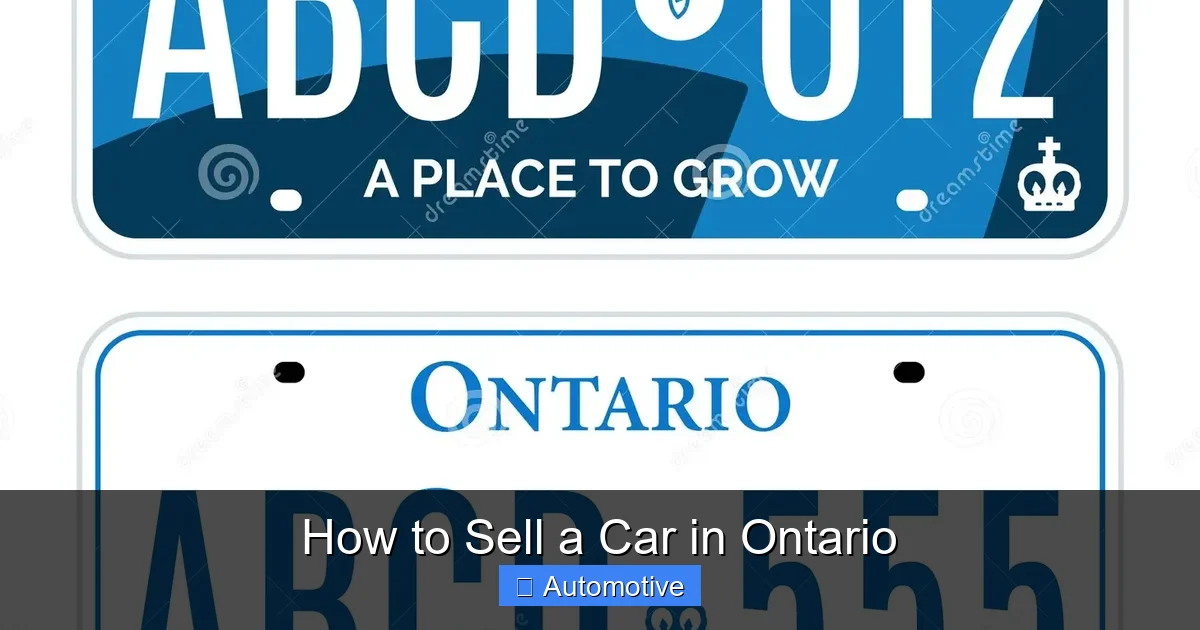
In Ontario, license plates stay with the seller—not the vehicle. Remove the plates before handing over the car. You can transfer them to a new vehicle or return them to ServiceOntario.
Do not leave the plates on the car. If the buyer drives it without proper registration, you could be held responsible.
Notify ServiceOntario
Within 6 days of the sale, you must notify ServiceOntario that you’ve sold the vehicle. You can do this online, by phone, or in person. This protects you from liability if the buyer gets a ticket or is involved in an accident before registering the car.
Provide the Buyer with Necessary Documents
Give the buyer:
– The signed bill of sale
– The UVIP
– The vehicle’s manual and any service records
– A copy of the safety standards certificate (if applicable)
Make sure the buyer understands they need to register the vehicle and get insurance before driving it.
Step 6: Finalize the Sale and Transfer Ownership
The last step is handing over the keys—but only after everything is in order. This ensures a smooth transition and protects both parties.
Accept Secure Payment
The safest way to receive payment is cash or a certified bank draft. Avoid personal cheques, which can bounce. If the buyer wants to pay by e-transfer, confirm the funds have cleared before handing over the keys.
Never accept overpayment and refund the difference—this is a common scam.
Hand Over the Keys and Documents
Once payment is confirmed, give the buyer:
– The car keys (and spare, if you have one)
– All documents (bill of sale, UVIP, manual, etc.)
– A signed copy of the transfer form (if applicable)
Make sure the buyer has insurance and registration before they drive away. You can ask to see proof of insurance.
Keep Records
Save copies of all documents, including the bill of sale and your notification to ServiceOntario. These can be useful if there are any disputes later.
Conclusion
Selling a car in Ontario doesn’t have to be stressful. By preparing your vehicle, pricing it fairly, advertising effectively, and handling the paperwork correctly, you can sell it safely and profitably. Remember to prioritize safety during test drives, avoid scams, and follow Ontario’s legal requirements to protect yourself.
Whether you’re selling a compact car or a full-size SUV, the key is to be honest, organized, and patient. Take your time, do your research, and don’t rush into a deal that doesn’t feel right. With this guide, you’re well-equipped to navigate the process like a pro.
So go ahead—clean that car, snap some great photos, and list it with confidence. Your next owner is out there, and you’re ready to make the sale.
Frequently Asked Questions
Do I need a safety inspection to sell a car in Ontario?
Yes, if the car is more than seven years old or has over 160,000 km, a valid safety standards certificate is required before the buyer can register it. You can get this from a licensed mechanic.
Can I sell my car without a UVIP?
No, it’s illegal to sell a used car in Ontario without providing a UVIP. The buyer needs it to complete the registration process.
What happens if I don’t notify ServiceOntario after selling my car?
You could be held liable for fines, tickets, or accidents involving the vehicle until the buyer registers it. Always notify ServiceOntario within six days of the sale.
Can I sell my car if it has a lien on it?
No, you must pay off the lien and obtain a clear title before selling. The lienholder must release the vehicle before the sale can proceed.
Is it better to sell privately or trade in at a dealership?
Private sales usually yield higher prices, but trade-ins are faster and more convenient. Choose based on your priorities—profit versus ease.
What if the buyer wants to pay with a cheque?
Only accept certified bank drafts or cash. Personal cheques can bounce, and fake cheques are a common scam. Wait for funds to clear before handing over the car.