How to Sell a Car in Missouri
Selling a car in Missouri doesn’t have to be complicated. With the right preparation, paperwork, and pricing strategy, you can complete the process quickly and legally. This guide walks you through every step—from cleaning your car to signing over the title—so you can sell with confidence.
In This Article
- 1 Key Takeaways
- 2 📑 Table of Contents
- 3 How to Sell a Car in Missouri: A Complete Step-by-Step Guide
- 4 Step 1: Prepare Your Vehicle for Sale
- 5 Step 2: Determine the Right Price
- 6 Step 3: Gather the Required Paperwork
- 7 Step 4: Advertise Your Car Effectively
- 8 Step 5: Complete the Sale Safely
- 9 Step 6: Protect Yourself After the Sale
- 10 Common Mistakes to Avoid
- 11 Final Thoughts
- 12 Frequently Asked Questions
- 12.1 Do I need a bill of sale to sell a car in Missouri?
- 12.2 Can I sell my car without a title in Missouri?
- 12.3 Do I need to provide an emissions test when selling a car in Missouri?
- 12.4 What happens if I don’t submit the Notice of Sale?
- 12.5 Can I sell my car if it has a lien?
- 12.6 Should I keep my license plates when selling a car in Missouri?
Key Takeaways
- Prepare your vehicle: Clean, repair minor issues, and gather maintenance records to increase buyer trust and value.
- Set a fair price: Use tools like Kelley Blue Book or Edmunds to research market value based on year, mileage, and condition.
- Gather required documents: You’ll need the title, bill of sale, odometer disclosure, and emissions certificate (if applicable).
- Complete the title transfer correctly: Sign the title over to the buyer and submit a Notice of Sale to the Missouri DMV to avoid liability.
- Advertise effectively: Use online platforms like Facebook Marketplace or Craigslist with clear photos and honest descriptions.
- Handle the sale safely: Meet in public, accept secure payment methods, and avoid cash transactions over $10,000 without proper documentation.
- Cancel insurance after sale: Notify your insurer once the sale is complete to stop coverage and avoid unnecessary charges.
📑 Table of Contents
- How to Sell a Car in Missouri: A Complete Step-by-Step Guide
- Step 1: Prepare Your Vehicle for Sale
- Step 2: Determine the Right Price
- Step 3: Gather the Required Paperwork
- Step 4: Advertise Your Car Effectively
- Step 5: Complete the Sale Safely
- Step 6: Protect Yourself After the Sale
- Common Mistakes to Avoid
- Final Thoughts
How to Sell a Car in Missouri: A Complete Step-by-Step Guide
So, you’ve decided it’s time to sell your car in Missouri. Maybe you’re upgrading to a newer model, downsizing, or just ready for a change. Whatever the reason, selling a vehicle can feel overwhelming—especially if you’ve never done it before. But don’t worry. With the right approach, the process can be smooth, legal, and even profitable.
Missouri has specific rules and requirements for selling a car, and understanding them upfront can save you time, stress, and potential legal trouble down the road. From pricing your vehicle correctly to transferring the title and protecting yourself from liability, every step matters. This guide will walk you through the entire process, from start to finish, so you can sell your car with confidence and peace of mind.
Whether you’re selling to a private buyer, trading in at a dealership, or using an online car-buying service, the basics remain the same: prepare your car, know your worth, handle the paperwork correctly, and close the deal safely. Let’s dive in and make selling your Missouri car as easy as possible.
Step 1: Prepare Your Vehicle for Sale
Visual guide about How to Sell a Car in Missouri
Image source: ussellmycar.com
Before you even think about listing your car, take the time to get it in the best possible shape. First impressions matter—especially when selling a used car. A clean, well-maintained vehicle not only attracts more buyers but can also help you command a higher price.
Clean Inside and Out
Start with a thorough cleaning. Wash the exterior, wax it if possible, and clean the windows inside and out. Don’t forget the wheels and tires—dirty rims can make a car look neglected. Inside, vacuum the carpets, wipe down surfaces, and remove any personal items. Consider using an odor eliminator if there are lingering smells from pets, smoke, or food. A fresh-smelling car feels newer and more appealing.
Address Minor Repairs
You don’t need to overhaul the engine, but fixing small issues can make a big difference. Replace burnt-out light bulbs, fix cracked windshields (or at least get a quote), and top off fluids. If the brakes squeak or the check engine light is on, consider getting them checked. Buyers are more likely to trust a car that’s been well cared for.
Gather Maintenance Records
Collect all service receipts, oil change records, and repair invoices. These documents show that the car has been maintained regularly, which builds buyer confidence. If you’ve kept a log of tire rotations, brake jobs, or transmission work, include that too. Organize them in a folder or binder to present during the sale.
Take High-Quality Photos
When you’re ready to list your car, photos are your first chance to impress. Take pictures in good lighting—early morning or late afternoon works best. Capture the front, back, sides, interior, trunk, and engine bay. Show any flaws honestly, but focus on the car’s best features. A clean, well-lit photo can double your response rate.
Step 2: Determine the Right Price
Visual guide about How to Sell a Car in Missouri
Image source: theghostyard.com
Pricing your car correctly is one of the most important steps in the selling process. Overprice it, and you’ll scare off buyers. Underprice it, and you’ll lose money. The goal is to find that sweet spot where your car is competitive but still reflects its true value.
Research Market Value
Use trusted pricing tools like Kelley Blue Book (KBB), Edmunds, or NADA Guides. Enter your car’s make, model, year, mileage, trim level, and condition. These tools will give you a range—typically “trade-in,” “private party,” and “dealer retail” values. For private sales, aim for the private party value.
For example, a 2018 Honda Civic with 60,000 miles in good condition might be valued at $16,500 privately. But if it has high mileage or needs repairs, that number drops. Be honest about your car’s condition when using these tools.
Check Local Listings
Look at similar cars for sale in your area on platforms like Facebook Marketplace, Craigslist, or Autotrader. Note the prices, but also consider differences in mileage, features, and condition. If your car has upgraded tires, a sunroof, or low mileage, you can justify a higher price.
Adjust for Condition and Extras
If your car has aftermarket parts, a clean history report, or recent major repairs (like a new transmission), mention these in your listing and adjust your price accordingly. Conversely, if there are known issues—like a worn clutch or paint damage—factor that into your pricing.
Leave Room for Negotiation
Most buyers will try to negotiate, so price your car slightly above your target. For instance, if you want $15,000, list it at $15,500. This gives you room to come down while still getting what you want. Just don’t overinflate the price—buyers can spot unrealistic listings quickly.
Step 3: Gather the Required Paperwork
Visual guide about How to Sell a Car in Missouri
Image source: cashforcars.com
In Missouri, selling a car involves more than just handing over the keys. You’ll need several documents to complete the sale legally and protect yourself from future liability. Missing even one can delay the process or cause problems later.
Vehicle Title
The title is the most important document. It proves you own the car and have the right to sell it. Make sure your name is correctly listed as the owner. If you’re married and the car is in both names, both signatures may be required.
If you’ve lost the title, you can request a duplicate from the Missouri Department of Revenue (DOR). You’ll need to fill out Form 4800 and pay a small fee. Don’t sell the car without it—buyers won’t accept it, and you could face legal issues.
Bill of Sale
While not always required, a bill of sale is highly recommended. It documents the sale, including the buyer’s and seller’s names, addresses, vehicle details, sale price, and date. Missouri provides a free bill of sale form on the DOR website, or you can create your own.
Include the VIN, odometer reading, and a statement that the car is sold “as-is” unless you’re offering a warranty. Both parties should sign and keep a copy.
Odometer Disclosure Statement
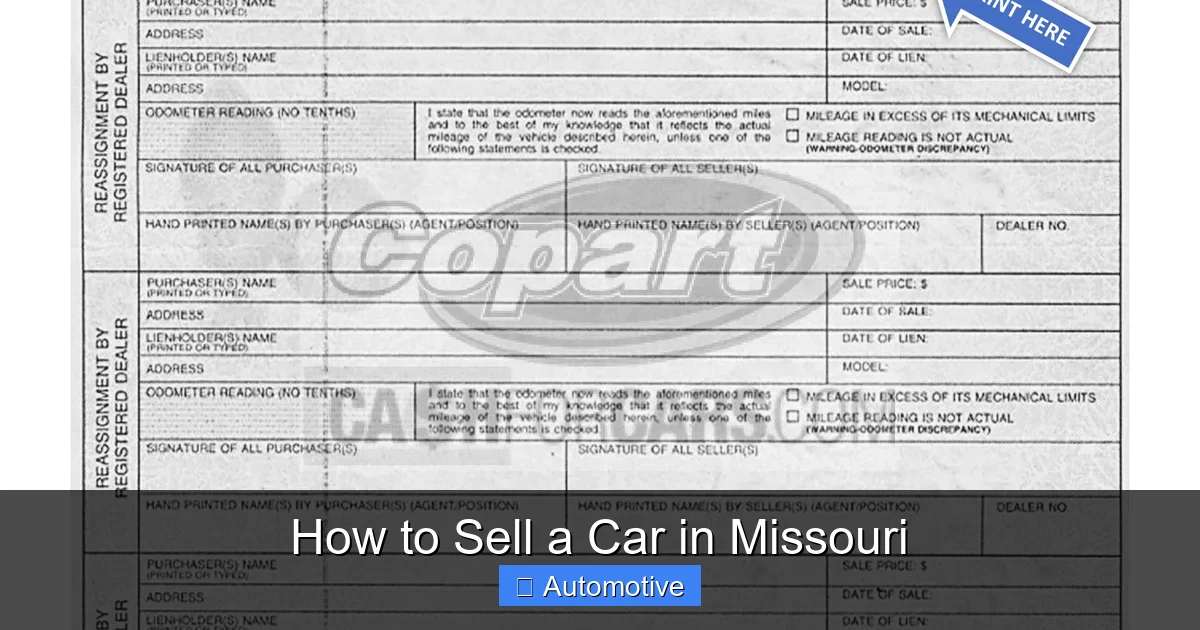
Federal law requires you to disclose the vehicle’s mileage at the time of sale. This is usually done on the title itself, but if your title doesn’t have a space for it, you’ll need a separate odometer disclosure form. This prevents fraud and protects both you and the buyer.
Emissions Certificate (If Applicable)
Missouri requires emissions testing only in certain counties, including St. Louis, St. Charles, Jefferson, Franklin, and parts of Kansas City. If your car is registered in one of these areas, you’ll need a valid emissions certificate to sell it.
The test must be completed within 90 days of the sale. You can get it done at an approved testing station. If your car fails, you may need to repair it before selling. Keep the certificate with your paperwork.
Release of Liability (Notice of Sale)
After the sale, you must notify the Missouri DOR that you’ve sold the vehicle. This is done by submitting a Notice of Sale (Form 4514) within 30 days. You can do this online, by mail, or in person.
This step is crucial—it releases you from liability if the buyer gets a ticket, causes an accident, or fails to register the car. Without it, you could still be held responsible.
Step 4: Advertise Your Car Effectively
Now that your car is ready and your paperwork is in order, it’s time to find a buyer. The way you advertise can make or break your sale. A great listing attracts serious buyers and helps you sell faster.
Choose the Right Platform
Popular options include:
– Facebook Marketplace: Free, easy to use, and reaches local buyers quickly.
– Craigslist: Still widely used, especially for private sales.
– Autotrader or Cars.com: Great for reaching serious buyers, but may charge a fee.
– Local classifieds or community boards: Good for older cars or niche markets.
For most sellers, Facebook Marketplace and Craigslist offer the best balance of reach and cost.
Write a Clear, Honest Description
Your listing should include:
– Year, make, model, and trim
– Mileage
– Condition (excellent, good, fair)
– Key features (sunroof, navigation, AWD, etc.)
– Recent repairs or maintenance
– Reason for selling
Be honest about flaws. Saying “minor paint scratches on rear bumper” is better than hiding them. Buyers appreciate transparency and are more likely to trust you.
Use High-Quality Photos
Take at least 8–10 photos from different angles. Include close-ups of the interior, dashboard, tires, and any damage. A well-lit, clean photo of the engine bay can reassure buyers about maintenance.
Respond Promptly to Inquiries
Check your messages daily. Answer questions quickly and professionally. If a buyer asks about the transmission, respond with facts—don’t guess. If you don’t know, say so.
Be Prepared for Test Drives
When buyers want to test drive, meet in a public place like a mall parking lot or police station. Bring a friend, verify the buyer’s driver’s license, and consider riding along. Never let a stranger take your car alone.
Step 5: Complete the Sale Safely
Once you’ve found a serious buyer, it’s time to close the deal. This step requires caution—both legally and personally. Protect yourself by following best practices for payment, paperwork, and communication.
Negotiate the Final Price
Be prepared to haggle. Most buyers will offer less than your asking price. Know your bottom line and stick to it. If the offer is too low, politely decline or counter.
Remember: a quick sale at a fair price is better than waiting months for the “perfect” offer.
Accept Secure Payment
Avoid cash for large amounts. Instead, use:
– Cashier’s check: Get it from a bank and verify it’s legitimate.
– Bank transfer: Safe and traceable.
– Certified check: Similar to a cashier’s check.
Never accept personal checks—they can bounce. If you must accept cash, meet at a bank so the buyer can withdraw it in front of you.
Sign Over the Title
On the back of the title, fill in the buyer’s name, address, sale price, and odometer reading. Sign exactly as your name appears on the front. If you’re married and both names are on the title, both must sign.
Make a copy of the signed title for your records.
Complete the Bill of Sale
Fill out the bill of sale with all required details. Both you and the buyer should sign it. Keep a copy.
Remove License Plates
In Missouri, license plates stay with the seller—not the car. Remove them before handing over the keys. You can reuse them on another vehicle or return them to the DOR.
Cancel Your Insurance
Once the sale is complete, call your insurance company to cancel or transfer coverage. Don’t wait—you’re still paying for a car you no longer own.
Step 6: Protect Yourself After the Sale
Your responsibilities don’t end when the money changes hands. Taking a few final steps ensures you’re fully protected from future issues.
Submit the Notice of Sale
Within 30 days, submit Form 4514 to the Missouri DOR. You can do this online at the DOR website. This officially releases you from liability.
Keep Records
Store copies of the title, bill of sale, and Notice of Sale for at least three years. If the buyer ever claims you misrepresented the car, you’ll have proof.
Watch for Red Flags
If the buyer doesn’t register the car within a few weeks, the DOR may contact you. This is why the Notice of Sale is so important—it shows you’ve done your part.
Consider a “Sold As-Is” Clause
Unless you’re offering a warranty, make it clear the car is sold “as-is.” This limits your liability if the buyer has problems after the sale.
Common Mistakes to Avoid
Even experienced sellers make errors. Here are some common pitfalls and how to avoid them:
Selling Without a Title
Never sell a car without a valid title. If you’ve lost it, get a duplicate first. Buyers won’t accept it, and you could face legal trouble.
Skipping the Notice of Sale
Failing to submit Form 4514 leaves you liable for tickets, accidents, or registration issues. Always do it within 30 days.
Accepting Risky Payments
Personal checks, wire transfers from unknown sources, or cash over $10,000 without documentation are red flags. Stick to secure methods.
Overpricing or Underpricing
Research thoroughly. Overpricing leads to no interest; underpricing means lost money.
Not Disclosing Problems
Hiding issues like transmission trouble or flood damage can lead to disputes or even lawsuits. Be honest upfront.
Final Thoughts
Selling a car in Missouri doesn’t have to be stressful. With proper preparation, honest communication, and attention to legal details, you can complete the process smoothly and safely. From cleaning your car and setting the right price to handling paperwork and protecting yourself after the sale, every step matters.
Remember: the goal isn’t just to sell your car—it’s to sell it the right way. By following this guide, you’ll avoid common pitfalls, attract serious buyers, and walk away with confidence. Whether you’re upgrading, downsizing, or just ready for a change, you’ve got this.
So take a deep breath, gather your documents, and get ready to sell. Your next adventure is just around the corner.
Frequently Asked Questions
Do I need a bill of sale to sell a car in Missouri?
While not legally required, a bill of sale is highly recommended. It protects both you and the buyer by documenting the sale details, including price, date, and vehicle information. Missouri provides a free form on the DOR website.
Can I sell my car without a title in Missouri?
No, you cannot legally sell a car without a valid title. If you’ve lost yours, request a duplicate from the Missouri DOR using Form 4800. The buyer will not accept the vehicle without it.
Do I need to provide an emissions test when selling a car in Missouri?
Only if the car is registered in a county that requires emissions testing, such as St. Louis or Kansas City. Check with the Missouri DOR to see if your area requires it. The test must be completed within 90 days of the sale.
What happens if I don’t submit the Notice of Sale?
If you fail to submit Form 4514 within 30 days, you may remain liable for tickets, accidents, or registration issues involving the car. Always notify the DOR to protect yourself.
Can I sell my car if it has a lien?
Yes, but the lien must be paid off before or at the time of sale. Contact your lender to coordinate the payoff and obtain a lien release. The title cannot be transferred until the lien is cleared.
Should I keep my license plates when selling a car in Missouri?
Yes, license plates stay with the seller in Missouri. Remove them before handing over the car. You can reuse them on another vehicle or return them to the DOR.