How to Sell a Car Dealership

Selling a car dealership is a major financial and emotional decision that requires careful planning, accurate valuation, and strategic marketing. Whether you’re retiring, pivoting your business, or seeking new opportunities, understanding the process ensures you maximize value and avoid costly mistakes.
Selling a car dealership isn’t like selling a used sedan. It’s a complex, high-stakes transaction that involves real estate, inventory, employees, customer relationships, and often, a franchise agreement. Whether you’ve built your dealership from the ground up or inherited it from a family member, deciding to sell is a big step—one that deserves careful thought and preparation.
You might be ready to retire, pursue a new venture, or simply cash in on years of hard work. Whatever your reason, the process of selling a car dealership requires more than just putting up a “For Sale” sign. It demands strategic planning, financial transparency, and a deep understanding of what buyers are really looking for. And let’s be honest—most buyers aren’t just interested in your cars. They’re buying your reputation, your location, your staff, and your customer base.
The good news? With the right approach, you can sell your dealership for top dollar and leave on your terms. This guide walks you through every step—from valuation to closing—so you can navigate the process with confidence and clarity.
In This Article
- 1 Key Takeaways
- 2 📑 Table of Contents
- 3 Step 1: Determine Why You’re Selling
- 4 Step 2: Get a Professional Valuation
- 5 Step 3: Prepare Your Financials and Records
- 6 Step 4: Choose the Right Sales Channel
- 7 Step 5: Navigate Legal and Regulatory Requirements
- 8 Step 6: Negotiate the Deal and Close
- 9 Step 7: Plan for Life After the Sale
- 10 Frequently Asked Questions
- 10.1 How long does it take to sell a car dealership?
- 10.2 Can I sell my dealership without a broker?
- 10.3 What affects the value of a car dealership?
- 10.4 Do I need manufacturer approval to sell my dealership?
- 10.5 What happens to my employees when I sell?
- 10.6 Should I sell the real estate with the dealership?
Key Takeaways
- Accurate valuation is essential: Get a professional appraisal to determine your dealership’s true market value based on assets, revenue, and location.
- Prepare financial records: Clean, organized books increase buyer confidence and speed up the due diligence process.
- Market strategically: Target qualified buyers through brokers, industry networks, and online platforms to attract serious offers.
- Understand legal and regulatory requirements: Franchise agreements, zoning laws, and licensing can impact the sale—consult experts early.
- Negotiate with confidence: Know your bottom line and be ready to discuss terms like inventory, real estate, and transition support.
- Plan for a smooth transition: A well-structured handover protects your reputation and ensures continuity for employees and customers.
- Timing matters: Selling during strong market conditions or after a period of growth can significantly boost your sale price.
📑 Table of Contents
Step 1: Determine Why You’re Selling
Before you even think about listing your dealership, take a moment to reflect on your motivations. Are you retiring? Expanding into a different market? Burned out from the daily grind? Understanding your “why” helps shape your strategy and sets realistic expectations.
For example, if you’re selling because you want to retire, you might prioritize a smooth transition and a buyer who will retain your employees. But if you’re selling to fund a new business, you may be more focused on maximizing the sale price, even if it means a quicker, less personal handover.
Your reason for selling also affects timing. If you’re emotionally ready to walk away, you might be more flexible on price. But if you’re selling out of necessity—like financial pressure—you may need to act fast, which could limit your negotiating power.
Take the case of Mike, a third-generation dealer in Ohio. He loved the business but was tired of the long hours. He spent six months preparing his dealership for sale, updated his financials, and worked with a broker to find a buyer who shared his values. Because he was clear on his goals, he sold for 15% above market average and stayed on for three months to train the new owner.
So ask yourself: What do I want after the sale? Peace of mind? A big payout? A legacy preserved? Your answers will guide every decision from here on out.
Step 2: Get a Professional Valuation
Visual guide about How to Sell a Car Dealership
Image source: simpleinvoice17.net
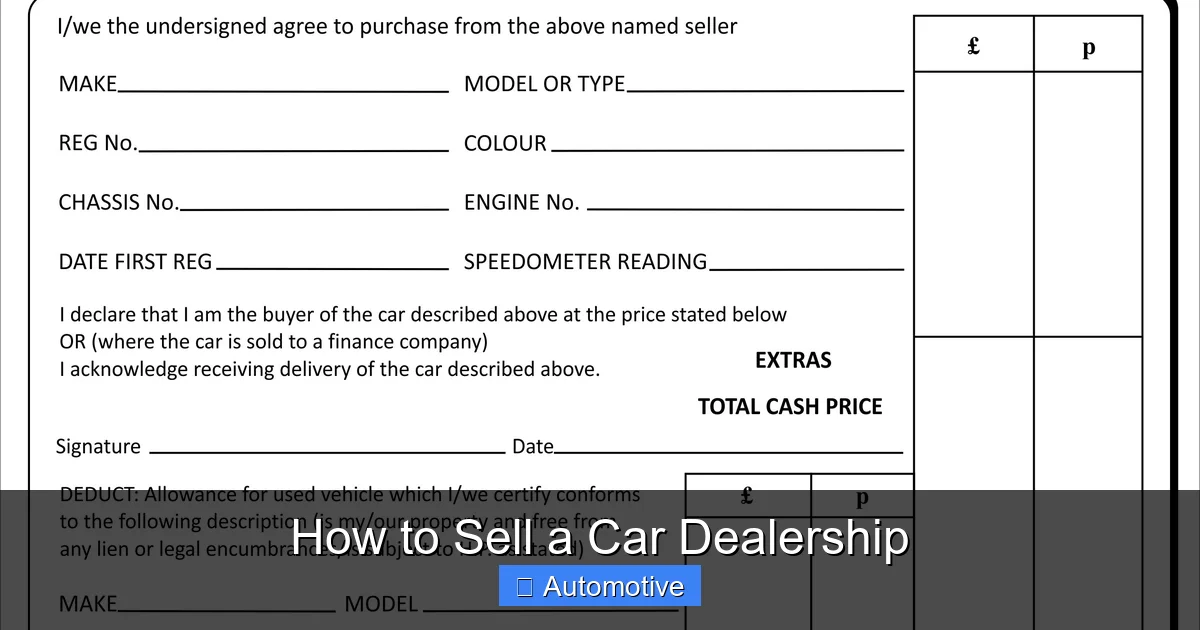
You wouldn’t sell your house without knowing its market value—so why would you sell a dealership without a proper valuation? A professional appraisal gives you a realistic estimate of what your business is worth and helps you set a competitive asking price.
There are three main methods used to value a car dealership:
Asset-Based Valuation
This approach adds up the value of your tangible assets—real estate, inventory, equipment, and furniture—and subtracts liabilities. It’s straightforward but doesn’t account for goodwill or future earnings.
For instance, if your dealership owns a $2 million property, has $1.5 million in inventory, and $500,000 in equipment, your asset value might be around $3.5 million. But this doesn’t reflect the fact that your location draws 500 customers a month or that you have a loyal service department.
Income-Based Valuation
This method focuses on your dealership’s profitability. It typically uses a multiple of your EBITDA (Earnings Before Interest, Taxes, Depreciation, and Amortization). A common range is 3x to 6x EBITDA, depending on growth, location, and market conditions.
If your dealership earns $1 million in EBITDA annually, a 4x multiple would value it at $4 million. But if you’re in a high-growth area with strong brand recognition, that multiple could go higher.
Market-Based Valuation
Here, you compare your dealership to similar ones that have recently sold. This method is especially useful in active markets where comparable sales data is available.
For example, if three similar dealerships in your region sold for 3.5x to 4.5x EBITDA, you can use that range to benchmark your own value.
Most experts recommend using a combination of these methods. A certified business appraiser or M&A (mergers and acquisitions) advisor can help you navigate this process and defend your valuation to potential buyers.
Pro tip: Don’t rely on online calculators or rough estimates. They often undervalue dealerships by ignoring key intangibles like customer loyalty, brand reputation, and employee expertise.
Step 3: Prepare Your Financials and Records

Visual guide about How to Sell a Car Dealership
Image source: nameguider.com
Buyers want transparency. The more organized and complete your records, the faster and smoother the sale will go. Think of it like cleaning your house before guests arrive—except your “guests” are scrutinizing every detail.
Start by gathering the following:
– Three to five years of tax returns
– Profit and loss statements (monthly and annual)
– Balance sheets
– Inventory reports (new and used)
– Payroll records
– Lease or mortgage documents for real estate
– Franchise agreement and any manufacturer requirements
– Customer database (anonymized for privacy)
– Service and parts department performance data
Clean Up Your Books
If your books are messy or inconsistent, now is the time to fix them. Hire an accountant if needed to reconcile accounts, remove personal expenses, and ensure everything is GAAP-compliant (Generally Accepted Accounting Principles).
For example, if you’ve been paying yourself a salary that’s below market rate, adjust it to reflect fair compensation. This gives buyers a clearer picture of true profitability.
Highlight Key Metrics
Buyers love data. Create a one-page summary that includes:
– Annual revenue and net profit
– Gross margins on new and used cars
– Service department revenue and retention rate
– Average days to sell inventory
– Customer satisfaction scores (like NPS)
– Employee tenure and turnover rate
These metrics show that your dealership isn’t just profitable—it’s well-run and sustainable.
Address Liabilities and Risks
Be upfront about any debts, pending lawsuits, or regulatory issues. Hiding problems can kill a deal or lead to legal trouble later. Instead, disclose them early and explain how they’re being resolved.
For instance, if you have a small environmental cleanup issue on the property, show that you’ve hired a remediation firm and have a timeline for completion. This builds trust and shows you’re proactive.
Remember: A clean, well-documented file room is one of your best sales tools.
Step 4: Choose the Right Sales Channel
Visual guide about How to Sell a Car Dealership
Image source: gtagaming.com
Once your dealership is ready, it’s time to find a buyer. But how? You have several options, each with pros and cons.
Work with a Business Broker
A specialized automotive broker has access to a network of qualified buyers and knows the ins and outs of dealership sales. They handle marketing, screening, negotiations, and paperwork—freeing you to run your business during the process.
Brokers typically charge a commission (5% to 10% of the sale price), but their expertise often leads to higher offers and faster closings. Look for a broker with experience in your brand and region.
For example, a Chevrolet dealer in Texas might work with a broker who has sold multiple GM franchises in the Southwest. That broker understands manufacturer requirements and can connect you with buyers who already have GM approval.
List on Industry Marketplaces
Websites like Dealership Exchange, BizBuySell, and LoopNet allow you to list your dealership publicly. These platforms attract serious buyers, but you’ll need to manage inquiries and negotiations yourself.
Pro tip: Use a confidentiality agreement (NDA) before sharing sensitive information. Most reputable sites require this.
Tap into Your Network
Sometimes, the best buyer is someone you already know—a competitor, a former employee, or a supplier. Reach out discreetly to see if anyone is interested.
For instance, a parts manager who’s been with you for 15 years might dream of owning their own store. With financing and your mentorship, they could be the perfect successor.
Contact Manufacturers
If you’re a franchise dealer, your manufacturer may have a list of approved buyers or even help facilitate the sale. Some brands require approval before a dealership can be sold, so check your franchise agreement early.
For example, Ford has a Dealer Succession Program that helps owners transition to qualified buyers who meet their standards.
No matter which route you choose, aim to reach a wide but targeted audience. The more qualified buyers you attract, the stronger your negotiating position.
Selling a car dealership isn’t just a business transaction—it’s a legal one. There are rules, contracts, and approvals that must be followed to ensure a valid sale.
Franchise Agreements
Most dealerships operate under a franchise agreement with a manufacturer (like Toyota, Ford, or Honda). These agreements often include clauses about ownership changes, requiring manufacturer approval before a sale.
For example, Toyota may require that the new owner has prior automotive experience, meets financial standards, and agrees to certain operational terms. Failing to get approval can void the sale.
Review your franchise agreement carefully. If it’s unclear, consult a lawyer who specializes in automotive law.
Real Estate and Zoning
If you own the property, the sale may include the land and buildings. But if you lease, the new owner will need to negotiate a new lease or buy the property separately.
Also, check local zoning laws. Some areas restrict automotive sales or require special permits. Make sure the property is compliant and that the new owner can continue operations without issues.
Licensing and Permits
Your dealership likely holds state and local licenses for sales, service, and emissions testing. These may need to be transferred or reissued to the new owner.
Work with your state’s DMV or licensing board to understand the process. In some cases, the buyer must apply for new licenses before the sale closes.
Employee Considerations
Your staff are a valuable asset. Decide whether you want the new owner to retain employees or offer severance. If you’re keeping the real estate but selling the business, clarify who is responsible for leases, benefits, and payroll.
Also, be mindful of labor laws. Mass layoffs may trigger WARN Act requirements, which mandate advance notice in certain situations.
Tax Implications
The sale of a dealership can trigger significant tax consequences, including capital gains, depreciation recapture, and sales tax on inventory.
Consult a tax advisor to structure the deal in a way that minimizes your tax burden. For example, selling assets versus stock can have very different tax outcomes.
A good attorney and CPA can help you navigate these complexities and avoid costly mistakes.
Step 6: Negotiate the Deal and Close
You’ve got an offer—now what? Negotiation is where the real work begins. Your goal is to get the best possible terms while ensuring a smooth transition.
Review the Offer Carefully
An offer isn’t just about price. It includes:
– Purchase price and payment terms (cash, financing, earn-outs)
– What’s included (inventory, real estate, equipment, goodwill)
– Contingencies (financing, inspections, manufacturer approval)
– Closing timeline
– Transition support (training, consulting)
For example, a buyer might offer $5 million but include a $500,000 earn-out based on performance over the next year. That means you only get the full amount if the dealership hits certain targets.
Counteroffer Strategically
Don’t accept the first offer unless it’s exceptional. Most buyers expect negotiation. Counter with a price and terms that reflect your valuation and goals.
Use data to support your position. “Based on our EBITDA of $1.2 million and recent sales of similar dealerships, we believe $5.5 million is fair.”
Due Diligence Period
Once you accept an offer, the buyer will conduct due diligence—reviewing your financials, contracts, and operations. This usually takes 30 to 60 days.
Be cooperative but protect sensitive information. Provide access to records, but require an NDA and limit access to key personnel.
Finalize the Purchase Agreement
Your lawyer will draft a purchase agreement that outlines all terms. This legally binding document covers everything from price to post-closing obligations.
Make sure it includes:
– Clear description of assets being sold
– Allocation of purchase price (for tax purposes)
– Representations and warranties
– Indemnification clauses
– Conditions for closing
Close the Deal
At closing, funds are transferred, titles are signed, and ownership officially changes hands. You may need to:
– Sign over vehicle titles and inventory
– Transfer leases and contracts
– Provide keys, codes, and access
– Introduce the new owner to staff and customers
After closing, stay available for a transition period—typically 30 to 90 days—to answer questions and help the new owner get up to speed.
Step 7: Plan for Life After the Sale
Selling your dealership is a huge milestone, but it’s not the end of your journey. What comes next?
Financial Planning
Work with a financial advisor to manage your proceeds. Consider investments, retirement accounts, and tax strategies to make your money work for you.
Emotional Transition
Many dealers feel a sense of loss after selling. You’ve spent decades building something meaningful. Give yourself time to adjust. Stay connected to the industry if you want, or explore new passions.
Legacy and Reputation
Even after you’re gone, your name may still be on the building. Choose a buyer who will uphold your standards. Consider staying on as a consultant or ambassador to ensure a smooth handover.
For example, a dealer in Florida stayed on part-time for a year after the sale, helping the new owner build relationships with local lenders and service customers. His reputation helped the dealership thrive under new ownership.
Selling your dealership is more than a transaction—it’s passing the torch. Do it right, and your legacy lives on.
Frequently Asked Questions
How long does it take to sell a car dealership?
The process typically takes 6 to 12 months, depending on market conditions, preparation, and buyer due diligence. Well-prepared dealerships with strong financials often sell faster.
Can I sell my dealership without a broker?
Yes, but it’s more work. You’ll need to market the business, screen buyers, and handle negotiations yourself. A broker increases your chances of a higher sale price and smoother process.
What affects the value of a car dealership?
Key factors include location, brand, profitability, real estate ownership, inventory, customer base, and employee quality. Strong performance and growth potential boost value.
Do I need manufacturer approval to sell my dealership?
Most franchise agreements require manufacturer approval before a sale. Check your contract early and involve the manufacturer in the process to avoid delays.
What happens to my employees when I sell?
It depends on the buyer and the deal structure. Some buyers retain all staff, while others restructure. Clarify this in the purchase agreement and communicate openly with your team.
Should I sell the real estate with the dealership?
It depends on your goals. Selling the property can increase the sale price but may limit future options. Leasing it to the buyer provides ongoing income but adds complexity.