
How to Reset the Bsd System on a Hyundai

Contents
- 1 Key Takeaways
- 2 📑 Table of Contents
- 3 Understanding Your Hyundai’s BSD System
- 4 Common Reasons Your BSD System Needs Resetting
- 5 How to Reset the BSD System on a Hyundai (Manual Methods)
- 6 Using Diagnostic Tools for BSD System Reset
- 7 When to Seek Professional Help
- 8 Maintaining Your BSD System for Long-Term Reliability
- 9 Conclusion
- 10 Frequently Asked Questions

Liquid Car Polish

Engine Oil Additive

LED Emergency Road Flares
Foam Cannon
The BSD (Blind Spot Detection) system in your Hyundai is a crucial safety feature that alerts you to vehicles in your blind spots. When it malfunctions, a warning light appears on your dashboard, indicating a need for attention. This comprehensive guide covers everything from understanding how BSD works to performing a manual reset or using diagnostic tools, ensuring your vehicle’s advanced safety systems function correctly and reliably.
So, that little car icon with the “A” inside it just popped up on your Hyundai’s dashboard. Don’t panic! It’s not a ghost in the machine—it’s your Blind Spot Detection (BSD) system telling you it needs a little attention. This smart safety feature is designed to make lane changes safer by alerting you to vehicles you might not see in your mirrors. But like any electronic system, it can occasionally get confused and throw a warning light. Resetting it is often a straightforward process you can handle yourself. In this complete guide, we’ll walk through everything you need to know about your Hyundai’s BSD system, why it might need resetting, and exactly how to do it, step-by-step. We’ll cover manual methods for different models and when it’s time to call in a pro. Let’s get that light off your dash and get your peace of mind back on the road.
Key Takeaways
- BSD is a safety system: Blind Spot Detection uses radar sensors to monitor areas you can’t see in your mirrors, significantly reducing side-impact collision risks.
- The warning light means a fault: An illuminated BSD icon on your dash indicates the system has detected a malfunction and has been deactivated for safety.
- Resets are often simple: Many BSD issues can be resolved with a manual reset procedure, which varies slightly by Hyundai model and year.
- Dirt and damage are common culprits: Obstructed or damaged sensors are the most frequent cause of BSD warnings, often requiring just a clean or realignment.
- Professional help is sometimes necessary: If a basic reset fails, a mechanic with advanced diagnostic tools is needed to identify and fix underlying electrical or hardware faults.
- Safety first: Never ignore a persistent BSD warning; while you can drive, you must manually check blind spots until the system is fully functional again.
📑 Table of Contents
Understanding Your Hyundai’s BSD System
Before we start pushing buttons, it helps to understand what we’re working with. BSD isn’t magic; it’s sophisticated radar technology. Your Hyundai likely uses microwave radar sensors, typically hidden in the rear bumpers on both sides. These sensors constantly scan the lanes adjacent to your vehicle. When they detect a car, motorcycle, or even a large truck entering your blind spot zone, they trigger a visual warning—usually a small icon that illuminates in the corresponding side mirror or on the A-pillar. Some systems also provide an audible alert if you signal a lane change while a vehicle is present.
How BSD Technology Works
The system operates on a simple but brilliant principle. The radar sensors emit radio waves that bounce off nearby objects. By measuring the time it takes for the waves to return, the system’s computer calculates the distance, speed, and trajectory of the object. This data is processed in real-time. The system is programmed to ignore stationary objects like guardrails and poles, focusing only on moving vehicles that pose a collision risk during a lane change. It’s a passive safety system, meaning it only warns you; it doesn’t take control of the steering or brakes.
Components of the BSD System
To diagnose issues, it’s good to know the key parts. The radar sensors are the eyes of the system. They are vulnerable to dirt, snow, ice, mud, and physical damage from bumps or parking incidents. The BSD control module is the brain, usually located somewhere in the rear of the vehicle, which processes all sensor data. Then there are the warning indicators—the lights in your mirrors or on the dash. Finally, the system is integrated with your vehicle’s main computer network, communicating over the CAN bus. A fault in any of these components or their connections can trigger the warning light.
Common Reasons Your BSD System Needs Resetting
The BSD warning light isn’t just being dramatic. It’s a genuine alert that the system has logged a fault and shut down to prevent erroneous warnings. Understanding the root cause helps you determine if a simple reset will work or if you need professional diagnostics. The most common triggers fall into a few categories.
Visual guide about How to Reset the Bsd System on a Hyundai
Image source: blog.rosenhyundaikenosha.com
Sensor Obstructions and Malfunctions
This is the number one cause, and it’s often the easiest to fix. The rear bumper sensors can get caked with mud, road salt, snow, or even a thick layer of pollen. A spider building a web in the sensor housing can also interfere. A minor bumper impact from a parking scuff can misalign the sensor, throwing off its precise calibration. Before you do anything else, thoroughly inspect and clean both rear bumper areas. Use a soft cloth and mild soapy water. Ensure there are no aftermarket bumper stickers or accessories blocking the sensor’s field of view. If the sensor housing is cracked or the sensor itself is physically damaged, cleaning won’t help—it will need replacement and professional recalibration.
Electrical Glitches and Software Hiccups
Modern cars are rolling computers, and sometimes the software just needs a reboot. A temporary voltage drop from a weak battery, a loose ground connection, or interference from other electronic devices can cause the BSD module to glitch. This is particularly common after a battery drain or jump-start. The system’s software might also have a temporary error in its logic. In these cases, a full system reset—either through a specific button sequence or by disconnecting the battery—can clear the transient fault and restore normal operation. These are the scenarios where a DIY reset is most likely to succeed.
After Repairs or Sensor Replacement
If you or a mechanic has recently replaced a bumper, had bodywork done, or replaced a BSD sensor, the system will almost certainly need to be reset and recalibrated. The new sensor or repositioned bumper changes the system’s parameters. Simply clearing the code isn’t enough; the module needs to “learn” the new position and range of the sensor. This often requires a professional diagnostic scan tool to initiate the calibration procedure, which involves driving the vehicle under specific conditions for the system to map its environment. Attempting a basic reset in this scenario will likely cause the light to return immediately.
For specific troubleshooting steps on similar sensor-based systems in other vehicles, resources like our guide on how to fix the BSD system on a Kia can offer valuable insights, as Kia and Hyundai share many platform technologies and sensor designs.
How to Reset the BSD System on a Hyundai (Manual Methods)
Alright, let’s get our hands dirty. Before you try any reset, ensure the car is parked safely, the engine is off, and the parking brake is set. You’ll also want to check your owner’s manual for model-specific instructions, as procedures can differ. The following are the most common manual reset methods for Hyundai vehicles equipped with BSD.

Visual guide about How to Reset the Bsd System on a Hyundai
Image source: thecarhow.com
The Standard Dashboard Reset Procedure
This is the first method to try for most Hyundai models from the 2010s onward. It’s a simple sequence using the ignition and the BSD reset button, typically located on the steering wheel stalk or the dashboard near the steering column.
- Turn the ignition to the “ON” position (the position right before starting the engine, where all dashboard lights come on). Do not start the engine.
- Locate the BSD reset button. It’s often a small button with a car and radar icon, or it might be shared with the “Driver Assistance” or “ADAS” button on the turn signal stalk. Consult your manual if unsure.
- Press and hold the reset button for approximately 5-10 seconds. You should see the BSD warning light on the dashboard blink or flash, then go out. It might also beep.
- Turn the ignition off, wait 10 seconds, and then restart the engine normally.
- Check the dashboard. The BSD light should remain off. If it comes back on immediately or after a short drive, the system has detected a persistent fault, and a deeper reset or diagnosis is needed.
If this doesn’t work, your model might require a different sequence. Some newer Hyundais with digital instrument clusters require you to navigate the menu system to find the “BSD Reset” or “ADAS Reset” option using steering wheel controls.
Model-Specific Reset Sequences
Hyundai’s procedures can vary. Here are examples for popular models:
- Hyundai Sonata (2015-2023): With the ignition ON, press the “Driver Assistance” button on the steering wheel until the BSD icon appears on the instrument cluster. Then, hold the “OK” button on the steering wheel for about 5 seconds until the icon flashes.
- Hyundai Tucson (2016-2021): Turn ignition ON. Press and hold the BSD reset button (on the left side of the steering column) for 10 seconds. The BSD light will flash three times and then turn off.
- Hyundai Elantra (2017-2023): Cycle the ignition ON-OFF-ON-ON (two quick ONs). Then, press and hold the cruise control “SET” button for 5-8 seconds. The BSD light should blink and extinguish.
- Hyundai Santa Fe (2018-2023): With the engine off but ignition ON, press the “ADAS” button on the steering wheel repeatedly until the BSD menu appears. Highlight “Reset” and press “OK.”
Note: These are general guidelines. The exact procedure for your specific year and trim can be found in the “Driver Assistance System” or ” BSD System” section of your owner’s manual. If you don’t have the manual, a quick online search for “reset BSD [Your Hyundai Year Model]” often yields forum posts with the correct sequence from other owners.
Using Diagnostic Tools for BSD System Reset
If manual methods fail, or if you’ve just replaced a sensor or bumper, you’ll need a professional-grade scan tool. These tools communicate directly with the BSD control module to clear fault codes and initiate the necessary calibration routines.
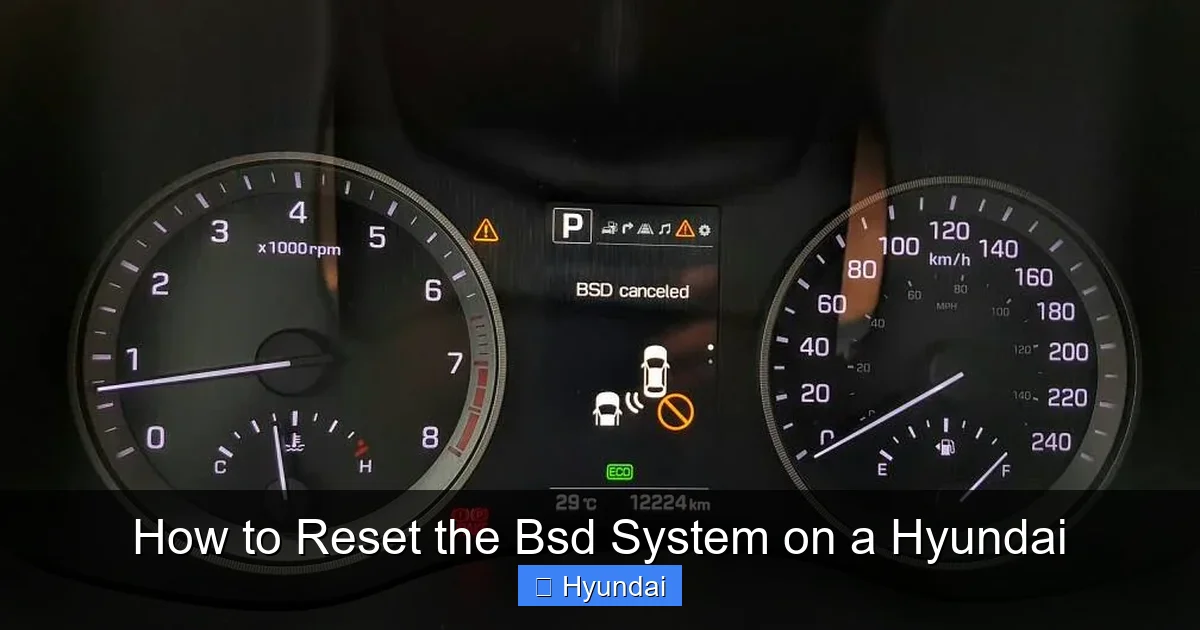
Visual guide about How to Reset the Bsd System on a Hyundai
Image source: images.platforum.cloud
Choosing the Right OBD2 Scanner
Not all OBD2 scanners are created equal. A basic “code reader” from an auto parts store can read and clear generic engine codes (P-codes), but it won’t access the proprietary BSD/ADAS module. You need an advanced diagnostic scanner with specific software for Hyundai’s ADAS systems. Brands like Autel, Launch, and professional versions of Bosch and Snap-on offer this capability. Some high-end consumer scanners like the Autel MaxiCOM or BlueDriver (with paid ADAS add-ons) can also perform BSD resets and calibrations. For a one-time job, taking your car to a mechanic or dealership with the proper tool is often more cost-effective than buying a $500+ scanner.
Step-by-Step Reset with a Scanner
Assuming you have the correct tool, the process is methodical:
- Connect the scanner to the OBD2 port, usually under the dash near the steering column.
- Turn the ignition to the ON position.
- Navigate the scanner menu. Select “Hyundai” as the make, then find the “ADAS” or “BSD” module. This might be under “Body” or “Driver Assistance.”
- Read the fault codes. The scanner will display any stored codes (e.g., C1234 – Left BSD Sensor Malfunction). Note these down. They are crucial for diagnosis.
- Clear the codes. Use the “Clear Codes” or “Reset” function. The scanner will confirm once done.
- Initiate the calibration/reset procedure. This is the critical step. The scanner will guide you through a process that often requires the vehicle to be on a level surface, with clear space (about 10-15 feet) in front and behind. Some systems require a specific “learning drive” at certain speeds on a clear road for the sensors to recalibrate. Follow the on-screen instructions exactly.
- Test the system. After calibration, drive normally. The BSD light should be off. Verify function by having another vehicle slowly approach your blind spot from behind. The warning light should illuminate in your mirror.
If the codes return immediately or the calibration fails, there is a genuine hardware fault—a bad sensor, damaged wiring, or a failed control module—that needs physical repair.
When to Seek Professional Help
Knowing your limits is key to safe and effective car repair. While a reset is often DIY-friendly, some situations absolutely require a professional technician with advanced knowledge and tools.
Persistent BSD Warnings After Reset
If you’ve performed the correct manual reset procedure and the light comes back on within a few minutes of driving, or if it was off but returns the next day, the system has a genuine, ongoing fault. This isn’t a software hiccup; it’s a hardware or persistent electrical issue. Continuing to reset it will not solve the problem and leaves you without a critical safety feature. At this point, a professional diagnosis is non-negotiable. They can perform a thorough inspection of the sensor housings for damage, check wiring harnesses for corrosion or breaks, and test sensor output with specialized equipment.
Diagnostic Codes You Can’t Clear
When you or a basic scanner reads a BSD code, it might say something like “Sensor Communication Error” or “Sensor Out of Alignment.” If a simple clear doesn’t work, or if the scanner can’t even communicate with the BSD module, the problem is more severe. This could indicate a failed BSD control module itself, a major wiring harness issue, or a problem with the vehicle’s main gateway that prevents communication. These are complex electrical problems that require circuit testing and module-level diagnostics. For context, issues with other vehicle computers, like the Transmission Control Module (TCM) on a Dodge Ram, often similarly require advanced tools—you can read about that process in our article on how to reset the TCM on a Dodge Ram 1500—but the principle of needing specialized diagnostics remains the same.
Maintaining Your BSD System for Long-Term Reliability
Prevention is always better than cure. A few simple habits can keep your BSD system happy and that warning light off for the long haul.
Regular Cleaning and Inspection
Make cleaning your BSD sensors part of your regular car wash routine. Once a month, especially during winter or muddy seasons, inspect the rear bumper areas. Look for caked-on dirt, snow, or ice. Use a gentle spray from a hose and a microfiber cloth. Avoid high-pressure washers directly on the sensors, as they can damage the radar lens. Also, visually inspect the sensor housings for any cracks, loose mounting, or signs of impact. If you have a front grille or rear bumper protector installed, ensure it’s not made of materials that interfere with radar signals (most are fine, but cheap metal ones can be problematic).
Avoiding Common Pitfalls
Be mindful after rear-end collisions or even minor bumper bumps. Even if the bumper looks fine, the sensor behind it could be knocked out of alignment. After any rear-end work, ask the body shop to verify BSD functionality and recalibrate if necessary. Also, be cautious with aftermarket accessories. Some trailer hitches or rear-mounted bike racks can interfere with the BSD sensor’s field of view if they extend too far down or to the sides. When loading cargo, ensure nothing is blocking the sensor’s path. Finally, a healthy battery is important. A chronically low or failing battery can cause voltage sags that confuse all the vehicle’s sensitive electronic modules, including BSD.
Conclusion
Your Hyundai’s Blind Spot Detection system is a fantastic driver-assistance tool that adds a significant layer of safety to your daily drive. When that little warning light appears, it’s your car’s way of saying, “Hey, I need a check-up.” In many cases, the solution is a simple manual reset you can perform in your driveway in under a minute. Start with a thorough cleaning of the rear bumper sensors and try the standard button-press sequence for your model. If that fails, a more advanced scan tool reset might be required, especially after repairs.
However, if the light persists or you discover physical damage, don’t gamble with your safety. The cost of a professional diagnosis and repair is minor compared to the risk of a side-impact collision. Remember, while the BSD system is down, your traditional mirror checks and shoulder checks become your primary blind spot defense. By understanding your system, performing regular maintenance, and knowing when to seek help, you can keep your Hyundai’s BSD functioning perfectly for miles and miles of confident, safe driving.
Frequently Asked Questions
What does the BSD warning light mean?
The BSD warning light (usually a car icon with radiating lines or an “A” in a triangle) means your Hyundai’s Blind Spot Detection system has detected a fault and has been automatically turned off. It’s a safety measure to prevent the system from giving you incorrect or no warnings.
How do I know if my BSD system needs resetting?
The primary sign is the illuminated BSD warning light on your dashboard or in your side mirror. Sometimes, you may also notice that the system doesn’t alert you when a vehicle is in your blind spot, even when you know one is there. A reset is the first troubleshooting step after ensuring the sensors are clean.
Can I reset the BSD system myself?
Yes, in many cases you can. For simple software glitches or after a battery disconnect, a manual reset using the ignition and a dedicated BSD reset button (often on the steering wheel stalk) will clear the light. The exact procedure varies by model, so check your owner’s manual.
Will resetting the BSD system clear all errors?
A reset will clear temporary fault codes and restart the system’s software. However, if there is a persistent physical problem—like a damaged sensor, broken wiring, or misalignment—the system will detect the fault again and the warning light will return, often immediately or after a short drive.
How much does professional BSD reset and calibration cost?
A simple diagnostic and reset at a repair shop might cost $80-$150. If the system requires full sensor calibration after a repair, the cost can range from $150 to $400, depending on the shop’s labor rates and whether specialized equipment is needed. Dealerships are often at the higher end of this range.
What if the BSD light comes back after resetting?
If the light returns, it means the underlying problem was not resolved by a simple reboot. You must stop ignoring it and seek professional diagnosis. Continuing to drive with a non-functional BSD system means you must rely solely on your mirrors and physical head turns for blind spot checks, increasing your risk of an accident.


