How to Reset Auto Leveling System
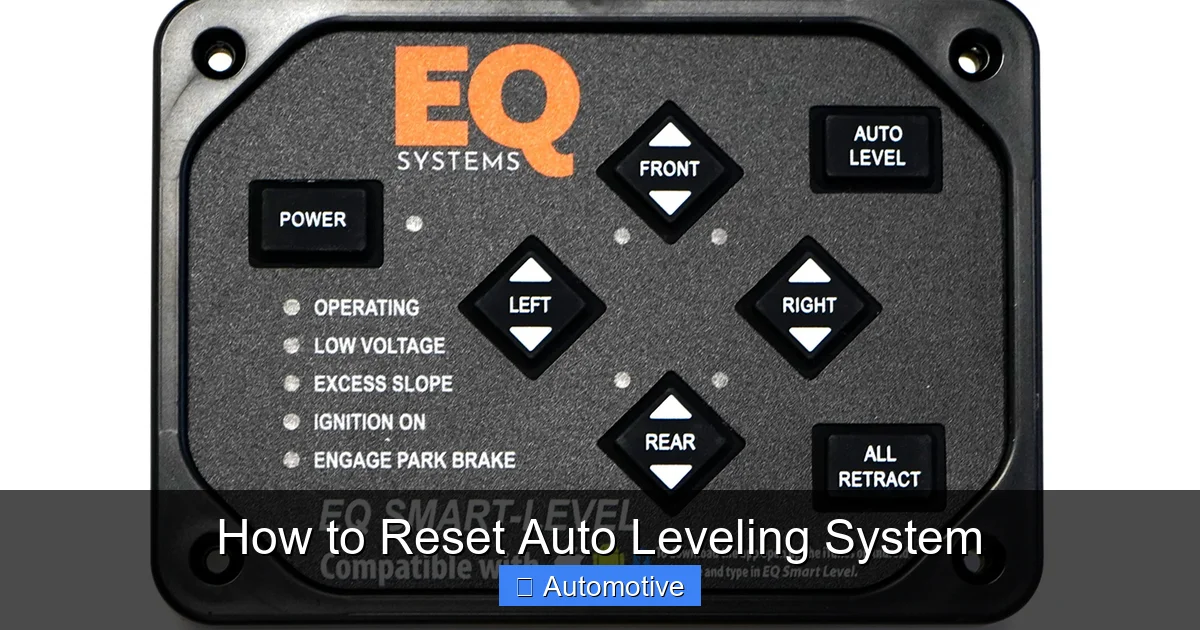
Resetting your auto leveling system doesn’t have to be complicated. Whether it’s your headlights, air suspension, or ride height sensors, this guide walks you through the process with simple, practical steps. Get your vehicle back to optimal performance in no time.
In This Article
- 1 Key Takeaways
- 2 📑 Table of Contents
- 3 What Is an Auto Leveling System?
- 4 Signs You Need to Reset Your Auto Leveling System
- 5 Tools and Preparation for Resetting
- 6 Step-by-Step Guide to Resetting Headlight Auto Leveling
- 7 How to Reset Air Suspension Auto Leveling Systems
- 8 Resetting Adaptive Ride Height Systems
- 9 Common Mistakes to Avoid
- 10 When to Call a Professional
- 11 Conclusion
- 12 Frequently Asked Questions
- 12.1 How often should I reset my auto leveling system?
- 12.2 Can I reset the auto leveling system without a scanner?
- 12.3 Will resetting the auto leveling system fix a leaking air spring?
- 12.4 Why does my headlight leveling light keep coming back after a reset?
- 12.5 Can I drive my car if the auto leveling system is malfunctioning?
- 12.6 Do all vehicles have auto leveling systems?
Key Takeaways
- Understand what auto leveling systems do: They maintain proper alignment and ride height for safety and comfort, especially in vehicles with adaptive headlights or air suspension.
- Know when a reset is needed: Warning lights, uneven headlights, or a sagging suspension are common signs that your system needs recalibration.
- Use the right tools: A diagnostic scanner, jack stands, and basic hand tools are often required for a safe and accurate reset.
- Follow manufacturer procedures: Each vehicle brand has specific steps—always consult your owner’s manual or service guide before starting.
- Test after resetting: Drive your vehicle and check for proper alignment, lighting, and suspension behavior to confirm success.
- Seek professional help if unsure: Complex systems like air suspension may require specialized equipment or expertise.
- Prevent future issues: Regular maintenance and avoiding rough terrain can extend the life of your auto leveling components.
📑 Table of Contents
- What Is an Auto Leveling System?
- Signs You Need to Reset Your Auto Leveling System
- Tools and Preparation for Resetting
- Step-by-Step Guide to Resetting Headlight Auto Leveling
- How to Reset Air Suspension Auto Leveling Systems
- Resetting Adaptive Ride Height Systems
- Common Mistakes to Avoid
- When to Call a Professional
- Conclusion
What Is an Auto Leveling System?
An auto leveling system is a smart feature found in many modern vehicles designed to maintain optimal performance and safety under varying conditions. These systems automatically adjust key components—like headlights or suspension—to compensate for changes in load, road surface, or driving dynamics. For example, if you’re carrying a heavy load in the trunk, the rear of your car may sag. An auto leveling suspension system detects this and inflates air springs to keep the ride height consistent. Similarly, auto leveling headlights tilt downward when the rear of the vehicle lowers, preventing glare for oncoming drivers.
These systems rely on sensors, control modules, and actuators working together. Common types include headlight leveling systems (found in European and luxury vehicles), air suspension systems (common in SUVs and high-end sedans), and adaptive ride height systems (used in off-road and performance vehicles). While they enhance comfort and safety, they can occasionally malfunction due to sensor errors, electrical issues, or mechanical wear. When this happens, a reset is often the first step toward restoring normal function.
Understanding how your specific auto leveling system works is crucial. Some systems are fully automatic and require no driver input, while others may have manual override options. Knowing the basics helps you identify problems early and take the right steps to fix them. Whether you’re dealing with a flickering headlight warning light or a suspension that won’t rise, recognizing the role of the auto leveling system is the first step toward a successful reset.
Signs You Need to Reset Your Auto Leveling System
Visual guide about How to Reset Auto Leveling System
Image source: i.ytimg.com
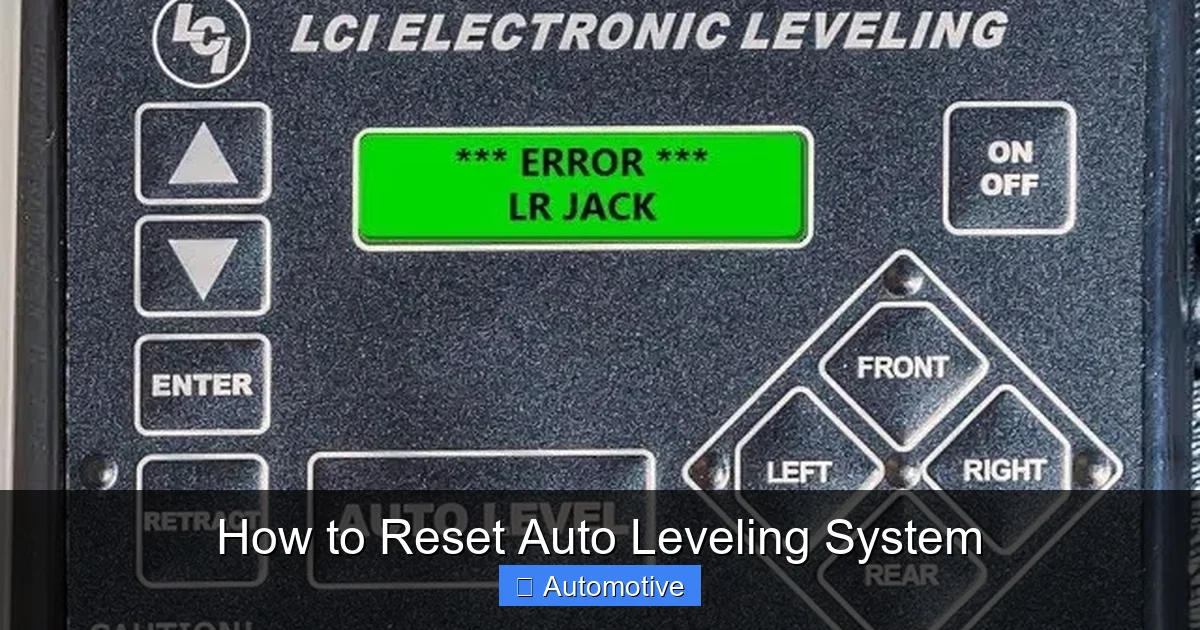
Recognizing the symptoms of a malfunctioning auto leveling system can save you from unsafe driving conditions and costly repairs. One of the most obvious signs is a warning light on your dashboard. Many vehicles display a specific icon—such as a headlight with an arrow or a suspension symbol—when the system detects an error. If this light stays on or flashes intermittently, it’s a strong indicator that a reset or further diagnosis is needed.
Another common issue is uneven headlight beam alignment. If your headlights seem too high, too low, or pointing in different directions, the auto leveling mechanism may be stuck or misaligned. This not only reduces your visibility at night but can also blind other drivers, creating a hazardous situation. You might notice this when driving on flat roads—your high beams may not illuminate far enough, or your low beams may shine directly into oncoming traffic.
For vehicles with air suspension, a sagging rear or front end is a telltale sign. If one side of your car sits noticeably lower than the other, or if the vehicle doesn’t rise to its normal height after starting, the leveling system may have failed to respond. You might also hear unusual noises—like hissing or compressor cycling—coming from under the car, especially when parked or during startup.
In some cases, the system may enter a “limp mode,” where it defaults to a fixed position to prevent damage. This can result in a stiffer ride, reduced ground clearance, or limited suspension travel. If you’ve recently replaced a sensor, strut, or control module, the system may also need a reset to recognize the new components.
Lastly, after driving over rough terrain, hitting a pothole, or loading/unloading heavy items, the system may temporarily lose calibration. While it often corrects itself, persistent issues suggest a deeper problem. Paying attention to these signs and acting quickly can prevent further damage and ensure your vehicle remains safe and comfortable to drive.
Tools and Preparation for Resetting
Visual guide about How to Reset Auto Leveling System
Image source: gocarlife.com
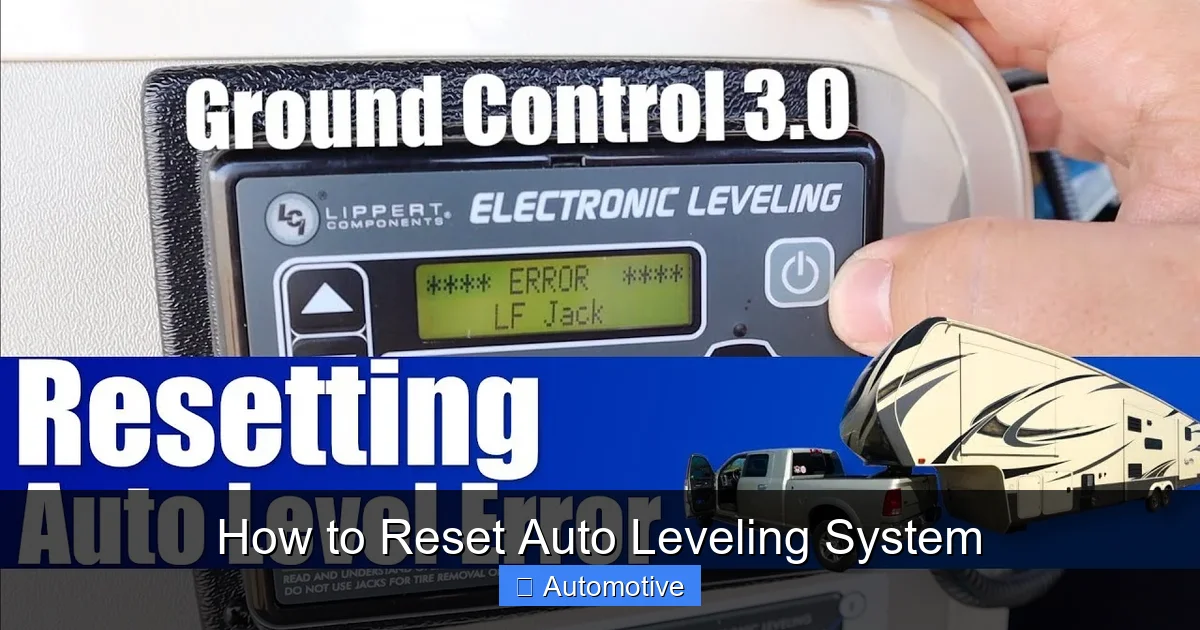
Before attempting to reset your auto leveling system, it’s essential to gather the right tools and prepare your vehicle properly. Safety should always come first. Start by parking your car on a flat, level surface—this ensures accurate sensor readings during the reset process. Engage the parking brake and, if you’re working on the suspension, use wheel chocks to prevent rolling.
You’ll likely need a few basic tools, depending on your vehicle. A jack and jack stands are essential if you’re accessing suspension components or sensors underneath the car. Never rely solely on a jack—always use stands for support. A socket set, wrenches, and screwdrivers may be needed to remove covers or access panels. For headlight leveling systems, you might only need a Phillips or flathead screwdriver to adjust manual trim wheels.
One of the most valuable tools is an OBD2 diagnostic scanner. Many modern auto leveling systems store error codes that can only be read with a scanner. Even if the system doesn’t have a dedicated warning light, a scanner can reveal hidden faults in sensors or control modules. Some advanced scanners even have reset functions built in, allowing you to clear codes and recalibrate the system with a few button presses.
If you’re working on an air suspension system, you may also need a pressure gauge to check air spring inflation levels. Some vehicles require a specific ride height measurement—usually measured from the wheel hub to the fender—to ensure proper calibration. A tape measure and a notepad can help you record these values before and after the reset.
Don’t forget to consult your vehicle’s owner’s manual or a repair guide. Each manufacturer has unique procedures, and skipping a step can lead to incomplete resets or new problems. For example, some systems require the ignition to be turned on but the engine off, while others need the engine running. Timing and sequence matter.
Finally, wear safety gear—gloves and safety glasses—especially when working near moving parts or electrical components. If you’re unsure about any step, take photos or notes as you go. This makes reassembly easier and reduces the risk of mistakes. Proper preparation not only makes the reset process smoother but also increases your chances of success on the first try.
Step-by-Step Guide to Resetting Headlight Auto Leveling
Visual guide about How to Reset Auto Leveling System
Image source: cruiserrv.com
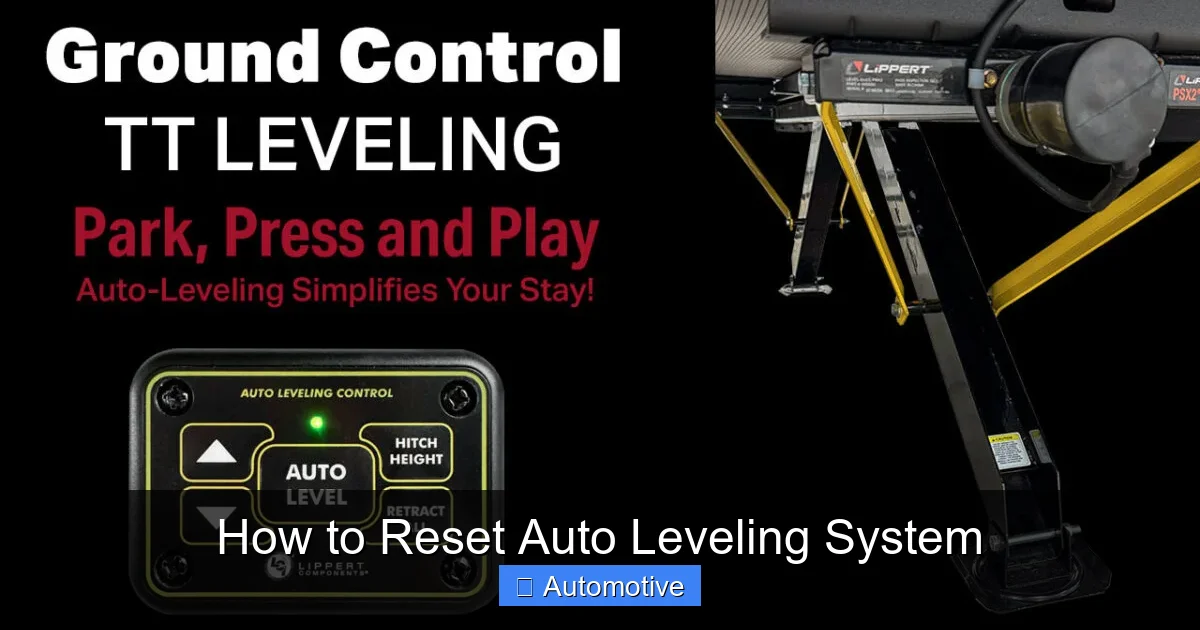
Resetting the auto leveling system for your headlights is often simpler than dealing with suspension systems, but it still requires attention to detail. These systems use sensors—typically mounted on the suspension arms—to detect the vehicle’s pitch and adjust the headlight angle accordingly. Over time, these sensors can become misaligned or send incorrect signals, leading to improper beam direction.
Step 1: Check for Warning Lights and Error Codes
Start by turning on the ignition and checking the dashboard for any headlight-related warning lights. If a light is on, use an OBD2 scanner to read any stored codes. Common codes include those related to leveling sensors (e.g., “Headlamp Leveling Sensor Circuit Malfunction”). Clearing these codes may resolve the issue, but if the light returns, a physical reset is likely needed.
Step 2: Inspect the Leveling Sensors
Locate the headlight leveling sensors—usually small plastic boxes attached to the front and rear suspension arms. Check for physical damage, loose connections, or corrosion. Gently clean the sensors with a soft cloth and ensure the wiring harness is securely plugged in. If a sensor is visibly damaged, it may need replacement before a reset can work.
Step 3: Park on a Level Surface
Drive your vehicle onto a flat, level surface such as a garage floor or paved driveway. Turn off the engine and allow the car to settle for a few minutes. This ensures the suspension is at its natural resting position, which is critical for accurate calibration.
Step 4: Perform the Reset Procedure
The exact reset method varies by manufacturer. For many European vehicles (like BMW, Mercedes, or Audi), the process involves turning the headlight switch to the “Auto” position, then turning the ignition on and off in a specific sequence. For example, on some BMW models, you turn the ignition to position 2 (without starting the engine), wait 10 seconds, then turn it off. Repeat this three times within 30 seconds.
On other vehicles, you may need to use a diagnostic tool. Plug in your scanner, navigate to the “Headlight Leveling” or “Lighting” menu, and select “Reset” or “Calibrate.” The system will then run a self-test and adjust the headlights to the correct angle.
Step 5: Test the Headlights
After the reset, turn on the headlights and observe the beam pattern. Drive the vehicle forward and backward slightly to trigger the leveling system. The beams should adjust smoothly and remain properly aligned. If they still appear too high or low, you may need to manually adjust the headlight aim using the trim wheels inside the headlight assembly.
Step 6: Recheck for Errors
Turn the ignition back on and check for warning lights. Use your scanner to confirm no error codes remain. If the system is functioning correctly, the reset is complete. If issues persist, consider having a professional inspect the sensors or control module.
How to Reset Air Suspension Auto Leveling Systems
Air suspension systems are more complex than headlight leveling systems, but resetting them follows a similar logic: restore proper sensor input and allow the control module to recalibrate. These systems use air springs, compressors, and height sensors to maintain a consistent ride height, regardless of load or road conditions. When they malfunction, the vehicle may sit too high, too low, or unevenly.
Step 1: Diagnose the Problem
Start by checking for warning lights—common indicators include a suspension fault light or a message like “Service Suspension System.” Use an OBD2 scanner to read any stored codes. Codes related to height sensors, compressor operation, or air leaks can help pinpoint the issue. For example, a “Front Left Height Sensor Low” code suggests a sensor or linkage problem.
Step 2: Inspect for Leaks and Damage
Visually inspect the air springs (also called airbags) for cracks, bulges, or leaks. Listen for hissing sounds when the compressor runs. Check the air lines and fittings for looseness or damage. Even a small leak can prevent the system from maintaining pressure, leading to a sagging ride height.
Step 3: Check the Compressor and Relay
Locate the air compressor—usually in the engine bay or under the vehicle. Ensure it’s receiving power and that the relay is functioning. A faulty relay can prevent the compressor from turning on, even if the rest of the system is fine. You can test the relay by swapping it with a known good one of the same type.
Step 4: Perform a Manual Reset (If Applicable)
Some vehicles allow a manual reset using the dashboard controls. For example, on certain Land Rover or Mercedes models, you can press and hold the ride height adjustment buttons for 10–15 seconds to initiate a recalibration. The system will then cycle through all height positions and reset to the default setting.
Step 5: Use a Diagnostic Tool for Advanced Reset
For most modern vehicles, a diagnostic scanner is required to fully reset the system. Plug in your scanner, access the suspension control module, and select “Reset Ride Height” or “Calibrate Sensors.” The tool will guide you through the process, which may include driving the vehicle in a specific pattern or holding the ignition in certain positions.
Step 6: Test Drive and Verify
After the reset, take your vehicle for a short test drive. Accelerate, brake, and turn to allow the system to adapt. Check that the ride height is even and that the suspension responds correctly to load changes. Monitor the dashboard for any returning warning lights.
Resetting Adaptive Ride Height Systems
Adaptive ride height systems go a step beyond basic air suspension by automatically adjusting ground clearance based on speed, terrain, or driver input. Found in off-road SUVs and performance vehicles, these systems enhance both capability and comfort. Resetting them requires understanding their dynamic behavior and ensuring all sensors are properly calibrated.
Step 1: Understand the System Modes
Most adaptive systems have multiple modes—such as “Normal,” “Off-Road,” “Sport,” or “Access” (lowest height for easy entry). Before resetting, ensure the vehicle is in the correct mode. For example, attempting a reset in “Off-Road” mode may not yield accurate results if the system expects a higher ride height.
Step 2: Drive Through a Calibration Cycle
Some systems require a driving cycle to complete the reset. This might involve driving at specific speeds (e.g., 30 mph for 2 minutes, then 50 mph for 3 minutes) to allow the sensors to map the suspension travel. Check your owner’s manual for the exact procedure.
Step 3: Use Manufacturer-Specific Tools
High-end vehicles like Range Rover, Porsche, or Tesla often require proprietary software or tools for a full reset. While some functions can be accessed via aftermarket scanners, others may need dealership-level equipment. If you’re unable to reset the system yourself, consider visiting a certified technician.
Step 4: Monitor for Recalibration Success
After the reset, observe how the vehicle behaves during different driving conditions. The system should smoothly transition between heights and maintain stability. If it hesitates, jerks, or fails to adjust, there may be an underlying mechanical or electrical issue.
Common Mistakes to Avoid
Even with the right tools and knowledge, it’s easy to make mistakes when resetting an auto leveling system. One of the most common errors is skipping the diagnostic step. Jumping straight to a reset without checking for error codes can waste time and mask the real problem. Always scan for codes first.
Another mistake is performing the reset on an uneven surface. If your car is parked on a slope, the sensors will read incorrect angles, leading to a failed calibration. Always use a level surface and allow the suspension to settle before starting.
Using the wrong procedure for your vehicle is also risky. For example, applying a BMW headlight reset method to a Mercedes may not work and could confuse the system. Always verify the correct steps for your make, model, and year.
Ignoring mechanical issues is another pitfall. If an air spring is leaking or a sensor is broken, a reset won’t fix the problem—it will only provide a temporary solution. Address hardware faults before attempting software resets.
Finally, don’t forget to test the system after resetting. A successful reset isn’t just about clearing warning lights—it’s about restoring full functionality. Take your car for a drive and confirm that everything works as expected.
When to Call a Professional
While many auto leveling resets can be done at home, some situations call for professional help. If you’ve followed all steps and the system still doesn’t work, there may be a deeper electrical or mechanical issue. For example, a faulty control module, damaged wiring harness, or internal compressor failure requires specialized tools and expertise.
Vehicles with complex adaptive systems—especially those with integrated stability control or autonomous driving features—should be handled by certified technicians. Tampering with these systems can affect other vehicle functions and even void your warranty.
Additionally, if you’re uncomfortable working under the car or handling electrical components, it’s safer to seek professional assistance. A qualified mechanic can diagnose the issue accurately and perform the reset using factory-approved methods.
Conclusion
Resetting your auto leveling system doesn’t have to be a daunting task. With the right preparation, tools, and step-by-step guidance, you can restore your vehicle’s performance and safety in a matter of minutes. Whether you’re dealing with headlights, air suspension, or adaptive ride height, understanding the process empowers you to take control of your car’s maintenance.
Remember to always start with a diagnosis, follow manufacturer procedures, and test your work. Avoid common mistakes like skipping error checks or working on uneven ground. And when in doubt, don’t hesitate to consult a professional. Your vehicle’s auto leveling system is designed to make driving safer and more comfortable—keeping it in top shape ensures you get the most out of this advanced technology.
Frequently Asked Questions
How often should I reset my auto leveling system?
You only need to reset the system when you notice issues like warning lights, uneven headlights, or suspension problems. There’s no regular maintenance schedule—reset as needed after repairs or sensor replacements.
Can I reset the auto leveling system without a scanner?
Some vehicles allow manual resets using dashboard buttons or ignition sequences, but many modern systems require a diagnostic scanner to clear codes and complete calibration. A scanner is highly recommended for accuracy.
Will resetting the auto leveling system fix a leaking air spring?
No, a reset won’t fix a mechanical issue like a leak. It may temporarily restore function, but the underlying problem must be repaired—such as replacing the air spring or fixing a damaged line.
Why does my headlight leveling light keep coming back after a reset?
This usually indicates a faulty sensor, wiring issue, or misalignment. The reset clears the code, but if the root cause isn’t fixed, the system will detect the same error and trigger the light again.
Can I drive my car if the auto leveling system is malfunctioning?
You can drive, but it may be unsafe. Misaligned headlights can blind other drivers, and a faulty suspension can affect handling. Have the system checked as soon as possible.
Do all vehicles have auto leveling systems?
No, they’re typically found in luxury, European, or high-end SUV models. Check your owner’s manual or look for leveling controls or warning lights to confirm if your vehicle has one.