
How to Keep Baby Warm in Car Seat in Winter: A Complete Safety Guide

As the temperatures drop, keeping your infant or toddler comfortable during winter car rides becomes a daily challenge. As a parent and a car owner, your first instinct is to bundle your child in their thickest, warmest winter coat before strapping them into their car seat. However, this common practice is actually a major safety hazard.
Bulky winter clothing completely changes how a car seat harness functions during a sudden stop or collision. If you want to know how to keep baby warm in car seat in winter without compromising their safety, you need to understand the relationship between clothing thickness and harness tension.
This guide will explain exactly why puffy coats are dangerous in vehicles, how to dress your child in safe layers, and how to prep your vehicle to ensure a warm, comfortable, and safe ride all winter long.
Quick Answer
Wondering how to keep baby warm in car seat in winter? Dress your baby in thin, snug-fitting layers like fleece or thermal knits instead of bulky puffy coats. Buckle them tightly into the harness, perform the “pinch test,” and then place a warm blanket or their winter coat backward over the secured harness.
The Hidden Danger of Bulky Winter Coats in Car Seats
To understand why winter coats are dangerous in car seats, you need to think about what happens inside your vehicle during a crash. Car seat harnesses are designed to rest snugly against a child’s skeletal structure—specifically the collarbones and hips.
When a child wears a puffy winter coat, the jacket is filled with air to create insulation. When you tighten the car seat harness over that coat, it feels snug. However, the harness is actually just compressing the fluff of the jacket, not resting against the child’s body.
In the event of an accident, the massive force of the crash will instantly compress all the air out of the jacket. Suddenly, a harness that felt tight in your driveway is dangerously loose. This slack allows the child’s body to lurch forward, greatly increasing the risk of head, neck, and spinal injuries. In severe cases, a loose harness can even result in the child being ejected from the seat entirely.
According to the official NHTSA child passenger safety guidelines, car seat straps must remain completely snug against the child’s chest to properly absorb and distribute crash forces. Anything that creates a gap between the child and the straps is a safety risk.
Step-by-Step: How to Keep Baby Warm in Car Seat in Winter Safely
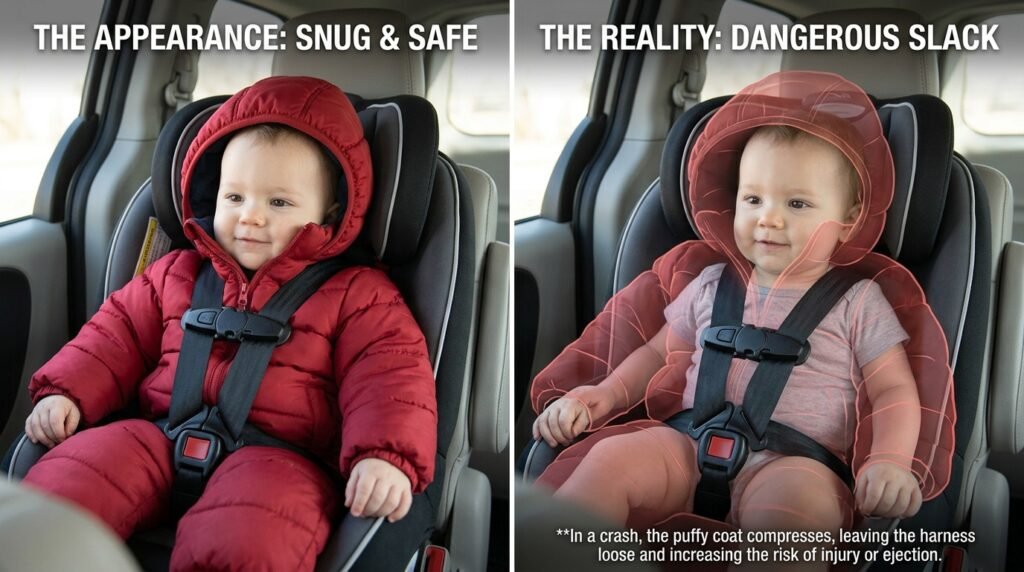
Keeping your child warm doesn’t mean sacrificing safety. By following a strategic layering process, you can ensure they are perfectly cozy and completely secure for the entire drive.
1. Start with a Snug Base Layer
The foundation of winter warmth is a good base layer. Dress your baby in close-fitting garments like long-sleeved bodysuits, thermal underwear, or cotton footed pajamas. Leggings and snug-fitting sweaters are excellent choices because they trap body heat without adding dangerous bulk.
2. Add a Safe Mid-Layer
If it is particularly freezing outside, add a second thin layer. A thin micro-fleece jacket or a tightly knit sweater works perfectly. Fleece is highly recommended because it is very warm but extremely thin, meaning it will not compress under the pressure of the car seat straps.
3. Secure and Tighten the Harness
Place your baby into the car seat and buckle the harness. Ensure the chest clip is positioned correctly at armpit level. Pull the adjustment strap tightly.
Expert Tip:
Use the “Pinch Test” every time you buckle your child. After tightening the harness, try to pinch the strap webbing vertically at the child’s collarbone. If you can pinch any fabric between your fingers, the harness is too loose. Tighten it until your fingers simply slide off the strap.
4. Add Warmth Over the Harness
Once your baby is safely strapped in and passes the pinch test, it is time to add the final layer of warmth. You can tuck a thick winter blanket over the child’s lap and chest. Just be sure to keep the blanket below their face to avoid any suffocation risks.
Alternatively, you can take their puffy winter coat and put it on them backward—slipping their arms into the sleeves while the jacket acts as a blanket over the secured harness.
Best Winter Clothing Alternatives for Car Seats
Navigating winter clothing racks can be confusing when you are looking for car-seat-safe gear. The American Academy of Pediatrics winter car seat guidelines recommend dressing infants in no more than one extra layer than an adult would wear in the same temperature.
Here are the safest alternatives to puffy coats:
- Car Seat Ponchos: These go over the child’s head after they are buckled in. The back of the poncho rests over the back of the car seat, while the front drapes over the child like a warm blanket.
- Fleece Bunting Suits: A thin, one-piece fleece suit keeps babies incredibly warm. Because fleece doesn’t compress much, it is generally safe for the harness, provided it isn’t overly baggy.
- Thermal Knits: Waffle-knit thermals are excellent at trapping body heat without adding any air-filled bulk.
Safe vs. Unsafe Winter Car Seat Gear
| Clothing Item | Safe for Car Seat? | Why it works (or doesn’t) |
| Thin Micro-Fleece Jacket | Yes | Provides high insulation with minimal compression. |
| Puffy Down Winter Coat | No | Fills with air and compresses flat in a crash, loosening straps. |
| Car Seat Poncho | Yes | Goes over the secured harness, not under it. |
| Snowsuits (Bulky) | No | Too thick and restrictive; interferes with proper harness fit. |
| Fleece Bunting Suit | Yes | Thin enough to pass the pinch test while keeping the baby fully covered. |
| Aftermarket Sleeping Bag Inserts | No | Reroutes straps and violates manufacturer safety warranties. |
Heating Your Car Safely Before the Drive
One of the easiest ways to keep your baby warm is to rely on your vehicle’s heating system rather than thick clothing. If you have a garage or a safe driveway, warming the car up for 5 to 10 minutes before loading the baby makes a massive difference.
If your vehicle is equipped with a remote start system, winter is the perfect time to use it. Pre-heating the cabin ensures the car seat plastic and fabrics aren’t freezing to the touch when you set your baby down.
Important Warning: Never warm up a vehicle inside a closed garage. Carbon monoxide is an odorless, deadly gas that can fill a garage and seep into your home in minutes. Always pull the car outside into the driveway before letting it idle. Furthermore, consulting safe winter driving tips from the Department of Transportation can help you prepare your vehicle’s tires and battery for freezing conditions, preventing roadside breakdowns with a baby in the car.
Common Mistakes Car Owners Should Avoid
Even well-meaning parents make mistakes when trying to keep their children warm. Avoid these common hazards:
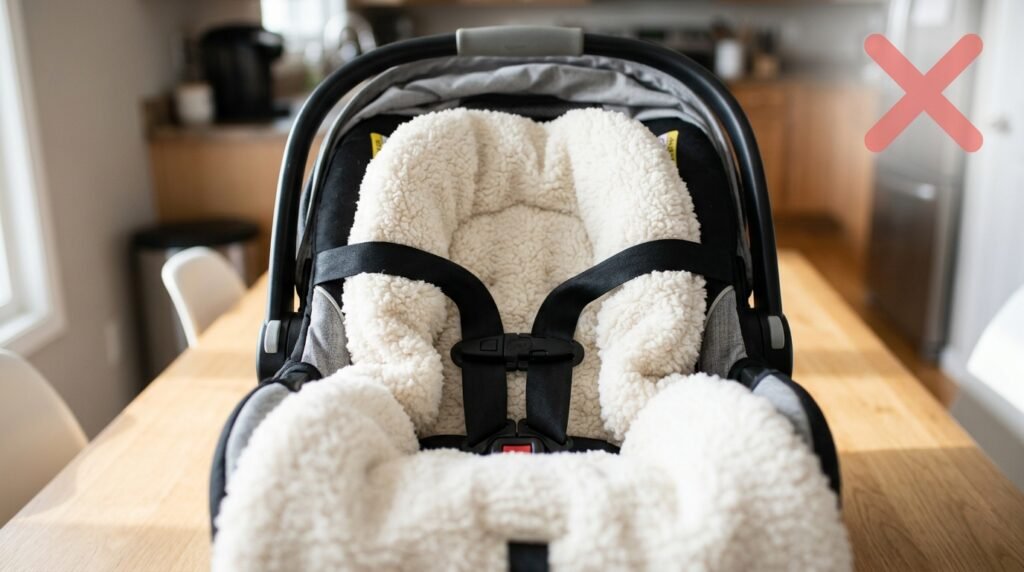
- Using aftermarket car seat inserts: Never use fluffy sleeping bag inserts, sheepskin covers, or headrest cushions that did not come in the box with your car seat. These alter the way the seat performs in a crash and usually void the warranty.
- Using “shower cap” style covers incorrectly: If you use an elastic cover that goes around the outside of an infant carrier, leave the face flap completely open in the car. Zipping it shut restricts oxygen and can cause the baby to rapidly overheat.
- Leaving blankets loose on the floor: While blankets are great for warmth, make sure they are tucked securely around the baby. A loose blanket can become a dangerous distraction for the driver if it falls on the floorboards near the pedals.
- Forgetting to adjust the straps for indoor clothing: If you adjust your car seat harness to fit over a fleece jacket, remember to tighten the straps again when the baby is just wearing a thin shirt on a warmer day.
When to Call a Professional Mechanic
While car seat safety largely depends on the parent, your vehicle’s heating and electrical systems play a vital role in winter comfort. If your car isn’t helping keep your baby warm, it might be time to visit an auto shop.
You should call a professional mechanic if:
- The heater blows cold air: If your engine temperature gauge is normal but the vents blow cold air, you may have a clogged heater core, a failing blend door actuator, or low coolant levels.
- The car takes too long to warm up: If you drive for 15 minutes and the car is still freezing, your engine’s thermostat is likely stuck open. A mechanic can easily replace this part.
- You smell sweet exhaust fumes in the cabin: A sweet, syrupy smell coming through the vents usually indicates a coolant leak or a failing heater core, which is dangerous for you and your baby to breathe.
Additionally, if you are ever unsure about your car seat installation, you don’t need a mechanic—you need a Child Passenger Safety Technician (CPST). Local fire departments and hospitals often have certified technicians who will inspect your car seat installation for free.
FAQs
Can my baby wear a fleece jacket in their car seat?
Yes, a thin, single-layer fleece jacket is generally safe for the car seat. Fleece provides excellent warmth but is thin enough that it does not compress significantly under the harness straps. Always perform the pinch test to be sure.
Are elastic car seat covers safe for winter?
“Shower cap” style covers that stretch over the outer rim of an infant bucket seat (without routing behind the baby’s back) are safe. However, you must keep the face area completely unzipped while driving to ensure proper airflow and prevent overheating.
How do I know if my baby is too cold in the car?
Feel the back of your baby’s neck or their stomach. If their core feels warm, they are fine. Babies often have cold hands and feet due to developing circulation, so checking their hands is not a reliable indicator of their core body temperature.
Can I warm up my baby’s car seat before putting them in it?
Yes, you can bring an infant bucket seat inside the house to keep the plastic and fabric at room temperature before you leave. You can also pre-warm the vehicle’s cabin so the air is comfortable by the time you load the baby.
Is it safe to put a blanket under the car seat straps?
No. You should never place any bulky material, including a blanket, underneath the car seat straps or behind the baby’s back. Always buckle the harness securely first, and then place the blanket over the baby’s lap and chest.
What should a newborn wear home from the hospital in winter?
Dress the newborn in a long-sleeved cotton bodysuit, pants, and socks, or a warm footed sleeper. Add a thin cardigan or fleece layer. Once they are tightly buckled into the car seat, tuck a warm receiving blanket around their sides and over their lap.
Conclusion
Figuring out how to keep baby warm in car seat in winter doesn’t have to be a source of stress, nor does it require compromising on essential safety rules. The core takeaway for every car owner and parent is simple: keep the layers thin and the harness tight.
By utilizing warm base layers, thin fleece mid-layers, and tucking a cozy blanket over the secured harness, you ensure your child stays perfectly comfortable while allowing the car seat to do its life-saving job. Combined with a properly functioning vehicle heating system, you and your family will be fully prepared for safe, warm, and stress-free winter driving. Take a few minutes today to check your baby’s winter gear, practice the pinch test, and ensure your car’s heater is ready for the cold months ahead.
