
The Ultimate Guide on How to Get Urine Smell Out of a Car Seat

Dealing with a sudden spill in your vehicle is always stressful, but few things are more overwhelming than an unexpected bathroom accident on your upholstery. Whether you are traveling with a newly potty-trained toddler or bringing an anxious puppy home from the vet, accidents happen.
Unfortunately, a closed car cabin acts like an oven, baking odors directly into your upholstery. Figuring out how to get urine smell out of a car seat is a necessary skill for any parent or pet owner. If you do not treat the problem correctly from the start, the odor can permanently embed itself in your seat cushions, ruining your driving experience and tanking your vehicle’s resale value.
In this comprehensive guide, we will walk you through the exact steps, products, and techniques needed to permanently eliminate these stubborn odors without damaging your car’s interior.
Quick Answer
To quickly learn how to get urine smell out of a car seat, immediately blot the spill with a microfiber towel—do not rub. Next, saturate the area with a high-quality, enzyme-based upholstery cleaner so the liquid reaches deep into the seat foam. Allow the cleaner to sit and air dry completely with the car windows down, then vacuum the area.
Why Urine Odors Are So Hard to Remove
If you have ever tried to clean an accident with standard soap and water, you likely noticed that the smell came back a few days later. This happens because of the unique chemical composition of urine.
Urine contains uric acid crystals. Traditional household cleaners and standard auto detailing sprays only wash away the water-soluble components of the spill. They do absolutely nothing to break down uric acid crystals.
When your car sits in the sun and the interior heats up, those leftover uric acid crystals reactivate, releasing that strong, lingering ammonia odor. Furthermore, liquid easily seeps past the surface fabric and settles deep into the polyurethane foam of the car seat.
If this trapped moisture is not properly treated, it creates secondary problems. According to the American Academy of Allergy, Asthma & Immunology (AAAAI), trapped moisture in confined environments can encourage mold and mildew growth, which frequently triggers respiratory issues for passengers.
Step-by-Step: How to Get Urine Smell Out of a Car Seat
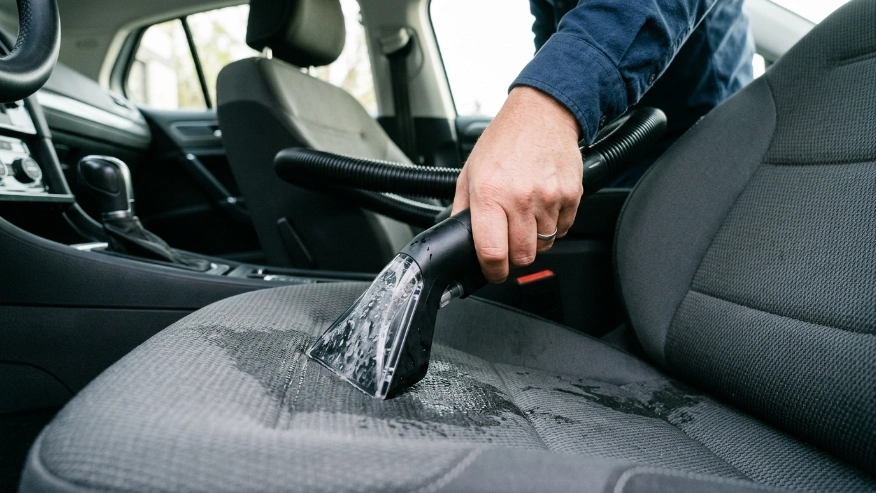
To effectively eliminate the odor, you need to break down the proteins and extract the liquid from the foam. Follow these detailed steps to save your car interior.
Step 1: Blot the Area Immediately
Speed is your best friend when dealing with a liquid spill. The faster you act, the less liquid will seep into the deep padding of the seat.
Grab a stack of paper towels, a heavy cotton cloth, or highly absorbent microfiber towels. Press down firmly on the wet spot using your body weight to absorb as much moisture as possible.
Important: Never rub or scrub the stain. Rubbing pushes the liquid deeper into the seat cushion and forces it outward, expanding the size of the contaminated area.
Step 2: Apply an Enzyme-Based Cleaner
Enzyme-based cleaners are the secret weapon for biological stains. These cleaners contain active, good bacteria that literally “eat” the uric acid crystals and proteins causing the foul odor.
Spray a generous amount of the enzyme cleaner directly onto the affected area. You are not just cleaning the surface fabric; you need the cleaner to soak down as deeply as the urine did.
When selecting an interior cleaner, you may want to look for products certified by the EPA’s Safer Choice program. This ensures you are using chemicals that are safer for your family, your pets, and the environment inside your closed vehicle cabin.
Step 3: Let the Solution Dwell
Enzymes are living organisms, and they need time to work. Do not immediately wipe the cleaner away.
Check the instructions on your specific product, but most require a dwell time of at least 15 to 30 minutes. For severe or old stains, you may need to let the product sit on the seat overnight.
Step 4: Extract and Air Dry
Once the enzymes have done their job, use a wet/dry shop vacuum to pull the remaining liquid out of the seat. Press the vacuum nozzle firmly into the upholstery and drag it slowly across the damp spot.
Finally, you must let the seat air dry completely. Leave your car windows cracked in a secure, covered area. Fresh airflow prevents mold and speeds up the evaporation process.
Fabric vs. Leather Car Seats: Different Approaches
The material of your car seat dictates how aggressive you can be with your cleaning methods. What works safely on cloth might permanently damage delicate leather.
Cleaning Cloth Car Seats
Cloth seats are highly absorbent, meaning spills penetrate quickly. The foam beneath cloth fabric acts like a giant sponge.
When treating cloth, you must be generous with your enzyme cleaner to ensure it reaches the bottom of the spill. You can also use a soft-bristled detailing brush to gently agitate the surface fibers, helping the cleaner penetrate without tearing the upholstery.
Cleaning Leather and Vinyl Seats
Leather and synthetic vinyl (like SofTex or MB-Tex) are less porous, meaning the liquid usually pools on the surface. However, urine can easily seep into the perforated cooling holes or the stitched seams.
Do not soak a leather seat. Instead, spray the enzyme cleaner onto a microfiber towel and carefully wipe the surface. Use a soft detailing brush to work the cleaner gently into the seams. Once the seat is clean and dry, you must apply a high-quality leather conditioner, as urine and cleaners will strip the natural oils from the hide.
Important Safety Warning Regarding Seatbelts
When accidents happen in a car seat, the liquid often splashes onto the seatbelt buckle or the nylon webbing. It is incredibly important that you clean these safety components correctly.
Never use bleach, harsh detergents, or extreme heat on your seatbelts. The National Highway Traffic Safety Administration (NHTSA) warns that harsh chemicals and bleach can degrade seatbelt webbing over time.
If the webbing integrity is compromised, the seatbelt may fail to protect the passenger during a high-speed collision. Clean seatbelts only with mild soap, warm water, and a soft cloth, then let them air dry completely out of direct sunlight.
Expert Tip:
Never use a steam cleaner on a fresh urine stain. The extreme heat from the steamer will permanently “cook” the proteins and uric acid into the seat foam. This makes the odor almost impossible to remove later. Always use cold or lukewarm cleaning solutions first.
DIY Solutions vs. Commercial Products
If you are caught in an emergency and do not have an enzyme cleaner, you can use household items to temporarily neutralize the situation. However, understand that DIY methods are rarely permanent fixes for deep cushion odors.
The Vinegar and Baking Soda Method
White vinegar is slightly acidic and does an excellent job of neutralizing the alkaline ammonia smell found in urine. Baking soda is a natural odor absorber.
How to use it:
- Mix a solution of 50% cold water and 50% white vinegar with a small drop of dish soap in a spray bottle.
- Spray the area lightly and blot with a towel.
- While the seat is still slightly damp, sprinkle a heavy layer of baking soda over the stain.
- Let the baking soda sit for several hours (or overnight) to absorb the moisture and odor.
- Vacuum up the dried baking soda powder.
This DIY method is great for surface-level spills, but it generally fails if the urine has deeply saturated the polyurethane foam.
Comparing Cleaning Methods
To help you choose the best approach for your vehicle, review this quick comparison of standard cleaning methods.
| Cleaning Method | Best Used For | Pros | Cons |
|---|---|---|---|
| Enzyme Cleaner | Deep spills, old stains, pet urine | Permanently destroys odor-causing proteins | Requires a long dwell time to work properly |
| Vinegar & Baking Soda | Emergencies, surface spills | Cheap, uses standard household ingredients | Rarely penetrates deep enough into seat foam |
| Standard Upholstery Foam | Mud, dirt, coffee spills | Great for visual stains and quick drying | Does not neutralize uric acid; smell will return |
| Professional Extraction | Severe saturation, lingering odors | Industrial suction removes all deep moisture | The most expensive option for car owners |
Common Mistakes Car Owners Should Avoid
When trying to fix a smelly car interior in a panic, car owners often make the problem much worse. Avoid these frequent missteps:
- Using standard air fresheners: Hanging a pine tree from your mirror or spraying heavy perfumes only masks the scent temporarily. It will eventually mix with the urine smell, creating an even worse odor.
- Applying too much heat: Drying the seat with a high-heat hair dryer will set the stain and bake the odor into the fabric. Always use fans or natural air flow.
- Ignoring the floor mats: Liquid travels fast. Always check the crevices, seat rails, and the carpet directly underneath the seat to ensure the spill did not spread.
- Scrubbing aggressively: Hard scrubbing frays cloth fibers, wears away leather dye, and pushes contaminants deeper into the seat base.
When to Call a Professional Mechanic or Detailer
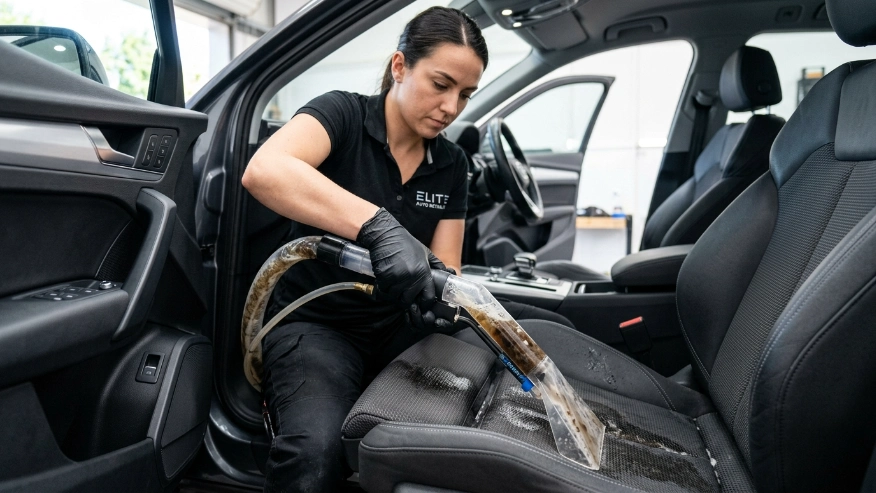
While most drivers can learn how to get urine smell out of a car seat on their own, there are specific times when you should hand the keys over to a professional.
1. Electrical Malfunctions
Modern car seats are packed with complex electronics, including side airbags, weight sensors, heating elements, and ventilation fans. If a massive spill soaks deeply into the seat, it can short out these electrical components. If your heated seat stops working or an airbag warning light appears on your dashboard after a spill, take the car to a certified mechanic immediately.
2. The Smell Won’t Go Away
If you have applied an enzyme cleaner multiple times and the cabin still smells awful on hot days, the liquid has likely reached the deepest layers of the foam cushion. A professional auto detailer has access to industrial hot water extractors and ozone generators that can neutralize severe odors.
3. Mold and Mildew Presence
If a spill went unnoticed for several weeks under a child’s car seat, mold can easily develop. Car mold is difficult to eradicate and poses a health risk. A professional will know how to properly sanitize the upholstery or advise you if the seat cushion simply needs to be replaced.
FAQs
How long does it take for the urine smell to go away in a car?
If treated immediately with a high-quality enzyme cleaner, the odor should dissipate as soon as the seat is completely dry, which usually takes 12 to 24 hours. If the smell persists, a second treatment is likely necessary.
Will baking soda alone remove urine smell from car seats?
Baking soda is a great natural odor absorber, but it will not permanently solve the problem on its own. It only absorbs surface odors and moisture. You still need a cleaner to break down the uric acid trapped inside the seat foam.
Can I use a carpet cleaner machine on my car seats?
Yes, a portable carpet cleaner or spot extractor is excellent for car seats. These machines inject clean water and immediately vacuum it back up, making them highly effective at removing deep liquid spills from vehicle upholstery.
Will dog urine permanently ruin leather car seats?
Not if you clean it up quickly. Leather is durable but porous. If left sitting, the acidity of the urine can eat away at the clear coat and dye of the leather, leaving a permanent faded stain. Clean it quickly and always follow up with a leather conditioner.
Does Ozium work for urine odors?
Ozium is a powerful air sanitizer that eliminates airborne bacteria and odors in the car cabin. While it will make the air smell fresh, it does not treat the source of the odor. You must still physically clean the seat cushion to stop the smell from returning.
Can liquid spills damage my car seat heating elements?
Yes. Heavy liquid saturation can cause the electrical wiring in a heated car seat to short circuit or corrode over time. If a large spill occurs, try to extract the liquid immediately and avoid turning on the heated seat function until the cushion is 100% dry.
Conclusion
Discovering a mess in your vehicle is frustrating, but knowing exactly how to get urine smell out of a car seat ensures the damage is only temporary. By acting quickly to blot up the moisture and relying on the chemical power of enzyme-based cleaners, you can permanently destroy uric acid and save your interior.
Remember to avoid harsh heat, be mindful of your vehicle’s delicate safety components like seatbelts, and ensure the cabin has plenty of ventilation to air dry completely. For peace of mind on the road, consider keeping a bottle of enzyme cleaner and a few microfiber towels in your trunk so you are always prepared for life’s unexpected messes.
