
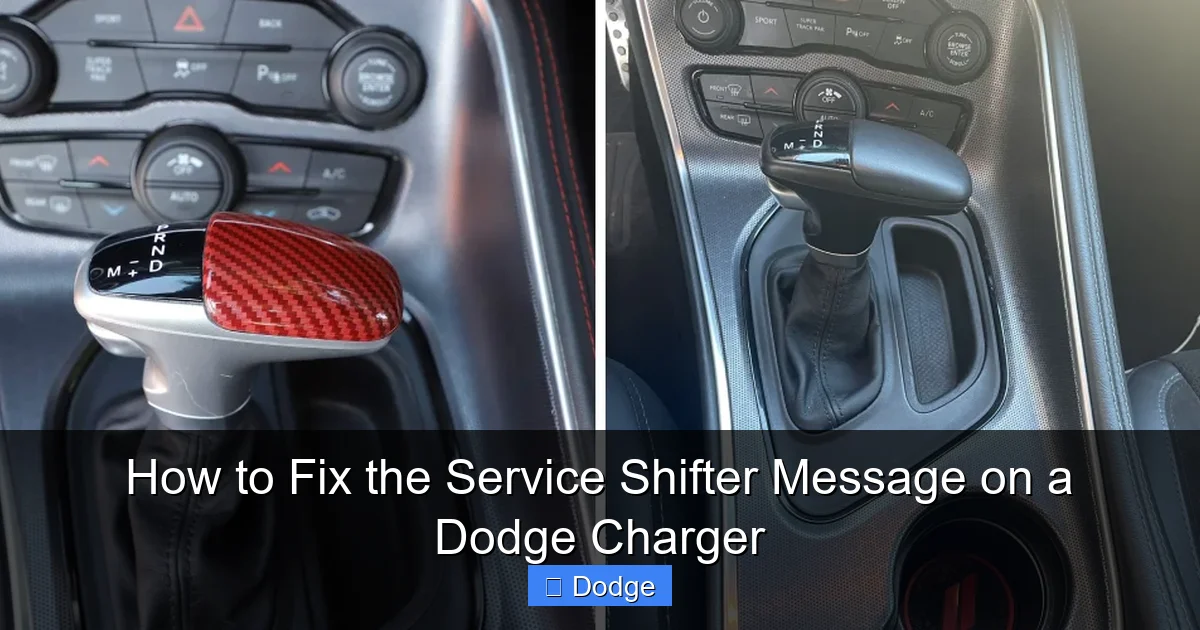
How to Fix the Service Shifter Message on a Dodge Charger

Contents
- 1 Key Takeaways
- 2 📑 Table of Contents
- 3 What Does the “Service Shifter” Message Mean on a Dodge Charger?
- 4 Common Causes of the Service Shifter Warning
- 5 Step-by-Step Troubleshooting Guide
- 6 How to Reset the Shifter System (Relearn Procedure)
- 7 When to Seek Professional Help
- 8 Prevention Tips to Avoid Future Warnings
- 9 Final Thoughts
- 10 Frequently Asked Questions



Seeing a “Service Shifter” message on your Dodge Charger can be alarming, but it’s often fixable at home. This guide walks you through common causes, diagnostic steps, and proven fixes to resolve the issue safely and efficiently—without a costly dealership visit.
Key Takeaways
- Understand the warning: The “Service Shifter” message indicates an issue with the electronic gear selector or related systems, not necessarily a mechanical failure.
- Check the basics first: Low battery voltage, loose connections, or a faulty shifter knob can trigger the alert—start with simple inspections.
- Scan for trouble codes: Use an OBD2 scanner to read transmission or body control module codes for accurate diagnosis.
- Reset the shifter system: A power cycle or relearn procedure often clears false warnings after repairs or battery replacement.
- Inspect wiring and sensors: Damaged harnesses near the shifter or faulty range sensors are common culprits in Chargers from 2011–2023.
- Know when to seek help: If the shifter won’t move or the car won’t start, avoid forcing it—professional diagnosis may be needed.
- Prevent future issues: Keep the battery terminals clean and avoid spilling liquids near the center console to protect sensitive electronics.
📑 Table of Contents
What Does the “Service Shifter” Message Mean on a Dodge Charger?
If you’re driving your Dodge Charger and suddenly see a “Service Shifter” warning on the dashboard, your first instinct might be panic—especially if the gear selector feels stuck or unresponsive. But before you rush to the dealership, know this: in most cases, the issue isn’t as serious as it seems. The message is part of your Charger’s advanced electronic shift system, which relies on sensors, software, and electrical connections rather than traditional mechanical linkages.
Introduced in the 2011 model year, the Dodge Charger uses an electronic gear selector (often called a “monostable” shifter) that sends signals to the transmission control module (TCM) and body control module (BCM). When something disrupts this communication—like a low battery, loose wire, or software glitch—the system triggers the “Service Shifter” alert as a safety precaution. It’s designed to prevent accidental gear changes or unsafe driving conditions.
Importantly, this warning doesn’t always mean your transmission is broken. In fact, many owners have resolved it with simple fixes like reconnecting a harness or resetting the system. However, ignoring it can lead to bigger problems, such as being unable to shift out of Park or experiencing erratic shifting behavior. That’s why understanding the root cause—and knowing how to respond—is key to keeping your Charger running smoothly.
Common Causes of the Service Shifter Warning
The “Service Shifter” message can stem from a variety of issues, ranging from minor electrical hiccups to more complex component failures. Below are the most frequent culprits reported by Dodge Charger owners and mechanics alike.
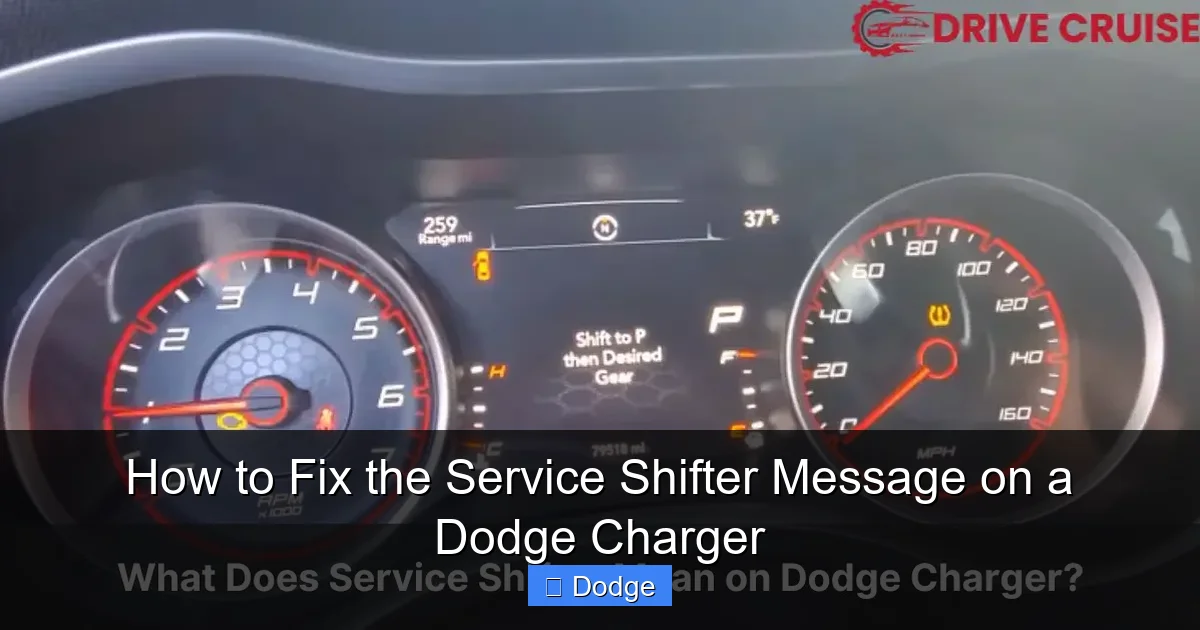
Visual guide about How to Fix the Service Shifter Message on a Dodge Charger
Image source: drivecruise.com
Low or Weak Battery Voltage
Your Charger’s electronic shifter system is highly sensitive to voltage fluctuations. If your battery is old, undercharged, or has corroded terminals, the shifter may not receive enough power to operate correctly. This is especially common in colder climates or after leaving lights or accessories on overnight. A voltage drop below 12 volts can cause the system to malfunction and display the warning.
Loose or Corroded Electrical Connections
The shifter assembly is connected to the vehicle’s wiring harness via a multi-pin connector located beneath the center console. Over time, vibrations from driving can loosen this connection, or moisture can cause corrosion. Even a slightly loose plug can interrupt communication between the shifter and the control modules.
Faulty Shifter Knob or Internal Electronics
The shifter knob itself contains microswitches and circuit boards that detect your input (e.g., shifting to Drive or Reverse). If these components wear out or get damaged—perhaps from spilled coffee or excessive force—the system may fail to register your commands, triggering the warning.
Range Sensor (Transmission Range Sensor) Malfunction
Also known as the neutral safety switch, the range sensor tells the car what gear it’s in. If this sensor fails or becomes misaligned, the vehicle can’t confirm its gear position, leading to the “Service Shifter” alert. This part is integrated into the transmission and may require professional replacement if faulty.
Software Glitches or Need for Relearn Procedure
After a battery replacement, jump-start, or software update, the shifter system sometimes needs to be “relearned” or recalibrated. Without this step, the modules may not sync properly, causing false warnings. This is a common oversight that’s easily fixed with the right procedure.
Damaged Wiring Harness
The wiring that runs from the shifter to the transmission passes through tight spaces and near moving parts. Rodents, wear, or improper repairs can damage these wires, leading to intermittent or complete signal loss.
Step-by-Step Troubleshooting Guide
Now that you know what might be causing the issue, let’s walk through a practical troubleshooting process. Always start with the simplest solutions before moving to more complex diagnostics. Remember: safety first—park on level ground, engage the parking brake, and disconnect the battery if needed.
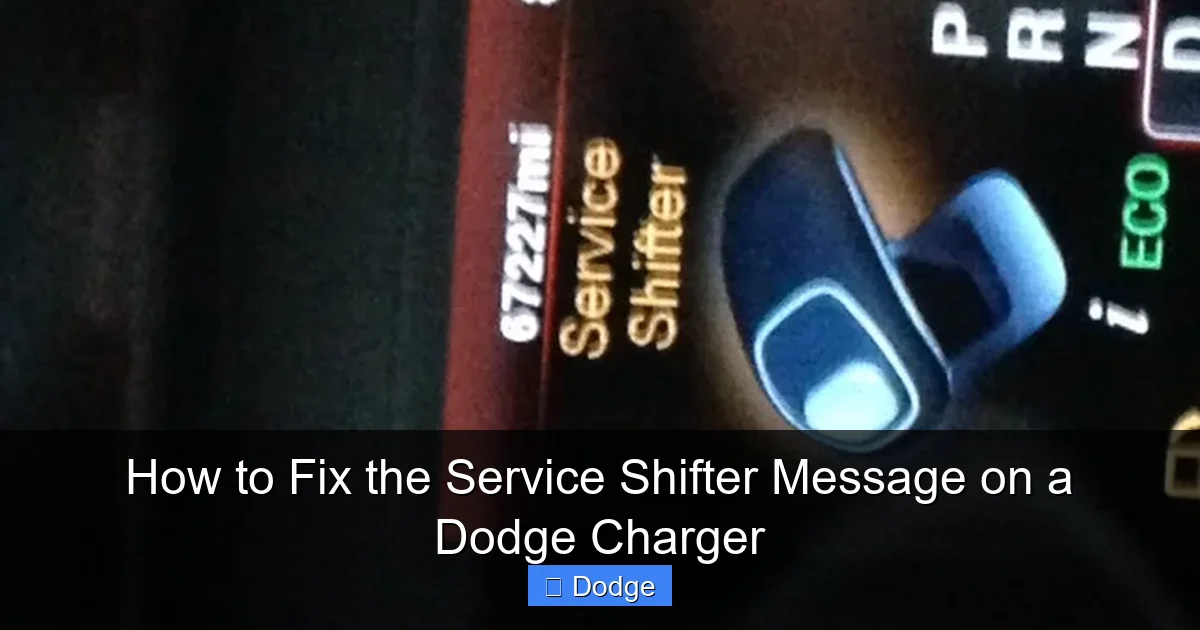
Visual guide about How to Fix the Service Shifter Message on a Dodge Charger
Image source: cdn.carcomplaints.com
Step 1: Check Your Battery and Charging System
Grab a multimeter and test your battery voltage with the engine off. A healthy battery should read around 12.6 volts. If it’s below 12.2 volts, charge it fully and retest. Also, inspect the battery terminals for corrosion—clean them with a wire brush and baking soda solution if necessary. While you’re at it, start the engine and check voltage at the battery posts; it should read between 13.7 and 14.7 volts, indicating the alternator is charging properly.
Pro Tip: If your Charger has been sitting for days or you recently jumped it, a low battery is the most likely cause. Many owners report the warning disappears after a full charge or drive.
Step 2: Inspect the Shifter Connector
Locate the shifter assembly under the center console. You’ll need to remove the trim panel (usually held by clips) to access the electrical connector. Carefully unplug it and examine both the plug and socket for signs of corrosion, bent pins, or moisture. Clean any debris with electrical contact cleaner and a soft brush. Reconnect firmly—you should hear a click.
Real-World Example: A 2015 Charger owner in Florida found salt residue had corroded his shifter connector after driving on beach roads. A quick clean and reconnect resolved the issue immediately.
Step 3: Perform a Power Cycle (Soft Reset)
Sometimes, the system just needs a reboot. Turn off the ignition, remove the negative battery cable for 10–15 minutes, then reconnect it. This resets the BCM and TCM. After reconnecting, turn the key to “ON” (don’t start the engine) and wait 30 seconds. Then start the car and test the shifter.
Note: Some newer Chargers (2015+) may require a specific relearn procedure after a power cycle—see the next section.
Step 4: Use an OBD2 Scanner to Read Codes
Not all “Service Shifter” warnings show up as generic check engine lights. You’ll need a scanner that can access the transmission and body control modules. Popular options include the BlueDriver, Autel MaxiCOM, or even a basic ELM327 adapter with compatible software like Torque Pro.
Look for codes such as:
- P0900 – Clutch Actuator Circuit Malfunction
- P0915 – Gear Shift Position Sensor Circuit
- B1A55 – Shifter Position Signal Invalid
These codes will point you toward the exact component at fault. If no codes are present, the issue may be intermittent or software-related.
Step 5: Test the Range Sensor (If Applicable)
If your scanner shows a range sensor code, you may need to inspect or replace it. On most Chargers, this sensor is located on the side of the transmission. However, replacement often requires draining transmission fluid and removing the valve body—best left to experienced DIYers or professionals.
How to Reset the Shifter System (Relearn Procedure)
After addressing hardware issues or replacing the battery, your Charger may still show the warning because the control modules haven’t “relearned” the correct shifter positions. Here’s how to perform the relearn procedure for most 2011–2023 Dodge Chargers:
- Ensure the battery is fully charged and all connections are secure.
- Turn the ignition to the “ON” position (engine off).
- Press and hold the brake pedal.
- Move the shifter slowly through all gear positions: Park → Reverse → Neutral → Drive → Sport (if equipped) → back to Park. Spend 2–3 seconds in each position.
- Repeat this cycle three times.
- Turn the ignition off for 30 seconds.
- Start the engine and test the shifter.
If the message persists, some models require a dealer-level scan tool (like WiTECH) to complete the relearn. In that case, consider visiting an independent shop with Dodge-specific equipment before going to the dealership.
When to Seek Professional Help
While many “Service Shifter” issues are DIY-friendly, there are situations where expert intervention is necessary:
- The shifter is physically stuck and won’t move, even with the emergency override (usually a small button near the shifter).
- You’ve tried all troubleshooting steps, but the warning returns immediately.
- Diagnostic codes point to internal transmission problems or TCM failure.
- You’re uncomfortable working with electrical systems or transmission components.
In these cases, a certified mechanic or Dodge specialist can perform advanced diagnostics, such as checking CAN bus communication or testing solenoid resistance. Remember: forcing the shifter can damage the transmission or selector mechanism, so don’t risk it.
Prevention Tips to Avoid Future Warnings
An ounce of prevention is worth a pound of cure—especially with modern electronics. Here’s how to keep your Charger’s shifter system in top shape:
- Maintain your battery: Replace it every 4–5 years and keep terminals clean.
- Avoid spills: Never place drinks near the center console—liquid can seep into the shifter and ruin internal circuits.
- Use gentle shifts: The electronic shifter isn’t designed for aggressive slamming. Treat it with care.
- Park on level ground: This ensures the transmission range sensor reads accurately.
- Update software: If your Charger is eligible for a TCM or BCM update, have it done at a dealership—it’s often free under warranty.
Final Thoughts
The “Service Shifter” message on your Dodge Charger doesn’t have to spell disaster. With the right approach—starting with basic checks and escalating only when needed—you can often resolve the issue yourself and save hundreds in labor costs. Whether it’s a loose connector, a weak battery, or a simple reset, most causes are manageable with patience and the right tools.
That said, always prioritize safety. If your car won’t start, won’t shift, or behaves unpredictably, don’t ignore it. Modern vehicles like the Charger rely heavily on integrated electronics, and what seems like a minor glitch could indicate a deeper problem. When in doubt, consult a professional—but now you’re equipped with the knowledge to ask the right questions and understand the solutions.
By following this guide, you’ll not only fix the current issue but also gain confidence in maintaining your Charger for years to come. After all, there’s nothing quite like the thrill of driving a properly functioning Dodge—shifter warning-free and ready for the open road.
Frequently Asked Questions
Why does my Dodge Charger say “Service Shifter” when I start it?
This usually happens due to a temporary communication error between the shifter and the vehicle’s control modules. It’s often caused by low battery voltage, a loose connection, or a need for a system relearn after a battery change.
Can I drive my Charger with the “Service Shifter” message on?
It depends. If the shifter still moves and the car drives normally, you may be able to drive short distances cautiously. However, if the shifter is stuck or unresponsive, do not drive—it could leave you stranded or cause unsafe conditions.
How much does it cost to fix a “Service Shifter” issue?
Costs vary widely. Simple fixes like cleaning connectors or resetting the system are free. Replacing a shifter knob may cost $100–$300, while a range sensor or TCM repair can run $500–$1,500, including labor.
Will disconnecting the battery fix the “Service Shifter” warning?
Sometimes, yes—especially if the issue is due to a voltage drop or software glitch. A power cycle (disconnecting the battery for 10+ minutes) resets the modules and may clear the warning temporarily or permanently.
Is the “Service Shifter” message covered under warranty?
If your Charger is still under the factory warranty (typically 3 years/36,000 miles for basic, 5 years/60,000 miles for powertrain), electrical and shifter-related issues are usually covered. Check your warranty booklet or contact a Dodge dealer.
Can a bad alternator cause the “Service Shifter” message?
Yes. A failing alternator can cause low or fluctuating voltage, which disrupts the sensitive electronics in the shifter system. Always test your charging system if you see this warning along with dim lights or slow cranking.


